

African and Arab nations are calling for a two-year postponement of an agreement on a set of indicators designed to track countries’ progress in adapting to climate change – a deal that is expected to be one of COP30’s flagship outcomes.
As seen in a new draft text on the Global Goal on Adaptation (GGA) issued in Belém on Wednesday, the two groups of countries have raised concerns on some proposed indicators which they argue could unfairly shift financial responsibility for climate adaptation onto developing countries.
They say the indicators which are meant to track progress in adapting to climate change are “not consistent with the Paris Agreement” because they include domestic budgets and national spending as part of adaptation finance.
This risks blurring the line between developing countries’ own money and the international support they are supposed to receive under the Paris accord, they argue. Asking governments to count their own spending towards global adaptation funding could place a further burden on poorer countries’ already limited resources, they fear.
-
COP30 Bulletin Day 1: Host nation Brazil averts agenda row at opening
In a compromise solution, the COP30 presidency will hold consultations on four contentious issues – climate finance, trade measures, 1.5C ambition and transparency of national data -
COP30 Bulletin Day 2: Ethiopia picked as COP32 host, while COP31 standoff continues
African nations backed Ethiopia’s bid to host the 2027 summit over Nigeria’s, while Australia and Türkiye remain deadlocked over next year’s host decision -
COP30 Bulletin Day 3: Brazil tries to find a home for tricky issues
Brazil is trying to craft a compromise package on several contentious issues and has dismissed the idea of a roadmap away from fossil fuels


An additional concern is that the proposed indicators related to expenditure tracking and national budget allocations could undermine countries’ sovereignty on how they spend their fiscal resources.
Africa needs over $50 billion a year to adapt to climate change. In 2019 alone, countries spent 0.95% of their governments’ budgets on adaptation – and in some countries like Botswana and Seychelles, it gobbled up 4% of their GDP, according to the 2023 UN Adaptation Gap Report.
In the new draft text, countries also note that the indicators fail to measure the quality and accessibility of climate finance. Observers told Climate Home News that this is especially key for African nations who want to avoid indicators that could set unrealistic criteria for accessing limited funds or locking them into high interest loans.

Responding to a question from Climate Home News, Richard Muyungi, chair of the African Group of Negotiators (AGN) said the indicators must be linked to finance, adding that this funding has to come from the international community so that developing countries are “supported” rather than being forced to use their own money to adapt to climate change.
The AGN wants the indicators to be shaped by government negotiators over the next two years so that they can be made more realistic, fair and reflective of national capacities.
An adviser to a North African government noted that deferring the adoption of the GGA indicators would not stop countries from using them to measure their adaptation progress, even though that would not be reported internationally in a formal way.
Analysts: NDCs have made little difference to projected warming
Last year, Climate Action Tracker (CAT) said the world was on course for 2.6C of global warming.
Since then, over 100 countries have updated their NDC climate targets. Now, CAT says, the world is on course for…still 2.6C.
“In other words, the 2035 NDCs so far submitted don’t change the dial in terms of keeping warming to 1.5˚C,” the analysts concluded.
On the other hand, as New Climate Institute’s Niklas Höhne says, CAT’s 2015 report predicted we were on course for 3.6C of warming. So “the Paris Agreement works”, he argues. Just not enough to hold global warming to its lowest limit of 1.5C, which the UN has now admitted will be exceeded, at least temporarily.
Also released today, Exeter University’s global carbon budget report projects – although with little confidence – that total carbon dioxide emissions in 2025 will be very slightly lower than last year.
While emissions from fossil fuels are likely to rise slightly in 2025 – with a big increase in the US as coal rebounds – emissions from land use look like they will fall.

That’s thanks partly to COP30’s Brazilian hosts, as deforestation rates in the Amazon have declined and are at their lowest level this season since 2014.
London Metropolitan University geography professor Julia Pongratz said this “demonstrates the success that environmental policies can achieve”.
Even if emissions have peaked though, the global average temperature will keep on heating up at least until we reach net zero, when no more greenhouse gas emissions are added to the atmosphere than are taken out by forests and other ways of removing them.
Amnesty study maps fossil fuel threat to health and human rights
From artisanal fishing communities in Brazil to Indigenous land defenders in Canada and coastal communities in Senegal, living near fossil fuel infrastructure is putting the health and human rights of hundreds of millions of people at risk, according to a new report from Amnesty International.
The global rights organisation teamed up with researchers at the University of Colorado Boulder in a mapping exercise showing that at least 2 billion people – a quarter of them children – live within 5km of more than 18,000 fossil fuel operations across 170 countries. Those include oil drilling and fracking sites, gas pipelines and coal power plants.
Among the 2 billion people, at least 463 million live within 1km of the sites, exposing them to much higher environmental and health risks, says the report released on Wednesday on the sidelines of COP30.
Exploration, processing, site development, transportation and decommissioning of fossil fuels have led to severe pollution and greenhouse gas emissions, as well as damaging key natural areas, it found, turning communities and ecosystems into “sacrifice zones”.
Studies show that exposure to sites where fossil fuels are produced and used raises the risks of negative health impacts including cancer, heart disease and birth problems, the report adds.
“This report provides yet more evidence of the imperative for states and corporate actors to ’defossilise’ the global economy to mitigate the worst impacts of the climate crisis on human rights,” Agnès Callamard, secretary general of Amnesty International, said in a statement.
The study shows that 16% of global fossil fuel infrastructure is sited on Indigenous territories, while around a third of the total overlaps with one or more ‘critical ecosystems’ that are rich in biodiversity or important carbon sinks.
The report warns that, despite governments pledging to transition away from fossil fuels two years ago at COP28, more than 3,500 fossil fuel infrastructure sites are either proposed, in development, or under construction globally.
The researchers estimate that such expansion could put at least 135 million more people at risk. The number of oil and gas projects is set to increase across all continents, it notes, while coal plants and mines are being added mostly in China and India.
Local people are often not consulted by authorities and companies managing the projects nor given enough information about their potential impacts, Amnesty said.
“Most affected groups condemned the power imbalance between their communities and corporate operators, as well as the lack of effective remedy,” said Candy Ofime, researcher and legal advisor on climate justice at Amnesty International.
The post COP30 Bulletin Day 4: African and Arab groups want adaptation indicator delay appeared first on Climate Home News.
COP30 Bulletin Day 4: African and Arab groups want adaptation indicator delay

Continue Reading
Prepared by a coalition of nine Western Australian union, industry, conservation, and community organisations—including UnionsWA, the Conservation Council WA, and the Smart Energy Council—the WA Clean Energy, Jobs & Industry Plan provides a practical roadmap to transform Western Australia into a clean energy powerhouse while creating thousands of secure local jobs.
Western Australia stands at a pivotal crossroads: lead the global clean energy economy or watch investment, future industries, and secure jobs go elsewhere. The WA Clean Energy, Jobs & Industry Plan outlines a transformative blueprint to harness the state’s world-class solar and wind resources. Discover how legislated renewable targets, green iron manufacturing, and a dedicated regional training strategy can generate tens of thousands of local jobs, lower household bills, and build a resilient, net-zero future for all Western Australians.

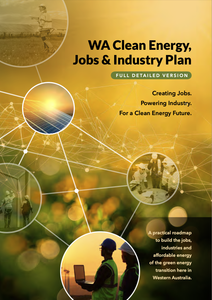
WA needs a clear and forward-thinking plan if it is going to become a competitive renewable energy powerhouse and maintain its economic strength through the energy transition.
“Western Australians know a faster renewable energy transition will lower their household expenses and prevent harmful climate pollution. But the community also needs clear direction to ensure this transition will create jobs, lower costs and not cause undue environmental harm.
“Here, sectors representing a broad range of interests have laid the groundwork for those outcomes, clearly outlining what is needed to create a future for WA that is good for the environment, for the climate, for workers and for the economy.
Summary
The WA Clean Energy, Jobs & Industry Plan sets out a strategic roadmap to position Western Australia as a global clean energy superpower while creating thousands of secure local jobs.
The report establishes three overarching goals:
- Creating local employment.
- Maintaining industrial competitiveness.
- Lowering household energy costs
To realize this vision, the framework details actionable measures to follow on from the recent WA Government announcement of a 75% Renewable Energy Target by 2031 for the South West Interconnected System. This includes developing a statewide Renewable Energy Target, coordinating statewide workforce and training pipelines, strategically planning regional infrastructure to safeguard high-value biodiversity and cultural heritage, and ensuring equitable benefit-sharing through household electrification incentives and First Nations equity partnerships. Ultimately, the plan highlights that establishing clear policy and regulatory certainty will unlock lower energy bills, boost power reliability, and secure the state’s global competitiveness in emerging green commodity export markets.

Key Findings
- Statewide Renewable Energy Target and Emissions Reduction Targets: The report calls for a statewide RET and 1.5°C aligned emission reduction targets to remove policy risk, lower capital costs, and attract clean energy investment.
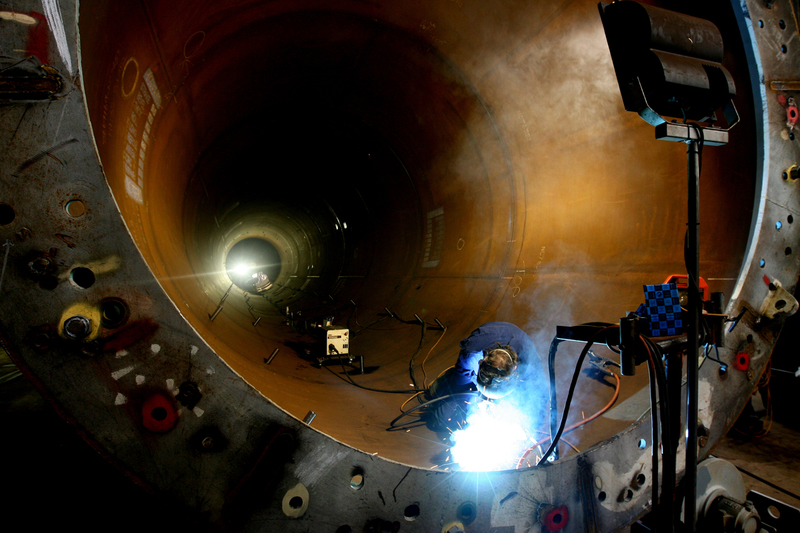
- Transformative Job Creation: Accelerating the transition offers massive employment prospects, including up to 8,800 solar and battery jobs by 2050, as well as 24,000 ongoing and 11,000 construction jobs in a commercial green iron industry.
- Industrial Electrification & Competitiveness: Requiring large gas users to adopt binding electrification timetables and providing concessional financing will protect existing energy-intensive manufacturers from rising energy costs and impending domestic gas shortfalls.
- Green Commodity Export Leadership: Western Australia can build new export markets in green iron, green ammonia, and offshore oil/gas decommissioning by constructing shared common-user infrastructure and setting dedicated Green Commodity Export Targets.
- Coordinated Workforce & Training Pipeline: To address critical skill shortages the plan recommends establishing a WA Clean Energy Jobs Plan 2050, three regional training hubs, and dedicated pathways for female and under-represented apprentices.
- Environmental Safeguards & Community Benefits: Fast-tracked development must be paired with State Planning Policies that avoid high-biodiversity and cultural heritage lands, mandate new data centres to run on additional renewable power, and deliver household electrification rebates and First Nations equity partnerships.
What you can do
WA has an opportunity to lead on sustainable, clean energy and associated industries. You can help by:
- Sending an email to Environment Minister Murray Watt and Prime Minister Anthony Albanese, calling on them to reject Browse.
- Sharing this story to help more Australians understand what’s at stake.
- Encouraging your friends and family to take action.