

Governments drew their battle lines this week over how COP30 should respond to an expected shortfall in ambition in countries’ national climate plans, raising the prospect of a fight at the UN summit in Belém.
Countries are divided over the need for the COP30 talks to formally discuss an upcoming UN review of newly announced targets to cut greenhouse gas emissions. That ‘synthesis report’ is widely expected to show that the world is not on track to limit global warming in line with the temperature goals of the Paris Agreement.
The clash of views became public for the first time on Thursday as Brazil’s COP30 president André Corrêa do Lago hosted a first round of informal consultations with delegations in a bid to avert procedural arguments over the agenda delaying the start of negotiations, as has occurred in recent years.
Anticipating the row in a letter last month, the seasoned Brazilian diplomat on Thursday appealed to countries to “exercise restraint” at a time when UN climate diplomacy is facing “one of the greatest tests” ever.
Rich nations, least developed countries (LDCs), small island states, Latin American nations and the United Arab Emirates spoke in favour of a COP30 decision that acknowledges the progress and remaining gaps in nationally determined contributions (NDCs) and lays out a pathway for accelerating climate action in the years ahead.
But a group of high-income emerging countries – including China, Saudi Arabia and India – voiced strong opposition to that plan. They argued that discussions of those NDCs and the UN “synthesis report” assessing them are not on the summit’s agenda – and the only space for addressing a shortfall in ambition remains the Global Stocktake (GST).
-
Addis summit trumpets African climate solutions, while quietly backing gas
African nations sent a strong message on driving green growth with homegrown resources, but were criticised for their softer stance on fossil fuels -
Ethiopia’s preparedness puts it ahead of Nigeria in bid to host COP32, campaigners say
Ethiopia’s logistics, infrastructure and climate diplomacy make it seem better placed to host the 2027 UN climate talks than its West African rival – for now


A five-yearly process established by the Paris Agreement, the next GST is scheduled to be completed in 2028.
Two years ago, the first GST found the world was significantly off track to meet its climate goals. That exercise resulted at COP28 in Dubai in what was hailed as a historic global commitment to transition away from fossil fuels in energy systems – but little has since been done to put that pledge into practice.
COP30 call for stronger climate plans
Speaking at Thursday’s consultation, the climate envoy for the low-lying Marshall Islands in the Pacific, said this round of NDCs – the third under the Paris Agreement – is “the last chance to course correct” emissions reductions in line with the 1.5C warming limit.
“We cannot wait for the next Global Stocktake,” she added. “That will be far too late for my country and millions of people around the world”.
Only a sixth of countries have presented their updated NDCs so far, including an emissions-cutting target for 2035, with those from many major economies including the European Union (EU), China and India still missing. A flurry of submissions is expected in the coming weeks ahead of an end-of-September deadline for their inclusion in the synthesis report.

The last such assessment, published last year, estimated that full implementation of the NDCs available at that point would lead to a 5.9% reduction in planet-heating emissions by 2030, compared to the 2019 level. That is far short of the 43% fall in global emissions the Intergovernmental Panel on Climate Change (IPCC) has said is needed by the end of this decade to be in line with the 1.5C target.
Nepal’s lead negotiator, taking the floor for the world’s poorest nations, said COP30 must offer “a clear plan” to address gaps in both climate ambition and the implementation of existing commitments. “It must provide confidence that we are moving forward, offer solutions to close the gap and reaffirm trust in multilateralism,” he added.
Responding to NDCs seen as “priority”
Colombia’s head of delegation argued that COP30 will be “a defining political moment for the international community”. “It will test whether parties are willing to match words with action and put forward contributions that genuinely keep 1.5C within reach,” she added.
Framing talks on the updated climate plans as one of COP30’s main objectives, most developed countries urged a strong response to the expected shortfall, ideally in the form of a negotiated outcome agreed by all nations.
In new book, WRI chief argues for climate optimism despite obstacles
The EU went as far as calling for the creation of a new item on the summit’s agenda that directly addresses the level of collective ambition of NDCs and the steps needed to plug remaining gaps. “This is the key priority for the EU,” said the climate negotiator for the bloc.
Switzerland, speaking on behalf of the self-styled Environmental Integrity Group, suggested that, at the talks in the Amazon city of Belém, countries could launch a new political process to “bring us closer to 1.5C”. That could include a forum for ministers to come together and identify opportunities for cooperation on climate action.
Emerging economies push back
Large emerging economies and the group of Arab countries pushed back on the need to discuss climate plans – arguing the topic is not on the agenda and would go against the “nationally determined” nature of the Paris Agreement. Instead, they called for talks to focus on finance and trade measures.
India said it is unclear why a separate discussion on the NDC synthesis report is needed when it is not an item on the formal agenda.
China argued that the COP30 presidency should not create a new process to consider NDCs that would risk diluting the GST. “The current multilateral process is complex and fragile,” said the country’s delegate, adding “any negative evaluation of NDCs might lead to a decrease in confidence and mutual trust”.
China on course to peak fossil fuel power as soon as this year, reports say
Speaking on behalf of the “Like-Minded” group of developing countries, Bolivia’s lead negotiator said the bloc is not in favour of reflecting messages from the NDCs in any COP30 decisions, and in particular in a political cover text, as the Global Stocktake remains the only dedicated space to assess collective climate efforts. He added that there is no consensus on the need to respond to the latest round of NDCs at COP30.
Saudi Arabia, on behalf of the group of Arab countries, raised the concern “that this push places undue pressure on developing countries with respect to ambition at a time when the Paris Agreement has clearly moved into an implementation phase”.
Saudi Arabia’s negotiator added that submitting national climate plans and assessing them in one year is “destructive” and out of step with the Paris Agreement. He urged the Brazilian presidency to focus on issues around finance and trade, which often refers to mechanisms such as the EU’s forthcoming carbon border tax.
More consultations on the calendar
While the disagreements were starkly evident this week, the COP30 presidency plans further consultations in the hope that countries can work out a way forward on how to respond to the NDC and other tricky issues before the summit in November.
An in-person consultation will take place on September 25 in New York, the day after a high-level UN event where countries are due to unveil their latest NDCs, and a second will be held on October 15, in Brasília as part of the “Pre-COP” meetings.
“The smooth adoption of the agenda at COP30 may be one of our strongest demonstrations to the outside world that this [UN climate] regime works, is alive and well,” Corrêa do Lago told country officials on Thursday.
The post Countries trail COP30 clash over global response to shortfall in national climate plans appeared first on Climate Home News.
Countries trail COP30 clash over global response to shortfall in national climate plans

Despite millions of dollars in grants and technical help for African businesses to power farming and other food production activities with renewable energy, most efforts remain stuck at the early stages because they struggle to find the investors, markets and expertise they need to grow.
This was the message from a coalition of global institutions working on energy, water and agriculture at this month’s Africa Food Systems Forum in Kigali, Rwanda.
“Energy, agriculture, water and nutrition actors rarely design solutions together,” the Agri-Energy Coalition said in a Call to Action on powering food systems with clean energy.
Using more renewables – especially solar power – to drive food systems would reduce food losses, ensure year-round availability and affordability of healthy foods, and improve productivity, income and resilience among farmers, food processors and other small enterprises, the coalition added.
In an interview with Climate Home News at the forum, Olamide Niyi-Afuye, CEO of the Africa Minigrid Developers Association (AMDA) – a body representing private-sector developers of small-scale, off-grid electricity systems across the continent – said its members are starting to recognise this interdependence and are increasingly considering businesses that combine energy with agricultural activities.
-
Second Africa Climate Summit seeks to jump hurdles to green industrialisation
A report on progress since the first summit in 2023 says financial, infrastructure and trade obstacles are hampering “climate-positive growth” on the continent

This, Niyi-Afuye added, could lead to greater supply and use of clean power for key processes like irrigation, food processing and storage, creating new sources of revenue for both sectors.
CHN: Conversations at the Africa Food Systems Forum highlighted how organisations working in energy and agriculture often operate in silos. What has hampered their collaboration, and how has that affected Africa’s economic development?
A: Most mini-grid companies in Africa were primarily incentivised to achieve connections. If you look at some ongoing projects, you see a cost-per-connection model [of revenue]. When a subsidy is tied to achieving a connection, regardless of whether it is a productive connection, you might not notice the problem until five years down the line, when you realise the cash flows are not what you projected.
Despite African walkout, fractious land COP ends without drought deal
So now we’re in a “come-to-Jesus moment” as an industry, where we’re righting the wrongs and adjusting our business models to make sure companies do not go bust and there is some level of sustainability over the long term.
The saying is not wrong that we’ve been working in our own silos because we’ve focused on the smaller things instead of the helicopter view. There needs to be cross-pollination [between the energy and agriculture sectors] because, if we are thinking about industrialisation, energy is a key driver of industrialisation. We will not achieve that if we’re not in the room and part of those conversations.
CHN: Productive use of energy is intended to ensure electricity access goes beyond lighting homes to improving livelihoods, creating jobs and powering equipment. But what happens when farmers cannot afford the equipment they need to do that? How can energy, agriculture and equipment players work together to make the transition more accessible?
A: That’s why we’re having conversations with companies set up to de-risk the agriculture sector. By leveraging that connection, we’re able to aggregate potential energy needs and develop instruments that make equipment more affordable through bulk procurement.
We can have arrangements that make it easier for farmers and food producers to lease equipment and eventually own it over a period. There’s no real pressure to recover the capital very quickly because you’re looking at scale.
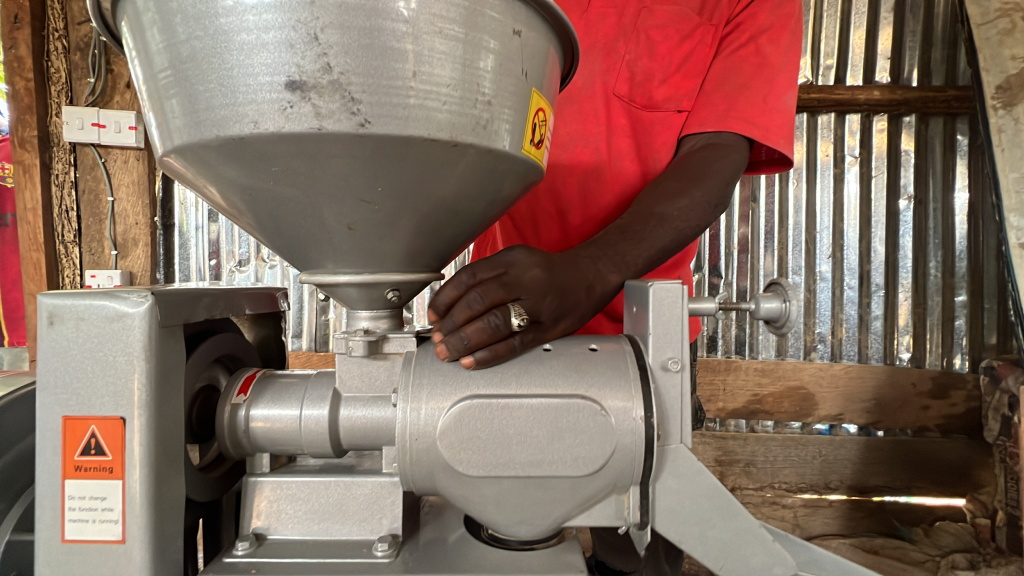
There is a whole lot across the agricultural value chain that needs energy, from farming and harvesting to food processing and value-addition. We need to understand the energy needs across the value chain and bring our members in to provide solutions.
Developers do not necessarily need to provide every productive-use solution themselves. They can partner with equipment suppliers, financiers, agribusinesses and other service providers to enable customers to use electricity productively. The objective is simple: do not just electrify communities; enable economic activity that uses that electricity.
CHN: When Africa’s industrialisation is discussed, you hear things like renewables cannot provide enough baseload, while some food processors are sceptical about switching to renewable energy because of these concerns about reliability. What is your response?
A: It’s not a controversial statement to say that a typical baseload is usually from the grid, and it’s usually from multiple sources including renewable energy. For large-scale operations, we can look at blending multiple sources of energy. But how do we solve the problem of a mid-sized farmer? We can solve it with a mini-grid using renewable energy.
Comment: Every country needs a model to help optimise its energy transition
If you go to a small farmer in a rural area, they don’t care about what source of energy they’re getting. They just want something that can help them get from A to B. If you look at the direct energy needs of farmers and food processors, I’m sure 90 percent of their consumption can be solved by renewable energy. Let’s start with that problem first. Then, as they scale, they might need to ramp up, and we can start talking about a bigger baseload.
CHN: How much agricultural value is lost because farmers and food businesses lack reliable, affordable electricity?
A: If you look at, for example, the fact that we need to maybe plant tomatoes or strawberries in Jos before it gets to Lagos [Nigeria], which most likely is by road, I can assure you that a good chunk, if not stored properly, would be bad by then. So the fact that we do not have energy is in itself a lost opportunity to maximise the potential of the agriculture sector. So until we’ve solved the energy problem, we will not salvage waste – and for me that is a lost opportunity.
CHN: AGRA, an institution focused on scaling agricultural innovations to help smallholder farmers, estimates a massive shortfall between current investments in the continent’s food systems and what is actually needed to build a resilient, profitable agricultural economy – to the tune of $180 billion per year. Can integrating energy into food systems help bridge that gap?
A: Yes – if energy can help unlock the potential to earn more money, investors will follow the money. Investments go where there is certainty, and until there is certainty around cash flow and revenue, investment will be limited.
My vision is to see more Power Purchase Agreements (PPAs) being signed between energy players and the agriculture sector. We can start by getting people into the room, understanding their pain points, crafting a framework and documentation that works for both parties, and then seeing deals happen.
This interview was shortened and edited for clarity.
The post How clean energy can boost business for Africa’s food producers appeared first on Climate Home News.
How clean energy can boost business for Africa’s food producers
Cristina Rumbaitis del Rio is a senior advisor on adaptation and resilience with the United Nations Foundation and Mattias Söderberg is global climate lead at Danish NGO DanChurchAid.
Recent extreme events – from wildfires and heatwaves in Europe to flash flooding following a glacier collapse in Nepal – have shocked and devastated communities, bringing years of warnings about such climate impacts to the doorstep of communities around the world.
One thing is certain: the new climate reality is here – and the adaptation strategies designed for yesterday’s world are no longer sufficient.
Attribution science has since shown that the hotter and more frequent heatwaves we’re experiencing around the world would have been virtually impossible without today’s high concentrations of greenhouse gases in the atmosphere. Climate shocks are now so severe that they reverberate through supply chains, food and water systems, financial markets and the movement of people.
-
Foreign minister: Nepal needs “meaningful” international support to face climate threats
Following its recent Himalayan flooding disaster, the South Asian nation is seeking urgent help from a new UN climate fund, appealing for “stronger global solidarity” -
Palestine: Israel’s bombing has left Gaza vulnerable to climate change
With homes, hospitals and water storage destroyed, Palestine’s government says that Gazans have little protection from climate impacts and sets conditional emissions targets
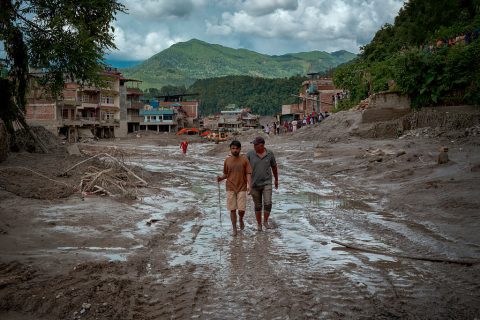

They must be a catalyst for a new way of thinking about adaptation and resilience, and how we finance solutions that work. A failure to invest in adaptation in one region can create costs far beyond it, which is why the concept of shared resilience is critical for leaders to grasp.
Investment not charity
At the UN General Assembly (UNGA 81) this month, leaders have an opportunity to translate today’s urgency into concrete commitments on adaptation and loss and damage finance ahead of COP31.
Those commitments are needed to underpin global stability, shared prosperity and human security. Governments should use this moment to show what a new response looks like: finance that reaches communities faster, supports locally grounded solutions, strengthens national systems, and helps countries prepare before the next shock arrives.
If we want sustained economic growth, food and water security, and resilient and prosperous societies across every region, adaptation must be at the heart of today’s development and security agenda. It cannot be just a future planning consideration or a narrow issue for climate ministries. Adaptation is now everyone’s business – and it must be financed fast and fair.
UN Secretary-General António Guterres has repeatedly framed climate finance as an investment rather than charity, warning that “a world in climate chaos cannot be a world at peace” and describing human security as freedom from the chronic and sudden disruptions that climate change multiplies.
What’s more, adaptation delivers a real return-on-investment, with researchers estimating that every dollar invested produces $10 in benefits, saving lives, protecting livelihoods, and reducing the costs of future disasters.
Hitting adaptation limits
The urgency to scale adaptation systematically is growing. The newly released “Limiting Overshoot” report from the UN Environment Programme (UNEP) confirms what scientists have long warned: exceeding global warming of 1.5C is now unavoidable under current policies. Yet, how high temperatures rise – and how long the world remains above the 1.5C threshold – will determine whether communities, economies and entire ecosystems can keep pace.
There are limits to adaptation. When we breach those limits, lives and livelihoods are lost, and people and ecosystems suffer greatly. We cannot simply build yesterday’s infrastructure a little stronger and assume it will be enough.
Nepal flood destruction shows “limits to adaptation”, scientists say
We need to fundamentally change the systems that determine how societies anticipate, absorb and recover from both immediate and evolving non-linear climate shocks. This includes transforming physical systems, such as infrastructure, and the governance systems that affect where and how we live to how we maintain our health and wellbeing.
Finance today is nowhere near the scale of the challenge.
The UNEP “Adaptation Gap Report 2025” estimates the shortfall in adaptation finance in developing countries at $284 billion–$339 billion a year – roughly 12 to 14 times current international public flows of around $26 billion. That gap is a development, economic and human security problem, especially for the most vulnerable populations who have contributed the least to causing the climate crisis.
Building resilience into financial systems
There are already signs of what a more systemic adaptation response could look like. Communities around the world are delivering practical solutions at local level, even as adaptation finance remains notoriously, and appallingly, difficult to access. Cyclone-resistant homes, local forecasting capacities, drought-resistant crops, heat insurance for pregnant informal workers and mangrove restoration are rooted in local knowledge and lived experience, while delivering benefits far beyond the communities where they originate from.
But local innovation alone is not enough; the systems around it need to be resilient too.
Jamaica offers one example. The country has built a multi-layered disaster-risk financing framework, including a catastrophe bond and contingency funds, through sustained fiscal discipline and proactive investment. Its debt-to-GDP ratio fell from around 147% in 2012 to around 62% in 202-25. That groundwork matters when disaster strikes.
Hurricane Melissa’s destruction shows need for climate resilience push
Following Hurricane Melissa, Jamaica was able to secure billions of dollars in reconstruction financing from multilateral banks – finance that might otherwise have been much harder to access. The lesson is clear: resilience can be built into the financial architecture of a country before a crisis arrives. That is the shift we now need to make at scale.
The foundations already exist – in Kingston’s fiscal reforms, in early-warning systems from the Sahel to the Pacific, and in every community that adapted before disaster struck. What is still missing is the political will, and the finance, to take what works and put it to work everywhere, at the speed our world’s new climate reality demands.
To hear more on this issue from high-level officials and experts, sign up for this event during Climate Week NYC, at 8am EDT on September 24 (in person or online), moderated by Climate Home News Editor Megan Rowling: Adapting to the New Climate Reality: Why Accelerating Impacts Demand New Responses.
The post Human security relies on adapting to the world’s new climate reality appeared first on Climate Home News.
Human security relies on adapting to the world’s new climate reality
Climate Change
Framing the climate science debate as a binary battle isn’t just wrong – it’s dangerous
Lidy Nacpil is the coordinator of Asian Peoples’ Movement on Debt and Development (APMDD).
Recent reporting on international climate negotiations has highlighted a sharpening divide within civil society and multilateral diplomacy. A troubling, simplistic narrative has taken root: that the UN climate process is witnessing a binary struggle between defenders of science and those attacking it.
This framing is not only inaccurate; it is dangerous. Characterising a substantive methodological and political debate in these terms misdiagnoses the stakes and stirs conflict instead of clarity.
No one disputes that climate action must rest on science. Science tells us what has led us to the climate crisis – the accumulation of historical emissions – and how much carbon budget remains if we are to keep temperature rise below 1.5C. It tells us how much global emissions must drop, and how fast. Science is also essential in assessing each country’s historical contribution to the accumulation of greenhouse gases in the atmosphere.
Responsibility, however, must also be based on capacity. For those who generated the largest share of historical emissions, that capacity includes the enormous wealth and economic power accumulated through the same fossil-fuel-intensive development that generated those emissions.
As science comes under attack at UN talks, climate movement splits over how to respond
While principles that should guide human action aren’t scientific questions – they are matters of values – applying them to real-world problems requires scientific grounding. Equity recognises the scientifically established reality of differentiated responsibilities among countries and within societies. Putting equity into practice demands scientific rigour.
Scrutiny of IPCC models
Today, critics are scrutinising the assumptions and frameworks behind the Intergovernmental Panel on Climate Change’s Integrated Assessment Models (IAMs), used to project future scenarios and map global mitigation pathways. These concerns centre squarely on equity and justice.
The economic, technological and policy assumptions used in IAM scenarios are normative choices rather than scientifically prescribed or neutral facts. These include choices about discount rates, economic growth, energy demand, technology costs, carbon prices, land availability and the regional location of mitigation. Many IAM scenarios reproduce existing global inequalities rather than transform them. Questions about transparency, representativeness and diversity in the scientific process are deeply urgent.
Most IAM scenarios are built primarily around global cost-effectiveness – directing emissions reductions to places where mitigation is modelled as cheapest rather than allocating effort according to historical responsibility, capacity and development needs.
The resulting pathways allow developed countries to retain disproportionately high levels of energy and fossil-fuel consumption while requiring developing countries to undertake substantial mitigation and carbon removal, including land-based measures that threaten food security and local development.
Northern models often assume uniform access to cheap financing. In reality, Global South economies face far higher capital costs, driving up the price tag of rapid infrastructure shifts.
Constraints on development space
Scenario constraints also limit the development space poorer nations need without guaranteeing adequate climate finance. When models treat profoundly unequal starting points as uniform baselines, policy pathways lock in global inequality under the banner of scientific objectivity.
Pointing out these structural flaws isn’t rejecting science. It is essential scientific scrutiny aimed at producing stronger, fairer, and more actionable results.
Science ‘under attack’ from fossil fuel interests at UN climate talks
The fight is not about whether we want to keep temperature rise below 1.5C, but about how we get there. A pathway can be technically compatible with 1.5C or 2C while still being deeply unequal in who gets to consume energy, who must reduce emissions, and whose development is constrained. Temperature compatibility alone does not make a pathway fair.
Critiquing IAM scenarios from an equity perspective is neither an attack on the Intergovernmental Panel on Climate Change (IPCC) nor an attack on science. Rigorously examining IPCC reports – their substance, assumptions, and processes – is an acknowledgement of the IPCC’s importance and entirely consistent with scientific method.
Tensions over AR7 timing
There is a separate but related tension over the cycle and timeline of the IPCC’s Seventh Assessment Report (AR7). Some governments and civil society voices advocate completing its Working Group reports in time to feed directly into the UN’s Second Global Stocktake in 2028.
The motivation makes sense: policymakers need timely science. But several developing-country negotiators and researchers have warned that meeting that deadline could severely disadvantage the Global South.
Funding gap threatens next round of IPCC climate science reports, chair warns
Global North authors and institutions remain disproportionately represented in the research underlying IAM assessments. Developing-country researchers often work with fewer institutional resources, smaller research budgets, and less administrative support. Accelerated publishing and assessment schedules can further limit their ability to generate, submit, and peer-review research in time for inclusion.
The AR7 timeline concerns boil down to inclusivity, representation, and equity. Requiring the IPCC to meet tight political calendars without ensuring meaningful support and participation for developing-country researchers risks reproducing the very inequalities being challenged.
Cooperation requires equity
Political interests are indeed at work in UNFCCC negotiations and must be surfaced. Bad-faith actors seek to evade fossil-fuel phase-outs or shirk climate-finance obligations. Many developed country parties are guilty of both, including those who style themselves as “Friends of Science.”
We must not lump legitimate scientific critiques raised by several Global South researchers and many civil society organisations concerning representation, economic assumptions and fair-share accounting together with obstructionism. Doing so risks misrepresenting and delegitimising critical scientific work and Global South equity and justice perspectives.
The climate movement is strongest when it aligns rigorous science with global equity and justice. Achieving the Paris Agreement’s goals requires robust science that fully integrates the experiences, economic realities and academic contributions of the Global South. Effective climate action also requires international cooperation, and without equity, such cooperation cannot be sustained. We do not have to choose between science and equity. We need both.
The post Framing the climate science debate as a binary battle isn’t just wrong – it’s dangerous appeared first on Climate Home News.
Framing the climate science debate as a binary battle isn’t just wrong – it’s dangerous



-

 Greenhouse Gases2 years ago
嘉宾来稿:满足中国增长的用电需求 光伏加储能“比新建煤电更实惠”
-
Climate Change1 year ago
Guest post: Why China is still building new coal – and when it might stop
-
Greenhouse Gases1 year ago
Guest post: Why China is still building new coal – and when it might stop
-

 Climate Change2 years ago
嘉宾来稿:满足中国增长的用电需求 光伏加储能“比新建煤电更实惠”
-

 Renewable Energy11 months ago
Sending Progressive Philanthropist George Soros to Prison?
-
Climate Change2 years ago
Bill Discounting Climate Change in Florida’s Energy Policy Awaits DeSantis’ Approval
-
Greenhouse Gases1 year ago
嘉宾来稿:探究火山喷发如何影响气候预测
-

 Carbon Footprint2 years ago
US SEC’s Climate Disclosure Rules Spur Renewed Interest in Carbon Credits