

The 2015 Paris Agreement to tackle climate change famously does not name the controversial root cause of the very problem it is intended to solve: fossil fuels.
In the year of its 10th anniversary, Gillian Cooper, political director of the Fossil Fuel Non-Proliferation Treaty Initiative (FFNPT), described the Paris accord as “our North Star” in efforts to limit global warming to 1.5 degrees Celsius.
“Unfortunately, as it is structured, it does not mention fossil fuels,” she added in an interview with Climate Home ahead of the mid-year UN climate talks in Bonn. “That is a massive omission because it is the root cause of over 80% of our emissions. So there is very little guidance as to how countries concretely will be able to transition from fossil fuels.”
Cooper argues that another international treaty is needed to provide that support to governments – a goal towards which her organisation has been working since 2020.
“The capacity of countries to transition from fossil fuels varies considerably across the globe and concrete solutions are needed to support an equitable, managed transition,” she said. “The treaty will provide greater guidance and support.”
Growing support for action on fossil fuels
In response to a call by Pacific Island nations back in 2015 for a moratorium on coal, the FFNPT initiative seeks to foster global cooperation to halt expansion of this planet-heating fuel, as well as oil and gas, and accelerate the transition to renewable energy. With 17 participating nations so far, it is in talks with more countries to sign up to the commitment.
Its members so far are Antigua and Barbuda, Bahamas, Colombia, Micronesia, Fiji, Nauru, Niue, Pakistan, Palau, Marshall Islands, Saint Kitts and Nevis, Samoa, Solomon Islands, Timor-Leste, Tonga, Tuvalu, and Vanuatu.
Cooper noted that meetings will be held with some delegations during the Bonn climate talks, especially target countries in Africa and Asia considered key due to their dependence on fossil fuels. “We are fairly confident that we will have more countries by the time we get to COP30,” she added.
Brazil’s current push to approve new oil exploration projects in the Amazon basin, with licences set to be auctioned in mid-June, would make it difficult for President Lula da Silva’s government to join the FFNPT.
The Amazon rainforest emerges as the new global oil frontier
But in its role as the COP30 Presidency, Brazil could create the political momentum needed to incorporate more ambitious language on fossil fuels in the final decisions stemming from November’s climate summit in Belem – something it has indicated it wants to do.
That aim is to drive forward the outcome of COP28 in 2023, in which countries agreed to transition away from fossil fuels in energy systems – but since then there has been little concrete progress within the UN climate process on how that could be done.
Resistance from major producers
A Fossil Fuel Non-Proliferation Treaty could help sidestep the objections of major oil and gas-producing nations, experts told a symposium in Bonn organised by the initiative.
Peter Newell, professor of international relations at the University of Sussex, said it is expected that big fossil fuel producers like Saudi Arabia or Russia will resist – but that might change as the world moves towards cleaner energy.
“These countries usually produce for export to Europe or other countries. So, if demand falls, it will be easier to convince them to reduce production,” Newell told Climate Home.
Against the common narrative of “fossil fuels are key to energy security”, he encouraged people to ask whose energy is being secured, how, and at what cost? And in response to the argument that fossil fuels are needed for development, he questioned why in many developing countries that are rich in fossil fuels, there is still so much energy poverty.

Newell believes that there will come a time when, due to the worsening impacts of climate change, or as the initiative gains more members, even big oil and gas nations might want to join the FFNPT.
“The challenge will be to have enough countries that want a strong version of the treaty and not the weaker version that large producers may seek to push,” he said.
Another hurdle is fighting disinformation around the initiative’s aims. “Those countries considering endorsing will want answers to tough questions about why they should join,” noted Newell.
Complementary to UN processes
Meanwhile, discussions about what shape a treaty to phase out fossil fuels could take are gathering momentum. At a ministerial meeting in late 2024 at COP29 in Baku, the initiative’s member countries highlighted the importance of identifying a framework.
One path would be through existing UN processes, such as the UN Framework Convention on Climate Change (UNFCCC) or the UN Environment Programme (UNEP). But there is a catch. “They are consensus-based decision-making forums,” said Cooper. “This dilutes the ambition that we are pursuing.”
And if an FFNPT were to be pursued via the UN General Assembly (UNGA), it would require a two-thirds majority of states to approve it – and likely take many years to advance.
Comment: COP30 must heed the elephant in the room: fossil fuels
“The other pathway is a dedicated process outside the UN,” said Cooper, noting that this is what happened in the case of the Mine Ban Treaty, the Convention on Cluster Munitions and the Treaty on the Prohibition of Nuclear Weapons. “A small group of progressive states can initiate a treaty process and start to change the norms and influence other multilateral spaces where climate change and fossil fuels can be discussed,” she added.
In that case, a connection with existing UN processes could be maintained, adopting a dual-track approach that is independent of the UN but still able to shape resolutions at the UNGA – for example, detailing countries’ needs in transitioning away from fossil fuels.
The analysis now being conducted by the FFNPT’s political and technical team will be presented to ministers of participating countries when they meet in Belem in November, so they can decide on a way forward. Building on this, the idea is to work on a diplomatic conference that would frame the issue and launch a mandate for the treaty.
Text or no text?
While initiative is called a “treaty”, it has yet to start work on a draft text. This is partly to avoid falling prey to the arguments, pressures and blocking that small details such as a comma or a verb can provoke, as often happens in the UN climate negotiations.
Whether a text will be developed will become clearer next year, but in the meantime, the initiative is researching and advising its member countries on areas of policy that are key to progressing their energy transition – work that could form the basis of a treaty, Cooper said.
Some of these levers were discussed at the FFNPT Research and Policy Symposium in Bonn ahead of the June negotiations. They include trade incentives and opportunities, legal and security aspects for actors involved in the transition, and financing mechanisms for a rapid and fair fossil fuel phase-out.

Funding a fossil fuel phase-out
“The [FFNPT] treaty has to recognize that many Global South countries are in what we call a climate debt trap,” said Jwala Rambarran, independent expert and senior policy advisor for the Vulnerable Twenty Group (V20) of nations.
“They require considerable investments to finance their climate resilience – and at the same time they have limited fiscal space simply because they are highly indebted. And part of that debt arises because they have to finance the response to a climate shock.”
The challenge for the treaty is to find ways to fund a just energy transition without worsening debt further and avoiding dependence on loans as the primary form of financing. From 2016 to 2022, 90% of financing provided by multilateral development banks was in the form of loans, according to the Organization for Economic Co-operation and Development (OECD).
“All of this is taking place within this global financial architecture that is 80 years old and was created when many of these countries did not even exist or they were part of colonial systems,” Rambarran said, pointing to the need for reform.
The idea of creating a new fund for the treaty emerged from ministerial discussions. A report by the OECD noted that as of 2022, more than 94 green climate funds had been set up, with 81 of them active, but their financial contribution accounted for less than 1% of global climate finance flows. So why create yet another?
That is being explored as part of the FFNPT discussions, said Rambarran, alongside issues such as: who would provide the money, who would be able to access the fund, would finance be provided as loans or grants, and would it be filled by donor countries or a tax on fossil fuels?
“I think it is good that the treaty is examining those questions and looking at the different types of mechanisms,” he added.
The post What could a Fossil Fuel Non-Proliferation Treaty look like? appeared first on Climate Home News.
What could a Fossil Fuel Non-Proliferation Treaty look like?

Next week, diplomats from around the world will descend on Yerevan, Armenia, to negotiate a series of decisions under the UN Convention on Biological Diversity (CBD).
Between 19 and 30 October, 196 parties will gather to hammer out the precise wording of the dozens of legal texts that make up the decisions under the Conference of the Parties (COP) to the CBD.
This year’s summit is particularly significant, as it marks the halfway point between the agreement of the Kunming-Montreal Global Biodiversity Framework and the deadline for achieving its targets.
The CBD has found that countries are currently not on track to meet 22 out of the framework’s 23 targets.
During the fortnight, delegates will also be negotiating decisions relating to the two supplemental protocols to the CBD: the Cartagena Protocol, which covers biosafety; and the Nagoya Protocol, which covers access and benefit-sharing for the use of genetic resources.
(The Cartagena and Nagoya Protocols, which are each governed by a “meeting of the parties”, or “MOP”, have fewer parties than the CBD as a whole, with 173 and 141, respectively.)
Carbon Brief is tracking the progress of countries towards consensus on dozens of negotiating texts using the interactive table below.
The tracker includes texts from the COP, as well as the MOPs for the Cartagena and Nagoya protocols. It also includes draft decisions from the most recent subsidiary body meetings, as these form the starting point for the negotiations in Yerevan.
The CBD has three subsidiary bodies: the subsidiary body on scientific, technical and technological advice (SBSTTA), the subsidiary body on implementation (SBI) and the subsidiary body on article 8(j) and other provisions (SB8J).
SB8J focuses on issues related to the Indigenous peoples and local communities. It was established at COP16 in Cali, Colombia, in 2024.
The first two columns of the interactive tracker list the topic of each agenda item and the relevant body, with subsequent columns including dates, page counts and links to the original documents.
The table is searchable and can be sorted using the arrows in the header.
Areas of disagreement in UN draft texts are denoted by square brackets. Counting the brackets in a particular iteration of a text therefore gives a sense of how far parties are from reaching consensus.
The bracket column is colour-coded, with dark green indicating a low number of brackets and red indicating a high number of brackets remaining.
Texts can also present parties with choices using “options” or alternatives (“alt”), which are counted together in the sixth column of the table.
The key discussions in Yerevan will centre around two agenda items in particular. The first is the global review, which will assess progress towards the GBF and make recommendations for accelerating action.
The second is finance, which can be separated into two parts: resource mobilisation and the financial mechanism. On resource mobilisation, biodiverse global south countries are likely to push for an increased amount of international finance for conservation.
Disagreement over the creation of the financial mechanism led to the suspension of COP16 in Cali in October 2024, as parties failed to find agreement on the mobilisation of finance before the end of the summit.
Global south countries want the establishment of a separate financial mechanism under the control of the CBD; global north countries largely prefer to maintain the existing mechanism, which sits under the Global Environment Facility.
At the resumed session of COP16 in Rome in early 2025, countries agreed on a roadmap that would lead to the establishment of a permanent mechanism.
related
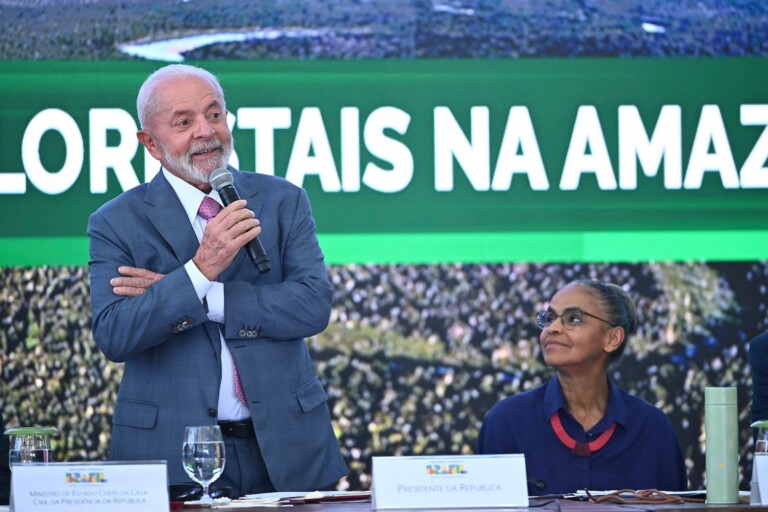
Analysis: Lula presidency saved at least 20,000km2 of Brazilian Amazon since 2022
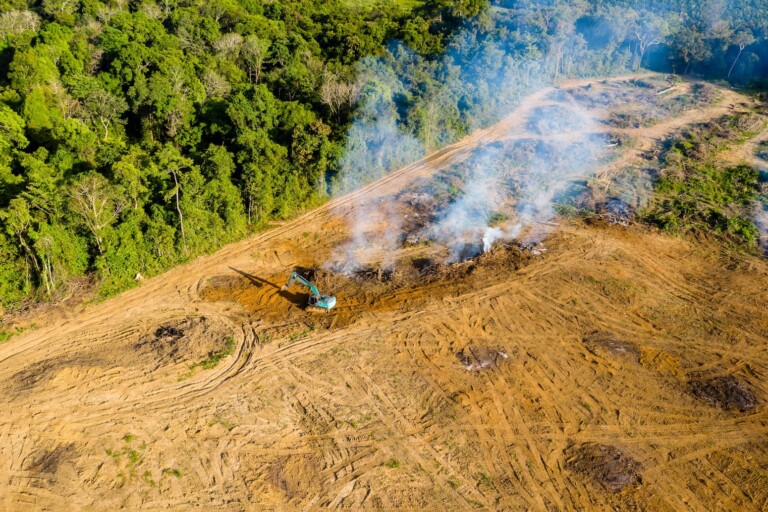
Why land-use emissions have fallen by a third this century – in six charts

Analysis: 84% of nations miss deadline to identify ‘nature-harming’ subsidies by 2025
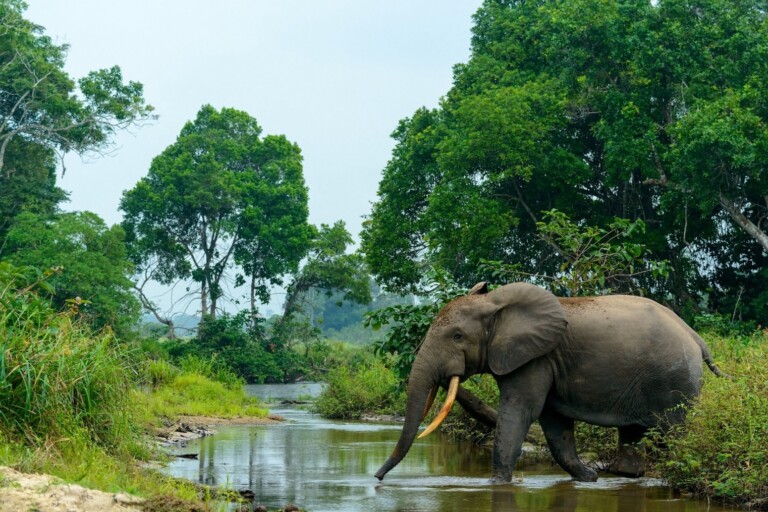
UK withdraws millions in funding from world’s second-largest rainforest in Congo
The post Interactive: Tracking negotiating texts at the COP17 biodiversity summit appeared first on Carbon Brief.
Interactive: Tracking negotiating texts at the COP17 biodiversity summit
A beacon of love
On an outer island of Fiji, two thousand nautical miles from Sydney, is a shining light of hope and resilience for our troubled world.
The island of Kioa is home to a Tuvaluan community who migrated from their atoll of Vaitupu in the late 1940s. It is a land of warm hearts, big smiles, and deep cultural roots; a place where the sound of a conch still summons the island together, where islanders paddle out to fish in carved outrigger canoes, and healthy happy children walk barefoot to school.
Here, culture is life. Kioans live sustainably through their traditional knowledge and practices. The island is alive with song, dance and the rhythms of a life tied to the tides, the winds, and the seasons.
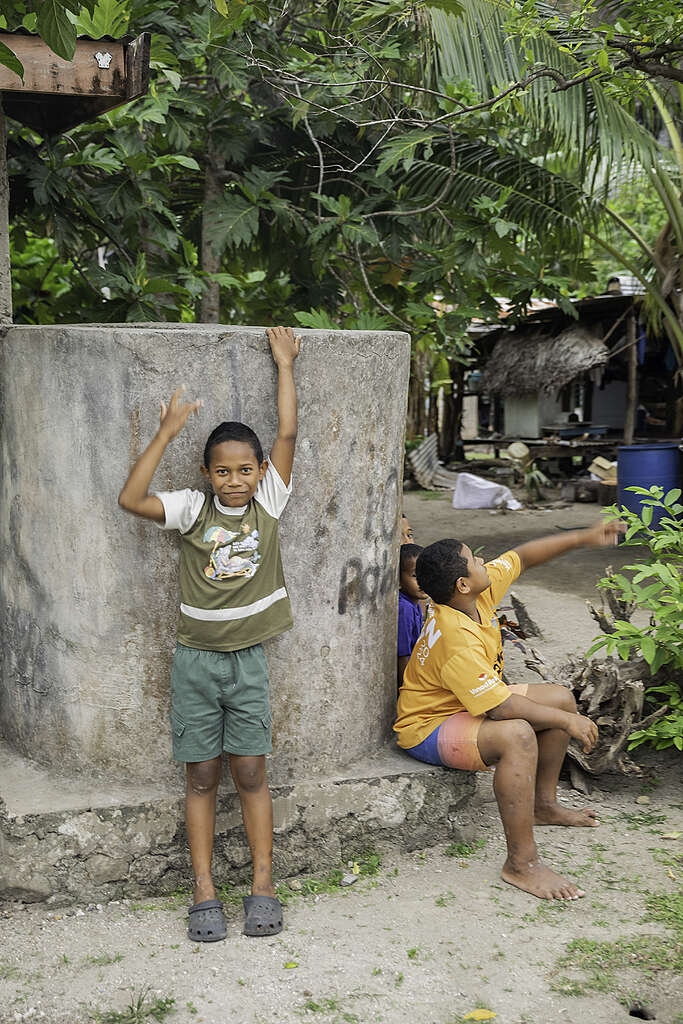
Facing the future
Greenpeace has been lucky to have a relationship with Kioa for a number of years now, and we are continually learning from this remarkable community.
Last week, as part of our Voyaging Oceania project, we returned to the island. Our purpose was twofold —- to carry messages from the island to leaders gathering in Nadi this week for the Pacific Pre-COP, and to support the Kioa community in their efforts to improve water security for the island.
Unlike Tuvalu itself, with its eight atolls, Kioa is a mountainous, forested and richly fertile island. It will remain habitable far into the future. Kioans did not initially migrate from Vaitupu due to climate change, but the move was prophetic. They now have a lifeboat.
However, even Kioa faces challenges on our rapidly warming planet, in particular when it comes to water. Climate change is shifting once reliable rainfall patterns. On top of this, the island is already feeling the effect of this year’s intensifying El Niño event, which for Fiji means reduced rainfall and prolonged dry spells.
Right now, fresh water has to be carefully rationed, and is only available for a few hours a day. During last week’s visit aboard our campaigning ship Oceania, Greenpeace was privileged to work with the Kioa community on a new solar-powered water distribution project for the island.
Designed and led by the island, the project involves using a solar pump to move water from a reliable source to a storage tank and then using gravity to distribute the water around the village.
It was a lesson in how local knowledge and ingenuity can be the backbone of today’s climate solutions. To build a dam around the source, the local community knew the exact spot where they could gather gravel at low tide to mix with the cement. They took only what was needed, knowing that all resources must be carefully conserved. Kioa has no roads and no machinery, and it was an all-of-island effort to carry the materials up to the project site, including many heavy bags of sand and rock.
Such projects truly bring to life the vision of a resilient, locally-led, fossil fuel free Pacific.