

Weather Guard Lightning Tech

Wind Turbine Monitoring: Fibersail’s Predictive Maintenance Could Save Operators Billions
Wind turbine blade failures represent the largest ongoing expenditures facing wind energy operators, with over $5-6 billion spent annually on unplanned repairs. What if wind turbine monitoring detected blade damage before it becomes catastrophic – and could give operators a clear strategy to prevent failure?
That’s what Fibersail, based in Portugal, with offices in the Netherlands, has developed with its innovative fiber optic sensing system.
Fibersail CEO Carlos Oliveira joined us to discuss why they developed this new turbine monitoring system, what they learned along the way, and how it’s working for wind farms around the world.
You can listen to the interview here or read the highlights below.
The Future of wind turbine Monitoring
As the wind industry continues to scale and turbines grow larger, the need for advanced monitoring systems has increased as well. Fibersail’s fiber optic technology represents a fundamental shift from reactive maintenance to predictive maintenance, potentially saving the industry billions while improving the reliability of renewable energy generation.
Wind Turbine Monitoring is a Billion-Dollar Problem
Most operators face the same stark reality: traditional monitoring systems simply aren’t equipped to handle today’s massive turbine blades. As Oliveira put it, “We are building bigger and bigger blades, using old technology. It does not work.”
Where turbines once showed problems after 5-8 years of operation, today’s operators routinely see major blade issues within the first year or two of operation—sometimes even during the warranty period. This dramatic change has led to some major companies recognizing billions in losses due to blade-related issues. It’s conceivable – realistic, even – that if this trend continues, it could put the entire wind industry at risk.
Why Go Beyond Traditional SCADA Systems?
Most wind turbines today rely on SCADA (Supervisory Control and Data Acquisition) systems for monitoring, but they weren’t designed to detect the structural issues that lead to blade failures. Fibersail’s fundamentally different approach brings advanced sensing technology directly to the blade structure.
The company’s fiber optic technology provides real-time data about blade behavior that simply isn’t available through conventional monitoring systems.
The Shape-Sensing Revolution
Fibersail’s innovation is its unique “shape sensing” technology. The concept originated from measuring sailboat sails and has evolved to monitor wind turbine blades—essentially treating each blade as a “rooted sail.”
Here’s how it works:
- Fiber optic sensors are installed directly inside the blade, running from root to tip
- The system monitors the blade’s shape in real-time, detecting minute changes that indicate structural issues
- Dual validation occurs by monitoring both shape changes and frequency variations
- All complexity is encapsulated in a robust system that field technicians can easily install
A Pragmatic Implementation Strategy
Ideally, a sensing system that is built into the blade would be an OEM integration, but Fibersail knew that would delay market entry, possibly for years, while operators and quite possibly the industry – ran out of money and out of business.
Rather than waiting for OEM integration, then, Fibersail began working directly with wind farm operators—the ones who face the immediate financial impact of blade failures.
“The owner-operators are the ones who have the problem to solve,” Oliveira explained. And by working directly with wind farming operations, Fibersail is better able to gather real-world data to prove how the sensing system saves blades, and money. The strategy is paying off.
The company is currently collecting field data from multiple installations, with promising early damage detection and damage propagation projects underway. This real-world validation is crucial, Oliveira emphasized, saying, “Nothing is as valued as the data from the field.”

From Data to Actionable Intelligence
Perhaps most importantly, the data Fibersail provides is not just graphs and charts, but actionable intelligence. Oliveira calls the solution “elegantly simple.” When the Fibersail system detects a problem or potential damage propagation, it sends an email alert to operators, allowing them to prioritize their limited maintenance resources effectively, and to focus on turbines that need immediate attention, while allowing others to wait for scheduled maintenance.
Blade Manufacturing: Variations Happen
Unfortunately, in working with wind farm operators, Fibersail has seen firsthand the frustrating reality of blade manufacturing variability. While blades are theoretically identical when they leave the factory, manufacturing tolerances mean each blade is slightly different. Add a few years of operation, repairs, and patches, and operators end up with what Oliveira colorfully describes as “Frankenstein turbines.”
This variability makes traditional numerical models inadequate for predicting real-world blade behavior – and it highlights the need for actual sensing technology.
Overcoming Installation Challenges
One of the biggest hurdles in the industry is navigating warranty restrictions and service agreements that can prevent operators from installing aftermarket monitoring systems. Fibersail positions itself as a solution provider for the entire industry, not just for the owners and operators, but also working with manufacturers and developers.
The company aims to create three-way partnerships between Fibersail, the customer, and the OEM when possible. The entities are more likely to work together when they see how the technology benefits all parties, by reducing costs and improving reliability – always a key to navigating warranty issues.
Oliveira noted that Fibersail understands its customers need to comply with strict cybersecurity requirements, which is simply a necessity in today’s complicated energy industry.
Tailored Solutions at Scale
Fibersail offers a modular product line that can be customized based on customer equipment, site conditions, and other operationall factors, including –
- Basic load sensors for customers needing fundamental load data
- Shape sensors for early damage detection
- Hotspot sensors for comprehensive damage monitoring
- Integrated systems combining multiple sensing technologies
Because of the company’s flexible offerings, customers can start with a basic monitoring system and add complexity as needed.
Expanding into Offshore
While Fibersail is currently focused on onshore installations, the company is expanding to offshore applications, with the first Fibersail offshore installation in the Netherlands planned for this summer. In the more challenging offshore environment, the company expects that the return on investment will be even greater.
For More Information
Learn more about Fibersail’s innovative blade monitoring technology at fibersail.com or connect with the company on LinkedIn for the latest industry insights and project updates.

https://weatherguardwind.com/wind-turbine-monitoring-fibersails-predictive-maintenance-could-save-operators-billions/

 For most of our lives, many of us boomers have believed that the biggest threat to the United States was our president, starting with Tricky Dick Nixon, the inventor of the “trickle-down economics,” liar Ronald Reagan, and GW (the moron) Bush.
But yes, none of us was prepared for the cold, calculating criminal who is Donald Trump.
There Were Prior Threats to the Nation Stemming from the White House
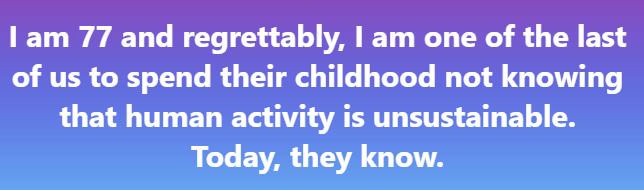 The fact that human activity is unsustainable has been revealed to us gradually over the last century. Rachel Carson’s “Silent Spring” was published 63 years ago.
That said, the ideas of climate change, ocean acidification, and loss of biodiversity have been essentially unchallenged by scientists for just the last couple of decades.
The only thing standing in the way of rapid environmental progress is greed, and in the end, that may prove to be an unbeatable foe. Decarbonizing our grid and transportation sector will eventually destroy the fossil fuel industry, a group so powerful that it has a stranglehold, both on our lawmakers and on our corporate-owned media, that works so hard to misinform our citizenry.
 It’s still possible that our most senior military leaders will insert themselves in time to prevent some truly catastrophic event here in the United States/abroad.
I keep thinking I’ll read about an exchange like this:
Trump: We’re invading Greenland.
Some four-star general: The f*** we are.
This may sound like a pipe dream, but these are people of real honor and integrity who take their oaths to our constitution quite seriously.
Will the U.S. Top Military Intervene Before Trump Inflicts Irreparable Damage



-

 Greenhouse Gases2 years ago
嘉宾来稿:满足中国增长的用电需求 光伏加储能“比新建煤电更实惠”
-
Climate Change1 year ago
Guest post: Why China is still building new coal – and when it might stop
-
Greenhouse Gases1 year ago
Guest post: Why China is still building new coal – and when it might stop
-

 Climate Change2 years ago
嘉宾来稿:满足中国增长的用电需求 光伏加储能“比新建煤电更实惠”
-
Climate Change2 years ago
Bill Discounting Climate Change in Florida’s Energy Policy Awaits DeSantis’ Approval
-

 Renewable Energy11 months ago
Sending Progressive Philanthropist George Soros to Prison?
-
Greenhouse Gases1 year ago
嘉宾来稿:探究火山喷发如何影响气候预测
-

 Climate Change2 years ago
Analysis: China’s CO2 falls 1% in Q2 2024 in first quarterly drop since Covid-19