

We explore the “Great”-rated brand’s efforts to reduce waste in the denim industry
This is a sponsored article about a brand that was independently assessed by our rigorous ratings system. We’re proud to only collaborate with “Good” and “Great” rated brands. Learn more.
Denim today has changed a whole lot from the 19th and early 20th-century trousers that started it all. What was born from a need for clothes that could withstand the repeated abrasion, stretching, dirt and wear that came with long days of (often manual) work has, ironically, morphed into an industry rife with fast fashion brands creating trend-driven jeans and denim jackets that wouldn’t last a minute under those stressors.
But there is another way to do things. And “Great”-rated Nudie Jeans is showing the industry that transcending the take-make-waste fast fashion model can be done through creating more thoughtfully, and taking responsibility for garments long after customers have bought them.
Why designing for longevity is key
Nudie Jeans was founded more than two decades ago in Gothenburg, Sweden on the principle of making jeans that become part of your life long-term and only get better with wear.
Today, its range covers more than denim but the ethos remains the same. “We want to create clothes that you fall in love with, and that you have a relationship with and want to keep for a long time,” says designer Emma Andersson Sköld. “And if you ever need to get rid of the garment, we want that garment to find a new person who falls in love with it. That’s what we mean when we say we want to make vintage, not garbage.”
That starts with the design phase and thinking about garments that live beyond the microtrend of the moment, adds product manager Victoria Cederfeldt. “The whole hype around clothes is a problem. It’s not sustainable to buy new clothes, use them a few times, and then throw them away.”
We want to create clothes that you fall in love with, and that you have a relationship with
Emma Andersson Sköld – designer
‘Vintage’ is often used interchangeably with ‘old clothing’, but its true definition speaks to quality and lasting design—something Andersson Sköld says is fundamental for Nudie Jeans: “It’s easy to think that what becomes vintage is what has a timeless style, like workwear that has looked pretty much the same for several decades, and that’s true, but it could just as well be the opposite, something that is really unique and stands out and therefore becomes a garment that people remember and have a strong relationship with.”
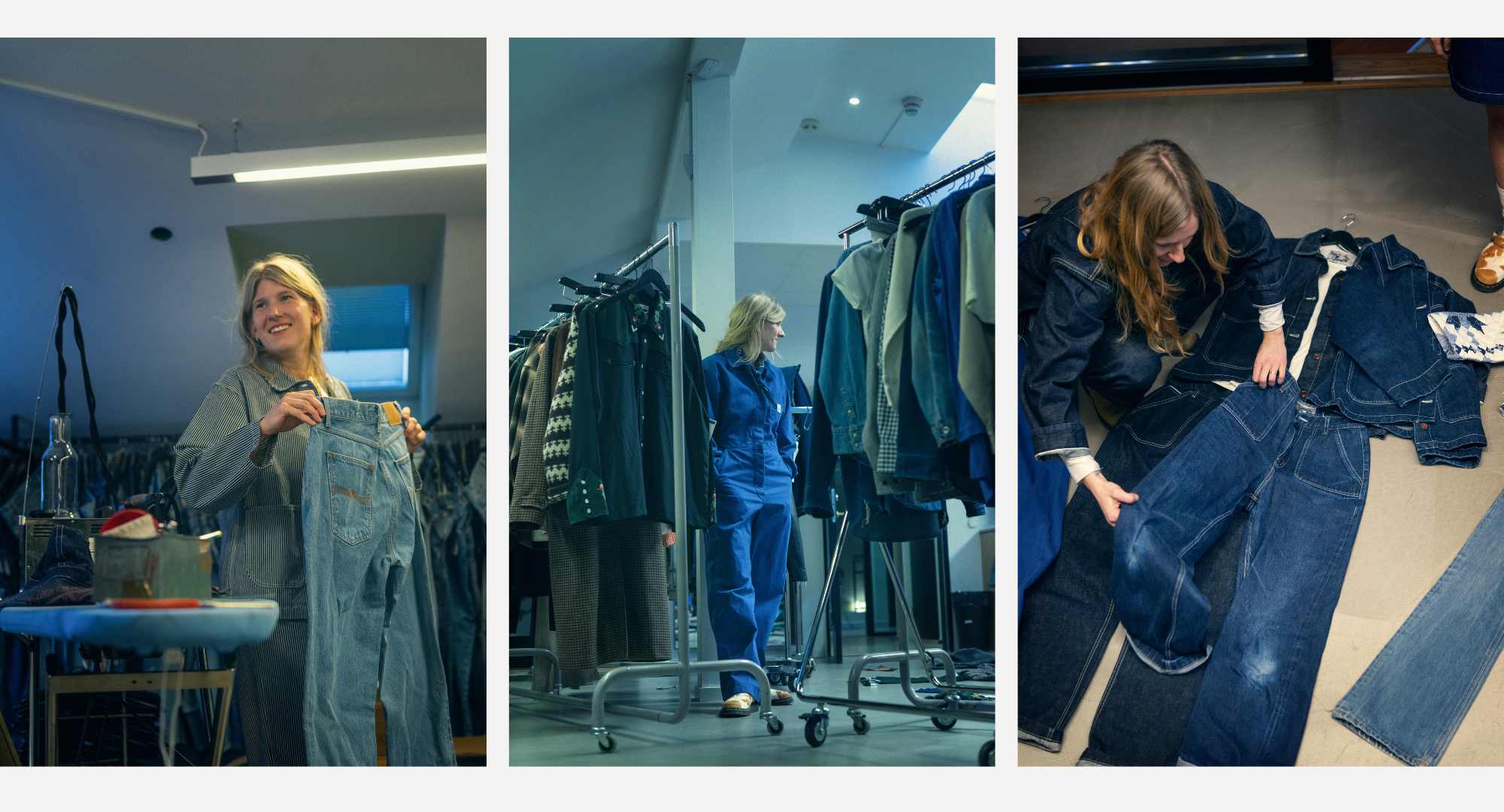
Creating lasting denim: Behind the scenes of Nudie Jeans’ product manager Victoria Cederfeldt and designer Emma Andersson Sköld’s product development process.
Crafting ‘Forever Jeans’
Nudie Jeans dubs every pair it makes “forever jeans” because they’re made to outlast their owner and be handed down to generations to come—with a few repairs here and there, of course. And “forever jeans” isn’t just a campaign name or buzzy phrase, it is an overarching philosophy that guides the brand in its endeavours.
This starts with denim woven from organic cotton that’s sourced responsibly from select suppliers, which is then carefully sewn together by manufacturers that also align with the company’s values. You can see for yourself exactly where an item has been thanks to ‘Product Transparency’ notes alongside products on Nudie Jeans’ website, which details the suppliers involved in many steps of production.
The brand’s designers, including Andersson Sköld, also play a key role in ensuring that its products stand the test of time—“we often ask ourselves ‘is this too trendy?’ to avoid making something that’s just part of a short-term trend,” Cederfeldt explains.

Left: Emma Andersson Sköld wears Anja Western jacket and Elvy Western skirt, Victoria Cederfeldt wears Clean Eileen jeans in Classic Blue, Berit denim jacket in Classic Blue; Middle: Rowdy Ruth jeans in Almost Black; Right: Clean Eileen jeans in Casual Blue
Wear, Repair, Repeat
When your jeans fade in the places they usually crinkle or fold, and when the yarns start to weaken and scuffs appear, then it’s a cause for celebration, not to throw them out. These patterns of wear and tear show a life lived and experiences had, argues the brand. “[Denim] is one of the few materials that people think becomes more beautiful with age,” says Andersson Sköld.
And when the denim does need some attention, repairs are free of charge at all of Nudie Jeans’ stores (customers who don’t live near one can seek out a Repair Partner or order a DIY kit). Since it launched in 2008, the initiative has proved highly successful, and the brand has breathed new life into around 500,000 pairs of its jeans by mending them.
But it doesn’t stop at repairs—customers can also trade their unwanted Nudie Jeans items for a discount on a future purchase, and in exchange, the brand will clean, repair, and resell the clothes to someone new. This is all part of its Reuse program, which helps to minimise the amount of products going unworn or reaching landfill, and in 2023, the brand collected around 20,000 pairs of jeans in its stores for the initiative, subsequently selling more than 4,000 repaired and reinvigorated pairs.
Denim is one of the few materials that people think becomes more beautiful with age.
Emma Andersson Sköld – designer
For shoppers, this program makes it easy to play a part in reducing waste in the fashion industry, and as many regular second-hand buyers can attest—there is a real sense of satisfaction in finding your new favourite piece of clothing and knowing you’re prolonging its life.
The fashion industry has changed dramatically around Nudie Jeans since its founding in 2001, but the brand has remained steadfast in mission is to create clothes that last a lifetime, and show the value in cherishing and rewearing the clothes you own. ”To truly make a change for the better, we have to make it stylish not to change our style every week,” it says.
The post Wear, Repair, Reuse: How Nudie Jeans is ‘Creating Tomorrow’s Vintage’ appeared first on Good On You.
Wear, Repair, Reuse: How Nudie Jeans is ‘Creating Tomorrow’s Vintage’

When the temperatures drop, boots are a non-negotiable for staying warm, but finding a stylish set of boots doesn’t need to come at such a high cost to the planet. Check out our curation to sustainable and ethical boots doing things better in footwear.
What Are Sustainable and Ethical Boots?
Any time the word “sustainable” or “ethical” is thrown around, you probably want some context. There aren’t standardized definitions for those terms in fashion and different people or media companies interpret them differently. Here’s what it means for us.
Note that this guide includes links that may earn us a commission at no additional cost to you.
Secondhand First
Pre-loved comes in right behind “wearing what you have” on the sustainability priority list. When you make the most of what already exists, you not only keep used footwear out of the landfill (virtually no shoe is truly recyclable) but can also contribute to slowing down fashion production.
Not every secondhand site has footwear, though, so here are our favorite options for finding sustainable boots:
The RealReal
If you’re looking for a quality pair of premium or even designer boots, The RealReal has plenty of options in a range of price points, styles, and quality conditions.
REI Used
For hiking and work boots, take a look at REI’s vast selection of used footwear. The retailer has gently to moderately used shoes from popular hiking brands at a fraction of original retail price.
It is a challenge to find functional footwear built to withstand tough environments that is also sustainable. So shopping used is a great option.
Responsible Production
For this guide, we looked for brands with more ecologically and socially responsible production practices. Does the brand take efforts to ensure workers are treated fairly? How does the brand reduce wastage during production? Do the manufacturing facilities use clean energy? Do they minimize or eliminate air and water pollution? Is the facility local or are the products getting shipped back and forth all over the world?
Not every brand will meet every standard, but we prioritize brands that can check several boxes.
More Sustainable Materials
When it comes to materials, there is quite a controversy in the sustainable footwear space.
Do we choose “vegan leather” that is often partially or fully plastic, and may degrade within a year? Or do we choose long-lasting durable leather that could be contributing to deforestation?
There aren’t easy answers because our options are not great. Alternative leathers have a long way to go when it comes to eliminating plastic and increasing durability. Yet we also cannot ignore leather’s heavy impact and connection to animal exploitation.
For this guide what that means is that we only selected brands with vegan boots that are made with little to no virgin plastic or brands with leather boots that use lower impact leather (recycled or vegetable-tanned) and/or take efforts to ensure the durability of their boots.
One certification you’ll see mentioned throughout the guide is Leather Working Group (LWG) which certifies that a tannery meets standards for environmental performance. This involves things like water and energy use, chemical management, and waste handling in the leather-tanning process. It’s a facility-level environmental certification for tanneries specifically, so it doesn’t certify labor conditions or make a claim about animal welfare.
Where to Find More Sustainable Boots
1. Thesus
Best for: everyday vegan boots that hold up to snow and hiking
Price: $190 – $250
Conscious Qualities: Vegan, Recycled & Natural Materials
I love my pair of Thesus’ Weekend Boots, and they are by far my most-worn shoes during cooler weather. You rarely find me wearing anything else.
The WOC-owned brand is committed to sustainability, making their vegan boots out of over 95% natural and recycled materials.
Tip: size up if you’re planning to wear thick socks! I was glad I did so that I could wear these shoes hiking even during the snowy winter.
2. NAE
Best for: all-vegan boots in innovative plant-based materials
Price: €135 – €215
Conscious Qualities: Vegan, Plant-Based Material Options
Standing for No Animal Exploitation, NAE has all-vegan footwear and accessories made slowly and ethically in Portugal.
NAE’s fall and winter boot collection features a variety of options made from unique footwear fabrics like organic cotton, Piñatex, and rPET.
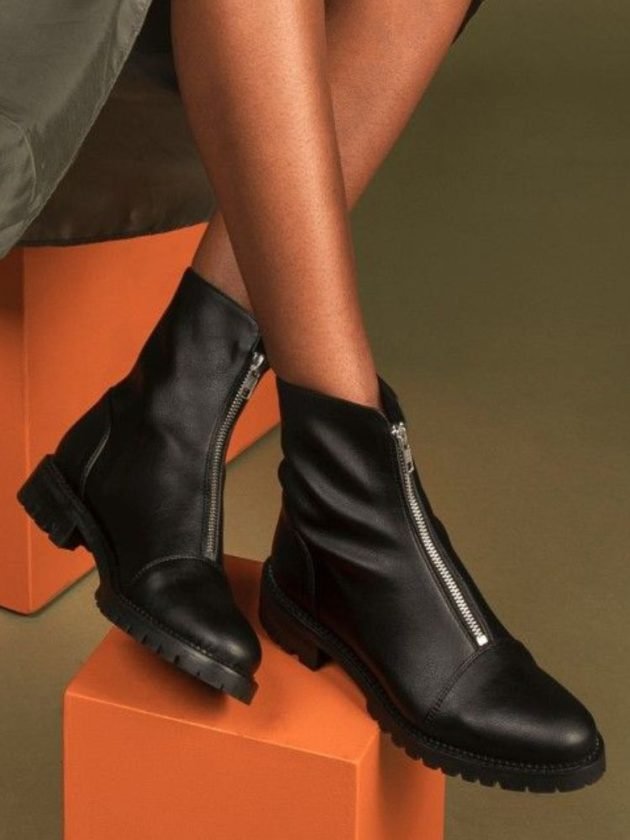
3. Christy Dawn
Best for: handmade artisan riding and paddock boots
Price Range: $328 – $498
Conscious Qualities: Slow Made, Deadstock Leather Option
Christy Dawn’s vintage-inspired Victorian lace-up paddock boots and timeless riding boots are the ultimate sustainable boots for fall. The Dawn Boot and Yoko Boot are handmade by artisans in Guatemala, with each pair requiring up to 14 hours to construct. Talk about slow fashion!
For a non-new leather option, check out the Chelsea Boot, which is made from deadstock leather in Los Angeles.
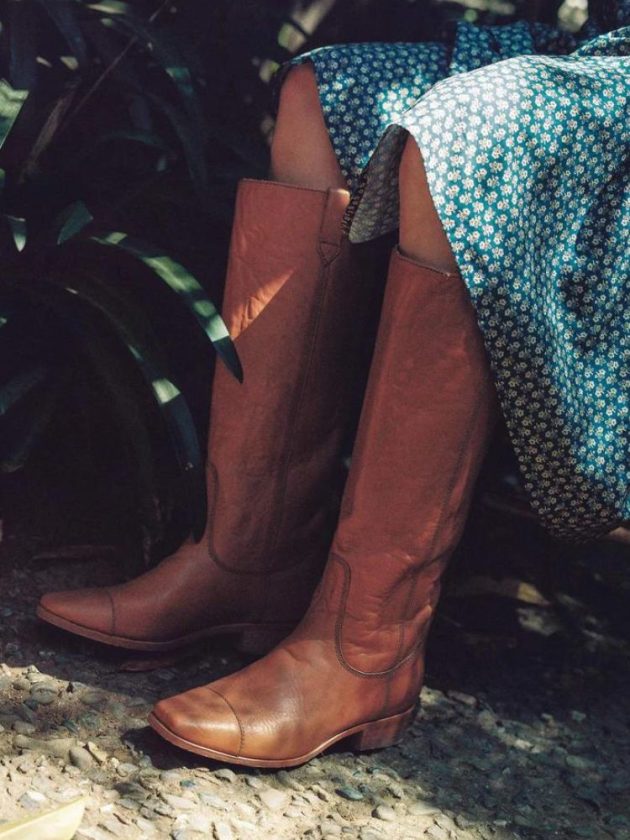
4. Bohema
Best for: statement vegan boots in biomaterial leathers
Price Range: €189 – €319
Conscious Qualities: Vegan, Plant-Based Materials, Renewable Energy-Powered Facility
Bohema is a Polish brand creating sustainable boots from impressive biomaterials like Piñatex® pineapple leaf leather, Desserto® cactus leather, and VEGEA® leather that comes from grape leftovers used in winemaking. From rugged combat styles to chic cowboy boots, these vegan boots are every bit as stylish as their leather counterparts.
With a passion for craftsmanship that has been passed down through generations in the brand’s family, Bohema’s collections are handcrafted by local solar-powered family manufacturers.

5. ALOHAS
Best for: made-to-order boots that cut overproduction
Price: $206 – $445
Conscious Qualities: Local Production, On-Demand Model
Crafted in Spain, ALOHAS’ boots will add a dash of glamour to your fall closet. Square-tipped or pointed, platform or high-heeled, ankle-length or mid-calf — you’ll be sure to find a striking pair.
Their range of vegan leather boots are made using biomaterials derived from cactus and corn, while the others are crafted out of Leather Working Group Certified Leather. Most of their boots are available on an “on-demand model” which allows them to produce only the amount that has been pre-ordered in order to cut waste.
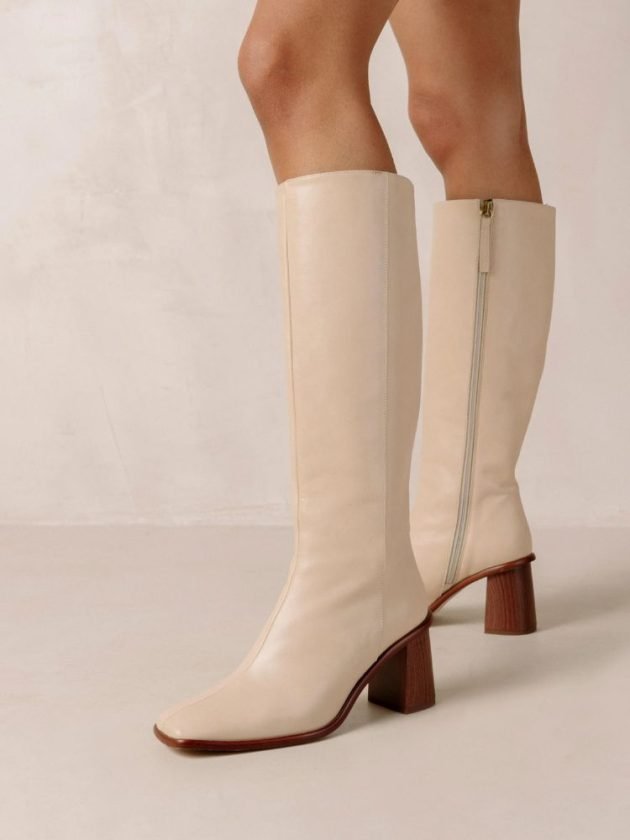
6. Coclico
Best for: small-batch artisan leather booties
Price: $225 – $695
Conscious Qualities: Artisan-Made, Small Batch Production
Coclico’s timeless shoes, including their elegant ethical boots, are ethically handcrafted by artisans. To ensure the utmost attention to quality craftsmanship and transparency, the independent footwear brand sources their shoes from a small family-run factory in Spain.
Embodying a slow fashion ethos Coclico’s boots are made in mindfully small quantities to avoid overproduction.
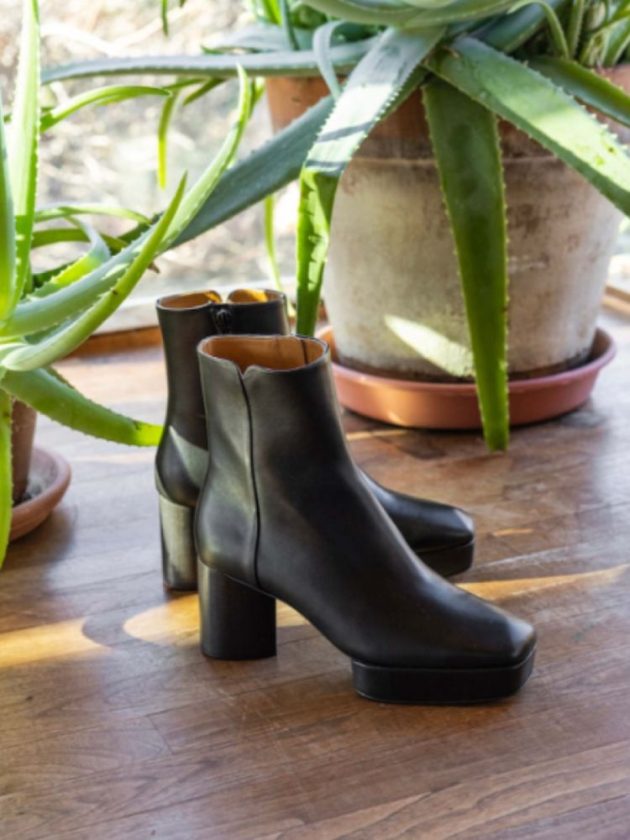
7. Brother Vellies
Best for: handcrafted boots rooted in heritage
Price: $795 – $2,250
Conscious Qualities: Black-Owned, Artisan-Made
Brother Vellies is a Black woman-owned brand that was founded by Aurora James in 2013 to celebrate cultural history and keep African practices and techniques alive.
All of Brother Vellies’ shoes are crafted globally by artisans using timeless artisanal crafts.
Don’t miss the brand’s one-of-a-kind cowboy boots that are hand-painted and true works of art.
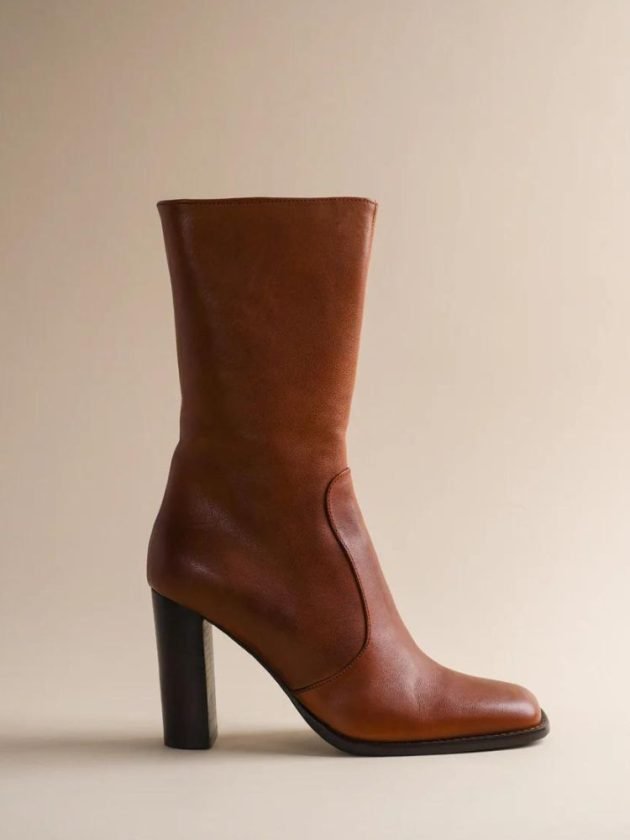
8. Fortress of Inca
Best for: Peruvian artisan-made leather boots
Price: $350 – $395
Conscious Qualities: Artisan-Made, Fair Trade Production
Fortress of Inca works with expert shoemaker partners based in Peru with deep experience in leather shoemaking.
The talented shoemakers at each of these workshops are committed to ensuring high-quality, ethically-made boots. Fortress of Inca’s most popular styles are made by Pedro and Marta, an inspiring husband-wife duo who launched their business after Pedro lost a job as a shoemaker.
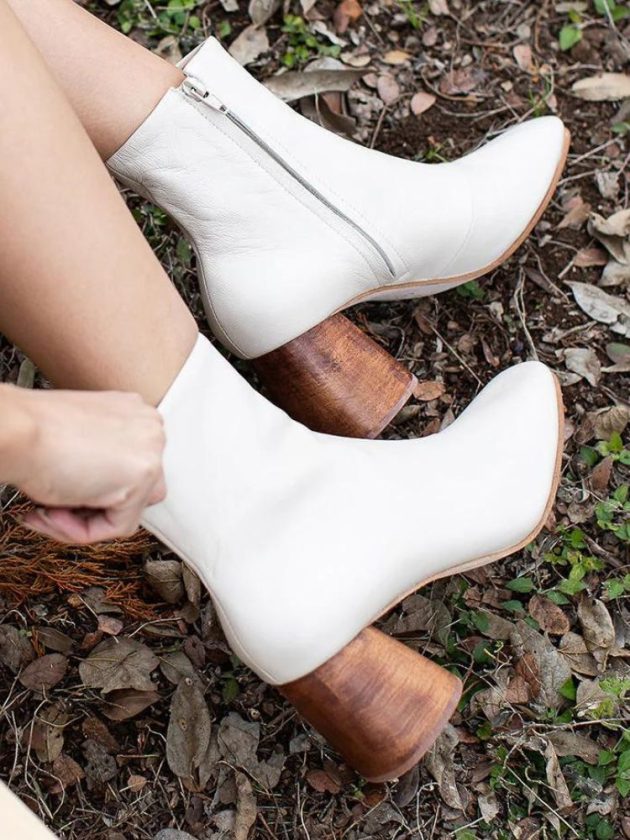
9. Poppy Barley
Best for: everyday leather boots
Price Range: $375 – $565
Conscious Qualities: Artisan-Made, Fair Trade Production
Poppy Barley is a B-Corp Certified ethical luxury brand based in Canada partnering with family-owned factories in Mexico and Brazil that provide sustainable employment opportunities, paying living wages and providing health care and pension benefits, and ensuring fair hours.
The brand is also taking significant steps to continually improve their social and environmental impact, reporting on their progress with annual reports.
 For More Slow Fashion Content:
More Conscious Fashion Guides for Cool Weather
Consciously-Made Sweaters to Keep You Cozy
The Best Eco-Friendly and Vegan Shoe Brands
The Best Ethical & Sustainable Coats to Stay Toasty Warm this Winter
The post 9 Best Sustainable & Ethical Boots For Stylish Warmth appeared first on Conscious Life & Style.
When it comes to shopping responsibly for furniture, one of the key decision factors to consider is locally-made — so if you’re in the United States, you might be looking for American made furniture companies.
Why Does Locally-Made Furniture Matter?
The first element that comes to mind is reducing shipping emissions. International shipping alone accounted for 2% of global energy-related CO2 emissions in 2022. So it’s crucial that we start to buy more locally and regionally made in general, and furniture is likely among the most bulky items we are going to buy so it feels like a particularly impactful area to focus on.
Additionally, when a product is locally made there is often more transparency. This is not always the case, but several of the US-made furniture companies here even have their own furniture workshops or partner with hyper-local manufacturers that they can regularly visit.
And with audit deception commonplace, it’s vital that a company visits their factories or has close relationships with their manufacturers to ensure social responsibility.
Another benefit is that you’ll contribute to supporting your local economy, especially if you’re purchasing from an American-made furniture brand that is based in your own state or region.
It goes without saying that American-made furniture is likely going to be more expensive than your standard mass-market furniture retailer.
However, there are several direct-to-consumer brands in this guide that avoid retailer markups to deliver more accessibly-priced furniture than some of the mid-tier to higher end furniture companies you might be familiar with that produce abroad.
A Quick Note on Certifications
You’ll see a few certifications referenced throughout this guide. Here’s what each one actually covers! You’ll notice many of them are quite specific to certain areas of the furniture. That’s why many sustainably-minded American-made furniture companies have products with several certifications.
- FSC Certified = the wood sourcing was responsibly managed; not a finish, foam, or textile guarantee. Some brands (like Avocado) hold their own facility-level FSC certification, which is a stronger signal than sourcing FSC-certified wood from a third party.
- GOLS Certified = verifies that latex foam is made from certified organic latex, grown and processed to strict environmental and safety standards; this is a latex-specific certification, not a wood, fabric, or product-level guarantee
- GOTS Certified = the fabric meets strict organic and safety standards, with labor protections built into the entire supply chain; this is a textile-specific certification, not a wood or foam guarantee
- OEKO-TEX® STANDARD 100 = tests the finished textile for harmful substances; a fabric-specific certification, not a claim about the wood or foam underneath it.
- Cradle to Cradle Certified (Gold/Silver/Bronze) = evaluates a product across material health, circularity, clean air/climate, water/soil stewardship, and social fairness; this is one of the few certifications that can assess a whole product rather than a single material and it’s the one sustainability managers at brands tell me is the toughest to get
Now that this is all cleared up, let’s dive into the guide!
My Top Picks for American Made Furniture Brands
Note that the following includes affiliate links, which means we may earn a small commission if you make a purchase, at no additional cost to you. As always we only feature brands that meet strict criteria that we love!
1. Medley
Best for: full range of American-made, non-toxic furniture
Categories: Living, Bedroom, and Dining Furniture
Made in: California and North Carolina
Price Range: $595 (poufs) – $10,290 (sectionals)
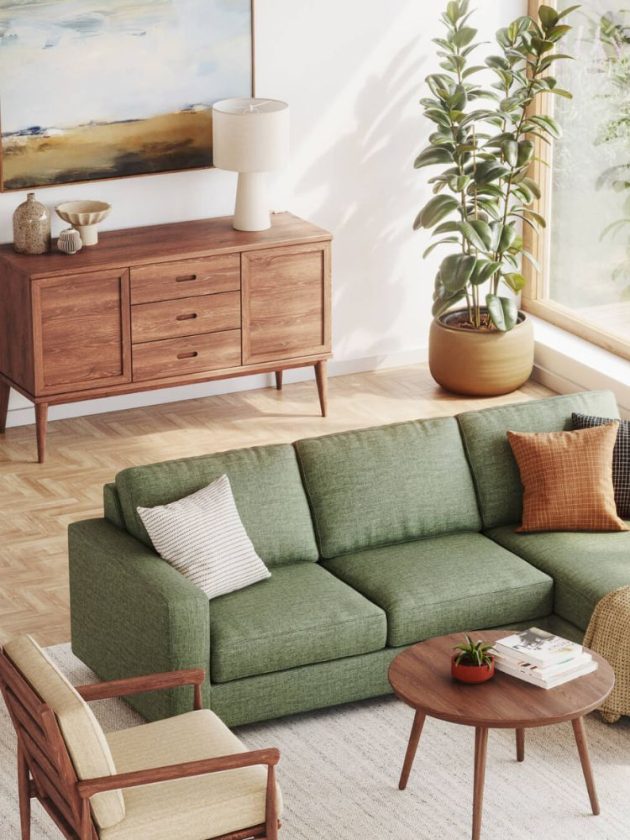
Medley is consistently at the top of my mind when I think of American-made furniture — their commitment to safe materials, sustainability, and craftsmanship is hard to match.
The brand combines traditional craftsmanship with modern ecological sensibility. Each sustainable furniture piece is meticulously made-to-order in California ensuring quality, supporting local manufacturing, and reducing their carbon footprint. Medley uses some of the best eco-certified materials in furniture too, like GOLS + GOTS-certified organic latex foam and OEKO-TEX® Standard 100-certified wool.
2. Avocado
Best for: FSC-certified and reclaimed wood furniture, made in their own LA woodshop
Categories: Bedroom and Living Room Furniture
Made in: California
Price Range: $349 (side table) – $3,999 (full bed frame)
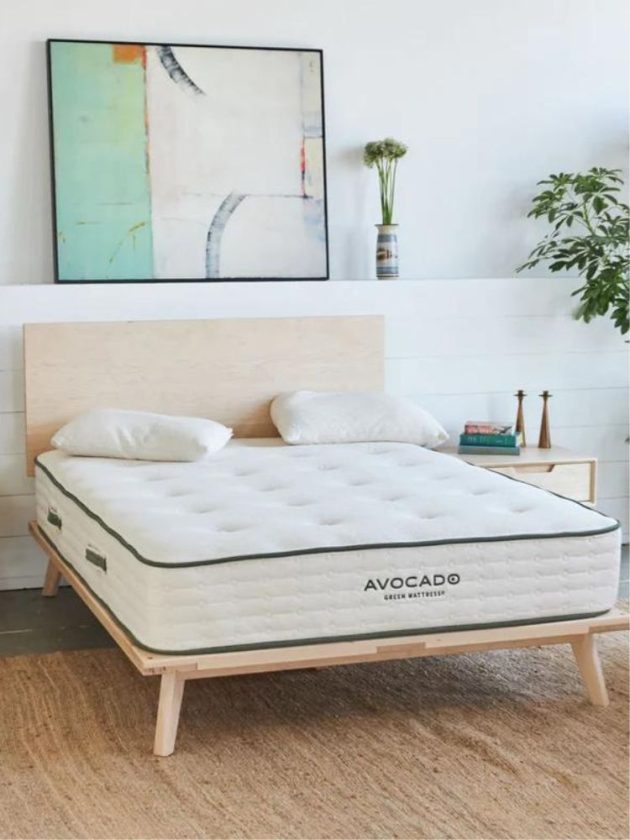
Rooted in a commitment to sustainability, Avocado has their own FSC®-certified (C156318) woodshop in Los Angeles! Among their offerings, you’ll find living room and bedroom furniture crafted from reclaimed wood or FSC-certified wood. Whether your aesthetic is minimal, Scandi, boho or MCM, you’ll find a beautiful piece to add to your home on this California-made furniture company’s site.
What really makes Avocado stand out to me though is their ethical labor standards. They produce in their own woodshop, pay living wages, and offer solid benefits to their factory team.
3. Cisco Home @ Urban Natural
Best for: design-forward furniture with three decades of LA craftsmanship
Categories: Living and Bedroom Furniture
Made in: California
Price Range: $975 (ottoman) – $9,000+ (large sectional)
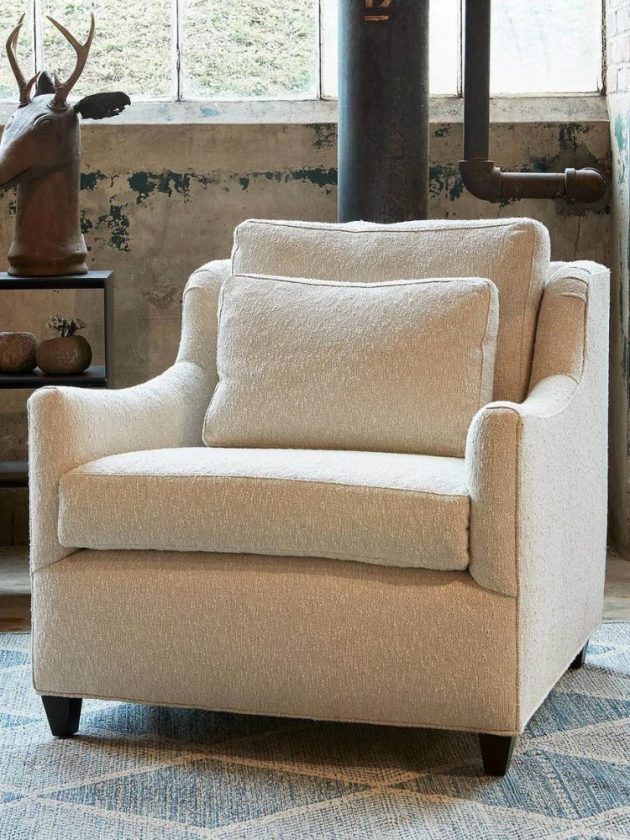
Founded in Los Angeles by Cisco Pinedo, Cisco Home focuses on environmentally responsible practices and local craftsmanship. Each piece, made in their Los Angeles workshop, combines modern elegance with rustic charm using materials like FSC-certified hardwoods and natural fabrics like hemp and organic cotton. Cisco Home’s three decades of experience in making quality sustainable furniture, makes them a top choice for American-made furniture.
Cisco Home’s default furniture options don’t automatically include their best eco materials though. So for the most eco-minded option, check “Organic Upgrade” on the product page.
4. Copeland @ Urban Natural
Best for: heirloom hardwood furniture
Categories: Living, Bedroom, and Office Furniture
Made in: Vermont
Price Range: $256 (shelf nightstand) – $6,865 (storage bed)
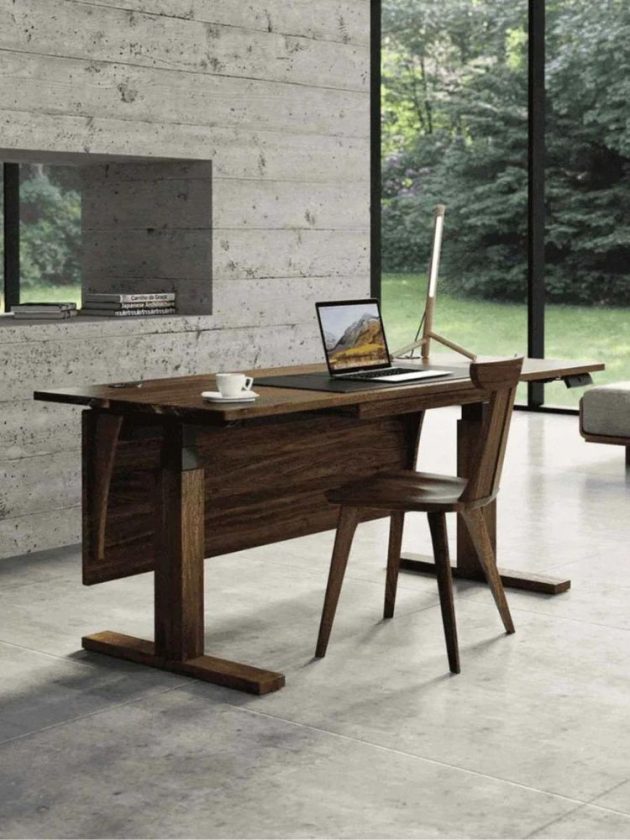
Copeland Furniture, based in Bradford, Vermont has been making heirloom-quality pieces since 1976. The USA-made furniture company sources their hardwoods like cherry, maple, and walnut from sustainably managed forests in the Northeast. Their collections blend traditional craftsmanship with elegant, contemporary design and functionality. You’ll find pieces like extendable tables and sit-stand desks from Copeland.
Copeland’s pieces are priced on the higher end, but they are truly stunning pieces that may be worth the investment if they’re within your budget.
5. Savvy Rest
Best for: fully organic, non-toxic bedroom and living room furniture
Categories: Bedroom and Living Room Furniture
Made in: Virginia
Price Range: $400 (bedside table) – $3,999 (sofa)
Savvy Rest’s commitment to organic materials and sustainable production practices is unmatched. I haven’t found another brand yet that matches their level of integrity!
The Northeast US-made furniture company crafts each piece of furniture with only the best non-toxic materials like GOTS-certified organic fabrics, Cradle-to-Cradle Natural Talalay latex foam, and zero-VOC finishes. Made in their Central Virginia wood shop, Savvy Rest exemplifies a dedication to creating non-toxic and sustainably-minded American-made furniture that is built to last.

6. What WE Make
Best for: reclaimed wood furniture
Categories: Dining, Living, Office, and Bathroom Furniture
Made in: Illinois
Price Range: $425 (bar stools) – $6,425 (bathroom vanities)
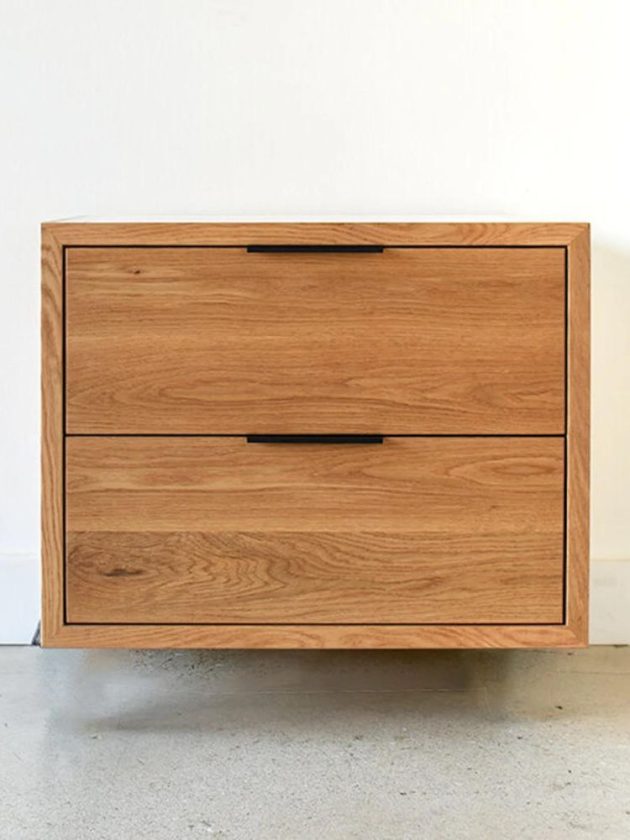
I loved learning that What WE Make produces their furniture right in Chicagoland, local to me!
What WE Make crafts tables, vanities, and more from old-growth salvaged wood sourced from torn down Midwestern barns. And ensuring the furniture brings in minimal to no toxins, the pieces are finished with zero-VOC finishes. Each piece is made-to-order and you can even get a vanity, table, or other furniture piece fully customized to your liking!
7. Sabai
Best for: affordable, repairable American-made seating
Categories: Living Room Furniture
Made in: North Carolina and Tennessee (go behind the scenes)
Price Range: $495 (side table) – $6,295 (sectional)
Sabai’s American-made furniture collection focuses on environmental consciousness and accessible pricing. Sabai’s sofas and chairs are made crafted from 100% recycled fabrics or natural upholstery (they have a cotton + hemp option) and FSC-certified wood while being free of PFAS and flame retardants. The best part about Sabai in my opinion, though, might be their Repair Don’t Replace program so you can ensure your sofa makes it for the long haul.

8. Maple Corner Woodworks @ Urban Natural
Best for: traditional Shaker-style Vermont craftsmanship
Categories: Bedroom, Living Room, Office, and Dining Room Furniture
Made in: Vermont
Price Range: $815 (end table) – $9,650 (armoire)
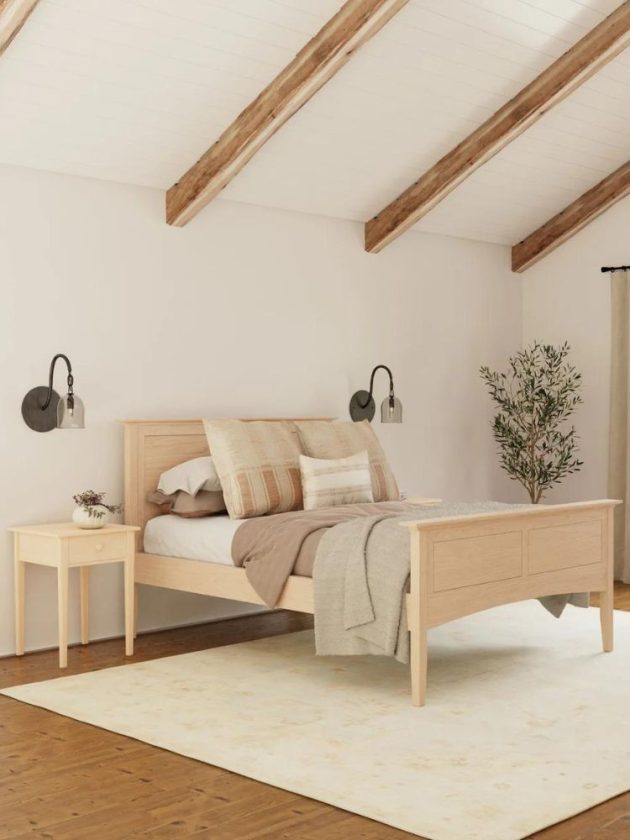
Maple Corner Woodworks is dedicated to crafting heirloom-quality, timeless furniture in Vermont, which is well-known for its quality woodworking.
With their most popular styles inspired elements by the best of furniture design from the mid to late 1800s, it’s safe to say that MCW prioritizes the longevity of their solid hardwood furniture. If you’re looking for classic designs, this is the direction I’d point you.
9. Loll Designs
Best for: American-made outdoor furniture
Categories: Outdoor Furniture
Made in: Minnesota
Price Range: $345 (stool) – $4,995 (sofa)
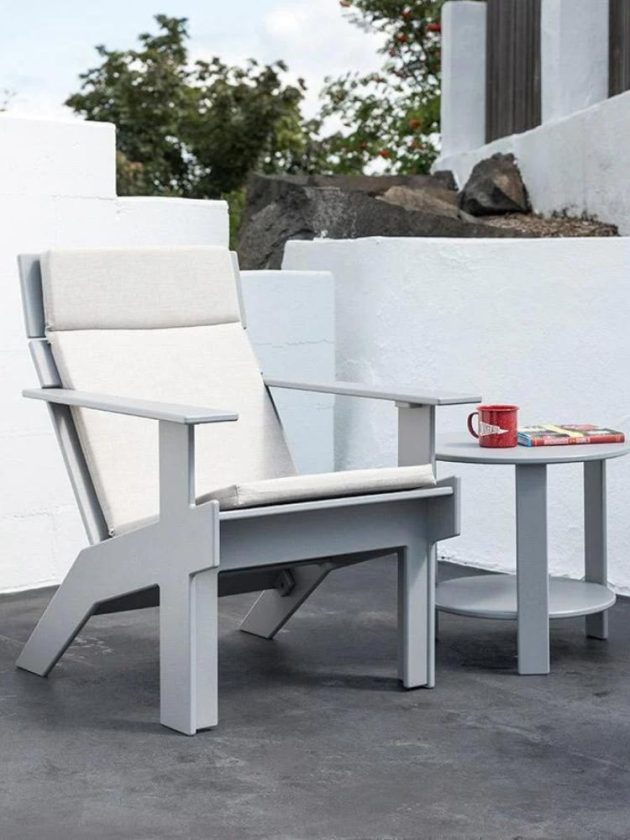
Loll Designs has everything you need for your patio redesign, from coffee tables and cabinets to benches and lounge chairs.
Made using recycled high-density polyethylene (HDPE), Loll Designs creates USA-made furniture build to last. The furniture is designed to not rot, splinter, or require any re-staining. In fact the brand was awarded the Cradle to Cradle Certified BRONZE certification, which as I mentioned is one of the toughest certifications for a company to get.
That wraps it up for our guide to American made furniture companies! I hope you find a quality piece or two that will last you a lifetime in this guide.
You Might Also Want to Check Out:
The Top Non-Toxic Furniture Companies
The Best Sustainable Tables to Gather Around
Comfy and Cozy Eco-Friendly Chairs
The post 9 American Made Furniture Companies Prioritizing Quality Over Quantity appeared first on Conscious Life & Style.
9 American Made Furniture Companies Prioritizing Quality Over Quantity
If you’re planning a bathroom renovation and are trying to make more eco-minded decisions, there are several considerations to make. This guide aims to help you save time on researching one of those elements: sourcing a sustainable bathroom vanity.
The furniture companies featured here offer single sink and double sink vanities, and several also let you customize the size of your vanity too.
What is an Eco-Friendly Bathroom Vanity?
Repurposed
Many of the same concepts from sustainable fashion apply to sustainable furniture! The most sustainable furniture is the one already in your home and what’s already been produced. So, can you repurpose something you already have or found at an estate sale with some non-toxic paint?
You could repurpose a sideboard / credenza or lower height dresser into a bathroom vanity, for example, by cutting a sink hole and piping holes and finishing the top with a counter or waterproof finish. There are also contractors who can do that customization for you if you find that perfect dresser you want to transform into a vanity.
Another option is to search for demolition sales near you. Search “demolition sales near me” or check out EstateSales.net and check “demolition sales” in the filters. You can find everything from appliances and cabinets to bathtubs and vanities at these demolition sales. They’re not always the most modern vanities, but if you love a DIY project, and access to a vehicle that can transport these kinds of heavy duty furniture pieces, this could have some potential.
By the way, if you are doing a renovation that requires demolition, see if you can partner with a demolition sales company to help you sell those hard-to-sell items like cabinets before you start your renovation to reduce waste.
Eco-Conscious Materials
If you’re buying a new bathroom vanity, one of the key considerations is the materials that vanity is made from. Look for sustainably-sourced (and ideally locally sourced!) hardwood that is finished with zero or low VOC finishes.
The shelves are typically going to be engineered wood, even if the outside is hardwood, otherwise the vanity would be extremely heavy.
Even better if you can find a bathroom vanity made from reclaimed wood, since that means no trees had to be cut down for producing the furniture!
There are also several eco countertop materials out there, including Richlite, made from post-consumer recycled paper, Grenite has recycled quartz, glass, and acrylic countertops. Most of the brands featured below focus their sustainability sourcing on the main vanity, but you could purchase one of those vanities without a countertop and get a separate eco countertop potentially.
You can also find countertops at demolition sales! (See above for more on those.)
Responsible Production
Given the weight and size of furniture, it’s especially great to see local production for furniture. The carbon footprint of shipping such heavy and large pieces around the world is nothing to overlook!
Another great practice is made-to-order, which reduces waste — and also often enables you to customize your vanity to your specifications.
Finally, transparency, fair wages, and safe working conditions are key to responsible production. This is another reason to choose non-toxic materials. You’re not only protecting yourself, but also supporting companies that protect their workers and the environment, too.
Certifications
You’ll see a few certifications and standards referenced throughout this guide. Here’s what each one actually covers:
- FSC Certified = the wood sourcing was responsibly managed; not a finish, countertop, or hardware guarantee.
- GREENGUARD Certified = the finished product was tested for low chemical emissions, including VOCs; product-level certifications mean that just because one product from a brand is certified, it doesn’t mean the others are!
- Fair Trade Certified = verifies that a factory meets standards for fair wages, safe working conditions, and ethical labor practices; not a company-wide certification
- B Corporation = a company-level certification (not product-specific) verifying that a business meets standards for social and environmental performance, transparency, and legal accountability, assessed by the nonprofit B Lab
Where to Find Sustainable Bathroom Vanities
Check out the curation of brands below that carry eco-friendly bathroom vanities. Details on each brand are included, as well as key points like price and shipping details. Each brand has different sustainability highlights.
Note that this guide includes affiliate links, which means we earn a commission if you buy through these links at no additional cost to you. This helps us continue to create more free guides for you!
1. What WE Make
Best for: made-to-order reclaimed wood vanities with character
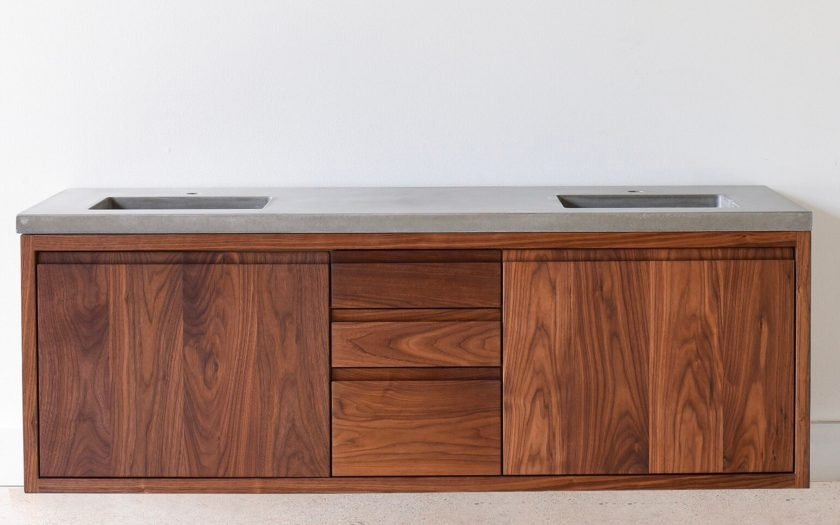
Based near Chicago, What WE Make handcrafts reclaimed wood furniture — including bathroom vanities — made from salvaged wood sourced from torn down midwestern barns. That means the wood is century- or centuries-old wood, with incredible durability and character. Just don’t expect every piece from the brand to look the same! Slight variations are part of the nature of using repurposed materials.
Their recycled bathroom vanities are available in a range of styles from mid-century modern to rustic farmhouse, with legs or as floating vanities, and are available in several low VOC finishes. Each vanity is made-to-order so you can also request custom sizes.
Materials: Reclaimed Wood, Concrete
Price: $1,995 – $5,485
Shipping: Ships free within U.S.
2. Native Trails @ Wayfair
Best for: solid wood vanities with lower impact countertops
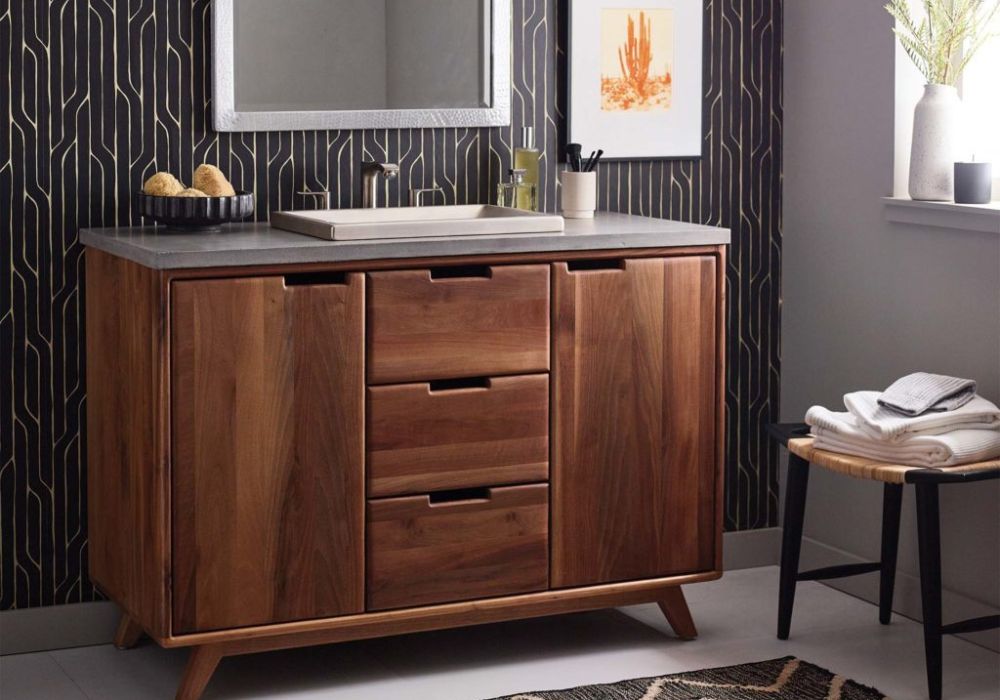
Native Trails is a woman-owned Certified B Corporation that prioritizes social and environmental responsibility. The company’s eco-friendly bathroom vanities are made with FSC-certified solid European hardwood or reclaimed wood from oak barrels of California vineyards. But my favorite part of Native Trails is that their vanities use more eco-friendly countertops made from their own material called NativeStone® — it’s a blend of cement and jute fiber handcrafted by artisans in Vietnam.
The sustainable furniture company also sells recycled copper sinks, NativeStone® basins, concrete vanity tops, mirrors, and even drains to complete your bathroom vanity. While Native Trails does not sell direct on their site, you can find their bathroom vanities at several in-person and online retailers, including Bed Bath & Beyond and Wayfair.
Materials: Reclaimed Wood, FSC-Certified Walnut, Solid Oak, Concrete & Jute (NativeStone®)
Price Range: $1,413 – $4,428
Shipping: Free shipping through Bed Bath & Beyond and Wayfair
3. West Elm Sustainably Sourced Collection
Best for: wide variety of aesthetic choices for more sustainable vanities
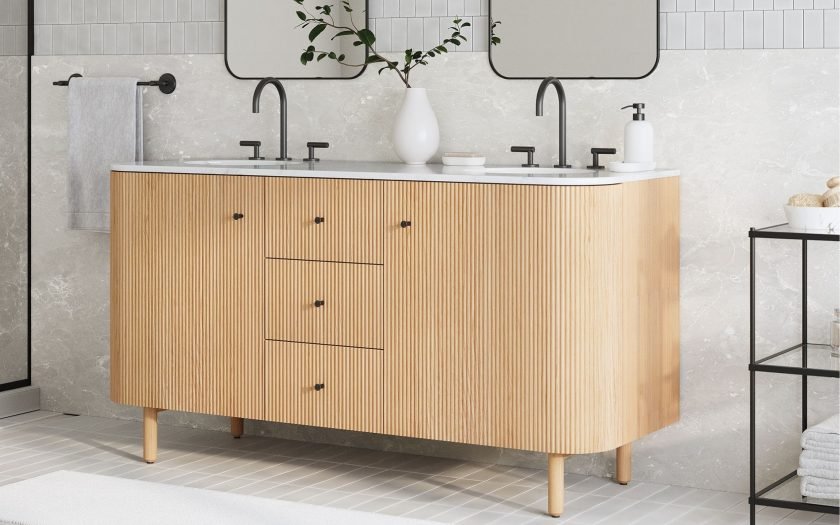
West Elm has been making strides in their sustainability efforts and has several sustainable bathroom vanities available. You can sort through their options with filters like Greenguard Certified (tested for toxic chemicals), Sustainably-Sourced (typically FSC-certified wood), and Fair Trade. They also have a Contract Grade tag signifying products that are durable and built to last. You can find eco-friendly mid-century modern, contemporary, and japandi style bathroom vanities on their site.
While West Elm doesn’t have the level of sustainability credentials of some of the other options on this list, I appreciate that the retailer is large enough to have stores where you can see the vanities in-person before making your decision.
Materials: Hardwood & Engineered Wood (check for GREENGUARD certified products on engineered wood)
Price: $1,055 – $3,399
Shipping: Within U.S.; White Glove Delivery available in select locations
4. Limitless Woodworking
Best for: solid wood vanities with a farmhouse feel
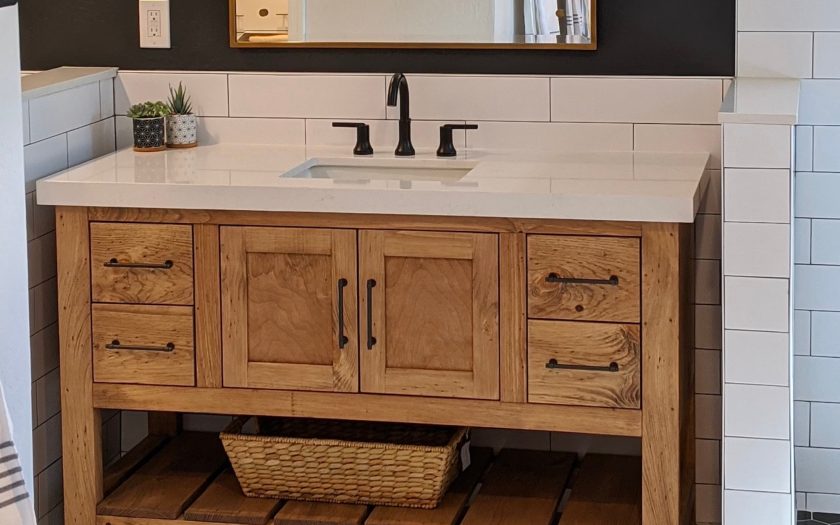
Specializing in custom wood furniture, you can find a USA-made bathroom vanity that you can design to your specifications, from size to stain color to hardware at Limitless Woodworking. The Indiana-based furniture company’s natural bathroom vanities are made-to-order just for you, and many reviewers compliment the products’ craftsmanship and quality.
The wood is new — not reclaimed like What WE Make or Native Trails — but I appreciate the transparency around the production of these vanities along with the commitment to using solid wood and building with quality craftsmanship.
Materials: Northeastern White Pine
Price: $1,433 – $8,189
Shipping: Ships free within U.S.
How about more affordable sustainable bathroom vanities?
You may have noticed that the price of a more sustainable bathroom vanity is on the higher end from your typical vanity — that’s to be expected when the sourcing is done responsibly, a company uses hardwood instead of composite wood, or when furniture is handcrafted domestically.
But if these vanities are outside of your budget, I’d suggest furniture outlets as a secondhand option (since it can be pretty tough to find vanities secondhand from someone’s home). I’m not talking about the kind of outlets where they just make cheaper products, but genuine outlets where they sell returned products they can’t resell as new. Such as:
West Elm Open Box Outlet Deals: this is where you can find deals on vanities and other bathroom furniture and accessories that have been opened and returned. A true outlet like this is a form of secondhand furniture, as these pieces usually cannot be sold as new. Some retailers toss out returned products, so it’s nice to see companies resell these types of items.
Wayfair Open Box: similarly, Wayfair offers open box deals up to 40% off on all kinds of furniture, including bathroom vanities. As an outlet, just keep in mind that you can’t return the items, so make sure to double check the measurements! If you’re thinking: but what if there’s an undisclosed issue or significant damage from shipping? Thankfully, those usually those have exceptions. I received a broken chandelier in the mail from Wayfair’s Open Box Outlet, and they did refund me after I sent photos. So while the product might have some wear on it from back and forth shipping, you shouldn’t have to deal with a dysfunctional product.
Ikea As Is: I’ve used the As Is program from Ikea several times. You simply browse your nearest store’s selection online, reserve the piece(s) you want then pick up and pay within 48 hours. It’s not as convenient as West Elm or Wayfair since you have to drive and pick up — versus just wait for the delivery — but the benefit is you can actually see the furniture before you purchase.
I hope one of these options will meet your needs for an eco-friendly bathroom vanity! Feel free to reach out if you have any further recommendations. And good luck on your bathroom remodel!
You May Also Like:
Gorgeous Sustainable Tables to Gather Around
The Best Sustainable Furniture Companies
Organic Towels to Transform Your Bathroom Into a Sustainable Sanctuary
The post 4 Eco-Friendly Bathroom Vanities For A More Sustainable Remodel appeared first on Conscious Life & Style.
4 Eco-Friendly Bathroom Vanities For A More Sustainable Remodel



-
Climate Change1 year ago
Guest post: Why China is still building new coal – and when it might stop
-

 Greenhouse Gases2 years ago
嘉宾来稿:满足中国增长的用电需求 光伏加储能“比新建煤电更实惠”
-
Greenhouse Gases1 year ago
Guest post: Why China is still building new coal – and when it might stop
-

 Climate Change2 years ago
嘉宾来稿:满足中国增长的用电需求 光伏加储能“比新建煤电更实惠”
-

 Renewable Energy11 months ago
Sending Progressive Philanthropist George Soros to Prison?
-
Climate Change2 years ago
Bill Discounting Climate Change in Florida’s Energy Policy Awaits DeSantis’ Approval
-
Greenhouse Gases1 year ago
嘉宾来稿:探究火山喷发如何影响气候预测
-

 Climate Change2 years ago
Analysis: China’s CO2 falls 1% in Q2 2024 in first quarterly drop since Covid-19