

The U.S. Fish and Wildlife Service has proposed an Endangered Species Act listing for a rare chub whose habitat has been dried up by over-pumping of groundwater that would be further stressed by proposed lithium mines.
DYER, Nev.—A century ago, Fish Lake Valley looked much more like its name than it does today.

Latin American governments cracked down on forest clearing in 2025, leading global deforestation to fall by the most this decade, but political shifts and the likely impact of a strong El Niño threaten to undo those “fragile” gains, a new report has found.
Seven million hectares of forests – roughly the size of Ireland – were lost last year, a 15% drop from 2024. This marks the first meaningful slowdown in deforestation since 145 countries committed to ending deforestation by 2030 at COP26 in Glasgow in 2021, according to an annual assessment of the pledge.
But the researchers cautioned that the world remains 70% off track from fulfilling that promise and, despite progress in Latin America, deforestation in tropical Africa, home to the Congo Basin, kept rising. For the first time, it nearly matched losses in Latin America – a trend the report’s publishers called “particularly ominous”.
Erin Matson, a lead consultant at Climate Focus and one of the report’s authors, said the slowdown in the rate of deforestation “is welcome news”, but last year’s figures “look good in part because previous years look so bad”.
She added that, at the moment, last year’s progress should be seen as an “exception and not a new trajectory because the underlying problem has not gone away”.
Lula’s policies drive progress
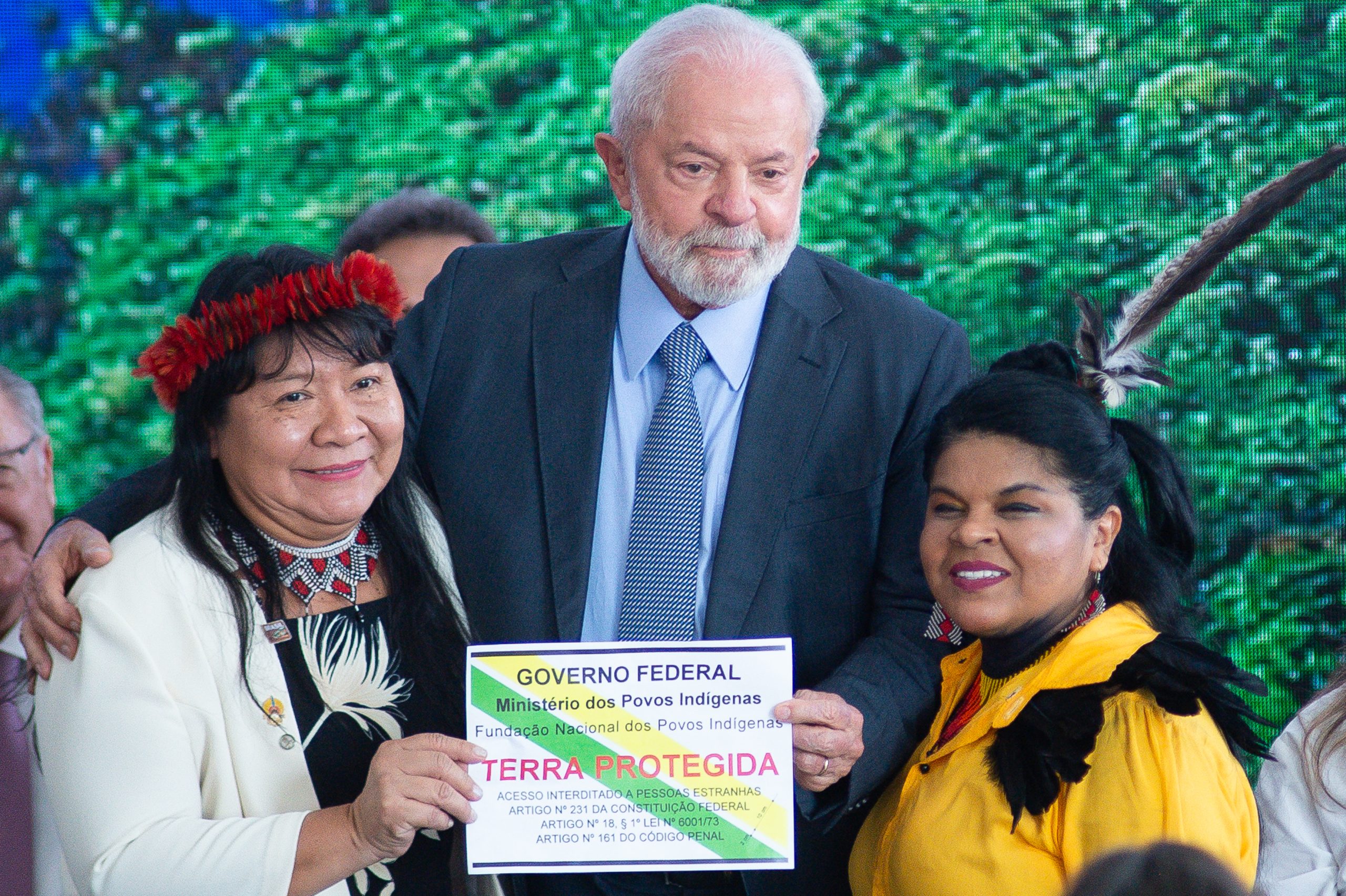
The decline in deforestation was primarily driven by reduced expansion of agriculture and cattle ranching in the Brazilian Amazon rainforest, thanks to a new deforestation action plan introduced by the Lula government and stronger enforcement measures, the report found.
“Brazil provides a concrete example of how national policies can be successful,” said Ana Flávia Corleto, legal analyst at Climate Policy Initiative in Brazil. “The combination of near real-time monitoring and targeted enforcement has contributed to a historical reduction in deforestation alerts in the Amazon, with a 36% decline between August 2025 and July 2026”.
-
Brazil confident new rainforest fund will reach $10bn donor milestone
Brazil’s environment minister said the Tropical Forest Forever Facility has raised billions in record time – which he hopes will convince more investors -
As El Niño intensifies, we should be investing more in the world’s farmers
Finance to help agriculture adapt to a hotter world and more extreme weather is vital for food security – but new data shows it’s on a downward trend


President Lula bolstered efforts to protect the vital Amazon ecosystem when he returned to office in 2023 after enforcement had deteriorated and deforestation skyrocketed under his far-right predecessor Jair Bolsonaro.
Neighbouring Colombia also contributed to the slowdown in forest loss in Latin America last year, posting a fourth consecutive year of falling deforestation, driven in part by reduced cattle-linked clearing.
Brazilian election puts gains at risk
But the researchers warn that this progress rests heavily on the choices of a small number of governments and it is “highly vulnerable” to political shifts in recent and upcoming elections across the Amazon basin.
On October 25, Brazilian voters will choose between Lula and Flávio Bolsonaro, the former president’s son, in a run-off election. Bolsonaro narrowly led the first round with 47% of the vote to Lula’s 45% and polls show the pair neck and neck.
In an interview with TV Globo in August, Bolsonaro said he did not believe in climate change, only in “cyclical” extreme weather events. As a senator, he voted in 2025 for a bill loosening environmental licensing rules.
Although he has pledged to end illegal deforestation by 2029, Brazilian environmental groups fear he could follow his father’s example of weakening forest protections. “Instead of restoring forests, we would face the dismantling of environmental safeguards, land grabbing, illegal mining, and deforestation,” Observatório do Clima, a network of climate NGOs, said on Tuesday. “At the worst possible moment in the global climate crisis, electing another Bolsonaro would be a gift to environmental crime and those who profit from the destruction of the planet”.
Climate Policy Initiative’s Corleto said changing political priorities in the Brazilian federal government can have significant consequences, especially for federal institutions and budgets. But she added that much of the country’s environmental policy is implemented at local or state level and some continuity can be expected there.
Deforestation growth in Congo Basin
Threats to forest conservation are already growing elsewhere in the Amazon region. In Colombia, recently elected far-right President Abelardo de la Espriella has repealed mining restrictions and promised to support oil and gas exploration, which the report’s authors said pose threats to forests.
Latin America has historically been the world’s deforestation hotspot but the second-largest tropical forest, Africa’s Congo basin, has been catching up, the assessment found. Deforestation in tropical Africa rose to 2.4 million hectares in 2025, almost level with the 2.5 million hectares lost across tropical Latin America and the Caribbean.
Forest loss there is driven primarily by smallholder agricultural expansion, logging, infrastructure development, and regulatory systems that lack either the capacity or the political mandate to counter those pressures, the authors found.
“We need to see states with very clear policies, strong legislation and very rigorous enforcement capacity,” said Samuel Nguiffo, a lawyer and founder of Cameroon’s Centre for Environment and Development. “Unfortunately, this is what we seem to be missing. There is a deficit in government capacity”.
El Niño threat
The report also warns that last year’s progress in keeping trees standing could also be eroded by a possible spike in forest fires fuelled by the so-called super El Niño weather pattern which could peak this December.
In Indonesia, which is severely affected by drought in El Niño years, wildfires are currently burning vast swathes of forest. Fire emissions in Indonesia are on track to match 2015, the country’s worst fire season this century, experts told Carbon Brief.
Matson said the world saw a “huge spike” in tree cover loss during the last “super” El Niño event in 2015 and expects to see a similar increase this year. “We can’t fully project the future, but it’s unlikely that in 2026, we’ll see the same kind of reductions that we saw last year”.
The post Global deforestation slowed in 2025 but Brazil’s election could undo “fragile” gains appeared first on Climate Home News.
Global deforestation slowed in 2025 but Brazil’s election could undo “fragile” gains
The UK government warned the Carbon Capture and Storage Association’s (CCSA) annual conference on Tuesday that the fledgling industry should prepare to receive less financial support from taxpayers in the future.
As the left-wing Labour government, under its new leader Andy Burnham, seeks to boost military spending in line with NATO allies, it is reportedly looking to cut funding for emissions-reduction projects, with subsidies for carbon capture and heat pumps among the projects in the firing line.
Martin McCluskey, a junior minister in the UK’s Department for Energy and Net Zero (DESNZ), told the CCSA conference in Westminster that, while the government supports the industry, “it is no secret that we are operating in a challenging fiscal environment and this government remains committed to meeting its fiscal rules”.
“So I owe it to you today to level with you,” he said. “The next phase of the CCUS (carbon capture, use and storage) programme will be in the context of broader, difficult decisions on funding. We must ensure that public investment is targeted where it can deliver the greatest value while continuing to build confidence in the long-term future of the sector.”

He warned that this may mean “making decisions about priorities, sequencing and pace and recognising that progress will not always happen everywhere at once”. “But this will also mean opportunity as we move beyond first-of-a-kind projects,” he added.
Earlier in the day, the energy ministry’s industrial carbon capture and storage (CCS) lead Stefanie Murphy was asked by an audience member if it had become clear that the government could not afford to support future carbon transport and storage projects at the same level as in the past.
“I think yes,” she replied. “We can all see the fiscal realities that we’re facing,” she said, adding that the government’s top priority is tackling the cost of living and, while it also wants to grow the economy, there are lots of competing priorities for its money.
She urged the industry to reduce costs and demonstrate its benefits in terms of job creation and regeneration of economically deprived areas.
-
Japan uses “diplomatic muscle” to push carbon capture as fossil fuel panacea
Two regional summits led by Japan, with a major focus on carbon capture and storage in Asia-Pacific, have drawn criticism from climate campaigners -
Q&A: “False” climate solutions help keep fossil fuel firms in business
Researcher Freddie Daley talks to Climate Home News about how fossil energy giants are using green technologies as a way to shore up their power -
Industry says carbon capture still an expensive last resort to cut emissions
Carbon capture players told a recent global conference that the technology remains a costly way to reduce CO2 and needs more government support


Opening the conference, the CCSA’s chief executive Olivia Powis made that case, arguing that CCS “engineers in Teesside, fabricators in Hartlepool, construction workers in north Wales” are “what reindustrialisation looks like”.
Speaking before the government officials took the stage, she warned that “this momentum is not inevitable. The first projects have created confidence because governments made commitments and industry invested against them.”
“If that commitment weakens now, investment and developers will not simply wait. They will go elsewhere. The UK has worked hard to establish itself as a global leader in CCUS. We cannot afford to lose that position just as delivery begins,” she said.

Eoin Devane, acting director of net zero for the UK government’s official advisers, the Climate Change Committee, said the government is relying on CCS to meet its carbon budgets and 2050 net zero target, but has “insufficient plans” to deliver these emissions cuts and there are “significant risks” it will fail.
Necessary but limited
CCS is when carbon dioxide is captured from a concentrated source – like a cement kiln’s exhaust – and then transported by pipeline, train or ship to be stored underground either at sea or on land.
It is controversial among many climate campaigners, as it is favoured as a solution to greenhouse gas emissions by fossil fuel companies that are keen to keep on making money both by producing more oil and gas and by storing carbon dioxide in reservoirs they have already exploited.
But experts describe it as having a necessary – although limited and expensive role – in the transition to clean energy. Scientists with the UK’s Climate Change Committee and the Intergovernmental Panel on Climate Change’s (IPCC) say it is required to help clean up the emissions of industries like cement and chemical production that are hard to replace with renewable electricity.
But the IPCC also says that CCS is one of the costliest ways to reduce climate-heating emissions. Whereas industries like solar and wind energy are now mostly profitable without subsidies, the CCS industry continues to rely on taxpayers for support.
Northern Lights, the crown jewel of Europe’s CCS industry, was 80% funded and “enabled very much” by the Norwegian government, its managing director Tim Heijn told the conference.
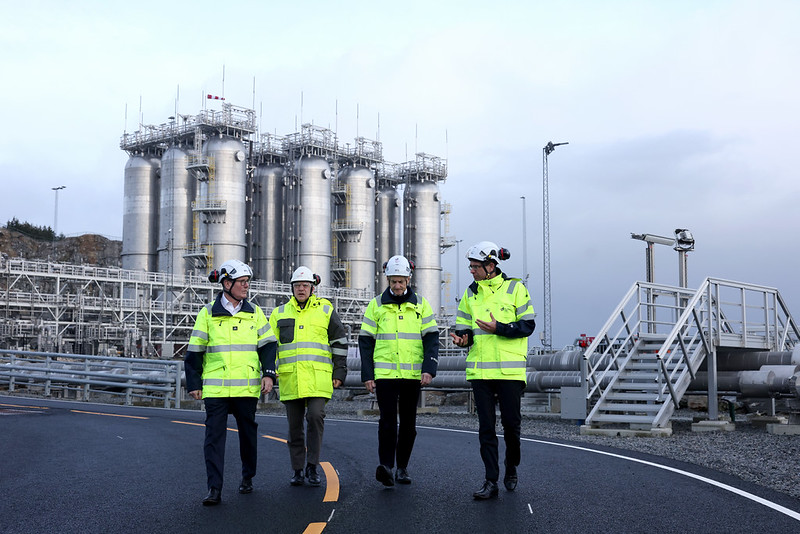
The project captures carbon dioxide from emitters across Europe, ships it as a liquid to Norway’s west coast and transports it through a 100km pipeline to be injected into a reservoir 2,600 metres below the seabed.
Carbon dioxide emitters, like cement plants, also receive government subsidies and carbon credit revenues to help them pay to store their carbon dioxide, Hejn added. They can sell their products, like low-carbon cement, for a green premium.
Ways to become financially sustainable
With subsidies in the UK likely to dwindle, panellists at the conference were asked whether – and how – their business could become financially sustainable.
Cristel Lambton, technical and operations director of Italian oil company Eni’s CCUS arm, said the industry “still needs funding at this stage”. “We all want the CCUS market to be a sustainable market but we can’t just rush towards it,” she added.
Tanisha Beebee, CCS lead at British oil and gas company Harbour Energy, said the shifting economic and political situation had led her company to try and change business models in a bid to reduce reliance on government subsidies and lower its costs.
Jack Richards, CCS lead at a company called Spirit Energy which wants to repurpose its Morecambe gas field to store carbon, argued that reliance on government funding would ease if there was a higher carbon price, making emitting greenhouse gases more expensive compared to capturing and storing them and therefore boosting demand for CCS.
Another problem is that the interest of some CCS customers in the UK appears to be waning. Hydrogen-maker BOC, a subsidiary of Linde, withdrew its interest in the Northern Endurance Partnership offshore carbon storage scheme in September 2025. BP also withdrew after cancelling a blue hydrogen project in the region, leaving just one gas-fired power plant called Net Zero Teesside as a customer.
Waste management company Viridor, however, is still interested in paying for its emissions to be captured and stored. Its CCUS director James Eyton said the timeline for becoming independent of government support is “tricky”, adding that the sale of carbon credits could be a “fundamental alternative revenue source” for the CCUS industry.
The post Carbon capture industry faces tough future, as UK raids green spending appeared first on Climate Home News.
Carbon capture industry faces tough future, as UK raids green spending
Climate Change
World Bank and IMF should lead the financial system in responding to the climate crisis
Sandra Guzmán is director at the Climate Finance Group for Latin America and the Caribbean (GFLAC), and Raju Pandit Chhetri is lead climate finance negotiator for the least-developed countries at the UNFCCC.
Recent catastrophic floods in Nepal starkly remind us that the climate crisis demands urgent action. The initial estimate that the country will need to spend $5 billion on recovery will likely remain a major concern. However, that is only one part of the story. No financial metric can capture the value of lives lost in crises like this.
And this is not a standalone event; from the mountains of Nepal to the coastlines of Latin America and the Caribbean, developing countries are increasingly facing severe climate impacts. The average annual loss from climate disasters in the Latin American and Caribbean region is estimated at $58 billion. Human suffering remains immeasurable in all these instances.
Climate finance has been a key demand from our regions and from all developing countries to meet the needs of their citizens. At the recently concluded pre-COP31 in the Pacific, several developing-country governments strongly warned leaders about the dangers of failing to act on both climate and climate finance.
Pacific leaders rail at climate finance failures after pre-COP trip to Tuvalu
Yet, two years after the Baku climate summit, where all governments agreed on the New Collective Quantified Goal (NCQG) on climate finance – with multilateral development banks (MDBs) playing a key role in delivery – that discussion risks being sidelined at this week’s annual meetings of the World Bank and International Monetary Fund in Bangkok, Thailand.
World Bank drops climate finance target
The MDBs have a critical role in mobilising a share of the $300-billion-per-year goal for public climate finance adopted at COP29 and are key to scaling broader financing to $1.3 trillion per year by 2035. They entered the NCQG dialogues promising capacity to mobilise these resources and agreeing to be part of the solution.
This June, even as the World Bank announced the renewal of its Climate Change Action Plan, it dropped its 45% climate finance target under pressure from the US administration. That commitment was key to ensuring the bank continues to deliver on its promise to mobilise enough climate finance to meet the NCQG target.
This announcement was a setback at a moment when developing countries are looking to MDBs to step up and fill gaps left by cuts in official development assistance (ODA) by donor governments.
World Bank’s climate work can endure without finance target, experts say
MDBs have long said they can convert $1 provided by donors into $2-$4 for client countries and have promised to deliver impact. Official data does paint an encouraging picture overall. The MDBs have delivered an increase in climate finance almost every year so far.
While financing needs far exceed what has been provided, MDBs mobilised an average of around $75bn per year in climate finance for low- and middle-income countries over the last five years, showing they are still on track to deliver the $120 billion per year they committed to.
Adding to the debt burden
However, climate finance cannot be measured by quantity alone. As MDBs increase their focus on private-sector mobilisation to diversify their funding, tracking the quality of the financing they mobilise becomes even more criti