

Welcome to Carbon Brief’s DeBriefed.
An essential guide to the week’s key developments relating to climate change.
This week
Net-zero media storm
NET-ZERO ATTACKED: The UK’s Labour government had to defend its net-zero policies after comments by former prime minister Tony Blair in a thinktank report sparked a frenzied media storm. Former Labour leader Blair said the world’s current approach to tackling climate change is “failing”, the Independent reported. (More accurately, Blair stated that “phasing out fossil fuels in the short term…is doomed to fail”, rather than at all, as highlighted in a factcheck by Carbon Brief’s Simon Evans on social media.)
MEDIA FRENZY: Blair’s comments were featured prominently – and inaccurately – by the UK’s climate-sceptic right-leaning media. In frontpage coverage, the Daily Telegraph described Blair’s comments as a direct “attack” on prime minister Keir Starmer, despite acknowledging in its coverage that Blair did not mention the UK. A frontpage Times story called Blair’s intervention the “latest sign that the mainstream consensus on green policies is collapsing”. (Carbon Brief has just published an analysis showing the same media have published 65 editorials attacking energy secretary Ed Miliband in the first four months of 2025.)
‘CLUMSY’ CRITICISM: BBC News reported that Starmer has since defended his net-zero policies in parliament. According to the Guardian, Downing Street “forced” Blair to “row back from his criticism”, after “furious Labour politicians warned he had given a boost to Tory and Reform on the eve of the local elections”. A former employee of Blair called his intervention “clumsy” and his ideas “expensive” and “unpopular” in Prospect magazine.
Around the world
- CANADA FOR CARNEY: Mark Carney’s Liberal party won this week’s Canadian elections, Climate Home News reported. The outlet said that Canadians chose the “former central banker and UN climate envoy” over the “anti-climate action Conservative party of Pierre Poilievre”.
- 100 DAYS: As the Guardian and other outlets covered Donald Trump’s first 100 days in office, the New York Times reported that his administration had dismissed hundreds of experts working on the country’s National Climate Assessment report.
- UPHILL BATTLE: The COP30 president has “admitted” that this year’s talks will be a “slightly uphill battle” due to economic turmoil and Trump’s removal of the US from the Paris Agreement, the Guardian reported.
- AIRLINE EMISSIONS: European airline emissions are on course to exceed pre-pandemic levels this year, according to the Financial Times.
- NEW NORMAL: Much of India and Pakistan is “sweltering” under early heatwaves, the Guardian reported. The newspaper highlighted that a Pakistani city in Sindh province recorded temperatures of 50C – nearly 8.5C above the April average.
38%
The percentage of global losses from “natural catastrophes” that were insured in 2023, according to a report by Zurich Insurance Group. The analysis found total losses of $280bn.
Latest climate research
- A combination of climate change and failure to meet sustainable development goals could contribute to an increase in global antimicrobial resistance by 2050, according to a study published in Nature Medicine.
- A paper published in Science Advances found that “co-exposure” to extreme heat and wildfire smoke has increased across 11 states in the western US over 2006-20.
- Just 2% of the UK Climate Change Committee’s (CCC’s) recommendations to the UK government over 2009-20 were accepted in full, according to new research published in Climate Policy.
(For more, see Carbon Brief’s in-depth daily summaries of the top climate news stories on Monday, Tuesday, Wednesday, Thursday and Friday.)
Captured

On Monday, a blackout across most of Spain and Portugal plunged the countries into chaos. While the initial trigger remains uncertain, the nationwide blackouts took place after around 15 gigawatts (GW) of electricity generating capacity – equivalent to 60% of Spain’s power demand at the time – dropped off the system within the space of five seconds (as illustrated above). At the time, solar accounted for 59% of the country’s electricity supplies, wind nearly 12%, nuclear 11% and gas around 5%. As the crisis was still unfolding, many media outlets were quick to blame renewables, net-zero or the energy transition for the blackout, despite very little available data or information. Carbon Brief has examined what is currently known about the power cuts and how the media has responded.
Spotlight
Trump’s ‘cascading’ impact on European climate science
This week, scientists attending the European Geosciences Union meeting in Vienna tell Carbon Brief how cuts to science funding and the dismantling of climate agencies in the US is impacting their work.
Dr Shouro Dasgupta, environmental economist at Fondazione CMCC in Italy:
“Trump’s decision to cut funding on climate science in the US will likely have cascading effects on both European research and global climate resilience. The transatlantic partnership is built on shared values and decades of cooperation. It has been crucial for advancing global understanding of climate change through joint efforts in Earth observation, including data infrastructure and joint policy innovation.
For example, several European Centre for Medium-Range Weather Forecasts products that rely on National Oceanic and Atmospheric Administration (NOAA) data streams will now face gaps in input data.
A major loss has been the defunding of Famine Early Warning Systems Network – a critical system that operated in more than 30 famine-prone countries and was the only consistent source of regular famine and food insecurity early warning.
Trump’s actions will slow our ability to understand and respond effectively to the climate crisis, a loss that, ultimately, impacts everyone.”
Dr Carl Schleussner, climate scientist at the International Institute for Applied Systems Analysis in Austria:
“I’m concerned about the credibility of science and communication. Attacks on science and scientific integrity are being driven by social media and alternative media platforms – and artificial intelligence (AI) systems can generate something that looks like a scientific paper, [but] is complete rubbish. [AI] basically drives down the cost of fakes to zero. We are running a heightened risk of climate misinformation.
Trump’s special advisor [Elon Musk] owns one of the largest social media networks and Grok [an AI system] can produce something like a paper in no time. Trying to undermine [science] by flooding the zone with sh*t is a declared strategy – and it is the total antithesis to science.
It is one thing to rebut people that are paid to ask stupid questions about the validity of climate science, as we’ve done for decades. [But it is another] to fight an AI system that produces all this bullsh*t in no time. As a scientific community, we are not equipped to fight back…I hope other actors in society are thinking about how to support climate science and the integrity of science and its role in society.”
Dr Eva Pfannerstill, atmospheric chemist at Forschungszentrum Jülich in Germany:
“The NOAA cuts are definitely impacting the air-quality research community and rippling to Europe. For several months this year, our NOAA colleagues were not allowed to join online meetings with us anymore, stalling the fruitful discussions and collaborations we have had for many years. One NOAA colleague was supposed to give an invited talk at EGU, but he was not allowed to travel.
Thinking back to last year’s EGU where we hung out with many NOAA colleagues, it was such a short time ago – but seems almost like another era where trans-Atlantic scientific cooperation and US leadership in atmospheric research were a given. Now our US colleagues are scared – scared to put anything in writing that could be used against them, scared of losing their funding and/or jobs.”
Prof Sonia I Seneviratne, climate scientist at the Institut für Atmosphäre und Klima at ETH Zurich in Switzerland and Intergovernmental Panel Climate Change Working Group 1 vice chair:
“The current attacks on climate research in the US are extremely concerning. A full generation of young researchers have been fired from their positions and are unlikely to stay in climate research. While some might move to Europe or other continents, it is not in the interest of the global climate research community to see such a weakening and even a destruction of climate research in the US.
While some decisions against climate research institutions and researchers might be annulled by the courts, several might be near impossible to reverse. For instance, buildings [that] will no longer be available for research institutions and researchers [that] move on to other positions out of concerns for their job security.
Attacks on climate science won’t change the facts and the reality of climate change – but they weaken our possibilities to address the climate crisis.”
Watch, read, listen
POWER PLAYER: For Common Dreams, Bill McKibben claimed that Mark Carney knows “roughly 20 times” as much about climate and energy economics than any other leader.
CONNECTED CRISES: In a new book, Climate Injustice, climate scientist Dr Friederike Otto argued that global justice is at the core of the solution to climate change.
SONG AND SEED: Al Jazeera ran a long-read about efforts led by Brazil’s Indigenous Maxakali community to protect and restore the rainforest in Minas Gerais.
Coming up
- 2-9 May: 20th session of the United Nations forum on forests, New York
- 7-8 May: Copenhagen climate ministerial, Denmark
- 11 May: Albanian parliamentary elections, Albania
Pick of the jobs
- Carbon Brief, summer journalism internship | Salary: London Living Wage (£13.85 per hour). Location: Hybrid (London and remote)
- C40 Cities, reinventing cities project manager | Salary: 108,074,116 pesos or 715,392 rand. Location: Colombia or South Africa
- Natural History Museum, curator, algae | Salary: £34,398. Location: London
- Agora Energiewende, project manager – policy design for a just energy transition | Salary: Unknown. Location: Berlin, Germany or Bangkok, Thailand
- Possible, community heat and energy project manager | Salary: £33,962 for four days a week. Location: UK
DeBriefed is edited by Daisy Dunne. Please send any tips or feedback to debriefed@carbonbrief.org.
This is an online version of Carbon Brief’s weekly DeBriefed email newsletter. Subscribe for free here.


The post DeBriefed 2 May 2025: Iberian blackout; Tony Blair’s ‘clumsy’ comments; Trump’s ‘cascading’ impact on European climate science appeared first on Carbon Brief.

Climate Change
“Sink or swim”: WA Gov hugely underestimating decline in regional gas demand while sleeping on green exports, new report finds
PERTH, Tuesday 13 October 2026 — A new report from Greenpeace Australia Pacific and Springmount Advisory reveals green commodity exports are an untapped economic opportunity for Western Australia in a declining Asian gas market, while offering a genuine solution for decarbonising Asia.
From Gas to Green: Building Western Australia’s Future State is a comprehensive analysis of the declining gas market in Asia, and the untapped economic opportunity for WA to become a global leader in green commodity exports while driving the regional shift away from fossil fuels.
The report offers key recommendations for the WA Government to support regional decarbonisation through an orderly phase out of gas exports in favour of green iron and other green exports. It comes as global climate leaders from across business, politics and advocacy prepare to meet for the Global Citizen Now: Perth event focused on decarbonising WA.
Key findings:
- Gas demand is falling across WA’s core markets in Asia: Gas demand fell in 2025 and is projected to continue to decline, driven by a combination of global geopolitical factors and domestic concerns.
- Policy shifts in key markets since the war on Iran now prioritise renewables and nuclear over gas: Japan, South Korea and China have legislated energy plans that prioritise renewables and nuclear over gas.
- New WA gas would arrive in a saturated, uncertain Asian market filled with cheaper gas: The US is now the world’s largest liquefied gas producer and plans to double its capacity as it also targets Asian markets.
- Green commodities offer a real solution to sustain WA’s economy: WA can lead Australia’s green commodity exports, which by 2060 could be worth almost a trillion dollars.
- Exporting more WA gas is likely to delay or impede Asia decarbonisation: Despite claims by the gas industry, there is no evidence that WA gas is displacing coal in Asia, and in fact diverts resources from genuine decarbonisation options.
Geoff Bice, WA Campaign Lead at Greenpeace Australia Pacific said: “As our export partners in Asia shift away from expensive and polluting gas, the WA Government has a golden opportunity to pivot our economy to green exports, like green iron, which is the most effective way to help our region to decarbonise.
“The writing is on the wall: gas is in decline, renewables are our future. In this context, it makes zero sense for the government to encourage high risk projects like Woodside’s reckless Browse gas proposal at Scott Reef.
“This report clearly shows that the WA Government faces a choice: sink or swim. They can either allow the gas industry to keep ripping off West Australians and continue propping up its decline, or choose the path that will deliver enormous benefits to the state and the world by becoming a leader in the rapidly expanding green economy.”
Tom Quinn, Managing Director of Springmount Advisory: “Western Australia prospers when it looks to the future and builds for future demand. Twenty years from now, what the world needs is green commodities made using WAs abundant renewable resources. Just like it did with iron ore in the 1950s and gas in the 1970s, WA should look to the future and build what the world will need, not sunsetting industries like gas that are already past their peak.”
-ENDS-
Media contact
Kate O’Callaghan on 0406 231 892 or kate.ocallaghan@greenpeace.org
Lucy Keller on 0491 135 308 or lucy.keller@greenpeace.org
A report from Greenpeace Australia Pacific and Springmount Advisory reveals the untapped green economic opportunity for Western Australia in a declining Asian gas market, which also offers a genuine solution for decarbonisation in Asia.
Is Western Australia clinging to a fading gas industry while a thriving green future passes it by? As major Asian trading partners rapidly pivot away from volatile gas imports toward cheap solar and battery storage, this report exposes a high-stakes choice: risk becoming stranded in an oversupplied fossil fuel market, or harness WA’s unmatched sun and wind to lead the global clean energy transition.
Summary
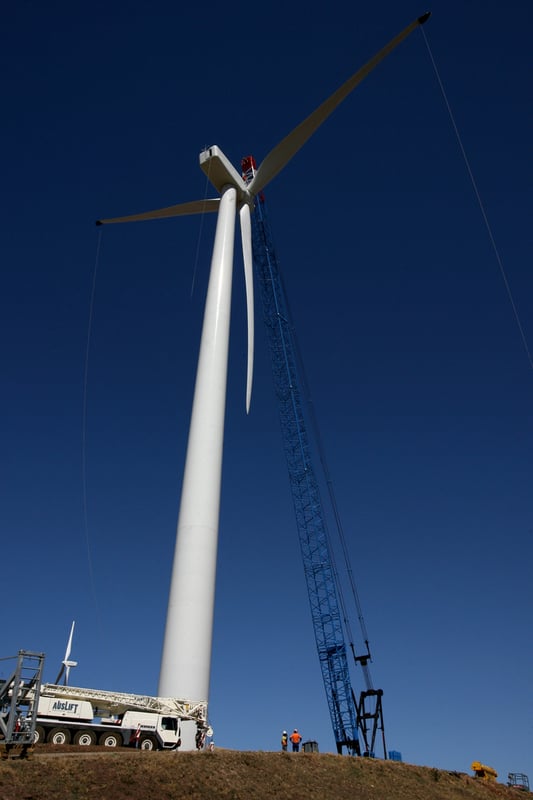
From Gas to Green: Building Western Australia’s Future State reveals that Western Australia (WA) faces a critical juncture as falling Asian gas demand, geopolitical gas supply volatility and accelerating renewable energy deployment undermine the long-term economic viability of gas exports. By harnessing its world-class wind and solar resources, the report demonstrates that WA can execute an orderly phase-out of gas and pioneer a green commodity export economy that could generate $987 billion in economic value by 2060, create 24,000 ongoing jobs, and drive a 9.6% reduction in global greenhouse gas emissions.
Key Findings
- Gas demand is falling in Asia – WA can no longer rely on gas exports: Gas demand in core Asian markets fell in 2025 and is projected to continue to decline in 2026. Legislated energy plans in Japan, South Korea, and China now prioritise renewables and nuclear over gas.
- Asia is increasing renewables, importing gas just gets in the way: Evidence from markets like Thailand suggests that gas imports are increasingly crowding out cheaper renewable energy investments and battery storage rather than displacing coal, locking in more emissions over time.
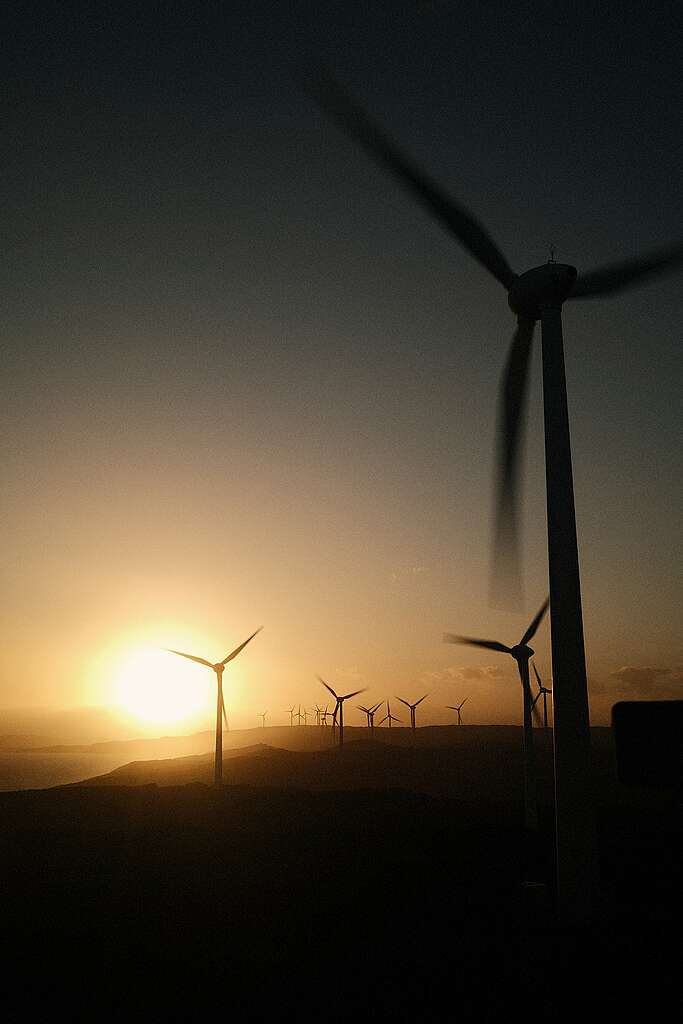
- Green commodities offer a real solution to decarbonise Asia – this is a major win for WA: With world-class renewables, WA can lead Australia’s green commodity exports, which by 2060 could be worth almost a trillion dollars ($987 billion) and support a genuine 9.6% reduction in global emissions.
Recommendations to WA government
Recommendation 1: Plan an orderly gas phase-out aligned with a trading partner pivot plan
Implement a managed, orderly phase-out of gas exports aligned with trading partners’ decarbonisation pathways, rather than waiting for demand to collapse, by:
- Developing and implementing a staged phase-out of gas facilities aligned with feedstock supply expiry or typical end of facility lifespans.
- Committing to no new gas development for gas expansion, including Browse and Kimberley fields.
- Developing new, reciprocal trade relationships with existing gas trade partners, structured to progressively replace gas exports with green commodities – integrated with recommendation 2.
Recommendation 2: Develop an integrated green commodity export strategy, positioning WA as a global green iron manufacturing hub
Establish an integrated green commodity export strategy that immediately prioritises green iron development, positioning WA as a global green iron manufacturing hub, by:
- Committing to green commodity export targets to give industry and investors a clear demand signal.
- Prioritising green iron as the lead sector within the broader green commodity strategy, given WA’s iron ore endowment and first-mover potential.
Recommendation 3: Reject false solutions such as carbon dumping (CCS) and blue hydrogen
Reject carbon dumping (also described as carbon capture and storage, or CCS) and blue hydrogen as viable decarbonisation technologies, and prioritise green hydrogen and proven renewables for clean energy and fuel production by:
- Excluding blue hydrogen projects (and CCS-dependent projects) from all government support programs.
- Requiring existing hydrogen-based production (including ammonia, methanol, synthetic fuels) to have clear, near-term transition timelines to switch to green hydrogen production.

What you can do
Together, we can push for a prosperous green future.
You can help by:
- Sending an email to Environment Minister Murray Watt and Prime Minister Anthony Albanese, calling on them to reject Browse.
- Sharing this story to help more Australians understand what’s at stake.
- Encouraging your friends and family to take action.
REPORT: “From Gas to Green” Building Western Australia’s Future State