

The head of the UN climate change body has urged countries to submit new “first-rate” climate targets by September, after only a handful of countries published new plans to cut emissions ahead of a February deadline.
Under the Paris Agreement, adopted nearly a decade ago, countries are expected to submit targets for cutting greenhouse gas emissions by 2035, and set out how they will reach them, by a – largely symbolic – deadline of February 10.
But only a handful of countries have submitted those plans, known as Nationally Determined Contributions (NDCs), to the UN so far.
They include the United Arab Emirates, Brazil, Switzerland, the UK, New Zealand and the US, whose plan President Donald Trump is expected to abandon after he announced he would pull the US out of the Paris Agreement, again.
China, the European Union and India are among the big climate polluters that aren’t expected to present their plans until later this year.
In a speech on Thursday in Brazil, which is hosting the COP30 climate summit in November, Simon Stiell, the executive director of UN Climate Change, described the plans as “among the most important policy documents governments will produce this century” and argued “their quality should be the paramount consideration”.
“So taking a bit more time to ensure these plans are first-rate makes sense,” he said.
“No future”: Climate projects face existential threat after Trump’s aid shutdown
Stiell said countries need to submit their NDC climate targets by September so they can be included in a UN assessment of planned emissions reductions, which will inform the COP30 conference.
Hosted in the Amazonian city of Belém, COP30 will be an opportunity for countries to take stock of their collective ambition and assess how far the world remains from achieving the Paris goals of limiting temperature rise to “well below 2C” and ideally no higher than 1.5C.
More than 170 countries have told the UN they intend to submit new plans this year, according to a UN official.
But Sofia Gonzales-Zuniga, of the Climate Action Tracker, an independent monitor of government action, said she was “disappointed” by the small number of plans submitted ahead of the February deadline. “We hope this marks a turning point,” she said.
Copycat Paris exits?
US disengagement has dealt a fresh blow to climate action around the world. Argentina is mulling a Paris accord exit. In Indonesia, meanwhile, the environment ministry insisted participation in the Paris deal had been beneficial to the country after its climate envoy grumbled about unfair obligations to cut emissions when the world’s second-largest culprit is withdrawing from global climate cooperation.
“Most leaders are kept on their toes by Trump. I’d assume they will only have the mind space for NDCs after the first couple of punches from Washington,” said Li Shuo, director of the China Climate Hub at the Asia Society Policy Institute.
Despite the headwinds brought by the US retreat from climate cooperation, Stiell argued that shifting from fossil fuels to clean energy remains in countries’ self-interest “because of the colossal scale of economic opportunity it presents”.
Yet many smaller countries face capacity constraints in developing new carbon-cutting and adaptation plans while meeting reporting requirements under the Paris deal.
Among those most notably missing in action is Azerbaijan, the host of last year’s COP29 talks, which still hasn’t made good on a promise to produce a 1.5C-aligned climate plan despite an initial commitment to do so by COP29.
A COP29 spokesperson told Climate Home News that “Azerbaijan has been working tirelessly to deliver its NDC”, while “allocating significant resources” to hosting November’s climate summit.
David Waskow, of the World Resources Institute, reminded large emitters of their responsibility to “unveil bold new plans that offer a credible pathway to reaching their net-zero promises”. “Weak plans mean a bleak future, plain and simple,” he said.
Comment: India can plug its green skills gap by elevating women in the workforce
At COP28, countries agreed that the new plans – the third round of NDCs since the Paris pact – should set a specific target for cutting emissions by 2035, cover all sectors of the economy, all greenhouse gas emissions and be aligned with limiting warming to 1.5C, which scientists and campaigners say means no new fossil fuel projects.
Early submissions haven’t all reached that level of ambition, however.
Fossil fuel expansion
The UAE and Brazil insist their plans are aligned with the 1.5C goal, but both countries plan to expand oil and gas production over the next decade – creating “a profound mismatch between words and action”, said Gonzales-Zuniga.
Meanwhile, activists slammed New Zealand’s commitment to reduce emissions by a mere additional 1% between 2030 and 2035, at the low end of its planned range, as “pathetic“.
Among the large emitters that have submitted plans, only the UK’s target to cut emissions by 81% by 2035 compared to 1990 levels is considered 1.5C-aligned by Climate Action Tracker.
However, none of them improved their 2030 objective “which on the one hand makes those 2035 targets less credible and on the other, makes limiting peak global warming to 1.5C ever more difficult”, said Gonzales-Zuniga.
Speaking at an event in London on Wednesday, UK climate envoy Rachel Kyte warned that the kind of plans being put forward by countries “will not get us back on track” to avoid the worst effects of climate change.
“We’re seeing a softening of ambition from some countries in their NDCs. But… they are floors, not ceilings, and… [countries] can improve their ambition over time,” she said.
EU backs North Africa hydrogen pipeline, but is it a green dream?
To get on a path to limiting warming to 1.5C, annual greenhouse gas emissions must fall 42% between 2019 and 2030, and by 28% for 2C. By 2035, that increases to 57% and 37% respectively. Yet, emissions rose to record levels in 2024.
Most countries are not on track to deliver on their 2030 targets – and current policies put the world on course for more than 3C of warming, according to an assessment by the UN Environment Programme.
Hottest January on record
The warming seen in recent years has led to accelerating climate impacts and a streak of heat records. On Thursday, Europe’s climate monitoring service Copernicus said that last month was the warmest January on record as global average temperatures reached 1.75C above pre-industrial levels. This is despite an emerging La Niña weather pattern which has a temporary cooling effect on the planet.
Speaking in Brazil, UN climate chief Stiell acknowledged that “ten years on from Paris, we won’t have delivered on all our commitments”.
But he pledged to make climate negotiations “more efficient” and “make space for leaders to do concrete deals that deliver for their citizens and economies now”. This will require “fewer high-level speeches repackaging old pledges already made but nowhere near fulfilled,” he emphasised.
(Reporting by Chloé Farand; additional reporting by Matteo Civillini; editing by Megan Rowling)
The post UN gives countries more time to submit “quality” climate plans for 2035 appeared first on Climate Home News.
UN gives countries more time to submit “quality” climate plans for 2035

Climate Change
‘Step up and lead’: All eyes on Australia as it takes the reins of UN COP31 climate negotiations
ANTALYA, Türkiye, Saturday 7 November 2026 — As leaders and delegates gather for the UN COP31 climate summit, Greenpeace Australia Pacific is calling on the Australian government in its role as President of Negotiations to ensure the just transition away from fossil fuels is central to negotiations, rigorously defend the 1.5°C temperature goal, and significantly scale up climate finance commitments.
This year’s climate talks take place amidst a deepening global energy shock, and grim reports that the world will barrel past the 1.5°C temperature goal. They also follow a deadly summer of extreme weather disasters that swept the northern hemisphere, with fears that a severe El Niño will see similar dangerous impacts in Australia.
But recent election wins by progressive candidates in the United States and Brazil are set to breathe energy and optimism into the negotiations as people around the world, bearing the brunt of soaring cost of living and climate disasters, shun regressive and divisive politics.
Speaking from Antalya, Dr Simon Bradshaw, COP31 Lead at Greenpeace Australia Pacific, said: “The world is in a moment of flux. We know it is in moments of huge upheaval that era-defining progress can happen — but only when countries step up and lead.
“As Australia takes control of COP31 Negotiations, we have an opportunity and responsibility to shepherd global climate cooperation through this moment of interlocking crises. That means backing Pacific leadership and priorities, and leading by example at home to end fossil fuels and deliver new, multi-year climate finance commitments.
“As a major coal and gas exporter, Australia plays an outsized role in fuelling the climate crisis, and has approved 38 new, extended and expanded fossil fuel projects since first elected in 2022. More than half the world’s coal export project pipeline is in Australia, and the Albanese Government is poised to make decisions on massive new gas projects. Australia must reckon with this reality.
“Domestically, we have made significant strides on ramping up renewables and the global ‘35 by 35’ electrification goal is welcome and necessary. But electrification must end fossil fuel dependence, not be an end in itself — its ultimate success depends on ensuring electricity comes from renewable sources that displace fossil fuels and align with a 1.5°C pathway.
“In Türkiye, the Australian government can rise to the occasion and show what true climate leadership looks like, but we can not move the world towards a clean energy future while expanding the industry we need to leave behind.”
Speaking from Antalya, Shiva Gounden, Head of Pacific at Greenpeace Australia Pacific, said: “As leaders meet in Türkiye amidst warnings that we will pass the 1.5°C threshold, the stakes have never been higher. Every heatwave, every flood, every storm is being unleashed on communities with the deadly force of accumulated emissions and gives a warning of what is to come.
“In Antalya, the COP31 Presidency must respond to the accelerating climate crisis and defend the 1.5°C goal based on the law and the science. 1.5°C is a non-negotiable survival line for Pacific communities and climate-vulnerable nations facing rising seas, extreme weather disasters, food insecurity and soaring economic costs. It is a fundamental component of the Paris Agreement and enshrined as a binding legal benchmark by the world’s highest court, the International Court of Justice.
“Australia must arrive at COP31 with more than meaningless speeches. The Pacific and the world need concrete dates, credible plans to deliver roadmaps away from fossil fuels built on the best available science, and a commitment to put people, energy security and the planet ahead of fossil fuel interests.
“We need real action to advance multilateral climate cooperation, ensure the just transition away from fossil fuels is high on the agenda, and back longstanding Pacific priorities — including keeping 1.5°C alive and significantly scaling-up climate finance.”
ENDS
Images and footage from Greenpeace’s COP31 ‘Keep 1.5°C alive’ photo opp in Antalya can be found here
Greenpeace has a diverse range of experts available for interviews and commentary from Antalya. Headshots can be found in Greenpeace Media Library here
Media contact: Kate O’Callaghan in Antalya (GMT+3) on +61 406 231 892 (Whatsapp/Signal)
‘Step up and lead’: All eyes on Australia as it takes the reins of UN COP31 climate negotiations
As an extreme El Niño breaks marine temperature records, COP31 is set to boost the profile of the ocean’s role in solving climate change, but finance and clear conservation measures will be needed for it to move the needle, experts said.
The Turkish presidency has announced plans for an Antalya Ocean Declaration that recognises the centrality of the global ocean – the world’s largest carbon sink – in regulating the climate and minimising the now unavoidable overshoot of global temperatures above 1.5C over pre-industrial levels.
Meanwhile, as part of the formal UN negotiations, Australia has announced plans to land a cover decision in Antalya, which, according to veteran former US negotiator Sue Biniaz, would be the only section of the formal negotiations where the role of oceans could be included.
She added that an outcome at COP31 seems likely, given the initiative from both presidencies and a push from over 100 countries – including Brazil, the EU and the African Group of countries – calling for the UN negotiations to deliver a plan for implementing ocean measures.
Governments will arrive in Antalya with a “super El Niño” adding stress to marine ecosystems and expected to continue to intensify until December 2026, with parts of the Pacific averaging almost 30C (86F) – over 3C more than normal – in October, according to monthly EU sea temperature data.
-
COP31 Briefing: What to expect from the Antalya climate summit?
Electrification, the fossil fuel transition, adaptation to rising impacts, climate science and trade are key themes as governments gather for COP31 in Türkiye -
European nations signal support for fossil fuel roadmap, says COP30 president
André Corrêa do Lago told Climate Home News that it’s up to other nations to decide how the fossil fuel and deforestation roadmaps are used -
Nepal seeks stronger recognition of mountain issues in UN climate process
Flood-hit Nepal wants COP31 to adopt a new agenda item formalising work on mountains and climate change and boosting the response to rising risks


Needs for ocean conservation and funding
While elevating the ocean agenda is “critical”, it must lead to funding for ocean conservation and a clear plan for reaching the global target – set at UN biodiversity talks in 2022 – of protecting 30% of the global ocean by 2030, said Pradeep Singh, senior ocean governance expert at Oceano Azul Foundation.
The ocean is precisely where governments are farthest off track from meeting this target – informally known as the 30×30 goal. Even if countries meet all their nature conservation plans, only about 12% of the global ocean would be protected, the UN says.
“Acknowledgment of marine protected areas and the 30×30 target as climate infrastructures will certainly boost efforts and funding for science and management,” Singh told Climate Home News.
Shamini Selvaratnam, director of international climate and clean energy at Ocean Conservancy, said an ocean commitment that makes a difference in coastal communities “takes funding, local capacity and support that countries can actually access”.
An analysis by climate think tank Zero Carbon Analytics shows that investment in the blue economy – through activities like sustainable fisheries or cleaner shipping – is only at about 2% of the needs, which are estimated at $550 billion per year.

Following-through on commitments
Selvaratnam added that countries must also establish mechanisms to follow through on these measures, which currently only exists in the form of a non-binding dialogue that is not expected to produce any negotiated agreements.
She said that countries at COP31 must find ways for their ocean commitments to inform the next global stocktake, the UN’s five-yearly review of progress on climate action. Some countries – including African countries, Latin American nations, small island states and the European Union – have backed a process that culminates in the next global stocktake.
At climate negotiations, countries are not mandated to include ocean conservation measures in their climate plans. But a group of countries led by France and Brazil is pushing them to do so voluntarily through an initiative called Blue NDC Challenge. Seventeen countries have joined the initiative so far.
In its list of COP31 priorities, the EU has called for the “critical role” of oceans to be recognised, but falls short of calling for any specific actions to feature marine action more prominently in climate plans.
As part of their demands, ocean campaign groups have called for the establishment of an “Antalya Ocean Compact”, a platform where countries can coordinate efforts across different environmental treaties, including the UN climate, biodiversity and high seas negotiations.
Ultimately, Selvaratnam said a strong deal “must accelerate emissions cuts, clean energy, and a transition away from fossil fuels, including offshore oil and gas”.
Ilana Seid, chair of the AOSIS group of small island states and permanent representative of Palau to the UN, said during a press briefing last week that “meaningful progress” on emissions reduction is “the best way” to alleviate stress on the ocean.
The post ‘Blue COP31’ set to spotlight need for ocean protections amid record heat appeared first on Climate Home News.
‘Blue COP31’ set to spotlight need for ocean protections amid record heat
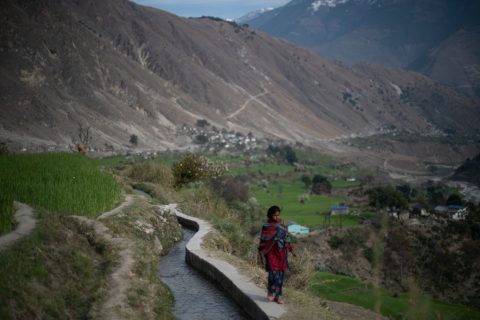
In the wake of its recent glacial flooding disaster, Nepal and the kingdom of Bhutan have proposed a new agenda item on mountains and climate change for the COP31 summit which opens on Monday in the Turkish city of Antalya.
In a submission addressed to the COP31 presidency and the head of the UN climate secretariat (UNFCCC), Nepal said the agenda item, entitled “1.5°C Warming in Mountains”, is an effort to strengthen the response of the international community to the climate risks facing the world’s mountain regions.
The item proposes that mountain issues should become a regular part of the formal UN climate change process, with a focus on scientific assessment of the risks associated with warming overshooting 1.5C, an annual high-level dialogue, a dedicated work programme and improved access to climate finance.
Maheshwar Dhakal, chief of the climate change management division of Nepal’s Ministry of Agriculture, Forests and Environment, told Climate Home News that Himalayan countries face similar problems such as collapsing glaciers and flooding from glacial lakes.
“We are trying to bring all Himalayan countries together under this agenda item,” he said.
COP31 Briefing: What to expect from the Antalya climate summit?
At this year’s UN General Assembly, Nepal’s Prime Minister Balendra Shah called for strong global action to ensure climate justice and proposed creating a Himalayan Climate Resilience Mechanism led by India, China and Nepal. It would share satellite data, monitor glacial slopes and lakes, strengthen early warning systems and coordinate cross-border disaster response.
Nepal has experienced significant infrastructure losses and human casualties from flooding every year since 2020. In late August, the collapse of a glacial slope on the border with Tibet caused a torrent of water and debris to course down the Bhote Koshi River, leaving more than 6,000 people dead or missing.
According to a government needs assessment, the disaster caused an estimated $2.7 billion in physical damage and economic losses, while around $4.8 billion will be required for recovery and reconstruction.
More research needed on threats
Although high mountain regions are known to be fragile ecosystems, especially as global warming accelerates glacier melt, the extent of their vulnerability is still not fully understood. When the devastating Bhote Koshi floods hit, it opened the eyes of the world to the risks.
Dhakal said the Bhote Koshi floods “have proved the impacts of climate change in the Himalayan region”, which were linked to rising temperatures by scientists with the World Weather Attribution group. “Therefore, Nepal wants scientific studies, research and political discussions on mountain climate risks to receive greater attention at international climate conferences,” he added.
Nepal has been making efforts on this front since 2009, when it held a cabinet meeting at Kalapatthar near Mount Everest. Since COP28 in Dubai, Nepal has organised high-level events and dialogues on mountain issues at COPs and is co-hosting one at COP31 with Bhutan, Pakistan, Kyrgyzstan and Tajikistan.
Editor’s Desk: Nepal’s disaster has laid bare the world’s adaptation accountability gap
Dhakal said the dialogues held so far have raised awareness, but mountain concerns must become part of the formal UN climate process to unlock climate finance and technical support that can bolster countries’ capacity to tackle climate threats.
If specific indicators and priorities are developed for mountain regions, vulnerable developing countries like Nepal would have better access to finance to help them adapt to the climate warming they have done very little to cause, he added.
More detailed data would enable them to prepare stronger project proposals for international climate funds, including the Green Climate Fund (GCF). In 2025, the GCF backed a project to protect livelihoods from climate-induced flooding in Nepal but it took seven years to get approval.
Sindhu Dhungana, an alternate board member at the GCF, said the problem is becoming more widespread and urgent for the Hindu Kush Himalaya region.
“The economies, cultures and almost everything in Himalayan countries depend on mountains,” he explained. “For us, climate change is mountain change… [it has] affected everything, including the economy and biodiversity.”
Destroyed development projects
Nepal wants the UN climate process to address mountain risks both before and after disasters. Countries need better research, technology, early warning systems and other adaptation measures to protect people and infrastructure. But even when countries take precautions, loss and damage is likely to occur and will require international support to address it.
Nepal has been provisionally allocated $21.6 million from the United Nations’ new Fund for Responding to Loss and Damage (FRLD) to help with the aftermath of the Bhote Koshi disaster, but this is just a fraction of needs and the money will come only months after it made an initial request.
Dhakal pointed to the damage caused by floods to infrastructure built with loans, such as the Melamchi Drinking Water Project, which received $312 million from the Asian Development Bank but was destroyed by a major flood in 2021, shortly after it began operating. The recent Bhote Koshi disaster wiped out a dozen hydropower facilities, as well as solar energy systems.
Nepal flood destruction shows “limits to adaptation”, scientists say
Nepal wants international discussions on what should happen when climate-related disasters destroy development projects built using credit, and how the loans should be treated afterwards.
“Climatic disasters wash out… projects, but the burden of loan is still paid by Nepal,” Dhakal said.
For now, it remains unclear whether the opening session of COP31 will consider or adopt the proposed agenda item on mountains and climate change, with consultations on how to respond still underway among governments and the COP31 co-presidencies.
“If countries agree to discuss the proposal and include it in the agenda, that would be another step forward,” Dhakal said. “Further discussions in the coming years could gradually give the mountain agenda a stronger shape.”
The post Nepal seeks stronger recognition of mountain issues in UN climate process appeared first on Climate Home News.
Nepal seeks stronger recognition of mountain issues in UN climate process
