

Alaska will resume the “barbaric” practice of shooting bears and wolves from helicopters to reduce their numbers with the hope that it will boost moose and caribou herds.
The renewed program would permit hunters to kill as many as 80 percent of the natural predators across 2,000 acres of state lands, reported The Guardian.
“Alaska’s practice of indiscriminately strafing predators is both inhumane and inane,” said Rick Steiner, an ecologist with Public Employees for Environmental Responsibility (PEER), in a press release from PEER. “There is no scientific evidence that this carnage will boost populations of moose and caribou, and there is a growing body of evidence that it disrupts a healthy predator/prey balance in the wild.”
Environmental groups opposed the practice, which they said has more to do with increasing caribou populations as trophy animals to be killed by hunters than it does with science-based wildlife management, The Guardian reported.
The state’s report on the program followed the Biden administration’s upholding of rules set during President Donald Trump’s first term that allowed other inhumane hunting practices, such as killing cubs in their dens, on Alaska federal lands.
On some state lands in Alaska, “intensive management” practices allow game agents to indiscriminately kill any black bear, brown bear or wolf.
In 2023, almost 100 bears were killed by helicopter, including 20 cubs.
The newest plan would allow 80 percent of wolves to be killed by aerial hunters until their numbers are reduced to 35; cutting down the black bear population by 80 percent to 700 individuals; and bringing the number of brown bears down 60 percent to a population of 375.

Critics of the state’s predator control methods said the state admitted in the report that it did not know the full impact of the practices on bear populations, since estimates of brown bear numbers were not known before the kills were allowed. Over half of brown bears killed last year were adult females, which raises additional concerns about the ability of the population to rebound.
“With a desire to avoid delaying the initiation of bear removal; the Department did not have an opportunity to estimate brown bear densities within the IM areas prior to removals,” the state’s report from October 2024 said.

“The goal of the project was to increase caribou calf survival by removing all bears and wolves from the calving grounds during the spring period when calves are highly susceptible to predation,” the report went on to say. “Data does not exist to evaluate whether the goal was achieved.”
Alaska officials refused to allow photographs to be taken of the killings, to subject the state’s program to federal scientific review or to permit independent observers to witness the slaughter, reported The Guardian.
The mass killing of wildlife in close proximity to national parks leads to major declines in predator numbers on federal lands, PEER said in the press release.
“Due to state predator control practices on adjacent lands, the ability of visitors to see intact wolf packs inside Denali National Park, one of the state’s major tourist draws, has plummeted,” PEER explained.
The National Park Service ended a study of wolf behavior in Yukon-Charley National Preserve that lasted more than 20 years because the same types of practices led to the collapse of the resident wolf population.
“Alaska’s predator control policies are cruel and the epitome of penny wise and pound foolish. The amount of tourist dollars from people seeking to view these predators in the wild dwarfs any incremental increase in hunting fee revenue the state hopes to realize,” said Tim Whitehouse, executive director of PEER, whose organization is circulating a national petition in protest of the most recent aerial gunning operation, in the press release. “Unfortunately, given its prior track record, we do not expect a Trump administration to protect wildlife on federal lands from state predator removal operations no matter how devastating or barbaric.”
The post Alaska to Resume ‘Barbaric’ Aerial Shooting of Wolves and Bears appeared first on EcoWatch.
https://www.ecowatch.com/alaska-wolves-bears.html

For 15 years, Toronto showed North America what a green roof mandate could build. Its 2009 bylaw, the first on the continent to both require green roofs and set a construction standard for them, produced more than 1,200 green roofs across the city. On November 3, 2025, the Ontario government revoked the provision of the City of Toronto Act that allowed the bylaw, with no advance notice or phase-out period.
That reversal represents the state of green roof policy in 2026. It’s a time of backlash against environment-minded construction practices. Housing-cost pressure is pushing some governments to loosen or drop requirements, while other cities keep adding them, and most of the newer laws let owners choose solar panels, vegetation, or both.
For building owners, advocates, and homeowners, the practical question now is which roof, under which local rule, delivers the most value for a specific building.
What Are Green Roofs?
A green roof, also called a living roof or ecoroof, is a roofing system that supports living plants. Sod roofs have existed since at least the Middle Ages. The modern version is engineered: Toronto’s definition calls for, at minimum, a root repellent layer, a drainage system, a filtering layer, a growing medium, and plants, all installed over a waterproof membrane.
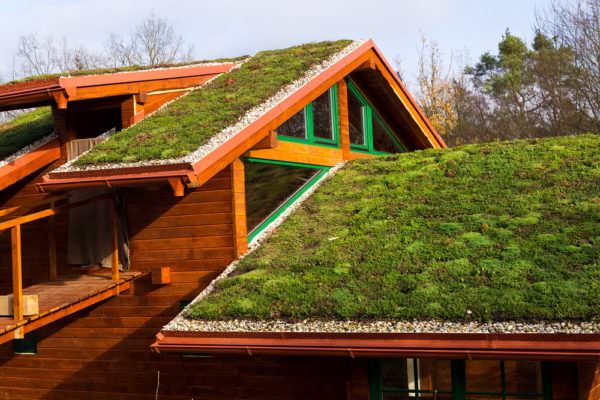
Today’s ecoroof systems fall into two broad families. Extensive roofs use a few inches of lightweight media and hardy, drought-tolerant plants such as sedums. Intensive roofs, on the other hand, use deeper soil that can hold grasses, shrubs, and even trees. The difference is the price: the Environmental Protection Agency noted in January 2025 on a page now removed that a simple extensive roof without public access can cost one-tenth to one-third as much as an intensive roof built for public access.
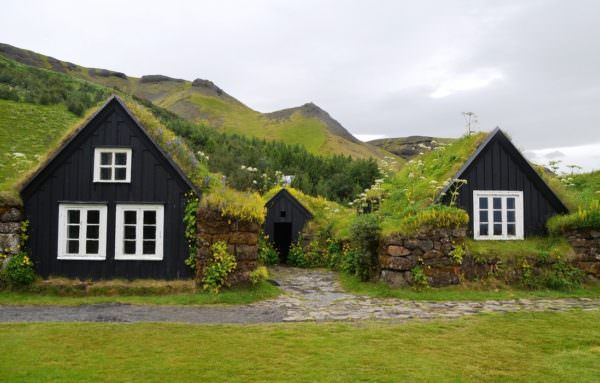
A modern green roof involves more than just plants. It needs high-quality waterproofing and protection against root damage, a drainage system, filter cloth, and a lightweight growing medium. The plants may be small, drought-tolerant ones like sedums, or larger grasses. The system can be modular or site-built, and depending on the planting medium depth, may even resemble a natural meadow or a garden with shrubs and trees.
Project Drawdown ranks green roofs and cool roofs as #73 in their list of solutions to global warming, with an anticipated 0.77 gigaton reduction in carbon dioxide by 2050. If green roofs cover 30% of roof space by 2050 and cool roofs cover 60%, approximately 407 billion square feet of efficient roofing would be in place globally.
A 2024 study published in Nature Cities reports that Seoul’s city-wide green roof implementation could reduce building energy use intensity by up to 7.7%. Another comprehensive 2024 study in Nature Urban Sustainability projected that by 2100, green and cool roofs could reduce HVAC use by up to 71.72% in six cities studied. A 2023 meta-analysis found that green roofs reduce rooftop surface temperatures by an average of 30°C during summer months.
A U.S. General Services Administration study that was removed from its website following the Trump Administration’s anti-green guidance estimated that the heating and cooling savings from green roofs on commercial and public buildings paid back the cost of installation in about 6.2 years.
Residential and Commercial Applications
Green roofs on private residences are very efficient. Despite the high cost of design and installation, which has slowed their adoption as a standard roofing option, they can provide lifetime savings.
Single-family homes accounted for less than 2 percent of green roofs in the U.S. in 2015. Multifamily homes, on the other hand, provide economies of scale that can justify the expense (and sometimes have the square footage to trigger green roof requirements), accounting for 22 percent of green roof projects. That still leaves the vast majority of green roofs to industrial and commercial buildings.
But private homeowners need not despair. Many of the incentives for green roof construction are also available for single-family residences.
Several impressive green roof installations have been completed in recent years:
Will’s Garden at Carle Foundation Hospital is a 2023 Award of Excellence winner that features a therapeutic garden in Urbana, Illinois. The immersive, wheelchair-accessible rooftop included significant technical achievements that allow the plants to grow in only six inches of media.
Construction began on the LXK Office and Residential Campus in Berlin. A designed development, it includes green rooftops and terraces.
Kö-Bogen II, in Düsseldorf, Germany, is a commercial complex features one of Europe’s largest green façades with over 30,000 hornbeam plants that provide a “green heart” and “urban mountain” in the city.
The Vancouver Convention Centre’s six-acre living roof remains the largest in Canada.
The California Academy of Sciences in San Francisco features 1.7 million plants in its living roof.
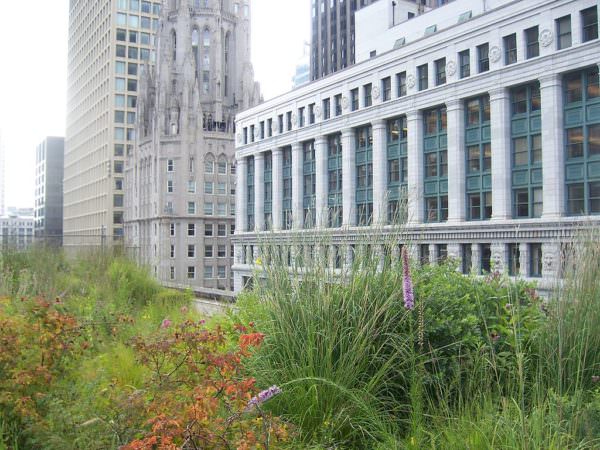
Chicago City Hall’s green roof remains one of the most studied examples, with more than 20,000 plants from 150 species.
Toronto’s Mandate Ends, Its Lessons Remain
Toronto’s bylaw applied to new commercial, institutional, and multi-unit residential developments with more than 2,000 square meters of floor area. Developers who could not fit the required coverage into a floor plan could pay $200 CAD per square meter in fees for the missing ecoroof. The city now advises building applicants that the bylaw is no longer applicable law under the Ontario Building Code.
The repeal followed Bill 17, the Protect Ontario by Building Faster and Smarter Act, which passed on June 3, 2025, after a rapid review process.
The province argued the law bars municipal requirements that go beyond the building code, including Tier 1 of the Toronto Green Standard; city staff disputed that reading, and a builders’ group was already suing the city over the standard. Green Roofs for Healthy Cities founder Steven Peck cited an analysis by local green roof companies that put the added cost at between $1 and $2.50 CAD per square foot of condominium living space, against units selling for $800 to $1,200 CAD per square foot.
Green roofs remain legal and voluntary in Toronto. The city published updated Eco-Roof Incentive Program terms in November 2025, so owners of existing buildings should check whether funding is available.
Where the Rules Stand in 2026
The most aggressive North American ecoroof requirements are concentrated in a handful of U.S. cities, and nearly all of them now treat solar as a qualifying or companion option. The summary below draws on city sources and a 2026 Roofing Brief roundup of mandates by city.
| Jurisdiction | What it requires | Applies to | Status, Nov. 2026 |
|---|---|---|---|
| New York City | Local Laws 92 and 94 (2019): a “sustainable roofing zone” of green roof, solar, or both | New buildings and full roof replacements | In effect |
| San Francisco | Better Roofs Ordinance (2017): 15% of roof as solar or 30% as living roof; SoMa needs 15% solar plus 50% living roof | Most new construction of 10 or fewer occupied floors | In effect |
| Denver | Green Buildings Ordinance (2019): cool roof plus one green option; the green-roof path means 60% vegetation (new) or 18% (existing) | New buildings, additions, and roof permits at 25,000 sq. ft. or more | In effect |
| Portland, Ore. | Central City 2035 ecoroof standard (effective July 2018) | Buildings of 20,000 net sq. ft. or more in the Central City | In effectSolar allowed as an alternative for residential projects since March 2024 |
| Cambridge, Mass. | Article 22 (2021): green roof and/or solar on 80% of available roof, or a per-square-foot payment | Most new buildings over 25,000 sq. ft. | In effect2026 payment is $64.29/sq. ft. of vegetated roof not built |
| Somerville, Mass. | Late 2023 ordinance: vegetation on 80% of available roof area | New mid-rise and high-rise buildings and major renovations, outside the Affordable Housing overlay | In effect |
| Toronto | Green Roof Bylaw (2009): 20% to 60% of available roof, scaled by building size | New buildings over 2,000 square meters | RepealedNo longer in effect since Nov. 3, 2025; Eco-Roof grants for existing buildings remain open |
| France | Climate and Resilience and APER laws: solar or vegetation on a share of the roof | Covered nonresidential new builds, extensions, and heavy renovations | 40% since July 1, 202650% from July 1, 2027; a bill that passed the Senate in Feb. 2026 and awaits National Assembly action would drop the green option |
San Francisco’s 2017 ordinance gives owners a choice between solar and a living roof rather than requiring living roofs outright. Denver’s current ordinance, adopted in 2019, replaced the voter-approved 2017 measure and pairs a cool roof requirement with a menu of compliance options. Portland’s ecoroof standard took effect in July 2018, and the plan was re-adopted in July 2020 after a court challenge.
Portland loosened, Massachusetts tightened. Portland’s Housing Regulatory Relief package, effective March 1, 2024, kept the ecoroof requirement while permitting solar panels as an alternative for buildings with residential uses. On the other side of the country, Cambridge requires green or solar coverage on 80% of available roof area for most new buildings over 25,000 square feet, and developers who build less pay a unit contribution that reaches $64.29 per square foot of vegetated roof in 2026. Neighboring Somerville went further at the end of 2023, requiring 80% vegetated coverage on new mid-rise and high-rise buildings and significant renovations.
France raised its bar, then reopened the debate. French law requires covered nonresidential buildings to put solar or vegetation on part of their roofs, and the share rose from 30% to 40% on July 1, 2026, and will reach 50% on July 1, 2027. A pending bill to align French law with EU rules would, in its Article 45, remove the vegetation option and require solar alone; legislators who object note that the EU buildings directive itself asks member states to account for green roofs.
Vancouver is still writing guidance. The city published a Rain City Green Roof Best Practices Guide in February 2026 and updated its rainwater management requirements in January 2026, but local advocates note that a mandate the council voted to explore in 2018 has not arrived.
Incentives Look Generous, but Few Owners Use Them
New York State extended New York City’s green roof property tax abatement in June 2026. The law, signed June 26, 2026, runs the program through June 30, 2031, at $10 per square foot citywide and $15 per square foot in designated community districts, capped at $200,000 per application and $4 million citywide per year. The application deadline moved to March 15, 2030.
Uptake has been the problem. A 2024 analysis of city Department of Finance records found that only two buildings had received the abatement, which helps explain why lawmakers keep raising the rate. The city’s Department of Environmental Protection runs a separate, rolling grant for green roof retrofits of at least 3,500 square feet on private property; a deputy commissioner told the City Council in 2025 that the program had funded $13 million across 32 sites, mostly green roofs.
Other programs have shrunk. Washington, D.C.’s RiverSmart Rooftops rebate, which offered $15 per square foot in target areas, now carries a notice that the program is closed. Chicago still offers developers in its downtown districts a floor area ratio bonus for green roofs, allowing more buildable space on the same lot.
Barriers to Adoption
Despite growing support, several challenges continue to limit widespread implementation.
- High Costs: Initial installation costs remain a financial barrier. A University of Michigan study found that a 21,000-square-foot green roof costs about $100,000 more to install than a conventional roof. Maintenance costs and the need for specialized expertise add to these expenses.
- Structural Concerns: Existing buildings, especially older ones, may not have been designed to bear the additional weight of saturated soil and vegetation. Assessing and potentially reinforcing structural capacity adds complexity and cost.
- Technical Challenges: The design and construction process requires coordination across multiple disciplines. Green roof components appear on architectural, structural, landscape, and plumbing drawings, while civil engineers handle exterior drainage—creating potential for coordination challenges.
- Policy and Regulatory Gaps: In municipalities without green roof policies, the permitting process for a living roof can pose barriers. Complex approval timelines often mean stormwater management plans are submitted before green roof designs are finalized.
Lack of awareness of green roofs across the public and private sectors, insufficient promotion by government entities, and limited experience with green roof systems in some regions continue to slow adoption. More research is needed to confidently price the public and environmental benefits of green roofs, including their distributed energy savings and cooling effects on surrounding buildings.
Carrots and Sticks: Policy Approaches
Toronto became the first city to require green roofs in 2009; in 2019, New York City became one of the latest major cities to pass mandatory legislation. At least 25 cities in North America now have programs to encourage green roofs, with a trend toward making them mandatory rather than voluntary. The organization also developed the Living Architecture Performance Tool, a free rating system and best practice guide for policymakers.
These cities are taking the next step toward making green roofs a fixture in their skylines:
Portland, Oregon (2020): The city’s “ecoroof” requirement went into effect, mandating that vegetation must cover 100% of roofs on buildings in the central city over 20,000 square feet (with some exceptions).
Denver, Colorado: Denver’s green roof ordinance requires new construction and existing buildings over 25,000 square feet to dedicate portions of their rooftops to vegetation or solar panels. The percentage of vegetation required increases with building size: 20% for 25,000 sq ft buildings, up to 60% for buildings 200,000 sq ft or larger.
San Francisco: The city implemented the first green roof mandate in the United States in January 2017 with its “Better Roofs Ordinance,” requiring living roofs on most new construction as part of the Sustainable City initiative.
New York City: Through the Climate Mobilization Act, Local Laws 92 and 94, passed in 2019, require solar panels or green roofs on all new construction and buildings undertaking major roof renovations. Additionally, the city’s Resolution 66 tripled the tax break for property owners who install green roofs in high-priority areas.
Barriers to Adoption
- Upfront cost. Green roofs cost more to install than conventional roofs, and intensive systems cost several times more than extensive ones. Maintenance and specialized expertise add to the bill.
- Structural capacity. Older buildings may not be designed to carry saturated soil and vegetation. Assessing and reinforcing a roof adds time and cost.
- Green roof components appear on architectural, structural, landscape, and plumbing drawings, while civil engineers handle exterior drainage, which creates room for errors.
- Permitting gaps. Where cities lack green roof policy, approval can be slow, and stormwater plans are often submitted before roof designs are final.
- Housing politics. Ontario and Portland both framed their changes as housing-cost relief. Requirements that lack clear cost data and flexible compliance paths are the most exposed to rollback.
Tips for Planning a Green Roof
For homeowners
- Start small. A garage, shed, carport, or porch roof is a manageable first project and teaches you how plants behave on your site.
- Get the structure checked first. Ask a structural engineer to confirm the roof can carry the system’s saturated weight before you buy materials.
- Choose plants for neglect. Sedums and drought-tolerant natives suited to your region survive best with little irrigation, and native mixes add more habitat value.
- Protect the membrane. Insist on a root barrier, ask about leak detection, and get a warranty that covers the whole assembly, waterproofing included.
- Budget for upkeep. Plan for watering during establishment, weeding, replanting, and at least two inspections a year to keep drains clear.
- Apply before you build. Most rebates and abatements require approval in advance. If your utility charges a stormwater fee, ask whether a green roof earns a credit.
- Handle old materials responsibly. Use Earth911’s recycling search to find outlets for old shingles, membranes, and metal flashing.
For building owners and developers
- Model a biosolar roof. Combining solar panels and vegetation satisfies the compliance menus in New York, Denver, Cambridge, and France, and gives you stormwater and energy benefits from one surface.
- Compare build versus pay. Where cities offer payment in lieu, as Cambridge does, price the payment against the lifecycle savings of building the roof.
- Hire credentialed teams. Look for designers and installers with Green Roof Professional (GRP) training or similar credentials, and require a written maintenance plan.
For advocates and policymakers
- Watch housing bills closely. Toronto’s requirement disappeared by provincial order within months of Bill 17. Comment early when code or zoning relief packages are drafted.
- Push for performance-based rules. Standards keyed to stormwater retention and heat reduction let green, cool, and solar roofs compete on results.
- Fund maintenance and monitoring. Toronto’s experience shows long-term success is achievable: a recent study found more than 90% of the city’s green roofs thriving.
Resources
- Green Roofs for Healthy Cities: Green Roof and Wall Policy in North America
- Living Architecture Monitor for ongoing policy news
- Project Drawdown: Deploy Green Roofs
- Your local planning, building, or stormwater department
Related Earth911 Reading
- Design Your Landscaping to Handle Stormwater Runoff
- How To Combat the Urban Heat Island Effect at Home
- How To Create a Rain Garden
- What Can You Do About Nonpoint Source Pollution?
Editor’s Note: This article was updated in November 2026 to include recent research, policy developments, and examples of green roof installations across North America.
The post Green Roof Policies Face: 2026 Update appeared first on Earth911.
https://earth911.com/home-garden/green-roof-policies-are-a-growing-trend/
What’s in your junk drawer? An educated guess would include old smartphones, glasses frames and cases, and outdated or broken watches.
It is tempting to throw out stuff like this. It certainly doesn’t make sense to keep it around gathering dust or taking up space. But consider this: You can reuse these common items, some for entirely new purposes. Reconsider the following reuse opportunities.
New Tricks for Old Smartphones and Tablets

U.S. wireless carriers shut down their 3G networks in 2022, so phones that only support 3G can no longer place calls, including calls to 911. According to the FCC, a phone needs 4G LTE with voice over LTE (VoLTE) or 5G to work with today’s network, so check your spare’s specifications before relying on it.
Allstate Protection Plans’ 2025 Mobile Survey found that 27% of Americans replace their phones every two years, 23% keep them for three to four years, and 21% wait until the phone stops working altogether. The survey also found the average household has 1.8 unused smartphones sitting idle in drawers, closets, and boxes stored in the garage. That still leaves a lot of working, albeit aging, smartphones lying around. Use them as spares for emergency purposes, particularly if you live in an area prone to earthquakes or sudden violent storms like tornadoes.
- Keep a couple of fully charged phones in your home in the event of an emergency. The basement is one good place to keep them.
- Keep a phone and charging device in each vehicle you own.
Old smartphones have apps that work independently of the phone function. An unactivated phone can still connect to Wi-Fi networks in your house. You can use your old smartphone in the following ways:
- Use it as an MP3 player to listen to music while on public transit or exercising.
- Turn it into a remote-control device for your entertainment center or to stream services through devices like the Google TV Streamer, which replaced Google’s Chromecast line in 2024.
- Use it as a wake-up alarm or kitchen timer. Even the oldest cellphones have a timer or alarm function.
Old smartphones and old tablets also make excellent dedicated electronic photo albums.
Replace the Lenses in Your Eyeglass Frames
Before you drop a lot of money on Tom Ford or Dolce & Gabbana frames, see if you can buy insurance for replacing broken frames or lenses. Chances are you won’t want to replace that look for at least a few years, particularly if they’re one of those timeless styles that always looks cool.
Did you drop your sunglasses again? Instead of heading to the mall for a new pair, just replace the lenses.
Revant Optics sells replacement lenses for about 75 brands, including Oakley, Ray-Bans, Costa, and Maui Jim. Depending on the brand, you can also select from a variety of lens tints and colors that are customized to activities like fishing or skiing.
Store Stuff in Surplus Eyeglass Cases
Every time you buy a pair of glasses, a new case comes along with it. How many cases do you really need for your glasses?
- Use old cases to organize and store pencils, crayons, and markers for the kids’ projects.
- Stuff bandages and ointment in a couple to make a basic first-aid kit for your vehicle.
- Eyeglass cases also make great manicure kits.
- Explore this collection of eyeglass case reuse ideas.
Bonus: Stash extra keys and cash that the kids will never find.
Give an Old Watch a New Look

Take a look at the old watches in your jewelry box or junk drawer. Chances are that a new band can make an old watch appealing again. From leather or cloth to metallic or rubber chains, a wide variety of watch band styles are available. And don’t hate a watch because it’s hard to strap on. Try an expandable strap or butterfly clasp.
Is the watch really broken? Get out an engraving tool. Give the face a new look to create an interesting bracelet, necklace, or pendant. Paint over it and etch an interesting design or tiny decal. Get even more ideas for turning old watches into cufflinks, earrings, sculptures, and more from; check out even more reuse ideas for old watches on Pinterest.
No matter whether you consider these reuse tips or repurposing tips, one thing is for sure: Keeping these materials out of the landfill helps reduce waste and keeps money in your pocket.
Now go dive into that junk drawer. It’s been lonely in there lately.
Editor’s Note: Content provided by SocialMonsters. Originally published on March 9, 2016, this article was updated in November 2026.
The post Guest Idea: 4 Old Products You Can Reuse Instead of Toss appeared first on Earth911.
https://earth911.com/inspire/4-products-reuse-toss/
Think about what goes into your bathroom trash: empty toothpaste tubes, worn toothbrushes, floss containers, and the occasional mouthwash bottle. Together, they make oral care worth a second look.
Packaging is a good place to begin. Lumineux® Whitening Mouthwash, for example, comes in a bottle made with BPA-free recycled plastic. Choosing products with recycled packaging can help support more sustainable oral care habits. Check local recycling guidelines to ensure proper disposal.
There are other simple changes you can make without sacrificing dental hygiene.
7 Simple Tips for a Greener Oral Care Routine
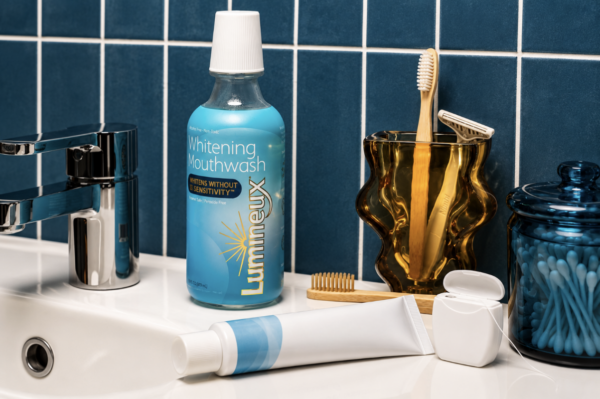
1. Choose Mouthwash With Recycled or Reduced Packaging
Before picking up a new bottle, look at its packaging. Does the manufacturer state how much recycled material it uses? Is there an extra box or wrapping that serves no obvious purpose?
A 2023 life-cycle study published in Environmental Research found that making bottle-grade PET resin from used PET bottles could cut greenhouse gas emissions by around 60% compared with virgin PET production in the scenarios studied. That’s a comparison of manufacturing processes, not a verified saving for a particular mouthwash bottle.
There’s also an important distinction: recycled means a product contains recovered material; recyclable means it can go through an appropriate recycling process after use.
A recycling symbol is no substitute for checking what your local program actually accepts.
2. Turn Off the Tap While Brushing
You don’t need a new product to save water. You only need to stop letting it run down the drain.
According to the U.S. Environmental Protection Agency, turning off the tap while brushing can save up to eight gallons a day. For someone who currently leaves the water running, that could add up to approximately 2,920 gallons over a year.
Wet your toothbrush, turn off the faucet, and turn it back on only when you need water. Rinse the sink once when you’re finished rather than leaving the tap running throughout your routine.
3. Switch to Bamboo or Replaceable-Head Toothbrushes
When bristles wear out, the handle often remains perfectly usable. A toothbrush with a replaceable head lets you keep that handle for longer.
Bamboo-handled brushes offer another option. A 2020 British Dental Journal study compared four toothbrush designs over five years. Bamboo and replaceable-head manual brushes had the lowest environmental impacts across the categories studied. The electric toothbrush examined had 11 times the climate-change impact of the bamboo model.
That isn’t a reason to throw out a working electric brush. Use what you already have, and explore alternatives when it’s time for a replacement.
Choose a brush that cleans your teeth comfortably and effectively. Replace worn heads or brushes when the bristles fray. For bamboo handles, check whether the bristles must be removed before composting the untreated handle. Don’t assume the entire brush is compostable.
4. Choose Toothpaste More Thoughtfully
Toothpaste tubes aren’t all made alike. Some use layers of different materials, while others use plastics that certain recycling programs can process. Check the manufacturer’s packaging instructions and your local rules before assuming a tube belongs in the recycling bin.
You may also come across toothpaste tablets, powders, or products sold with less packaging. Consider the complete package rather than the format alone. A product isn’t automatically better for the environment because its ingredients are described as natural.
Read the ingredient label, too. Oral care still needs to work. Choose toothpaste with proven cavity protection, including fluoride when appropriate, rather than making a choice based only on an environmental slogan.
5. Explore Lower-Waste Dental Floss Options
Think about the floss dispenser before you throw it away. If you’re buying a new plastic case every time you finish a spool, a refillable container could reduce that packaging.
Alternative floss materials, including silk, are also available. But words such as biodegradable and compostable deserve a closer look. Coatings can affect whether a material breaks down, and some products need industrial composting conditions.
Check the instructions before deciding where used floss belongs. Most importantly, keep cleaning between your teeth every day, whether you use floss or another suitable interdental cleaner.
6. Recycle Oral Care Products Responsibly
An empty mouthwash bottle may be accepted in curbside recycling while a toothbrush isn’t. Toothbrushes combine different components, and leftover paste or layered materials can complicate recycling toothpaste tubes.
Earth911’s guide to recycling toothbrushes and toothpaste tubes explains these challenges and describes take-back options for products that local recyclers may reject.
Start with your community’s recycling instructions. Empty and rinse bottles where required, and keep unaccepted items out of the bin. Then search for a nearby collection site using Earth911’s Recycling Search or check whether a manufacturer offers a mail-back program.
Recycling works better when the right materials reach the right facilities. Guessing can make the job harder.
7. Support Brands With Meaningful Environmental Initiatives
A company can put a leaf on its packaging without explaining what it’s actually doing for the environment. Look for specifics instead: recycled-content figures, reduced packaging, clear targets, and progress reports.
Tree planting is another initiative worth examining. Through the Lumineux® mouthwash subscription program, one tree is planted for every new subscription. That’s a concrete commitment, but it doesn’t necessarily mean that each purchase delivers a specific carbon benefit.
If tree planting matters to you, look for information about where trees go, how they’re cared for, and whether the company reports on their survival.
Ask similar questions about packaging improvements. The clearer the evidence, the easier it is to judge a brand’s claims.
Build a Greener Oral Care Routine, One Habit at a Time
Start with what you already have. Turn off the tap. Finish products before replacing them. When it’s time to shop, compare packaging and choose options that make sense for your needs and your local recycling system.
You don’t have to make every change at once. A few habits you can stick with will do more good than a bathroom full of replacements you didn’t need.
The goal is to reduce unnecessary waste while continuing to give your teeth and gums the care they need.
About the Author
This sponsored article was written by Dr. Kourosh Maddahi, DDS, a Beverly Hills cosmetic dentist and graduate of the University of Southern California School of Dentistry. He is the founder of Lumineux® and has written several books about the relationship between oral health and overall wellness. Learn more about his work on his official author page.
Title image courtesy of Canva.
The post Guest Idea: 7 Simple Tips for a Greener Oral Care Routine appeared first on Earth911.
https://earth911.com/health/guest-idea-7-simple-tips-for-a-greener-oral-care-routine/

‘We must go further’: Latest COP31 draft text fails to deliver clear pathway from fossil fuels

COP31 Bulletin Day 10: New draft keeps electrification goal but drops fossil fuel references

As COP31 weighs 35×35 pledge, IEA says Hormuz crisis driving electrification

-
Climate Change1 year ago
Guest post: Why China is still building new coal – and when it might stop
-
Greenhouse Gases1 year ago
Guest post: Why China is still building new coal – and when it might stop
-

 Renewable Energy1 year ago
Sending Progressive Philanthropist George Soros to Prison?
-
Greenhouse Gases1 year ago
嘉宾来稿:探究火山喷发如何影响气候预测
-

 Climate Change2 years ago
Analysis: China’s CO2 falls 1% in Q2 2024 in first quarterly drop since Covid-19
-

 Climate Change1 year ago
嘉宾来稿:探究火山喷发如何影响气候预测
-

 Green Living2 years ago
Our Picks for the Top 2024 Black Friday and Cyber Week Sales From Sustainable Brands
-

 Renewable Energy5 months ago
Send a Bible to a Starving Child