


On September 23, Uranium Energy Corp (UEC) made a historic announcement to buy 100% of Rio Tinto’s Wyoming assets. These assets include the fully licensed Sweetwater Plant and several uranium mining projects with about 175 million pounds of uranium resources. This huge acquisition must have a huge price tag attached. So, what is it worth?
Unlock below.
Unlocking the UEC and Rio Tinto Deal Value
The total cost of the deal is $175 million, which UEC will pay using its available funds. UEC disclosed in the press release that it is buying 100% of the shares in two Rio Tinto subsidiaries that hold its Wyoming uranium assets. As part of the deal, UEC will replace $25 million in surety bonds for future reclamation costs. The deal is expected to close in the fourth quarter of 2024 after fulfilling all the standard conditions.
Amir Adnani, President and CEO, stated:
“Expanding our production capabilities with the acquisition of highly sought after and fully licensed uranium assets in the U.S. is an important and timely milestone, especially in Wyoming, where we have recently restarted ISR production. These assets will unlock tremendous value by establishing our third hub-and-spoke production platform and cement UEC as the leading uranium developer in Wyoming and the U.S.”
UEC Expands Its Uranium Portfolio, Builds the 3rd Hub in the U.S.
Donna Wichers, Vice President of Wyoming Operations remarked exuberantly,
”In my 46 years of operating experience in Wyoming, this is the first time that such a large portfolio of assets has been consolidated with one company, offering a pathway to near-term production, development and untapped exploration potential.”
UEC has gained 12 uranium projects in Wyoming’s Great Divide Basin. By acquiring Rio Tinto’s Sweetwater Plant and uranium projects, UEC creates its third U.S. hub-and-spoke production platform, unlocking the potential of its extensive assets. It includes access to licensed uranium facilities and mining resources.
Notably, The Sweetwater Plant, capable of processing 3,000 tons per day and 4.1 million pounds annually, offers flexibility for both ISR and conventional mining. As said before, a complete acquisition adds around 175 million pounds of uranium resources. Half can be mined using cost-effective ISR methods, which UEC will prioritize, while conventional mining will provide future growth opportunities. Thus, there’s a lot of flexibility in the production process.
On September 15, 2022, UEC filed the S-K 1300 Technical Report Summary, revealing resources for its Wyoming Hub-and-Spoke ISR Platform.
A MESSAGE FROM URANIUM ROYALY CORP.
NASDAQ’s Sole Uranium Focused Royalty Company

The company is Uranium Royalty Corp., trading as (NASDAQ: UROY, TSX: URC), holding a strong portfolio includes strategic acquisitions in uranium interests with royalties, streams, equity in uranium companies, and physical uranium trading. Their strategic approach aims to support cleaner, carbon-free nuclear energy while fostering long-term relationships based on sustainability principles.
Learn about the company’s portfolio of royalty assets and uranium holdings >>
NASDAQ: UROY | TSX: URC
*** This content was reviewed and approved by Uranium Royalty Corp. and is being disseminated on behalf of Uranium Royalty Corp. by CarbonCredits.com for commercial purposes. ***
Other Uranium Projects Bolstering UEC’s Resource Base in The Great Divide Basin
UEC also gains 53,000 acres of land and valuable geological data from Rio Tinto, increasing its exploration footprint to 108,000 acres in Wyoming’s Great Divide Basin. Other than the Sweetwater Plant, UEC will be adding Red Desert and Green Mountain uranium projects to its portfolio.
Red Desert Uranium Project
The Red Desert Project covers 20,005 acres in Wyoming’s Great Divide Basin. The project has about 42 million pounds of uranium resources across three deposits, with potential for more discoveries near the Sweetwater Plant. These deposits are conducive for ISR mining, as the uranium lies below the water table in sands confined by impermeable layers.
Green Mountain Uranium Project
Located 22 miles from the Sweetwater Plant, the Green Mountain Project spans 32,040 acres of mining and exploration rights. It holds an estimated 133 million pounds of uranium resources across five deposits. Some areas are suitable for ISR mining, while others are better for conventional methods.
Adnani further added,
“With this Transaction, we are building upon our transformative acquisition of Uranium One Americas in 2021, which added a large portfolio of holdings in the Great Divide Basin of Wyoming. We recognized early on that there are meaningful development synergies with the Rio Tinto assets, particularly the Sweetwater Plant.”
Map: Shows the position of Rio Tinto’s assets relative to the existing UEC portfolio in the Great Divide Basin

Source: UEC
Empowering America’s Uranium Future: A Stronger Domestic Supply
On May 13, President Biden signed the Prohibiting Russian Uranium Imports Act, a significant law to enhance America’s energy and economic security by reducing reliance on Russian nuclear power. This legislation reestablishes U.S. leadership in the nuclear sector and secures the country’s energy future. With $2.72 billion in funding, it increases domestic enrichment capacity and demonstrates a commitment to long-term nuclear growth while promoting a diverse market for reliable commercial nuclear fuel.
With growing clean energy demand and a U.S. ban on Russian uranium, UEC is well-positioned to meet the increasing need for domestic uranium. Another recent big news was Microsoft’s partnership with Constellation Energy to revive Three Mile Island by 2028, generating over 800 megawatts of carbon-free energy.
Three Mile Island (TMI) in Pennsylvania is a significant site in nuclear energy history, known for the severe accident in 1979 that led to the closure of TMI-Unit 2. TMI-Unit 1 continued operations until 2019 when it was shut down due to economic reasons. However, this is a huge initiative amid the surge in nuclear energy, uranium demand, and of course AI expansion.
- With global growth in nuclear energy and demand for uranium, the US is currently the largest consumer of uranium.

Source: UEC
In conclusion, this recent acquisition of Rio Tinto showcases UEC’s dedication to establishing itself as the leading uranium company in North America, while also strengthening domestic supply chains to meet the rising demand for clean energy.
- MUST READ: The Atomic Awakening
The post Uranium Energy Corp (UEC) Fully Acquires Rio Tinto’s Wyoming Assets—What’s the Deal Value? appeared first on Carbon Credits.

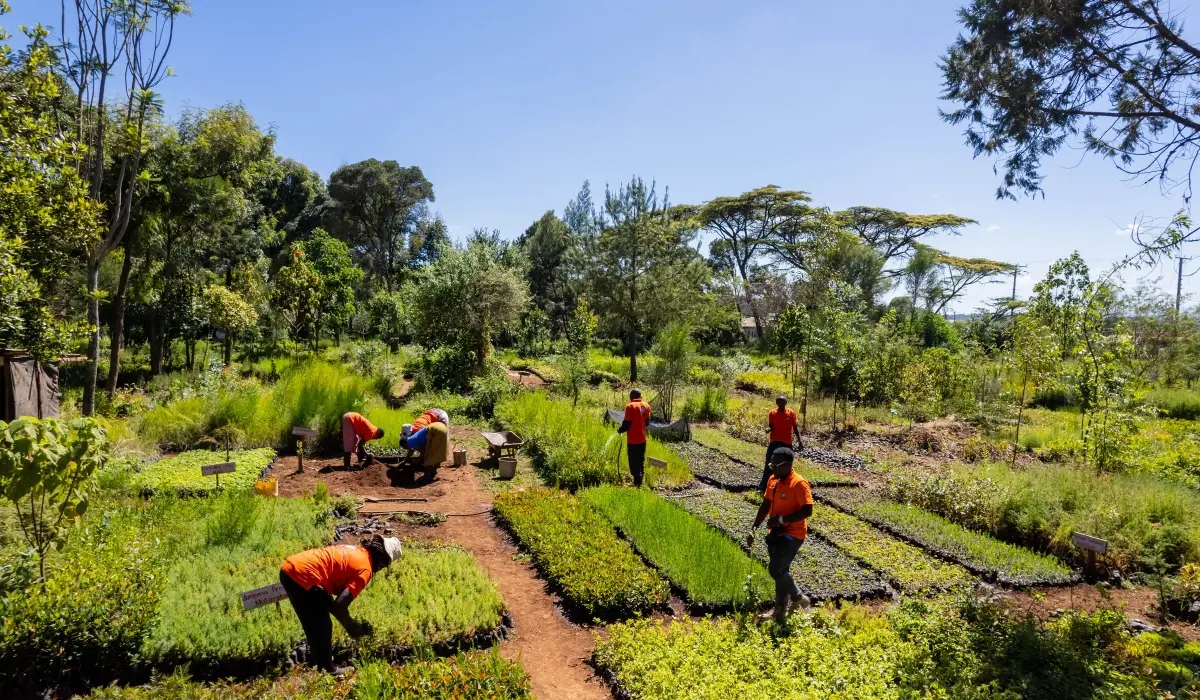
Carbon credit providers vs marketplaces is the first comparison many buyers try to make. In this comparison, a carbon credit provider is the project developer: the company that originates credits from its own projects and sells them directly. A carbon credit marketplace is a platform that lists credits from many projects at published prices.

Carbon Footprint
Democrats who call climate change an emergency should not defend a permitting system too slow to build the clean energy that would address it.”
Democrats, Take The Deal. New York Times editorial, Nov. 12.
Insetting program design starts with your supplier map. The carbon claim comes much later.
Consider a coffee procurement team that funds a farm intervention before checking its sourcing data. The supplier aggregates coffee lots from several regions. The buyer lacks farm-level traceability. Another purchaser expects to report the same outcome. A more attractive project brochure solves none of these problems.
If the distinction between a value-chain intervention and a purchased credit is still open, read CCC’s Insetting vs Offsetting guide before you set the brief.
Insetting program design begins with the purchasing relationship and works outward. You need to decide 1) where an intervention belongs, 2) what business problem it addresses, 3) who pays for it, 4) how results will be measured, and 5) what the evidence will let you say about them. This five-step playbook turns that sequence into a procurement plan.
Step 1: Insetting program design starts with supplier mapping
Start with the commodities that matter most to your Scope 3 inventory and sourcing continuity. Ask finance for spend by supplier, sustainability for the emissions baseline, and category managers for origin and volume records. Then identify which suppliers can trace material to a jurisdiction, sourcing region, producer group, or individual land-management unit.
The level of traceability affects what you can account for. Under the GHG Protocol Land Sector and Removals Standard, the spatial boundary for purchased land-based products depends on the traceability associated with each volume. Farm-specific factors or removals require physical traceability through an acceptable chain-of-custody model. A contract with a tier-one trader, by itself, does not establish a link to the farms behind its deliveries.[1]
Build a first-pass table with five columns: commodity and annual volume; supplier and origin; current traceability level; land-use and production risks; and the business owner who can change the purchasing terms. Mark missing data plainly. A blank cell is cheaper to fix before a program starts than after a claim is drafted.
If your company sets an SBTi Forest, Land and Agriculture target (FLAG), keep its land-related target boundary separate from energy and industry emissions. The current FLAG guidance also requires relevant companies to assess primary deforestation-linked commodities in their value chains.[2]
Step 2: Choose a commodity and jurisdiction for a pilot
Select one supply corridor where the sourcing connection can be established and procurement has a reason to stay. A useful pilot has repeat purchases, suppliers willing to share records, an intervention matched to a diagnosed problem, and a defined plan to measure the result. Carbon potential alone is a poor selection rule if the supplier cannot deliver the crop your business needs.
Compare candidate regions on land-use risk, supplier concentration, local rights and tenure, the availability of baseline data, and exposure to drought, erosion, or forest conversion. Check the relevant legal requirements separately. A nature project does not satisfy a due-diligence obligation merely because it has a carbon method attached.
Consider a coffee buyer sourcing from two districts. In the first, producer-group records identify the farms, while recent dry seasons have increased rejected green coffee lots. In the second, deliveries pass through several intermediaries and farm origins are unknown. Pilot shade management in the first district, with local agronomic advice and quality checks built into the plan. The buyer can trace purchases there and test the intervention against a defined sourcing problem.
Use a short decision memo to record why the selected corridor beats the alternatives, what remains uncertain, and what would stop the pilot. That memo is the first control against a project drifting toward whatever happens to photograph well.
Step 3: Design the supplier engagement and commercial model
The intervention needs an owner on each side of the contract. Decide who supplies planting material or training, who maintains the practice, who bears the cost if a harvest disappoints, and how long the buyer expects to purchase from participating suppliers. Where smallholders participate, budget cash flow and technical support for practices that offer a later return.
Put these terms in a supplier agreement or pilot addendum. It should cover eligible farms and volumes, consent to data collection, access for monitoring, any land or carbon rights that matter, benefit sharing, and what happens if the purchasing relationship ends. Ask local counsel and producer representatives to review the arrangement. The Accountability Framework is a useful reference for supply-chain work involving forests, ecosystems, and human rights.[3]
Avoid assigning an automatic carbon benefit to the buyer. The contract should say which party has the right to report each outcome, how overlapping claims will be checked, and how any issued credits will be handled. A reduction reported in a buyer’s inventory cannot simply be sold for someone else’s offset claim without an accounting review. SBTi FLAG guidance excludes purchased credits used as offsets from near-term FLAG target achievement.[2]
Set commercial measures beside environmental ones: delivered volume, rejection rate, supplier retention, and procurement cost. They tell you whether the program works as a supply-chain investment, even if carbon accounting takes longer to resolve.
Step 4: Build monitoring, reporting, and verification before rollout
Agree on the baseline and data flow before paying for a full rollout. Identify the land units or sourcing regions in scope, the practices that change, the records suppliers already keep, and the additional measurements the program requires. Decide which data can come from field visits, transaction records, or remote sensing, and who checks each source.
For carbon, separate three questions. Did the practice happen? Did emissions or removals change under an applicable method? Can the buyer attribute a defensible share to its purchased goods without double counting? The GHG Protocol’s 2026 guidance includes dedicated chapters on spatial boundaries, data and methods, evaluating actions, credited outcomes, and assurance.[1] These are distinct jobs. A photograph of a planted tree answers only part of the first.
CCC’s MRV and Additionality article explains the separate evidence questions a project reviewer will ask.
Create an evidence file for every reporting period: dated supplier and farm records, purchase volumes, methods and emission factors, uncertainty, quality checks, and changes from the baseline. Specify who can challenge the data and how corrections are recorded. If a project also seeks credit certification, keep project accounting and corporate inventory accounting separate. The GHG Protocol says its land standard focuses on entity-level inventories and does not set the rules for credit certification.[4]
Start with the minimum viable measurement design that can survive review. Add complexity when the pilot tells you which data actually changes a decision.
Step 5: Decide what can be reported and claimed
Insetting program design needs reporting rules before the marketing copy. Procurement, sustainability, finance, and legal should agree on four distinct outputs: operational performance; observed land or nature outcomes; inventory effects, if the accounting criteria are met; and any separately issued credits. One dashboard can display them, but they should not share a single unqualified headline.
SBTi FLAG guidance allows certain land-based removals within a company’s operations or supply chain to contribute to FLAG pathways, subject to criteria including permanence, traceability, data quality, and allocation. It does not allow purchased offsets to meet near-term FLAG targets.[2] Eligibility therefore depends on evidence and the applicable target rules, not on calling an activity “insetting.”
Draft a claims register. For each proposed sentence, record the period, boundary, data owner, calculation method, reviewer, and whether the result is measured, estimated, or still a goal. If the evidence supports only “we funded a pilot with 200 farms,” say that. Do not turn a funding fact into a verified emissions reduction.
What good looks like by year three
Treat year three as a review point, not a promised payback date. A mature pilot should have mapped participating supply volumes, a stable supplier agreement, a repeatable data collection process, and a comparison of commercial and environmental results against the baseline. It should also have a documented answer for outcomes that cannot be included in the buyer’s inventory.
Scale only where the pilot improves a sourcing decision and the evidence can follow the product. If neither condition holds, redesign the intervention or change the corridor. A disciplined program can conclude that a site is unsuitable. That is useful procurement intelligence.
Discuss your insetting program with CCC
Carbon Credit Capital designs nature-based supply chain investments around sourcing needs and measurable sustainability outcomes. Schedule a consultation with our carbon and sustainability experts to map your tier-one supplier network, FLAG exposure, and first pilot decision.
Sources
[1] GHG Protocol, Land Sector and Removals Standard, version 1.1, and companion Guidance, June 2026: https://ghgprotocol.org/land-sector-and-removals-standard ; https://ghgprotocol.org/land-sector-and-removals-guidance
[2] Science Based Targets initiative, Forest, Land and Agriculture Science-Based Target-Setting Guidance, version 1.2, March 2026, especially pp. 16–17, 37, and 41: https://sciencebasedtargets.org/resources/files/SBTiFLAGGuidance.pdf
[3] Accountability Framework initiative, Accountability Framework and guidance for companies: https://accountability-framework.org/
[4] GHG Protocol, Frequently Asked Questions: Land Sector and Removals Standard, questions 10 and 18: https://ghgprotocol.org/blog/frequently-asked-questions-land-sector-and-removals-lsr-standard



-
Climate Change1 year ago
Guest post: Why China is still building new coal – and when it might stop
-
Greenhouse Gases1 year ago
Guest post: Why China is still building new coal – and when it might stop
-

 Renewable Energy1 year ago
Sending Progressive Philanthropist George Soros to Prison?
-
Greenhouse Gases1 year ago
嘉宾来稿:探究火山喷发如何影响气候预测
-

 Climate Change2 years ago
Analysis: China’s CO2 falls 1% in Q2 2024 in first quarterly drop since Covid-19
-

 Climate Change1 year ago
嘉宾来稿:探究火山喷发如何影响气候预测
-

 Renewable Energy5 months ago
Send a Bible to a Starving Child
-