


Introduction Iconic Sustainable Park in the World
Explore the world’s most iconic sustainable parks, where ecological harmony meets innovative design. From repurposed industrial landscapes to urban green oases, these parks showcase a commitment to environmental stewardship and sustainable practices.
Join us on a journey through lush greenery, cutting-edge eco-friendly technologies, and a harmonious blend of nature and urbanity. Discover how these ten parks across the globe are setting the standard for sustainable living, conservation, and community well-being.
List of 9 Iconic Sustainable Park in the World
Singapore Botanic Gardens, Singapore: Blending lush greenery with sustainable practices, this UNESCO World Heritage site emphasizes conservation and biodiversity.
Parque La Mexicana, Mexico City, Mexico: A modern park with recycled materials, green roofs, and a rainwater harvesting system, promoting environmental awareness.
Landschaftspark Duisburg-Nord, Germany:Transformed from an industrial site, this park showcases adaptive reuse, with repurposed structures and sustainable lighting.
High Line, New York City, USA: A repurposed elevated railway turned green space, featuring native plants, efficient irrigation, and a commitment to ecological restoration.
Bishan-Ang Mo Kio Park, Singapore: Integrating water-sensitive design, this park focuses on flood control, water purification, and natural habitat creation.
Biosphere 2, Arizona, USA: Although not a traditional park, it’s an iconic sustainable research facility exploring ecological concepts and sustainable living.
Kings Park and Botanic Garden, Perth, Australia: Showcasing native flora, water-wise landscaping, and conservation efforts, promoting environmental stewardship.
Parco Dora, Turin, Italy: Formerly an industrial area, this park combines green spaces, art installations, and sustainable design, symbolizing urban renewal.
Eden Project, Cornwall, UK: While not a park, it’s a sustainable garden with iconic biomes showcasing different climates, emphasizing environmental education and conservation.
“The Iconic Sustainable Park stands as a global beacon of environmental stewardship, seamlessly blending cutting-edge eco-friendly design with lush green spaces, exemplifying a harmonious coexistence between urban development and nature’s vitality.”

Singapore Botanic Gardens
The Singapore Botanic Gardens, a UNESCO World Heritage site, stands as a testament to the seamless integration of nature and sustainability. Spanning 158 years, this iconic park in the heart of the city-state embraces a commitment to conservation and biodiversity. The lush landscapes feature a diverse array of plant species, with a focus on native flora.
Beyond its aesthetic appeal, the Singapore Botanic Gardens incorporates sustainable practices such as water recycling, energy-efficient lighting, and eco-friendly landscaping. The Gardens’ holistic approach extends to educational programs, raising environmental awareness and fostering a sense of responsibility towards the planet. Whether exploring the National Orchid Garden or strolling along the Symphony Lake, visitors are immersed in a green haven that exemplifies the harmonious coexistence of urban life and nature.

Parque La Mexicana, Mexico City
Parque La Mexicana in Mexico City emerges as a shining example of modern urban sustainability. This vibrant park not only offers recreational spaces but also integrates eco-friendly features into its design. Emphasizing environmental consciousness, Parque La Mexicana incorporates recycled materials, green roofs, and a rainwater harvesting system.
The park’s commitment to sustainability extends to energy-efficient lighting and waste management practices, promoting a cleaner and greener urban environment. Nestled amidst the bustling city, Parque La Mexicana serves as a model for how metropolitan areas can prioritize ecological responsibility while providing a welcoming retreat for residents. Whether enjoying the open green spaces or participating in community events, visitors experience firsthand the harmonious blend of nature and sustainability in this iconic Mexican park.

Landschaftspark Duisburg-Nord, Germany
Landschaftspark Duisburg-Nord in Germany stands as a remarkable testament to the transformative power of sustainable urban planning. Once an industrial site, this iconic park has been ingeniously repurposed, preserving the industrial heritage while embracing environmental consciousness.
The park features adaptive reuse of industrial structures, with illuminated catwalks and climbing structures integrated into former blast furnaces. Sustainable lighting enhances the park’s nocturnal allure, while the ingenious repurposing of structures showcases a commitment to sustainability. Landschaftspark Duisburg-Nord not only provides recreational spaces but also serves as a symbol of urban renewal and environmental creativity, demonstrating how repurposing industrial spaces can contribute to sustainable, green urban landscapes.

High Line, New York City
The High Line in New York City exemplifies urban sustainability through innovative repurposing. What was once an abandoned elevated railway has been transformed into a linear park, seamlessly blending nature and urban design.
This iconic park features native plants, sustainable landscaping, and a commitment to ecological restoration. The High Line showcases the potential for adaptive reuse, providing a green oasis in the heart of Manhattan. Efficient irrigation systems and a dedication to environmental stewardship contribute to the park’s sustainability. As visitors stroll along this elevated greenway, they witness a harmonious convergence of urban development and environmental responsibility, making the High Line a globally recognized model for transforming disused infrastructure into vibrant, sustainable public spaces.
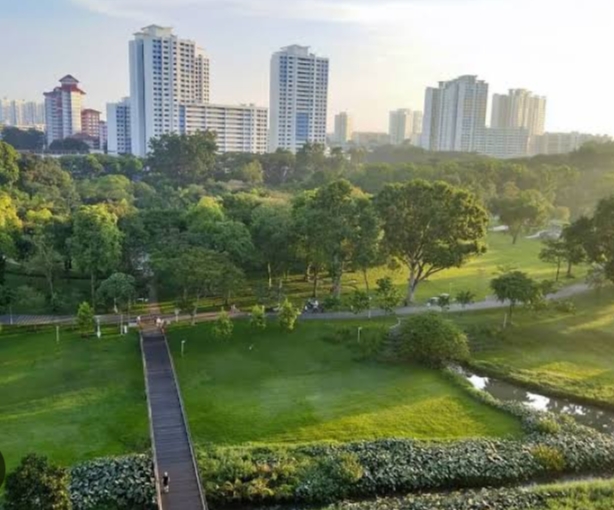
Bishan-Ang Mo Kio Park, Singapore
Bishan-Ang Mo Kio Park in Singapore is a shining example of sustainable urban planning. This iconic park goes beyond traditional green spaces, incorporating water-sensitive design to address both recreational and environmental needs.
The park features a naturalized river, providing flood control, water purification, and enhancing biodiversity. Sustainable practices include the use of recycled materials, energy-efficient lighting, and eco-friendly landscaping. Bishan-Ang Mo Kio Park not only serves as a serene recreational area but also demonstrates Singapore’s commitment to sustainable development, showcasing how urban environments can harmonize with nature to create resilient and eco-friendly spaces for the community.

Biosphere 2, Arizona, USA
Biosphere 2 in Arizona, USA, is a unique facility that, while not a traditional park, embodies sustainable principles and ecological research. Conceived as a closed ecological system, Biosphere 2 explores the possibilities of self-sustaining environments and human habitat.
The facility incorporates sustainable practices such as controlled ecosystems, energy-efficient technologies, and waste recycling. Although Biosphere 2 is primarily a scientific research center, it serves as a symbol of humanity’s pursuit of sustainable living solutions and environmental stewardship. Visitors can engage with educational programs to learn about ecological systems and the importance of sustainability in shaping the future.

Kings Park and Botanic Garden, Perth, Australia
Kings Park and Botanic Garden in Perth, Australia, stands as an iconic and sustainable urban green space. This expansive park not only offers breathtaking views of the city and the Swan River but also showcases a commitment to conservation and environmental responsibility.
The park emphasizes the use of native plants, promoting biodiversity and water-wise landscaping practices. Sustainable design features, such as efficient irrigation systems and eco-friendly construction materials, contribute to the overall environmental ethos. Kings Park and Botanic Garden not only serve as a recreational haven but also as an educational hub, fostering an appreciation for Western Australia’s unique flora and advocating for sustainable practices in urban development.

Parco Dora, Turin, Italy
Parco Dora in Turin, Italy, is an exemplary urban park that illustrates the successful transformation of an industrial area into a sustainable and vibrant public space. This iconic park integrates greenery, public art, and sustainable design, symbolizing urban renewal and environmental consciousness.
Parco Dora features reclaimed industrial structures, repurposing them for recreational use. The park incorporates sustainable materials, green technologies, and eco-friendly landscaping practices. Visitors can enjoy the juxtaposition of green spaces with remnants of the area’s industrial past, showcasing how cities can balance historical preservation with contemporary sustainability. Parco Dora stands as a testament to Turin’s commitment to creating inclusive, eco-friendly urban spaces for its residents and visitors alike.

Eden Project, Cornwall, UK
The Eden Project in Cornwall, UK, is not a traditional park but rather a groundbreaking environmental complex. This iconic project consists of a series of large biomes housing different climates and ecosystems, serving as a living educational center for environmental sustainability.
The Eden Project promotes sustainable practices through its architecture, using recyclable materials and energy-efficient design. It focuses on education and conservation, raising awareness about the importance of biodiversity and environmental stewardship. The project demonstrates how innovation and ecological awareness can coexist, making it a global symbol of sustainable living and a must-visit destination for those passionate about environmental issues.

Conclusion Iconic Sustainable Park in the World
The world boasts a collection of iconic sustainable parks that transcend traditional notions of green spaces.
From the lush landscapes of the Singapore Botanic Gardens to the adaptive reuse of industrial spaces in Landschaftspark Duisburg-Nord, each park represents a harmonious blend of nature and innovation.
Parque La Mexicana in Mexico City showcases a modern approach to sustainability, integrating recycled materials and green infrastructure. Meanwhile, the High Line in New York City stands as a testament to the transformative power of repurposing urban infrastructure into a vibrant greenway.
Bishan-Ang Mo Kio Park in Singapore goes beyond aesthetics, incorporating water-sensitive design for flood control and biodiversity. Internationally, Kings Park and Botanic Garden in Perth and Parco Dora in Turin demonstrate how cities can balance historical preservation with eco-friendly urban development.
Even unconventional spaces like Biosphere 2 in Arizona and the Eden Project in Cornwall redefine the concept of parks, focusing on research, education, and environmental conservation.
These iconic sustainable parks collectively inspire a global movement towards responsible urban planning, conservation, and the integration of eco-friendly practices. As we explore these green oases, we discover not only the beauty of nature but also the potential for a sustainable and harmonious coexistence between urban landscapes and the environment.
https://www.exaputra.com/2023/12/9-iconic-sustainable-park-in-world.html

 My family is one of countless millions of those that have been profoundly disfigured by Fox News since it came along in the late 1990s. In particular, my well-educated and well-read mother, in her mid 70s at the time, started to imbibe many hours of this right-wing propaganda per day, and soon began to parrot it at the dinner table, to the shock and horror of all those around her.
The point here is that she told me, shortly before she died, “Obviously, I don’t have a single point of agreement with Bernie Sanders, but I must admit that he’s completely sincere in his beliefs and in what he’s telling the American people.”
 Steve Martin may be the most talented person in any of our lifetimes. And, like many celebrities, he keeps his politics to himself, which is, of course, his right.
But ask yourself: Is there any chance at all that this powerhouse has the same political sensibilities as the white folks in rural Alabama?
If Steve Martin Voted so as To Keep Trump in Office, I’m a Bald Eagle
 If you want a good laugh, I highly recommend this short video, depicting some ICE agents trying to arrest a protestor on roller skates.
https://www.2greenenergy.com/2026/10/25/no-kings-protesters/



-
Climate Change1 year ago
Guest post: Why China is still building new coal – and when it might stop
-

 Greenhouse Gases2 years ago
嘉宾来稿:满足中国增长的用电需求 光伏加储能“比新建煤电更实惠”
-
Greenhouse Gases1 year ago
Guest post: Why China is still building new coal – and when it might stop
-

 Climate Change2 years ago
嘉宾来稿:满足中国增长的用电需求 光伏加储能“比新建煤电更实惠”
-

 Renewable Energy1 year ago
Sending Progressive Philanthropist George Soros to Prison?
-
Climate Change2 years ago
Bill Discounting Climate Change in Florida’s Energy Policy Awaits DeSantis’ Approval
-
Greenhouse Gases1 year ago
嘉宾来稿:探究火山喷发如何影响气候预测
-

 Climate Change2 years ago
Analysis: China’s CO2 falls 1% in Q2 2024 in first quarterly drop since Covid-19