

Do you have a favourite book, poem or story about the ocean?
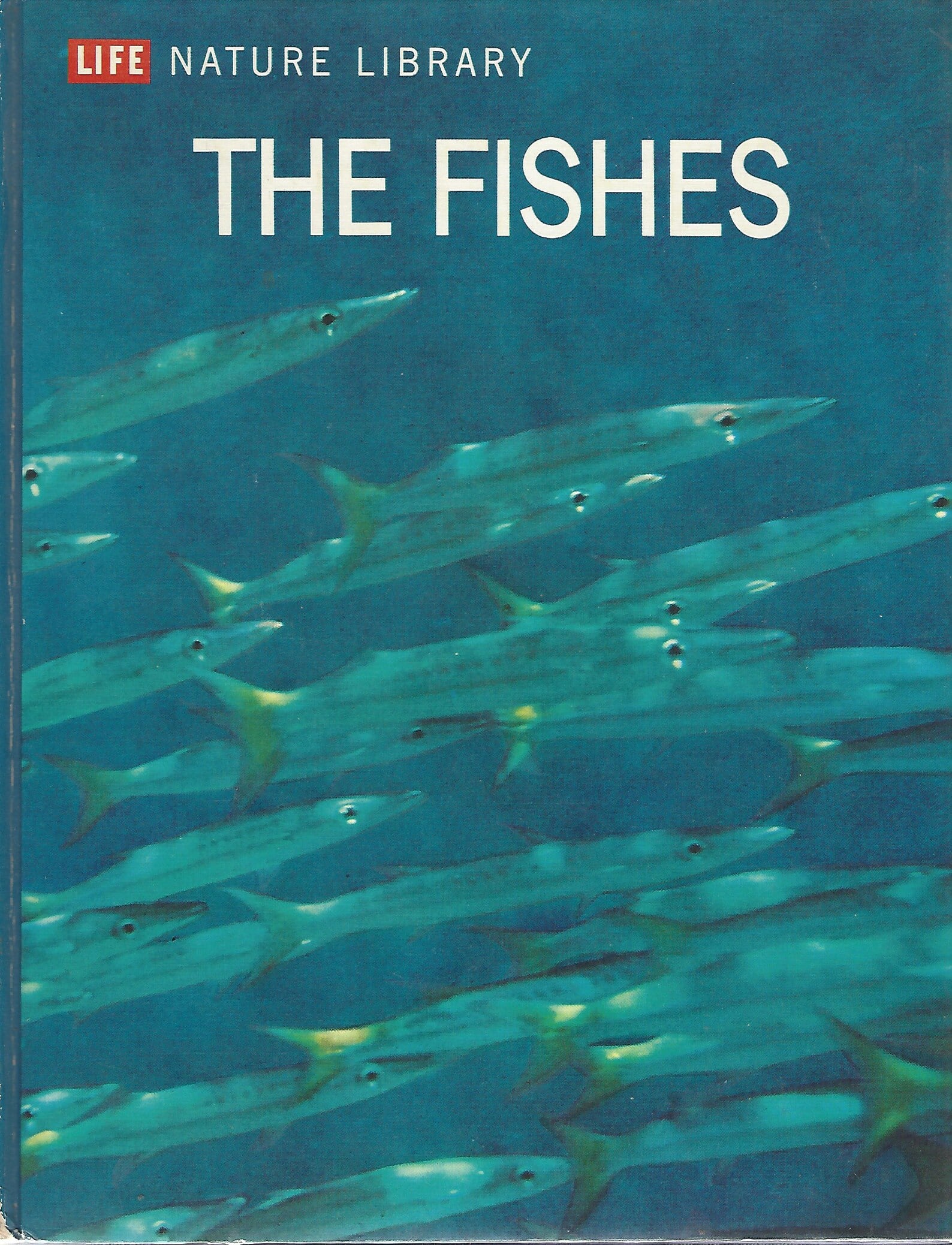
When I was very small, it was the TimeLife book of The Fishes, by F. D. Ommanney, which I remember endlessly poring over, my child’s mind gripped, in total fascination. The cover illustration showed a shoal of barracuda, mid-water and heading upwards, lit up as an iridescent blue by a column of sunlight. Oddly, it is only the cover and the illustrations of the deep sea creatures which I now remember—but I loved that book, as the weakened spine, blunted pages and dog-eared corners attested.
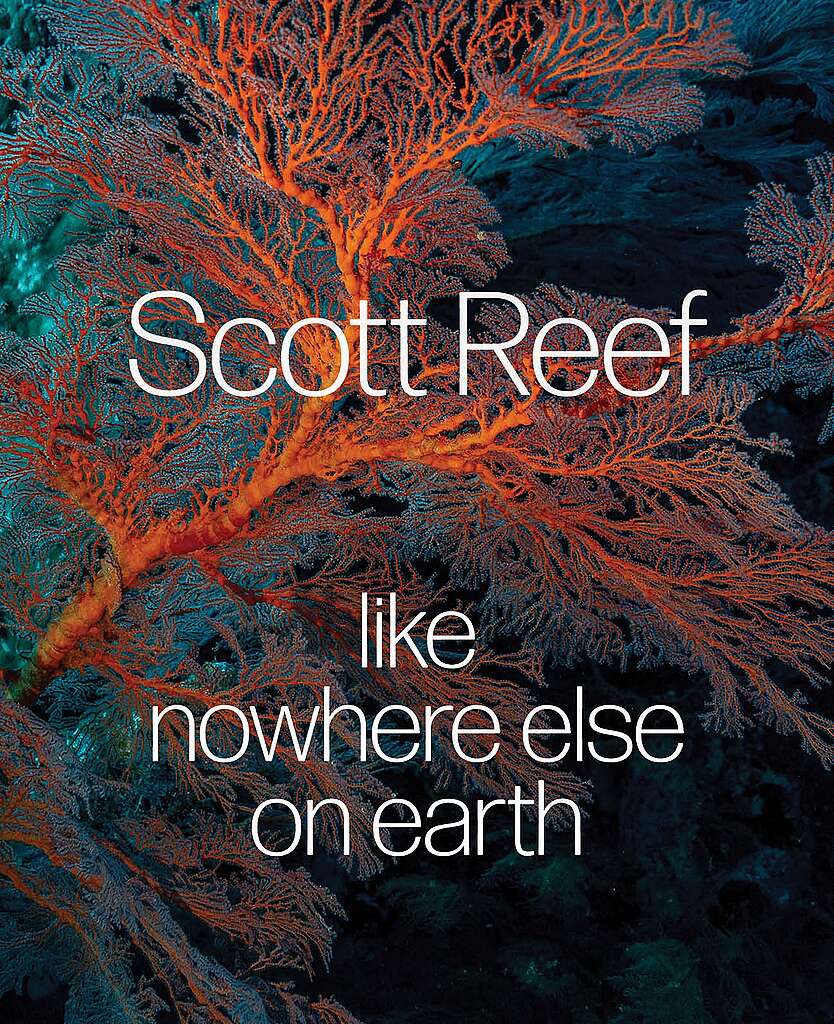
The Fishes has been on my mind recently, because I’ve been working with some dear friends on our own illustrated oceans book, to be published by Upswell Publishing. The book is called Scott Reef: Like Nowhere Else on Earth, and I want to share with you a bit of the story behind its creation.
Scott Reef is absolutely magnificent: Australia’s largest freestanding oceanic reef, brimming with life, including rare and threatened species such as a genetically distinct population of green sea turtles, pygmy blue whales and the wonderfully elegant dusky sea snake. But Scott Reef isn’t near our capital cities; it is way off the north-west coast of WA. And it is threatened with devastation by Woodside, which wants to drill up to 57 toxic wells at the Reef for its vast, dirty Browse gas project.
One of the main challenges in the fight to save Scott Reef from being turned into an industrialised gas zone by Woodside is bringing this incredible location to life for people who haven’t actually experienced it first hand. Because despite its ecological significance and dazzling beauty, ‘Scott Reef’ is also—at least not yet—exactly a household name.
To help get over this barrier, Greenpeace has enabled a number of photographers to travel to Scott Reef by boat (including the Rainbow Warrior) to document its astonishing diversity of colour and life. We then brought these images together in a remarkable photobook, produced by our talented in-house team, which we’ve been putting into the hands of as many leaders as possible—including the MPs whose decisions can determine the Reef’s future.
Back in June this year, I was sharing a copy of our in-house book at a business gathering in Perth when someone pulled me aside. Had we thought about publishing the book commercially? Apart from anything else, he wanted to buy a copy himself! He had a point. We were proud of what we’d created, but a commercially published version could reach a much wider audience and have even greater campaign impact. I immediately turned to my dear friend, Terri-ann White, who runs Upswell Publishing in WA, for advice.
Terri-ann has a huge heart and terrific vision. So many wonderful things in WA owe their existence to her doings, and, true to form, she was immediately encouraging and enthusiastic. “But,” she said, “it would add a whole new dimension if we had some words to accompany the incredible pictures.”
Fair enough, I thought. I could ask a few authors.
“And when would you like it published?” she asked.
“Ideally November,” I answered sheepishly.
Now, in publishing terms, nobody goes from idea to finished work, beautifully produced by a commercial publisher, in just four months. It. Just. Doesn’t. Happen. A book of this scale would ordinarily take nine months, I was told. But Terri-ann was undeterred. “If you can get a rapid turnaround on the writing, I will give it a shot.”
Over the following few days, I sent out 24 emails to prospective writers. To my joy and surprise 23 of them responded almost immediately with an enthusiastic yes!
Terri-ann was somewhat alarmed and perplexed when I told her the good news… we’d discussed a few authors, not more than twenty! “Impossible,” she texted. “Editing is important and you are talking about thousands of words!” But I also know Terri-ann. She does the impossible. And so, here we are… Terri-ann is going to hit that improbable deadline. Scott Reef: Like Nowhere Else on Earth will be on shelves in November.
The contributors are a wonderfully diverse bunch, united by their enthusiasm for Scott Reef — and their extraordinary speed!
It’s a brilliant mix. The book brings together national icons like Peter Garrett, Tim Winton, Mick Dodson, Janet Holmes à Court and Fiona Stanley; the intellectual heft of professors Frank Bongiorno, Jessica Meeuwig, Rick Steiner and Samantha Hepburn; the poetic vision of Prema Arasu, Berndt Sellheim and Saadiah Freeman; the field expertise and passionate first hand witnessing of Imogen Zethoven, Tooni Mahto, Ben Fitzpatrick, Geoff Bice, Olaf Meynecke, Paul Gamblin, Sarah Gittoes and Hayley Baillie; and the determination of emerging activist voices Jackson Reid and Emma Sangalli.
Their elegant words wrap themselves around the sheer wonder of the underwater world, brought to life by the work of the photographers — of whom one, Wendy Mitchell, has also contributed a wonderful essay.
Terri-ann showed me the full physical proofs this week and they are breathtaking. This book contains some of my absolute favourite images of wildlife beneath the waves -– and believe me, after almost 20 years at Greenpeace, I’ve been privileged enough to see some remarkable shots! The essays bring a whole new depth and richness to the story of Scott Reef.
If I am being honest, and maybe a bit sentimental, I hope that a four or five-year-old child somewhere in Australia will spend part of their summer holidays turning the pages of this book, wide-eyed with curiosity and awe at the beauty and strangeness of the creatures that call our oceans home.
Our shared commitment is to make sure that, as those children grow up, the wonders of Scott Reef will exist not just in the pages of the book, but out there in the wild waters off north-western Australia—alive, thriving, and every bit as extraordinary as they are today; a living wonder beneath the waves.
Pre-orders of Scott Reef: Like Nowhere Else on Earth are available here.


Q & A
Sometimes you get asked a question so often that you decide to produce a report to answer it!
We know there is strong public opposition to voter opposition to gas drilling at Scott Reef and fracking in the Kimberley in Western Australia. But I am frequently asked whether, even if people don’t want it, more gas drilling is a necessary evil to sustain WA’s prosperity?
The short answer is an unequivocal ‘No’. The longer answer is our new report, From Gas to Green: Building Western Australia’s Future State, which makes the comprehensive case that Asia’s gas market is declining — while WA has an enormous untapped opportunity to become a global leader in green industries and exports, helping drive the region’s shift away from fossil fuels. The faster that WA embarks on a decisive shift away from gas—and that includes no fracking in the Kimberley, or drilling at Scott Reef — so much the better for the state’s people, ecology and economy.

Scientists behind a landmark UN report on overshooting the 1.5C warming limit have defended its credibility, after Saudi Arabia and other large developing countries questioned its scientific legitimacy and sought to keep it out of the main political decision expected from COP31.
The UN Environment Programme’s (UNEP) Limiting Overshoot report, published in September, examines how to minimise an almost certain breach of the Paris Agreement’s temperature goal, what crossing it will mean for people and ecosystems and how temperatures could be brought back down.
The European Union, the UK, the Least Developed Countries (LDCs) and small island states are among those pushing for COP31 to make the response to overshoot of 1.5C one of the summit’s priorities.
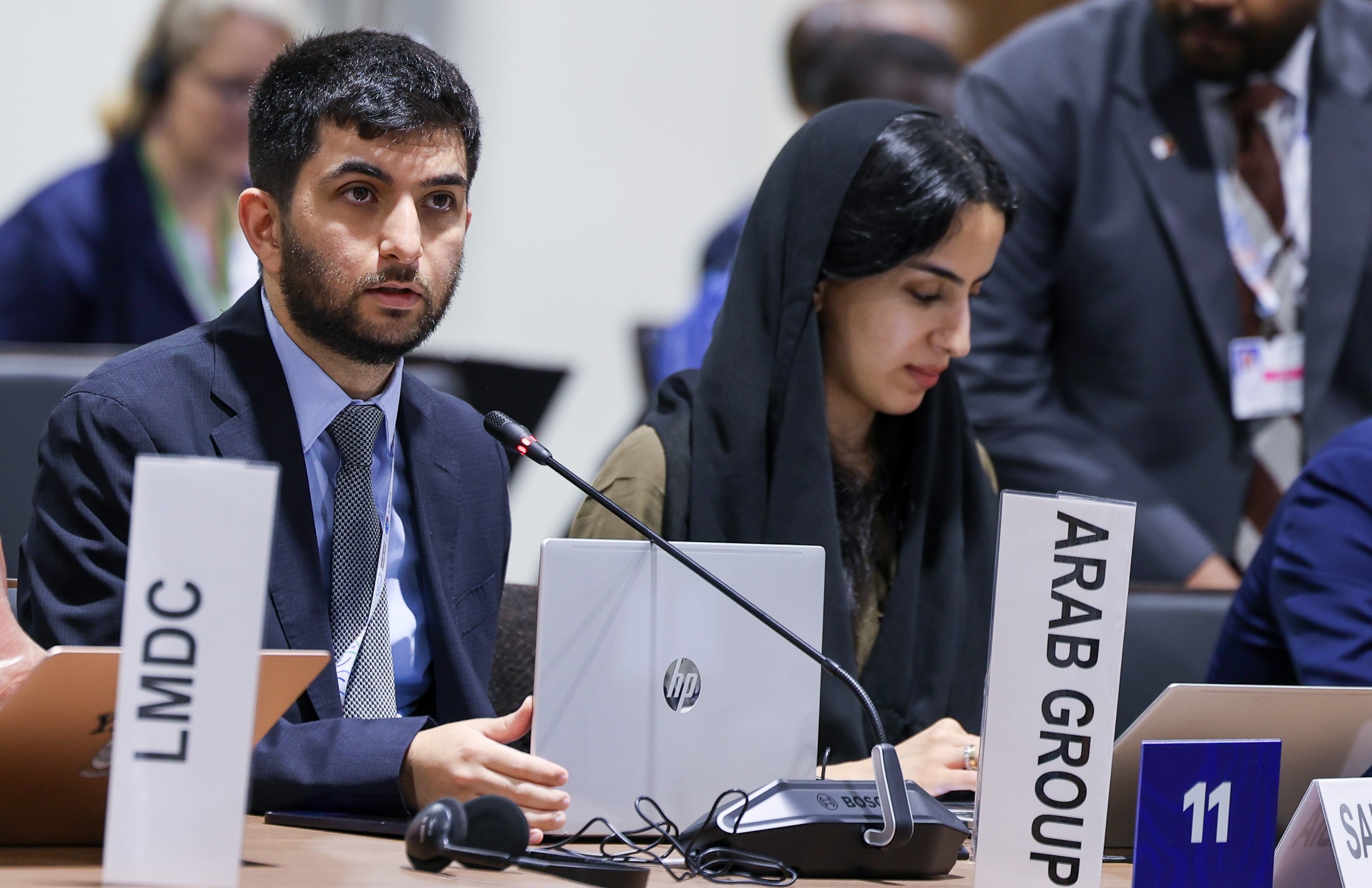
But during closed-door consultations on the cover decision this week, the Arab Group, led by Saudi Arabia, have tried to cast doubt on the report’s scientific rigour, arguing it had not been peer-reviewed, according to sources familiar with the discussions.
Meanwhile, the bloc of Like-Minded Developing Countries (LDMCs), which included India and China, called for the cover decision to avoid references to reports produced outside the UN climate process, seen by observers as a thinly-veiled reference to the UNEP report.
Laurence Tubiana, CEO of the European Climate Foundation and one of the key architects of the Paris Agreement, said the overshoot report “tells us a truth some would rather hide”.
“We are on course to exceed 1.5C and limiting how far and for how long is a matter of survival for us all,” she told Climate Home News. “The attacks on climate science are an attempt to delay action. They target intergovernmental institutions that give countries a shared scientific basis for acting together.”
-
Science ‘under attack’ from fossil fuel interests at UN climate talks
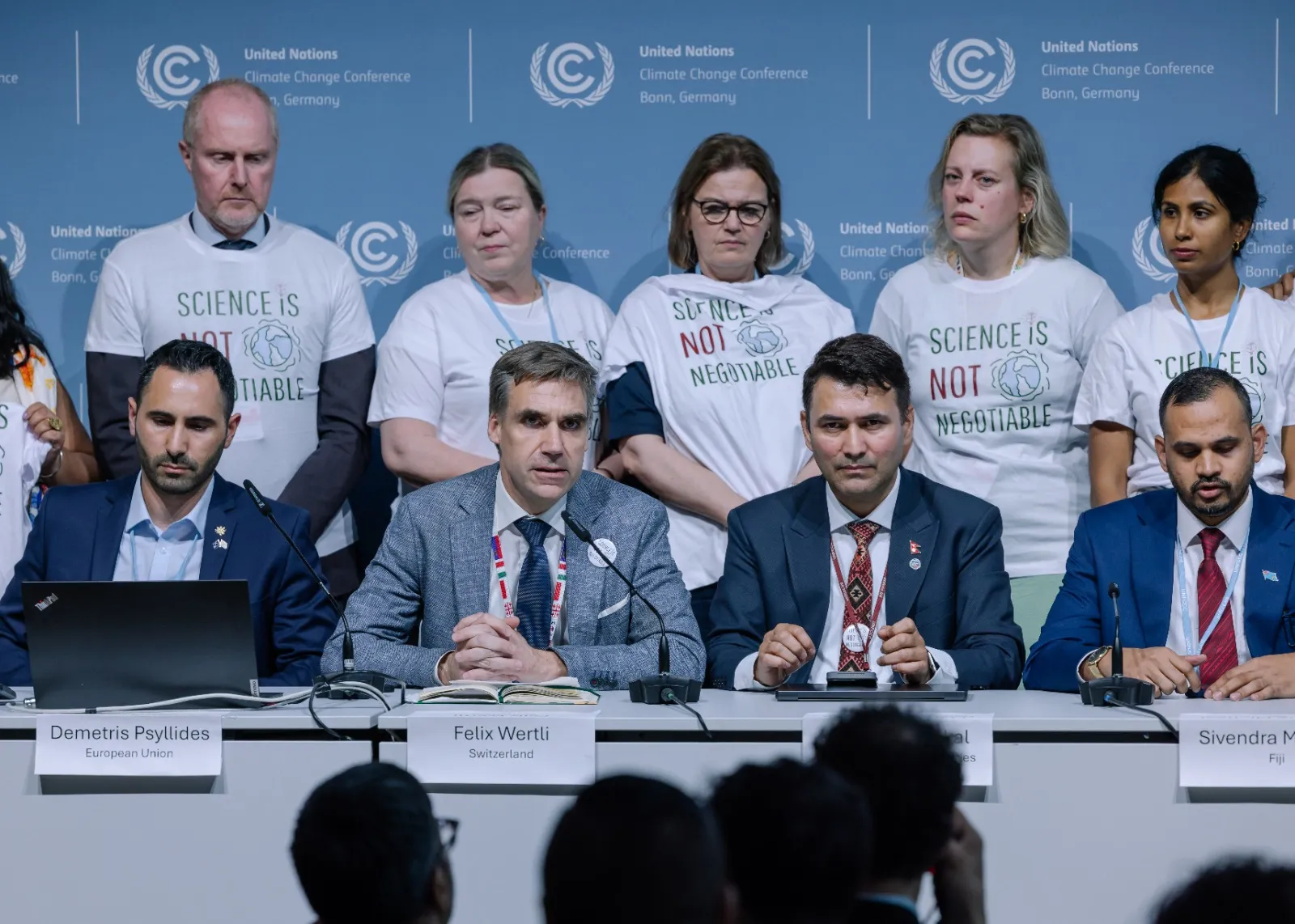
A coalition of some rich nations and the world’s most vulnerable have vowed to protect climate science in UN negotiations -
Framing the climate science debate as a binary battle isn’t just wrong – it’s dangerous
Achieving the Paris Agreement goals requires robust science that fully integrates the experiences, economic realities and academic contributions of the Global South

Rigorous approach
Speaking at an event in Antalya on Saturday, scientists involved in the report also pushed back.
Debra Roberts, a South African scientist who co-chaired the IPCC’s Working Group II in its last assessment cycle and was part of the UNEP report’s core coordinating team, said the authors had followed the standard process for a global assessment of existing science, in line with the practices of the Intergovernmental Panel on Climate Change (IPCC). The only difference, she said, was that governments did not review the outputs.
“It was certainly reviewed internally by the authors, external peer-reviewers were brought into the process, and UNEP also reviewed it,” she told Climate Home News.
Forty-four experts from across the globe authored the report, which largely synthesises existing literature, and their work was scrutinised by a further 44 reviewers in a year-long exercise.
“Let’s be straightforward here: the reports are being attacked because some people don’t like the conclusions and it’s fairly obvious why,” Bill Hare, CEO of Climate Analytics and one of the report’s reviewers, told Climate Home News.
“If you as a government are basing your economy on burning and selling fossil fuels, then the last thing you want to do is accept that we are overshooting 1.5C, because then obviously you will take on some responsibility for paying for the damage,” he added.
“Grey literature” debate
In Antalya, some big emerging economies have also called for “grey literature”, including the overshoot report, to be kept out of the cover decision. The term refers to scientific products that are published outside of traditional academic journals.
While that applies to the UNEP report, some of its authors said it should not mean “grey literature” is of lower quality and cannot be used to inform policy-making.
They added that other forms of “grey literature”, including the UNEP Emissions and Adaptation Gap reports or the work of the International Energy Agency (IEA), are routinely used in the IPCC climate science assessment cycles and sometimes referenced in COP decisions.
Manjeet Dhakal, a Nepalese advisor to the LDCs, told Climate Home News those reports have previously been very useful to inform policy-makers. He added that the overshoot report is comprehensive and countries should be guided by it in Antalya.
‘A distraction’ amid bigger science spat
One of the UNEP report authors said the attempts by some countries to cast doubt on the overshoot report is just “a distraction”.
Clashes over climate science and its role in policy-making have escalated over the last few years amid a long-running stand-off at the IPCC. Most governments want the panel to produce all of its key assessment reports in time to inform the next UN Global Stocktake of climate action, due to be completed in November 2028.
But a smaller group of countries, led by Saudi Arabia, India and Russia, have resisted, claiming that timeline would be too rushed for scientists and governments from developing countries to contribute to and review the reports.
The IPCC will reconvene in an online meeting in early December in a last-ditch effort to find a solution.
As well as the IPCC assessments, Tubiana said the findings of the overshoot report must also inform the next global stocktake.
The post Scientists defend UN overshoot report after Saudi-led push to sideline it at COP31 appeared first on Climate Home News.
Scientists defend UN overshoot report after Saudi-led push to sideline it at COP31
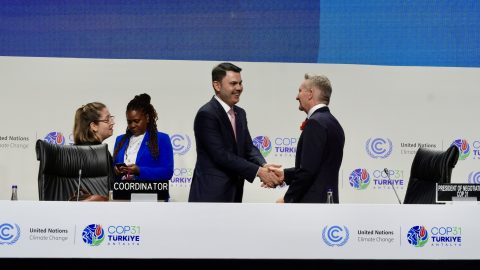
As technical negotiators race to lay the ground for the big political fights coming in the second week of COP31, delegates will spend their Saturday night at a stocktaking plenary presided over by Türkiye and Australia, where countries’ first red lines are expected to emerge.
Countries will have to decide whether to move forward with a cover decision as the main outcome from the Antalya talks. Some large developing countries have pushed back on it all week, as well as on any inclusion of sectoral targets, including a flagship new pledge to increase electrification to 35% by 2035.
UN climate chief Simon Stiell told a press conference on Saturday morning that progress so far has been “constructive” and praised the fact that negotiations were able to start on time as countries avoided what had seemed to be shaping up as a fight over the agenda.
He added that Saturday’s plenary will provide a sense of the most controversial issues, which government ministers now flying will have to take up and settle.
As of now, most issues on the formal agenda still need a lot of work. The cover text is more a wishlist of every proposal tabled and still needs to be worked up into a draft – expected by early next week.
An informal note on the Mitigation Work Programme (MWP), which tackles cutting planet-heating emissions, is heavily bracketed. The EU has said one of its priorities is to extend the MWP, with current options for a timeline going up to 2030, 2031 or 2040 (at COP45!). The MWP has so far delivered weak outcomes, but the current fight is over whether to expand its scope and task it with informing the next Global Stocktake of climate policies in 2028.
-
COP31 Bulletin Day 5: Cover decision wishlist issued as China bows out of COP33 hosting
Governments must start narrowing down what a political decision could look like in Antalya, while the conversation buzzes around who will host 2028’s important COP -
Push for ocean roadmap that informs next global stocktake grows at COP31
A group of countries including African nations, European Union, and small island states wants COP31 to deliver an ocean roadmap towards 2028 -
COP31’s electrification pledge wins support, with caveats on clean power and finance
At least 14 countries have endorsed the voluntary pledge so far, but island nations warn it must not distract from the shift away from fossil fuels

A separate draft text on the global goal on adaptation released overnight is set to become the main battleground for Africa’s top priority to triple adaptation finance to “at least $120 billion per year by 2035”, based on a previous goal set in 2021 – a figure it wants agreed in Antalya.
Another option in the text proposes starting a process to review several elements of this finance target – which was adopted in the final deal at COP30 – including the baseline, the total amount and its scope. It requests this to be reflected in a report that would then be considered at a later summit. African countries are likely to push back on this idea.
An informal note that includes the set-up of a new Just Transition Mechanism also came out late on Friday and has been condemned by civil society groups for the limited scope of what it would be expected to achieve.
In the meantime, the Turkish and Australian co-presidency has continued consultations on a number of issues, including on how to strengthen the UN climate process itself. Some countries – including Arab nations, Mexico, Korea and Switzerland – have proposed switching COPs to a biennial format, instead of the current yearly summits.
Brazil says it wants to host third fossil fuel phase-out conference
Brazilian President Lula da Silva told civil society in Antalya this week that his country should host the third global conference on Transitioning Away from Fossil Fuels (TAFF), which would likely fall in 2028.
“We have the moral obligation,” Lula said at a meeting before heading off to the Philippines for the ASEAN summit. The Brazilian president told the event he came to Antalya to demonstrate that “no country has more credibility on climate” than his.
The first conference on TAFF was held in Santa Marta by a coalition of around 60 governments that decided to take voluntary measures to wean their economies off coal, oil and gas. The next conference is expected to take place mid-next year in Tuvalu, with a pre-conference event for academics, subnational governments and civil society in Dublin.
In Antalya, Brazil’s COP30 presidency held a big launch event for a voluntary global roadmap it produced to help countries shift off fossil fuels, proposing a build-up of clean energy systems followed by a push to start phasing out coal, oil and gas production and consumption after 2031.
Currently, a proposal to welcome the Brazil-led roadmap in the formal UN negotiations is included in the COP31 cover decision, as well as an option for “ongoing implementation” of a COP28 landmark deal to transition away from fossil fuels in energy systems.
The post COP31 Bulletin Day 6: Limited progress as ministers arrive in Antalya appeared first on Climate Home News.
https://www.climatechangenews.com/2026/11/14/cop31-bulletin-day-6-limited-progress-as-ministers-arrive-in-antalya/
Climate Change
‘Stop dicking around’: Bowen facing uphill battle amidst insufficient progress at COP31 climate talks
Antalya, Türkiye, Saturday 14 November 2026 — At the midway point of the COP31 climate talks where Australia is chairing negotiations, vital work is still needed to deliver real progress to phase out fossil fuels, protect the 1.5°C temperature goal, and to massively scale-up climate finance.
On Friday, the COP31 Presidency released a ‘summary of reflections’ on the proposed cover decision, providing a ‘Christmas list’ of options for the COP31 outcome, including proposals to advance the transition away from fossil fuels, recognition of the critical role of forests and oceans, and a response to the urgency of 1.5°C overshoot. But these are not yet agreed commitments, and they need to be strengthened in any cover decision, not diluted, says Greenpeace.
Speaking from Antalya, Dr Simon Bradshaw, COP31 Lead at Greenpeace Australia Pacific, said: “It’s time to stop dicking around. Australia must focus on the urgent task of accelerating the global transition away from fossil fuels. We are experiencing rapidly worsening climate impacts, and a crippling cost of living crisis driven by fossil fuel dependence, yet the negotiating rooms are becoming increasingly disconnected from the brutal realities faced by communities all around the world.
“In week