

Power-Up: Siemens Gamesa LEP, Vestas Vibration Monitoring
This week on Uptime Power-Up, we discuss Siemens Gamesa’s unique leading edge protection solution which uses a shock absorbing cavity for added cushion. Then Vestas’ Utopus Insights patent that uses vibration monitoring to determine turbine health. And finally, a diaper for your bird, which Joel may be in the market for.
Sign up now for Uptime Tech News, our weekly email update on all things wind technology. This episode is sponsored by Weather Guard Lightning Tech. Learn more about Weather Guard’s StrikeTape Wind Turbine LPS retrofit. Follow the show on Facebook, YouTube, Twitter, Linkedin and visit Weather Guard on the web. And subscribe to Rosemary Barnes’ YouTube channel here. Have a question we can answer on the show? Email us!
Pardalote Consulting – https://www.pardaloteconsulting.com
Weather Guard Lightning Tech – www.weatherguardwind.com
Intelstor – https://www.intelstor.com
Allen Hall: Welcome to Power Up, the Uptime podcast focused on the new, hot off the press technology that can change the world. Follow along with me, Allen Hall, and IntelStor’s Phil Totaro, as we discuss the weird, the wild, and the game changing ideas that will charge your energy future. Phil, our first idea is a Siemens Gamesa, and this leading edge protection is a little bit different than things we have normally seen.
It includes basically a cavity. So it’s like a shell sort of device that would go on the leading edge, but it has a cavity with a shock absorbing medium. Inside of it. So it take the blows of the raindrops or the bugs or the hail. So it absorbs that energy. And then the, the wind turbine lives a long time.
That’s a interesting concept. I haven’t seen
Philip Totaro: it implemented yet though. I think because this patent application is also recent is probably something they’re still testing. They’ve got a blade tip with a double layer with an elastomeric. Or, I mean, I guess they’ve described it in the patent as it could be anything kind of squishy, let’s call it polymeric material, any kind of, squishy type material.
But what their, what their theory is behind this is that Because the leading edge, the, particularly around the tip, your tip speed is so high on a wind turbine blade that when you impact a raindrop or you impact a bug, obviously it makes little dents and you hit enough, especially if you’ve got like a swarm of bugs or flies or something, it can actually act like you’re, you’re sandblasting the leading edge of the blade.
And, everybody in the industry has probably seen, leading edge erosion and knows what it is. But the idea behind this is to say, all right, behind, the, the blade leading edge and the gel coat, there’s this cavity with this, elastomeric damper kind of in there that would theoretically absorb some of that impact and also provide a, um, so it, it provides a rebound on the tip to, to allow it to maintain the aerodynamic profile.
The elastomeric material can be shaped to conform to the cavity so that it will, it will maintain It’s aerodynamic profile on the leading edge, regardless of the amount of tip damage. So there’s, there’s a potential performance and certainly noise benefit to it. But I mean, Joel, I’m, I guess I’m curious about this.
There, there’s other concepts out there, one from polytech included that seems kind of similar to this. Is this gonna be a thing?
Joel Saxum: What i’m looking at this material is like I see it the concept makes sense. Everything is great We have been installing shells on turbines because that’s what the installation of this will look like it’ll look like a shell We’ve been installing shells for a long time You have armor edge polytech like those things those solutions are out there but the reason i’m looking at this one with a little bit of a side eye is If this thing starts to fail, if that front edge opens up and then you have this shock absorbing elastomeric compound all of a sudden exposed and this thing starts to open itself up, because that’s what will happen if it starts to open up, then you’re going to have an AEP loss and possible noise issues and all kinds of weird stuff going on up there that you don’t want.
So I think that some of the, and I don’t know what the, chemical makeup of this thing is or the how they’re going to design it, but. In my mind, some of the existing solutions that are on the market today may have a better lifespan once they start to degrade than something like this.
Allen Hall: The key to this patent is the goo you put inside of it, and my suggestion is to use that Stretch Armstrong toy goo.
You ever had one of those, Joel? Yeah, yeah, for sure. That thing was indestructible. Whatever that goo was, we need to be putting that on the leading edge. Our second idea comes from our friends at Utopis Insights. And it is a system for monitoring wind turbines using vibration data. And this is a little unique, Phil, in that it’s a sort of a data driven approach to health monitoring.
And they’re measuring vibration on a number of turbines and trying to group those vibrations into two sets, one that’s sort of healthy, normal operations, and another set that’s unhealthy, and then use that data to provide forecasting on the health of the turbines. This does make sense. I thought I have seen this in other, in other farms already.
Is this idea unique?
Philip Totaro: Well, it’s, it’s, there is a unique aspect to this. And I also want to preface this by explaining to people. So Utopis Insights is now kind of the, the data analytics and asset management platform component of Vestas Wind Systems for those who aren’t familiar. What they’re doing with clustering the turbines is kind of fascinating because What they’re actually trying to accomplish is what a lot of people in the industry want, which is, tell me which of my turbines operating in a wind farm might need to be taken down or could be taken offline at the same time to have maintenance scheduled.
And so if you can monitor several turbines in the wind farm that are seeing largely the same kind of loading, largely the same kind of damage accumulation, and the clustering of these turbines together in, this data analytics platform can help you determine, okay, well, there’s six turbines that are coming up to, a timeframe in about three months where we might have a high probability of a catastrophic failure.
We’re going to take those turbines, offline at a point in time in between now and when, our analytics platform says that’s going to happen to be able to address that, those issues, whether it’s just a, a lubrication change in the gearbox, whether it might be, gear damage, whether it’s something to do with the blades whatever the issues are, they can monitor these turbines.
In a way that lets them do predictive maintenance scheduling that is a helpful component to be able to minimize the AEP loss of taking turbines offline. This technology is actually in use right now on the VX Plus platform for Utopis Insights, so, please get in touch with Vestas and Utopis if you want to learn more.
Or talk to us because we’ve cataloged, something like 65, 000 patents and we can tell you who’s using what.
Allen Hall: Our fun patent of the week is entitled Bird Diaper. Now this, this is an actual patent. That is for your pet bird. And if you have a pet bird in the house or in enclosed space, you can imagine what the mess is.
And this, this patent is really interesting because Phil there, it’s like a leotard for your bird, but I’m not sure how you’re supposed to hold the bird to put the diaper on this thing. Cause it’s got wing holes and obviously tail hole and a head hole. There’s a lot of holes here.
Philip Totaro: Well, and in addition to all that, it’s also got a connector for a leash.
So just in case you want to be able to, walk or, tether your bird and keep it, keep it on its leash,
Joel Saxum: this thing does it all. My sister in law has a green cheek parakeet. And when you go to her house, you may end up with a little mess on your shirt, on your shoulder. So this thing, I might search this out and try to purchase one of these.
Because I believe it could be a good Christmas gift for my sister in law and her family for their green cheeked parakeet
Philip Totaro: You see a patent like this and your immediate thought is well, that’s great If you have a pet bird at home, but you know, unless we’re gonna outfit every bird on earth with this It’s not really gonna solve our wider problem.
Phil, do they make this in large sizes for like big bird? Allen, I don’t know the answer to that, but probably.
https://weatherguardwind.com/siemens-gamesa-vestas-vibration-monitoring/

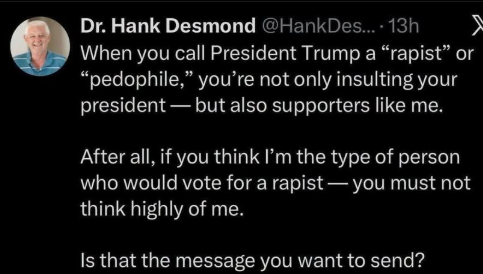 Apparently, this guy believes that the majority of Americans think poorly of Trump supporters, and wonders if this the message we want to send.
News flash: This is precisely the message we want to send.
I wonder what his doctorate is in. Filth? Debauchery? White collar felonies? War crimes?
 The idiot’s t-shirt shown here raises the question: How do you define the word “support?”
In a certain sense, I support all countries, insofar as the people living in each deserve to live freely.
As an American, I support the United States. I revere it for its strengths, while I advocate for remedying its considerable set of weaknesses: corruption, injustice, racism, indifference to human suffering, militarism, and greed.
 BREAKING: Texas Republicans are flailing after a party nominee posted vile racist commentary and refused to take it back.


-
Climate Change1 year ago
Guest post: Why China is still building new coal – and when it might stop
-

 Greenhouse Gases2 years ago
嘉宾来稿:满足中国增长的用电需求 光伏加储能“比新建煤电更实惠”
-
Greenhouse Gases1 year ago
Guest post: Why China is still building new coal – and when it might stop
-

 Climate Change2 years ago
嘉宾来稿:满足中国增长的用电需求 光伏加储能“比新建煤电更实惠”
-

 Renewable Energy11 months ago
Sending Progressive Philanthropist George Soros to Prison?
-
Climate Change2 years ago
Bill Discounting Climate Change in Florida’s Energy Policy Awaits DeSantis’ Approval
-
Greenhouse Gases1 year ago
嘉宾来稿:探究火山喷发如何影响气候预测
-

 Carbon Footprint2 years ago
US SEC’s Climate Disclosure Rules Spur Renewed Interest in Carbon Credits