

It’s the last official day of COP and the pavilions are being packed up, turtle mascot costumes are being stuffed in bags and exhausted delegates trudge through the drizzle.
But the negotiations are getting exciting as we enter the endgame. The Australian and Turkish co-presidencies talked to governments last night about the second draft of the cover text – which our Thursday bulletin covered in detail.
It’s uncertain when the next version of the cover decision – which could be the more or less final one – will be published but we’ll tell you what’s changed when it is.
The COP looks certain to drag on past its scheduled end of 6pm on Friday as countries push for their red lines to be addressed in the final political outcome and negotiations continue on unresolved issues including climate finance, adaptation and a new just transition mechanism.
In the meantime, there have been more reactions to Thursday’s draft text – with African ministers, global campaigners and a group of anti-fossil fuel nations holding press conferences on Friday.
COP31 Bulletin Day 10: New draft keeps electrification goal but drops fossil fuel references
African ministers said COP31 has let down their people, especially when it comes to the lack of new climate finance and scant progress on key issues such as a just energy transition and green trade measures, which they said do nothing to support economic development in their countries.
Shortly after, activists came together under the Climate Action Network (CAN) umbrella to reject the cover text as it now stands. Speaking to the media, with a line of campaigners behind her holding up signs reading “Shame”, Tasneem Essop, CAN’s director, said governments should do the same.
“We are calling on those governments – especially the Global South governments – to put pressure and try and fix things, clean up the mess,” she urged. “It’s of course not on their shoulders alone. We need developed countries to back down and stop blocking, so that we could still, in these last hours, try and save this COP 31.”
Mohamed Adow, founder and director at Power Shift Africa, slammed the Turkish COP president for saying on Thursday that delegates should leave Antalya declaring it “the best COP ever”.
“I can tell you this is the worst COP ever,” he said. “Overseeing a failing summit is bad enough. Trying to sell it as a success rubs salt into the wounds of the people who need it to deliver.”
Campaigners said developed countries in Antalya were backing off promises they have already made, especially on putting a number to a goal to triple adaptation finance and setting up a just transition mechanism.
“If all we are doing is repeating what we agreed in Brazil a full year ago, why have we brought everyone to Türkiye for two weeks?” asked Adow. “Communities living with drought, floods and failed harvests were promised action. They cannot survive on an annual renewal of the same promises.”
At a press conference on Friday morning, a group of mainly European, Latin American and Pacific nations ministers gathered to promote the transition away from fossil fuels – which is not explicitly mentioned in the draft text.
Marshall Islands environment minister Jess Gasper said that for the Pacific transitioning away from fossil fuels “is not a political choice – it is a matter of survival”.
IEA-inspired carbon capture goal draws campaigner criticism
The inclusion in Thursday’s draft cover text of a global target for carbon capture, utilisation and storage (CCUS) has drawn criticism from many climate campaigners, who call it a dangerous distraction from transitioning away from fossil fuels. The EU also has said it does not want CCUS in the COP31 decision.
CCUS consists of technologies that capture carbon dioxide from emitting facilities like a power station or cement plant and either store it – usually in underground reservoirs – or use it in industrial processes like making drinks fizzy. If the gas does not reach the atmosphere, it does not contribute to global warming.
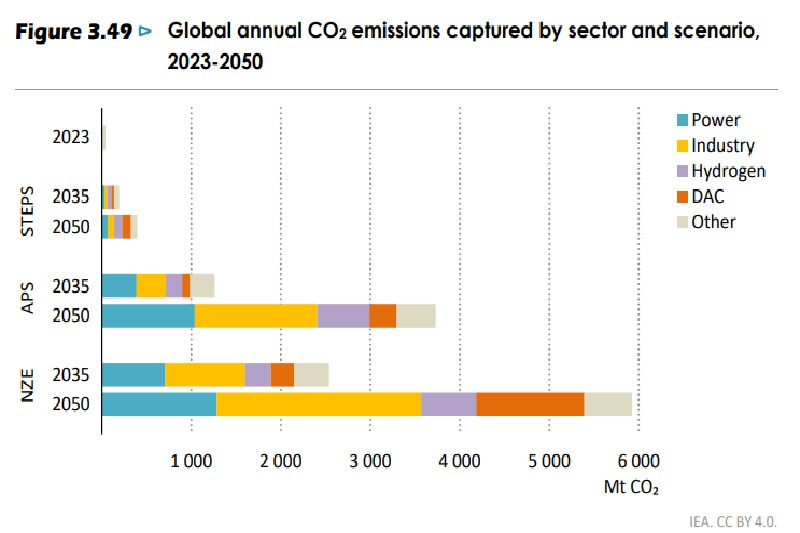
The COP31 draft text calls – in square brackets, meaning it is undecided – for CCUS to aim to capture 2.5 gigatonnes (Gt) of carbon dioxide a year by 2035. A weaker alternative calls for a target of 0.5Gt “and to work towards” 1.3-2.5Gt.
These figures stem from the International Energy Agency’s 2024 World Energy Outlook, with 1.3 Gt the target from the less ambitious “Announced Pledges Scenario” and 2.5Gt from the more ambitious 1.5C-aligned “Net Zero Emissions Scenario. The IEA’s head Fatih Birol has said that CCUS is “critical for ensuring our transitions to clean energy are secure and sustainable”.
The IEA’s report says this carbon dioxide could be captured from energy, industry and to make low-carbon hydrogen. It also says that, based on announced projects, the world is well off track to meet these figures. Currently only 0.05GT can be captured each year and governments like the UK are warning they will cut investment.
Oil and gas producers Saudi Arabia and Russia are the main supporters of climate action focusing on CCUS as it allows for continued fossil fuel use. In a press conference earlier this week, Europe’s Climate Commissioner Wopke Hoekstra opposed suggestions that CCS “might be the solution for everything” without giving further details. Small islands have also historically been opposed to CCS promotion.
Some climate campaigners have called for the target to be deleted. Romain Ioualalen, global policy lead at Oil Change International, said the target “gives dangerous credibility to disproven technologies like CCS that will trap us in our dependence on the volatile fossil fuel economy”.
He added: “These CCS paragraphs are a real and immediate danger to the energy transition and need to be removed. This isn’t a pathway out of the crisis – it’s a license to prolong it.”
Coraina de la Placa, coordinator of the Hands off Mother Earth Alliance, said the text “opens the door to the dangerous normalisation of CCS”.
As well as the numerical target, Thursday’s draft text says governments are “recognising the role of CCUS, particularly in hard to abate sectors”. The EU has previously said that CCUS should be limited to these sectors, like cement, rather than used in easy-to-clean-up sectors like electricity generation.
The post COP31 Bulletin Day 11: Best COP, worst COP? Weary negotiators seek to strengthen outcome appeared first on Climate Home News.
COP31 Bulletin Day 11: Best COP, worst COP? Weary negotiators seek to strengthen outcome

A global roadmap to transition away from fossil fuels will be “very useful” to support Uganda’s energy transition planning, even as the country prepares to export its first barrel of oil next month, a senior official at the state-run Petroleum Authority told Climate Home News.
The Brazil-led roadmap, which was presented at the COP31 climate talks in Türkiye, invites countries to draw up national plans to build clean energy systems by 2028 and to cut coal, oil and gas supply and demand after 2031.
Jane Byaruhanga, the environmental and social affairs manager at the Petroleum Authority of Uganda, told Climate Home News on the sidelines of COP31 that the roadmap is “fundamental” to helping the government develop its own framework for transitioning away from fossil fuels and enhance its energy transition plan.
Byaruhanga, who also acts as a negotiator on just transition issues for Uganda at the climate talks, welcomed the roadmap’s recognition that each country has different levels of economic development and capacity to transition their energy systems. When asked about timelines for Uganda’s own shift away from oil and gas, she said the roadmap had only just been released and that officials will need to review it and “make a realistic timeline for ourselves” in consultation with relevant stakeholders.
At COP31, Ugandan diplomats want to ensure that the time-frame for the transition isn’t “one size fits all,” she added.
A staggered fossil fuel phase-out
At COP31 in Antalya, fossil fuel-producing countries, including India, Nigeria and Germany, backed the roadmap presented by Brazil.
In his final address to the climate summit as UN Secretary-General, António Guterres encouraged all countries to start making progress on cutting fossil fuels by 2028.
But the timeline remains a sensitive topic for oil and gas-rich African governments, some of which rely on extraction of these fuels for a significant share of their revenues.
-
Africa launches long-delayed energy bank to finance fossil fuel projects
The Africa Energy Bank’s main aim is financing oil and gas projects, underscoring support among many African governments for continued fossil fuel development -
Tanzania pushed African nations to oppose fossil fuel transition at COP30
While chairing the African group at the summit, the gas-dependent nation advised the continent’s ministers to block language on transitioning away from fossil fuels -
Can AI data centres help power underserved African communities?
Three African countries join a pledge for sustainable AI at COP31, but the jury is still out on whether the energy-hungry industry can bring benefits for all


African countries must be “very careful” while having conversations on transitioning away from fossil fuels, the chair of the African Group of Negotiators, Ghana’s Antwi-Boasiako Amoah, told a civil society roundtable in Antalya.
For the transition to be fair, developed countries – which got rich by extracting and burning fossil fuels – should take the lead in reducing their dependence on hydrocarbons, he said. “Let them show leadership. We follow. Our economies depend on this fossil [fuel], and so it has to be equitable, just and fair,” he added.
Germany, France and the Netherlands are among a number of mostly European countries that have published their own roadmaps to move away from fossil fuels, with Berlin and Paris setting out plans for phasing out fossil fuel in the 2040s while the Netherlands committed to phase out coal by 2030.
Shady Khalil, a global policy strategist at Oil Change International, said African countries need financing to shift from fossil fuels to clean energy systems, adding that developed countries and polluters should pay to ensure the transition delivers energy access, economic transformation and opportunities for people everywhere.
Uganda prepares to export its first barrel of oil
Uganda’s quiet support for the TAFF roadmap comes as the country is actively developing its own fossil fuel resources and is preparing to export its first barrel of oil.
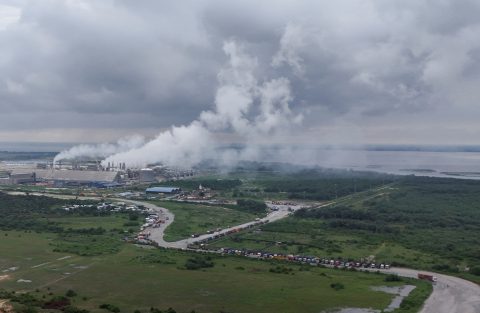
Byaruhanga said oil is expected to start flowing through the 1,443-kilometre East African Crude Oil Pipeline (EACOP) – which connects Uganda’s oil fields in the west of the country to the port of Tanga in Tanzania – next month, with the first export shipment planned in mid-2027.
The oil will be produced by the China National Offshore Oil Corporation (CNOOC) at the Kingfisher oil field on the shores of Lake Albert.
Last month, TotalEnergies’s CEO Patrick Pouyanné said commercial production will begin at its oil fields in the first half of 2027, after the effective closure of the Strait of Hormuz delayed the import of critical equipment.
Oil production was initially expected in 2018 but the EACOP project has been marred by a series of lawsuits from activists and affected communities opposing the pipeline, as well as challenges to raise the necessary capital, delaying the project by nearly a decade.
In addition, Uganda is advancing plans for a domestic refinery to help meet local fuel supply and expects a final investment decision by February.

Revenues to finance the transition?
Byaruhanga, of the Petroleum Authority, said revenues from future oil and gas exports will help accelerate Uganda’s energy transition. Oil production will help the country meet its clean cooking objectives by replacing wood and charcoal with liquefied petroleum gas (LPG), she said.
The oil project was also designed to minimise emissions from production, including by prohibiting gas flaring and venting, and setting up solar and battery storage systems along the heated pipeline’s path as a way to “decarbonise as we industrialise”, she added.
But campaigners say the project is a carbon bomb for the planet, which risks creating stranded assets that will bring little benefit to local people after thousands were displaced to make way for the pipeline.
-
Ugandan farmers launch UK court case against East African oil pipeline
Crowdfunded lawsuit filed at London’s High Court seeks to enforce Uganda’s laws against EACOP Ltd, the pipeline project’s UK-registered company -
Ugandan farmers use British court to try to stop East Africa oil pipeline
The farmers and their lawyers will argue that a UK-based entity linked to the East African Crude Oil Pipeline has breached Ugandan law and construction should halt -
Ugandans living near new oil pipeline let down by compensation programmes
Ugandans whose lands and livelihoods were affected by the oil pipeline do not think enough was done to leave them better off


On Monday, EACOP-affected communities from Uganda and Tanzania, as well as members of the StopEACOP coalition walked out of an event at the French pavilion at COP31, after the organiser – the Oil & Gas Methane Partnership – showcased TotalEnergies as a case study for reducing emissions from oil and gas production.
As countries around the world aim to reduce their dependence on imported fossil fuels, the value of Ugandan oil will drop, generating smaller revenues for the country, Diana Nabiruma, senior communications officer for the Uganda-based Africa Institute for Energy Governance, told Climate Home News. That “will do very little in addressing the clean energy needs for Ugandans,” she added.
Bakundane Balach, a campaigner from Kikuube community, which lies on the pipeline’s path, said the government is yet to convince displaced people of the project’s benefits.
Balach joined thousands of climate campaigners who took to the streets in Antalya to demand a just energy transition. Oil corporations are only “interested in extracting from our communities” – and this isn’t the type of transition local people want, he added.
The Ugandan government did not respond to a request for comment.
The post Ugandan oil official welcomes transition roadmap as nation gears up for exports appeared first on Climate Home News.
https://www.climatechangenews.com/2026/11/20/uganda-backs-fossil-fuel-transition-roadmap-gears-up-oil-exports/
Climate Change
‘We must go further’: Latest COP31 draft text fails to deliver clear pathway from fossil fuels
ANTALYA, Türkiye, Thursday 19 November 2026 — In response to the second draft COP31 cover decision text, Dr Susie Byers, Head of Advocacy at Greenpeace Australia Pacific, said:
“While this latest cover decision draft at least recognises the reality and urgency of 1.5°C overshoot, it doesn’t set the world on a path to fix it. Any electrification goal must be much clearer about accelerating the pathway out of fossil fuels, and the inclusion of a target on CCUS – a false solution and effective licence for fossil fuel companies to keep polluting – is completely out of order.
“The draft text provides no certainty or clarity about finance actually being delivered to the communities that need it, when they need it, and instead kicks key decisions into the long grass.
“Every fraction of a degree of overshoot means losses becoming increasingly irreversible, the scale of harm to lives and livelihoods grows. This is not a moment for weak compromises: the world has a responsibility to do more. Minister Bowen as President of Negotiations must now pull every single lever to drive these talks as far as they can possibly go, and deliver an outcome that raises political will to deliver the phase out of coal, oil and gas.
“The spirit of multilateral co-operation seen in Antalya must turn commitments into accelerated action to deliver a just transition away from fossil fuels and deliver the crucial finance communities need. We must go further.”
ENDS
COP31 images and video available here in Greenpeace Media Library
Media contact: Kate O’Callaghan in Antalya (GMT+3) on +61 406 231 892 (Whatsapp/Signal)
‘We must go further’: Latest COP31 draft text fails to deliver clear pathway from fossil fuels
Climate Change
COP31 Bulletin Day 10: New draft keeps electrification goal but drops fossil fuel references
The keenly awaited second draft of the COP31 cover decision was released mid-afternoon on Thursday in Antalya. At half the length of the first version, the nine-page document still covers many bases – except a key demand by developing nations to put a number on tripling finance for adaptation.
It also drops wording welcoming the global roadmap on transitioning away from fossil fuels prepared by Brazil’s COP30 presidency, which one veteran campaigner called “a glaring regression”.
The text has a section with a menu of measures for responding to an expected overshoot of the 1.5C warming limit, which includes the Turkish presidency-led 35×35 electrification pledge and efforts to boost both carbon capture and storage (CCS) and carbon dioxide removal.
This appears to be an effort to placate Arab nations, which do not want reference to new sectoral goals in the text, but are pushing for the inclusion of CCS.
The text also highlights the importance of the reports from the Intergovernmental Panel on Climate Change (IPCC) for the next Global Stocktake (GST) of climate progress ending in 2028. It “invites” the IPCC to provide all three key reports in its next assessment cycle to the GST.
Some large developing nations, led by Saudi Arabia and India, oppose landing two of these three reports in time for the GST, arguing it does not give enough time to include science from the Global South, but the European Union is insisting on the delivery of the reports.
-
Rich countries must step up to replenish Green Climate Fund, Duarte says
GCF Executive Director Mafalda Duarte tells Climate Home News efforts to leverage the fund’s balance sheet more effectively and find new contributors do not mean letting wealthy donor nations off the hook
One of the most controversial changes from the first version of the text seems to be the exclusion of a figure for the goal to triple adaptation finance approved last year at COP30 in Brazil, which African and least-developed countries had wanted to see defined as at least $120 billion a year by 2035.
Instead, it proposes a report to be prepared on the baseline for that goal by COP32, which would also track progress on delivery, alongside a roadmap on adaptation and resilience finance aiming to identify sources, including “innovative” sources, which would also cover funding for loss and damage. An “implementation pathway” for the tripling would also be discussed under the new climate finance work programme.
Jasper Inventor, head of the COP31 Greenpeace delegation, said that, on finance, the text “kicks crucial decisions on adaptation on how to deliver the tripling commitment down the road”.
“Developing countries and communities need predictable funding, with a clear baseline, delivery milestones and accountability today,” he added.
On oceans – one of the main priorities for both Türkiye and Australia which has historically played a relatively backseat role in climate talks – it creates the Antalya Ocean Current, a multi-year plan for ongoing dialogues that would seek to inform future COP decisions from a marine perspective.
It also requests the co-facilitators of the current ocean and climate dialogue (so far a relatively weak voluntary initiative) to develop a report by 2028 that would inform the next GST. Pradeep Singh, senior project manager at the Oceano Azul Foundation, said both outcomes are “encouraging” but that countries are “behind time and need to already move from dialogue to implementation”.
Mohamed Adow, director of climate and energy think tank Power Shift Africa, said that if the text remains as it is, “it will be a ghost COP”.
“After the progress made in 2023 at COP28 in Dubai where fossil fuels were mentioned for the first time, there is now no mention of the f-word at all,” he said. “COP31 has been muzzled on the most important threat causing the climate crisis.”
David Waskow, director of international climate at the World Resources Institute (WRI), told journalists that the text is “more focused” than previous iterations but that the main battles are still outstanding. He added “we still have a way to go” before knowing how ambitious the final outcome will be.
He also noted that the only issues with a numerical target are the electrification pledge and a bracketed proposal to ramp up carbon capture and storage to “at least 500 MtCO2” by 2035, which he said some countries might be “uncomfortable with”.
Little progress in ministers’ key “divan” meeting
After ministers gathered for a “divan” conflab on Wednesday night to start resolving differences on what should be in the main COP31 political decision, the talk in the halls was that it had been a nice opportunity for them to share views but little had moved forward.
The room – closed to media – was set out with chairs in a large circle, so far apart the assembled ministers looked like they had to cross a small ocean to actually speak to one another.
Adão Soares Barbosa, Timor-Leste’s climate ambassador who chairs the Least Developed Countries (LDCs) at the climate talks, told Climate Home News the discussion had been “constructive” but noted that some ministers expressed concern there would be no agreement on a decision.
The co-presidencies reassured ministers that there would be, Barbosa said.
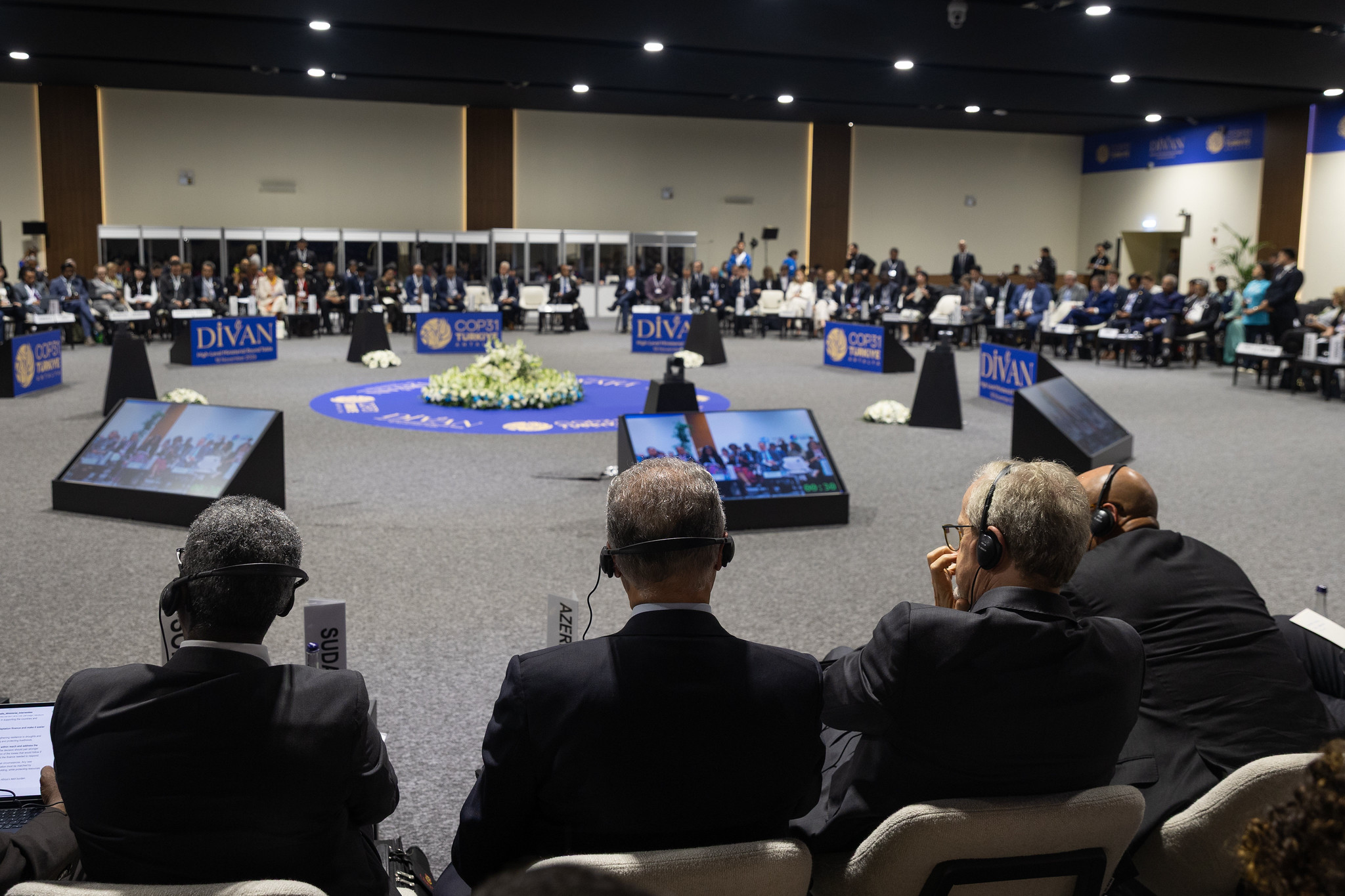
Irish environment minister Darragh O’Brien, who represents the European Union, told a press conference on Thursday morning that the atmosphere at the divan was “very different” from last year’s similar ministerial Mutirão session. “It wasn’t as confrontational,” he said.
Next to him, Tuvalu’s climate minister Maina Talia said “it seems to be” that language about transitioning away from fossil fuels will be out of the cover text, adding there was a small window of opportunity to keep it in. It is opposed by fossil fuel-producing countries, including Saudi Arabia and Russia.
In a statement issued after the “divan”, COP31 president Murat Kurum urged countries not to reiterate their respective positions at this stage of the talks, but to identify where they can move forward together.
“Let us listen to one another, broaden our common ground and translate what is possible into concrete outcomes,” he said in an emailed statement.
Discussions reportedly touched on all the key hot topics – from 1.5C overshoot to adaptation finance and electrification – but little progress seems to have been made in how to bridge divisions.
According to World Resources Institute experts, reiteration of positions and a lack of guidance from Australia and Türkiye left ministers frustrated and many issues still blocked.
Rich countries must step up to replenish Green Climate Fund, Duarte says
A second draft of the cover decision is due later today, with expectations that it will be slimmed down from the catch-all version released on Monday. New draft decision texts on other tricky topics, including the climate finance work programme, just transition mechanism and global goal on adaptation are so far missing in action.
The presidency’s plan is to hold a closing plenary later today to gavel through less controversial items that have been settled, but that list is not likely to be long.
Hot-button issues include whether and how to define the goal to triple adaptation finance by 2035 that was agreed in the final hours of COP30 in Brazil but without any numbers attached to it. Developing countries want Antalya to define the target as $120 billion a year but wealthy governments are reluctant to assume the full burden of delivering that.
Climate Home News understands from a senior government source that there is appetite across the board for a strong outcome on adaptation that would create a drumbeat towards COP32 in Ethiopia, but that finance is the piece that still needs to be worked out in order to unlock a deal.
Read this new comment piece from Shaikh Faridul Islam, Bangladesh’s state minister for environment, forest and climate change, explaining why clarity is needed from COP31 on where, when and how international climate finance will be delivered to vulnerable countries.
IEA: Hormuz crisis drives electrification shift as COP31 weighs 35×35 pledge
The flagship World Energy Outlook report from the International Energy Agency (IEA) suggests that, in a scenario aligned with the Paris temperature limit of 1.5C, a planned transition away from fossil fuels and into renewables could cut energy bills and add millions of jobs in the energy sector.
In the IEA’s net zero pathway, annual clean energy investment triples to around $4.5 trillion over the next decade. The energy sector also adds 15.6 million jobs by 2035, most of them building clean power and grids. Under that scenario, jobs in fossil fuel supply would halve over the same period, with the IEA warning that policies are needed to support workers and communities during the transition..
A turn towards electrification has been one of the main responses to the Hormuz crisis, the report says, which has led 25 countries to announce new electrification policies since February.
IEA chief Fatih Birol said in a statement: “I have rarely seen the energy security policy objectives and the climate objectives so closely aligned.”
But the IEA warned that security concerns alone will not deliver the emission cuts needed. Current policies point to 2.9C of warming by 2100 and the latest national climate plans do not foresee a significant acceleration of emissions reductions.

At COP31, Birol called on countries to deliver an “unmistakeable signal” to markets by strongly backing a pledge – which the IEA was involved in drafting – to increase electrification from 23% to 35% of final energy consumption by 2035. Around 75 countries – both developed and developing – are said to have endorsed the pledge, although the Turkish presidency has yet to release a list.
According to the IEA report, electricity could already reach around 33% of final energy consumption by 2035 at a profit, using today’s prices and technology costs.
David Tong, global industry lead at Oil Change International, called on countries at COP31 to deliver “credible roadmaps to phase out fossil fuels” and deliver finance that helps developing countries “electrify almost everything”. Around 10 countries, mostly European, plus the Pacific region have developed, or said they will develop, such a roadmap.
The post COP31 Bulletin Day 10: New draft keeps electrification goal but drops fossil fuel references appeared first on Climate Home News.
https://www.climatechangenews.com/2026/11/19/cop31-antalya-turkiye-australia-ministers-agremeent-fossil-fuels-electrification/

Statement on the Bipartisan American Affordability and Jobs Act Passing the Senate from ACORE President and CEO Ray Long

Ugandan oil official welcomes transition roadmap as nation gears up for exports

COP31 Bulletin Day 11: Best COP, worst COP? Weary negotiators seek to strengthen outcome

-
Climate Change1 year ago
Guest post: Why China is still building new coal – and when it might stop
-
Greenhouse Gases1 year ago
Guest post: Why China is still building new coal – and when it might stop
-

 Renewable Energy1 year ago
Sending Progressive Philanthropist George Soros to Prison?
-
Greenhouse Gases1 year ago
嘉宾来稿:探究火山喷发如何影响气候预测
-

 Climate Change2 years ago
Analysis: China’s CO2 falls 1% in Q2 2024 in first quarterly drop since Covid-19
-

 Climate Change1 year ago
嘉宾来稿:探究火山喷发如何影响气候预测
-

 Green Living2 years ago
Our Picks for the Top 2024 Black Friday and Cyber Week Sales From Sustainable Brands
-

 Renewable Energy5 months ago
Send a Bible to a Starving Child