

After repeated delays, the Africa Energy Bank (AEB) was officially launched this week – tasked with financing oil and gas projects across the continent as global lenders retreat from such investments due to climate concerns.
Even as the world aims to transition away from fossil fuels, many African leaders have made clear they want to continue exploring and extracting the continent’s large oil and gas deposits – estimated at about 125 billion barrels of crude and more than 600 trillion cubic feet of gas – to fund economic development.
“The creation of the Africa Energy Bank reaffirms African governments’ determination to secure their own energy future,” said a statement announcing the institution’s launch at a meeting in Abuja, adding that the bank’s founders believed oil and gas remained vital to the continent’s energy systems.
The delays to the bank’s launch had raised questions about its momentum and whether it could mobilise investment to finance major African hydrocarbons initiatives in an era of energy transition.
The initial plan for the energy bank – a joint initiative of the African Petroleum Producers’ Organization (APPO) and the African Export-Import Bank (Afreximbank) – was to start operations in January 2025, but the bank’s opening was repeatedly pushed back.
Quest for investment
The bank said it had authorised capital of $5 billion but did not disclose how much of that had been subscribed or paid in by shareholders. It vowed to focus on projects that would help strengthen productive capacity, reduce reliance on imported fuels and promote trade in energy goods across the continent.
-
Made in Nigeria: The race to build an African solar industry from scratch
A solar power revolution is gathering pace in Africa and Nigeria wants a slice of the fast-growing industry, but competing with Chinese imports won’t be easy -
Why the global electrification agenda misses the point on Africa’s energy crisis
With hundreds of millions of Africans still lacking electricity access, global electrification goals must reflect the continent’s realities and deliver development alongside connections -
Uganda cites contentious IEA fossil fuel scenario backed by Trump administration
Critics of the African nation’s oil ambitions say referencing the International Energy Agency’s most pessimistic scenario for climate action is a risky policy

It estimates Africa’s energy investment needs at $200 billion, and energy analysts told Climate Home News the institution could struggle to mobilise enough resources to advance large-scale projects.
However, its backers said at the weekend launch that the bank would seek investment from governments, national oil companies, financial institutions and private investors across the continent to ensure that “Africa’s energy future is shaped by Africans”.
African-led approach to energy financing
Backers said the bank was needed because many traditional international lenders have curtailed financing for oil and gas projects, potentially hindering a more extended and gradual energy transition advocated by many African leaders as a way to ensure economic and social development.
Chantal Naidoo, executive director at Rabia – a South Africa-based just transition think-tank – said the creation of a bank to invest in fossil fuel projects reflected the complexities of switching to clean energy for African countries – noting the high cost of financing for clean energy projects.
Africa wants adaptation finance on COP31 agenda, raising risk of a fight
At the same time, Naidoo said, the continent is expected to transition within a global system in which the rules are not applied equally – citing recent support for continued oil and gas development by the British and Norwegian governments.
“A binary choice between fossil fuels and renewables does little to address these complexities,” Naidoo said.
“Momentum lies with renewables”
But many climate campaigners say the bank should prioritise renewable energy investment as Africa builds out much of its energy system for the first time, fueling growth in solar power.
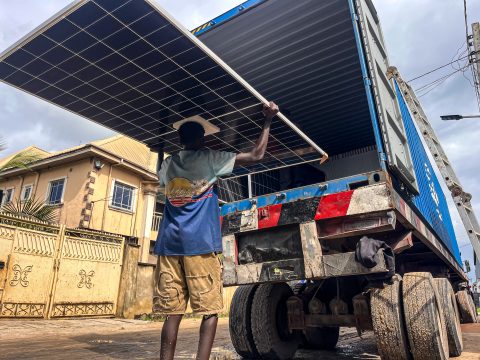
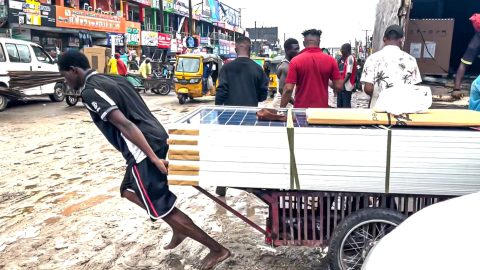
Data from energy think-tank Ember, published in August, projects that the continent will install a record 17 gigawatts (GW) of solar capacity in 2026 – equal to about 100,000 solar panels every day. This would mark the third consecutive year of record growth, following increases of 51% in 2025 and 25% in 2024.
African governments strengthen waste rules as solar and battery use surges
Joseph Ibrahim, Nigeria campaign director for Secure Energy Project, a global advocacy organisation working to accelerate the energy transition, said Africa receives only about 2% of global clean energy spending, leaving plenty of scope for more.
“A new African energy bank should build on that momentum, not pull scarce public money away from it,” Ibrahim said.
The post Africa launches long-delayed energy bank to finance fossil fuel projects appeared first on Climate Home News.
Africa launches long-delayed energy bank to finance fossil fuel projects

On 3 November, the Brazilian presidency of the COP30 climate talks released its long-awaited “roadmap” on ending deforestation.
Ahead of the Belém summit, Brazilian president Luiz Inácio Lula da Silva made a call for a “roadmap” to halt and reverse deforestation.
Although this voluntary roadmap was outside the COP’s official agenda, it snowballed into a rallying point at the “Amazon” COP.
By the end of the summit, 93 countries had signed on to the deforestation roadmap, committing to develop voluntary pathways to reverse forest loss and degradation by 2030.
The Brazilian presidency called on countries to describe what a pathway away from deforestation could look like, what challenges and support they needed.
This call was answered by 18 countries and four negotiating blocs that offered their inputs on the roadmap, along with scores of NGOs, research centres and other groups.
Now that the roadmap has been published, Carbon Brief explains where it came from, what it entails, why some did not sign on – and what’s next.
What is a deforestation ‘roadmap’?
The “deforestation roadmap” was one of the signature announcements of the Brazilian presidency of the COP30 climate summit in Belém – albeit one that fell outside the official, negotiated outcomes.
Brazilian president Lula first proposed the deforestation and forest degradation roadmap, alongside one on the fossil fuel transition, at the leaders’ summit in Belém a few days before COP30 began.
By the end of COP30, nearly 100 countries had expressed their support for such a roadmap. This includes the EU, with its 27 member states, as well as the 56-member Coalition for Rainforest Nations.
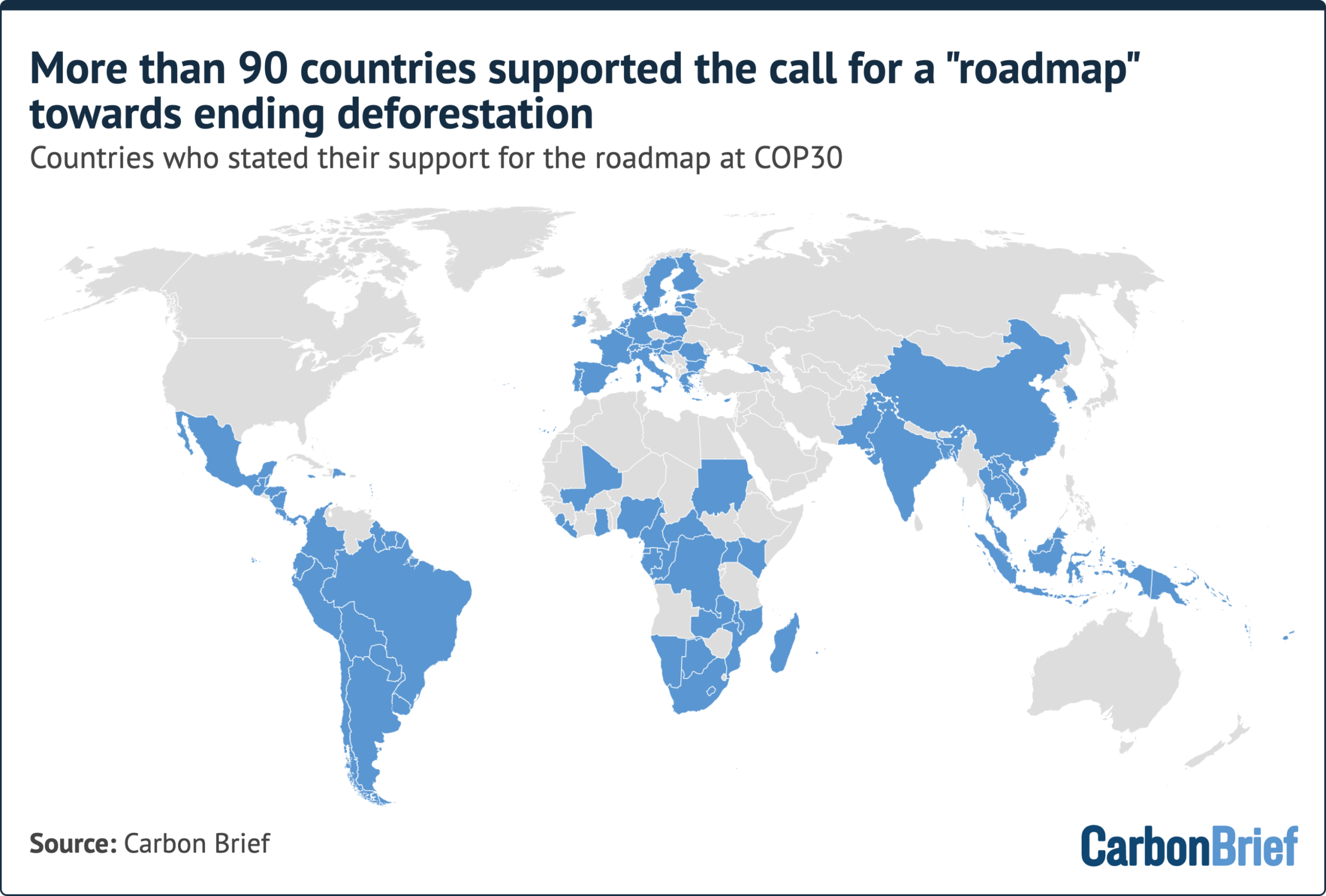
However, this was still short of the 196 parties needed for consensus at a COP, meaning that, ultimately, the roadmap was not a formal outcome.
Instead, COP30 president André Corrêa do Lago announced during the closing plenary session that the presidency would work towards creating both deforestation and fossil-fuel phaseout roadmaps outside of the COP process.
The deforestation roadmap is the latest in a series of international pledges to put an end to forest loss.
In 2014, 39 countries pledged to end natural forest loss by 2030 at UN Climate Week, as part of the New York Declaration on Forests.
Seven years later, at COP26, more than 140 countries signed the Glasgow Leaders’ Declaration on Forests and Land Use. The declaration stated that countries “commit to working collectively to halt and reverse forest loss and land degradation by 2030” – although conflict subsequently arose over what, exactly, countries had agreed to.
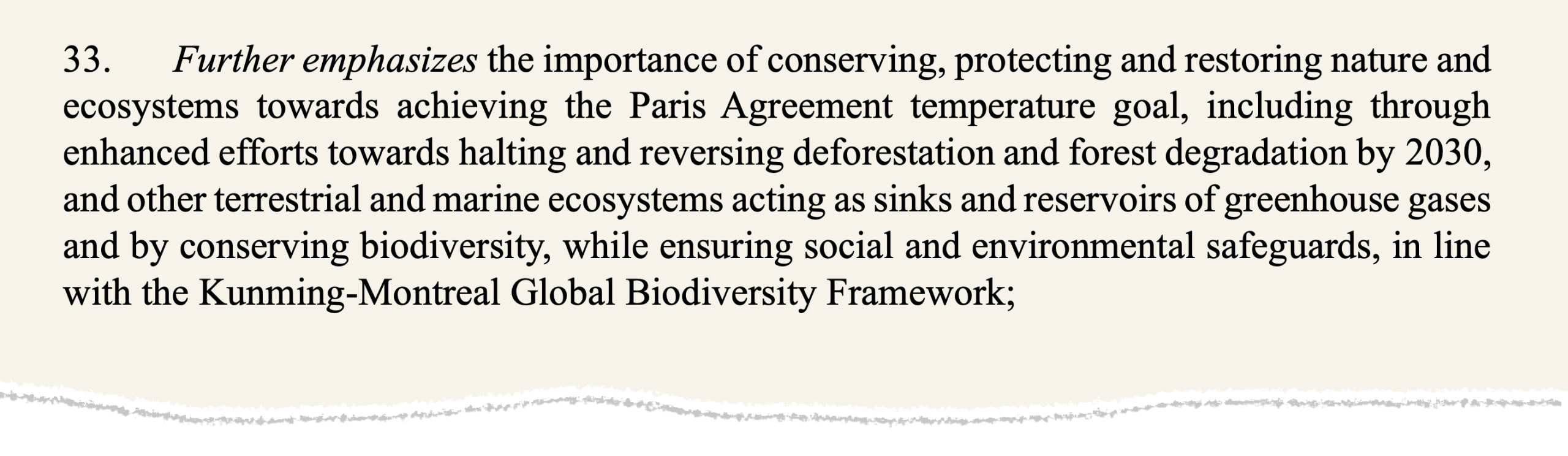
The objective of halting and reversing deforestation by 2030 was ultimately agreed in a negotiated text for the first time two years later, at COP28 in Dubai, where it was part of the global stocktake.
Unlike these previous pledges, the roadmap does not make any new commitments. It also does not “seek to reopen agreed decisions”.
Instead, the roadmap’s stated objective is to “translate forest-related outcomes into coordinated, country-led action while respecting different national circumstances, priorities and implementation challenges”.
Following the conclusion of COP30, the presidency – along with the Climate Policy Initiative thinktank – began soliciting inputs from countries, civil society organisations, Indigenous peoples, academic researchers, the private sector and other groups.
(The Climate Policy Initiative was chosen to serve as the secretariat and technical partner to the roadmap process.)
The secretariat notes that it received more than 200 contributions following this invitation. However, just 18 of these came from countries, and four from blocs – the EU, the Coalition for Rainforest Nations, the Alliance of Small Island States (AOSIS) and the Least Developed Countries (LDC) blocs – themselves.
What does the roadmap say about reducing deforestation?
The roadmap was released less than a week before the COP31 climate summit is due to begin, at an event hosted by the UN Development Programme in Brasilia.
During the launch event, Do Lago highlighted recent figures showing that Brazil’s deforestation rate had fallen to its lowest level on record – dropping by more than 70% since 2022.
“Even the optimists wouldn’t believe that we were able to decrease deforestation” by as much as the country has managed in recent years, he said.
Corrêa Do Lago said that he hoped the roadmap would be a “living document” and that it could provide countries with a “practical pathway for climate action”.
The roadmap divides forest action into three complementary parts: national action, international action and financial mechanisms.
For each of the three, the document highlights current actions or instruments and the enabling conditions required to promote action. Then, it offers “COP30 presidency proposals on the way forward” on each pillar.
Under “national efforts”, the roadmap addresses the challenge of halting and reversing deforestation across five “forest dimensions”:
- Maintaining existing forests.
- Using forests sustainably while generating value for communities.
- Combatting forest degradation.
- Combatting deforestation.
- Restoration, reforestation and afforestation.
The roadmap identifies 18 policies or “implementation approaches” that countries can use to address forest loss and degradation, although it notes that the list is not intended to serve as an “exhaustive or prescriptive classification”.
This includes a wide range of approaches, including establishing or maintaining protected areas, recognising the territorial rights of Indigenous peoples, managing the spread of pests and plant diseases and restricting permits for activities associated with forest conversion.
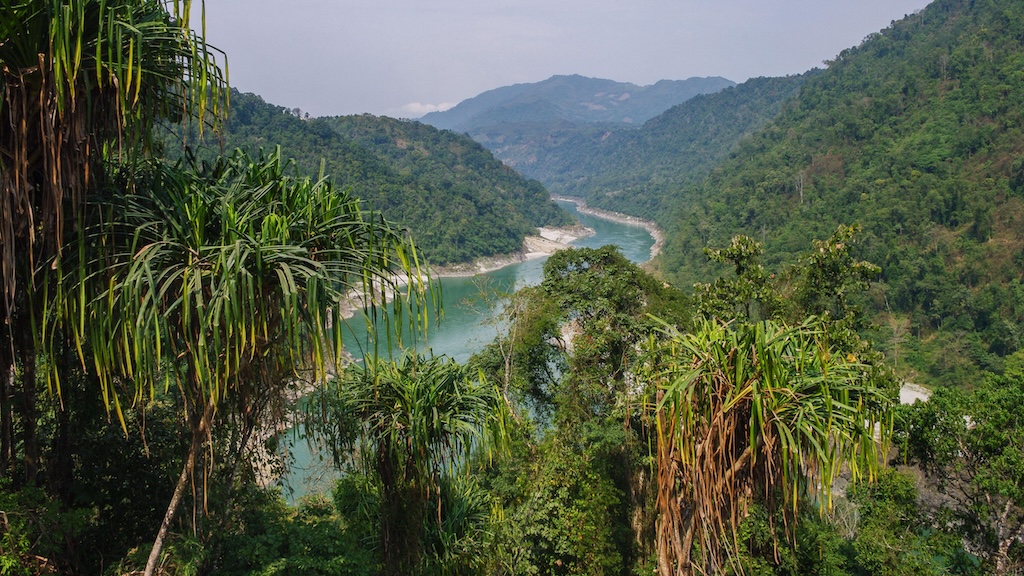
For each of these policies, the roadmap explains the approach and gives an overview of the evidence of its effectiveness. It also gives examples of how countries are implementing that policy.
Then, the roadmap discusses the enabling conditions that need to be ensured for action to occur at the national level, such as supporting land governance and promoting environmental education.
Finally, for national action, the roadmap proposes a five-step process for countries to follow. It provides “guiding questions” that countries may consider in their work to support each step.
On “international architecture for forest action”, the roadmap discusses how various international environmental and human-rights instruments address the problem of deforestation in different ways. It says:
“Climate change, biodiversity, land degradation, Indigenous peoples and local communities’ rights, ecosystem conservation and species protection are addressed through distinct international regimes, but their objectives and implementation intersect in important ways in relation to forests.”
The roadmap highlights some of the global forest-monitoring initiatives that can support national efforts, while noting that countries’ capacity for accessing and using such information “remains uneven”. It calls for improving technical cooperation between countries and increasing capacity-building.
Finally, the roadmap discusses two cross-border issues: crime and trade. On the latter, it notes that trade measures that reward compliance are generally more effective than those that impose “additional economic and administrative burdens on exporters”.

Membership
Support award-winning climate journalism
The roadmap’s final proposals for international action include strengthening national capacity for investigating environmental crime and prioritising trade policies that reward sustainable, deforestation-free production.
The roadmap notes that countries need an estimated $300bn per year by 2030 to halt and reverse deforestation, yet current finance reaches less than one-third of that figure.
Of this, nearly 90% comes from domestic public finance, as forest countries already dedicate “substantial effort” to protecting their domestic policies and budgets, the roadmap notes.
The roadmap offers 10 proposals for action on forest finance, including aligning domestic finance flows to support forest action, enacting effective benefits-sharing measures and strengthening the position of forests in carbon markets.
It concludes with an appeal to countries to “keep the collective dialogue going” through the conclusion of the second global stocktake in 2028.
In a statement, Kelly Stone, coordinator of the civil society network Climate Land Ambition and Rights Alliance, said:
“The forest commitments in the first global stocktake and this roadmap process are important steps, but these commitments need to translate into actual urgent action on the ground.
“This roadmap needs to be taken forward in a process where countries are working together for rapid, ambitious action on the ground to address deforestation and degradation and protect food security. We cannot afford to wait.”
Why did some countries not sign onto the roadmap at COP30?
In Belém, discussions around the deforestation roadmap were highly charged and several countries did not sign on.
Historically, India has opposed and raised concerns about top-down commitments around mitigation and land-use change. For example, the country did not sign the original Glasgow pledge on forests and land-use at COP26, objecting to “trade” being linked to forests and climate action.
In Belém, India – as part of the Like Minded Developing Countries bloc – objected to the inclusion of voluntary roadmaps outside of the COP agenda in the formal COP30 outcome.
However, in an interview after the talks concluded, the country’s minister for environment, forests and climate, Bhupender Yadav, told the Times of India that India “welcomes” the forest roadmap. He added that it additionally “endorses” Brazil’s Tropical Forest Forever Facility fund.
Russia was an early objector to the deforestation roadmap, laying out its position as early as April last year. While the country reiterated its commitment to the Glasgow forest declaration and the first global stocktake, it “does not support the development of a universal roadmap”, arguing that:
“…such initiatives are not mandated under the agreed international climate architecture and go beyond adopted decisions under the UNFCCC and the Paris Agreement.”
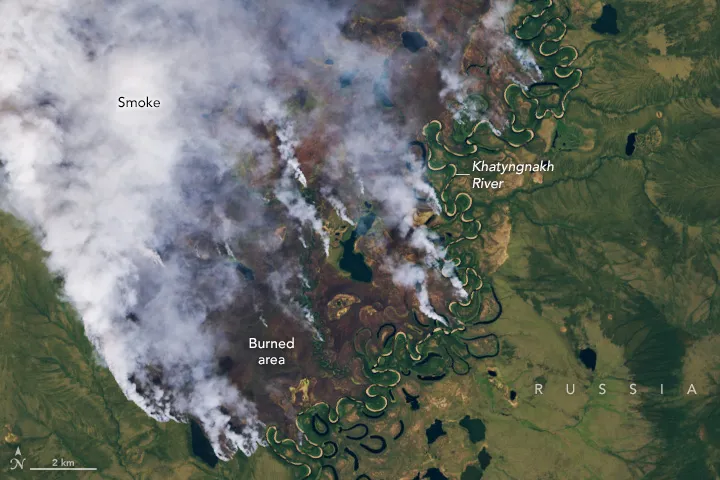
Russia hosts the world’s largest boreal forests, which are seeing more intense wildfires. In its submission on the deforestation roadmap, Russia “underscored” that there is no “universally agreed, legally binding definition” of forest degradation, although it adds subsequently that wildfires are a “key driver” of degradation.
Like India, it also opposed the roadmap on trade grounds.
Other countries were wary of signing on to new non-negotiated mitigation commitments outside of the official COP agenda, at the expense of other agenda items, such as adaptation finance.
At the recently concluded Yerevan COP17 nature talks, the deforestation roadmap’s coordinator Marco Túlio Scarpelli Cabral told Carbon Brief it does not make sense to talk about more countries signing up to the non-negotiated roadmap, when countries have agreed by consensus to tackle deforestation within the global stocktake and biodiversity COPs. He added:
“All countries have already taken this [deforestation] commitment, both in the Kunming-Montreal [Global Biodiversity Framework] with some converging targets, but also in the global stocktake…
“We have all accepted [it]. So we don’t need any country to subscribe to the roadmap.”
The first global stocktake was undertaken at COP28 in Dubai. As mentioned above, within the mitigation section of this document – which was adopted by consensus – the importance of “hal