

Canada and the European Union’s commitment to strengthen cooperation on energy security and the energy transition lays the foundation to put clean growth and climate priorities at the heart of their alliance, according to experts.
In a seven-page joint statement agreed at the end of a two-day summit in Montreal on Friday, both sides committed to work more closely on investment in critical minerals, green grids, energy sources, battery storage and the protection of energy infrastructure.
They agreed to assess opportunities for long-term energy connectivity across the Atlantic, including through a feasibility study on liquefied gas (LNG) exports to Europe. The statement also includes a pledge to “deepen targeted industrial cooperation” on technology value chains and “address bilateral trade barriers”.
“Canada and the European Union have sent a clear and unwavering signal that closer cooperation on decarbonisation and climate resilience will be central to their new strategic alliance,” said Canadian Climate Institute president Rick Smith. “The task now is to turn talk into action.”
Foundation for climate action
The EU and Canada’s “alliance for the future” aims to deepen their partnership across investment, trade and economic security to weather geopolitical tensions and global threats, including “the existential threat of the interdependent crises of climate change, biodiversity loss, ocean and land degradation, and pollution”.
These threats are “increasingly impossible to ignore as the impacts of extreme heat, wildfires, floods, and other disasters become more disruptive and expensive,” Smith said.
-
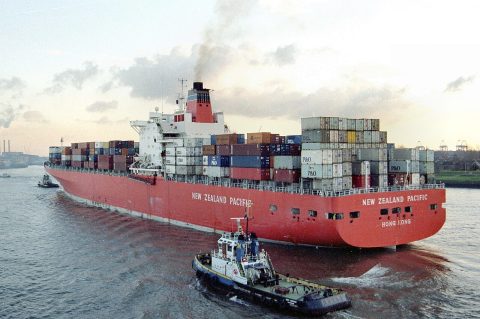
New Zealand accused of breaching EU trade deal over climate rollbacks
The EU’s climate trade rules face their first major test after a green group alleged New Zealand violated binding environmental provisions under its trade deal with the bloc -
Tensions set to flare over trade at COP31 as China makes it a priority
After difficult talks in Belém last year, trade is likely to remain a sticking point at COP31 despite Brazil’s efforts to contain the issue to a series of dialogues -
International trade linked to 20% of global emissions – but imports ignored
Researchers say governments should discuss how to tackle emissions linked to globally traded goods and services, especially in large importing countries


The statement reaffirms existing commitments established by the Canada-European Union Green Alliance, which both parties described as “our compass for advancing decarbonisation while also strengthening competitiveness, affordability, and economic security”.
Investment in critical minerals
During the summit, the European Investment Bank (EIB) announced a “new chapter” for its presence in Canada, beginning with accelerated investment in critical minerals.
“At a time when both sides of the Atlantic are working to reduce strategic dependencies, we want to turn our partnership into investment in real projects, from mining and processing to recycling,” EIB Vice-President Nicolas Beer said in a statement. “That is how we build supply chains that are not only more secure, but more competitive too.”
Joanna Kyriazis, director of policy and strategy at Clean Energy Canada, welcomed the EIB announcement as a “bright spot of the summit” and “one of the few tangible actions”.
“As the EU and Canada seek to advance a partnership anchored in ensuring mutual security and navigating an uncertain world, it is essential that electrification remains a north star… one of the greatest ways we can advance both short- and long-term affordability, competitiveness, and energy security,” she said.
Feasibility of Canadian LNG exports to the EU
In addition, the agreement calls for a joint long-term feasibility study on LNG exports to Europe, although no immediate investment was announced to support this.
A media briefing circulated by climate advocacy groups in advance of the summit had warned that a call for such a study would support Canada’s efforts to rebrand gas, a highly polluting fossil fuel, as a reliable, low-carbon energy source.
Yet, the agreement was interpreted by some observers as a Canadian concession following more than a year of rhetoric predicting a boom in Canadian gas exports to the EU and elsewhere.
-
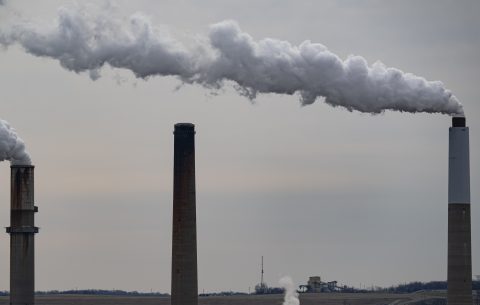
National climate plans now promise half the emission cuts expected by UN
The US exit from the Paris Agreement and weak new pledges leave 2035 emissions just 6% below 2019 levels, against 12% projected last year -
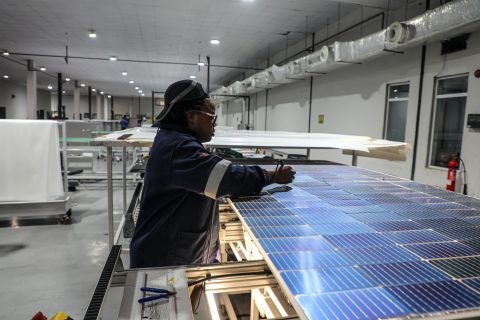
Why COP31 needs to start talking about just transition finance
Funding that helps workers and communities navigate the clean energy switch remains overlooked, splintered and poorly tracked – a blindspot that could undermine climate goals -
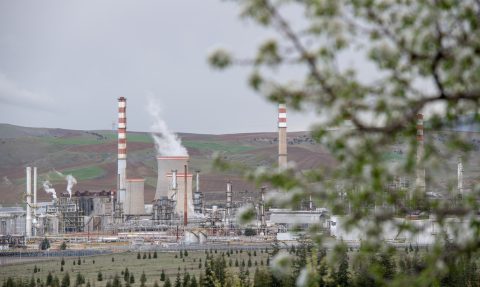
Turkish giant sponsoring COP31 cut climate goals then cashed in on oil boom
COP31 sponsors should be screened for “climate integrity”. Yet Koç Holding has become a top partner while its oil refiner runs flat out and its climate targets slip
“What is clear is that the EU is reducing its gas consumption drastically,” Adrian Hiel, director of the Brussels-based Electrification Alliance, told the Globe and Mail. “The long-term trend is clear and by the middle of the next decade, Europe should be out of the LNG game.”
Last year, The Energy Mix and Berlin-based Clean Energy Wire reported on mounting doubts that serious European demand for additional gas supplies would ever materialise after Energy and Natural Resources Minister Tim Hodgson touted LNG exports to Germany in “as little as five years”.
Rapprochement on a ‘trade irritant’
In the lead-up to the summit, the Canadian Broadcasting Corporation reported that Canadian iron, steel, fertiliser and aluminium would not be exempt from carbon tariffs under the EU’s Carbon Border Adjustment Mechanism (CBAM), as it moves toward full implementation in 2034.
The CBAM is a trade tool designed to protect the continent’s domestic industries from competitors in countries with less stringent carbon controls.
Unlike other non-EU members like Switzerland, Norway, Iceland, and the UK, Canada is unlikely to be exempted from the CBAM because there are no plans to link its carbon market to Europe’s.
However, at the end of the Montreal summit, Canadian Prime Minister Mark Carney and EU Commission President Ursula von der Leyen told a press conference they had made progress on finding joint solutions to the issue, which von der Leyen described as a “trade irritant”.
Canada’s EU ambassador, Jonathan Wilkinson, formerly the environment and climate minister, said Canada sees it as a problem that the CBAM “did not acknowledge Canadian producers were doing their part to reduce their greenhouse gas footprint by paying an industrial carbon price”.
He “confirmed diplomatic talks are heading in the right direction but not resolved”, CBC reported.
A longer version of this story was originally published by The Energy Mix as part of its partnership with Small Change Fund.
The post Canada, EU agree deeper cooperation on energy and cleantech supply chains appeared first on Climate Home News.
Canada, EU agree deeper cooperation on energy and cleantech supply chains

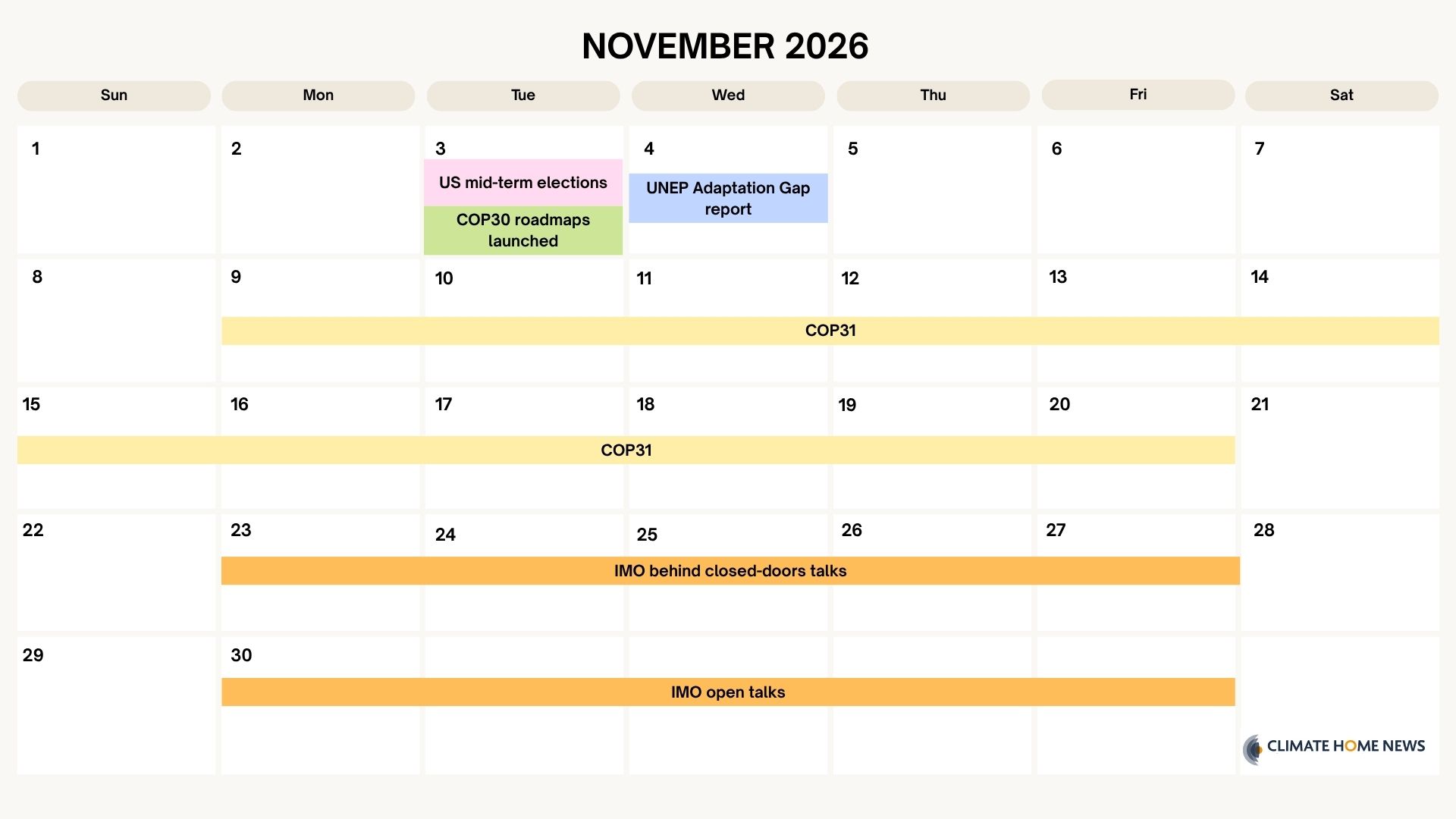
This is a republication of November’s edition of The Climate Agenda – a subscriber-only newsletter designed to keep you informed of the key events, negotiations and announcements happening every month. If you want to receive The Climate Agenda straight to your inbox at the start of each month, sign up as a subscriber today.
COP31 begins in one week, and we’ll have five specialist reporters on the ground in Antalya, Türkiye, bringing you every development as it happens. From the negotiations to leaders’ speeches and side events, we’ll be there to dissect what it all means for international climate policy on electrification, just transition, adaptation finance and much more.
Here’s what you need to know for November, why it matters and what to expect.
US midterm elections
Tuesday 3 November – United States
The geopolitical highlight for the first week of November is the US midterm elections, which will show whether American voters are in any mood to forgive President Donald Trump for failing to bring down the cost of living. From an energy perspective, his pro-oil and gas stance hasn’t led to cheaper prices for consumers, pushed up by the US-instigated Iran conflict. And his diesel deal with Russia won’t yet have made a difference at the pump.
The key issue for climate and energy policy is whether the Republicans hold onto their governing trifecta. If so, then expect continued dismantling of regulations that protect the environment, as well as strong backing for fossil fuel production. If the Democrats regain control of Congress, which polls suggest is possible, it could trigger a push to restore Biden-era clean energy tax credits, and support states wanting to restart mothballed wind and solar projects.
Data centres have been a hot-wire issue, with growing community opposition to their expansion – partly due to concerns over rising utility bills as the facilities gobble power. Whether Republicans or Democrats win Congress, both are likely to make tech firms pay for the extra electricity production they need, with the latter favouring renewable sources.
Governor races are also taking place in key states for climate issues, including Democrat-run California, which has used the courts to fight Trump’s attacks on clean energy.
Read more: National climate plans now promise half the emission cuts expected by UN
Read more: The more Europe relies on the US for energy, the more it’s vulnerable to pressure by Trump

COP30 Deforestation and Fossil Fuel Transition Roadmaps
Tuesday 3 November – Brazil
Brazil is set to unveil two global roadmaps: one for transitioning away from fossil fuels, the other for ending deforestation.
The COP30 presidency promised them in the dying hours of the Belém summit last November as a last-minute fix to break a political impasse. Since then, it has been consulting with countries, experts and campaigners around the world to gather ideas and sketch out the elements to include in these blueprints.
Don’t expect the roadmaps to offer any new global targets or give direct instructions on what countries must do, either to cut fossil fuel production and consumption or better protect forests. Rather, Brazil has said the documents will identify barriers and priority actions, highlight existing mechanisms and present a range of options that can be adapted to different national contexts.
It remains unclear what will happen with the reports once they are delivered on Tuesday. At the Bonn talks last June, a group of European and small island nations called for the roadmaps to be brought into the official negotiations, warning that a one-off report won’t cut it. But such efforts would undoubtedly face stiff opposition from fossil fuel-producing nations that objected to drafting the energy transition roadmap within the formal UN process last year.
Read more: European, island states seek clear future for global roadmap to cut fossil fuels
Read more: COP30 roadmap to end deforestation will invite countries to draft domestic plans
Read more: What we need to see in the roadmap to transition away from fossil fuels
UNEP Adaptation Gap Report
Wednesday 4 November – Nairobi, Kenya
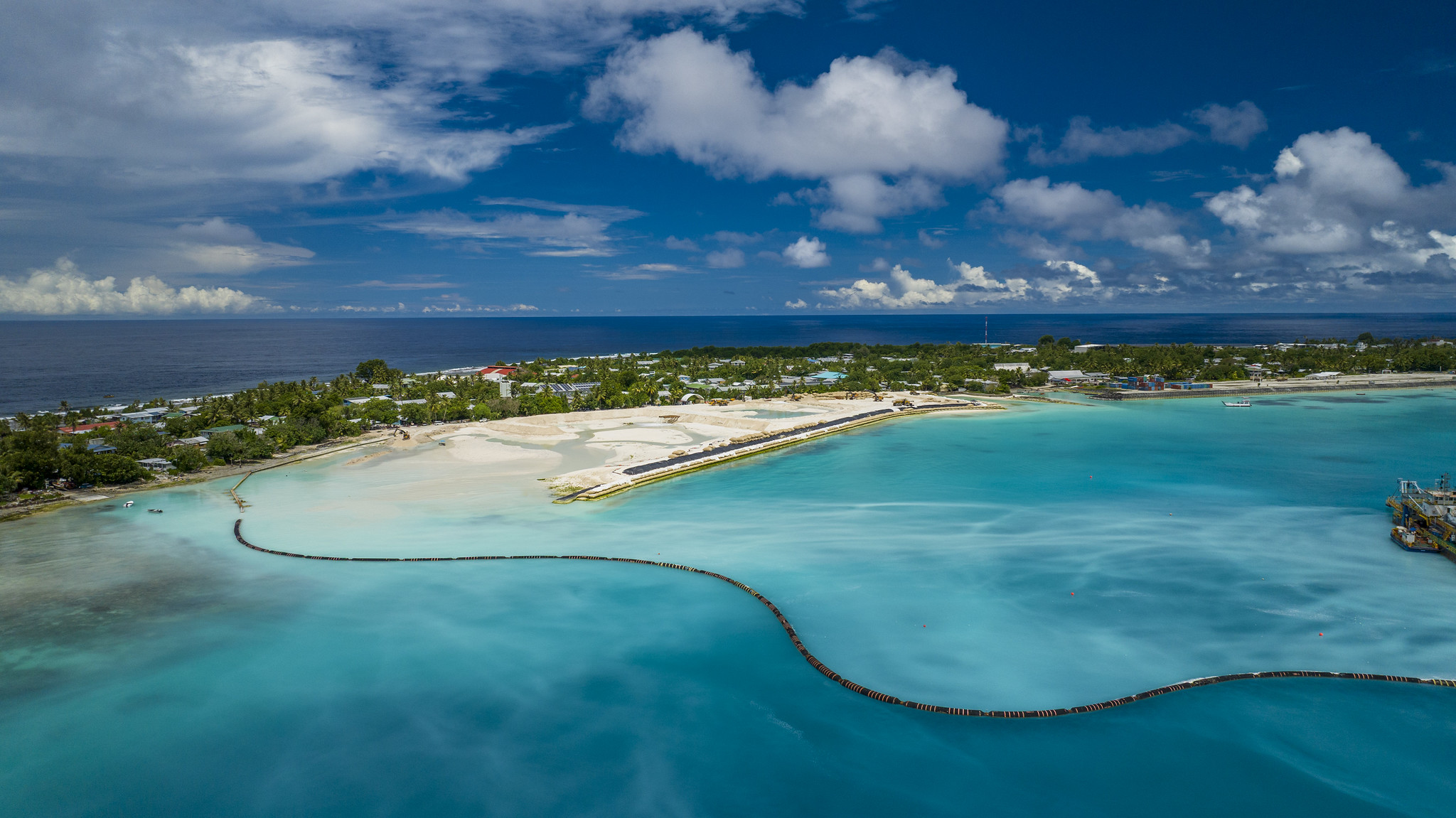
The UN Environment Programme (UNEP) will publish its annual assessment of how well the world is planning, implementing and – crucially – financing measures to cope with worsening climate impacts.
Past editions have made for grim reading. Last year’s report warned of a widening gap between what developing countries need for adaptation and what they can access. It estimated they will need $310–365 billion a year by 2035, which is 12 to 14 times current international flows. The report also found that a goal of doubling international public adaptation finance by 2025 was likely to have been missed.
This year’s edition will be closely watched with adaptation expected to be a big-ticket item at COP31. Governments are likely to discuss the specifics of a commitment to triple adaptation finance for developing nations by 2035, agreed at COP30 last year – particularly what the baseline for that pledge is. Negotiators will be debating how to track progress against the 59 indicators of the Global Goal on Adaptation.
Read more: Editor’s Desk: Nepal’s disaster has laid bare the world’s adaptation accountability gap
Read more: Bonn climate talks end in “gridlock” on adaptation and emissions-cutting
Read more: New data shows rich nations likely missed 2025 goal to double adaptation finance
COP31 Climate Conference
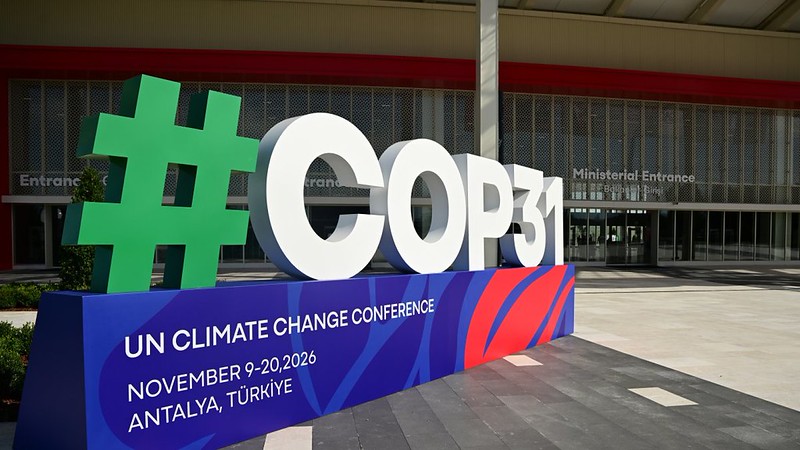
Monday 9 November – Friday 20 November – Antalya, Türkiye
The climate community’s attention turns this month to Antalya for the annual UN climate summit. From the outset, COP31 will have an unprecedented, and potentially explosive, set-up: Türkiye is COP president overseeing the non-negotiated Action Agenda, while Australia runs the negotiations.
Billed, once again, as an “implementation COP”, the talks come amid a global energy crisis largely sparked by the actions of the US government, which is not expected to show up on the Turkish Riviera. It is also the first COP in the era of climate overshoot, coming just weeks after the UN officially confirmed the 1.5C warming limit will be breached and set out a narrow pathway to bring temperatures back down to the most ambitious Paris goal.
Unlike most recent COPs, the formal negotiations lack a clear headline item. Countries are due to establish and define the scope of the Just Transition Mechanism agreed in Belém last year, including its rules, governance and possible funding arrangements. On adaptation, vulnerable countries want a clearer path to delivering last year’s pledge to triple finance by 2035 and to putting the new progress indicators to work on the ground.
Governments are also likely to clash over next steps on the transition away from fossil fuels, and especially over whether the mitigation work programme – the forum dedicated to emission-cutting measures – has any future beyond this year.
Notable events to look out for in Antalya:
Opening session (9 November): The summit kicks off with the customary first-morning plenary. After the usual pageantry from the host nation, negotiating blocs and individual countries will deliver statements setting out their stall for the next two weeks. Watch out for a potential fight over the summit’s agenda – perhaps on issues relating to finance and trade following submissions requesting additional items – also a COP tradition.
Electrification (10 November): On Energy Day, the Turkish presidency is expected to formally launch its flagship electrification pledge, revealing which countries have signed up. Signatories will voluntarily commit to raising electricity’s share of global final energy consumption to 35% by 2035, though the current text does not require that power to come from clean sources. There is also a question mark over whether and how this can be included in the political cover decision the COP co-hosts have said they will aim to produce.
Leaders Summit (11-12 November): Heads of state and governments will jet into town for the traditional high-level segment in the middle of the first week, where world leaders typically talk up their climate record, air their grievances and call for more action.
Relatively few powerful leaders are on the list this time. Brazil’s Lula is set for another star turn this year, fresh from his surprise election win in October. The UK’s Andy Burnham, Spain’s Pedro Sanchez and China’s vice-premier Ding Xuexiang are expected, alongside Türkiye’s Recep Tayyip Erdogan and Australia’s Anthony Albanese. In addition, African and small island nations will feature prominently.
Our COP31 Briefing newsletter will offer a more in-depth preview of the talks later this week.
Read more: Early speakers’ list suggests few powerful leaders will attend COP31
Read more: COP31 electrification pledge leaves out clean power commitment
Read more: From Belém to Antalya – gains, gaps and challenges for a new Just Transition Mechanism
International Maritime Organization (IMO) Shipping Talks
Monday 23 November – Friday 4 December – London, United Kingdom
One year on from explosive talks in which Trump’s officials teamed up with Saudi Arabia to delay a deal to make the shipping industry greener, governments will gather on the banks of the Thames for another attempt to reach agreement.
The Net Zero Framework, provisionally agreed in October 2025, includes a series of emissions reduction targets for the owners of large ships along with penalties for not meeting them, rewards for doing so and measures to make the maritime transition fair.
The framework is likely to be either tweaked or radically rewritten so that it’s more acceptable to the US and Saudis. Brazil and Japan have submitted compromise proposals. Analysts find those will move shipping further away from being able to meet its climate goals.
There will be closed-door talks between November 23-27 and a second week of talks open to accredited media from November 30 to December 4. Agreement on a proposal, perhaps decided through a vote, is expected after long and technical negotiations. The shipping industry’s 3% share of the world’s emissions is at stake.
Read more: London talks raise hopes for green shipping deal
The post What’s on the climate calendar for November 2026? appeared first on Climate Home News.