

Canada and the European Union’s commitment to strengthen cooperation on energy security and the energy transition lays the foundation to put clean growth and climate priorities at the heart of their alliance, according to experts.
In a seven-page joint statement agreed at the end of a two-day summit in Montreal on Friday, both sides committed to work more closely on investment in critical minerals, green grids, energy sources, battery storage and the protection of energy infrastructure.
They agreed to assess opportunities for long-term energy connectivity across the Atlantic, including through a feasibility study on liquefied gas (LNG) exports to Europe. The statement also includes a pledge to “deepen targeted industrial cooperation” on technology value chains and “address bilateral trade barriers”.
“Canada and the European Union have sent a clear and unwavering signal that closer cooperation on decarbonisation and climate resilience will be central to their new strategic alliance,” said Canadian Climate Institute president Rick Smith. “The task now is to turn talk into action.”
Foundation for climate action
The EU and Canada’s “alliance for the future” aims to deepen their partnership across investment, trade and economic security to weather geopolitical tensions and global threats, including “the existential threat of the interdependent crises of climate change, biodiversity loss, ocean and land degradation, and pollution”.
These threats are “increasingly impossible to ignore as the impacts of extreme heat, wildfires, floods, and other disasters become more disruptive and expensive,” Smith said.
-
New Zealand accused of breaching EU trade deal over climate rollbacks
The EU’s climate trade rules face their first major test after a green group alleged New Zealand violated binding environmental provisions under its trade deal with the bloc -
Tensions set to flare over trade at COP31 as China makes it a priority
After difficult talks in Belém last year, trade is likely to remain a sticking point at COP31 despite Brazil’s efforts to contain the issue to a series of dialogues -
International trade linked to 20% of global emissions – but imports ignored
Researchers say governments should discuss how to tackle emissions linked to globally traded goods and services, especially in large importing countries



The statement reaffirms existing commitments established by the Canada-European Union Green Alliance, which both parties described as “our compass for advancing decarbonisation while also strengthening competitiveness, affordability, and economic security”.
Investment in critical minerals
During the summit, the European Investment Bank (EIB) announced a “new chapter” for its presence in Canada, beginning with accelerated investment in critical minerals.
“At a time when both sides of the Atlantic are working to reduce strategic dependencies, we want to turn our partnership into investment in real projects, from mining and processing to recycling,” EIB Vice-President Nicolas Beer said in a statement. “That is how we build supply chains that are not only more secure, but more competitive too.”
Joanna Kyriazis, director of policy and strategy at Clean Energy Canada, welcomed the EIB announcement as a “bright spot of the summit” and “one of the few tangible actions”.
“As the EU and Canada seek to advance a partnership anchored in ensuring mutual security and navigating an uncertain world, it is essential that electrification remains a north star… one of the greatest ways we can advance both short- and long-term affordability, competitiveness, and energy security,” she said.
Feasibility of Canadian LNG exports to the EU
In addition, the agreement calls for a joint long-term feasibility study on LNG exports to Europe, although no immediate investment was announced to support this.
A media briefing circulated by climate advocacy groups in advance of the summit had warned that a call for such a study would support Canada’s efforts to rebrand gas, a highly polluting fossil fuel, as a reliable, low-carbon energy source.
Yet, the agreement was interpreted by some observers as a Canadian concession following more than a year of rhetoric predicting a boom in Canadian gas exports to the EU and elsewhere.
-
National climate plans now promise half the emission cuts expected by UN
The US exit from the Paris Agreement and weak new pledges leave 2035 emissions just 6% below 2019 levels, against 12% projected last year -
Why COP31 needs to start talking about just transition finance
Funding that helps workers and communities navigate the clean energy switch remains overlooked, splintered and poorly tracked – a blindspot that could undermine climate goals -
Turkish giant sponsoring COP31 cut climate goals then cashed in on oil boom
COP31 sponsors should be screened for “climate integrity”. Yet Koç Holding has become a top partner while its oil refiner runs flat out and its climate targets slip
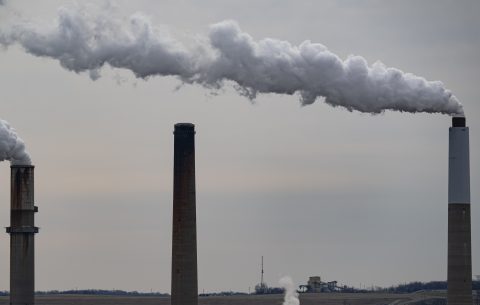
“What is clear is that the EU is reducing its gas consumption drastically,” Adrian Hiel, director of the Brussels-based Electrification Alliance, told the Globe and Mail. “The long-term trend is clear and by the middle of the next decade, Europe should be out of the LNG game.”
Last year, The Energy Mix and Berlin-based Clean Energy Wire reported on mounting doubts that serious European demand for additional gas supplies would ever materialise after Energy and Natural Resources Minister Tim Hodgson touted LNG exports to Germany in “as little as five years”.
Rapprochement on a ‘trade irritant’
In the lead-up to the summit, the Canadian Broadcasting Corporation reported that Canadian iron, steel, fertiliser and aluminium would not be exempt from carbon tariffs under the EU’s Carbon Border Adjustment Mechanism (CBAM), as it moves toward full implementation in 2034.
The CBAM is a trade tool designed to protect the continent’s domestic industries from competitors in countries with less stringent carbon controls.
Unlike other non-EU members like Switzerland, Norway, Iceland, and the UK, Canada is unlikely to be exempted from the CBAM because there are no plans to link its carbon market to Europe’s.
However, at the end of the Montreal summit, Canadian Prime Minister Mark Carney and EU Commission President Ursula von der Leyen told a press conference they had made progress on finding joint solutions to the issue, which von der Leyen described as a “trade irritant”.
Canada’s EU ambassador, Jonathan Wilkinson, formerly the environment and climate minister, said Canada sees it as a problem that the CBAM “did not acknowledge Canadian producers were doing their part to reduce their greenhouse gas footprint by paying an industrial carbon price”.
He “confirmed diplomatic talks are heading in the right direction but not resolved”, CBC reported.
A longer version of this story was originally published by The Energy Mix as part of its partnership with Small Change Fund.
The post Canada, EU agree deeper cooperation on energy and cleantech supply chains appeared first on Climate Home News.
Canada, EU agree deeper cooperation on energy and cleantech supply chains

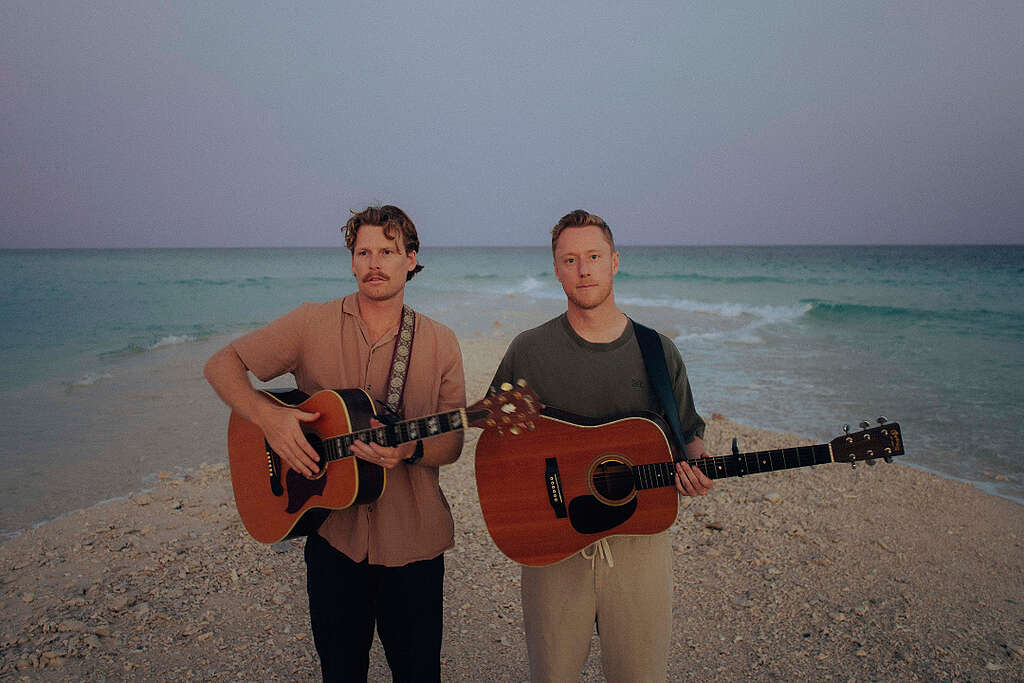
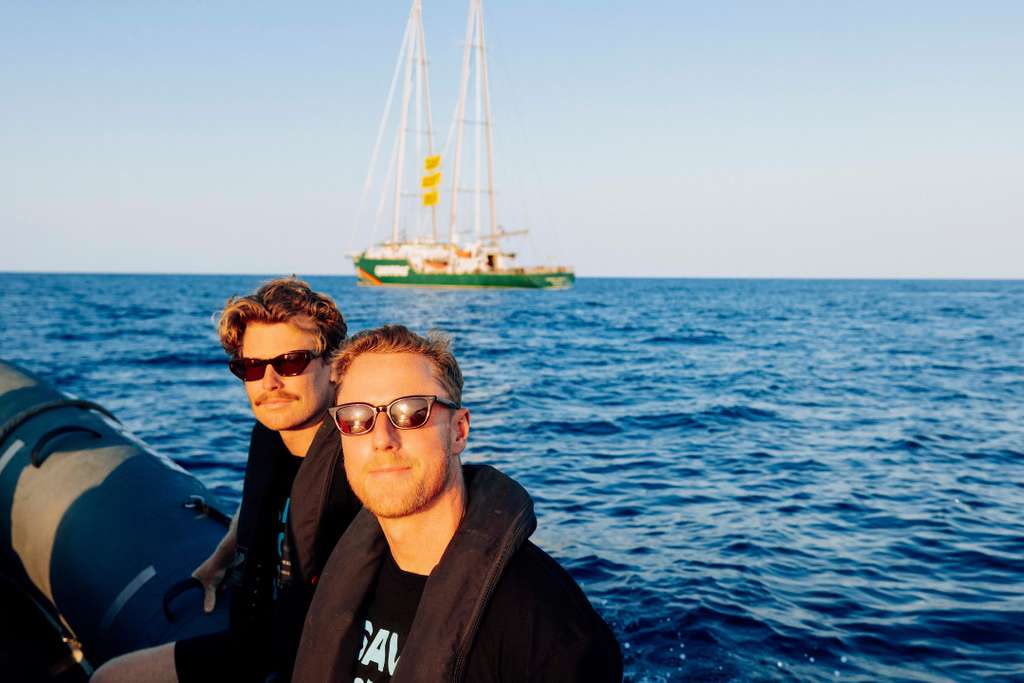
Australian indie-folk duo Hollow Coves have found a special way to combine their love of music and the natural world. They have lent their, very soothing, voices to the Save Scott Reef campaign by recording a music video of their much-loved song Coastline at the reef.
We sat them down on the Rainbow Warrior to talk about their musical inspiration, their experience on the reef, and why they believe it’s so important to protect these incredible places for future generations.
1. Tell us a little about Hollow Coves and the music you make.
Matt: Our music is acoustic indie folk. We like bands like Angus and Julia Stone, Ben Howard, Mumford and Sons – acoustic music like that.
Ryan: Historically, a lot of our music has been inspired by travelling and seeing beautiful places in nature, and just writing about experiences in the world.
We both live on the east coast of Australia, on the Gold Coast, and we’re surrounded by nature. We’ve got beautiful oceans, amazing hinterland spots and some really cool rock pools.
2. Your music is often inspired by nature and the outdoors. What is your personal connection to the ocean?
Matt: I’m in the ocean as much as I can. I surf, and I’ve always loved the ocean. I grew up just outside Brisbane, and we would catch the ferry across to North Stradbroke Island. A lot of our mates would just camp over there on the weekends. It’s been a natural part of my life.
Ryan: I don’t surf, but I have an appreciation of the ocean. When we were writing Coastline, I was actually living in Canada, and being away from the ocean made me realise how much I missed it. There’s something about living near the ocean and being able to go and be by the ocean. It’s just a different feeling.

3. You recently joined Greenpeace aboard the Rainbow Warrior to visit Scott Reef and film a music video for Coastline. What made you want to get involved?
Ryan: We’ve been so fortunate to have the success that we’ve had with our music, and when this opportunity came up, we were like, man, it just feels so fitting to give back in whatever way we can. The music has been so inspired by these places of beauty, and so we just want to do our part to protect and preserve these places so that future generations can appreciate them in the same way that we do.
Matt: Collaborating with Greenpeace has just been so aligned with our mission as well. We love nature, we love singing about it, and I think it’s so important to protect these places that are vulnerable and unique to the world. They really are just a natural wonder.
4. What was it like seeing Scott Reef for the first time?
Matt: The first time was really magical. I didn’t realise there was even this amazing coral shelf out off the Kimberley Coast. Just being able to go snorkelling every day and see the wildlife and what’s actually underneath the water – the whole world around is just something else.
Ryan: The first day we arrived at the reef, the sun was rising and this pod of about 50 dolphins greeted us as we entered. It was like, wow, this place is just so brimming with life. It was really beautiful to see, and the colour of the water – everyone was just like, oh my gosh, this water is insane!
Matt: You just always forget that when you’re sailing, it’s obviously beautiful, and every sunset’s magical, but you forget there’s this whole world underneath the ocean and just how lively and vibrant it is.
5. Tell us about filming the Coastline music video. What was it like performing on that tiny island?
Matt: It was an amazing opportunity to be alongside this project and get on the Rainbow Warrior, see Scott Reef and go play on this amazing little sandbank island in the middle of the ocean. We were losing our minds with the beauty of it.
It was a big team effort. The island only comes out at low tide, and on the day we arrived it was completely submerged. We had to wait for the right opportunity to get onto the island safely.
Ryan: When we first got on there, the waves were still crashing over it from either side. As the tide kept going down, a bit more of the island was revealed.
Matt: There was a whole film crew, with a drone flying around to capture the scale of how small this little island is and how big the ocean is. It was just so magical, like a pinch-me moment. Something we’ll remember for the rest of our lives.

6. What surprised you most about Scott Reef and the marine life you discovered?
Matt: The third day was the highlight for me. I got to see a turtle swim by, a little reef shark and another sea snake which tried to chase me, which was pretty scary! But it was cool.
Ryan: Just the colours, all the coral and so many beautiful, colourful fish. It’s such a crazy experience to be down there.
Matt: I think you just forget there’s this whole world underneath the ocean. It just felt really cool to be down there and a part of it.
7. Before this trip, how much did you know about Scott Reef, and why do you think it’s important to raise awareness about it?
Ryan: Prior to this trip, we knew very little about Scott Reef, and I think that’s part of the problem. It hasn’t been very common for people to know about this place. Part of the trip is to bring awareness to how beautiful Scott Reef is and to show people that it is something worth protecting.
If we don’t stand up and protect these places, then we are at risk of losing them. It just sets a really bad precedent for coral reefs in Australia.
Matt: Scott Reef doesn’t really have the name like a lot of other places. I think that’s the key, to spread the word and tell people about what’s happening out here and how beautiful it is.
8. What is at stake if the proposed drilling project near Scott Reef goes ahead?
Ryan: Currently there’s a proposal for a drilling project that would take place near Scott Reef. If that was to go ahead, it would be a massive risk for the reef, and it would put a lot of the wildlife at risk as well.
Having been out there and seeing the beauty there, it just doesn’t feel right. It doesn’t feel like it’s a risk that we need to take. Particularly with these places that are so beautiful, why would we want to risk losing them?
Matt: I think it’d be an absolute tragedy. Just experiencing it yourself, it’s like, wow, this place is incredible. There are so many endangered sea creatures. I think for anyone that would come out here and experience it, everyone would be aligned with how important it is to keep this place.
9. What was your experience like aboard the Rainbow Warrior and getting to know the Greenpeace crew?
Matt: I didn’t really know what to expect, but everyone was so lovely and passionate. It was cool just being part of the process of running the ship. We had very strict schedules, and we did cleaning at eight o’clock every day! It was really cool to see how the ship operates.
Ryan: We were welcomed like family to the crew on board. Everyone’s been so encouraging and helpful. It was really special to see the amount of effort that goes into trying to protect these places.
I hadn’t really explored Greenpeace too much before this trip, so it’s been cool to learn more about the organisation and the people involved and hear more of their heart towards preserving these beautiful places.
10. What message would you like to share with people who want to help protect Scott Reef?
Matt: I think anyone that loves the ocean or finds nature a big part of their life should get behind this campaign. It’s about raising awareness, sharing the word of what Scott Reef is and how beautiful it is.
Being a father myself, it’s just made me even more passionate about these places that we have, how fragile they are and how important it is to pass them on to the next generation. I just want my kids to see it and future generations, because it really is a spectacular thing.
Ryan: I think it’s important to be on the right side of history with things like this. You can sit back and do nothing and just see these beautiful places be lost. Or you can stand up and fight for what’s right.
We’re at this point in history where we have an opportunity to make a difference. These places are constantly being put at risk, and if we do nothing, then we’ll just see them go. We’ve already lost so much, and so it’s important to stand up and fight for these places that we want to keep.
Matt: Absolutely, we’ve got this. Let’s spread the word. We can absolutely win this campaign!
Climate Change
‘Ode to Scott Reef’: Indie-folk duo Hollow Coves performs at famous Australian reef in call for protection
SCOTT REEF, Tuesday 24 November 2026 — Released today, a new music video with Gold Coast duo Hollow Coves performing onboard the flagship Rainbow Warrior at Scott Reef calls for protection of the ancient ecosystem from oil and gas drilling proposed by multinational Woodside.
- Watch ‘Coastline’ shot at Scott Reef here and see visuals from the shoot at sea here
The new music video, in collaboration with Greenpeace Australia Pacific, captures a performance of Hollow Coves’ viral single ‘Coastline’, joining a nationwide push by Australian artists to protect heritage-nominated Scott Reef, located 270 kilometres off WA’s Kimberley coast. The video was shot on multiple cameras including a Bolex 16mm vintage movie camera, and boasts original underwater and aerial footage of Scott Reef.
Scott Reef is home to thousands of marine species, genetically unique green sea turtles and endangered pygmy blue whales but is threatened by oil and gas drilling proposed by multinational corporation Woodside, the Browse project.
Matt Carins, Hollow Coves musician, said: “It would be such a tragedy if gas drilling happened at Scott Reef. It’s such an incredible part of the world and is something that we want to pass on to future generations. Being a father myself, I want to share these places with my kids.
“There’s still hope in saving Scott Reef. I think it’s our time now to spread the word of how beautiful this place is. It may not have the same fame as other reef systems, but it’s just as amazing and just as important.”
Ryan Henderson, Hollow Coves musician, said: “Scott Reef is incredible. We were greeted by a pod of dolphins the first day we arrived. The whole place is brimming with wildlife.
“It would be such a shame to allow gas drilling to go ahead at Scott Reef. We wouldn’t allow drilling at the Great Barrier Reef so why should we allow it at Scott Reef which is also so beautiful and so precious. We want to preserve these places.
“There’s still hope. The Australian Government has an opportunity now to save Scott Reef and be on the right side of history.”
Hannah Schuch, Senior Campaigner at Greenpeace Australia Pacific, said: “It was a privilege to witness Hollow Coves playing their iconic single ‘Coastline’ live from Scott Reef, surrounded by wildlife and tranquil blue water.
“The ecological significance of Scott Reef to thousands of species, many of which are threatened, cannot be understated, but its surreal beauty is something that is so easy to capture and makes a perfect setting for a song like Coastline.
“Hollow Coves’ work is a perfect example of the symbiosis between Australian music and nature, and we are so excited to present this musical and cinematic ode to Scott Reef in collaboration with them.
“Drilling at Scott Reef is an unacceptable proposal, and Environment Minister Murray Watt has a generational opportunity to write a legacy of nature protection by putting a stop to Woodside’s plans and saving Scott Reef.”
Minister Watt is expected to decide if Woodside will be allowed to drill at Scott Reef for the Browse gas project in the coming months.
-ENDS-
Media contact
Emma Sangalli on 0431 513 465 or emma.sangalli@greenpeace.org
High res images and footage of Scott Reef can be found here