

¡Hola y bienvenidos a Chile!
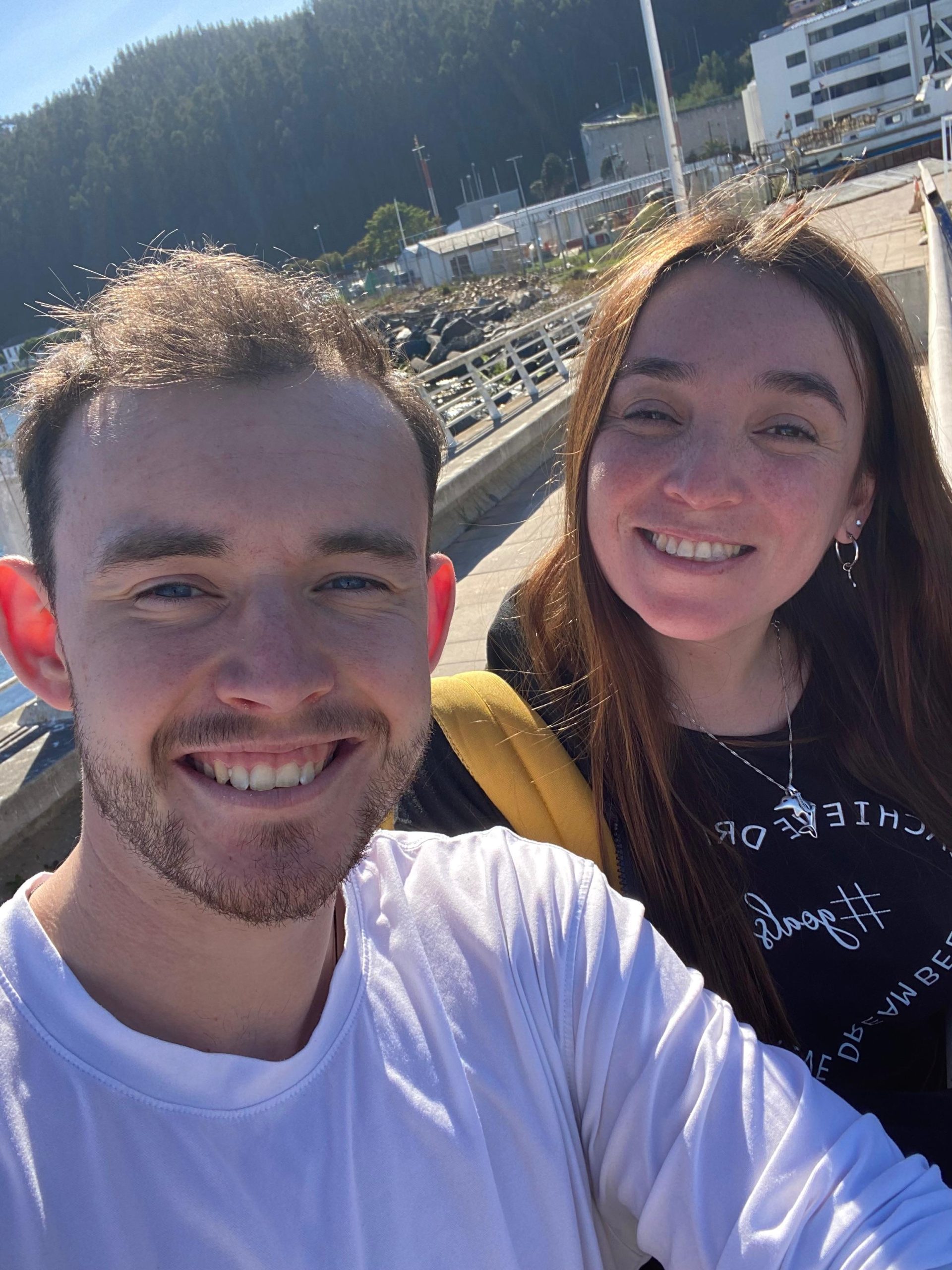
We are Paula and Tim, Team Chile of GAME 2026. For the past four months, we have been working together to investigate how different underwater soundscapes (i.e. natural and human-made sounds) affect the settlement of benthic organisms and the formation of hard-bottom communities in a field experiment. We are based in Concepción, Chile (latitude -36.8 and longitude -73.0), and therefore have a rather unique position within the GAME network as the only location on the Southern Hemisphere.
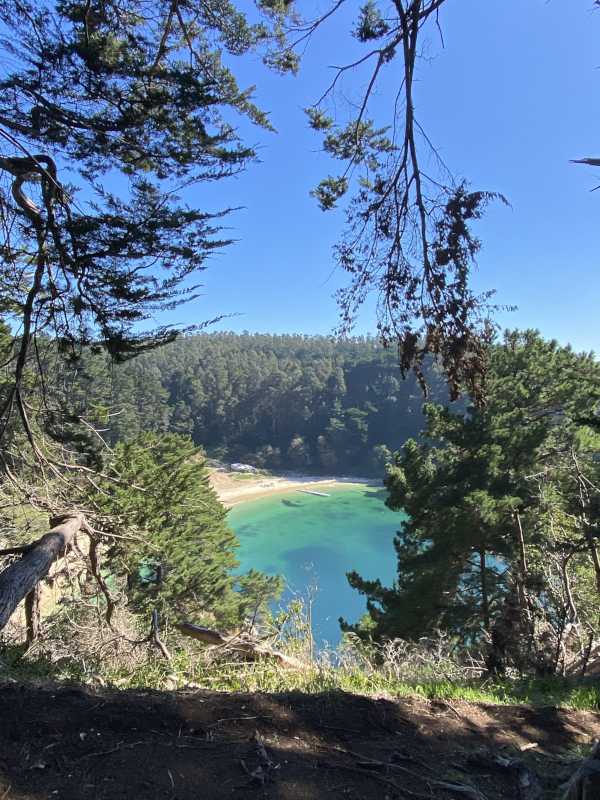
Concepción has a mild Mediterranean climate with a strong ocean influence. The summers are warm, while the winters are cool and rainy, but never cold enough for snow due to the city’s low elevation and coastal location. However, if we want to see snow during our stay here, we only need to reach the nearby Andes Mountains that are just an hour away. At this time of the year, the day-time temperatures typically range from 11–15°C, while at night the average is about 5–8°C. The Pacific Ocean actually remains cool throughout the entire year due to the upwelling of cool deep water, and the winter sea surface temperature is about 11–13°C. This means that swimming is a definite no-go right now. Of course, we tried it on various occasions, but only to back out soon every single time. One of Concepción’s greatest attractions are its diverse natural surroundings. There are beautiful Pacific beaches, rolling hills, native forests, green landscapes, rivers and waterfalls – and all of this is within easy reach. To the east, the snow of the Andes provides excellent opportunities for skiing and hiking. To the west, we can enjoy surfing and diving along the Pacific coast (once the water warms up), exploring nature trails, or simply admiring breathtaking scenery. Altogether, Concepción offers a wide range of outdoor activities for everyone.
In 2026, we are the only GAME team that works on the Southern Hemisphere and the only one that is located in the Americas. This distinction comes with both advantages and disadvantages. On the one hand, it means that we have to get up earlier than anyone else for the weekly GAME Zoom meetings, which take place every Wednesday at 1 pm European summer time. Furthermore, we are also the only team experiencing winter while everyone else, in Europe and in Asia, is enjoying summer. On the other hand, we were in the ideal time zone for watching this year’s World Cup matches.
Now, in the austral winter, the days in Concepcíon are just starting to get longer; the rain, however, more frequent, and grey skies have become a familiar sight. Actually, our record were two straight weeks without seeing the sun, but having constant rain instead. Fortunately, our morale remains high, and this is achieved in no small parts by increasing quantities of coffee and hot chocolate, which we drink whenever and wherever possible to boost our frozen spirits.
The first month of the practical phase of the project was dedicated almost entirely to the preparation of our experimental setup. We spent countless hours identifying suitable field sites, solving logistical challenges, assembling equipment, and navigating the realities of conducting marine ecological research in Chile. Fortunately, the staff at the CENDYR Náutico facility and the Marine Science Outpost of the UCSC near Caleta Lenga provided tremendous support. They helped us to establish our experimental setup by providing local expertise on tidal conditions or allowing us to use their kayaks for the final deployment of our constructions.
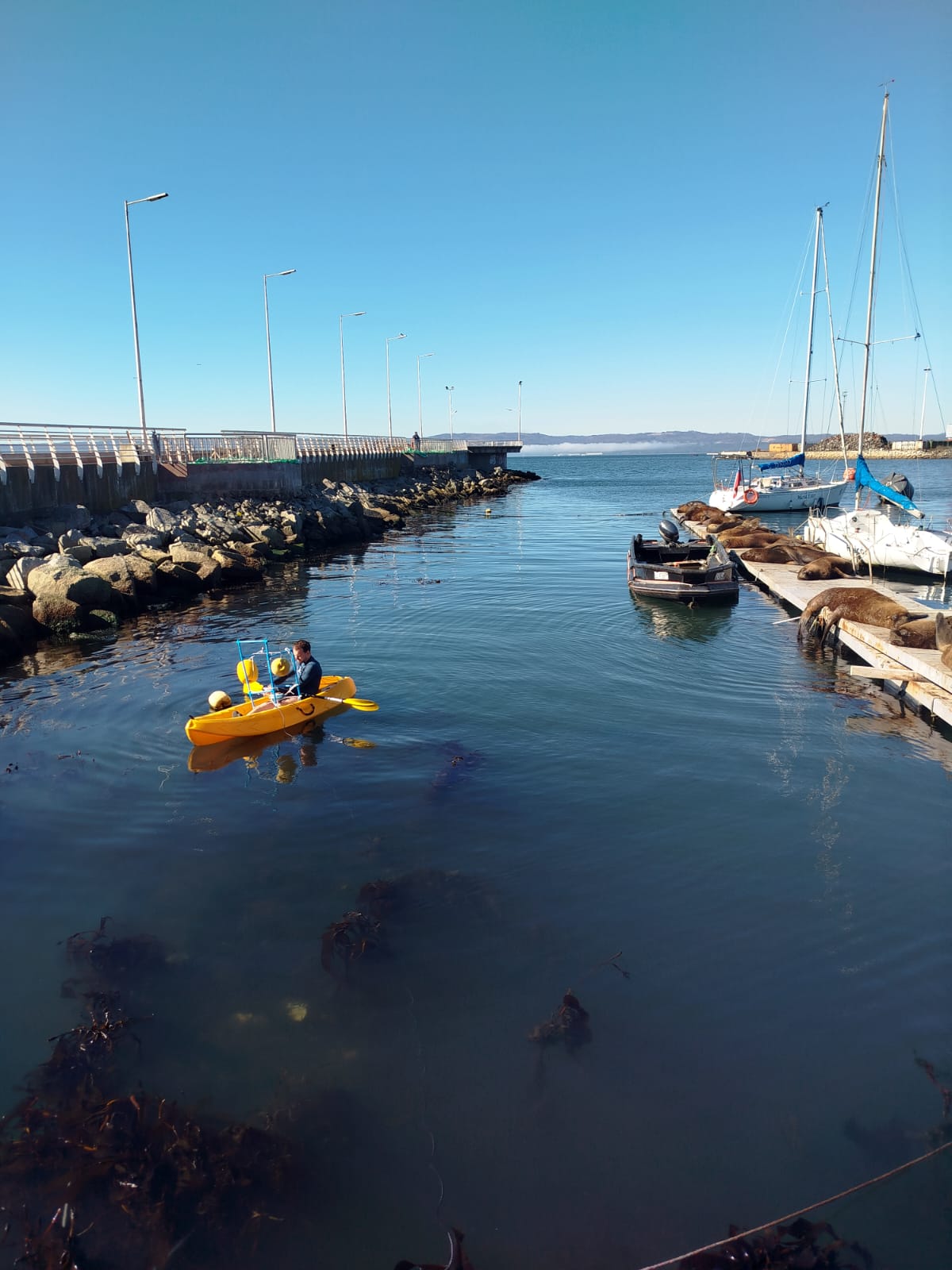
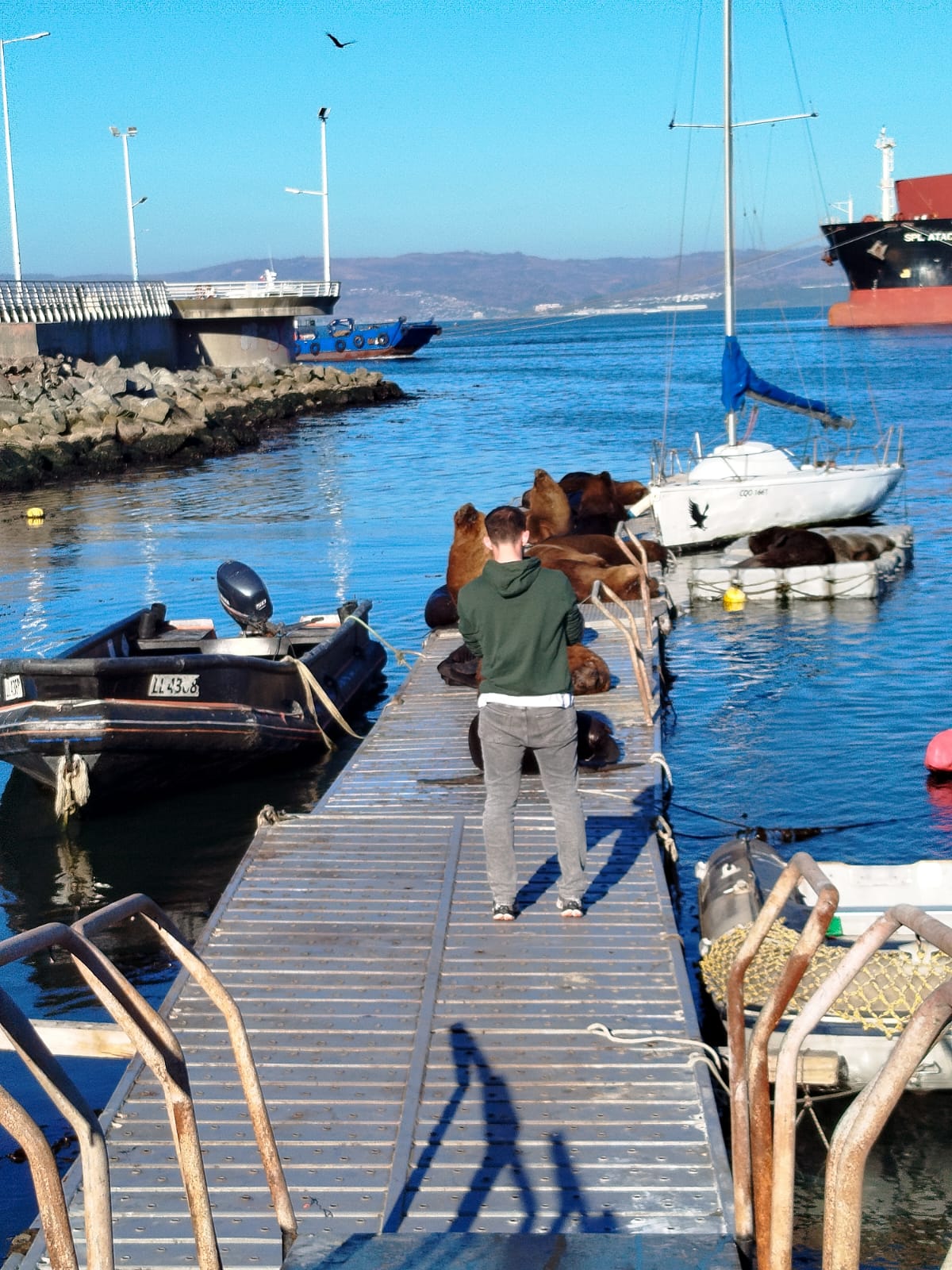
However, not every challenge came from the scientific side. For example, the local sea lions seemed determined to remind us that we were visitors in their territory. Sadly, these sea lions are less the cute, curious, and cuddly kind and more the gigantic, grunting, and grumpy kind. Every trip to the experimental site involves negotiating space with our new noisy neighbours, who rarely appeared impressed by our presence. On sunny days the negotiations are often fruitless, while they are frequently watched by curious tourists, who regularly come to the pier to watch the marine mammals.
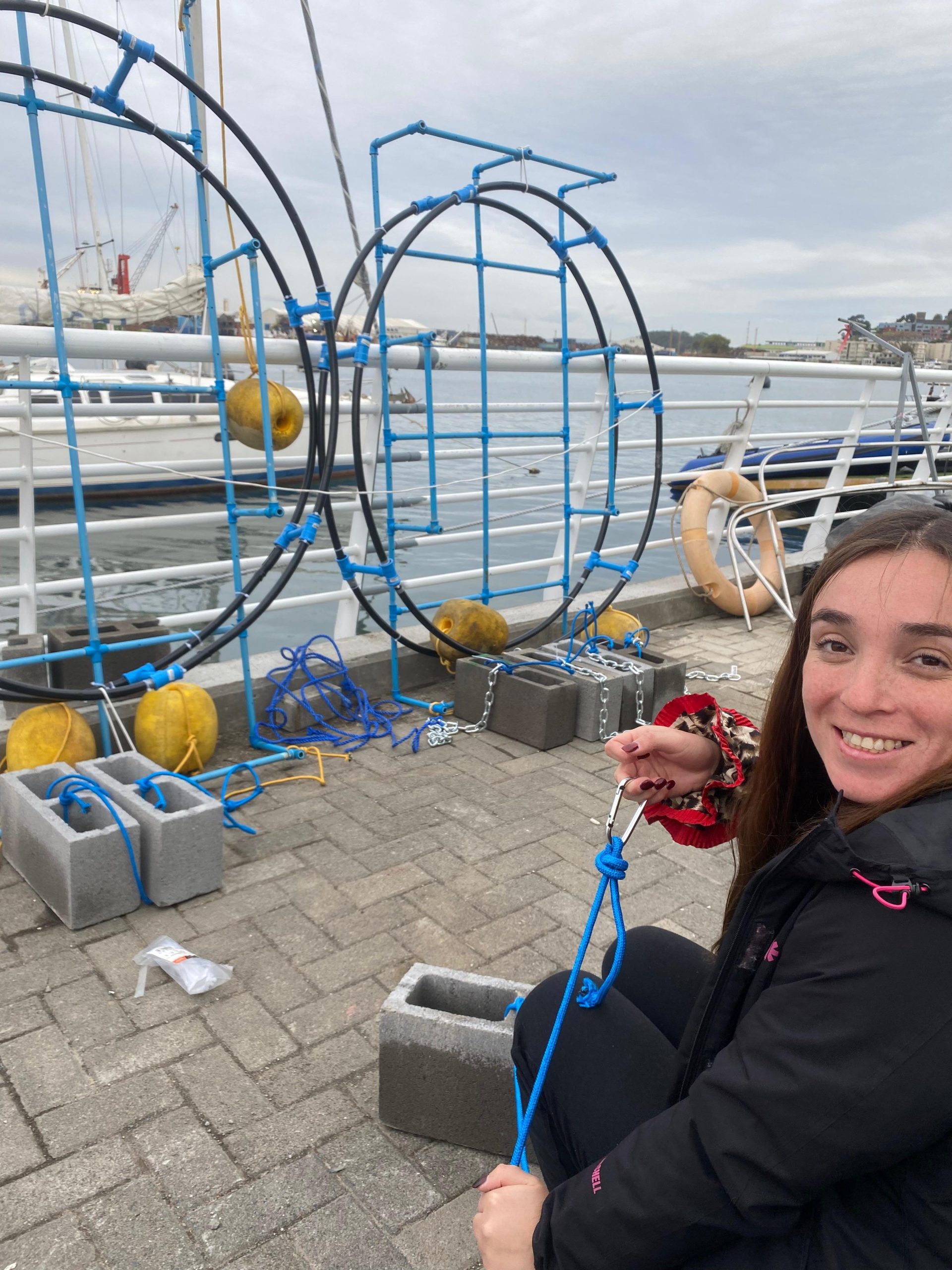
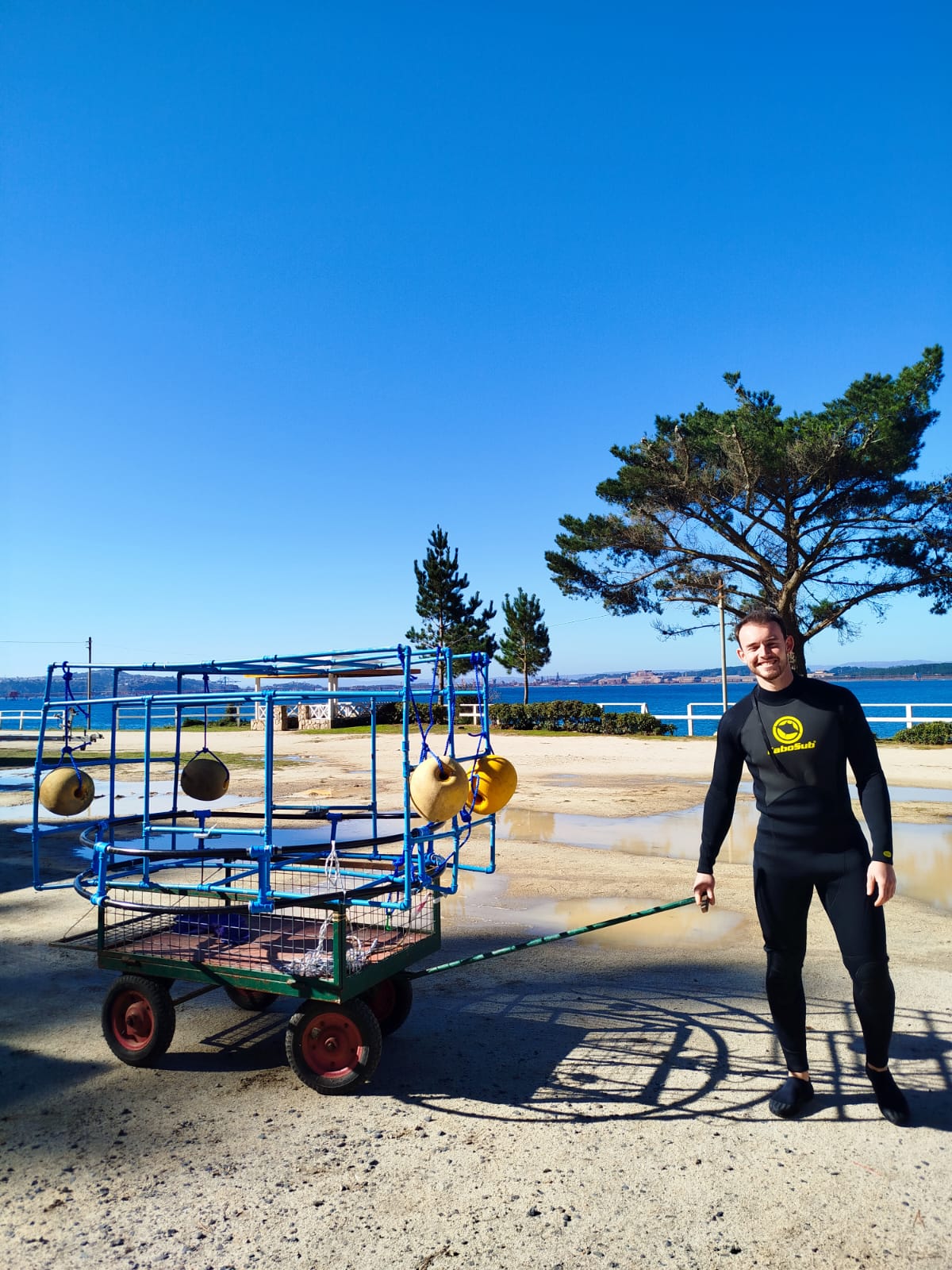
After this first month full of challenges, we were finally able to begin the experiment. It is designed to compare the effects of two very different underwater soundscapes on the settlement of marine organisms. Rather than investigating the effects of the two soundscapes simultaneously, we run two subsequent experiments using the same experimental setup. It consists of two frames: one for the sound application and one that is experiencing the natural, un-manipulated acoustic environment of our study site. Each frame supports a circular ring as its main structure, which carries the settlement panels on which marine invertebrates and algae establish during the experiment. To minimize the influence of the played back sounds on the second set-up, the two frames are placed as far apart from each other as possible. One is at the very beginning of the pier and the other one at its end.
Sixteen settlement panels are attached to each ring, which are equivalent to the surface of a ship hull or a rocky cliffside, and which provide a suitable surface for the colonization by marine sessile organisms. The establishing communities can be very diverse and identifying every species that settled on the panels can be a slow and sometimes painstaking process. However, this is part of our work and every time we come across a species we haven’t seen before, curiosity and excitement take over. We then feel just like little kids making a new and awesome discovery.
Paula is a marine biology student at the Universidad Católica de la Santísima Concepción. Before joining GAME, she had already gained experience in marine acoustics through projects supervised by Dr. Iván Hinojosa. Participating in GAME has pushed her well beyond her comfort zone. To attend the initial course in Germany, she left South America for the first time and travelled to Europe, which was an exciting but challenging experience. The journey was filled with many firsts – from her first intercontinental flight and her first European spring, to meeting Tim and the other members of the project in person for the very first time. The introductory course at GEOMAR provided an excellent opportunity to exchange ideas and learn new techniques. Beyond the scientific experience, it also allowed her to explore new cultures, visit beautiful places, and grow both personally and professionally. As English is not commonly used in everyday life in Chile and opportunities to practice it are limited, the course also gave her the chance to improve her language skills and gain confidence while working alongside students from around the world. Everything felt completely new, even going to the supermarket in Germany became an adventure. Making mistakes while choosing ingredients or accidentally buying the wrong sauce for lunch, became something fun to laugh about and remember. In March, travelling within the country became one of her favourite adventures. At first, she chose the safest option and bought bus tickets, but during her last days before leaving again, she challenged herself to take the train and travel anywhere without thinking too much. That sense of independence and discovery made her feel unstoppable. Exploring new destinations, discovering different architectural styles, and visiting Chilean friends living in Berlin made the experience even more special and unforgettable.
Germany had always been on Paula’s list of places to visit. Not only because of its history, but also because of the opportunity to study and collaborate internationally. Back in Chile, the project now provides another personal challenge for her. Most of her previous work experience took place in laboratories and offices, meaning that the winter fieldwork in coastal Chile, which we need to do now, is something that is unfamiliar to her. It is not completely new, but was definitely not part of her everyday routines so far. Every field day comes with a little bit of uncertainty: Will the weather cooperate? Will the sea be calm? Will everything go according to plan?
Working outdoors means adapting to whatever nature decides to bring. The job can be physically demanding and mentally exhausting. Sometimes Paula finds herself feeling seasick on the pier, trying to focus on the work and there are moments when the idea of sitting in a warm office, drinking a coffee, and staying far away from the waves sounds like the best scientific strategy ever created. However, she is determined to embrace this experience with curiosity, enthusiasm, and the best energy possible. After all, not every researcher gets the chance to work surrounded by the ocean, gain new insights into marine bioacoustics, and collect stories that will last far beyond the end of the project. Every working day is simply another part of the adventure, and, fortunately, conducting the project in her hometown means having family, friends, and local contacts nearby whenever a helping hand is needed.
Tim is a Master’s student in the programme “Biodiversity, Ecology and Evolution” at the University of Tübingen. Outside marine ecology, his main passion is handball. Within days after arriving in Chile, he joined the UCSC university handball team and is now helping them pursue qualification for the Chilean national championships. This sounds highly prestigious until one learns that the number of competitive handball teams in Chile is considerably smaller than in Germany.
During the first months in Chile he also made an intensive effort to relearn Spanish – which he had forgotten after his schooltime. Progress has been steady: he can now confidently introduce himself and can understand approximately every second or third word of a conversation, provided that it is spoken slowly enough. Nevertheless, this has not discouraged him from speaking Spanish whenever possible. Unfortunately, his inability to properly roll the letter “r” still reveals his foreign origins almost instantly. Despite occasional linguistic mishaps, he is thoroughly enjoying to experience South America for the first time and is looking forward to discovering more of Chile in the months ahead.
In the first months of the practical phase, opportunities for travel were limited due to the demanding preparation of the experiment. Between building frames, preparing equipment, scouting field sites, and carrying out the first sampling events, there was little time left to explore the country. However, now that the experiment is running smoothly and sampling events are more structured, there is finally enough time to enjoy life outside the field. Tim interpreted this newfound free time somewhat differently than expected and promptly booked a two-week trip to Rio de Janeiro—partly in search of warmer temperatures and partly because renewing his visa required leaving the country. After several weeks of cold, rainy Chilean winter weather, Rio offered exactly the kind of break he had hoped for: sunshine, beaches, mountains, and the unmistakable energy of one of South America’s most iconic cities. However, this experience made the rain in Chile seem only slightly less grey.
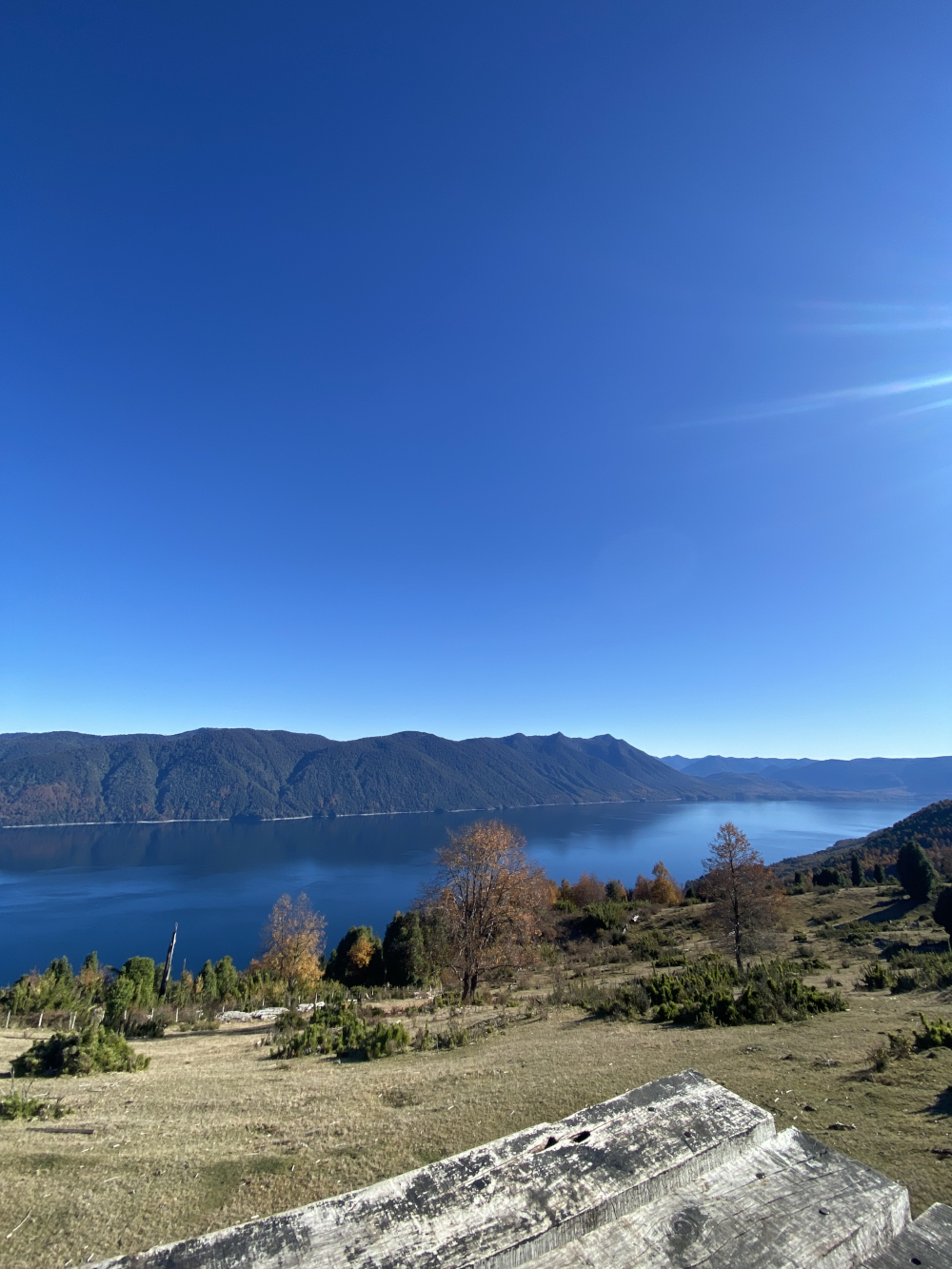
Before heading to Brazil, he also spent a weekend exploring the volcanic landscapes around Pucón. Hiking through forests, lava fields and snow-covered mountains quickly became one of the highlights of his time in Chile so far and confirming that Chile’s reputation for spectacular nature is well deserved.
With several weeks of fieldwork still ahead, there are already more adventures on the horizon. A trip to Buenos Aires is planned for the end of August, and before returning to Germany, Tim hopes to visit both, Patagonia in the far south and the Atacama Desert in the north. Few regions in the world offer such an incredible variety of landscapes within a single country, and after spending most of the winter along Chile’s central coast, seeing more of what Chile has to offer has become one of his goals for the remaining weeks of the project.
However, back to the experiment: For the first two months, our underwater loudspeakers continuously played recordings of container ship noise, recreating a busy shipping environment to our settlement panels. However, by now we have officially entered the second phase of the experiment, in which we replaced the anthropogenic noise by recordings of natural reef sounds. Over the coming weeks, we are looking forward to seeing whether the establishing communities differ between these two contrasting acoustic worlds.
Applying the two different soundscapes in separate experiments, has given us the opportunity to work closely together throughout every stage of the experimental work. We have been able to support each other during the harder tasks, double-check our work and decisions, and by this learnt from every step of the process. This collaboration has been essential for improving our methods and preparing us to carry out the second experiment in the best possible way. Working as a team has not only helped us overcome difficulties more easily, but has also made the journey much more enjoyable, with the phrase “It is what it is” becoming our team mantra to remind us to stay positive and adaptable when some things became challenging.
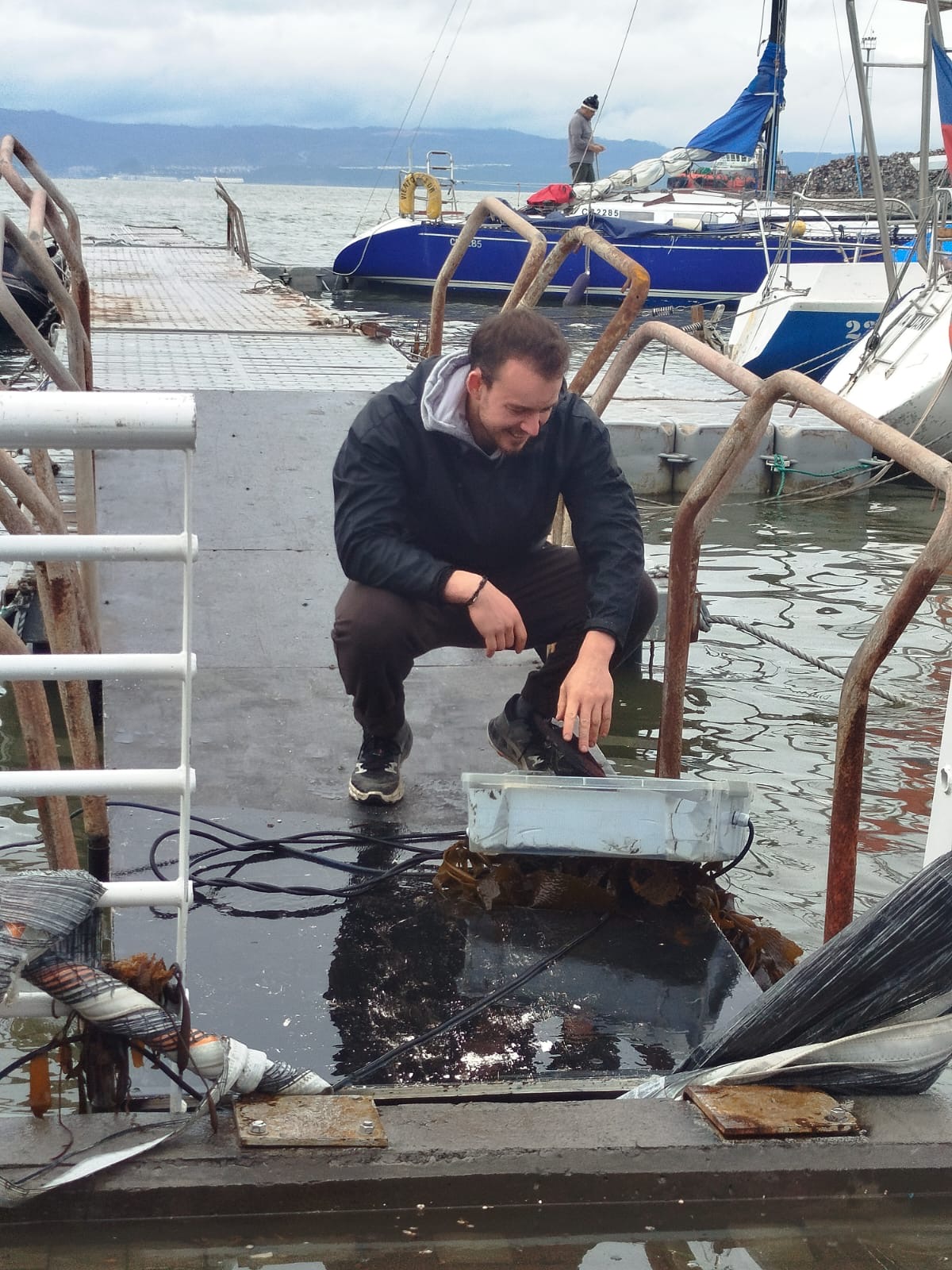
As if to test whether our team mantra really holds up under pressure, nature decided to throw us one final challenge. Just two weeks ago, a severe winter storm with wind speeds exceeding 100 km/h swept across the coast of Talcahuano. The combination of strong winds, high waves, and an exceptionally high tide pushed the water level over the seawall and straight into the crate containing all of our playback equipment, dragging it into the ocean. What had taken weeks to assemble was suddenly soaked and destroyed. After a brief moment of disbelief (or maybe two or three moments), there was only one option: rebuild everything. It took us around five days, plenty of patience, and more than a few nerves before the experiment was running again. Fortunately, we managed to get everything back into operation with only minimal interruption—proving once again that sometimes “It is what it is” really is the only way forward.
Our experiment will be continued until approximately mid-September. As we now move into the final weeks of fieldwork, we are excited to see how the project develops and what the data will ultimately reveal about the influence of underwater sounds on the diversity and composition of hard-bottom communities. We are especially curious about the final results of the second experiment, as the outcomes of the first phase were quite unexpected and contrary to what we had initially anticipated. These surprising results have made us even more eager to understand how marine organisms respond to different underwater soundscapes and what new insights the second experiment will bring.
Together, we have challenged ourselves to achieve two important goals: successfully completing this project and winning the endless battle to pronouncing the “R” sound in both of our new native languages. So far, the first one seems much more achievable than the second.
The work has been demanding, the weather at times challenging, and the sea lions consistently uncooperative, but the experience has already been incredibly rewarding. We are both very grateful for the opportunity to participate in GAME 2026 and look forward to sharing more updates as the project progresses.
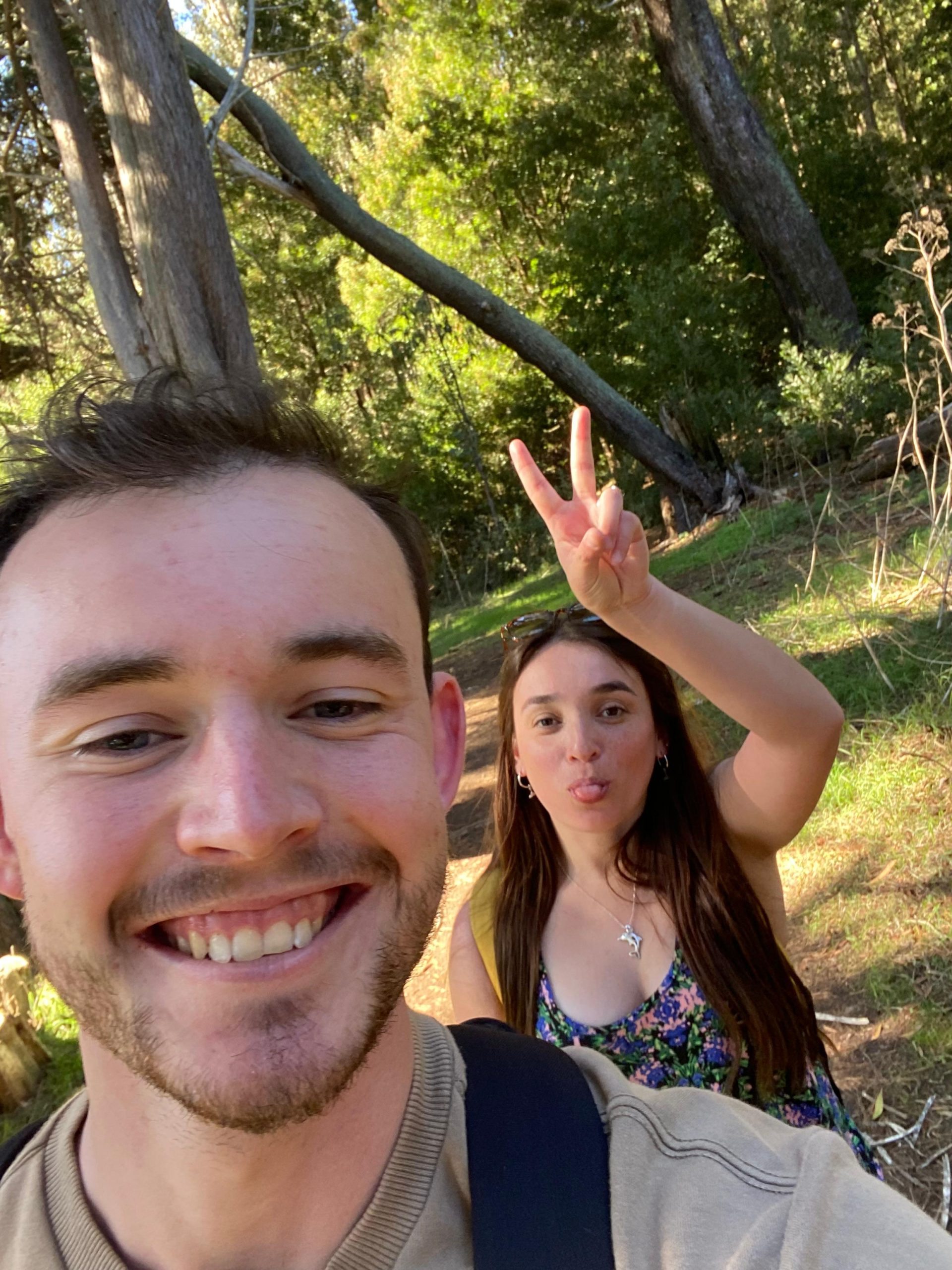
Meet Team Chile: Science, Sea Lions and the South American Winter

Ocean Acidification
Dr Heidarzadeh’s TV interview with SkyNews on the massive M7.7 Panama earthquake on 9 October 2026
Dr Heidarzadeh’s TV interview with SkyNews on the massive M7.7 Panama earthquake on 9 October 2026. Click here for the full story.
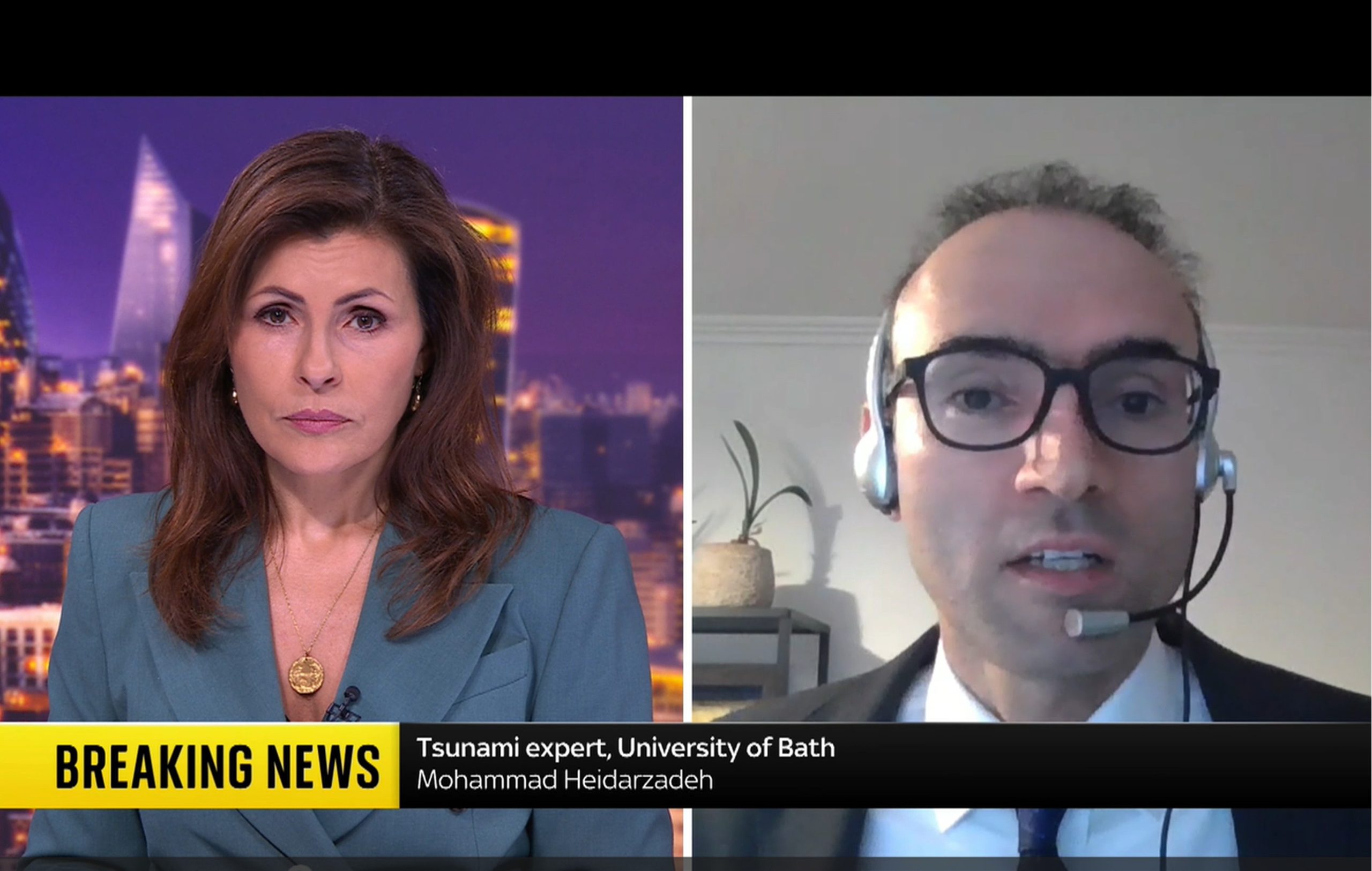
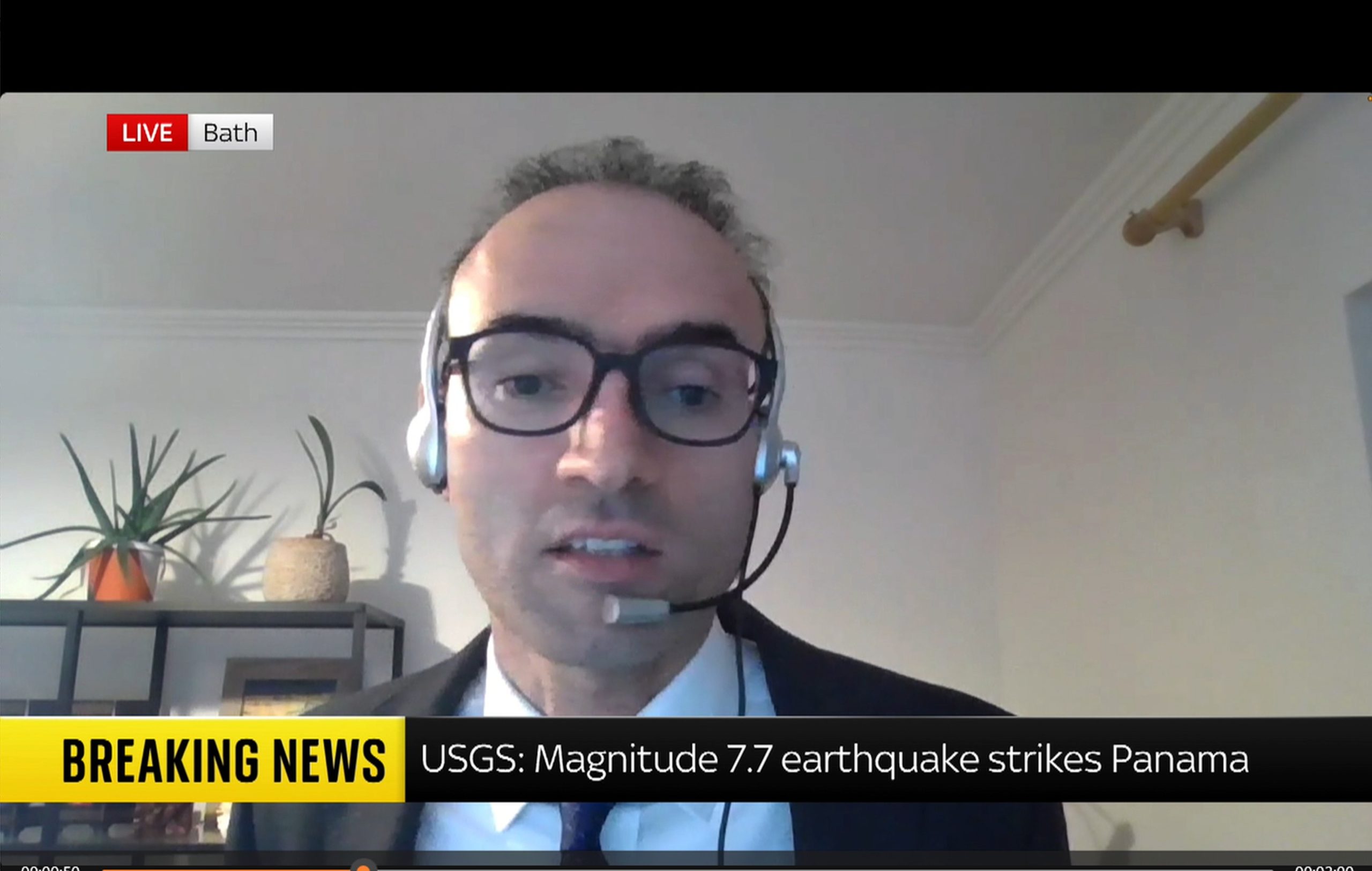
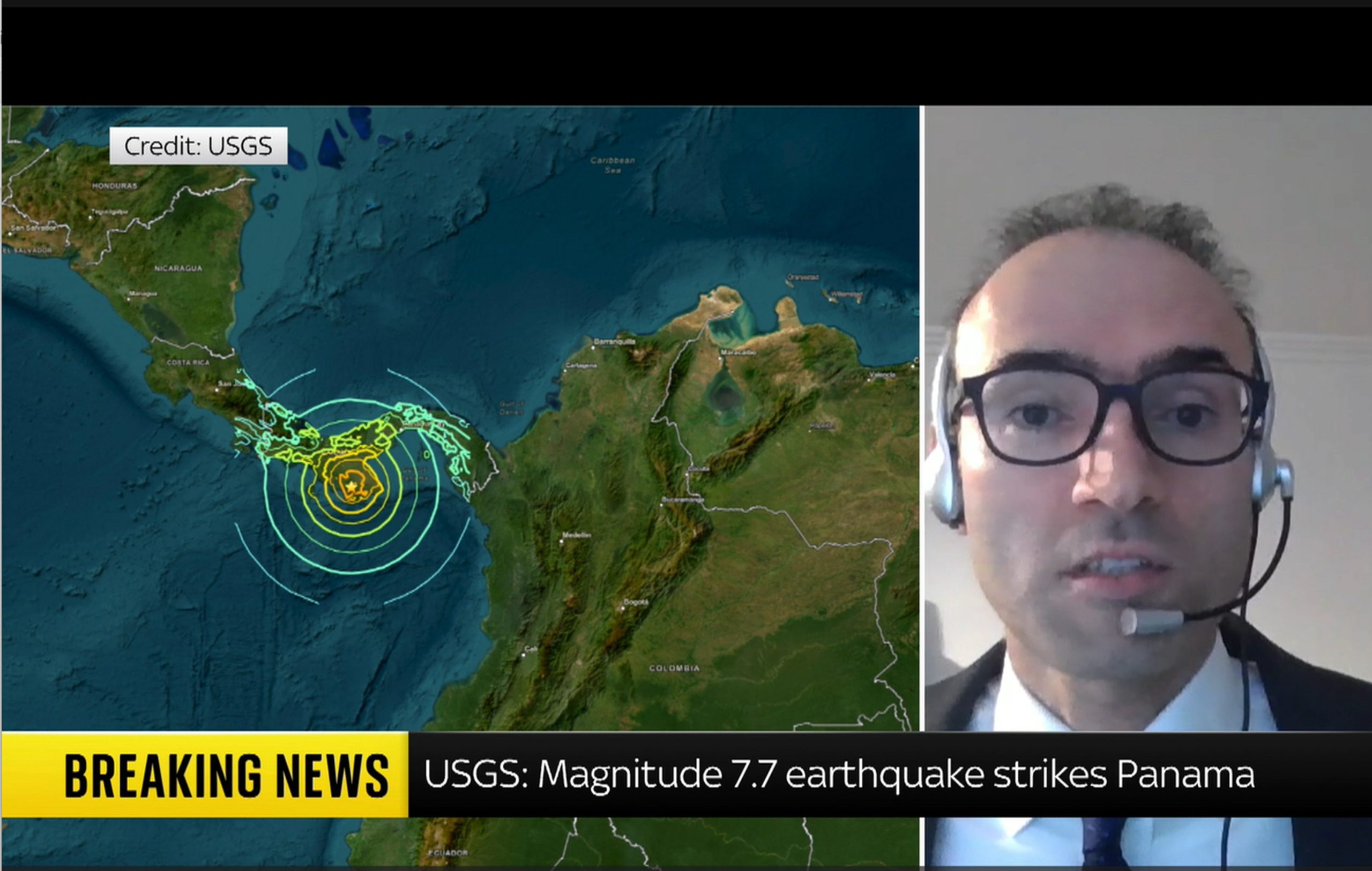
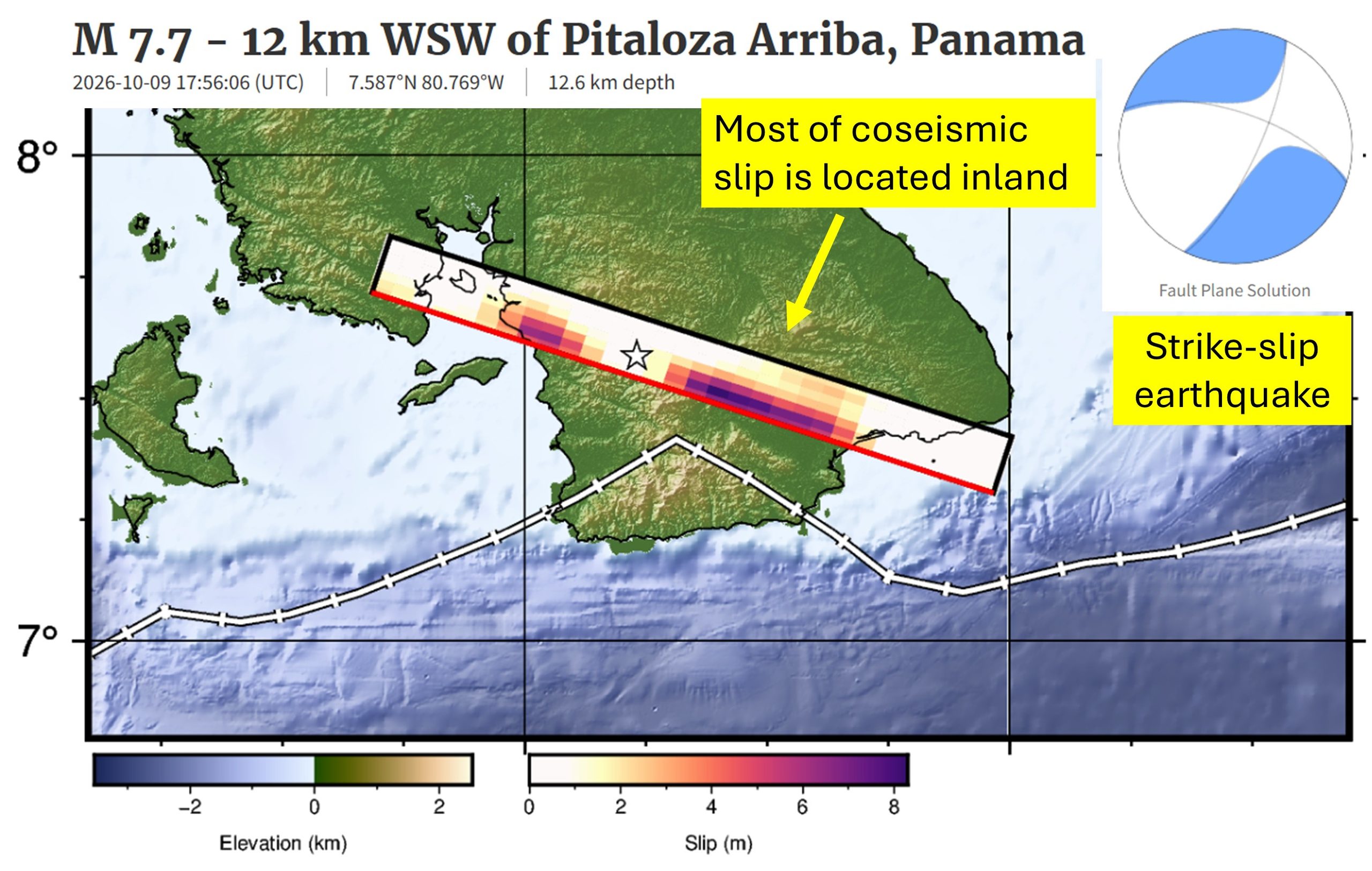
Dr Heidarzadeh’s TV interview with SkyNews on the massive M7.7 Panama earthquake on 9 October 2026
Our ocean is an incredibly vast and mysterious place. And there is no place where that is more evident than the deepest ocean area in the world: the legendary Mariana Trench. Located east of the Philippines, the Mariana Trench lies in the Mariana Archipelago in the western portion of the North Pacific. The greater area of the Mariana Trench Marine National Monument is made up of more than 95,000 square miles of ocean. Beneath these waters lie incredibly complex aggregations of submerged islands and volcanoes … and of course, an astoundingly massive trench.
Dive in with us to have your biggest questions answered about the famed Mariana Trench.
How deep is the Mariana Trench?
The deepest part of the Mariana Trench, known as Challenger Deep, is almost 36,000 feet below the ocean’s surface. For context, Mount Everest is about 29,000 feet above sea level, so the Mariana Trench is about 7,000 feet deeper than Mount Everest is tall. For one more comparison, the RMS Titanic lies at a depth of about 12,500 feet below sea level. The Challenger Deep is in waters nearly three times deeper than this ship’s final resting place.
Due to its enormous size, the Mariana Trench has at times been affectionately nicknamed the Grand Canyon of the ocean. This is certainly a picturesque image, but don’t let the mammoth size of this U.S. national terrestrial park fool you into thinking the Mariana Trench matches its size. The trench’s footprint is estimated to be 120 times larger than the Grand Canyon’s, and to reach the bottom of Challenger Deep, you’d need to descend through almost six Grand Canyons stacked on top of each other before you’d reach the seafloor.
Oh … and did we mention it’s five times wider than it is deep? It’s about 43 miles wide!
What is Challenger Deep, and how long would it take to reach it?
Challenger Deep is the deepest point of the Mariana Trench. Fewer than 30 people have ever journeyed to this area. The trek below the surface is long, dark and time-consuming, and it’s not an expedition considered lightly by scientists and explorers.
The first people to descend into the depths of this area in 1960 were oceanographers Jacques Piccard and Don Walsh, and it took them close to five hours to reach Challenger Deep. Since then, more advanced submersibles have been created, but it still takes two to four hours for modern vessels to reach such depths. For example, explorer and filmmaker James Cameron reached the seafloor in a little more than 2.5 hours in the first documented solo submarine dive to the area, and it took oceanographer Dr. Dawn Wright about four hours in 2022. It is crucial that these submersibles descend slowly and steadily beneath the surface, as the immense water pressure compounds with every mile a submersible descends. Speaking of pressure …
Get Ocean Updates in Your Inbox
Sign up with your email and never miss an update.
What is the water pressure at the bottom of the Mariana Trench?
If you thought the depth of the Mariana Trench was its only jaw-dropping feature, think again. Water pressure is one of the most important factors affecting deep-sea life. In the ocean, pressure increases by one atmosphere for every 33 feet (10 meters) of depth. One atmosphere (a unit of measurement for pressure equivalent to average air pressure at sea level) is equal to about 14.7 pounds per square inch (PSI), which is the approximate standard atmospheric pressure at sea level. If you were to convert atmospheric pressure into weight, one atmosphere is about the weight of a bowling ball. Stay with me, friends.
If a vessel were to dive 2,000 feet below the surface, the pressure would equal that of 60 bowling balls stacked atop every square inch of that submersible. But 60 bowling balls is simply nothing compared to the pressure in the Mariana Trench. The atmospheric pressure at the depths of Challenger Deep is equal to about 16,000 PSI. That pressure is about the same as the weight of an entire full-grown elephant on every square inch of a submersible!
Need a more extreme comparison? If a human were to be placed at the bottom of the Mariana Trench, the pressure would be equal to that of 50 jumbo jets piled on top of a person!
Do any animals live in the Mariana Trench?
The depths of the Mariana Trench come with immense pressure and extreme darkness, but somehow, life finds a way to survive. Organisms that live at an extreme depth, like that of Challenger Deep, have to be highly adapted to low temperatures (typically just above freezing), high pressure and virtually no light at all.
Species found in the depths of the Mariana Trench might look vastly different from animals from other ocean depths because their anatomy has been refined to thrive in harsh conditions. At such great depths, these animals typically depend on chemosynthesis (using nutrient-rich waters being pumped out of hydrothermal vents) or descending detritus (dead matter that has fallen from higher parts of the ocean) for food, such as whale falls. Just a handful of these animals include species of octopuses and squids, sea cucumbers, amphipods, sea jellies, shrimp, sea worms and some wild-looking fish!
In 2025, more than 7,000 new species were discovered in the Mariana Trench, including the hadal snailfish (Pseudoliparis swirei). This is the deepest-dwelling fish currently known to science. Now, the fish has been dubbed “the Mariana snailfish.”