

Weather Guard Lightning Tech
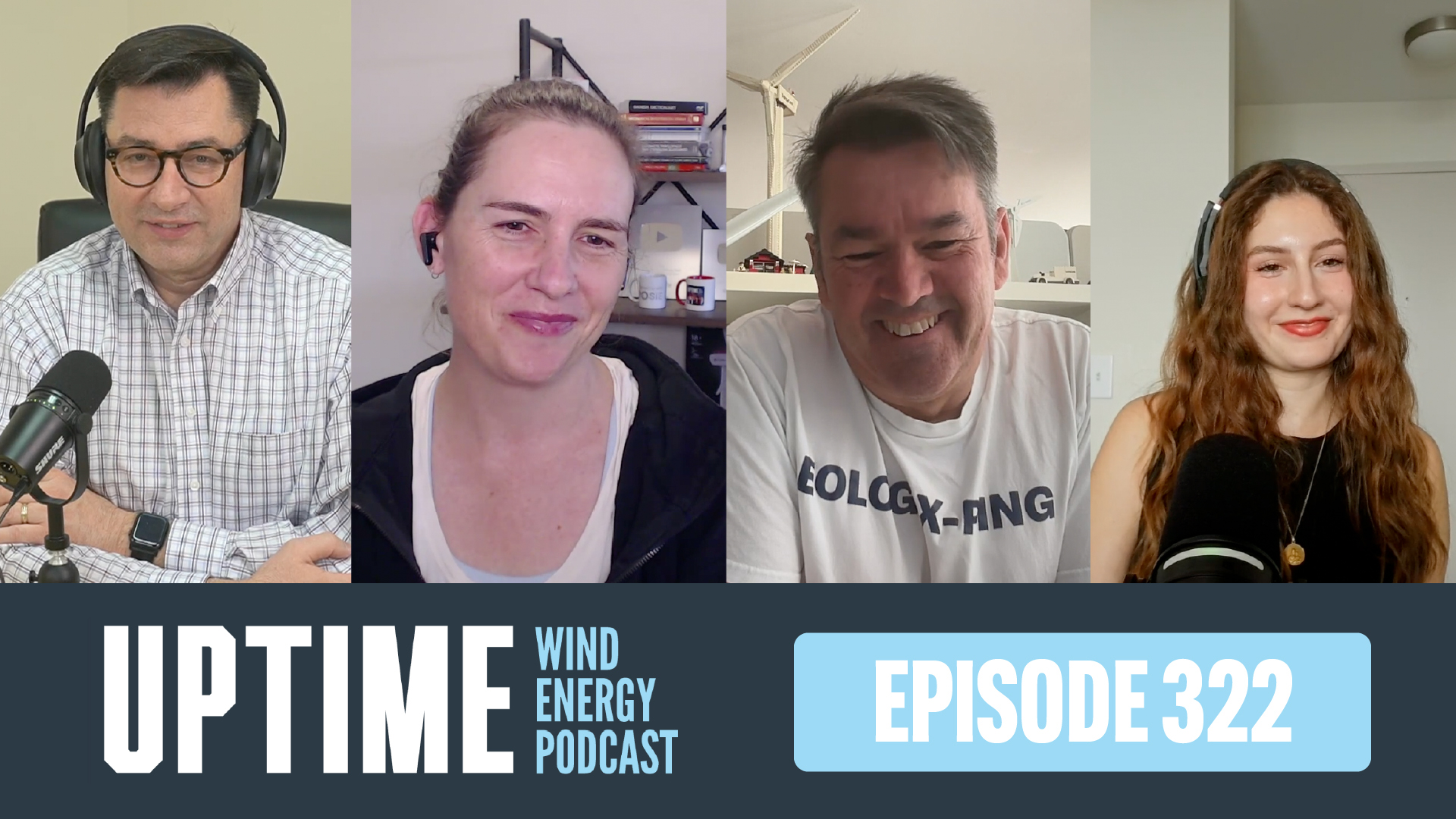
Ørsted Explores US Exit, Ming Yang Builds 20MW Turbine
Ørsted closes its European offshore sale to CIP and weighs a $1 billion exit from the US market. Plus MingYang commissions a 20 MW offshore turbine, and ZF’s plain bearings log 36 GW with no measurable wear.
Sign up now for Uptime Tech News, our weekly newsletter on all things wind technology. This episode is sponsored by Weather Guard Lightning Tech. Learn more about Weather Guard’s StrikeTape Wind Turbine LPS retrofit. Follow the show on YouTube, Linkedin and visit Weather Guard on the web. And subscribe to Rosemary’s “Engineering with Rosie” YouTube channel here. Have a question we can answer on the show? Email us!
[00:00:00] The Uptime Wind Energy podcast, brought to you by StrikeTape, protecting thousands of wind turbines from lightning damage worldwide. Visit StrikeTape.com. And now, your hosts
Allen Hall: Welcome to the Uptime Wind Energy podcast. I’m your host for today, Allen Hall, along with Matthew Stead, Rosemary Barnes, and Yolanda Padron. If you’re going to be in Houston for Clean Power 2026, mark Wednesday, June 3rd on your calendar. The Australian American Chamber of Commerce, Texas is hosting an invitation-only panel and networking reception with cocktails from 6:00 to 8:00 PM at the Houston Club, and I’ll be moderating.
We’re bringing together Australian and US wind energy experts to compare notes on how two markets handle O&M, lightning risks, blade inspections, remote monitoring, and where operational gaps [00:01:00] are. The evening also marks the North American commercial launch of EOLOGIX-PING’s satellite-based lightning monitoring system, developed with Adelaide-based satellite IoT company, Myriota.
So in joining me on the panel, our own Matt Stead, co-founder of EOLOGIX-PING, and Mark Norman, VP of Edge Solutions at Myriota, and Weather Guard’s Yolanda Padron. EOLOGIX-PING and Myriota have systems already deployed in Japan and Australia, and a little bit in the US here at Weather Guard, and they’re stepping into the North American market at American Clean Power with this advanced lightning monitoring product.
So you’ll want to be there and see this new product introduced. It is an invitation-only event, so if you’re at Clean Power and want to be in the room, reach out to us on LinkedIn so we can get you on the list. Orsted finished selling off its European offshore wind business to Copenhagen [00:02:00]Infrastructure Partners, better known as CIP or as it’s a-affectionately called CIP.
Now, Bloomberg reports the Danish company is exploring a sale of its US portfolio also, which includes a whole bunch of wind. It’s a decent amount of solar and battery storage in a deal that could bring more than about a billion dollars. Uh, the business generated more than one-fifth of Orsted’s total operating income just last year.
Uh, meanwhile, uh, more than 50 US organizers are urging RWE CEO, Markus Kroeker, not to hand back over $1 billion in US offshore wind leases as part of a reported deal with the Trump administration. Uh, so the, the pattern is clear, everybody. European developers are being pushed towards the exit in the American market.
The Ørsted situation’s been going on several months now. I, I think it’s pretty much common [00:03:00] knowledge, I would assume at this point. W- we’ve known for months, and I th- think a lot of people we’ve talked to have been saying Ørsted is prepping for a sale. The question is who? And the, the RWE getting rid of their offshore leases in the United States would be a little bit of a odd move.
However, a billion dollars back in your bank account is probably a smart move today. So are the, the Germans and the Danish leaving America?
Yolanda Padron: Ørsted’s still keeping their offshore in the US, right?
Allen Hall: Yeah, I don’t know if they’ll be able to sell it off. They own it 100% at this point, right? All the partners have pulled out But I wonder if that’s on the auction block also.
That it could be
Matthew Stead: So why? Why are they, why are they selling? I mean, there has to be a reason. I mean, do they have better use for the money elsewhere, or do they just have lost faith in the, the USA?
Allen Hall: It could be a combination of both, right? Both can be true at the same time. I do think the cash flow is an issue [00:04:00] for renewable energy companies at the minute, so if they can get some money back into the coffers and to get ready for the next big run of development, they probably should do it now.
But things, especially it does seem a little bit on the slow side on the re- renewable development, except in the UK where it’s going crazy.
Do you think then that they’re looking for American people to sell it to?
Allen Hall: Or Canadian. If Ørsted sells their onshore business, uh, to CIP, it still remains in Danish hands, so it wouldn’t necessarily be a, uh, removal of the Danes from America, not, not quite.
Matthew Stead: Yeah. I’m just a bit confused why, you know, why, you know, why would it, um, attract a good price at the moment? So I would’ve thought, you know, if it was me, I would’ve take the long-term view and just hang onto it.
Allen Hall: Well, the, the tax credit’s already built into those businesses, right? I, I at least that’s what I would assume, that the, the tax credits are still [00:05:00] available on a number of the Ørsted sites.
They’re not that old. A lot of the wind sites are not that old, so you could gain that tax advantage. It may make sense. It may be a, a Berkshire Hathaway or somebody like that may, may jump into the mix.
Rosemary Barnes: Yeah, and maybe because there’s not so much opportunity for new developments at the moment, that might be maybe it’s appealing for that reason, that there’s, yeah, not, not so many wind opportunities around, and companies want wind in their portfolios, so.
Allen Hall: Or data centers like we just saw with NextEra and Dominion. The, the drive for, for data centers, uh, is pushing the, the power demand, and if you could buy wind, solar, and battery all together, most of it kind of co-located, you could put some data centers in Texas ’cause a vast majority of that Ørsted fleet is in a place where you could plant a data center right next to it.
Maybe that’s, maybe that’s the thought. Uh, if they saw NextEra and Dominion join hands, maybe there’s another partnership in the mix. That would be really interesting. Maybe it’s Elon. Maybe [00:06:00] SpaceX or, uh, Tesla could just buy Ørsted’s onshore wind business. That would be a- amazing.
Matthew Stead: I thought they were going into space.
Why would they be bothering with the Earth?
Allen Hall: You gotta power the rockets before you launch them, right? You get so-
Matthew Stead: gotta get some power from somewhere.
Allen Hall: Delamination and bondline failures in blades are difficult problems to detect early. These hidden issues can cost you millions in repairs and lost energy production. CIC-NDT are specialists to detect these critical flaws before they become expensive burdens. Their nondestructive test technology penetrates deep into blade materials to find voids and cracks traditional inspections completely miss.
CIC-NDT maps every critical defect, delivers actionable reports, and provides support to get your blades back in service. So visit cicndt.com because catching blade problems early will save you millions[00:07:00]
China has commissioned what is being called the world’s largest offshore wind turbine. It’s a 20-megawatt machine built by MingYang Smart Energy, installed off the coast of China in the South China Sea. The structure stands about 240 meters tall with blades around 128 meters long. That’s a pretty good-sized blade.
And it’s rated to survive gusts up to 80 meters per second. But the real story is what researchers are watching after the turbine starts up. Early reports say that the rotor that is massively big will create measurable changes in local air currents and temperature distribution. At this scale, offshore wind creating a physical footprint that scientists want to measure and We have seen this effect here at Weather Guard Lightning Tech, watching storms go through the big wind farms [00:08:00] in the United States.
So you can actually see storm behaviors change because of the quantity of turbines, and the turbines are getting to be high enough with the hub heights approaching 100 meters. But nothing as big as a 20 megawatt machine out on the ocean. It’s mixing the t- the, the air quite a bit, changing the temperature.
Uh, is this something that climatologists are looking at, Rosemary, or, or, or watching closely, particularly with the, uh, fish life and sea life around the wind turbines?
Rosemary Barnes: I don’t know. My thing with MingYang is that they’re always, like, you only ever hear about them ’cause they’re announcing the biggest something, right?
Um, that’s like the extent of it. It’s not like you hear about, oh, there’s a wind farm near you and it’s gonna have MingYang turbines in it. You never hear that. You only hear about they’ve got the biggest, and now next year they’ve got the new biggest, the biggest, the biggest, the biggest. And, uh, it’s like I know that they do actually make some, like, a lot of turbines.
I think they’re in the, we mentioned last week, they’re in the top five manufacturers, um, mostly or maybe [00:09:00] pretty much entirely for the Chinese market. Um, so it’s not like I think they don’t make anything. But I do think it’s quite easy to announce the biggest something. This announcement is also like, yeah, okay, but is it real?
Like it’s the, it’s a big, it’s a really big turbine. It’s going pretty high, but like offshore, um, there are, I think, onshore turbines being announced that are gonna go as high or higher because, you know, onshore, um, turbines have much taller towers than, than offshore. So I actually don’t think that it probably is a record for the tallest, like, tip that’s scraping.
This is a thing that’s always happened, and sure, that’s interesting to have a look at and see if it has any local impact. It’s not like it’s, it’s not creating energy, right? It’s not gonna warm up, um, the, the planet. I mean, it’s, yeah, taking energy out of the, the air and then converting it to electricity.
Um, so overall you’re gonna end up with the same amount of, of energy. But yeah, could be interesting to study, study what’s happening specifically.
Matthew Stead: I think it’s a so what question. You know, so what? I mean, I can sneeze and [00:10:00] I’d change the local environment, but who cares if I sneeze and change the local environment?
You know, the, you know, the weather is inherently turbulent and, you know- There’s mixing and there’s all sorts of stuff naturally occurring. Yeah, my question is, so what?
Rosemary Barnes: Yeah. I mean, it’s interesting in terms of, like, wakes of wind turbines and, you know, there’s, uh, people are researching that more because it’s not well enough understood, I think, for some of the really big offshore wind regions where there’s heaps of different wind farms and, you know, like, you’re gonna wanna know if you’ve got a win- an existing wind farm or you’re planning one, and then they sell, um, rights to build one immediately upstream of you, then, you know, you’re gonna wanna understand how, how all that local atmospheric stuff is, is happening exactly.
Um, but yeah, like, it’s not, it’s not quite new and it’s not, yeah, like you said, it’s not unique to wind turbines. Um, so yeah, it is, like, slightly interesting, I would say. 5 out of 10 interesting.
Allen Hall: How much time should we spend on contrails? [00:11:00] Because we spent a good 20 minutes before we started this podcast talking about contrails, which is a one or maybe a negative one on the scale of should I follow this?
Rosemary Barnes: How interesting is the fact that air travel is contributing to climate change? How interesting is that on a scale of one to 10?
Allen Hall: Zero.
Matthew Stead: Eight.
Allen Hall: It’s like the, it’s like the cow argument, right?
Rosemary Barnes: Allen doesn’t care about climate change. That’s okay.
Allen Hall: You asked me to put it on a ranking of where it is in importance.
It’s, it’s nowhere near m- even a five.
Rosemary Barnes: Yeah. So Yves said zero. Matt said eight. What about you, Yolanda? How, how interesting is the fact that air travel impacts climate change?
Yolanda Padron: I think it’s, like, a six.
Rosemary Barnes: Six. Okay. And so did you know that, um, airplanes are 2.5% of the world’s emissions, um, come from air, air travel?
And did you know that I think it’s [00:12:00] 4% of the world’s warming comes from air travel? Of the warming, two-thirds of the warming that is caused by air travel or airplanes, uh, could be freight as well, it’s not to do with CO2. So some of that is, you know, like other, um, gases like NOx is a pretty potent greenhouse gas.
Contrails are the biggest single component, the single biggest factor causing warming from, um, from air travel. And it’s not, it’s not necessary. You know, every airplane doesn’t create contrails in every trip. It’s, it’s a small number. Like, it’s a pretty small number of trips that are making contrails, and if we can better understand how
like, what are the factors that lead to a contrail being formed or not, then we can avoid them and, you know, get rid of a, a percent or two of the world’s global warming. I think that’s just really huge.
Matthew Stead: What would you do about it, Rosie?
Rosemary Barnes: There’s a couple of solutions I know that other people are working on that sound very interesting to me.
So the first is that if you change the fuel, like, [00:13:00] um, to sustainable aviation fuel, like a, a biofuel, some of those that have been tested also produce less contrails. I don’t know the exact reason why. Would be interesting to find out. That’s one thing. But secondly, um, if you can get good data about, like, very local atmospheric conditions and, you know, let the world’s airplane fleet can communicate with each other and some AI processing in real time, you can make small changes to your flight path to avoid making contrails, and yeah, you get, um, a small increase in, in f- fuel burn, I guess, from deviating from the most efficient route, but a big, big inc- um, decrease in contrails.
Uh, so I think both of those are really promising solutions.
Allen Hall: It’s not that easy It isn’t like every airplane’s out there changing its altitude to keep away from creating contrails. There’s whole systems, thousands of people working at any one moment to keep airplanes up in the air. So it, it’s not something you just willy-nilly say, [00:14:00] “AI can adjust my altitude or my flight plan to deviate so I can prevent contrails.”
It’s not that easy. It’s actually a huge undertaking, and it may end up burning more fuel.
Rosemary Barnes: Oh, I mean, it’s an incredibly complex system to keep airplanes up and not colliding. Um, I believe it’s not centrally planned. It’s not like you’re not logging your whole flight path any- anymore. I, I listened to a podcast about this the other day, and in the past you used to log your entire flight plan and not deviate from it, but now it, it’s done a bit on the fly.
So I’m sure that there are already hundreds or thousands of factors that an aircraft computer is taking into account, um, when it’s figuring out exactly where it’s gonna go, and this would be another bit of complexity. I don’t, I don’t think it’s easy, otherwise we’d already be doing it. But I think it’s, it’s promising.
And I think it’s easier than making hydrogen airplanes, for example. I think it’s easier than electrifying airplanes. And the fact of it is that even if you do [00:15:00] have sustainable aviation fuel, if it’s still making contrails, it’s still causing warming. So if you wanna actually s- solve, uh, you know, heating from flying, then you have to, you have to tackle the contrail part of the problem.
It’s the biggest, it’s the biggest chunk on its own, bigger than CO2.
Matthew Stead: So did we get here by talking about possible contrails from wind turbines? Is that what we were talking about?
Rosemary Barnes: No. It was because Allen was saying before that we were gonna go off the rails, and he’s like, “Oh, you know what? In no time we’ll be talking about contrails,” like using it as an example of a tinfoil hat-wearing person.
And I’m like, “Actually, that is a tinfoil hat that I do like to wear,” the contrails one. Um, not because I think the government is controlling me, uh, with with, you know, targeted hor- hormone or chemical releases via contrails, but because of the global warming potential.
Matthew Stead: Could a, a really tall wind turbine create contrails?
What, what’s the physics behind that?
Allen Hall: [00:16:00] It’s just, um, water, right? So you’re just condensing water and shoving it out the back. When you’re burning hydrocarbons, it’s one of the byproducts, right? It’s like in, when, in an internal combustion engine, you see water dripping out the tailpipe. It’s this very similar kind of thing.
Uh, so how much water comes out is dependent upon somewhat the fuel, as Rosie’s pointed out, so you can slightly change it, but a lot of it has to do with the temperature, altitude, pressure moisture content of the air, all those different factors play into it. So you’d have to have, in order to go look at it, you’d have to have a bunch of sensors on the airplane, which, which the aircraft may have some of them, but probably not enough to determine if they’re creating contrails besides looking out the window to see what’s coming out on the backside of the engine.
Matthew Stead: A wind turbine could not create contrails. The pressure differential and the, the vapor pressure-
Allen Hall: Yeah, it’s not enough to, you’re, you’re not, you’re not changing temperatures enough, [00:17:00] right? So you, you basically have to change the dew point. That’s the way I would think about it. You have to change the dew point somehow, which I guess you could do maybe by a degree or so locally, you may be able to, to change it, and maybe you could.
Um, well, we have seen tip vortices, right? So tip vortices, you have seen these contrails off the, the tips of, of, of aircraft wings.
Rosemary Barnes: But are they durable? You know, ’cause like, yeah, you see tip vortices off, yeah, off wing, wingtips, off wind turbine tips as well. But I don’t think they stay in the air after, you know, they, um, you can see them, and then they dissipate usually.
Allen Hall: Yeah, it, it depends. You’ll see it when aircraft land quite a bit. Depends on what the temperature, humidity is at that particular moment, but th- those will, those will hang around a little bit
Rosemary Barnes: But I mean, certainly you can, you can, um, cause droplets to freeze from a wind turbine being there. That’s how they get iced up, is that their…
Or either their water was super cooled to begin with and it just needs a, a surface to latch onto so that the crystal can, [00:18:00] um, form or also, yeah, like, I mean, in the aerodynamics there is that point between where the air goes over and under and you, um, sta- stagnation or-
Allen Hall: Stagnation point?
Rosemary Barnes: Yeah. So you can, um, you, you could get some freezing there.
Allen Hall: You can create cold zones.
Rosemary Barnes: I, as far as I know, all that stuff is just causing ice to build up on the blade. I don’t think that it’s, um… Yeah. And anyway, even if it did, like even if you did affect the, um, you know, have some ice particles forming in the, um, the wake then it’s just going to, or I don’t know, get hit the next time the, the, the blade goes through or, yeah, fa- fall out I would think ’cause it’s quite close to the ground
Allen Hall: but- Just to tie into what Rosemary’s saying, although I think wasting time on contrails is not worth the effort, I do think meteorologists do not do enough work on big changes that are happening to the planet in regards to, like, renewable energy is one of them, like wind turbines.
I [00:19:00] haven’t seen a lot of work done about are wind turbines changing the temperature locally or not. I mean, they- I’ve seen some top level things, solar panels, but the same thing could be seen about shipping.
Rosemary Barnes: Oh, I mean shipping, shipping was, shipping was, um, cooling the planet until we, um, brought in restrictions on how much, um, sulfur emissions that you could, you could make.
But can I use this to actually plug a, um, a, a pro- a collaborative project that we’re about to start where actually, uh, this is quite specific to Australia, to Queensland and Northern New South Wales. We’ve got a study, uh, collaborative study from a bunch of wind farms in that area and getting some academic researchers involved to look at how, like very detailed how lightning is in that region.
And one of the questions that we’re gonna look at is what, h- how has the, um, the presence of wind farms, like when wind farms are built, how has that affected the local lightning, um, area? [00:20:00] So we’re gonna be able to answer, uh, you know, like to what extent have these wind farms caused increases in In lightning
Allen Hall: Or decreases
Rosemary Barnes: Or decreases.
I’d, I, oof, yeah. I, I’d be surprised if it was decreases, and I will say, like, yeah, that area of Queensland, northern New South Wales, um, you know, they get kind of tropical storms, um, heaps and heaps of lightning, you know, hundreds hundreds of, um, strikes in a single storm sometimes, you know, and, you know, in one wind farm.
But even if you think, like, uh, down in Victoria, New South Wales and Victoria, where you look at a lightning map and there should be very little lightning there, there are certain sites that are actually having huge problems with lightning, like way more strikes than you would expect based on the map, and I think that partly that’s also ’cause it just varies locally.
But the other thing is, like, a l- a lot more of really damaging strikes. It is something that’s the world needs to do more of, is looking into, like, really local lightning, understanding how the wind farm is interacting with the lightning, causing lightning, how it differs from place to place. [00:21:00] I’m really hoping that, yeah, this, this one study that we’re working on now, and anyone who has a wind farm in that area, Queensland, northern New South Wales, if you wanna be involved, get in touch.
The more people involved, the cheaper it is. But I think that that’s definitely something that can improve how lightning protection systems are, are designed, if we just know, like, what’s, what’s happening. ‘Cause there aren’t great links between OEMs doing the design and people in the field experiencing damage.
Like, they don’t talk. Even when it’s the same company, you know, if it’s Vestas or GE that designed the turbine and is now servicing the turbines, they, they don’t necessarily talk to each other as much as, um, would be ideal.
Allen Hall: Using the EOLOGIX-PING lightning sensors, we just completed a study over a five-year period, uh, just about that subject.
Rosemary Barnes: Where, where did you do that?
Allen Hall: In the States.
Rosemary Barnes: And will you be publishing the results and sending a, a letter to Vestas and GE and Siemens and whoever else and send them a letter, “Attention lightning expert”? [00:22:00]
Matthew Stead: We’re probably just gonna put it on the website.
Rosemary Barnes: But is there even a, a, a conference, a, a conference for wind turbines and lightning?
Con- considering it’s, like, one of the number one O&M things, like we’re-
Matthew Stead: There’s one in Melbourne next year in February.
Rosemary Barnes: I wasn’t attempting to, um, set the stage for, uh, this is why everyone has to come to our event. I mean, it, it, it’s so strange to me that there isn’t just, you know, like, a big conference every year.
I mean, it could be every two years where all of the univ- like there’s heaps of people researching it, heaps of people working on designing on it, heaps of people working on operating it, repairing it when it doesn’t work, and, um-
Allen Hall: I think they’re looking at it from a very, uh, local scale And looking at a turbine taking a lightning strike and the things you can do to reduce damage or what the, the physics are locally, ’cause we don’t understand all that much about lightning, honestly.
However, on a, on a larger scale, which is what the effort we’re working on right now, is that we’re looking at several states that are right in the thunderstorm alley and where [00:23:00] there’s a lot of wind turbines, thousands and thousands of wind turbines. What you see is, uh, a real change in the, in the weather patterns and in lightning, but it depends on the time of year.
And having the EOLOGIX-PING lightning sensors on gives us a better sense of the number of strikes that are occurring, where they’re occurring on the wind farms. Uh, o- otherwise, all the other services that you could use wouldn’t be nearly as accurate. A lot of false positives.
Rosemary Barnes: But I wanna say, like, I think you’re so right that lightning it- it’s very local, like, and s- lightning behaves differently depending where you are.
It dep- dep- behaves differently or it affects your turbine differently depending on what kind of LPS you’ve got. But the problem is that it’s not like there’s, um, you know, a catalog of LPSs and you’re like, “This one suits the lightning in Japan, and this one suits the lightning in Queensland.” It’s one– Y- if you want a GE turbine, this is the, it comes with a certain type of LPS, and the same with, with Vestas and, you know, ev- every other manufacturer.
And they’ve all, I’m sure, got types of lightning that [00:24:00] they are better or worse suited to, but the information is, is certainly not out there for someone who’s choosing a turbine, and I don’t think that it’s actually properly understood by, by anyone. Because, like, who’s measuring all of the characteristics that you would need to know to design the LPS better?
Almost no one. Most of the people doing that in the world are probably, yeah, on this podcast today. Um, but it’s, uh… And, and when they are being measured, is it being communicated back to every OEM so they can know? Like, of course it’s, it’s not.
Allen Hall: I’ll give you a good example because it happened over the past week or two.
Looking at a wind turbine blade that had some damage to it, and the question was, was it caused by lightning? That was the question. And that’s a really good question. So I thought, “Oh, this will be easy,” because there’s gonna be a plethora of- lightning test data reports talking about testing of this particular kind of aluminum mesh on fiberglass surfaces, and [00:25:00] there really is not much.
I was shocked by it. So I always think like if, if I can’t put my fingers on it readily, then what is a blade engineer or a site supervisor or someone who owns an asset’s gonna do?
Rosemary Barnes: I saw a presentation at Wind Europe last year or whenever I went, when I met with, with you both, probably both of you there, um, uh, that Polytech did where they had done some fatigue testing, um, of copper mesh and its lightning, um, protecting capabilities.
And they did f- they, so they, you know, put some mesh into, um, fatigue testing, I, I think, or they, they damaged it a bit with a bit fatigue, some micro cracks and stuff. And they just did find that it heated up a lot after that. Um, you know, after it was a bit damaged, they were getting like real hot spots.
And so then you’re gonna start to see laminate damage, um, in the, the area underneath that. So yeah, I, I think that more, more, like it’s a, it’s a good step that we’re now thinking [00:26:00] of, you know, protecting better than what we used to do with just, you know, one receptor in the, the tip and a cable, especially, you know, throw in carbon fiber and you, you know, make a second electrically conductive path and have flashover and stuff.
It’s really great that, you know, we’ve evolved beyond that design, but it’s not finished yet. Like th- all those designs are new. There’s a lot of them out there. It sound like everyone’s like, “Oh, it’s, you know, we don’t have to worry if it’s got mesh over the whole blade.” It’s like, okay, maybe you don’t have to worry.
Maybe, maybe you do. We, we kind of have to, have to keep on monitoring those for a few years and sharing the information.
Allen Hall: As wind energy professionals, staying informed is crucial, and let’s face it, difficult. That’s why the Uptime Podcast recommends PES Wind Magazine. PES Wind offers a diverse range of in-depth articles and expert insights that dive into the most pressing issues facing our energy future.
Whether you’re an industry veteran or new to wind, PES Wind has the high-quality content you need. Don’t miss out. Visit [00:27:00] peswind.com today. In the current issue of PES Wind Magazine, there are a number of great articles. If you haven’t received your copy, you should just go to peswind.com and where you can read it and download a copy.
Well, uh, this issue has an article from ZF and talking about gearboxes. And as we all know, inside every gearbox there are bearings and surfaces. Those tend to be the weak links when things break. And for decades, the industry has used roller bearings and, uh, the same kind basically you find in other machines.
Uh, they work, but they do wear out. And how many times have you seen bearings, roller bearings wear out inside of gearboxes? Quite a bit. So– And they, they, they break down, they go offline. It’s, it’s a big problem. But ZF Wind Power says it has cracked the code with its hydrodynamic plain bearings. The company has already installed 36 gigawatts of gearboxes [00:28:00] using this technology, and they say field inspections show no measurable wear.
Uh, the next generation, uh, which is a single film design, is heading to production in 2027. So ZF uses a different technique to keep their gearboxes running for a long time, which is, uh, it’s a simple device mechanically, but it is quite complicated in the way you have to design materials. Uh, basically plain bearings are what’s used in, in internal combustion engine around camshafts and things of that sort.
But designing those and making sure you have the right materials is the trick, Matthew, and you’ve been around cars for quite a while. It’s, it’s the right approach if you can make it work, and it looks like ZF has done a really good job of making these, uh, bearing services work.
Matthew Stead: Yeah, it sounds like a, a perfect, uh, innovation.
I, I heard about this the first time, I think it was a couple of years ago. And, and like you said, Allen, um, you know, cars for the [00:29:00] last 100 years or so have, have been using journal bearings. I probably need to fact check that one. It may not be 100 years yet, but definitely cars from a long time ago have been using these, um, these bearings.
Um, I, I think, uh, one question is, though, around condition monitoring. You know, how do you actually monitor the condition of the, the s- the surfaces? Um, you know, with a traditional roller bearing, you can use, you know, vibration techniques. I’m not aware of as many condition monitoring techniques for, for the journal bearings.
Um, perhaps, um, obviously the oil, oil particle and, you know, checking the oil quality, et cetera, et cetera. But, um, that might be where the gap might occur. But You know, if they’re lasting, if they’re not degrading, um, there’s no moving parts, um, yeah, great
Allen Hall: The issue is lubrication, right? Because you’ve got basically two well-designed flat metal surfaces that you have to provide lubrication to, and those two surfaces are moving relative to one another.
The lubrication [00:30:00] matters ’cause you’re literally riding on a very, very thin layer of lubricant. So making sure the lubricant gets in there, that it’s, it’s clean, and it’s always available, uh, is the trick. That’s why in today’s world, a lot of internal combustion engines can go several hundred thousand miles in a vehicle because the lubrication systems have gotten so much better over the last 50, 60 years.
And ZF is probably using something very similar, where the, the technology has gotten better and the metallurg- the metallurgy has gotten way better, and control of that. Because the, the bearing surface really matters, and there’s two pieces to it, right? You got this rotating– To simplify it, you got a rotating shaft, and then you have this bearing surface that that shaft sits on.
The, the rotating shaft is gonna be made out of something relatively hard, where the bearing surface is gonna be made out of a mixture of metals that is a little bit soft. So if anything goes wrong, that bearing surface, that little race right there, uh, will wear, [00:31:00] and you can replace it. But if kept lubricated and cleaned and proper, that will run dang near forever, as ZF has proven.
Matthew Stead: I think it’s the starting load. I think it’s when it’s at stationary and then starts. So I’m getting that initial lubrication. From my understanding, that’s where the, where the challenge lies. And, you know, obviously in a combustion engine in a vehicle, it’s starting and stopping all the time. So, um, but I just wonder, are the loads higher?
Um, how does that occur in a, in a actual, um, gearbox on a, a turbine?
Allen Hall: Right. It’s not like a main, uh, shaft bearing, right? The– It’s, it’s in a gearbox. You have a lot of planetary gears and a lot of rotating com- pieces there But the, I think the trick is, one, understanding what’s happening load-wise, and hydrodynamic bearings can have some issues if things are twisting in weird ways.
So a gearbox is probably the right place to do this technique because of it’s a [00:32:00] controlled environment necessarily.
Matthew Stead: Alignment.
Allen Hall: Yeah. So you can, you can control how the, the loads are carried internally to it, which would make it last a lot longer. S- because roller bearings and, and all of the complexities around that, uh, we’ve seen those fail so many times inside of wind turbines because it’s hard to control everything about that.
Al- although they, they can be extremely durable, I would say ZF is onto something in, in terms of delivering a gearbox that can actually run longer using, uh, good engineering. That’s what it is. It’s just really good engineering. So if you haven’t seen this issue of PES Wind, you should download it today.
Go to peswind.com. That wraps up another episode of the Uptime Wind Energy podcast. If today’s discussion sparked any questions or ideas, we’d love to hear from you. Reach out to us on LinkedIn. And don’t forget to subscribe so you [00:33:00] never miss an episode. And if you found value in today’s conversation, please leave us a review.
It really helps other wind energy professionals discover the show. So for Rosie, Yolanda, and Matthew, I’m Allen Hall, and we’ll see you here next week on the Uptime Wind Energy podcast.

 Apparently, this guy believes that the majority of Americans think poorly of Trump supporters, and wonders if this the message we want to send.
News flash: This is precisely the message we want to send.
I wonder what his doctorate is in. Filth? Debauchery? White collar felonies? War crimes?
 The idiot’s t-shirt shown here raises the question: How do you define the word “support?”
In a certain sense, I support all countries, insofar as the people living in each deserve to live freely.
As an American, I support the United States. I revere it for its strengths, while I advocate for remedying its considerable set of weaknesses: corruption, injustice, racism, indifference to human suffering, militarism, and greed.
 BREAKING: Texas Republicans are flailing after a party nominee posted vile racist commentary and refused to take it back.


-
Climate Change1 year ago
Guest post: Why China is still building new coal – and when it might stop
-

 Greenhouse Gases2 years ago
嘉宾来稿:满足中国增长的用电需求 光伏加储能“比新建煤电更实惠”
-
Greenhouse Gases1 year ago
Guest post: Why China is still building new coal – and when it might stop
-

 Climate Change2 years ago
嘉宾来稿:满足中国增长的用电需求 光伏加储能“比新建煤电更实惠”
-

 Renewable Energy11 months ago
Sending Progressive Philanthropist George Soros to Prison?
-
Climate Change2 years ago
Bill Discounting Climate Change in Florida’s Energy Policy Awaits DeSantis’ Approval
-
Greenhouse Gases1 year ago
嘉宾来稿:探究火山喷发如何影响气候预测
-

 Carbon Footprint2 years ago
US SEC’s Climate Disclosure Rules Spur Renewed Interest in Carbon Credits