

- Formal negotiations
- Finance
- Global review
- Global report
- Digital sequence information
- Harmful subsidies
- Marine biodiversity
- Planning, monitoring, reporting and review
- Article 8(j) implementation
- Biodiversity and climate change
- Links with other bodies
- Around the COP
- Armenian presidency
- Protests
- Lobbying and influence
- Carbon and biodiversity markets

The newly appointed board of the climate finance world’s latest entry – the hard-won UN “loss and damage” fund – will likely hold its first meeting in late April after delays in agreeing members. But despite soaring needs for help, the fund itself isn’t expected to hand out any money until 2025 at the earliest, officials say.
The World Bank – the fund’s expected host – said on its website last week that its own board anticipates approving a formal plan to become the fund’s “financial intermediary” by mid-April, with a final operating deal due to be in place with the fund by the end of July.
But would-be recipients of the loss and damage fund’s resources are already jostling for position in a growing queue of nations hoping for help – and its board faces an unenviable task: figuring out how to fairly divide very little money among too many people in desperate need of it, as climate impacts accelerate in a warming world.

Timetable of steps the World Bank plans to undertake to become host of the new UN loss and damage fund (Source: World Bank)
Pakistan, for instance, is still seeking about $16 billion to rebuild roads, bridges, schools and more, after 2022 floods inundated a third of the country. In southern Africa, Zambia – hit by a severe drought that has ruined half of this season’s staple maize crop – wants support to shore up its dwindling water supplies.
Vulnerable countries – from Pacific and Caribbean island nations to Bangladesh – are looking for money to cover growing losses as warmer seas drive stronger hurricanes and cyclones. And in Senegal, where higher oceans are accelerating coastal erosion, families watching their ancestors’ skeletons float out to sea from flooded graveyards are asking for cash to rebuild crumbling coastal communities.
“The need is for trillions (of dollars) – and what we have is millions, not even billions,” said Ritu Bharadwaj, a climate finance and governance researcher at the UK-based International Institute for Environment and Development who has closely followed the new fund’s evolution. So far, it has garnered about $700 million in pledges.
With the residual costs from loss and damage projected to reach a total of $290 billion to $580 billion by 2030, according to a 2018 study, the loss and damage fund aims to ramp up its resources significantly, largely by persuading donor governments it can use their money effectively.
In partnership with a new taskforce on international taxation, it is also exploring how to harness innovative but politically tricky funding sources such as levies on fossil fuels, aviation, shipping and financial transactions.
UN’s climate body faces “severe financial challenges” which put work at risk
To make limited resources stretch further, fund observers like Bharadwaj have urged the board to consider ways to reach vulnerable people directly, such as cash transfers when a pre-set trigger point is passed – for example, a top-strength hurricane hitting an at-risk zone.
That approach would cut out middleman delivery agencies that critics say now claim too much of climate finance flows and reduce the amounts getting to the frontlines.
Bharadwaj and some others also believe the fund should consider supporting so-far inadequate efforts to build resilience to worsening climate shocks, rather than just responding once they happen – in order to curb future demands for assistance.
That could include helping Zambia’s farmers build community irrigation systems to avoid them coming back to the fund repeatedly to cover crop losses from warming-fuelled drought.
“We need to be more responsive to the comprehensive risks the communities are facing,” said Bharadwaj.
Between relief and resilience
However, Avinash Persaud, a loss and damage fund board member from Barbados representing Latin American and Caribbean nations, said the fund should focus on its core mission – helping the worst-hit communities and countries recover and rebuild after climate impacts – rather than responding to well-intentioned pleas to expand its work.
“This fund is not replacing relief agencies. This is not a resilience-building fund,” he told Climate Home. “This is doing the stuff in the middle – what happens the day after the relief agencies pack up and leave your people fed and watered but under blue tarpaulins.”
The fund could support the reconstruction of devastated towns in a safer location, repairs to roads, bridges and schools – or anything else that “reboots the community”, said Persaud, an economist noted for helping design the Bridgetown Initiative, which aims to reshape international finance flows to help debt-strapped countries boost climate protection.

Damage in a Miskito indigenous community called Wawa Bar, after being the epicenter of Hurricane Eta, on the Caribbean side of Nicaragua. The North Caribbean, one of the poorest regions of Nicaragua, was plunged into uncertainty and despair after the double blow of hurricanes Eta and Iota, which sowed death and destruction in Central America, Puerto Cabezas, Nicaragua, November 23, 2020 (Photo: Katlyn Holland/CRS / Latin America News Agency via Reuters)
With the loss and damage fund’s 26-strong board now in place – albeit several weeks late and yet to name one developing-world member with only an alternate from India listed for that seat – it is expected to start work in April to establish its operating rules.
The board is set to grapple with a range of contentious discussions, including whether a share of support should be given as concessional loans rather than simple grants.
Also up in the air is whether money should move straight to governments and local organisations or also through international partners – including development banks and UN agencies – and how much direct access to the fund vulnerable communities should have.
African dismay at decision to host loss and damage advice hub in Geneva
With the UN-backed Green Climate Fund, for example, about three-quarters of funding has been channeled to countries via international organisations and only a quarter has been delivered directly to developing countries and regions for projects.
Harjeet Singh, who has tracked efforts to establish the fund for more than a decade and is now global engagement director at the Fossil Fuel Non-Proliferation Treaty Initiative, said he was hopeful “this fund is going to be different from the ones we’ve had so far”.
Fund with ‘a clean slate’
Michai Robertson, a climate finance negotiator for the Alliance of Small Island States and a researcher at the UK-based Overseas Development Institution, said language in the agreement setting up the fund should help ensure it operates in new ways.
In making allocations, for instance, the board – which aims to disburse money far faster than existing climate funds – will have to balance the needs of countries that have sustained large climate losses with setting aside a basic floor of support for poorer or highly vulnerable nations where the overall bill is smaller but some communities are hit very hard.
Currently, small island developing states get just 2% of international climate finance and least-developed countries, largely in Africa, about 8-10%, Robertson noted.
“You don’t want one country to take up all the scarce resources,” he said.
In Somalia, Green Climate Fund tests new approach for left-out communities
The fund’s agreement also says that vulnerable countries and communities should have a large say in deciding priorities for using its money – and that Indigenous and other community knowledge of local risks should be considered as a valuable source of information, especially when climate risk modelling is lacking in some countries.
The fund will also address some “non-economic” losses and damage – such as the disappearance of nature a community relies on, or cultural institutions – in the form of finance to help rebuild a ruined museum or replant lost mangroves, Singh said.
Bharadwaj said she hoped the fund can act in a way that is catalytic, helping countries fill the gaps in other funding streams – from climate adaptation and resilience, to development and humanitarian aid.
“When an existing institution or organisation does things in a certain way, it takes a lot of effort to change that. But the loss and damage fund is not carrying any baggage behind it. Here we have a chance for a clean slate,” she said.
The post Expectations mount as loss and damage fund staggers to its feet appeared first on Climate Home News.
Expectations mount as loss and damage fund staggers to its feet
Continue Reading
Prepared by a coalition of nine Western Australian union, industry, conservation, and community organisations—including UnionsWA, the Conservation Council WA, and the Smart Energy Council—the WA Clean Energy, Jobs & Industry Plan provides a practical roadmap to transform Western Australia into a clean energy powerhouse while creating thousands of secure local jobs.
Western Australia stands at a pivotal crossroads: lead the global clean energy economy or watch investment, future industries, and secure jobs go elsewhere. The WA Clean Energy, Jobs & Industry Plan outlines a transformative blueprint to harness the state’s world-class solar and wind resources. Discover how legislated renewable targets, green iron manufacturing, and a dedicated regional training strategy can generate tens of thousands of local jobs, lower household bills, and build a resilient, net-zero future for all Western Australians.

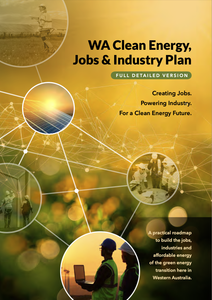
WA needs a clear and forward-thinking plan if it is going to become a competitive renewable energy powerhouse and maintain its economic strength through the energy transition.
“Western Australians know a faster renewable energy transition will lower their household expenses and prevent harmful climate pollution. But the community also needs clear direction to ensure this transition will create jobs, lower costs and not cause undue environmental harm.
“Here, sectors representing a broad range of interests have laid the groundwork for those outcomes, clearly outlining what is needed to create a future for WA that is good for the environment, for the climate, for workers and for the economy.
Summary
The WA Clean Energy, Jobs & Industry Plan sets out a strategic roadmap to position Western Australia as a global clean energy superpower while creating thousands of secure local jobs.
The report establishes three overarching goals:
- Creating local employment.
- Maintaining industrial competitiveness.
- Lowering household energy costs
To realize this vision, the framework details actionable measures to follow on from the recent WA Government announcement of a 75% Renewable Energy Target by 2031 for the South West Interconnected System. This includes developing a statewide Renewable Energy Target, coordinating statewide workforce and training pipelines, strategically planning regional infrastructure to safeguard high-value biodiversity and cultural heritage, and ensuring equitable benefit-sharing through household electrification incentives and First Nations equity partnerships. Ultimately, the plan highlights that establishing clear policy and regulatory certainty will unlock lower energy bills, boost power reliability, and secure the state’s global competitiveness in emerging green commodity export markets.

Key Findings
- Statewide Renewable Energy Target and Emissions Reduction Targets: The report calls for a statewide RET and 1.5°C aligned emission reduction targets to remove policy risk, lower capital costs, and attract clean energy investment.
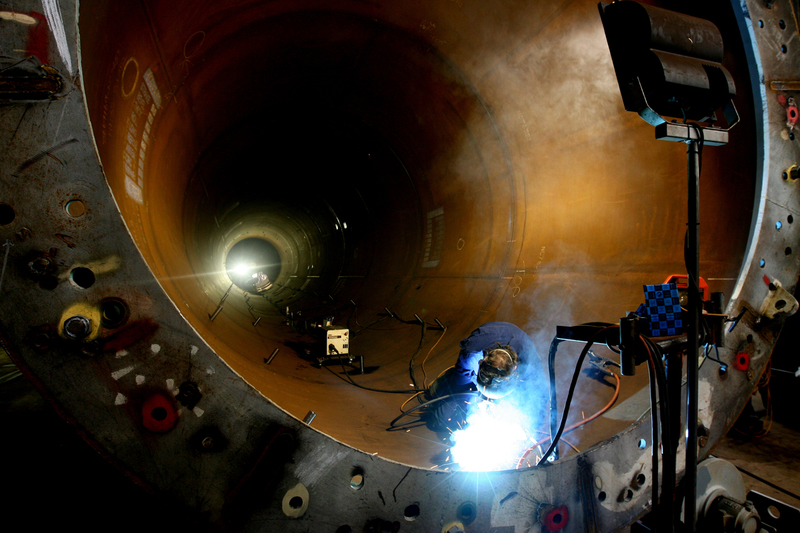
- Transformative Job Creation: Accelerating the transition offers massive employment prospects, including up to 8,800 solar and battery jobs by 2050, as well as 24,000 ongoing and 11,000 construction jobs in a commercial green iron industry.
- Industrial Electrification & Competitiveness: Requiring large gas users to adopt binding electrification timetables and providing concessional financing will protect existing energy-intensive manufacturers from rising energy costs and impending domestic gas shortfalls.
- Green Commodity Export Leadership: Western Australia can build new export markets in green iron, green ammonia, and offshore oil/gas decommissioning by constructing shared common-user infrastructure and setting dedicated Green Commodity Export Targets.
- Coordinated Workforce & Training Pipeline: To address critical skill shortages the plan recommends establishing a WA Clean Energy Jobs Plan 2050, three regional training hubs, and dedicated pathways for female and under-represented apprentices.
- Environmental Safeguards & Community Benefits: Fast-tracked development must be paired with State Planning Policies that avoid high-biodiversity and cultural heritage lands, mandate new data centres to run on additional renewable power, and deliver household electrification rebates and First Nations equity partnerships.
What you can do
WA has an opportunity to lead on sustainable, clean energy and associated industries. You can help by:
- Sending an email to Environment Minister Murray Watt and Prime Minister Anthony Albanese, calling on them to reject Browse.
- Sharing this story to help more Australians understand what’s at stake.
- Encouraging your friends and family to take action.
Countries have completed the first “global review” of their progress towards reversing nature loss by 2030 at the COP17 biodiversity talks in Yerevan, Armenia.
The review “notes with deep concern” that, unless action is “rapidly accelerated”, the goal to reverse nature loss and meet a set of 23 targets by 2030 “will not be achieved”.
It “urges” countries to accelerate action, including by “increased ambition in addressing the gaps”.
Much of the discussions in Yerevan focused on how to raise the necessary funds to help developing countries protect nature.
Some major economies pushed to expand the range of nations that are expected to provide finance, with countries agreeing at the end of the two weeks of talks that non-donors that want to contribute can “signal interest” before COP18.
This came after developed countries failed to meet a target to significantly ramp up nature finance over the last few years.
It also came as a landmark fund agreed at COP16 in Colombia to pay communities for the genetic resources derived from nature stands nearly empty two years on.
The Yerevan talks marked the halfway point of the “Kunming-Montreal Global Biodiversity Framework” (GBF), the “Paris Agreement for nature” first made in 2022 and due to be achieved by 2030.
During the nearly 12-hour-long final plenary, countries voted for Quito, Ecuador, to host the COP18 nature talks, which will be held in 2028.
Countries managed to sign off on all the major negotiation texts, marking a stark contrast to COP16, which ran so far over time that the Colombian presidency lost “quorum”, forcing talks to resume in Rome months later.
Below, Carbon Brief has detailed analysis of all of the key outcomes from COP17.
Formal negotiations
Finance
Finance, predictably, was at the heart of the discord and deadlock at the Yerevan talks.
At COP17, discussions on finance had to achieve several outcomes.
The first part – to take stock of biodiversity finance mobilised so far to meet the nature deal’s goals – fell under the global review.
As the global report noted, developed countries failed to meet their commitments to raise “at least $20bn a year by 2025” for nature. Delegates pointed to falling aid levels and a sharp 27% decline in environmental funding for the 2026-30 period.
The second part was to agree on how to mobilise resources for the next four years, to meet the GBF’s goals and targets.
Calls to “broaden the contributor base” of who pays to protect nature – and whether that should include emerging economies – became the most fraught element of the talks.
Eventually, countries agreed on what Switzerland described as a “super, mega-delicate” text. It hinged on major “political compromises”, with “no major winner or loser”, according to Kenya.
Per the decision, countries that want to be included on a list of developed country donors can “signal interest” through bilateral, confidential consultations before COP18 and every alternate COP after.
Finally, countries also agreed on criteria to shape and resource a new, permanent financial mechanism to protect nature after 2030.
However, this did not immediately take the form of a new fund under the COP that biodiverse countries have demanded since 2022, deferring the mechanism’s institutional structure to COP18.
Resource mobilisation discussions at the GBF’s halfway mark were supposed to agree on how to close the “biodiversity finance gap” and to “increase resources from all sources” to “at least” $2