

Welcome to Carbon Brief’s DeBriefed.
An essential guide to the week’s key developments relating to climate change.
This week
Landmark ruling repealed
DANGER DANGER: The Trump administration formally repealed the US’s landmark “endangerment finding” this week, reported the Financial Times. The 2009 Obama-era finding concluded that greenhouse gases pose a threat to public health and has provided a legal basis for their regulation over the past two decades, said the New York Times.
RACE TO COURT: Multiple environmental groups have already threatened to sue over the administration’s decision, reported the Guardian. The fate of the ruling is likely to ultimately be decided by the Conservative-majority Supreme Court, explained the New York Times.
‘BEAUTIFUL CLEAN COAL’: Separately, Donald Trump signed an executive order requiring the Pentagon to buy coal-fired power, a move aimed to “revive a fuel source in sharp decline”, reported the Los Angeles Times. Despite his efforts,Trump has overseen more retirements of coal-fired power stations than any other US president, according to Carbon Brief analysis.
Around the world
- CLIMATE TALKS: UN climate chief Simon Stiell said in a speech on Thursday that climate action can deliver stability in the face of a “new world disorder“ while on a visit to Turkey, which will host the COP31 climate summit later this year, reported BusinessGreen.
- IBERIAN CATASTROPHE: A succession of storms that hit Spain and Portugal in recent weeks have caused millions of euros worth of damage to farmlands and required more than 11,000 people to leave their homes in Spain’s southern Andalusia region, said Reuters.
- RISKY BUSINESS: The “undervaluing” of nature by businesses is fuelling its decline and putting the global economy at risk, according to a new report by the Intergovernmental Science-Policy Platform on Biodiversity and Ecosystem Services (IPBES), covered by Carbon Brief. Carbon Brief interviewed IPBES chair Dr David Obura at the report’s launch in Manchester.
- CORAL BLEACHING: A study covered by Agence France-Presse found that more than half of the world’s coral reefs were bleached over a three-year period from 2014-17 during Earth’s third “global bleaching event”. The world has since entered a fourth bleaching event, starting in 2023, a scientist told AFP.
- ‘HELLISH HOTHOUSE EARTH’: In a commentary paper, scientists argued that the world is closer than thought to a “point of no return”, which could plunge Earth into a “hellish hothouse” state, reported the Guardian.
7.4 gigawatts
The record amount of solar, onshore wind and tidal power secured in the latest auction for new renewable capacity in the UK, reported Carbon Brief.
Latest climate research
- Human-caused climate change made the hot, dry and windy weather in Chile and Argentina three times more likely | World Weather Attribution (Carbon Brief also covered the study)
- “Early-life” exposure to extreme heat “increases risk” of neurodevelopmental delay in preschool children | Nature Climate Change
- Climate change, urbanisation and species characteristics shape European butterfly population trends | Global Ecology and Biogeography
(For more, see Carbon Brief’s in-depth daily summaries of the top climate news stories on Monday, Tuesday, Wednesday, Thursday and Friday.)
Captured
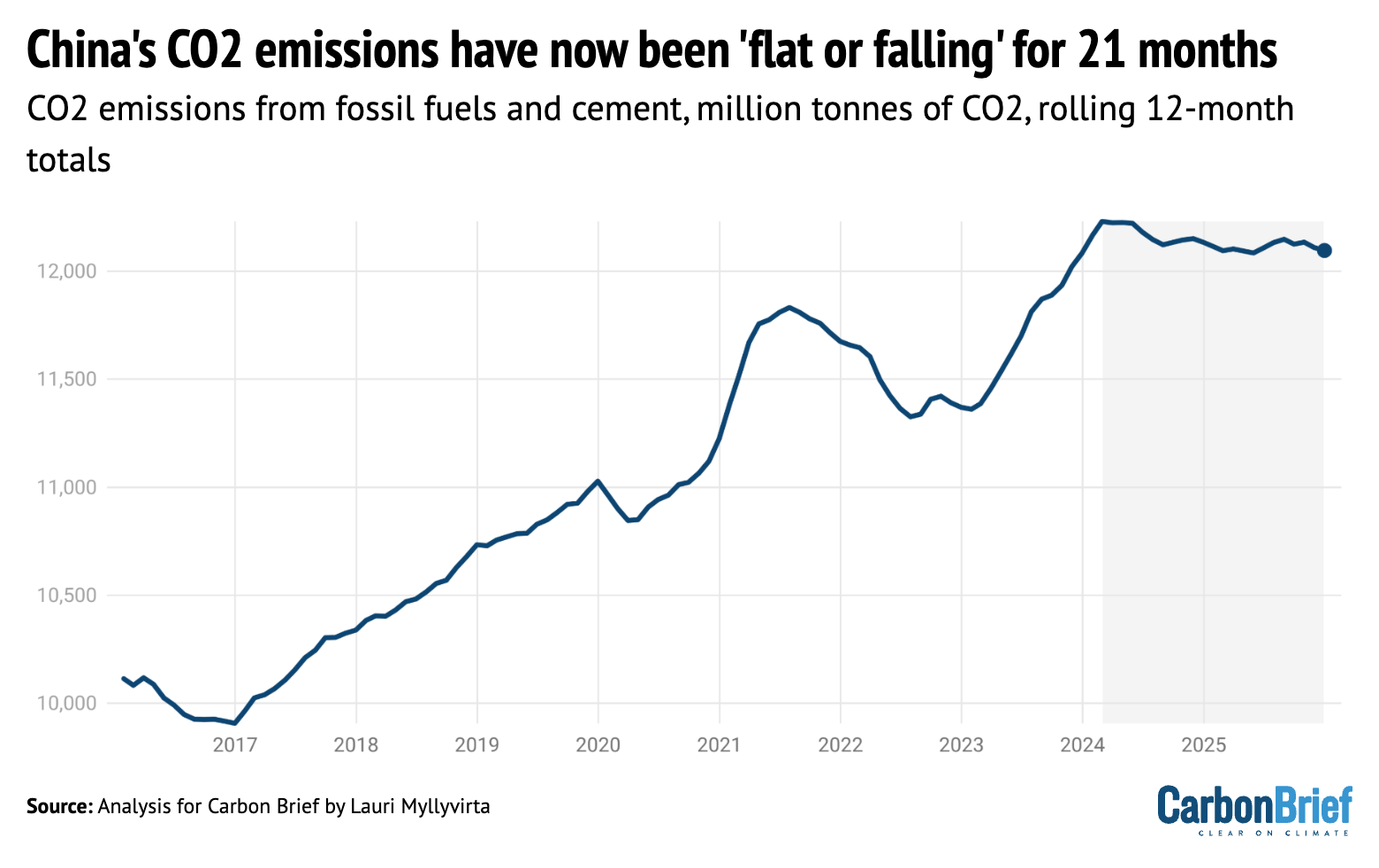
China’s carbon dioxide emissions have “now been flat or falling for 21 months”, analysis for Carbon Brief has found. The trend began in March 2024 and has lasted almost two years, due in particular to falling emissions in major sectors, including transport, power and cement, said the analysis. The analysis has been covered widely in global media, including Agence France-Presse, Bloomberg, New York Times, BBC World Service and Channel 4 News.
Spotlight
UK’s ‘relentless rain’
This week, Carbon Brief takes a deep dive into the recent relentless rain and floods in the UK and explores how they could be linked to climate change.
It is no secret that it can rain a lot in the UK. But, in some parts of the country, it has rained every day of the year so far, according to Met Office data released this week.
In total, 26 stations set new monthly rainfall records for January. Northern Ireland experienced its wettest January for 149 years and Plymouth, in the south-west of England, experienced its wettest January day in 104 years.
Areas witnessing long periods of rain included Bodmin Moor in Cornwall, which has seen 41 consecutive days of rain “and counting”, reported the Guardian. The University of Reading found that its home town had its longest period of consecutive rain – 25 days – since its records for the city began in 1908.
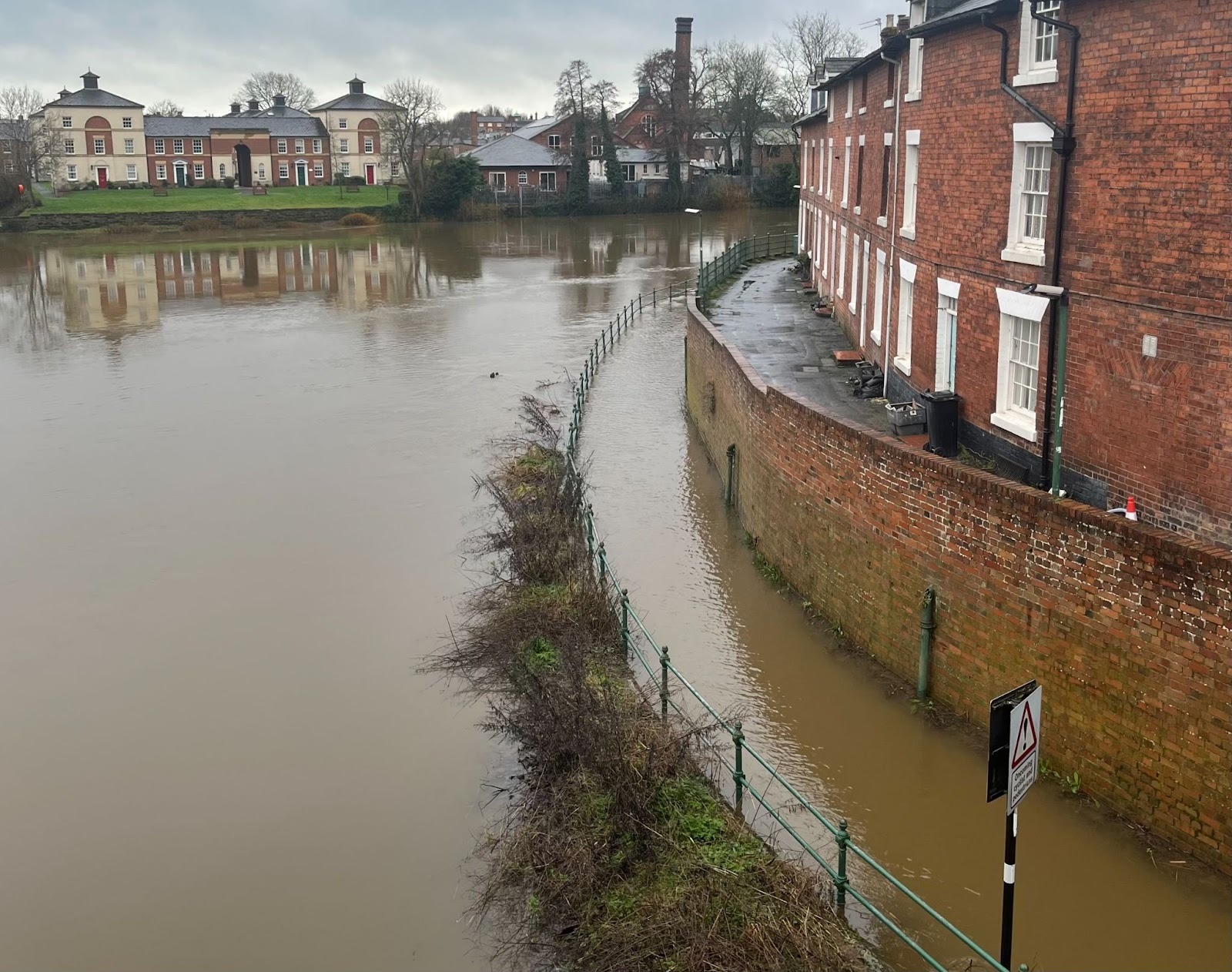
The relentless rainfall has caused flooding in many parts of the country, particularly in rural areas.
There were more than 200 active flood alerts in place across England and Wales at the weekend, with flood warnings clustered around Gloucester and Worcester in the West Midlands, as well as Devon and Hampshire in southern England. A flood “alert” means that there is a possibility of flooding, while a “warning” means flooding is expected.
“Growing up, the road to my school never flooded. But the school has already had to close three times this year because of flooding,” Jess Powell, a local resident of a small village in Shropshire, told Carbon Brief.
Climate link
While there has not yet been a formal analysis into the role of climate change in the UK’s current lengthy period of rain and flooding, it is known that human-caused warming can play a role in wet weather extremes, explained Dr Jess Neumann, a flooding researcher from the University of Reading. She told Carbon Brief:
“Warmer air can hold more moisture – about 7% more for every 1C of warming, increasing the chance of more frequent and at times, intense rainfall.”
The UK owes its rainy climate in large part due to the jet stream, which brings strong winds from west to east and pushes low-pressure weather systems across the Atlantic.
Scientists have said that one of the factors behind the UK’s relentless rain is the “blocking” of the jet stream, which occurs when winds slow, causing rainy weather patterns to get stuck.
The impact of climate change on the jet stream is complex, involving a lot of different factors. One theory, still subject to debate among scientists, is that Arctic warming could play a role, explained Neumann:
“As the Arctic warms faster than the tropics, the temperature gradient that fuels the jet stream weakens, causing it to become slower and wavier. Blocking patterns develop that can cause weather conditions to get stuck over the UK, increasing the likelihood of extreme rainfall and flooding.”
Adaptation needs
Long periods of rain saturate the ground and can have adverse impacts on agriculture and wildlife.
Prof Richard Betts, a leading climate scientist at the Met Office and the University of Exeter, said that these impacts can have harmful effects in rural areas:
“The climate change-driven increase in flood risk is impacting food production in the UK. In 2024, the production of wheat, barley, oats and oilseed rape shrunk by 13% due to widespread flooding of farmland.
“Assistance with recovery after flooding is increasingly important – obviously, financial help via insurance and reinsurance is vital, but also action to reduce impacts on mental health is increasingly important. It’s very stressful dealing with the impacts of flooding and this is often not recognised.”
One key adaptation for floods in the UK could be to “integrate natural flood management, including sustainable urban drainage, with more traditional hard engineering techniques”, added Neumann:
“Most importantly, we need to improve our communication of flood risk to help individuals and communities know how to prepare. We need to shift our thinking from ‘keeping water out’ to ‘living with water’, if we want to adapt better to a future of flooding.”
Watch, read, listen
‘IRREVERSIBLE TREND?’: The Guardian explored how Romania’s emissions have fallen by 75% since the 1990s and have been decoupled from the country’s economic growth.
UNDER THE SEA: An article in BioGraphic explored whether the skeletons of dead corals “help or hinder recovery” on bleached reefs.
SPEEDING UP: Through dynamic charts, the Washington Post showed how climate change is accelerating.
Coming up
- 16-19 February: Sixth meeting of the subsidiary body on implementation of the Convention on Biological Diversity, Rome, Italy
- 20 February: Webinar on the key findings from the International Energy Agency policy brief: the value of demand flexibility: benefits beyond balancing
- 20 February: UN day of social justice
- 22-27 February: Ocean Sciences Meeting, Glasgow, UK
Pick of the jobs
- UN Food and Agriculture Organisation (FAO), national senior climate change expert | Salary: Unknown. Location: Dhaka, Bangladesh
- British Antarctic Survey, marine biologist | Salary: £31,183. Location: Antarctica
- Green Climate Fund, regional lead for resource mobilisation – Europe | Salary: $109,000. Location: Seoul, South Korea
- Scientific American, documentary film proposals | Up to $80,000 per commissioned film
DeBriefed is edited by Daisy Dunne. Please send any tips or feedback to debriefed@carbonbrief.org.
This is an online version of Carbon Brief’s weekly DeBriefed email newsletter. Subscribe for free here.


The post DeBriefed 13 February 2026: Trump repeals landmark ‘endangerment finding’ | China’s emissions flatlining | UK’s ‘relentless rain’ appeared first on Carbon Brief.

Drought and heatwaves occurring together – known as “compound” events – have “surged” across the world since the early 2000s, a new study shows.
Compound drought and heat events (CDHEs) can have devastating effects, creating the ideal conditions for intense wildfires, such as Australia’s “Black Summer” of 2019-20 where bushfires burned 24m hectares and killed 33 people.
The research, published in Science Advances, finds that the increase in CDHEs is predominantly being driven by events that start with a heatwave.
The global area affected by such “heatwave-led” compound events has more than doubled between 1980-2001 and 2002-23, the study says.
The rapid increase in these events over the last 23 years cannot be explained solely by global warming, the authors note.
Since the late 1990s, feedbacks between the land and the atmosphere have become stronger, making heatwaves more likely to trigger drought conditions, they explain.
One of the study authors tells Carbon Brief that societies must pay greater attention to compound events, which can “cause severe impacts on ecosystems, agriculture and society”.
Compound events
CDHEs are extreme weather events where drought and heatwave conditions occur simultaneously – or shortly after each other – in the same region.
These events are often triggered by large-scale weather patterns, such as “blocking” highs, which can produce “prolonged” hot and dry conditions, according to the study.
Prof Sang-Wook Yeh is one of the study authors and a professor at the Ewha Womans University in South Korea. He tells Carbon Brief:
“When heatwaves and droughts occur together, the two hazards reinforce each other through land-atmosphere interactions. This amplifies surface heating and soil moisture deficits, making compound events more intense and damaging than single hazards.”
CDHEs can begin with either a heatwave or a drought.
The sequence of these extremes is important, the study says, as they have different drivers and impacts.
For example, in a CDHE where the heatwave was the precursor, increased direct sunshine causes more moisture loss from soils and plants, leading to a drought.
Conversely, in an event where the drought was the precursor, the lack of soil moisture means that less of the sun’s energy goes into evaporation and more goes into warming the Earth’s surface. This produces favourable conditions for heatwaves.
The study shows that the majority of CDHEs globally start out as a drought.
In recent years, there has been increasing focus on these events due to the devastating impact they have on agriculture, ecosystems and public health.
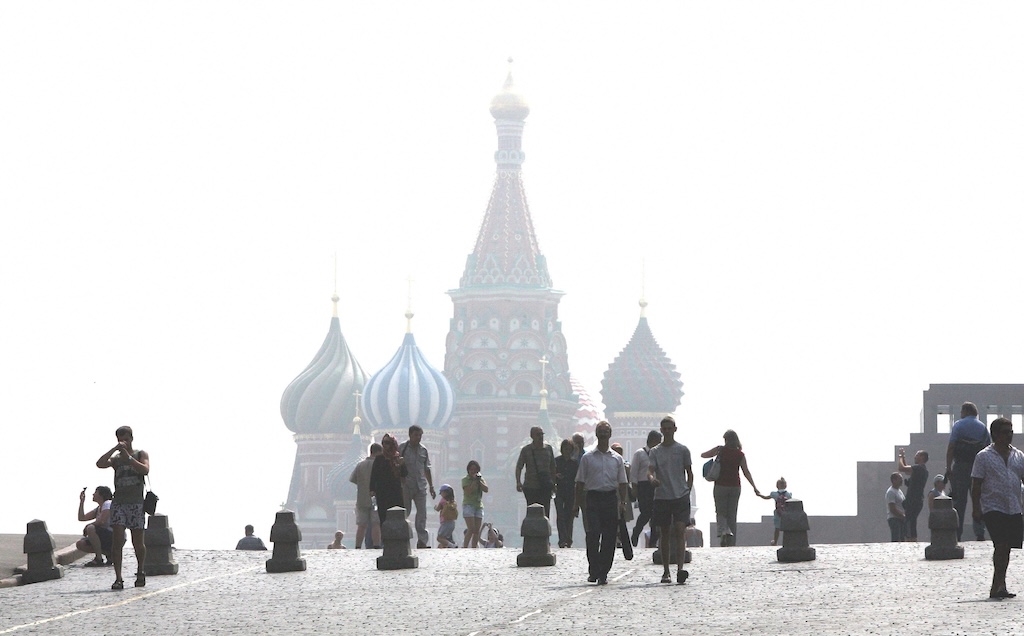
In Russia in the summer of 2010, a compound drought-heatwave event – and the associated wildfires – caused the death of nearly 55,000 people, the study notes.
The record-breaking Pacific north-west “heat dome” in 2021 triggered extreme drought conditions that caused “significant declines” in wheat yields, as well as in barley, canola and fruit production in British Columbia and Alberta, Canada, says the study.
Increasing events
To assess how CDHEs are changing, the researchers use daily reanalysis data to identify droughts and heatwaves events. (Reanalysis data combines past observations with climate models to create a historical climate record.) Then, using an algorithm, they analyse how these events overlap in both time and space.
The study covers the period from 1980 to 2023 and the world’s land surface, excluding polar regions where CDHEs are rare.
The research finds that the area of land affected by CDHEs has “increased substantially” since the early 2000s.
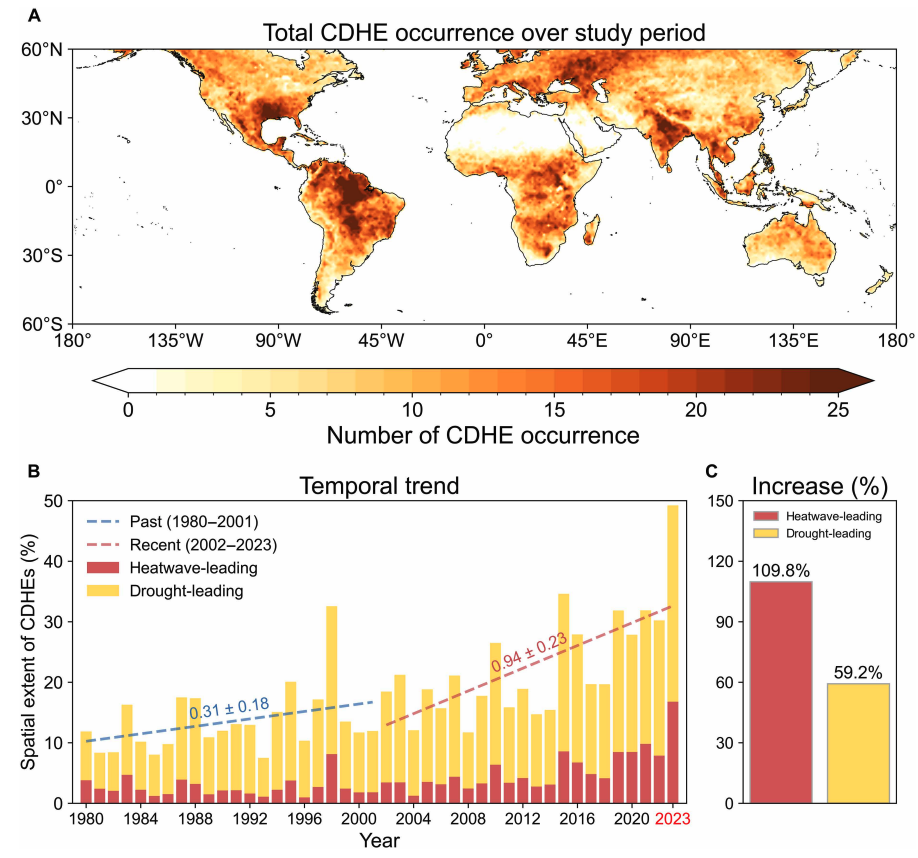
Heatwave-led events have been the main contributor to this increase, the study says, with their spatial extent rising 110% between 1980-2001 and 2002-23, compared to a 59% increase for drought-led events.
The map below shows the global distribution of CDHEs over 1980-2023. The charts show the percentage of the land surface affected by a heatwave-led CDHE (red) or a drought-led CDHE (yellow) in a given year (left) and relative increase in each CDHE type (right).
The study finds that CDHEs have occurred most frequently in northern South America, the southern US, eastern Europe, central Africa and south Asia.
Threshold passed
The authors explain that the increase in heatwave-led CDHEs is related to rising global temperatures, but that this does not tell the whole story.
In the earlier 22-year period of 1980-2001, the study finds that the spatial extent of heatwave-led CDHEs rises by 1.6% per 1C of global temperature rise. For the more-recent period of 2022-23, this increases “nearly eightfold” to 13.1%.
The change suggests that the rapid increase in the heatwave-led CDHEs occurred after the global average temperature “surpasse[d] a certain temperature threshold”, the paper says.
This threshold is an absolute global average temperature of 14.3C, the authors estimate (based on an 11-year average), which the world passed around the year 2000.
Investigating the recent surge in heatwave-leading CDHEs further, the researchers find a “regime shift” in land-atmosphere dynamics “toward a persistently intensified state after the late 1990s”.
In other words, the way that drier soils drive higher surface temperatures, and vice versa, is becoming stronger, resulting in more heatwave-led compound events.
Daily data
The research has some advantages over other previous studies, Yeh says. For instance, the new work uses daily estimations of CDHEs, compared to monthly data used in past research. This is “important for capturing the detailed occurrence” of these events, says Yeh.
He adds that another advantage of their study is that it distinguishes the sequence of droughts and heatwaves, which allows them to “better understand the differences” in the characteristics of CDHEs.
Dr Meryem Tanarhte is a climate scientist at the University Hassan II in Morocco, and Dr Ruth Cerezo Mota is a climatologist and a researcher at the National Autonomous University of Mexico. Both scientists, who were not involved in the study, agree that the daily estimations give a clearer picture of how CDHEs are changing.
Cerezo-Mota adds that another major contribution of the study is its global focus. She tells Carbon Brief that in some regions, such as Mexico and Africa, there is a lack of studies on CDHEs:
“Not because the events do not occur, but perhaps because [these regions] do not have all the data or the expertise to do so.”
However, she notes that the reanalysis data used by the study does have limitations with how it represents rainfall in some parts of the world.
Compound impacts
The study notes that if CDHEs continue to intensify – particularly events where heatwaves are the precursors – they could drive declining crop productivity, increased wildfire frequency and severe public health crises.
These impacts could be “much more rapid and severe as global warming continues”, Yeh tells Carbon Brief.
Tanarhte notes that these events can be forecasted up to 10 days ahead in many regions. Furthermore, she says, the strongest impacts can be prevented “through preparedness and adaptation”, including through “water management for agriculture, heatwave mitigation measures and wildfire mitigation”.
The study recommends reassessing current risk management strategies for these compound events. It also suggests incorporating the sequences of drought and heatwaves into compound event analysis frameworks “to enhance climate risk management”.
Cerezo-Mota says that it is clear that the world needs to be prepared for the increased occurrence of these events. She tells Carbon Brief:
“These [risk assessments and strategies] need to be carried out at the local level to understand the complexities of each region.”



The post Heatwaves driving recent ‘surge’ in compound drought and heat extremes appeared first on Carbon Brief.
Heatwaves driving recent ‘surge’ in compound drought and heat extremes
Greenhouse Gases
DeBriefed 6 March 2026: Iran energy crisis | China climate plan | Bristol’s ‘pioneering’ wind turbine
Welcome to Carbon Brief’s DeBriefed.
An essential guide to the week’s key developments relating to climate change.
This week
Energy crisis
ENERGY SPIKE: US-Israeli attacks on Iran and subsequent counterattacks across the Middle East have sent energy prices “soaring”, according to Reuters. The newswire reported that the region “accounts for just under a third of global oil production and almost a fifth of gas”. The Guardian noted that shipping traffic through the strait of Hormuz, which normally ferries 20% of the world’s oil, “all but ground to a halt”. The Financial Times reported that attacks by Iran on Middle East energy facilities – notably in Qatar – triggered the “biggest rise in gas prices since Russia’s full-scale invasion of Ukraine”.
‘RISK’ AND ‘BENEFITS’: Bloomberg reported on increases in diesel prices in Europe and the US, speculating that rising fuel costs could be “a risk for president Donald Trump”. US gas producers are “poised to benefit from the big disruption in global supply”, according to CNBC. Indian government sources told the Economic Times that Russia is prepared to “fulfil India’s energy demands”. China Daily quoted experts who said “China’s energy security remains fundamentally unshaken”, thanks to “emergency stockpiles and a wide array of import channels”.
‘ESSENTIAL’ RENEWABLES: Energy analysts said governments should cut their fossil-fuel reliance by investing in renewables, “rather than just seeking non-Gulf oil and gas suppliers”, reported