

Americans throw out 81.5 pounds of clothing a year; two-thirds of it ends up in landfills. That’s no accident—it’s a fast fashion design principle that many have embraced.
A December 2024 U.S. Government Accountability Office report found that textile waste grew by more than 50 percent from 2000 to 2018, while federal agencies still lack a coordinated strategy. As a result, consumers seeking sustainable options carry the burden of finding responsible brands.
Look good and reduce your footprint—you don’t have to choose. The brands below carry recognized certifications, use lower-impact materials, and often sell via Amazon. We’ve updated this list since 2021 to reflect brands still delivering and those raising the bar.
Throughout this list, you’ll see references to GOTS (Global Organic Textile Standard), Fair Trade Certified, and SA8000. GOTS covers the entire supply chain from farm to finished garment, requiring organic fibers and strict environmental and social standards. Fair Trade and SA8000 focus on worker wages, safety, and conditions. These aren’t marketing claims, they require third-party audits.
This article contains affiliate links. If you make a purchase through these links, we may receive a small commission at no additional cost to you. This supports our independent work but does not influence our recommendations or coverage.
1. Pact — GOTS-Certified Organic Cotton Basics and Dresses
Pact offers women a strong foundation for building a sustainable wardrobe. Each garment is crafted from GOTS-certified organic cotton in Fair Trade Certified factories, with certifications updated as recently as 2025. The brand partners with SimpliZero to measure and offset the carbon footprint of individual products, investing in reforestation and renewable energy.
Their organic cotton process uses 81% less water and 62% less energy than conventional cotton farming, a meaningful difference given that a single conventional cotton T-shirt typically requires around 2,700 liters of water to produce.

Standout Pact picks on Amazon:
- The Pact Organic Cotton Women’s Ruffled Maxi Dress is made from 100% organic cotton double gauze and is machine washable.
- Pact’s Organic Cotton Women’s Fit & Flare Halter Dress, which features 95% organic cotton and 5% elastane
- The Organic Cotton Women’s Lightweight Jacket, featuring 97% organic cotton, is a great layering piece.
- Check out Pact’s Organic Cotton Women’s Gauze Wide Leg Pantsmade from 100% organic cotton with a smocked elastic waistband
2. Girlfriend Collective — Recycled Activewear with Radical Transparency
Seattle-based Girlfriend Collective leads in sustainable activewear. Its fabrics are made from post-consumer plastic bottles, fishing nets, and fabric scraps. They are OEKO-TEX Standard 100 certified and BPA-free, making them safer if they end up in a landfill. The brand uses eco-friendly dyes and provides washing bags with each purchase to help reduce microfiber pollution.
On the labor side, Girlfriend Collective holds SA8000 certification, which independently verifies safe working conditions and fair wages. They also run ReGirlfriend, a take-back and recycling program that gives you store credit for returning worn-out pieces. That circular loop — buy, wear, return, recycle — is still rare in activewear.
The brand carries sizes XXS to 6XL and has an Amazon storefront with frequently updated inventory.

Standout picks:
- Girlfriend Collective High-Rise Skort is crafted from recycled polyester sourced from certified post-consumer plastic bottles and features useful hidden pockets.
- Browse Girlfriend Collective’s full Amazon store for leggings, sports bras, and shorts.
3. Eileen Fisher — Circular Fashion and B Corp Commitment
If any brand embodies “timeless,” it’s Eileen Fisher. Since 2013, the company has championed circularity through its Renew take-back program—one of the longest-running garment recycling efforts in American fashion. Send back your worn Eileen Fisher pieces, and they’re cleaned, repaired, and resold or upcycled into new textiles.
As of 2025, 75% of Eileen Fisher’s products use lower-emissions or certified materials, including organic linen, organic cotton, regenerative wool, TENCEL lyocell, and deadstock fabric. The brand holds certifications from GOTS, GRS (Global Recycled Standard), RWS (Responsible Wool Standard), Bluesign, and FSC. It’s also a certified B Corp with published emissions targets.
Eileen Fisher acknowledges it is not currently on track to hit its science-based emissions reduction targets. That’s a candid admission that distinguishes genuine transparency from greenwashing. Their organic linen and TENCEL pieces are particularly durable and environmentally benign: linen requires no irrigation in most growing conditions and generates roughly a quarter of the carbon emissions per pound of fiber as conventional cotton.
Eileen Fisher sells direct at eileenfisher.com with free shipping on U.S. orders.
4. Reformation — Carbon-Tracked Dresses and Recycled Cashmere
Los Angeles-based Reformation publishes quarterly sustainability reports that break down water, energy, and carbon footprint per product — a level of granularity that almost no other fashion brand offers. Their key fabrics include TENCEL™ Lyocell, produced in a closed-loop system that recycles 99% of its non-toxic solvent, low-irrigation linen, and Forest Stewardship Council-certified viscose.
In late 2024, Reformation launched its first 100% recycled cashmere sweater line — a blend of 95% recycled cashmere and 5% recycled wool. The brand reports these sweaters produce 96% less carbon and require 89% less water than conventional cashmere. That’s a significant claim, and the brand backs it with third-party verification.

Reformation also partners with ThredUp and Poshmark so you can resell verified purchases directly through those platforms. It also offers a take-back program for Ref sweaters, shoes, denim, and outerwear.
Reformation sells direct at thereformation.com.
5. Amour Vert — Made in California, Plant a Tree With Every Tee
Amour Vert (“green love” in French) produces 97% of its garments in California, collaborating with mills to create signature sustainable fabrics such as beechwood modal, GOTS-certified cotton, OEKO-TEX silk, TENCEL, and cupro from cotton waste. The brand recycles nearly all byproducts at its factories.
For every T-shirt purchased, Amour Vert plants a tree in North America through its partnership with American Forests, and has planted more than 220,000 trees to date. Products are made in small batches to limit overproduction, and the brand offers an upcycled clothing collection that transforms discarded materials into new pieces.

Key pieces for the Spring and Summer of 2026 include:
- Victoire Wide Leg Pants feature organic cotton and a TENCEL blend, a versatile year-round foundation for your look.
- The Verona Blazer is made from organic cotton and TENCEL to deliver an office-appropriate, seasonless look.
- The Sloan Skirt uses TENCEL from sustainably sourced wood pulp to provide moisture-wicking comfort.
6. Warp + Weft — Size-Inclusive Denim Under $100
A traditional pair of jeans takes roughly 1,500 gallons of water to produce. Warp + Weft, a family-owned brand, produces jeans using less than 10 gallons of water. By operating a vertically integrated denim mill, Warp + Weft controls every step: utilizing onsite solar panels, a heat recovery system, recycling and treating 98% of water used, and employing dry ozone technology instead of chemical bleaching.
The brand is fully size-inclusive (through 3X for women), and prices stay under $100. Their compliance with International Social and Environmental & Quality Standards is auditable, not self-reported. Warp + Weft has expanded from denim into matching sets, tops, and jackets, making it easier to build a full outfit around their sustainable denim base.
Shop at warpweftworld.com and Amazon.
7. Karen Kane — Ethical Production and TENCEL Chambray
Karen Kane stands out for its transparent, energy-efficient operations, including LA-based manufacturing, hangar reuse, and sustainable fabric initiatives. The Asymmetric Hem Wrap Top, a signature design, is crafted from 100% TENCEL soft chambray made with FSC-certified wood pulp. This closed-loop process recaptures and reuses solvents, greatly reducing chemical waste compared to traditional rayon methods.
Karen Kane offers a broader range of wardrobe essentials beyond the wrap top, and its women’s collection is available on itssite and select Amazon listings.
8. Mango — Organic Denim and a Declared Sustainability Road Map
Mango is a larger brand, which warrants more scrutiny, but it can also make a positive impact through its environmental commitments. The brand publicly committed to using 100% organic cotton and 50% recycled polyester by 2025, and 100% cellulose fibers with verified sustainable origins by 2030. Their organic cotton pieces, including several denim options, are genuinely certified organic, meaning no synthetic pesticides or fertilizers are used in cultivation.
Mango describes its sustainability journey as ongoing, and it is. Organic cotton still requires significant water input, and a large global retailer faces supply chain complexity that smaller brands avoid. Good On You rates the brand as making progress but “Not Good Enough.” That said, Mango’s organic denim line is worth considering for shoppers who want accessible price points alongside high-quality materials. Organic Mango pieces are available through mango.com.
What You Can Do To Lower Your Impact
Individual purchasing choices alone won’t fix a 17-million-ton textile waste problem. But they shape markets, and markets respond. Here’s how to shop with more impact:
- Look for GOTS, Fair Trade Certified, or B Corp status. These require third-party audits, not just brand claims.
- Prioritize longevity. A $90 Eileen Fisher linen shirt, worn 200 times, has a far lower footprint than a $20 fast-fashion top, worn 7.
- When you’re done with clothes, resell on ThredUP, Poshmark, or TheRealReal before donating. Secondhand marketplaces keep clothing in circulation longer.
- Use Earth911’s recycling search to find textile recycling options in your area. Only about 15% of U.S. textiles are currently recycled.
- Check takeback programs before you throw anything out. Eileen Fisher Renew, Girlfriend Collective’s ReGirlfriend, and Reformation’s takeback initiative all exist for exactly this reason.
The post 8 Sustainable Women’s Fashion Brands for Spring & Summer 2026 appeared first on Earth911.
https://earth911.com/living-well-being/5-sustainable-fashion-lines-for-women/

Curating a conscious home is a thoughtful process involving much consideration — who made my products, how they were made, and what are they made from — and this guide aims to support you on your journey towards finding ethical and sustainable home decor you truly love.
What is Sustainable Home Decor?
Sustainable home decor includes any home decor that is made in a way that takes into consideration both the makers and the planet. Sustainable home decor will be ethically made using eco-friendly and natural materials. Eco-friendly decor will also be produced using sustainable supply chain practices. This includes using renewable energy and recycled or compostable packaging.
While there are numerous sustainable home decor brands, some of which are featured below, first consider what’s already been made in order to prevent contributing to new waste. Secondhand, used, or DIY home decor options are typically more sustainable than buying new.
What is Ethical and Fair Trade Home Decor?
Ethical and Fair Trade home decor is produced in a way that adheres to Fair Trade standards and is, ideally, Fair Trade Certified. Fair Trade means paying artisans and makers a fair, living wage and providing ethical working conditions. Ethical home decor also includes supporting goods made by artisans using traditional heritage techniques and art forms. Many cultures around the world are at risk of losing their age-old artisanal crafts forever in the age of mass manufacturing.
It’s important to note that sometimes a major brand may use an “eco” fiber while still supporting irresponsible labor practices, and excessive production amounts that inevitably lead to a lot of waste. This is not true sustainability in my mind!
Most artisan-made home decor is ethically produced and directly supports the makers. However, it’s important to check if a brand or marketplace is transparent about their business practices to ensure they are ethical or Fair Trade.
Where Can You Find Sustainable Home Decor?
In terms of environmental sustainability, looking secondhand and vintage is always a great first place to look for sustainable home decor.
But if you’ve scoured those options and haven’t found what you’re looking for and/or if you’re looking to financially support artisans and traditional crafts around the globe, this shopping guide is designed for you. You’ll discover many brands with artfully designed and artisan handmade goods for furnishing any space among this list of decor brands.
All of the brands in this guide use natural and/or recycled fibers and avoid the use of virgin synthetics like polyester; however, some brands do use materials that are not the most environmentally-friendly option on the market, such as conventional cotton.
And of course, I wanted to choose brands that followed slow, thoughtful production practices, prioritizing artisan handmade over factory labor and quality over quantity.
So without further ado, here are my favorite small-batch, artisan-made, and ethical home decor brands.
Note that this guide includes affiliate links — as always, we only curate brands vetted for sustainability that we love (and that we think you’ll love too).
1. Urban Natural
Categories: Accent Pillows, Tabletop, Lighting, Wall Art & Mirrors, Blankets & Throws
Eco-friendly home retailer Urban Natural is on a mission to curate high-quality furniture (and other home goods) built with quality and free of toxic chemicals. Urban Natural carries several sustainable home decor brands, including artisan brands Ethnicraft and Jaipur Living as well as ethically USA-made brands Farmhouse Pottery and East Fork.
2. GOODEE
Categories: Pillows, Lighting, Wall Decor, Planters, Baskets, Blankets, Candles
GOODEE is an ethical marketplace featuring numerous sustainable artisan brands and designers. You’ll find a variety of beautifully crafted home decor goods to suit a wide range of styles. Goodee is a Climate Neutral and B Corp Certified company. They publish an annual impact report so you can easily ensure their business practices align with your values.
Our favorite brands on Goodee are Texidors, Baba Tree, Makaua, and Tensira.
3. Healthier Homes
Categories: Rugs, Lighting, Tabletop, Baskets, Wall Decor & Wallpaper
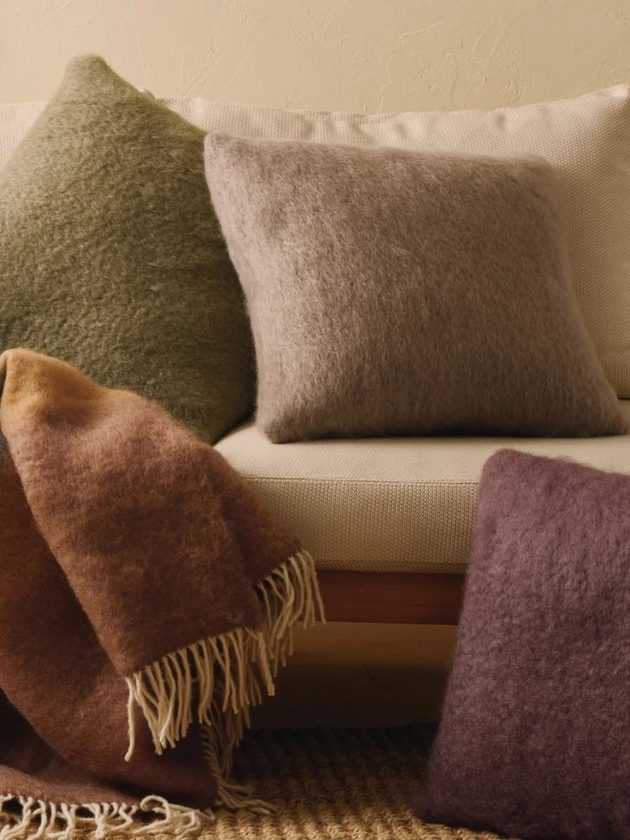
Founded after years running an award-winning healthy home building firm and publishing a book by the same name (Healthier Homes) this retailer is a go-to online destination for finding non-toxic home goods. The eco-friendly home decor on Healthier Homes is primarily made with natural materials like clay, cotton, seagrass, mango wood, and bamboo,

4. Will & Atlas
Categories: Baskets, Tabletop
Will & Atlas is a women-owned small business making most of their homewares from plant materials like jute, palm leaf, and hogla grass. Their natural fiber baskets are flexile but sturdy built to hold blankets, pillows, laundry, magazines, toys, or just to stand alone as a decor piece. You’ll also find jute coasters and placemats in their tabletop collection.
The brand is committed to ethical practices, partnering with nonprofit fair trade artisan groups in Bangladesh and craftspeople in the U.S. to build long-lasting production relationships.

5. Ten Thousand Villages
Categories: Baskets, Pillows, Throws, Candles, Wall Art, Planters & Vases
Founded 80 years ago, Ten Thousand Villages is the original fair trade store. Throughout the decades, the nonprofit business has continued their commitment to fair wages, safe working conditions, as well as sustainability.
As a founding member of the World Fair Trade Organization, with artisans around the world from under-resourced communities. Most of the products they carry are made from recycled, upcycled, and natural materials.
6. MagicLinen
Categories: Curtains, Kitchen Linens
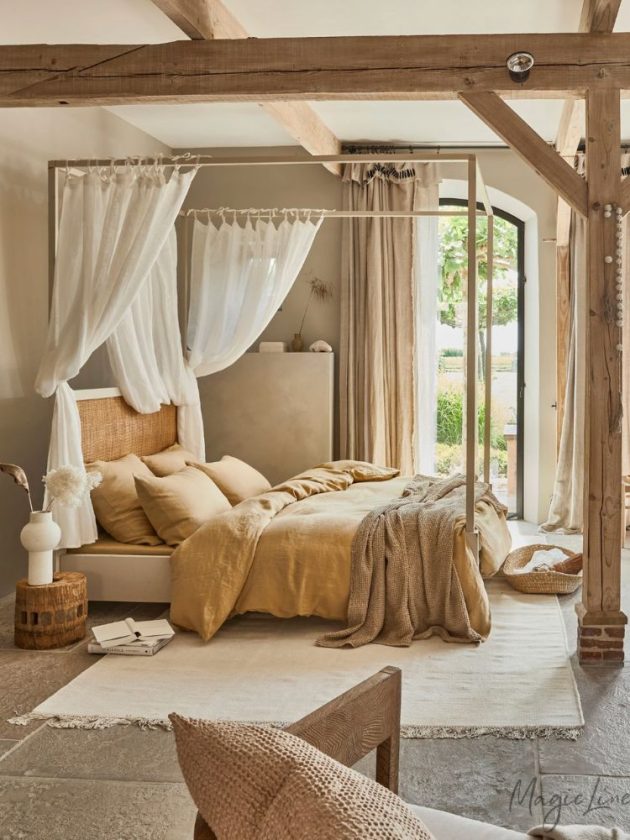
Linen is an exceptional material for home decor — there’s a reason we say “kitchen linens!” It’s natural, beautiful, and is often high quality.
I purchased a set of linen curtains from Magic Linen one year ago and they remain one of my favorite home decor pieces. The fabric they use meets the OEKO-TEX® STANDARD 100, meaning its been tested for harmful substances.
7. Passion Lilie
Categories: Pillow Covers, Table Linens
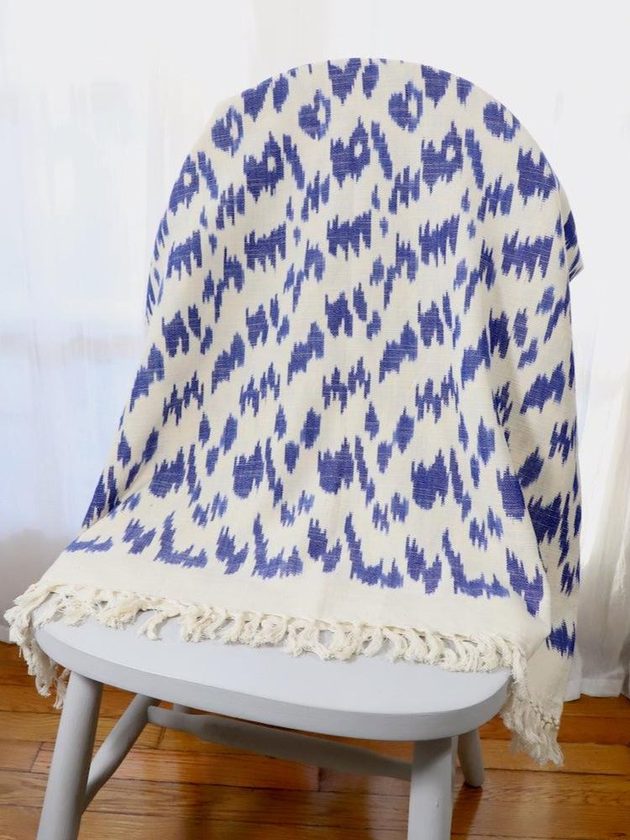
Passion Lilie is a fair trade fashion and lifestyle brand with ethically made home decor, too. The Fair Trade Verified brand has handwoven cotton blankets, organic cotton kitchen linens, unique ornaments, and hand-dyed throw pillow covers.
Each piece is made by Passion Lilie’s partners in India who pay living wages and ensure a safe working environment. Beyond this, the brand supports efforts to enable artisans to continually develop their skills and creates opportunities for community development.
8. 54kibo
Categories: Throw Pillows, Wall Hangings & Artwork, Mirrors, Baskets, Rugs, Lighting
A destination for modern African artisanal decor, 54kibo curates a stunning selection of ethically made home decor. The pieces on 54kibo are made with time-honored techniques using locally sourced materials with rich histories. The designs are exceptional, but the stories behind them make the pieces beautiful additions to your home beyond the surface.
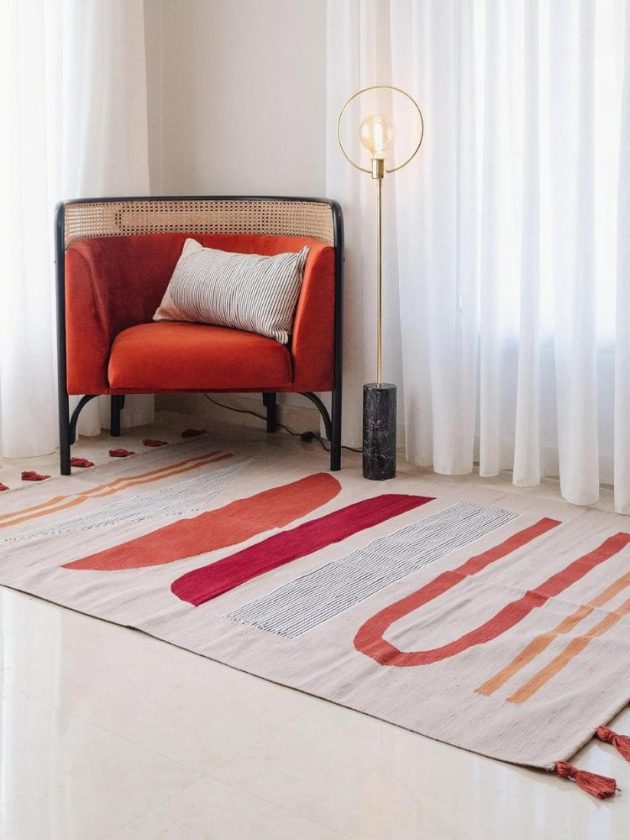
9. The Citizenry
Categories: Baskets, Planters & Vases, Tabletop, Wall Decor, Mirrors
The Citizenry partners with artisans around the world, ensuring safe conditions, fair wages, and offering grants to their artisan partners so that they can expand their businesses.
Their online collection features small-batch artisan-made home goods made from locally-sourced and natural materials like palm leaves and indigo dyes.

More Sustainable Home Guides:
Sustainable Furniture Brands to Furnish a Conscious Home
Best Eco-Friendly and Zero Waste Kitchen Products
Easy Swaps for a Low Waste, Sustainable Bathroom
The post 9 Beautiful Places to Source Ethical and Eco-Friendly Home Decor appeared first on Conscious Life & Style.
9 Beautiful Places to Source Ethical and Eco-Friendly Home Decor
Take a look at why hemp is heralded as a hero material and discover 14 hemp clothing brands that have tapped into its sustainable potential.
The exploration of fabrics has always been a starting point for sustainable innovation in fashion. After all, fabrics provide tangible proof that change is possible while having a direct impact on the environment in one way or another. Plus fabrics are responsible for an outsized proportion of a fashion brand’s carbon footprint and overall environmental impact, including biodiversity loss and pollution.
So, What is Hemp Fabric?
Hemp is a bast fiber produced from the cannabis sativa plant, where every part of the plant can be utilized for over 25,000 industrial uses including clothing, biofuel, bricks, paper, and textiles.
Contrary to its popular association, hemp is actually the sober sister to marijuana. Unlike its recreational sibling that’s grown for its psychoactive THC (tetrahydrocannabinol) properties, hemp contains less than 0.3% THC, a value that was the driving force behind the legalization of hemp production in the 2018 Farm Bill. So while you can’t really get high from hemp, you can definitely enjoy its material benefits — which are plenty!
What is Hemp Clothing?
The simple answer is that hemp clothes are garments made from hemp fabric! But the important caveat here is that most hemp clothes on the market today are not made from 100% hemp fabric. They are usually blended with other fibers, like cotton.
At this point, hemp fabric manufacturing is not at the scale or technological level that the manufacturing of cotton (the most popular natural material) is, making 100% hemp clothing more expensive to produce. Also, pure hemp fabric is also known to be quite stiff until a couple dozen washes later, so blending it with a fiber like cotton can make it softer and easier to wear on the offset.
100% hemp fiber content clothing does exist, it’s just rare at this point. Though we do think this will change with more sustainable material investment happening in the textiles industry.
Is Hemp Clothing Comfortable?
It depends! The softness of hemp clothing will vary based on how the fabric was produced and if it is blended with other fibers like cotton or lyocell. Pure hemp clothing can be rougher than cotton, but hemp is known to get softer with every wash.
Also, since hemp is a natural bast fiber that comes from the softer parts of the plant’s stalk or stem, it is softer than the coarser leaf fibers.
Can Hemp Clothing Protect From The Sun?
A lesser known benefit of hemp clothing is that it can reportedly even help shield you from harmful UV rays. According to skin cancer research, a fabric’s UPF (Ultraviolet Protection Factor) value is a number that coincides with the fraction of UV rays it allows to pass through and hit your skin — the higher the UPF number, the better the protection.
Research claims that hemp has a UPF of >50 (according to European standards) due to natural pigments and lignin within the fibers, which act as UV absorbers.
Is Hemp Clothing Sustainable?
There are a lot of benefits to hemp clothing. But don’t just take our word for it, we’ve listed some of hemp’s most impressive sustainable qualities below:
1. Hemp is not resource-intensive
Hemp can be grown under a variety of agricultural and ecological conditions and has a capacity to grow rapidly.
Hemp clothing vs. cotton: With a high yield of 250% more fiber than cotton, hemp requires less land to grow, has no need for harmful pesticides or chemicals, and needs as little as 1/3rd of the water compared to conventional cotton. (Though individual use cases may vary based on the region that each of the crops are grown.)
2. Hemp is a restorative plant
Growing hemp can also help contribute to the maintenance of soil quality, courtesy of its anchored roots which prevent soil erosion and nutrient loss.
In fact, research shows that hemp can be used to restore contaminated soils through ‘phytoremediation’ — a process that has proven successful in the early 90s when industrial hemp was planted in some of the polluted Ukrainian regions near the Chernobyl disaster where much of the land was rendered useless. The experiments showed that hemp helped remove radioactive elements from the soil.
3. Hemp can absorb carbon more than other plants
Hem can act as a carbon sink. According to a Cambridge University researcher, a hectare of hemp can absorb between 8-15 tonnes of CO2, giving hemp plants a vital role in reversing carbon emissions.
Impressed yet? Ahead, discover 14 brands that have some of the best takes on this sustainably versatile fiber.
Note that this guide includes affiliates. As always, all brands meet very high standards for sustainability and are brands we love that we think you’ll love too.