Fusion is the future of energy, and that’s becoming increasingly evident. How? Well, recently tech giant Microsoft invested generously in Helion Energy as it recognized fusion’s potential to revolutionize the energy transition.
Andrew Holland, CEO of the Fusion Industry Association explained this very nicely by stating,
“The fusion industry is poised to help the world achieve the energy transition to net zero carbon emissions. Commercialization of fusion energy will create new jobs and a new industry addressing a trillion-dollar market.”
Recently they published the Global Fusion Industry Report that highlights how the race to commercialize fusion energy is speeding up. We discovered that forty-five companies are putting in various technological efforts and have raised over $7 billion in investments till now. Notably, with public-private partnerships the funding has seen a 50% jump.
President Biden and his climate agenda are one of the propellers for addressing the climate crisis. The US DOE says fusion energy has immense potential to meet carbon reduction targets, ensure energy security, and promote economic growth.
Moving on, let’s understand what is fusion.
Fusion and Its Fuel
In Chemistry,
“Nuclear fusion is the process by which two light atomic nuclei combine to form a single heavier one while releasing massive amounts of energy. The sun, along with all other stars, is powered by this reaction.”
- IAEA says, Fusion could generate 4X more energy per kilogram of fuel than fission (used in nuclear power plants) and nearly four million times more energy than burning oil or coal.
From this estimate, we can fathom the impact of fusion in the future once it’s fully deployed. Secondly, there are particular fuels that trigger fusion. The deuterium-tritium (D-T) fuel is the most efficient for fusion devices.
As fusion produces safe, clean, and infinite energy, it’s crucial to find a viable fuel source to power the process. Top fusion companies are working on several other alternatives along with D-T. A few examples are proton–boron (pB11), deuterium–helium3 (DHe3), and lithium.
However, turning this into reality involves rigorous R&D and investments. And this is why public-private partnerships have become inevitably important for the fusion industry.
Public-Private Partnerships Drive Fusion Commercialization
One cannot overlook the role of public-private partnerships as they are the driving factor behind the commercialization of fusion energy. Government funding to support private companies has jumped by over 50%. This indicates a keen interest from national governments. The investment figures are shown below:
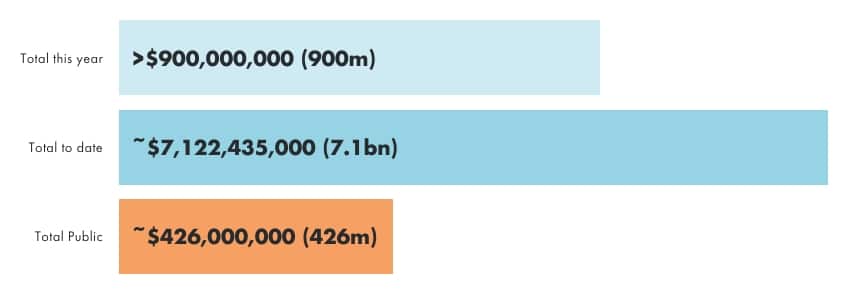
While private companies will take charge of the commercialization, public partnerships will drive scientific research and emerging technologies. The Fusion Industry Association has consistently pushed for such collaborations to ensure that private companies can leverage maximum knowledge from public research programs.
Several notable public-private partnerships have gained momentum in the past year. In June 2024, the U.S. DOE signed contracts with eight companies under the Milestone-Based Fusion Development Program to deliver pilot plant designs. Even ITER, the global leader in fusion research, is embracing public-private partnerships by offering its expertise to private companies.
Germany launched its “Fusion 2040” initiative, directly investing in private companies, while Japan’s “Moonshot” program and the UK’s “Fusion Futures” are backing key technology providers. Meanwhile, the EU plans to establish a fusion investment consortium by 2026.
Potential Markets for Fusion Energy
The demand for fusion commercialization can be met only with international cooperation. This is because such partnerships can overcome research challenges, boost supply chains, and train workforces.
Thus, building a global fusion energy market requires turning rigorous R&D efforts into commercial technologies. Fusion developers aim to export facilities worldwide. This can help us understand the diverse commercial landscapes essential for global collaboration.
The DOE has outlined a pathway of how international partners can support fusion’s entry into these markets. The steps are:
- Identifying necessary technologies, manufacturing, and infrastructure for fusion development, while mapping global supply chains to target high-value markets.
- Exploring common benchmarks and standards.
- Engaging with industry groups, consortia, and NGOs to address commercial and community needs.
- Helping multinational companies benefit from technologies developed outside their home countries.
Additionally, coordinating early on regulatory frameworks and policies will also ensure a smooth market entry for fusion energy. This will also involve scaling from prototypes to real-world solutions. However, with major advancements, protecting intellectual property will also become crucial for R&D, commercialization, and global partnerships.
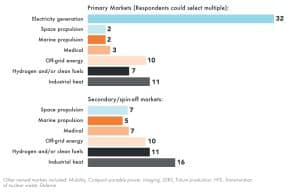
Take a peek at the following chart to discover the industries where fusion energy will be useful.
Commonwealth Fusion Systems: Leading the Pack
Located in Devens, Massachusetts, Commonwealth Fusion Systems is the world’s largest commercial fusion energy company. To date, it has secured around $2 billion in funding having a primary market for electricity generation.
The company aims to deploy fusion power plants quickly to meet rising global energy demands and achieve decarbonization goals. It specializes in making tokamaks (a magnetic confinement device to generate thermonuclear fusion) with innovative high-temperature superconducting (HTS) magnet technology. The company is currently building SPARC, a Q~10 demonstration plant that uses actual fusion fuels based on peer-reviewed science. Catch a glimpse of the reactor here.

Source: CFS
Recently the power giant produced two advanced superconducting magnets for the University of Wisconsin’s WHAM experiment, which is exploring magnetic mirror fusion. These are the first products shipped under CFS’s plan to supply magnets for both its power plants and other innovative uses.
While CFS’s main focus is building its own fusion devices, including the SPARC tokamak, its cutting-edge magnet technology has broader potential. Several companies have already approached CFS for its expertise in developing high-temperature superconducting magnets for various markets.
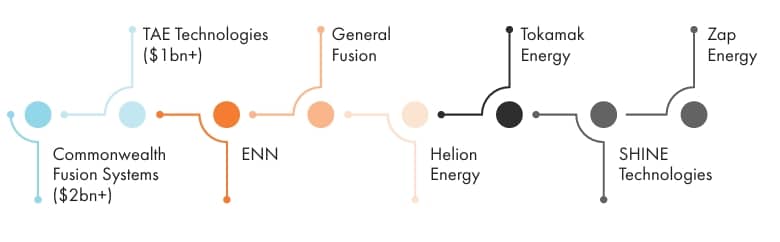
The top fusion companies are charted in the image below:
“Recreating the conditions in the center of the Sun on Earth is a huge challenge”
The above statement was said by Dr. Aneeqa Khan, lecturer in nuclear materials at the University of Manchester to BBC. Building a fusion power plant involves complex engineering and material challenges. It also requires trained and a large workforce with precision and skills to work in this field.
Understand the diverse challenges of the fusion sector from this figure:
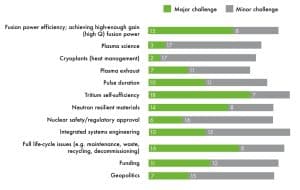
Commercial fusion power will still take time to develop. However, investment in fusion is surging and the companies are making steady progress to bring this technology to the world sooner in the future.
Disclaimer: Data and Visuals Collected from 2024 Global Fusion Industry Report
The post $7.1 Billion Investment Fuels Fusion Commercialization. Is Fusion the Future Energy? appeared first on Carbon Credits.
Carbon Footprint
CSRD for SME Suppliers: How to turn data requests into a competitive advantage
Across Europe, a quiet but decisive shift is reshaping how companies work with their suppliers. As the Corporate Sustainability Reporting Directive (CSRD) comes into force, large organisations are under mounting pressure to disclose detailed, verifiable sustainability information—not only about their own operations, but across their entire value chain. And because up to 80% of a company’s emissions often come from its supply chain, the spotlight naturally turns to SMEs.
![]()
Carbon Footprint
Lithium Prices Surge Amid Strong Demand Forecasts, Could Reach Up to $28,000/Ton by 2026
Disseminated on behalf of Surge Battery Metals Inc.
Lithium prices have jumped sharply overnight, catching the attention of investors, automakers, and battery makers. In China, lithium carbonate futures on the Guangzhou Futures Exchange hit about 95,200 yuan (≈$13,400 USD) per metric ton. This marks a rebound from earlier lows caused by oversupply.
Historically, lithium prices have been volatile. Peak prices reached around 150,000 yuan per ton in 2022, followed by a slump during the oversupply period in 2023–2024.
The recent spike followed comments from the chairman of Ganfeng Lithium, Li Liangbin, who projected a 30–40% rise in global demand by 2026. He suggested prices could reach between 150,000 and 200,000 yuan per ton if this growth materializes.
The surge highlights lithium’s critical role in powering electric vehicles (EVs) and large-scale energy storage.
Growing Demand for Lithium: What Drives the Boom?
Electric vehicles remain the largest driver of lithium demand. Around 16 million EVs were on the road globally in 2024, up from 10 million in 2022. Sales are forecast to exceed 25 million units by 2026 and reach over 50 million by 2030. Longer-range vehicles require larger batteries, which increases lithium use.
Energy storage systems are another fast-growing source of demand. Utilities expanding solar and wind energy need lithium-based batteries to store surplus electricity. Heavy-duty electric trucks and buses have larger batteries. This means they use more lithium per vehicle compared to passenger EVs.
Long-term trends toward decarbonization and renewable energy growth further support lithium demand. Analysts say that EV batteries make up about 70% of lithium demand. Grid storage accounts for 15%. Electric trucks use 10%, and other uses, like electronics and specialty chemicals, are around 5%.
Supply Challenges Keep Prices Elevated
Lithium carbonate prices in China have climbed dramatically, moving from $8,259/tonne on June 23, 2025, to $12,791/tonne on November 19, 2025 – a rise of about 55% over five months.
This recent rally is primarily attributed to tight supply conditions, with major Chinese mines, including those operated by CATL, pausing operations due to falling prices earlier in the year. As output was reduced or shut in, inventories were gradually drawn down, tightening available supply.

Moreover, lithium production is highly concentrated. Australia leads with around 60,000 tonnes LCE annually, followed by Chile (35,000 tonnes), China (25,000 tonnes), Argentina (18,000 tonnes), and the U.S. (≈5,000 tonnes). Geographic concentration adds risk: environmental regulations, political tensions, or operational issues could tighten supply.
Restarting idled mines or opening new projects takes 2–5 years. Inventories from the oversupply period act as a buffer. Current estimates show global lithium stocks at about 350,000 tonnes LCE. This amount can help with short-term supply issues, but it’s not enough for long-term growth.
- SEE live prices here: Live Lithium Prices Today
The factors that keep pushing lithium demand higher include:
- Electric vehicles,
- Energy storage systems,
- Electric trucks and buses, and
- Long-term climate trends.
Lithium makes up about 20–25% of total EV battery costs. So, price changes can greatly impact EV production costs. Also, battery chemistry trends show that sodium-ion and solid-state batteries might take a small share of the market by 2030. However, lithium-ion will remain the leader for now.
Lithium carbonate prices in China have climbed sharply, as shown in the chart. Prices rose more than 17% this month as investors bet on accelerating demand from the energy storage sector.
- MORE on LITHIUM:
What Analysts Say: Forecasts and Future Trends
Fastmarkets predicts a small surplus in 2025, shifting to a deficit of 1,500 tonnes LCE by 2026. A few years ago, the market had a surplus of about 175,000 tonnes in 2023 and 154,000 tonnes in 2024. Cuts in production at high-cost or marginal mines and rising demand from EVs and storage systems are driving this rebalancing.
Arcane Capital forecasts global demand could hit 4.6 million tonnes LCE by 2030, led by EVs, grid storage, and heavy-duty transport.
Benchmark Mineral Intelligence expects lithium carbonate prices to stay between $15,000 and $17,000 USD per ton in 2025, but prices may be lower in 2026 if supply increases faster than demand.
Still, the chart from Katusa Research highlights a growing deficit in lithium supply and demand. This supply deficit will likely underpin upward pressure on lithium prices moving toward 2030.

Production in Australia, China, and South America should grow by about 10% each year, per industry estimates. However, delays or cost overruns might slow this growth.
Risks to the Price Recovery
Lithium prices face several risks. EV adoption could slow if subsidies or incentives drop. Battery makers might adopt sodium-ion or other chemistries if costs rise. Rapid restarts of idled mines or new production could oversupply the market.
Regulatory hurdles, environmental restrictions, and trade tensions could also disrupt supply. Recent price spikes were partly due to speculative trading, highlighting the market’s sensitivity to sentiment.
Who Wins and Who Loses?
Higher lithium prices may hurt automakers and battery makers, pushing them to secure contracts or invest in recycling. Mining companies benefit from higher prices but must manage timelines and costs.
Meanwhile, investors have opportunities, though volatility is high. Policymakers consider lithium a strategic resource and are encouraging domestic production, recycling, and robust supply chains.
With global supply growth uncertain, focus is turning to projects that provide steady, long-term output. This is especially true in areas aiming to boost domestic supply chains, where Surge Battery Metals comes in.
Spotlight: Surge Battery Metals – US Lithium Hero
Surge Battery Metals (TSX-V: NILI | OTCQX: NILIF) is emerging as a key U.S. lithium developer. Its Nevada North Lithium Project (NNLP) hosts the highest-grade lithium clay resource currently reported in the United States, with an Inferred Resource of 11.24 million tonnes of lithium carbonate equivalent (LCE) grading 3,010 ppm lithium (NI 43-101, September 24, 2024).

A Preliminary Economic Assessment (PEA) on the project outlines robust economics, including:
- After-tax NPV₈%: US$9.21 billion
- After-tax IRR: 22.8%
- Low operating costs: US$5,243 per tonne LCE
NNLP benefits from access to regional infrastructure, including established roads and nearby power, supporting future development.
Surge’s leadership team includes veterans from Millennial Lithium, a company acquired for US$490 million in 2022. The company has also secured a staged C$10 million JV funding agreement with Evolution Mining to advance NNLP toward Pre-Feasibility while maintaining majority ownership.
How Nevada North Fits into the Global Picture
The Nevada North Lithium Project demonstrates the potential to become a globally significant lithium operation. According to comparative analysis from 3L Capital and S&P Global, NNLP’s Life-of-Mine (LOM) average production of 86 kt LCE per year—as outlined in the PEA—would rank the project as the 5th largest lithium-producing project in the world compared with 2024 producers and developers.

Even in its first year, NNLP is projected to produce 26 kt LCE, placing it among the top 16 lithium projects globally on a 2024 comparative basis. This combination of scale, grade, and location underscores NNLP’s potential as a strategic U.S. supply source in a market seeking domestic, high-quality lithium to reduce dependence on overseas imports.

If advanced through feasibility, permitting, and construction decisions, NNLP has the potential to become a competitive, American-based lithium operation—supporting both EV manufacturing and large-scale energy storage with “American-made” battery-grade feedstock.
Lithium Surges, Supply Matters, and America Prepares
Prices are shaped by several key factors. These include updates on production from major mines, trends in EV adoption, grid storage deployment, new battery technologies, and changes in policy. Inventory levels and market speculation will continue to influence short-term volatility.
Lithium prices have jumped, signaling a possible market turning point after past oversupply. High demand from EVs, grid storage, and heavy-duty transport, along with limited production and geographic concentration, is pushing prices up.
Industry stakeholders, investors, and policymakers have to monitor developments closely as lithium continues to play a central role in the global energy transition. Surge Battery Metals shows the type of domestic production needed to meet rising demand and strengthen supply chains in a rapidly evolving market.
DISCLAIMER
New Era Publishing Inc. and/or CarbonCredits.com (“We” or “Us”) are not securities dealers or brokers, investment advisers, or financial advisers, and you should not rely on the information herein as investment advice. Surge Battery Metals Inc. (“Company”) made a one-time payment of $50,000 to provide marketing services for a term of two months. None of the owners, members, directors, or employees of New Era Publishing Inc. and/or CarbonCredits.com currently hold, or have any beneficial ownership in, any shares, stocks, or options of the companies mentioned.
This article is informational only and is solely for use by prospective investors in determining whether to seek additional information. It does not constitute an offer to sell or a solicitation of an offer to buy any securities. Examples that we provide of share price increases pertaining to a particular issuer from one referenced date to another represent arbitrarily chosen time periods and are no indication whatsoever of future stock prices for that issuer and are of no predictive value.
Our stock profiles are intended to highlight certain companies for your further investigation; they are not stock recommendations or an offer or sale of the referenced securities. The securities issued by the companies we profile should be considered high-risk; if you do invest despite these warnings, you may lose your entire investment. Please do your own research before investing, including reviewing the companies’ SEDAR+ and SEC filings, press releases, and risk disclosures.
It is our policy that the information contained in this profile was provided by the company, extracted from SEDAR+ and SEC filings, company websites, and other publicly available sources. We believe the sources and information are accurate and reliable but we cannot guarantee them.
CAUTIONARY STATEMENT AND FORWARD-LOOKING INFORMATION
Certain statements contained in this news release may constitute “forward-looking information” within the meaning of applicable securities laws. Forward-looking information generally can be identified by words such as “anticipate,” “expect,” “estimate,” “forecast,” “plan,” and similar expressions suggesting future outcomes or events. Forward-looking information is based on current expectations of management; however, it is subject to known and unknown risks, uncertainties, and other factors that may cause actual results to differ materially from those anticipated.
These factors include, without limitation, statements relating to the Company’s exploration and development plans, the potential of its mineral projects, financing activities, regulatory approvals, market conditions, and future objectives. Forward-looking information involves numerous risks and uncertainties and actual results might differ materially from results suggested in any forward-looking information. These risks and uncertainties include, among other things, market volatility, the state of financial markets for the Company’s securities, fluctuations in commodity prices, operational challenges, and changes in business plans.
Forward-looking information is based on several key expectations and assumptions, including, without limitation, that the Company will continue with its stated business objectives and will be able to raise additional capital as required. Although management of the Company has attempted to identify important factors that could cause actual results to differ materially, there may be other factors that cause results not to be as anticipated, estimated, or intended.
There can be no assurance that such forward-looking information will prove to be accurate, as actual results and future events could differ materially. Accordingly, readers should not place undue reliance on forward-looking information. Additional information about risks and uncertainties is contained in the Company’s management’s discussion and analysis and annual information form for the year ended December 31, 2024, copies of which are available on SEDAR+ at www.sedarplus.ca.
The forward-looking information contained herein is expressly qualified in its entirety by this cautionary statement. Forward-looking information reflects management’s current beliefs and is based on information currently available to the Company. The forward-looking information is made as of the date of this news release, and the Company assumes no obligation to update or revise such information to reflect new events or circumstances except as may be required by applicable law.
Disclosure: Owners, members, directors, and employees of carboncredits.com have/may have stock or option positions in any of the companies mentioned: None.
Carboncredits.com receives compensation for this publication and has a business relationship with any company whose stock(s) is/are mentioned in this article.
Additional disclosure: This communication serves the sole purpose of adding value to the research process and is for information only. Please do your own due diligence. Every investment in securities mentioned in publications of carboncredits.com involves risks that could lead to a total loss of the invested capital.
Please read our Full RISKS and DISCLOSURE here.
The post Lithium Prices Surge Amid Strong Demand Forecasts, Could Reach Up to $28,000/Ton by 2026 appeared first on Carbon Credits.
Carbon Footprint
Canada’s Carbon Pricing Reset in 2026: Will Industry Step Up or Stall Climate Progress?
Canada is at a key moment in its fight against climate change. Carbon pricing has been the central tool used to cut emissions, but recent policy changes and differences across provinces have created uncertainty.
This article examines how Canada’s carbon pricing system works now. It covers expert concerns and what the key federal review in 2026 might mean for both industry and the country’s journey toward a lower-carbon future.
How Canada Prices Pollution
Canada uses carbon pricing to encourage companies and people to cut greenhouse gas (GHG) emissions. Under that system, there are two main parts.
For ordinary people and small businesses, there used to be a “fuel charge” or carbon tax on fossil fuels. For large industrial emitters, there is a program called the Output-Based Pricing System (OBPS).
Under the OBPS, factories or facilities that produce a lot of emissions get a limit based on how much they produce. If they emit more than their limit, they must pay; if they emit less, they earn credits that they can sell or use later.
This approach aims to reduce carbon pollution while trying to protect industries that compete globally. The goal is to cancel out the risk that companies might move to other countries with weaker climate rules.
From Gas Pumps to Smokestacks: A Major Policy Shift
In 2025, the federal government made important changes. It removed the “consumer-facing” carbon tax — the fuel charge — effective April 1, 2025. This means people pay no extra carbon tax when buying gasoline or heating fuel.

Instead, the focus shifted more clearly onto industrial carbon pricing. The government said it would review the carbon pricing “benchmark” in 2026. This review could change how industrial carbon pricing operates.
A recent analysis by ClearBlue Markets shows that Canada’s carbon pricing for industry is now fragmented. Fragmentation has caused uncertainty. This is a problem for companies that need stable cost signals before they invest in cleaner technology.
The ClearBlue report stated:
“The federal benchmark review will therefore trigger extensive engagement between the federal government and the provinces, aimed at aligning key benchmark elements such as coverage, pricing stringency, and competitiveness protections. Negotiations are likely to be complex and politically charged, particularly with provinces like Alberta and Saskatchewan, which have already taken strong positions. These types of unilateral decisions reflect ongoing tensions and highlight the difficulty of achieving a truly aligned national approach.”
Carbon pricing today: A patchwork across Canada
Because Canada is large and its provinces have different rules, carbon pricing for industry is not the same everywhere. ClearBlue Markets shows that credit prices—what companies pay or earn—vary a lot by province or system.
Here are specific examples:
In Alberta, the Environmental Monitoring, Evaluation and Reporting Agency has seen a big drop in credits under its Technology Innovation and Emissions Reduction Program (TIER). Despite a compliance price of CAD 95 per tonne, market credits trade at around CAD 18 per tonne. This shows a credit surplus and weak demand.
In British Columbia (B.C.), the new B.C. Output-Based Pricing System (B.C. OBPS) began to be applied recently. Credits are trading at about CAD 65 per tonne, a discount compared with the regulatory level of CAD 80.
In Ontario, the Emissions Performance Standards (EPS) system governs industrial emissions. Because the program does not allow offset credits, supply is tighter — units (EPUs) recently traded at around CAD 72 per tonne.
In areas where the federal OBPS still applies, like some territories and small provinces, cheap carbon offset credits from Alberta’s TIER have lowered prices. Now, they can be as low as about CAD 37.50 per tonne.

The true cost of carbon emissions differs greatly by industry and province. The federal government aims to raise the carbon price to CAD 170 per tonne by 2030 for direct pricing systems.
The 2026 Showdown: Can Canada Fix Its Carbon Market?
The upcoming review of the federal benchmark is seen as a turning point. It could lead to stronger, more aligned carbon pricing across all provinces. As ClearBlue Markets notes, the review may address issues such as:
- Align different provincial systems under a common design. This way, credits and compliance will act more alike.
- Improving transparency in reporting credit inventories, trades, and emission reductions.
- Possibly introducing a “floor price” — a minimum cost for carbon credits — to avoid extreme price drops like those seen in some programs.
- Setting a long-term carbon price path past 2030 helps industries plan investments more clearly. This is especially important for clean technologies.
All of these could make carbon pricing more predictable and effective. If the review doesn’t meet expectations, patchwork and uncertainty may persist. This could weaken the carbon price signal and confuse investment in clean technology.
This patchwork of provincial and federal carbon pricing programs has created a corresponding patchwork of compliance offset markets. The image below shows how these offset markets are distributed across Canada.

Global Pressure Is Rising: Europe Could Hit Canada with Carbon Tariffs
One major external risk comes from the global trade environment. Starting in 2026, the European Union’s Carbon Border Adjustment Mechanism (CBAM) will impact imports based on their carbon emissions.
For Canadian exporters, this raises a key question:
- Will EU authorities accept the compliance credits or offsets generated under Canada’s various carbon pricing systems as evidence of “carbon price paid”?
If not, Canadian exports might face extra tariffs. This could double the carbon cost or hurt competitiveness.
This makes it even more important for Canada to standardize and strengthen its carbon pricing framework before 2026. This is to ensure that its pricing and credits are recognized internationally. Otherwise, Canadian industries like steel, aluminum, and cement might find it hard to compete. This is especially true in markets with strict climate-related import rules.
Strengths and Challenges of Canada’s Carbon Pricing
Carbon pricing works to link environmental costs with economic decision-making. For large emitters, it encourages improved efficiency. Carbon pricing revenue, especially from the OBPS, can fund clean energy projects. It also supports carbon capture and investments in low-carbon infrastructure.
A recent evaluation by the government highlights that industrial carbon pricing helps reduce emissions with minimal impact on households.
But there are major challenges too. The system varies by province, so many industries might have low carbon costs. This means there is little motivation for real change.
A 2022 report from the Office of the Auditor General of Canada (OAG) found that weak rules in provincial large-emitter programs lower the impact of carbon pricing. Also, the unclear use of carbon revenues and the long-term price outlook have made some firms hesitant to invest in cleaner technologies.
The Stakes: Canada’s Climate Credibility and Industrial Future
The 2026 benchmark review could reshape Canada’s carbon pricing for decades. Key signs to watch are:
- Whether the government sets a new, clear carbon price path beyond 2030 — possibly up to 2050, that would give firms confidence to invest in long-term clean solutions.
- Whether provincial carbon pricing systems become more harmonized. This means similar rules, credit prices, and transparency everywhere.
- Introducing a price floor or other methods can help prevent deeply discounted carbon credits. This ensures a strong carbon price signal.
- Will Canadian industrial credits and compliance be set up to gain recognition under global systems like CBAM? This could help keep Canadian exports competitive.
Canada’s carbon pricing, especially for industry, is at a crossroads. The removal of the consumer carbon tax in 2025 reflects a shift toward focusing on industrial emissions. Meanwhile, the upcoming 2026 benchmark review offers a chance to make this system stronger, fairer, and more predictable.
However, much depends on political and regulatory will. Without clear pricing, rules, and long-term certainty, the carbon price might be too weak. This puts Canada’s climate goals and global competitiveness at risk. But if the government and provinces act quickly, carbon pricing can help Canada shift to a low-carbon economy while also keeping industries competitive.
The post Canada’s Carbon Pricing Reset in 2026: Will Industry Step Up or Stall Climate Progress? appeared first on Carbon Credits.
-
Climate Change4 months ago
Guest post: Why China is still building new coal – and when it might stop
-
Greenhouse Gases4 months ago
Guest post: Why China is still building new coal – and when it might stop
-
Climate Change2 years ago
Spanish-language misinformation on renewable energy spreads online, report shows
-
Greenhouse Gases2 years ago嘉宾来稿:满足中国增长的用电需求 光伏加储能“比新建煤电更实惠”
-

Climate Change Videos2 years ago
The toxic gas flares fuelling Nigeria’s climate change – BBC News
-
Climate Change2 years ago嘉宾来稿:满足中国增长的用电需求 光伏加储能“比新建煤电更实惠”
-
Carbon Footprint2 years agoUS SEC’s Climate Disclosure Rules Spur Renewed Interest in Carbon Credits
-
Climate Change2 years ago
Why airlines are perfect targets for anti-greenwashing legal action