PERTH, Monday 23 February 2026 — New information about one of Australia’s most polluting fossil fuel projects, Woodside’s North West Shelf gas extension, proves the fossil fuel multinational can’t be trusted ahead of a major milestone for its Browse project.
The documents, released under Freedom of Information laws and published by Nine Papers today, showed that Woodside lobbied the federal government to water down conditions placed on its North West Shelf project in September.
It comes as the WA Environmental Protection Agency (EPA) prepares to hand down its recommendation on Woodside’s controversial Browse plans, a key component for the North West Shelf. It was revealed, again through FOIs, that the WA EPA was to reject Browse in 2024, declaring the plans to have “unacceptable impacts” on Scott Reef, Australia’s largest oceanic reef system.
Gemma Plesman, Senior Campaigner at Greenpeace Australia Pacific, said: “How was Woodside able to self-appoint as the judge, jury and executor of the North West Shelf, one of Australia’s dirtiest and most polluting fossil fuel projects? The level of influence and interference is chilling and is a sign of what to expect from Woodside. Woodside has been playing dirty, attempting to write its own rules about one of the most consequential and controversial fossil fuel projects on Australia’s books.
“All eyes are now on the WA EPA, which is about to hand down its recommendation on the Browse project. Woodside has revised its Browse plans multiple times – most recently in 2025, but the reality is: Woodside still wants to drill more than 50 gas wells around Scott Reef, and their plans still threaten some of our ocean’s most vulnerable species like endangered pygmy blue whales and green turtles, and still risk oil spills, seismic blasting and reef sinking.
“Clearly, Woodside can’t be trusted. It has been desperately trying and failing for years to get Browse off the ground and will do anything it can to push the plans ahead, and the North West Shelf scandal is proof. The EPA must recommend rejecting this proposal, and the WA government must put an end to this shoddy project.”
-ENDS-
Woodside’s North West Shelf scandal a warning sign ahead of Browse approvals


The centrepiece of every UN climate summit is for countries to negotiate the wording of a large number of legal agreements – and COP31 in the Turkish city of Antalya is no different.
These texts are hashed out behind closed doors in the “blue zone” at the COP, where diplomats from nearly 200 nations – not including the US – will be haggling over each individual verb.
Over the course of the two-week summit, negotiators will be trying to reach consensus on more than 100 separate agreements – but, first, they must agree which issues are on the agenda.
The complexity of this process can make it challenging to keep track of what countries are fighting about and how negotiations are progressing.
Carbon Brief’s real-time text tracker, below, offers a helping hand by decoding the agenda and keeping a searchable record of every document for each part of the negotiations.
The first column of the interactive tracker lists the topic of each agenda item, with further columns including dates, page counts and links to the original PDFs.
The table is searchable via the interactive text box and can be sorted using the arrow icons.
This year’s talks come with a twist: Turkey holds the presidency and is hosting COP31, but Australia is jointly running the show as “president of negotiations”.
The pair have already announced their intention to produce a “cover text” – an overarching political document summarising key negotiated outcomes, along with issues not on the official agenda.
This could include a recognition that warming is set to “overshoot” the 1.5C limit and the impacts this is already causing. It may also include potential solutions, such as the Turkish presidency’s “electrification” target, for 35% of global final energy to come from electricity by 2035.
While the summit is not seen as a banner year for the negotiations, falling half-way between two “global stocktakes” of progress, there are still plenty of major topics up for discussion.
These include efforts to finalise the “global goal on adaptation” and whether to continue a contested process on how to cut emissions, known as the “mitigation work programme”.
Negotiators will also be trying to agree on the details of a new “just transition mechanism”, also referred to as the “Belém-Antalya mechanism for global just transitions” (BAM).
While most of the items on the agenda are agreed in advance, parties can suggest late additions. These must be signed off before negotiations can begin, often resulting in an “agenda fight”.
COP30 agreed to put two new items on the agenda for future summits.
These are the provision of climate finance by developed countries, under Article 9.1 of the Paris Agreement, and making global “finance flows” consistent with the treaty, under Article 2.1c.
Ahead of COP31, the African group of nations filed a request to add climate-related trade tariffs to the agenda. COP30 had agreed to annual “dialogues” on this matter at the Bonn climate talks.
The African group also wants further items added, on tripling adaptation finance and on funding for the Green Climate Fund, a flagship UN body designed to support climate action.
Ahead of the opening of the summit, Carbon Brief’s text tracker counts 104 substantive items on the agenda, not including procedural matters, such as the election of COP officials.
The figure below illustrates the status of the COP31 negotiations overall, in a traffic-light format. Each agenda item is colour-coded according to its current status.
For topics shown in red, negotiators have not yet managed to put anything down on paper, perhaps because parties have fundamentally different views on how they should proceed.
For items in orange, negotiators are working on an “informal text”, which is an early draft setting out the views of different parties, but not yet expressed in formal legal language.
Once a draft legal agreement becomes available, topics will be colour-coded yellow. At this point, areas of remaining disagreement will be denoted in the text with [square brackets] and “options”.
As such, texts with many square brackets or options tend to be an indicator of a high level of disagreement between parties. For this reason, the tracker table above counts and displays the number of outstanding brackets and options in each document.
During the course of the summit, negotiators may work through many iterations of texts on each agenda item. These documents may include “bridging text”, designed to resolve differences of opinion and to find a “landing zone” that all groups can agree on.
Agreement is reached on a given topic once all brackets and options have been resolved, at which point the item will be coloured green in Carbon Brief’s traffic-light chart.
Where agreement cannot be reached, discussions may be subject to “rule 16”, meaning negotiations are postponed until the next session. These topics are colour-coded grey.
The figure below gives an at-a-glance overview of the status of the main topics up for negotiation.
As parties narrow down the options and brackets towards the end of each summit, they start to generate “clean” texts, which contain no areas of disagreement and can be converted into “draft decisions” that are ready for formal adoption at the closing plenary of the meeting.
Finally, at the closing plenary, each draft decision must be gavelled through by the COP president, signifying its formal adoption as a legal agreement and outcome of the summit.
This last step is usually a formality, but dramatic exceptions are possible.
During the closing plenary at COP29, the president of the meeting failed to adopt a deal relating to the “global stocktake” from 2023, which had called for “transitioning away” from fossil fuels.
Carbon Brief also ran text trackers for COP28, COP29 and COP30.
Words by Simon Evans. Tracker maintained by Ho Woo Nam.
The post Interactive: Tracking negotiating texts at the COP31 climate summit appeared first on Carbon Brief.
Interactive: Tracking negotiating texts at the COP31 climate summit
Here’s an overview of issues to watch as governments, businesses and civil society head to the Turkish seaside resort of Antalya for two weeks of negotiations, leaders’ speeches, panel discussions and initiative launches.
This is the first COP to be staring an almost certain overshoot of the 1.5C warming limit in the face, even as countries squabble over when the next UN science reports should be delivered.
The geopolitical mood ahead of the annual talks, from November 9-20, has been sweetened somewhat by Lula’s surprise re-election in Brazil and American voters delivering a thumbs down to climate change-sceptic Donald Trump in the US midterms this week.
Still, neither of those things will make the talks much easier in practice, as fossil fuel-producing emerging economies are unlikely to want to make compromises on issues such as the energy transition and donor nations aren’t expected to turn up with much additional money for helping developing countries deal with worsening climate impacts.
With government budgets squeezed by ongoing conflicts and oil prices riding high after the Strait of Hormuz crisis, there will be a focus on the national benefits of boosting renewables, from a security and cost perspective. This advances the cause of the voluntary electrification goal proposed by Türkiye – which could be one of the biggest headlines from this COP.

How did we get here?
In terms of the mechanics of how COP31 will work, all eyes are on the relationship between the co-hosts Türkiye and Australia. This unusual splitting of the presidency roles wasn’t born out of love, despite the friendly demeanour the country’s two environment ministers displayed at the pre-COP in Fiji.
The deal, for Türkiye to host the COP on its soil and run the non-negotiated Action Agenda side of things while Australia manages the formal negotiations, was reached last year after Ankara steadfastly refused to back down in the face of greater support for its rival. It’s all smiles for now, with Australia backing the Turkish-championed electrification goal and early signalling in Fiji that both COP31 teams will work on producing a COP cover decision, summarising key outcomes and setting the political direction for the year ahead.
Türkiye says it has “final decision” at COP31 despite Australia running negotiations
But what if they disagree on how things are going? That’s where it could get awkward. As we have reported, Türkiye is adamant it will have the final say over what happens in Antalya. Ahead of the COP, the government of President Recep Tayyip Erdoğan has been criticised by rights campaigners for cracking down on civil liberties in the country, while COP31 attendees have been warned not to interfere in Türkiye’s internal affairs. Apparently government approval for the traditional COP climate protest due to take place on Saturday is still pending.
The view from Climate Home News
With the opening plenary scheduled for Monday, Australia is doing its best to try to avoid an agenda fight at the start. African countries have submitted requests for additional items including on adaptation finance and trade.
Nepal, which is still struggling with the aftermath of August’s huge flash flood, has also thrown its hat into the ring, requesting an agenda item to kick off a formal work programme on mountains and climate change. A row over what to discuss even before the talks start is never a good look, but it’s unclear how Australia is going to settle this ahead of time.
Later in the week – on November 11 and 12 – the leaders’ segment takes place. The early speaking list shows a relatively low-key turnout, with the few big hitters including Brazil’s Lula, the UK’s Andy Burnham and Spain’s Pedro Sanchez. India and China aren’t sending their top men. We’ll be listening out for whether leaders commit to the electrification goal, national plans for transitioning away from fossil fuels and cutting deforestation, and/or any new pledges of climate finance.
Early speakers’ list suggests few powerful leaders will attend COP31
On the last of these, it’s likely to be slim pickings, with the EU saying it’s coming empty-handed. The Adaptation Fund will be seeking contributions from donor governments as will the new Pacific Resilience Facility. African and other developing countries will push for a number to be put on last year’s vague goal to triple adaptation finance by 2035, as well as talks on how to get there. If rich nations refuse to budge at all, we expect fireworks.
Towards the end of the talks, all eyes will be on the cover decision – what goes into it and what doesn’t. Key elements that could be in there, according to Australia, include some wording on the 1.5C overshoot, the electrification goal, cutting methane emissions, early warning systems, improved access to finance for climate-vulnerable countries and nature-based solutions including more action to protect forests and oceans.
The elephants in the room will be whether and how to incorporate the new global roadmap on transitioning away from fossil fuels into the formal COP outcome and any specification – wanted by the EU, for example – that the new electrification goal should be achieved using largely clean sources of power.
Fossil fuel transition and how to cut emissions
Having seemingly emerged from nowhere, the idea of a global fossil fuel roadmap became a flashpoint at last year’s summit in Belém. After countries fought bitterly over it in the formal negotiations, with only around half of countries in favour, COP30 president André Corrêa do Lago saved the day by promising to produce a voluntary roadmap.
Unveiled on November 3, the 182-page document sets out a voluntary three-stage timetable to 2033. Countries are advised to draw up national transition plans by 2028, in time for the next Global Stocktake, then prioritise building up clean energy in 2029–30, with the main push to cut fossil fuel production coming only from 2030 onwards.
The EU has made clear that the extension of the work programme is one of its priorities for the summit.
It remains to be seen how the blueprint will be followed up. Brazilian officials have emphasised that it is not a formal document that needs to be negotiated.
But some governments, especially Europe and small island states, might lead a charge to try and include references to it in the COP31 cover decision, expected to be the summit’s main negotiated outcome. Fossil fuel-producing nations, meanwhile, have already made it clear that’s a no-no for them.
In the formal negotiations, the hottest ticket is the mitigation work programme (MWP) – the dedicated track for discussing emission-cutting measures that’s barely made progress over the years, primarily due to stonewalling from fossil fuel producers like Saudi Arabia and Russia.
After failing to agree on minimal conclusions last June in Bonn, countries now need to decide in Antalya whether this forum should continue to exist and, if so, in what form.
The Least Developed Countries (LDCs) and small island developing states want the MWP to continue with a stronger mandate more closely linked with efforts to deliver on the outcomes of the Global Stocktake, which in 2023 called for the transition away from fossil fuels in energy systems. Emerging economies like Saudi Arabia, India and China are likely to fiercely oppose that framing.
Science row set to rumble on
While it’s not on the negotiating table, climate science could carve out a more prominent place than at recent COPs. The context is stark: the UN now accepts that overshooting warming of 1.5C is unavoidable, and even its most optimistic scenario sees it peak at 1.7C–1.8C around mid-century before falling back again.
Some countries may push for COP31’s headline outcomes to acknowledge the overshoot and call for stronger efforts to limit it. Others may point to it as evidence that the world should abandon 1.5C altogether.
A bigger fight over science has been rumbling on elsewhere, at the Intergovernmental Panel on Climate Change (IPCC), but it is likely to cast a long shadow over proceedings in Antalya. The UN panel’s last meeting a few weeks ago was suspended after governments failed, for the sixth time, to agree on a timeline for its next flagship assessment.
A majority of countries want the AR7 set of IPCC reports ready in time for the second global stocktake (GST) of climate action, due to end in November 2028. But a smaller group of developing nations, led by Saudi Arabia, India and Russia, have pushed back claiming this schedule would make it harder for developing-country scientists to contribute. While governments will continue discussions online at an extraordinary IPCC meeting in early December, some might push for the COP31 to send a signal.
One option floated by scientists and policy experts is for the COP31 cover decision to call on the IPCC to deliver its inputs to the GST in good time. And with the dispute now more political than technical, the presidency could use the presence of world leaders and ministers in Antalya to try to broker a deal that has so far eluded their more junior colleagues at the IPCC.

Electrification goal – a bright spot?
COP31’s flagship initiative to accelerate the electrification of the world’s economy – which is part of the Action Agenda being led by Türkiye – has been criticised for failing to include a commitment to produce the power from clean energy.
Governments that sign onto the voluntary pledge in Antalya will commit to increasing electricity’s share of total energy consumption to 35% globally by 2035 in line “with pathways consistent with keeping 1.5C alive”, the text put together by the Turkish presidency says.
The pledge’s text says the electricity goal should be supported by “diverse and sustainable energy sources”, but stops short of explaining what these sources are. The goal is “complementary to efforts to expand renewable energy and improve energy efficiency”, but the “use of clean electricity” will vary according to national circumstances, it adds.
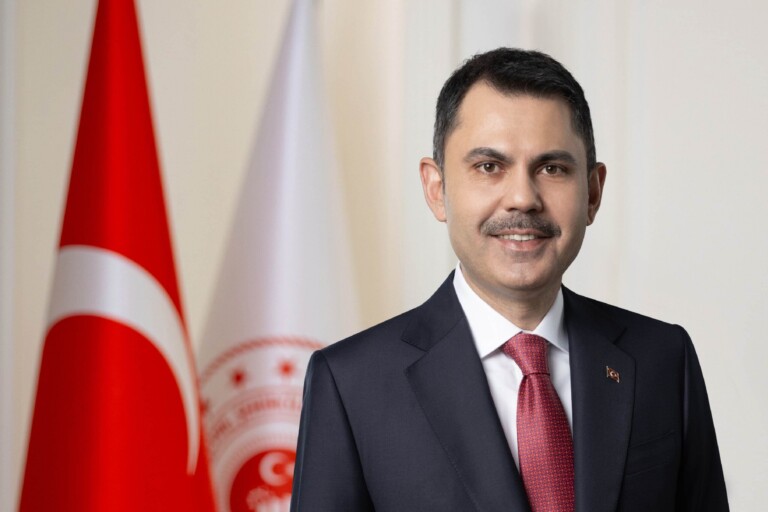
COP31 president Murat Kurum has said that the push to make electrification more “widespread” – through measures like the rollout of electric vehicles and heat pumps – will “automatically” lead to a reduction in the use of fossil fuels. But many campaigners disagree, criticising the proposed pledge for failing to give an explicit signal on the fossil fuel transition.