

Quick Key Facts
- There are nearly 60 million hikers in the United States, according to a report by the Outdoor Foundation and the Outdoor Industry Association.
- America’s National Trails System extends more than 88,600 miles.
- It has 1,300 National Recreation Trails, 19 National Historic Trails and 11 National Scenic Trails. National Scenic Trails are considered long-distance footpaths of more than 100 miles.
- The Appalachian Trail (1921) and Pacific Crest Trail (1932) were the first National Scenic Trails in America.
- At approximately 2,190 miles, the Appalachian Trail is the longest hiking-only trail in the world.
What Is ‘Wilderness Hiking’?

Wilderness hiking is an escape from developed areas into the healing vastness of nature. On a trek through the forest you can expect to experience peace, wonder and awe — all of which are great for the body and mind.
Taking a backpack and venturing into the woods can be a long or short journey of varying levels of difficulty, depending on what you’re in the mood for and what your body is capable of. But don’t underestimate yourself. On a recent steep hike through the Oregon wilderness, I was surprised by a level of energy and endurance I didn’t feel when I started out. By the end of three days of hikes, I found myself bounding down the trail, filled with the kind of vivacity only a ramble through the woods can provide.
How to Prepare & Plan a Backpacking Journey
Supplies

While the image of your hike undoubtedly includes clear blue lakes and streams, magisterial trees and abundant wildlife, you’ll need to be prepared for the unforeseen. Any trip to the woods includes its challenges and risks. Packing essentials will give you peace of mind and the necessary supplies for any sticky situation that may arise.
A good way to estimate how long it will take to complete a hike is to use Naismith’s Rule. This convenient calculation advises an hour for every three miles and another hour for every 1,968.5 feet of ascent. Other considerations include the conditions on the day of your hike, the terrain and the endurance levels of all participating.
What to Wear
Choose your trail clothing according to the season. If there’s one word that applies to all hiking adventures it’s layers, layers, layers. This will include a base, midlayer, insulation and shell. Some items to consider adding to your pack — in addition to good hiking boots — include long underwear, a hoodie or fleece, a light jacket, a minimum of one pair of socks per day and lightweight shoes to wear around the campsite.
You’ll want to adjust for temperature — warm and extra layers for colder hikes and lighter layers in hot weather. Always bring a warm hat and light gloves just in case, and if you’re hiking above the tree line — even in summer — pack or wear an insulated jacket.
Cotton is not recommended for hiking, as it traps moisture and takes a long time to dry when it gets wet, making your skin cold. Wool, silk, nylon, rayon and polyester are all moisture-wicking fabrics that pull sweat and moisture away from the skin to the outer surface so it can evaporate.
To avoid your clothes getting wet, try taking off layers before you get sweaty and slow down to reduce perspiration. Make sure to add shell layers before your clothes get saturated in rain or snow. Store essential layers in a separate waterproof bag in your pack to keep them dry.
What to Bring
Water
You’ll want to not only bring water in your hard-sided or collapsible bottles, but what you’ll need to make additional safe drinking water if you run out or accidentally spill some. When you’re on a longer hike — especially one that involves multiple days — be sure to bring a filter or iodine tablets.
A good rule of thumb is to drink one liter of water every two hours. However, the amount of water you will need will depend on the outdoor temperature and your level of exertion.
Food
You will need plenty of fuel, so pack enough food for how long you plan to be on the trail, plus an extra full day’s worth that can be consumed without cooking.
The contents of the food in your backpack should include a combination of carbohydrates, proteins and fats that are convenient to eat consistently and easily during your hike. While proteins and fats burn more slowly and give us energy longer, carbohydrates provide quick energy that can be followed by a “crash” and tiredness. Depending on your companions, wanting to take a nap during the hike may or may not be acceptable.
Some good snacks to take on your wilderness hike include nuts, trail mix, protein bars, dehydrated fruits, cheese, crackers and chocolate.
Cooking in the Woods
While cooking over a fire is a classic camping activity — and understandably tempting if you’re planning an overnight hike — with all the gear you’ll already be carrying, you may want to keep it simple.
Packing foods that are easy to prepare — like veggie hotdogs, pre-cut vegetables to be cooked in tinfoil and the classic campfire dessert: s’mores — are good options, as are sturdy fruits and vegetables like apples, carrots and juice.
If you do decide to cook over a camping stove or campfire, plan all the meals and snacks for your hike ahead of time. Consider opting for no-cook breakfasts and lunches like yogurt, granola and berries and cheese and crackers, and save dinnertime for a cooked meal.
Instead of bringing bread, think of carbs that won’t get squished as easily like tortillas or fajitas. If you decide to bring canned foods such as black or baked beans, don’t forget the can opener. And remember, every pan and utensil will need to be washed or rinsed, which is always a much more time-consuming process under a spigot than in your sink at home.
While cooking outdoors can be rewarding, the simpler you keep your meals while wilderness hiking and camping, the more time you will have to enjoy the scenery, friends and the stars.
Light

When you go hiking in the wilderness, even if it’s just a day trip, always come equipped with everything you would need to spend an unplanned night in the woods. If you’ve ever been camping, you know that includes a flashlight, headlamp and plenty of extra batteries stored in a waterproof container.
Test your illumination devices before heading out, and start your trek knowing that — even if the sun starts to go down — you’ll still be able to find your way in the dark.
Heat
Another essential if you find yourself spending a planned or surprise night in the forest is the equipment you’ll need to start a fire. Not only will it provide light and warmth, but also protection from certain wild animals — including squirrels, skunks, rats, coyotes and wolves — and the smoke can help repel some insects, like mosquitoes.
Pack a lighter, waterproof matches and candles, as well as kindling in the form of dry tinder like wood chips soaked in resin, petroleum jelly-soaked cotton balls, paper bags or dryer lint.
If you’re hiking somewhere where no firewood will be available, bringing a stove is a good idea. It will serve as a heat source in an emergency, as well as a source of water in snowy terrain.
Preventing Wildfires
Whenever you build a campfire, it’s imperative to be mindful of your surroundings and the conditions — are there any burn bans, safety warnings or regulations in effect?
There are certain conditions in which it is not advisable to start a fire in the woods, including conditions that are too windy or dry — especially if the area where you’ve chosen to hike or camp is experiencing a drought.
Other precautions to take so that your campfire doesn’t turn into a wildfire include putting fire rings in place; keeping the fire small; and building it on open, flat ground away from brush, leaves or logs. Be careful with any equipment that produces sparks, and keep it at least 10 to 25 feet clear of vegetation.
When you’re packing up to leave, make sure to put out your campfire completely, smothering it with dirt or saturating it with water until it’s no longer emitting any flames, embers or heat.
Navigation

While smartphones and GPS watches can come in handy where there is cellular reception, you definitely can’t count on them when you’re in the wilderness. Make sure to pack the essential navigation tools that helped many travelers before the invention of cell phones: an old-fashioned topographical map and compass. And familiarize yourself with how to use them before you leave the parking lot.
Studying your map before you head off can not only make your hike smoother, it can also make it more enjoyable. You’ll know ahead of time where inclines, potential rough spots, restrictions and water sources are located. You can also mark your map when you choose to go in a particular direction at a junction, along with what time you arrived to get a sense of the duration of specific sections of your hike.
Sunscreen
Protecting your skin from the elements includes wearing broad spectrum sunscreen, not only on your body during the warmer months, but on any exposed skin regardless of the weather.
Elevation gains mean more intense exposure to ultraviolet (UV) rays, which get stronger the higher you climb. Higher altitudes have thinner air that absorbs less UV radiation, meaning its intensity goes up by roughly 10 to 12 percent each 3,000 feet.
Sunglasses or goggles with polarized lenses and UV protection are useful for hiking, and can be particularly helpful with glare reflecting off snow and water.
First-Aid Kit

Whether it’s a three-hour day hike or a weeklong backcountry expedition, having an adequate first-aid kit is essential for any wilderness hiking adventure.
Being mindful of your surroundings, staying well-hydrated and wearing proper clothing can prevent many of the accidents, illnesses or injuries that can happen while out in the woods. But even with all the preventative measures in the world, accidents and injuries still happen.
Here are some recommendations for supplies to have with you in case you need to care for yourself or a hiking companion while on the trail. A premade first-aid kit is great, but you might want to supplement it with some of these as well:
- Aspirin to help prevent heart attacks and clotting
- Acetaminophen for pain relief
- Ibuprofen to act as an anti-inflammatory and reduce swelling
- Emergency whistle to call for help
- Bear whistle, in case you encounter one
- Antihistamines such as diphenhydramine
- Imodium anti-diarrhea medication
- Electrolyte powder for rehydration
- ACE bandages
- Band-aids
- Rollers of different-sized gauze
- Medical tape
- Alcohol prep pads
- Non-latex nitrile gloves
- Antibiotic ointment
- Feminine pads for absorption with major cuts or contusions
- Burn gel
- Trauma shears
- Tweezers
- Safety pins
- SAM splint
- A lighter and matches
- Compostable plastic bags to dispose of medical waste
Take the time to familiarize yourself with all the contents of your first-aid kit, and inform your hiking companions of the location of the kit and any personal medications you have with you.
Repair Kit
Before you set off into the wilds, it’s a good idea to familiarize yourself with your hiking gear. Evaluate each piece from the vantage point of what you will do if it breaks and whether or not you have the means and knowhow to fix it.
Some things you can bring to make repairs on the fly include: duct tape — the essential multipurpose adhesive — repair tape for patching tents and rain gear; a folding pocket knife with tools such as a screwdriver and pliers; a needle and thread; extra cloth; scissors; twine; extra batteries; safety pins; a paracord; and zip ties.
Emergency Shelter

Hiking in the wilderness can mean being miles from human development, so you need to be prepared to spend the night out in the elements in case you become stranded or injured.
In the unlikely event this happens, you’ll want to have the necessary equipment to stay warm and dry, including: an emergency space blanket, bivy sack, ultralight tarp, lightweight sleeping bag, inflatable or foam pad, three-season tent and a large trash bag.
How to Register
Before you go on your next wilderness hiking adventure, be sure to check what permits are required.
There are different types of permits depending on which wilderness area you’re planning to visit. Some welcome visitors free of charge, some come with small fees and others require a lottery before you can apply. Areas of some parks operate using a quota system, allowing only a certain number of users or permits to enter at a time.
Most of the sites that the National Park Service manages are free, but some require users to purchase an entrance pass. Others — like Mt. Rainier National Park — ask visitors to obtain a backcountry or wilderness permit. Permits provide a method for regulating foot traffic in environments that are fragile and only able to handle a certain amount of use before they start to erode.
Sites that charge a fee to enter require the purchase of one of the following: a standard pass, an annual pass to a specific park or an America the Beautiful pass. An America the Beautiful pass covers entrance and day-use fees at lands that are managed by the National Park Service, the U.S. Forest Service, the U.S. Fish & Wildlife Service, the Bureau of Land Management, the Bureau of Reclamation and the U.S. Army of Corps of Engineers.
Depending on what type of entrance fee is charged at a site, the pass covers either the fee for one private vehicle or four individual visitors.
For a few high-traffic national park sites, you may need a reservation. Reservations are usually made available here on a rolling basis.
Leave No Trace
Wilderness is for everyone: plants, animals and humans. But while we’re on the trail and before we return to civilization, it’s important to remember to be respectful of the natural world. Its pristine beauty was formed over millennia — before plastics, synthetic chemicals and billions of humans began to tip the balance of trash and toxins polluting the planet to an unsustainable degree.
Following the principles of “Leave No Trace” — a philosophy and set of guidelines to help keep the planet healthy and protect it from being overtrodden, polluted and degraded by humans — is useful when going on a hike into unspoiled wilderness.
There are seven basic principles of Leave No Trace — detailed here — all centered around the basic idea of minimizing your impacts while visiting the outdoors:
- Plan Ahead & Prepare
- Travel & Camp on Durable Surfaces
- Dispose of Waste Properly
- Leave What You Find
- Minimize Campfire Impacts
- Respect Wildlife
- Be Considerate of Others
These well-established principles are not fixed, but are continually being reevaluated and updated according to research and the most recent insights from land managers, biologists and other experts in outdoor education.
Places to Hike
Day Hikes
Some of the most spectacular hiking spots in the U.S. can be found within the country’s 63 national parks, which includes thousands of miles of trails. Here are three picturesque day hikes within the national park system.
Skyline Trail, Mount Rainier National Park, Washington State

Washington State is full of wilderness hikes. It has three national parks — Mount Rainier, Olympic and North Cascades — and more than 120 state parks.
If you want to start off with a strenuous hike with breathtaking views, the 6.2-mile Skyline Trail Loop will take about three to five hours and give you plenty of exercise.
On this stunning hike, which begins in the Paradise area of the park’s south slope, you will walk through evergreen forests, pass Myrtle Falls and climb the slopes of the mountain. Once you reach the aptly named Panorama Point, you will be treated to sweeping views of the park with Oregon’s Mt. Hood in the distance on a clear day.
Grinnell Glacier, Glacier National Park, Montana
Montana is one of the most rugged and unspoiled places in the U.S., and Glacier National Park is a testament to the state’s wild beauty.
The 10.6-mile trail to Grinnell Glacier will take you on an approximately five- to seven-hour trek through alpine wilderness dotted with wildflowers, lakes, waterfalls and the splendid Grinnell Glacier.
On your hike you may encounter a variety of wildlife, including mountain goats, bears and moose.
If this strenuous hike seems a little too long for you, it can be shortened by 3.4 miles by taking a scenic boat ride across Lake Josephine and Swiftcurrent Lake.
Queen’s Garden and Navajo Loop Trail, Bryce Canyon National Park, Utah
For a shorter, less difficult hike that will give you a taste of epic Bryce Canyon, the combined Queen’s Garden/Navajo Trail is an easy to moderate loop that takes about two to three hours to complete. This 2.75-mile hike will bring you into canyons, beneath arches, close to hoodoos and through ancient pine forests.
Longer Hikes
Appalachian National Scenic Trail

If you’re looking for an epic wilderness hike that will take you through many different landscapes and multiple states, the Appalachian Trail (AT) is a definite must. At approximately 2,190 miles, the AT is the longest hiking-only trail on Earth.
The AT brings wilderness hikers through 14 states along the valleys and peaks of the Appalachian Mountains — from Springer Mountain, Georgia, at the southern end of the range to the trail’s northernmost point at Katahdin, Maine.
Each year, more than three million visitors from around the world traverse the AT, with 3,000-plus of them attempting a “thru-hike” of the whole path in one year.

Along the footpath you will experience breathtaking summits like North Carolina’s Clingmans Dome — the highest point on the AT at 6,643 feet. You will encounter the lush forests and billowing waterfalls of the Tennessee stretch of the trail; the verdant greenery of Vermont’s share of the AT; and the vast backcountry of Maine with its valleys, lakes and rivers teeming with wildlife.
Inspired by forester and conservationist Benton MacKaye’s article An Appalachian Trail: A Project in Regional Planning in 1921 and built by private citizens, the AT was completed in 1937. The scenic trail is part of the National Park System, managed through a public-private partnership by the Appalachian Trail Conservancy, U.S. Forest Service, National Park Service, thousands of volunteers and many state agencies.
Hiking the legendary AT with a friend, partner or family member is an unforgettable experience that can create a unique bond with whomever you choose to share this ultimate wilderness hike.

Pacific Crest National Scenic Trail
The Pacific Crest Trail System (PCT) Conference was founded in 1932 by Harvard graduate and Boy Scout Clinton C. Clarke, who was dedicated to preserving part of the Western U.S. for future generations. Clarke envisioned a trail along the mountain ranges of Washington, Oregon and California “traversing the best scenic areas and maintaining an absolute wilderness character.”
PCT Conference founding members included Ansel Adams, the Young Men’s Christian Association (YMCA) and the Boy Scouts. Clarke recommended linking existing trails in each state — the Cascade Crest Trail in Washington, Oregon’s Skyline Trail and the Tahoe-Yosemite and John Muir Trails in California — to create the PCT.
In October of 1968, the National Trail Systems Act — naming the AT and the PCT as the country’s first national scenic trails — was signed by President Lyndon Johnson.
Over the next quarter-century, the PCT Association, other trail organizations, land management agencies and countless volunteers constructed almost 1,000 miles of trail to create the PCT. In 1993, it was finished — a continuous path to be traversed on foot or horseback from Mexico to Canada.
There are five PCT regions: Southern, Central and Northern California; Oregon; and Washington. The varied topography of the PCT includes remote and mostly wild desert, forest, volcanic and alpine landscapes. The Oregon region of the PCT goes through Crater Lake National Park, with a spur tail leading to the rim of the ultra-clear, deep blue lake.
Many species of plants and wildlife can be seen along the PCT, including lizards, snakes, cougars, coyotes, deer, marmots, black bears, martens, badgers, mink, foxes, bobcats, red-tailed hawks, mountain chickadees, Steller’s jay, hummingbirds, nutcrackers, grouse, beaver, elk, grizzly bears, mountain goats and Canada lynx.
In the fall, migrating birds can often be seen flying south via the Pacific Coast flyway.
The terrain of the trail is made vibrant and colorful by its diverse array of vegetation, including red, noble, silver and Douglas fir trees; ponderosa and white bark pine; mountain hemlock; oak; chaparral; lupine; larkspur; paintbrush; gooseberry; corn lily; fireweed; Oregon grape; western larch; and a number of plants from Canada and Alaska, including Alaska grand fir and cedar.
Whether tackled alone or shared with friends and family, the rugged and sublime PCT is a magnificent tour of the best the West Coast landscape has to offer.
Benefits of Wilderness Hiking

Hiking is one of the best and most enjoyable ways to get a great physical workout — it gets your heart rate up, exercises your muscles and joints and improves balance.
Research has shown that spending quality time in nature can reduce stress and improve mental health. Being amongst tall trees and dense, green foliage; feeling the warm sunshine — not to mention getting a healthy dose of vitamin D; hearing the sound of water moving through the woods; and being surrounded by the smell of leaves and soil have proven physical, mental and emotional benefits that can provide a sense of peace and wellbeing and boost your mood. In fact, being surrounded by trees, plants, water and soil is so healing, it can even be prescribed by a doctor.
So grab a human or furry friend, get out on the trail and immerse yourself in the restorative and energizing power of nature!

Takeaway
Whether you go solo or with a group, taking the time to go on a hike through the wilderness has the power to rejuvenate and inspire.
But before you set off on your next wilderness trek, be sure you have everything necessary to be comfortable, protected and well-nourished. And prepare for the unexpected — it can be the difference between an experience akin to Gentle Ben or The Blair Witch Project.

The post Wilderness Hiking 101: Everything You Need to Know appeared first on EcoWatch.
https://www.ecowatch.com/wilderness-hiking-tips-ecowatch.html

These brands have all types of sustainable socks for just about all of your footwear or around-the-house needs, from no-shows and performance-ready ankle socks to comfy crew-length and cozy knee-high socks.
I originally wrote this guide about four years ago, and I must say that sustainable socks have upped their game since then. We’ve been able to raise the bar on what it takes to get included in this guide.
What Qualifies as (More) Sustainable Socks?
There are several criterion I’ve used to determine the brands in this guide. Some brands meet several of these criteria and some even meet all of the criteria below.
- Use of at least 70% natural and organic materials, like organic cotton, hemp, and organic wool
- Uses certified organic materials and sources from certified GOTS (Global Organic Textile Standard) factories and/or Fair Trade factories
- Minimal to no use of synthetic fibers, preferring recycled when there are some synthetics used
- Use of either no dyes, natural dyes or low impact dyes
- Responsibly manufactured, ideally locally made or produced in fair trade environments
You’ll find that most of the sustainable socks in this guide do have a small percentage of synthetics for some stretch. (Though there are three brands with 100% organic cotton socks — check them out below!) I like to use a Guppyfriend Washing Bag to prevent the microplastics from synthetic textiles from being released into our waterways.
In case you have sensitive skin or want a pair of organic socks with an even lower environmental impact, there are also several brands with dye-free sock options.
As mentioned, the brands featured in this guide have all types of socks whether you’re looking for breathable moisture-wicking socks to play tennis in or comfy socks to cuddle up and say warm with. However if you’re looking for more substantial slippers, my guide to eco-friendly and ethical slippers will be a better bet.
The guide features affiliate links. As always, we only feature brands that meet high standards for sustainability that we love — and that we think you’ll love too!
Where to Find Sustainable and Organic Socks
1. Cottonique
Best for: latex-free organic cotton socks for sensitive skin
Materials: 100% GOTS-Certified Organic Cotton
Price: $18 for Kids (3 pairs) | $23-$28 for Adults (2 pairs)
Categories: Quarter, Crew, Ankle, Kids
Cottonique is the only brand I’ve found so far that sells exclusively 100% organic cotton socks. Founded by and designed for individuals with skin sensitivities, Cottonique’s socks are free of latex, spandex, or any other synthetic stretch.
The socks are also OEKO-TEX Standard 100 certified and sewn in the brand’s owned GOTS- and B Corp-certified factory in the Philippines.
I tried out the brand’s crew-length socks and found them to be quite comfortable, and I appreciated the ribbed detail. Without elastic for stretch, they fit snug in order to stay in place, so it’s important to get the right size! I wear a shoe size 7.5-8 and the medium was perfect.

2. Q for Quinn
Best for: soft, dye-free organic cotton socks
Materials: 98 – 100% Organic Cotton
Price: Kids’ from $10 | Adults from $15 / Pair
Categories: Ankle, Crew, and Trouser Socks
Made from 98% GOTS-certified organic cotton (with one pair of socks made of 100% cotton), Q for Quinn’s socks are breathable and super soft. One reviewer calls them the “softest socks I’ve ever worn!” and hundreds of other customers giving five-star reviews seem to agree.
Q for Quinn also has organic dye-free adult and kids’ socks perfect for sensitive skin.

3. Maggie’s Organics
Best for: 100% merino wool socks
Materials: 73% – 99.8% Organic Cotton | 60 – 100% Organic Merino Wool
Price: From $8.50 / Pair
Categories: Footie, Ankle and Crew Socks; plus Allergy, Recovery, and Diabetic
Sourcing GOTS-certified organic fibers and knitting all of their socks in the US, Maggie’s Organics is the real deal when it comes to sustainably-made socks.
The company is also committed to “Real Fair Trade” — they invest in the wellbeing of their farmers and suppliers and are on a journey to become employee-owned.

4. Rawganique
Best for: 100% natural fiber socks (cotton, linen, and wool)
Materials: 100% Organic Cotton, 100% Hemp, and 100% Wool Options
Price: From $12 / Pair
Categories: Anklet, Crew, Knee-High, and Dress Socks
If you’re looking for plastic-free socks, you will love Rawganique. The brand has several options of 100% natural fiber socks that are free of polyester, spandex, or nylon. Select from breathable 100% organic cotton socks, temperature-regulating 100% linen socks, or cozy 100% wool socks.
There are also several options of organic socks blended with a bit of synthetics for some stretch. These options will likely be more suitable for sport and hiking use.

5. Organic Basics
Best for: core-color basics with recycled synthetic blends
Materials: 70 – 75% Organic Cotton
Price: From $14 for 2-Pack
Categories: No-Show, Ankle, Crew, and Knee-High Socks
Focused on only the essentials — and doing them well — Organic Basics creates a range of quality organic socks in core colors like black, gray, blue and white. While these (more) sustainable socks do contain a percentage of synthetics, the majority of the synthetic content is recycled. I also appreciate that the product pages suggest a cooler washing temperature of 30C since clothing care and cleaning can make up a significant portion of a product’s total impact.

6. PACT
Best for: GOTS-certified organic no-show socks
Materials: 75 – 83% Organic Cotton
Price: From $14 for 2-Pack
Categories: No-Show and Crew Socks
PACT’s organic cotton no-show socks are made in a Global Organic Textile Standard certified factory. The no-show pairs come in basic black, white, and tan as well as some cute prints. They feature a new design and silicone grips to make sure they stay in place. That said, the socks unfortunately only come in one size — some of the reviewers who wear a shoe size 9 note that they are a bit too small for them.

7. Harvest & Mill
Best for: Naturally-colored dye-free cotton socks
Materials: 88% Organic Cotton
Price: $10 – $12 / Pair
Categories: Ankle and Crew Socks
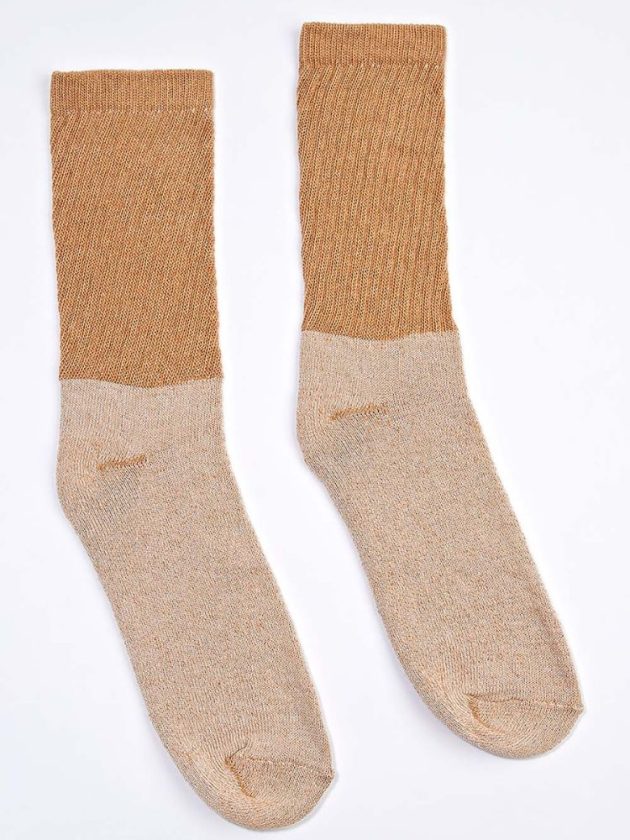
Sustainable basics brand Harvest & Mill uses USA-grown and spun cotton for their ankle and crew organic socks. While these socks might look dyed with their earthy colors, they are actually completely dye-free — the natural color cotton varieties Harvest & Mill uses are naturally a muted brown or green.
8. tentree
Best for: hemp-blend white socks that plant trees
Materials: 71% Hemp and TENCEL Lyocell
Price: $10 – $14 for 2-Pack
Categories: Ankle, Quarter, and Crew Socks
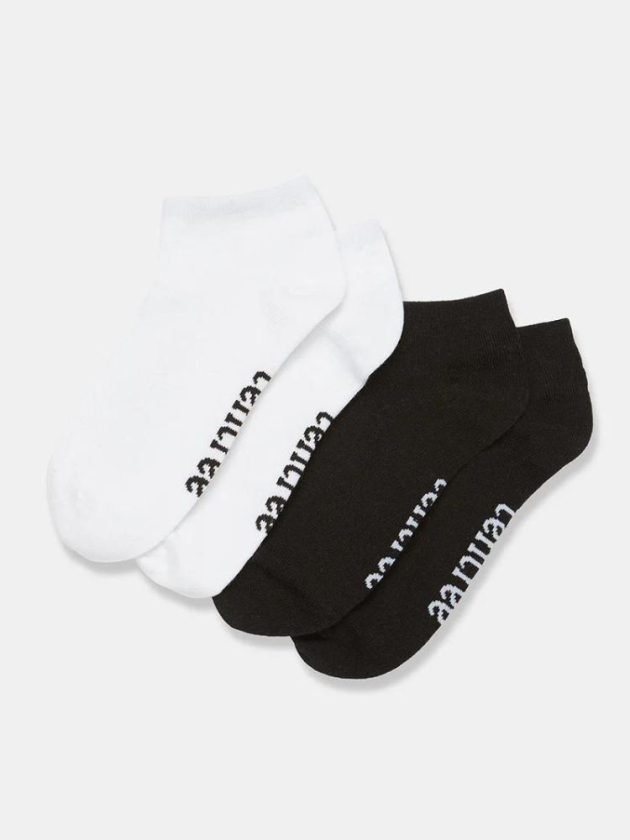
Socks are the crucial foundation of any closed-toe shoe and tentree’s basics are here to ensure you’re always putting your best foot forward. Crafted from a comfortable blend of hemp, TENCEL Lyocell, recycled polyester, their socks come in several lengths in basic pairs.
Plus, every pair plants 10 trees (the reason for their namesake ten-tree).
9. Conscious Step
Best for: giftable cause-driven organic socks
Materials: 75% Organic Cotton
Price: $15.95 / pair
Categories: Ankle and Crew Socks
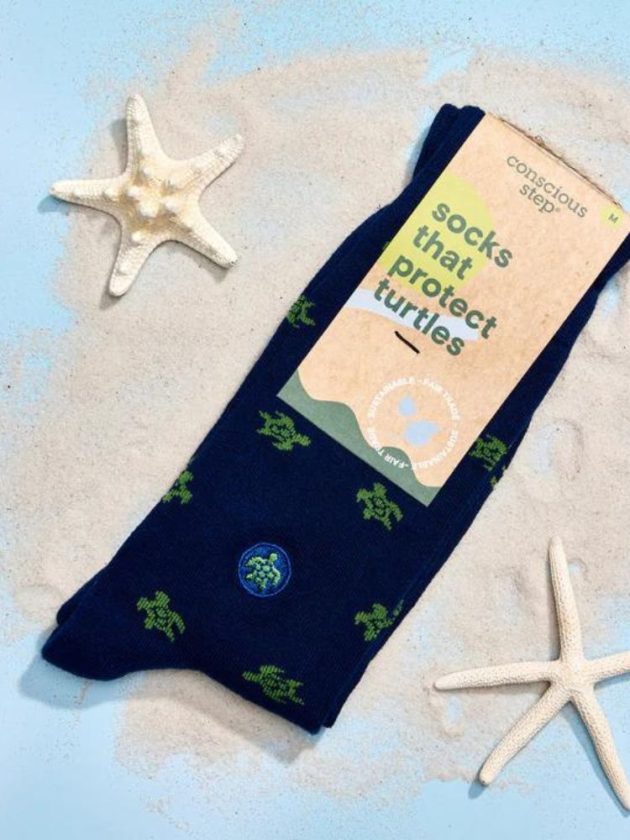
Conscious Step’s socks are made with Fairtrade and GOTS-certified organic cotton and recycled polyester. The brand’s organic cotton socks are made with an exceptional quality too — with some even featuring a cushioned insole and arch support. But perhaps what this brand is really known for is that each design is associated with a different cause where a portion of your purchase goes.
10. Kind Socks
Best for: organic socks with fun prints
Materials: 80% Organic Cotton
Price: $12 – $14 / pair
Categories: Crew and Ankle Socks
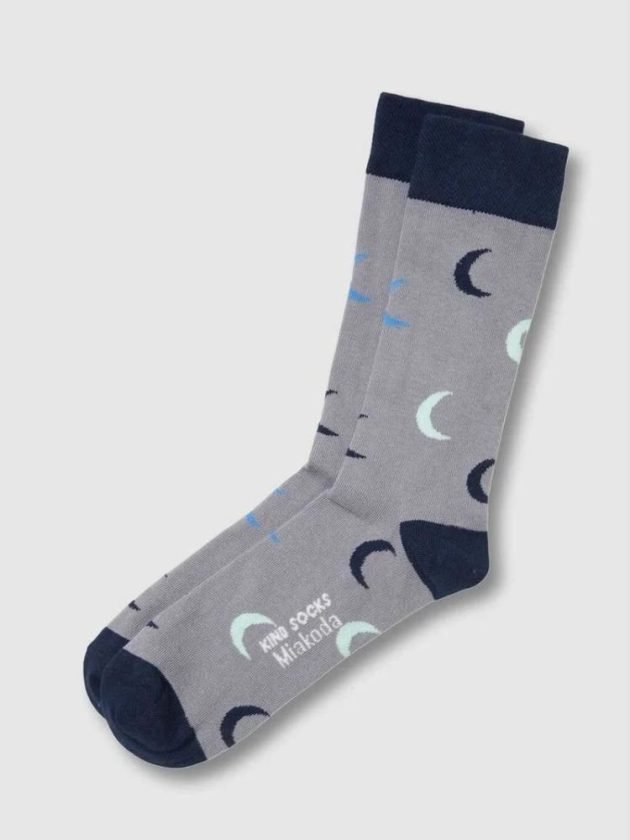
KIND Socks is a Black-owned sustainable sock brand using GOTS-certified organic cotton for their vibrant collections. With prints like monstera leaves, watermelons, and bumblebees, KIND Socks will bring a touch of whimsy to any outfit.
The post 10 Sustainable Socks Made with Organic Fabrics appeared first on Conscious Life & Style.
When the temperatures go up, all I want to reach for is natural fibers — specifically, my linen clothing. There’s nothing quite as breathable or breezy as linen. So in this guide I break down what to know about this quintessential summer fiber, and share my top selections for linen clothing brands. They’re all small to mid-sized brands, mostly women-led!
Some Background on Linen
Where does linen come from?
Linen fiber is extracted from the stalks of flax plants. This plant is also known for providing us with nutritious flaxseeds and linseed oil — talk about an overachiever!
In fact, linen is one of the oldest fibers known to man, dating back to the prehistoric era. Archaeologists and paleobiologists have discovered flax fibers during excavations that were twisted, indicating they were used to make ropes or strings among many proposed applications that must have been a great advantage to the hunter-gatherer society. In fact, linen wrappings were even used for mummification in ancient Egypt.
Linen fabric is then created by obtaining its fibers from the inner bark (or stalks) of the flax plant.
How is the linen cloth made?
Before the fibers are spun into the breezy linen you know and love, its fibers are loosened and separated from the rest of the stalk through a process known as “retting”. At that point, the fibers are still straw-like and coarse in texture.
To soften it, the fibers are broken up into small, short bits, while the actual fiber is left unharmed, and then “scutched”, where the straw is scraped off the fiber. After which they are then pulled through “hackles”, that comb the straw out of the fiber to finally prepare flax for spinning into linen fabric.
And linen clothing is, of course, garments comprised of linen fiber in its entirety or blended with other fibers. For this guide, I tried to select brands that only used 100% linen or at the minimum blended linen with other natural fibers like cotton.
The Benefits of Linen Clothing
Why wear linen? Known for being ideal during the summers, clothing made from linen will allow heat to escape from the body while absorbing moisture and drying relatively quickly. While linen may have a notorious reputation for wrinkling rather quickly, when blended with other fibers, the creases aren’t as discernible as they would be with pure linens.
While linen may be notorious for its high energy consumption owing to its need to be ironed more, linen clothing’s pros easily outweigh its cons.
Flax plants can be grown in the harshest of climate conditions that require minimum water. What’s more impressive is the plant’s ability to absorb carbon. The European Confederation of Flax and Hemp (CELC) states that one hectare of flax absorbs 3.7 tons of CO2 every year.
Is Linen More Sustainable Than Cotton?
While there are benefits and drawbacks to every fiber when it comes to environmental sustainability, there are a few points where linen stands out when compared to cotton.
First, we know that durability is a key aspect of sustainability, because it means our clothes will last, enabling us to keep our clothes longer and buy new clothing less frequently.
So how long does linen clothing last in comparison to cotton? Linen clothing is up to 12 times stronger than cotton, helping increase its longevity and taking away the need to be replaced so often.
Another question might be about flax’s water usage. While the irrigation needs of the crop are dependent on the region’s climate (just as with cotton), 450–750 mm of water per season is sufficient for flaxseed. In fact, some studies even indicate that flax could be regarded as a drought-tolerant crop.
How to Care for Linen Clothing
When it comes to caring for linen clothing, linen can be washed on a gentle machine cycle with a mild detergent. (Check out these low waste low-impact detergent options.)
In case you’re curious whether linen stretches or shrinks, then there isn’t much to worry about. Linen is mostly pre-shrunk during the manufacturing stages but pure linens may show about 4% shrinkage.
And when it comes to stretch, linens aren’t known to stretch out over time but can show some level of elasticity when blended with other fibers.
Finally, it’s no secret that linen clothing tends to wrinkle easily! You may choose to embrace the natural characteristics of linen and wear your linen clothing as is, or if you want a crisper look, you may either want to look for a linen blended fabric, or be prepared to steam and/or iron your garments relatively frequently.
Note: This guide includes partners and/or affiliates. As always, brands must meet high standards for sustainability and ethics — and I only share brands that I believe in.
How to Find Sustainable Linen Clothing
So of course, I’m a big advocate for “secondhand first” when it comes to all fashion, including linen clothing. While your local thrift store might not be filled with 100% linen clothes, online secondhand shops can be a great resource. For luxury and premium brands, Vestiaire Collective and The RealReal. For more affordable options, my favorite pick is ThredUp because you can filter by natural fibers only. To be clear: the listings aren’t always accurate, so I still double check the descriptions of any product that shows up with that filter, but it does save some time to start there.
When looking for new linen clothing, I always prioritize small to mid-size women-led businesses. And I check the product details to see if they use 100% linen or if they’re deceptively saying “linen blend” and then it’s actually 50% polyester!
And while not perfect you can also look for certifications. These are the ones most relevant to linen clothing and linen fashion brands.
OEKO-TEX Standard 100 certifies that the finished textile product has been tested for harmful substances (heavy metals, formaldehyde, pesticide residue). This is a chemical-safety certification, not a guarantee of fair labor or environmental practices. So it tells you the linen has been tested for potentially toxic chemicals, but it doesn’t tell you who made it or how. Note that some brands just say “OEKO-TEX certified” — that virtually always refers to OEKO-TEX Standard 100, the most common certification from OEKO-TEX.
GOTS (Global Organic Textile Standard) certifies that a textile contains a minimum percentage of certified organic fiber and meets environmental and social criteria through processing. It’s the standard for verifying a fabric is genuinely “organic,” not just marketed that way.
B Corp certifies the company as a whole against social and environmental performance standards (labor, governance, environmental impact). This is a business-level cert, not a product-level one, so it doesn’t speak to any single garment’s materials.
Fair Trade Certified verifies that the specific factory/facility producing the item meets standards for labor conditions, wages, and worker safety, and that a Community Development Premium is paid to workers. It’s a labor and production-facility certification. It doesn’t certify the fabric’s environmental footprint or chemical content (that’s what OEKO-TEX covers), so a garment can carry both certifications and they’re speaking to different things.
Where to Find Eco-Friendly Linen Clothing
I scoured through dozens of brands to find my top picks for brands with sustainably-crafted linen clothing for women (some have men’s clothing too). I’ve included their conscious qualities, what they’re best for, and any caveats so you can make the best decision for yourself. Keep in mind while shopping that 100% linen garments won’t have any stretch — so if you run between sizes, I’d default to sizing up. But of course, check the size chart and reviews for each brand!
1. Linen Handmade Studio
Best for: tailored, elevated linen clothing
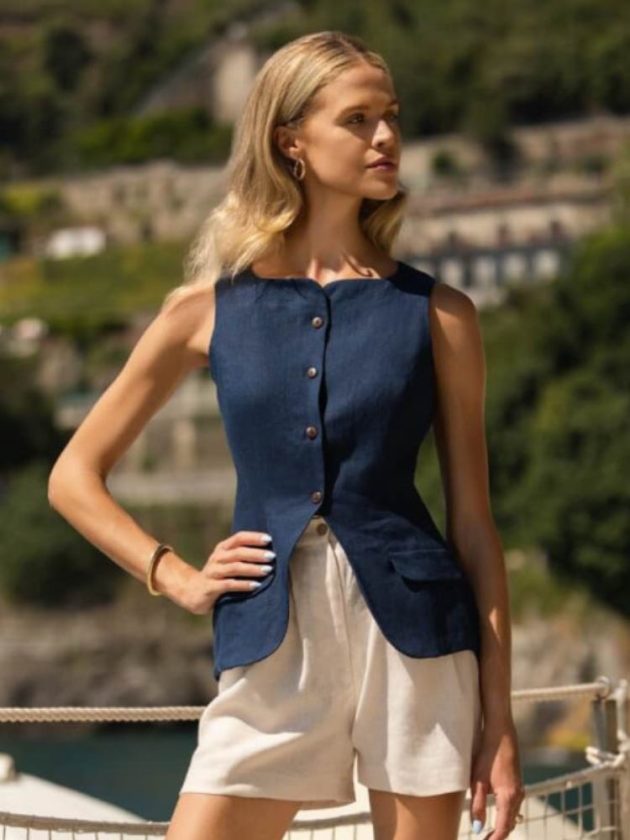
A lot of linen clothing can feel quite casual. And while Linen Handmade studio does have relaxed-fit options, what differentiates the brand in my opinion is their tailored options. I often hear from conscious readers that they want to wear natural fibers to work, but they can’t find something nice enough. Enter in: Linen Handmade Studio’s tailored pieces.
The brand has linen blazers and jackets, linen vests, and linen pants elevated enough for work or an evening out. (They even have bridesmaid dresses.) I’ve been wearing their Evelyn Longline Linen Vest in red clay on repeat and gotten so many compliments on it.
Price Range: $68 – $305
Size Range: US 2-18 (runs slightly small, I’d size up!)
Based in: Lithuania | Ships: Internationally; free U.S. shipping on orders $300+
2. MATE
Best for: casual GOTS-certified organic linen clothing
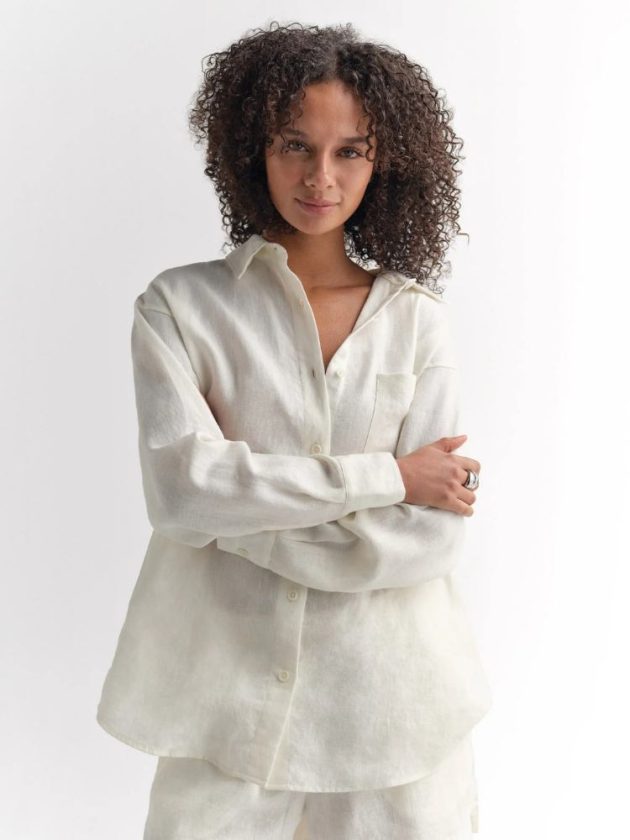
Prioritizing natural non-toxic materials, MATE has a collection of effortless linen shorts, button-downs, and pants made from GOTS-certified organic linen and colored with low-impact dyes.
That means that the color options at MATE are a bit more limited than you might see at other brands. They carry white, black, and “dune” — a soft beige.
I have their organic linen button-down in white and it’s been a reliable staple for me the past two years that’s held up beautifully.
Price Range: $88 – $178
Size Range: XS – XL
Based in: U.S. | Ships: Internationally
3. Linen Fox
Best for: romantic pastoral clothing in trend-forward colors and prints
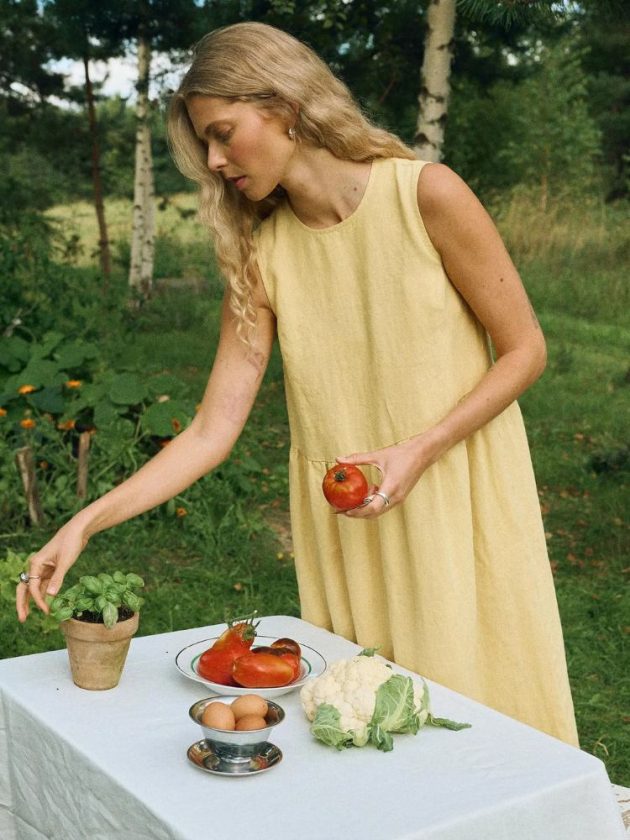
Linen Fox is a Lithuanian small independent fashion brand — their team of 16 people make all of their linen clothing — including womenswear, menswear, and kids clothes.
The brand’s garments are made from OEKO-TEX Standard 100 certified linen fabric. The label follows fair trade principles to production and reduces fabric waste by selling their fabric scraps as samples, and crafting accessories like scrunchies. They also ship in 98% plastic-free packaging.
Price Range: $74 – $187
Size Range: XS – XL (several products fit oversized; check each description!)
Based in: Lithuania | Ships: Internationally
4. Magic Linen
Best for: linen separates plus matching home linens
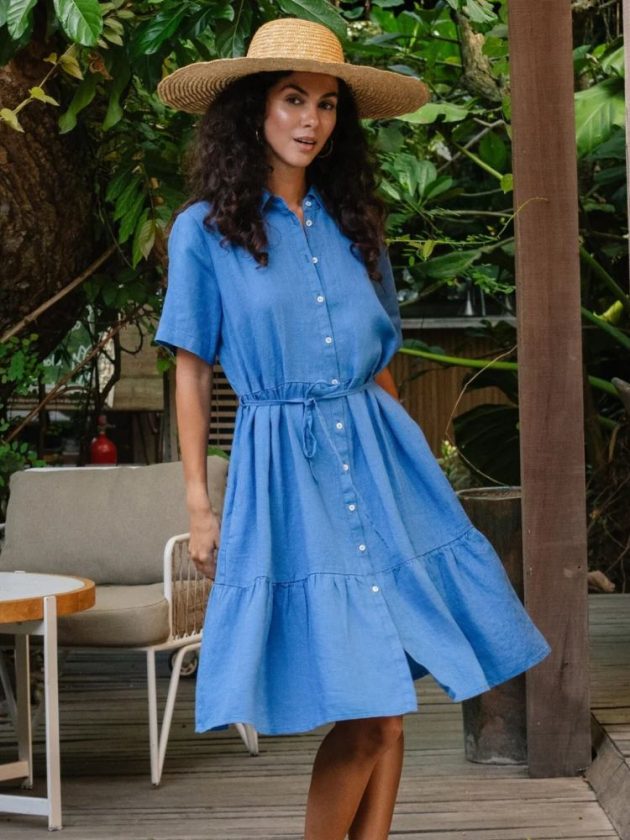
From classic linen shirts to linen aprons and linen pajamas, Magic Linen is your destination for finding summer-ready sustainable linen clothing for men or women.
The small business’ linen clothing is made with European flax linen certified by OEKO-TEX Standard 100.
The Etsy shop also has plenty of linen home goods — I have linen curtains and bedsheets from Magic Linen and the quality of the fabric has been fantastic, with the sheets holding up well even after years of washing.
Price Range: $93 – $298
Size Range: XS – XXL
Based in: Lithuania | Ships: Internationally
5. Beaumont Organic
Best for: European-made linen clothing with full factory transparency
Looking for breathable garments perfect for your summer getaway to the English countryside or sea? Look no further than Beaumont Organic.
Beaumont Organic is a UK slow fashion brand with garments made from natural fabrics, like flax linen clothing! The brand publishes a directory of the factories they source from — 97% of production takes place in Northern Portugal.
They also have a repair program and are launching a resale program (currently available within the UK only).
Price Range: $211 – $300
Size Range: XS – L
Based in: UK | Ships: Internationally
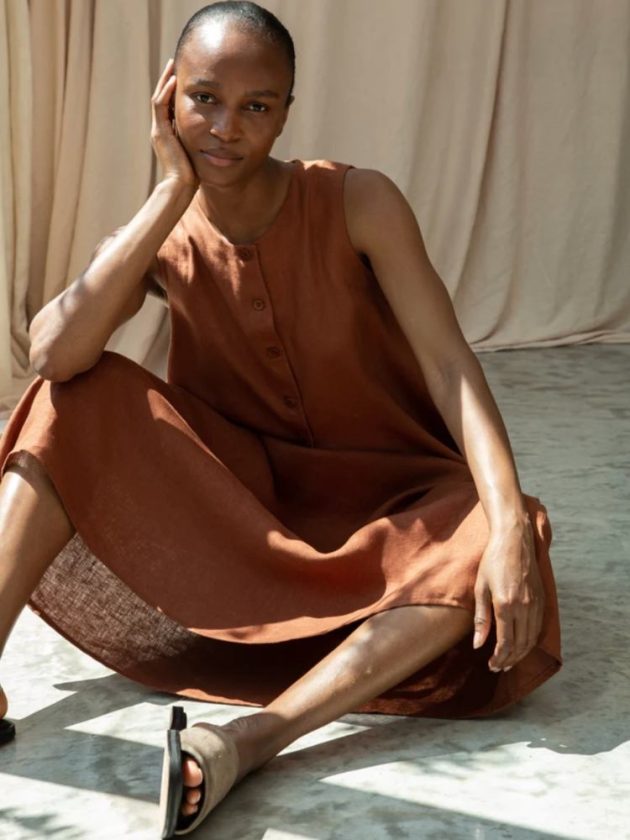
6. LoveAndConfuse
Best for: feminine style linen clothing
The linen clothing from this lovely small Lithuanian brand on Etsy are truly swoon-worthy!
From wrap dresses to ruffled midi’s to high-waisted linen shorts and linen crop tops, their collection of linen fashion will have you dreaming of a slow travel escape to somewhere warm and sunny.
Price Range: $116 – $225
Size Range: XS – XL
Based in: Lithuania | Ships: Internationally
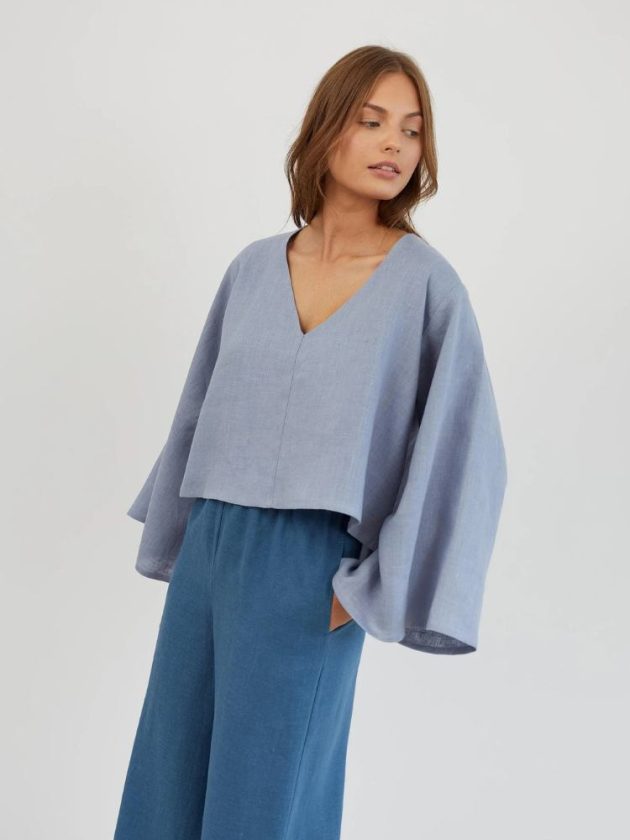
7. Neu Nomads
Best for: classic linen garments and resortwear
With a mission to create simple, sustainable luxury, Neu Nomads offers quality classics made from earth-minded materials, including 100% OEKO-TEX Standard 100-certified linen.
You’ll find linen trousers, effortless shirts, resort-ready kaftans, and tailored linen blazers in classic colors like white, black, olive, and bright coral.
Price Range: $159 – $359
Size Range: XXS – XXL
Based in: U.S. | Ships: Internationally
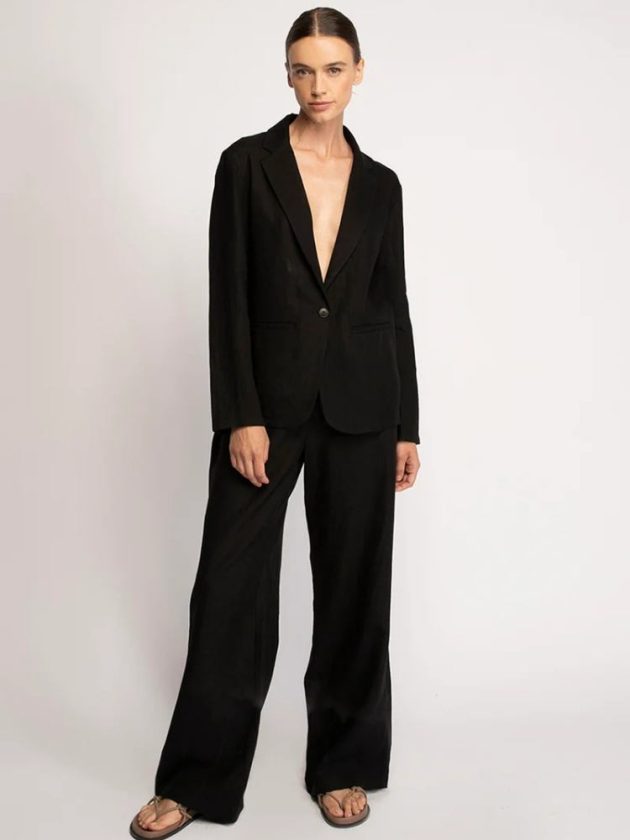
8. EILEEN FISHER
Best for: classic linen clothing with circularity programs
Slow fashion brand EILEEN FISHER has elegant, minimalistic garments made from eco-minded fabrics including organic linen. Several of the pieces are made in Fair Trade Certified factories.
This is the largest company on the list, but still considered a medium-sized enterprise — and, of course, this namesake label is woman-founded.
EILEEN FISHER’s organic linen clothing is timeless and made with quality, as part of their circularity efforts. In addition to ensuring their pieces last, the brand also has a resale program called Renew and a “third life” program that repurposes unwearable garments into unique artwork and other goods.
Price Range: $98 – $268
Size Range: XXS – XL
Based in: U.S. | Ships: Within U.S.
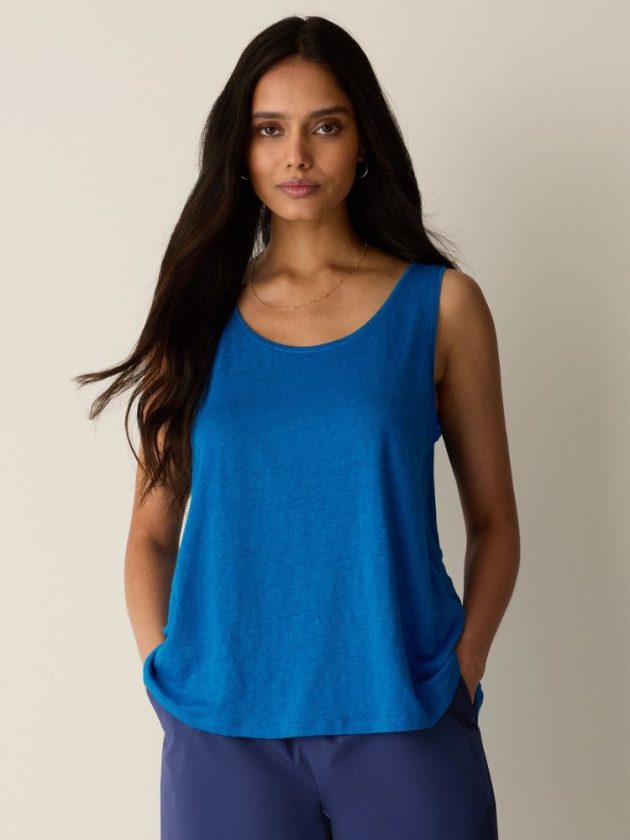
Your Questions, Answered:
What about Quince’s linen clothing?
While Quince offers more affordable linen clothing, in my experience their linen clothing is ok quality, but does not compare with the quality of some of the other brands on this list. Also, I personally want to prioritize women-led small businesses for my guides, not venture-backed billion-dollar companies.
Should I look for organic linen clothing?
While organic linen is wonderful, it is quite rare. Only two brands on this list use certified organic linen. Note that OEKO-TEX Standard 100 linen is not “organic” linen, but rather linen clothing that has been tested against common harmful substances. The most common certification for organic fiber clothing is Global Organic Textile Standard, or GOTS.
Is there any linen clothing that’s work-appropriate?
This one depends on your work place’s dress code, but there are a few options on this list with linen blazers, trousers, and other more tailored pieces like Linen Handmade Studio and Neu Nomads.
More Sustainable Clothing Guides:
The Best Organic Cotton Fashion Brands
Actually Fashionable Hemp Clothing Brands
The post 8 Best Linen Clothing Brands With Easy Breezy, Beautiful Pieces appeared first on Conscious Life & Style.
9 Best Linen Clothing Brands With Easy Breezy, Beautiful Pieces
Breezy, light, and breathable, we take a deep dive into how one of the best summer fabrics fares when it comes to sustainability while discovering these brands that are doing right by linen.
Some Background on Linen
Where does linen come from?
Linen fiber is extracted from the stalks of flax plants. This plant is also known for providing us with nutritious flaxseeds and linseed oil — talk about an overachiever!
In fact, linen is one of the oldest fibers known to man, dating back to the prehistoric era. Archaeologists and paleobiologists have discovered flax fibers during excavations that were twisted, indicating they were used to make ropes or strings among many proposed applications that must have been a great advantage to the hunter-gatherer society. In fact, linen wrappings were even used for mummification in ancient Egypt.
Linen fabric is then created by obtaining its fibers from the inner bark (or stalks) of the flax plant.
How is the linen cloth made?
Before the fibers are spun into the breezy linen you know and love, its fibers are loosened and separated from the rest of the stalk through a process known as “retting”. At that point, the fibers are still straw-like and coarse in texture.
To soften it, the fibers are broken up into small, short bits, while the actual fiber is left unharmed, and then “scutched”, where the straw is scraped off the fiber. After which they are then pulled through “hackles”, that comb the straw out of the fiber to finally prepare flax for spinning into linen fabric.
And linen clothing is, of course, garments comprised of linen fiber in its entirety or blended with other fibers. For this guide, I tried to select brands that only used 100% linen or at the minimum blended linen with other natural fibers like cotton.
The Benefits of Linen Clothing
Why wear linen? Known for being ideal during the summers, clothing made from linen will allow heat to escape from the body while absorbing moisture and drying relatively quickly. While linen may have a notorious reputation for wrinkling rather quickly, when blended with other fibers, the creases aren’t as discernible as they would be with pure linens.
While linen may be notorious for its high energy consumption owing to its need to be ironed more, linen clothing’s pros easily outweigh its cons.
Flax plants can be grown in the harshest of climate conditions that require minimum water. What’s more impressive is the plant’s ability to absorb carbon. The European Confederation of Flax and Hemp (CELC) states that one hectare of flax absorbs 3.7 tons of CO2 every year.
Is Linen More Sustainable Than Cotton?
While there are benefits and drawbacks to every fiber when it comes to environmental sustainability, there are a few points where linen stands out when compared to cotton.
First, we know that durability is a key aspect of sustainability, because it means our clothes will last, enabling us to keep our clothes longer and buy new clothing less frequently.
So how long does linen clothing last in comparison to cotton? Linen clothing is up to 12 times stronger than cotton, helping increase its longevity and taking away the need to be replaced so often.
Another question might be about flax’s water usage. While the irrigation needs of the crop are dependent on the region’s climate (just as with cotton), 450–750 mm of water per season is sufficient for flaxseed. In fact, some studies even indicate that flax could be regarded as a drought-tolerant crop.
How to Care for Linen Clothing
When it comes to caring for linen clothing, linen can be washed on a gentle machine cycle with a mild detergent. (Check out these low waste low-impact detergent options.)
In case you’re curious whether linen stretches or shrinks, then there isn’t much to worry about. Linen is mostly pre-shrunk during the manufacturing stages but pure linens may show about 4% shrinkage.
And when it comes to stretch, linens aren’t known to stretch out over time but can show some level of elasticity when blended with other fibers.
Finally, it’s no secret that linen clothing tends to wrinkle easily! You may choose to embrace the natural characteristics of linen and wear your linen clothing as is, or if you want a crisper look, you may either want to look for a linen blended fabric, or be prepared to steam and/or iron your garments relatively frequently.
Note: This guide includes partners and/or affiliates. As always, brands must meet high standards for sustainability and ethics — and I only share brands that I believe in.
How to Find Sustainable Linen Clothing
So of course, I’m a big advocate for “secondhand first” when it comes to all fashion, including linen clothing. While your local thrift store might not be filled with 100% linen clothes, online secondhand shops can be a great resource. For luxury and premium brands, Vestiaire Collective and The RealReal. For more affordable options, my favorite pick is ThredUp because you can filter by natural fibers only. To be clear: the listings aren’t always accurate, so I still double check the descriptions of any product that shows up with that filter, but it does save some time to start there.
When looking for new linen clothing, I always prioritize small to mid-size women-led businesses. And I check the product details to see if they use 100% linen or if they’re deceptively saying “linen blend” and then it’s actually 50% polyester!
And while not perfect you can also look for certifications. These are the ones most relevant to linen clothing and linen fashion brands.
OEKO-TEX Standard 100 certifies that the finished textile product has been tested for harmful substances (heavy metals, formaldehyde, pesticide residue). This is a chemical-safety certification, not a guarantee of fair labor or environmental practices. So it tells you the linen has been tested for potentially toxic chemicals, but it doesn’t tell you who made it or how. Note that some brands just say “OEKO-TEX certified” — that virtually always refers to OEKO-TEX Standard 100, the most common certification from OEKO-TEX.
B Corp certifies the company as a whole against social and environmental performance standards (labor, governance, environmental impact). This is a business-level cert, not a product-level one, so it doesn’t speak to any single garment’s materials.
Fair Trade Certified verifies that the specific factory/facility producing the item meets standards for labor conditions, wages, and worker safety, and that a Community Development Premium is paid to workers. It’s a labor and production-facility certification. It doesn’t certify the fabric’s environmental footprint or chemical content (that’s what OEKO-TEX covers), so a garment can carry both certifications and they’re speaking to different things.
Where to Find Eco-Friendly Linen Clothing
I scoured through dozens of brands to find my top picks for brands with sustainably-crafted linen clothing for women (some have men’s clothing too). I’ve included their conscious qualities, what they’re best for, and any caveats so you can make the best decision for yourself. Keep in mind while shopping that 100% linen garments won’t have any stretch — so if you run between sizes, I’d default to sizing up. But of course, check the size chart and reviews for each brand!
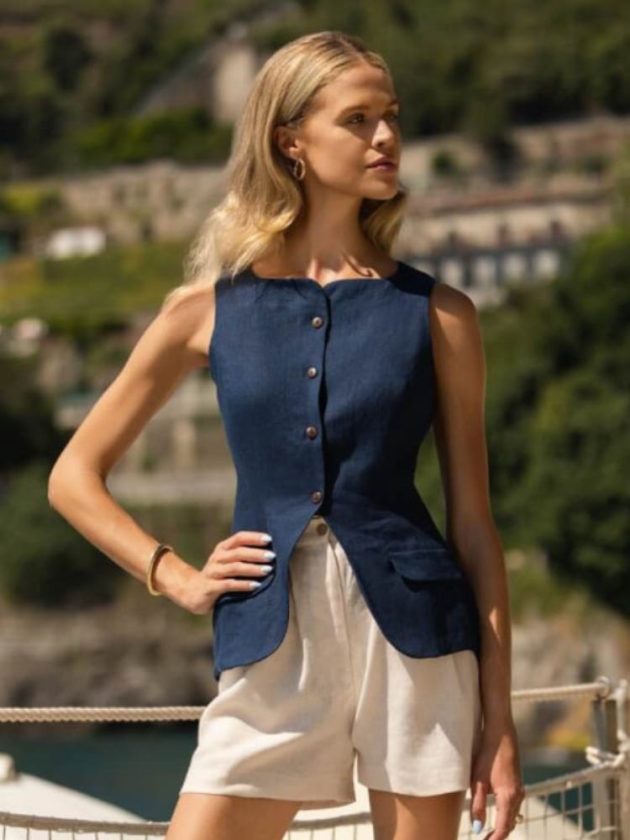
1. Linen Handmade Studio
Best for: tailored, elevated linen clothing
A lot of linen clothing can feel quite casual. And while Linen Handmade studio does have relaxed-fit options, what differentiates the brand in my opinion is their tailored options. I often hear from conscious readers that they want to wear natural fibers to work, but they can’t find something nice enough. Enter in: Linen Handmade Studio’s tailored pieces.
The brand has linen blazers and jackets, linen vests, and linen pants elevated enough for work or an evening out. (They even have bridesmaid dresses.) I’ve been wearing their Evelyn Longline Linen Vest in red clay on repeat and gotten so many compliments on it.
Price Range: $68 – $305
Size Range: US 2-18 (runs slightly small, I’d size up!)
Based in: Lithuania | Ships: Internationally; free U.S. shipping on orders $300+
2. MATE
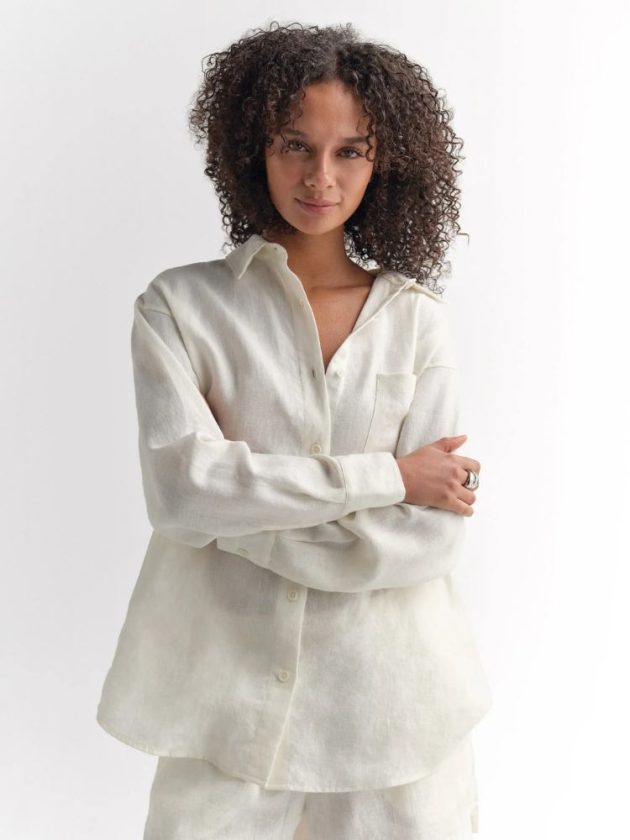
Best for: casual GOTS-certified organic linen clothing
Prioritizing natural non-toxic materials, MATE has a collection of effortless linen shorts, button-downs, and pants made from GOTS-certified organic linen and colored with low-impact dyes.
That means that the color options at MATE are a bit more limited than you might see at other brands. They carry white, black, and “dune” — a soft beige.
I have their organic linen button-down in white and it’s been a reliable staple for me the past two years that’s held up beautifully.
Price Range: $88 – $178
Size Range: XS – XL
Based in: U.S. | Ships: Internationally
3. Linen Fox
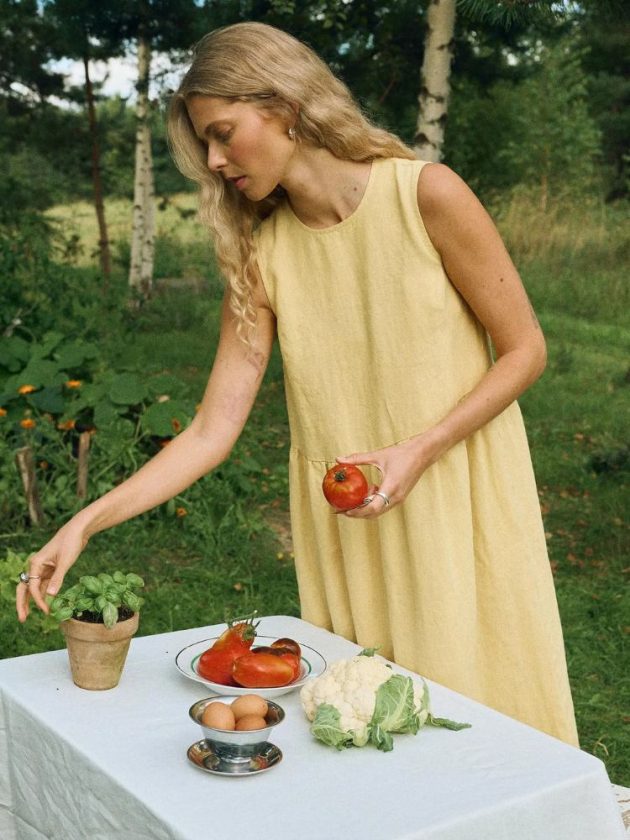
Best for: romantic pastoral clothing in trend-forward colors and prints
Linen Fox is a Lithuanian small independent fashion brand — their team of 16 people make all of their linen clothing — including womenswear, menswear, and kids clothes.
The brand’s garments are made from OEKO-TEX Standard 100 certified linen fabric. The label follows fair trade principles to production and reduces fabric waste by selling their fabric scraps as samples, and crafting accessories like scrunchies. They also ship in 98% plastic-free packaging.
Price Range: $74 – $187
Size Range: XS – XL (several products fit oversized; check each description!)
Based in: Lithuania | Ships: Internationally
4. OhSevenDays
Best for: deadstock linen with custom sizing available
OhSevenDays was founded by Megan Mummery after seeing the vast supply of surplus fabrics (i.e. deadstock) in Istanbul, Turkey.
While originally sourcing their deadstock fabric from middleman sellers, OhSevenDays now sources their surplus fabrics (including linen) directly from OEKO-TEX fabric mills for better transparency.
Price Range: $$
Size Range: XS-XL + custom sizing options
Based in: Turkey | Ships: Internationally

5. Magic Linen
Best for: linen separates plus matching home linens
From classic linen shirts to linen aprons and linen pajamas, Magic Linen is your destination for finding summer-ready sustainable linen clothing for men or women.
The small business’ linen clothing is made with European flax that means the pre-certification guidelines of OEKO-TEX Standard 100.
The Etsy shop also has plenty of linen home goods — I have linen curtains and bedsheets from Magic Linen and the quality of the fabric has been fantastic, with the sheets holding up well even after years of washing.
Price Range: $-$$
Size Range: XS – XXL
Based in: Lithuania | Ships: Internationally

6. Beaumont Organic
Best for: UK-made linen with full factory transparency
Looking for breathable garments perfect for your summer getaway to the English countryside or sea? Look no further than Beaumont Organic.
Beaumont Organic is a UK slow fashion brand with garments made from natural fabrics, like flax linen clothing! The brand publishes a directory of the factories they source from — 97% of production takes place in Northern Portugal.
They also have a repair program and are launching a resale program (currently available within the UK only).
Price Range: ££ – £££
Size Range: XS – L
Based in: UK | Ships: Internationally; covers EU customs & fees

7. LoveAndConfuse
Best for: ultra feminine style linen clothing
The linen clothing from this lovely small Lithuanian brand on Etsy are truly swoon-worthy!
From wrap dresses to ruffled midi’s to high-waisted linen shorts and linen crop tops, their collection of linen fashion will have you dreaming of a slow travel escape to somewhere warm and sunny.
Price Range: $ – $$
Size Range: XS – XL
Based in: Lithuania | Ships: Internationally
8. Neu Nomads
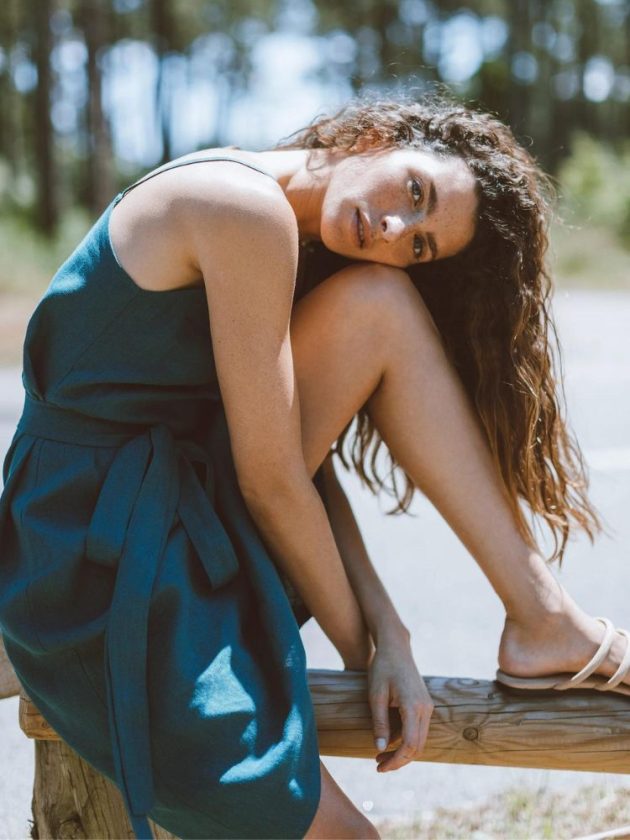
Best for: affordable linen garments
With a mission to create simple, sustainable luxury at affordable prices, Neu Nomads offers quality classics made from earth-minded materials, including organic linen.
You’ll find linen trousers, effortless shirts, chic blouses, summer dresses, and even linen blazers in a range of colors among Neu Nomad’s consciously crafted selection.
Price Range: $ – $$
Size Range: XS – XL
Based in: U.S. | Ships: Internationally
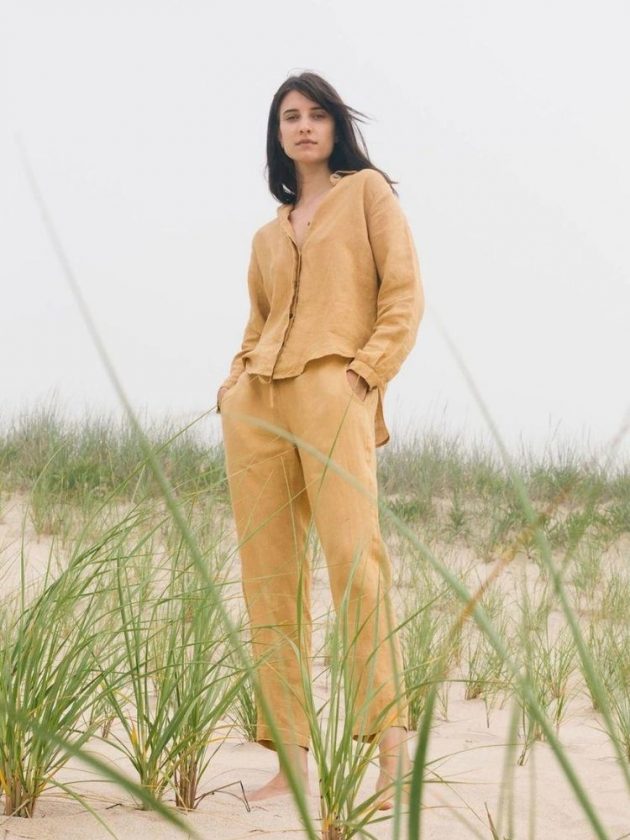
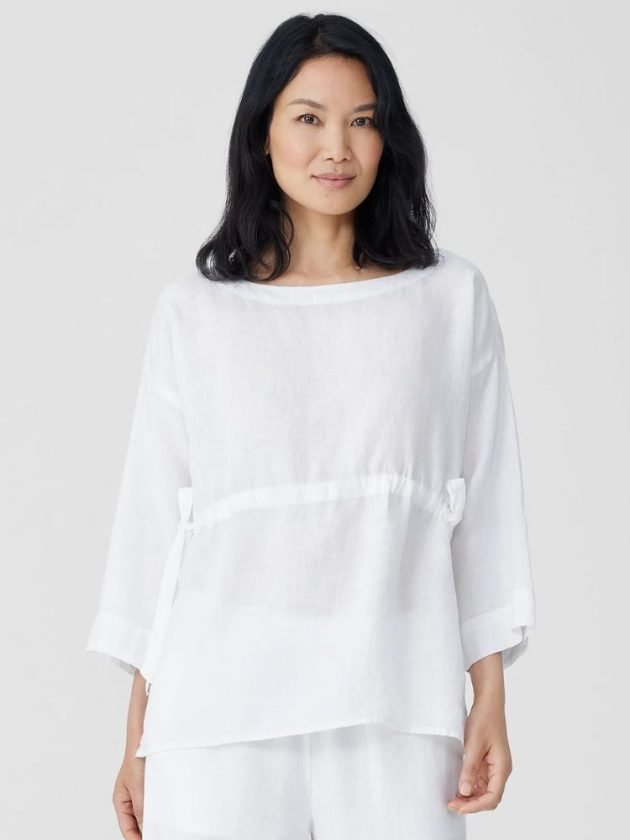
9. EILEEN FISHER
Best for: investment-piece linen with a circularity program
Slow fashion label EILEEN FISHER has elegant, minimalistic garments made from eco-minded fabrics including organic linen.
EILEEN FISHER’s organic linen clothing is timeless and made with quality, as part of their circularity efforts. In addition to ensuring their pieces last, the brand also has a resale program called Renew and a “third life” program called Waste No More that repurposes unwearable garments into unique items.
Price Range: $$$
Size Range: XXS – XL
Based in: U.S. | Ships: Within U.S.
Your Questions, Answered:
What about Quince’s linen clothing?
While Quince offers more affordable linen clothing, in my experience their linen clothing is ok quality, but does not compare with the quality of some of the other brands on this list. Also, I personally want to prioritize women-led small businesses for my guides, not venture-backed billion-dollar companies.
Should I look for organic linen clothing?
While organic linen is wonderful, it is quite rare. Only two brands on this list use certified organic linen. Note that OEKO-TEX Standard 100 linen is not “organic” linen, but rather linen clothing that has been tested against common harmful substances. The most common certification for organic fiber clothing is Global Organic Textile Standard, or GOTS.
More Sustainable Clothing Guides:
The Best Organic Cotton Fashion Brands
Actually Fashionable Hemp Clothing Brands
The post 9 Best Linen Clothing Brands With Easy Breezy, Beautiful Pieces appeared first on Conscious Life & Style.
9 Best Linen Clothing Brands With Easy Breezy, Beautiful Pieces



-
Climate Change1 year ago
Guest post: Why China is still building new coal – and when it might stop
-
Greenhouse Gases1 year ago
Guest post: Why China is still building new coal – and when it might stop
-

 Greenhouse Gases2 years ago
嘉宾来稿:满足中国增长的用电需求 光伏加储能“比新建煤电更实惠”
-

 Climate Change2 years ago
嘉宾来稿:满足中国增长的用电需求 光伏加储能“比新建煤电更实惠”
-
Climate Change2 years ago
Bill Discounting Climate Change in Florida’s Energy Policy Awaits DeSantis’ Approval
-

 Renewable Energy10 months ago
Sending Progressive Philanthropist George Soros to Prison?
-
Greenhouse Gases1 year ago
嘉宾来稿:探究火山喷发如何影响气候预测
-

 Carbon Footprint2 years ago
US SEC’s Climate Disclosure Rules Spur Renewed Interest in Carbon Credits