

A new draft text to revive deadlocked UN plastics treaty talks does not include specific measures on managing runaway plastic production, a growing source of greenhouse gas emissions, drawing criticism from some countries and campaigners that ambition for the global pact is shrinking.
After diplomats met in Nairobi early in July for the first time since negotiations fell apart a year ago, Chilean ambassador Julio Cordano, who is chairing the talks, released a first document last weekend, setting out elements of a possible treaty to tackle plastic pollution.
Cordano stressed this is an “informal reference document” rather than a negotiated text. But its structure is similar to a draft treaty and closely resembles the previous version rejected by governments during the last round of formal negotiations in Geneva.
The new text recognises the world’s “unsustainable” levels of plastic production and consumption, both of which are projected to nearly triple by 2060. But it contains no measures to stem that growth, critics say, pointing to what they see as a broader weakening of ambition.
They argue the document is increasingly aligned with the demands of fossil fuel-producing countries, including Gulf states, the US and Russia, which have pushed for the treaty to focus on managing plastic waste rather than limiting production.
“When you leave the countries that have the most vested interests in delaying meaningful action to shape the agenda, you end up with a text that does nothing to end plastic pollution,” said David Azoulay, environmental health programme director at the Center for International Environmental Law (CIEL).
France disappointed with production omission
“We’ve gone backwards rather than forwards,” Christina Dixon, a campaigner at the Environmental Investigation Agency (EIA), told Climate Home News. “A text that was rejected by the majority of countries in Geneva as being too weak and not ambitious enough has been repackaged one year later with some key elements removed and put out as a kind of sign of progress.”
A French diplomatic source told Climate Home News it was “disappointing” that the text lacked any concrete provisions on tackling “unsustainable” levels of plastics production and consumption. That is despite a majority of countries repeatedly advocating for curbs and scientists saying the world cannot put an end to plastic pollution without tackling the issue at source, they added.
-
South Africa’s offshore oil push meets grassroots resistance in court
Two court cases against oil majors TotalEnergies and Shell could derail South Africa’s plan to expand offshore fossil fuels -
UN bid to keep 1.5C alive exposes deepening divisions over fossil fuels
Vulnerable island nations and the poorest countries want the Belém Mission to 1.5 to drive fossil fuel phase-out, while Arab states call for more investment in oil and gas


Governments across Europe, Latin America, Africa and the Pacific islands have previously called for efforts to limit the manufacturing of plastics to “sustainable levels”, but their efforts have been frustrated by strong and persistent opposition from a small group of fossil fuel producers, who see plastics as a growing market for oil and gas.
Weakening of production ambition
Cordano told Climate Home News that the “concept” of sustainable production is still reflected in different parts of the new document.
But measures aimed at achieving that objective have progressively weakened over time. Initial versions of the draft treaty, dating back to 2024, included a standalone article with the option of setting a global target to reduce the production and consumption of primary plastics.
That disappeared from successive drafts published in Geneva last year. The last version nevertheless said data on plastic production could be considered in future assessments of whether the treaty was meeting its objectives. Observers saw this as an important provision that could have strengthened the pact over time and potentially kept the door open for a global production target.
The new text only mentions “sustainable production” in the preamble and includes an article saying that countries could improve the design of plastic products in order to contribute to “sustainable production”.
“There’s a war of attrition element,” said Dennis Clare, a negotiator for the Pacific island nation of Micronesia. “The countries that want to do less are dragging out discussions and gradually pressuring the more ambitious to compromise towards a lower common denominator.”
Little space for thorny discussions
Countries have twice failed to agree on a global plastics treaty at what were meant to be final rounds of negotiations in December 2024 and August 2025. After being selected as the new chair earlier this year, Cordano has been working to steer the process back on track through a series of informal meetings, hoping diplomats can find common ground ahead of the next formal negotiations scheduled for early 2027.
But he has been criticised for sidelining discussions on some of the thorniest issues. Cordano kept plastic production off the official agenda for the Nairobi meeting a few weeks ago. He said beforehand that countries could bring any issue to the table, but production did not feature in the summary of discussions subsequently published by the chair.
Clare said discussions on fundamental elements of the treaty, including production, had been “constrained” and that there was little space for them in Nairobi.
Cordano told Climate Home News the Nairobi talks had provided space both for “reaffirming positions and expressing new ideas”, adding that countries “remain free to raise all issues they consider important”.
Informal talks between negotiators are held behind closed doors and neither the media nor external observers can take part.

Campaigners have accused the chair of making political calculations to reach an agreement at any cost. “He has clearly identified that the only way to achieve an agreement by consensus is to do away with the more complex elements of the treaty like those that deal with sustainable production and consumption of plastics,” the EIA’s Dixon said.
Cordano said he continues to be guided by countries as “they develop their own exchanges and continue working towards possible landing zones”.
Push for more ambition
Governments will debate the new text at another meeting of chief negotiators in Bangkok, Thailand, at the end of September, and a new version of the document is expected after that meeting.
The French diplomatic source said the current text should not be viewed as “an end-product”, but as a starting point that “can and should be improved”.
France, together with the EU and members of the High Ambition Coalition (HAC), will continue pushing for stronger provisions, including measures to address plastic production, the source said.
China’s coal power rebounds as record clean energy goes to waste
The HAC group includes over 70 countries, primarily from across Europe, Latin America, Africa and the Pacific.
Micronesian negotiator Clare said countries on the frontline of the plastics crisis may decide to reject a really weak treaty that puts the burden on them to clean up somebody else’s waste, while producers can keep churning out plastics unrestrained.
“If the treaty does not include essential elements of the solution, even an initial, apparent diplomatic success – an agreement – can come to be seen over time as an environmental failure,” Clare warned.
The post “We’ve gone backwards” – new plastics treaty text dims hopes for production curbs appeared first on Climate Home News.
“We’ve gone backwards” – new plastics treaty text dims hopes for production curbs

Dozens of countries – from big emerging economies to the world’s poorest nations – are calling for the UN’s new carbon market to reassess climate integrity rules, in a push that campaigners and researchers have blamed on industry lobbying.
At COP31 talks on the Paris Agreement Crediting Mechanism (PACM) this weekend, the Like-Minded Developing Countries – a group that includes Saudi Arabia, India and China – the Least Developed Countries (LDCs) and landlocked developing countries raised concerns about the requirements project developers must meet, according to sources familiar with the closed-door discussions.
They warned about the cumulative weight of those requirements developed under Article 6 of the Paris Agreement as barriers to implementation. Several countries, including Singapore and some Latin American states, said rules must keep projects financially viable, while South Korea asked for proportionate requirements, the sources said.
Their demands closely track arguments from carbon market industry groups, which claim PACM’s conservative approach to counting emission reductions is so strict that few projects will ever come to fruition.
Industry and NGOs lobby to weaken UN carbon credit rules in “coordinated” push
In a letter published ahead of COP31, the lobby groups asked governments to “raise implementation concerns” and to request that the Supervisory Body – the UN body that oversees the market – assess the “combined impact” of its rules on the feasibility of projects.
The letter was signed by the International Emissions Trading Association (IETA), a business group whose members include fossil fuel giants Shell, BP, Saudi Aramco and Chevron, along with the Project Developer Forum and the Wildlife Conservation Society, which develops forest conservation programmes.
Draft text reflects industry demands
Those demands are reflected in the first draft of the COP31 decision on the mechanism, published late on Saturday. To guard against over-crediting, PACM’s rules deliberately err on the side of issuing fewer credits when emissions cuts from projects are uncertain.
The document asks the Supervisory Body to look at how these cautious assumptions add up across its rules and what that means for the number of credits, project costs and prices. The aim, it says, is to avoid “excessive compounding of conservative adjustments”.
Other parts of the draft tell the body not to make its rules too cautious or too rigid. That includes efforts to guard against the risk that carbon captured by a project is later released. Most of these passages add that environmental integrity must be maintained.
Risk of another ‘failure’
“Weakening the rules is not climate ambition – it is a license to pollute,” said Erika Lennon, a senior attorney at the Center for International Environmental Law (CIEL). “As we are on the brink of permanently breaching 1.5C, we cannot afford to turn the carbon market into another loophole for polluters,” she added.
Axel Michaelowa, research director at Perspectives Climate Research, said that if attempts to weaken the rules succeed, it could lead to another failure of an international carbon market. Demand for credits rests on trust, he said, and the slightest doubt over integrity erodes buyers’ willingness to pay.
Calls to revise requirements “must be supported by scientific evidence, not unsupported claims of under-crediting – especially when these assumptions come from private actors whose revenues depend on the volume of transacted credits rather than real mitigation outcomes,” Michaelowa said.
The EU, Switzerland and Senegal are among a handful of countries pushing back against demands to re-assess the market rules, according to the sources, and are opposing requests to weigh up the profitability of projects or to lower standards.

Cookstove credits in focus
At the centre of the fight are new methodologies for projects that aim to cut emissions by distributing cleaner cookstoves – one of the carbon market’s most popular credit types and also one of its most criticised for overstating climate benefits. A 2024 study in Nature Sustainability found cookstove projects had been over-credited roughly tenfold.
Under the rules adopted by the Supervisory Body in October, cookstove project developers are required to set aside part of their credits in a buffer pool, in case the forests they claim to save later burn or are cleared.
The body rejected an exemption from this requirement sought by developers, corporate buyers, some conservation groups and the UN Environment Programme, in what critics called a coordinated lobbying campaign, as reported by Climate Home News.
Industry groups and some countries have seized on the cookstove methodologies to warn against excessively stringent requirements, which they say undercount emission reductions and deter developers. The LDCs told negotiators that developers had found some approved methodologies, including on clean cooking, difficult to apply.
Industry group calls for revisions
Industry representatives attacked the Supervisory Body’s approach in interventions that sources in the room described as very aggressive.
In a subsequent Linkedin post, IETA’s Andrea Bonzanni accused the regulator of following an unscientific approach that would deliver systematic under-crediting. He called on environmental integrity standards to be amended and rulebooks to be revised.
The mechanism “has had a false start”, he said, but countries in Antalya have a chance to agree on clear guidance that puts it back on track. “Unless the mechanism becomes workable across countries and activity types, its impact on the atmosphere risks remaining marginal,” he added.
IETA did not respond to a request for comment.
-
UN carbon market forces cookstove projects to protect against forest loss
Despite lobbying for an exemption, the UN regulator has for the first time made cookstove projects cover the risk that the trees they save are later destroyed -
Most “zombie credits” locked out of new UN carbon market after China and India snub
Fears of a flood of environmentally-dubious carbon credits have faded, with most old projects not able to transition to new UN market
Campaigners and researchers have pushed back on the claims. Arguing there is currently no evidence of under-crediting in the UN market, they stressed that more credits do not necessarily mean more emissions reductions if the rules underpinning them are not grounded on science.
“Having a Paris Agreement carbon crediting mechanism that cheats the atmosphere completely misses the point,” said Isa Mulder, a policy expert at Carbon Market Watch. “Countries should not allow Article 6 to become just another dangerous distraction from real, urgent climate action.”
The draft of the rules is an early version and will be negotiated during the COP31 summit’s final days. Under the Paris Agreement rules, the Supervisory Body must follow guidance that governments give through COP decisions.
The post Countries take up industry push to loosen UN carbon market rules at COP31 appeared first on Climate Home News.
Countries take up industry push to loosen UN carbon market rules at COP31
Mohamed Adow is director of Power Shift Africa.
International Energy Agency chief Fatih Birol celebrates the electricity demands of AI and electric cars, but the revolution must be about more than luxuries for the rich. It must bring clean, affordable power to the hundreds of millions still living without it.
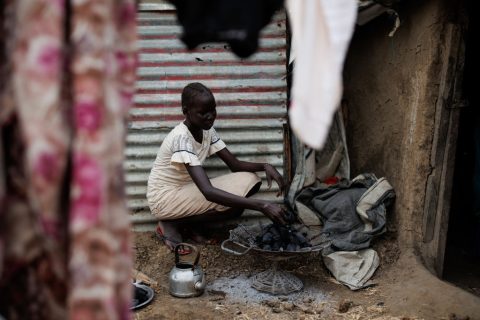
The world is entering the age of electrification. But while wealthy countries focus on powering AI data centres, electric cars and other energy-hungry technologies, hundreds of millions of people across Africa and the developing world still lack access to electricity.
The real promise of the electricity revolution is not simply meeting the growing demands of those who already have plenty, but bringing clean, affordable power to those who have none.
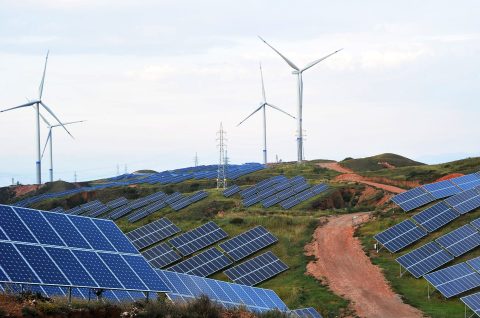
So the decision by Türkiye and Australia to make electrification a flagship initiative at COP31 should be welcomed. Their proposed 35 by 35 goal, increasing electricity’s share of global final energy consumption to 35 per cent by 2035, could accelerate this transformation.
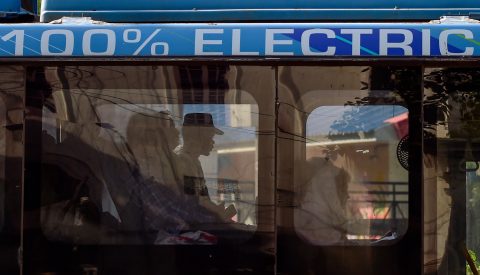
But who is this revolution actually for? Birol has celebrated the arrival of the electricity age, identifying AI data centres, electric transport and air conditioning as three major drivers of growing electricity demand.
-
Can AI data centres help power underserved African communities?
Three African countries join a pledge for sustainable AI at COP31, but the jury is still out on whether the energy-hungry industry can bring benefits for all -
COP31’s electrification pledge wins support, with caveats on clean power and finance
At least 14 countries have endorsed the voluntary pledge so far, but island nations warn it must not distract from the shift away from fossil fuels

These technologies are reshaping the global energy system. But it is extraordinary that a discussion about the world’s electricity future can focus on infrastructure and services for the rich while overlooking those who still have no electric power at all.
For wealthy countries, electrification may mean powering AI or replacing petrol cars with electric ones. For millions across Africa and the developing world, it means something more fundamental: being able to turn on a light, refrigerate food and run a hospital or a business.
The electrification revolution cannot simply meet the growing energy demands of those who already have plenty. It must deliver electricity to those who have none.
A dirty energy goal?
There is another serious flaw in the COP31 proposal. It promotes electrification without ensuri