

US Offshore Wind Struggles, Lawsuit on Osage Land Continues
Legal battles in Oklahoma continue between the Osage Nation and Enel. Equinor faces offshore wind project hurdles amidst U.S. offshore wind regulatory issues. Plus a rebranding announcement from Deutsche Windtechnik to DWT and a new study painting wind blades red to prevent bird strikes.
Sign up now for Uptime Tech News, our weekly email update on all things wind technology. This episode is sponsored by Weather Guard Lightning Tech. Learn more about Weather Guard’s StrikeTape Wind Turbine LPS retrofit. Follow the show on Facebook, YouTube, Twitter, Linkedin and visit Weather Guard on the web. And subscribe to Rosemary Barnes’ YouTube channel here. Have a question we can answer on the show? Email us!
You are listening to the Uptime Wind Energy Podcast, brought to you by build turbines.com. Learn, train, and be a part of the Clean Energy Revolution. Visit build turbines.com today. Now here’s your hosts, Allen Hall, Joel Saxum, Phil Totaro, and Rosemary Barnes.
Allen Hall: There’s more news out of Oklahoma. The state of Oklahoma has.
Entered the legal ballot between the wind developer in EL and the Osage nation. It, we all recall on the podcast probably a year ago where the Osage Nation had won a lawsuit with the help of the federal government to take down a big wind farm in north central Oklahoma. The state of Oklahoma has filed an amicus brief opposing the immediate removal of the 84 turbines in Osage County.
Now, this is a big deal [00:01:00] because pretty much the last I saw, which is a while ago, the order was that they needed to take down all the turbines and reclaim the land, basically put it back to where it was before the turbines were placed in it. Now the state of Oklahoma is stepping into the mix and they’re citing a couple of things.
They’re saying that the state of Oklahoma has an interest in property laws and protecting tax revenue. However, Osage doesn’t fit into Oklahoma laws. It’s not their territory. And meanwhile, the Osage tribe is saying, Hey, this is over and we have mineral rights, and these turbines need to come down.
So this is a kind of a weird spot because Anelle’s in the middle of this, now that the state’s gotten involved against the federal government, is there a missing link here? Is, this is certain more to this story because it does seem like some wheels are turning at the moment. I think,
Joel Saxum: Phil Allen.[00:02:00]
You guys are very smart, right? But I think we need someone smarter than us to decode this whole thing as far as like maybe a lawyer that can get in there, because Alan, you hit it on the head, Osage tribe and Osage tribe lands do not actually fall under Oklahoma law. They have their own sets of laws, so you have a federal ruling saying that something must happen within, of course, the outlines of the state of Oklahoma, but within the greater outlines of the United States.
But now the state wants to be able to go against the federal ruling to have their own rights recounted for while this, the Oage tribe is saying no, like we’ve already passed and I think the total bill that NL is gonna was supposed to get stamped, it was like $300 million, which is crazy ’cause it doesn’t cost $300 million to remediate 84 turbines.
However. This isn’t necessarily a wind turbine take down exercise. This is a mining reclamation exercise after you take the wind turbines down. That’s why it costs so much. [00:03:00] So there’s a lot of money on the table for nl and now you have the Oklahoma Solicitor General Jerry Gary Gaskins stepping in and saying Hey, we’re also getting some kind of tax revenues to the state and things like that from the wind farm.
But I wouldn’t think that would go to the state in this case. I would think it would go to the Osage tribe. So I don’t understand the state’s. The state’s position in this.
Phil Totaro: But Phil, do you have any insights on that? Unfortunately, I do not. But what’s interesting about it is that you had, the federal government stepped into this whole thing because they.
Felt like the tribe wasn’t being adequately represented basically, or if they were representing themselves or they had, attorneys representing them. The federal government stepped in because of the nature of the case and how the high profile would’ve been to, to say that yes, the tribe actually has these these mineral rights on what is effectively there.
They’re a chunk [00:04:00] of the United States as you’re saying, it’s, they’re physically located within the confines of Oklahoma, but they are their own little thing, so I. Yeah I, unfortunately I don’t, and you’re right, we probably need somebody smarter than any of us to figure out what is really going on with this other than obviously the state.
Whatever money the state gets from any kind of tax revenue, they don’t want to ever see it go away. So it can be a nickel and they’ll still chase after you for it.
Joel Saxum: But here’s the other thing and Alan, I wanna get your 2 cents on what my thought is here. This is my theory, my working theory. NL has a removal order on hold pending their appeals to the federal court.
I think that as soon as 10 years and one day from commissioning date comes up, this whole thing’s gonna get dropped. And they’re gonna, they’re gonna take this wind farm down.
Allen Hall: That’s what I was wondering. Is it a repowering play that once they get to the end of the PPA life or the PTC life. Does this thing not matter [00:05:00] anymore and they’re just trying to delay it and maybe the state of Oklahoma is helping anelle with that.
It is odd. When did this farm go in, Joel? It went in 20 16,
Joel Saxum: 17. It started in 2013, but it wasn’t. Commissioning until 2015. But that was the initial, that was the initial thing. So PTC does a start until commission day. So that’s, it’s it’s this year, like it’s 10 years is up this year sometime.
So what is the play here? It’s push off until PTC revenues are pulled. And then once PTC revenues are pulled, dcom, you know what I, Joel, I like that theory. I’m gonna
Phil Totaro: go with that.
Joel Saxum: I think that’s what it is. Because they’re not gonna let ’em repower it. I can guarantee you that’s not gonna happen.
Phil Totaro: I think it’s, it makes sense to me that they would just be trying to stretch it out because what else is the play here?
Because if, ’cause again, if the state’s taking some kind of tax revenue, it’s probably tax off the sale of the power, which probably goes to the utility, which has nothing to do with the Osage nation, which make would make even more sense. And then. Because of the production tax credit, [00:06:00] they get to take extra tax revenue off the power sales.
So that’s probably a reason why the state would wanna step in and try to, stretch this thing out until the end of that PTC period. I gotta tell you, this is the, this is armchair
Joel Saxum: math and I’m saying PTC credits are like 26 bucks. A megawatt hour, 26 bucks, a megawatt hour, 84 turbines at 1.79 megawatts, which is what these are.
Is 150.4 megawatts, I’m gonna give them a 40% capacity factor, which is being a little bit generous. That equates to $1.126 million per month in PTC credits. So you extend this thing for six months, that’s 7 million, seven and a half million dollars in L’S pocket. If they can stretch this thing for seven months just of PTC credits, it’ll help pay for the decommissioning.
Allen Hall: Because that’s where it’s headed. Yeah. And the federal court system is not [00:07:00] something to play around with, so you gotta tread lightly here because if the federal court feels like this is just being a delay tactic to increase revenue, that will come with penalties, typically, that $7 million will go right back.
You go right into the Osage nations. Yeah. Yeah. It’s interesting developing. Gotta keep track of it now because it’s moved into a really unique phase beyond what I thought was possible. I didn’t think the state of Oklahoma’s gonna wade into this, but here we are Deutsche Wind Technique, which if you don’t know Deutche wind technique, where have you been?
They have announced a strategic rebranding. To DWT, which is what everybody calls Deutsche Wind Technique in the states. It’s DWT. We never used Deutsche Wind Technique and it’s going to take effect in what, five different places? United States, Poland, which is odd, but, okay. France, I get United Kingdom obvious in Taiwan.[00:08:00]
And the company employs about 2,400 people at the minute, and they service about 8,000 wind turbines across 10 countries. So this is trying to address the whole pronunciation, spelling of Deutsche Wind. And, but at least in this states, because our spelling’s atrocious, let’s just admit it. But they’re gonna keep the dornell wind technique the same and not changing it in Germany, Sweden, the Netherlands, and Belgium.
Which again makes sense. That’s why Poland is in that weird offset one. Yeah.
Joel Saxum: But why just do it, just change it to DWT across the board? Maybe. Yeah. You can leave Deutsche Wind Technique in their summer, but Brandon has DWT across the board. It’ll be
Allen Hall: easier. Oh, you think so? The swag is gonna be great.
The DWT swag is perfect, right? The three letter acronym that fits right on a hat. Come on,
Joel Saxum: by the way. DWT if you guys are looking to send swag anywhere, we can give you all of our addresses. We will take it and wear it on the shelf. I got no problem with that, right? I think this is [00:09:00] great, right? Deutsche Wind Technique, technique.
Technique, doche, like wherever you go, right? You hear someone say it differently. Yeah, I think it’s gonna be it’s good for the brand. Even the, I hope they change their emails. Please, if someone’s listening, change your email aliases to just DDWT instead of having to type that off. But yeah, good move.
Allen Hall: Don’t let blade damage catch you off Guard the logics. Ping sensors detect issues before they become expensive. Time consuming problems. From ice buildup and lightning strikes to pitch misalignment in internal blade cracks. OGs Ping has you covered The cutting edge sensors are easy to install, giving you the power to stop damage before it’s too late.
Visit og ping.com and take control of your turbine’s health today. Sted today as we record announced the discontinuation of its 2,400 megawatt horn C four offshore wind farm in the uk. And despite securing the CFD last September, the [00:10:00] project has fallen victim to escalating prices and financial pressure.
It raises some interesting and important questions about the future of offshore wind in the UK because there’s just a lot of CFDs that are happening there, and they’re, the UK is really dependent upon the projects going to completion. Let’s talk about from the OR standpoint for a minute. So this is gonna be a financial impact.
It’s gonna hit them for about $500 million in Q2 of this year because of write downs and. All the equipment that was being built for this project, and there was another, about a hundred million US dollars on capitalized construction. That’s gonna be in an impairment. Now I think stead is totally fine with that because at the same time they announced the horn C four discontinuation and the company released its Q1 financial results.
So it’s the good with the not so good. But, stead is doing pretty well, right? So the EBITDA went up about 18% versus [00:11:00] Q1 in 2024. Now, there’s a lot of companies that would dream to have those kind of numbers, and obviously, last year was not a great year because of some of the right downs that they had to go take.
But there’s, they’re going to, it’s what they’re at 10 gigawatts of installed offshore wind capacity at the moment. That’s crazy. That’s an amazing amount. And the total installed capacity for renewables is at 18 and a half gigawatts. That’s amazing. So although some of these projects don’t have the financial numbers that Osted would wish to continue with them, it does seem like Ted itself is doing fairly well.
If you look at some of the details on the CFDs in the uk. And Phil, correct me if I’m wrong here, it does look like the price is going to jump quite substantially. It was in the 65 pounds per megawatt hour that’s gonna be heading [00:12:00] up to north of 90 pounds per megawatt hour and some of the CFDs. So it makes sense if Ted can just hold and they still have rights to the plot.
Maybe they can restructure the CFD to get into the 95, maybe a hundred. Maybe even more because it’s based on like 2015 numbers, right? The, all these are based on a years ago now you’re really talking about maybe 120 pounds per megawatt hour, which is an incredible. Number to get as a producer of power offshore?
Phil Totaro: Yes. At the moment, those are, that’s how the CFD system is structured. They’re looking at making some changes. We’re probably not gonna have time to go into what all the details of ’em are, but effectively they’re going into a scenario where they’re gonna have sealed bids but. The, which they already do today.
But the Energy Secretary in the UK is actually gonna be able to look at sealed bids anonymously. So what the [00:13:00] independent power producers in the uk of which ORs, Ted’s one of ’em, what they all want is to be able to have. A hundred percent of their power generation guaranteed and basically underwritten by this CFD structure.
All of these little things that at a government will try to put in place to protect consumers are things that can also create a significant amount of risk and uncertainty for businesses and the independent power producers in particular. So it’s just a balancing act that, that everybody has to go through.
And for a company like Sted to pull the. Plug on active development for the ho C phase four at this point. It would seem to make a lot of sense that they think they can get a better deal later. All of these factors are gonna come together to suggest a positive outcome for a company like Sted with with this kind of a decision.
Joel Saxum: Yeah, that’s what I’m saying is 2.4 gigawatts is a lot. What does that do to, and I would guess I was assuming that was, they were Siemens turbines, but [00:14:00] what does that do to the, that’s a hateful bottom line hit for any OEM Duple four gigawatts, even at your big turbines.
That’s 175 turbines ish, something like that.
Phil Totaro: Yes. 2.4 gigawatts is a significant chunk bigger, so if it is actually vestus but it’s a big chunk for either Siemens or Vestus to have to put on hold. Because keep in mind, again, when. Somebody signs a turbine supply contract, they’ll give an OE emm a deposit of maybe five to 10% of the total contract value.
You don’t get paid if you’re the OE em, you don’t get paid until commissioning. The fact that commissioning can be delayed is obviously quite problematic to anybody’s bottom line. Absolutely. Joel you’re spot on.
Allen Hall: My understanding was for horn C four, there are termination fees involved.
And that my read on it was that, that there were going to be payments made to close out the projects for now, which I [00:15:00] as immediately assume was Siemens. Mea could be wrong, but it’ll show up in the quarterly reports here in the next couple of months. Phil? You’ll see it.
Phil Totaro: Yeah.
Allen Hall: Okay. So we’ll know who the turbine provider was and 2.4 gigawatts worth of turbines.
You’ll, that’s a bump in somebody’s pocketbook.
Joel Saxum: What do we always say? 10 million. A megawatt. We know that it’s a little bit higher for offshore 1.1. So you’re talking two and a half billion to 3 billion. $3 billion.
Phil Totaro: Oh, that’s, yeah, it’s two. 2 million a megawatt for offshore, Joel.
Joel Saxum: Okay, so fi 5 billion.
Yeah, so $5 billion, 10% is 500 million, which it says here, the decision will impact Q2 2025 earnings by up to 506 million, including write downs of offshore transmission assets and contract cancellation fees. So it’s in
Allen Hall: there somewhere. Hard to hide that in the quarterly report.
Speaker 5 (2): Lightning is an act of God, but lightning damage is not, actually, is very predictable and very preventable. Strike tape is a lightning protection system upgrade [00:16:00] for wind turbines made by weather guard. It dramatically improves the effectiveness of the factory LPS so you can stop worrying about lightning damage.
Visit weather guard wind.com to learn more. Read a case study and schedule a call today.
Allen Hall: EOR has announced it may pursue legal actions against the Trump administration over the order to halt work at its empire win one project off the coast of New York. The company described the directive as quote unquote unlawful and quote unquote.
Unprecedented as developers across the us continue to raise to get their projects done. Now this is a unique situation, of course, just because it has focused attention on one WIN site while others are quickly trying to get to completion. Vineyard Wind one, coastal Virginia offshore wind, or continuing on and.
Ecuador. It just isn’t a weird spot and a lawsuit doesn’t really make sense [00:17:00] here. Everybody. I say don’t think that’s the right approach. There is existing regulatory ways to appeal this. They’re gonna have to go through that process first and can’t necessarily bypass it. You could do things in parallel in terms of a lawsuit, but you’re gonna have to play by the federal rules at the moment, and that’ll be an appeals process through multiple.
Governmental agencies, I think, but nothing’s gonna happen, Phil, this summer, right? I think Ecuador’s in trouble in terms of deployment. They will not be able to do any work when the weather is good, which is right now. Try to get the production tax credits and all that up and running, it’s just gonna delay it no
Phil Totaro: matter what.
Yeah. And this is what kind of confounds me about this is the, look at the end of the day, this is ultimately a power play kind of a thing. And it comes down to, alright, if you’re gonna still respect the US Federal government and comply with orders that they give you, [00:18:00] then.
They took the right decision to stop construction. However, it seems like they took that decision a little too hastily without talking to their lawyers first, because why would you stop construction and then talk to your lawyers and then go with the lawsuit saying, we don’t think this was a fair and lawful decision to, to order us to stop.
You what they should have done if you ask me. Is just keep building because as you both just said, you’ve got a scenario where you’ve got. Climatic conditions in the summer that are gonna allow for construction to continue and flourish. And, why not just take advantage of this and then if there’s a fine to be paid for defying government order, just pay it later.
And because you’re gonna be. Screwed if you do, or it’s screwed if you don’t. So if it’s me, I’m just gonna keep building and like Charlton Heston used to say they can [00:19:00] come take my wind farm outta my cold dead hand. I’m paraphrasing him, so it’s like, what? Like what?
What’s the alternative now? ’cause now like Alan, you’re saying they’re stuck in court. Like how does that do anything good for anybody? It’s wasting time in resources of eor. It’s wasting time in resources of the government when there’s gonna be, whether it’s a legal appeal or a regulatory appeal, there’s gonna be an appeal anyway and.
I it just seems like EOR just absolutely did not respond the right way to this at all. If you ask me,
Joel Saxum: Einor is a global company, of course, but they’re a Norwegian company and they’re playing in an American realm where the culture change. If you ask Norwegians, they listen to no matter what the authorities say.
They don’t fight back. You don’t see a whole lot of protests going on in Stockholm, or, sorry, not Stockholm. That’s Sweden, my bad. Oslo. Yeah. Greta Gre. Greta Thunberg. Sorry. Yeah. So nor the Norwegians, it’s a cultural thing. They [00:20:00] get an order. They just they’re gonna, they’re usually gonna.
Comply with it. Also congratulations and I think the first Charlton Heston reference on the podcast over five years. Maybe the last hopefully.
Phil Totaro: But here’s the here’s the thing though, that, that may be the case, Joel, but what I actually think it was about is I. Obviously Ecuador also does a lot of oil and gas business, globally and in the US that’s their bread and butter.
That’s what they don’t really wanna jeopardize. This whole foray into offshore wind is all very well and good and it might give them some revenue, but it’s you know what, like 3% of their total revenue for the entire, EOR Corporation is like wind or renewables related in general versus.
The 97 or whatever percent it is. I’m just making those numbers up. But it’s probably in that kind of a ballpark. It, it might also be because it’s like, it’s a project in New York, near where, obviously Trump’s got some interest vested interests. It’s a foreign company.
As opposed to, a US based entity. There’s [00:21:00] probably, any number of reasons that are behind why this is really happening. But, again, at the end of the day, how a company chooses to respond to it is going to have a massive financial impact on them one, one way or another.
Joel Saxum: Here’s your last reason. EOR is the top five producer in the Gulf of Mexico. 120,000 barrels a day. They’re putting out, they don’t wanna jeopardize that, so they’re not gonna piss anybody off at the federal level to jeopardize 120,000 barrels a day and a hundred leases in the Gulf.
Allen Hall: The part that’s confusing is to me, is that there’s a long track record of questions about the environmental impact studies that were done, and that’s all public record.
You, you can see that on the bone site. You can walk through the. Transactions that happened and the reports that were issued between Noah and Boem. And I think this comes down to six turbines. I really do, and maybe I’m wrong, but I did a little bit of research into it and it looks like that’s the holdup is there’s six [00:22:00] turbines on the western edge of empire in one that are in a sensitive area on the seabed and.
If those six turbines had been moved or could be readjusted somewhere else, this may go away. However, the really no place to put those six turbines and nyserda needs all the power and they’re gonna need those six turbines to meet the offtake. So Ecuador’s kind of stuck on that level, but you would think that the attorneys and the people reviewing that paperwork over the last three fourish years would’ve flagged it.
Hey, we’re gonna be at risk here. We need to be prepared for it. Something bad to happen.
Joel Saxum: Alan, are those, is that the kind of situation though, where it’s it’s not just a change order to change it, like you have to resubmit everything once you change the plan?
Allen Hall: Obviously they would, right?
But there’s no place to put those six turbines. If you look at where they are at right now and where the prevail league winds are the farm is set up to pick up as much wind as they can, and moving those six turbines in the front of the farm in the clean air [00:23:00] are a problem.
Joel Saxum: So they need a couple, couple more megawatts across the whole wind farm.
On each turbine.
Phil Totaro: It’s basically there’s, if you moved the turbines, there’s shipping lanes that you’re running into and fishing that would be more impacted versus where the turbines were eventually, as they are right now they’ve been cited, anytime you do a project development, whether it’s offshore, onshore, solar, wind, batteries, I don’t care.
You’re always on the lookout for some little, a critter running around that, that you don’t want to step on their environment and or, you’re looking at the fishermen offshore. You don’t want to impede their ability to be able to go and fish and at the end of the day, everything, what I’m getting at is everything’s compromises.
You can’t violate, you can’t violate the law. They knew all this and there were compromises made. But the issue, the permit was issued,
Allen Hall: right? But the federal law requires Noah and to do certain things, and it requires BM to do other things. But the B, [00:24:00] if you look at the list of things that BM was responsible for is the environment.
Phil Totaro: But nobody’s other than Trump’s administration, nobody’s saying that they didn’t do their job. That’s the whole point. They’re using that as a nitpicky little excuse to go back and open up a can of worms that was already decided upon.
Allen Hall: That’s not what the federal record shows, Phil.
The federal record is very clear about Noah being super concerned about and providing a list of 37 items that needed to be addressed before Boeing should be afforded, and Bowen addressed. Almost
Phil Totaro: none of them. Everybody’s else is being reviewed. Nobody’s gotten a letter saying Stop construction, but everybody else is having their permits re-reviewed.
And my point is, there’s probably legitimate, according to what you’re suggesting, there’s legitimate reasons to go stop every single one of these projects. That’s exactly what the government’s trying to do.
Allen Hall: I’ve looked at other ones. They see. If you look at vineyard wind, you could look at the time that they went back and did the environmental review.
It took ’em a long time to do that. Now, from what I can tell mean vineyard’s an easy one, right? Vineyard’s an easy target [00:25:00] today because of all the problems they had with the turbines themselves. However, looking on the environmental side that they went through a lot of effort to clear the deck of all the questions and did all the work.
Empire did also. But Noah had concerns about a particular part of that plot. In fact they, the b reduced the size of the area by 1700 acres to remove some of the environmentally sensitive area, which they thought was going to be enough. It isn’t like Boem sat there and said, oh, Noah, we don’t care.
That’s not what happened. Bowen made an adjustment, but Noah persisted as they are obligated to do. By federal law.
Phil Totaro: So they wrote the letter. But the point is that you could do that with every pro. You can do that with any project. It might not be to the same degree. I get that. But you could nitpick any single project at every single project.
Allen Hall: When they write down the code of federal regulations that are potentially in [00:26:00] violation of that is not just willy-nilly that is. You
Phil Totaro: pointing out where there may be deficiencies and maybe every other project doesn’t have 37 things, they’ve only got 15. But again, a decision was taken to say that we understand that those 37 things or those 15 things, or those three things are that one thing is important, but we’re going to say, you know what?
We’re making an exception and we’re issuing the permit regardless of what those concerns are. A decision was taken and it was, when you issue a permit, there’s certainty, and when you take that certainty away, it drives away money, it drives away investment
Allen Hall: as wind energy professionals Staying informed is crucial, and let’s face it difficult.
That’s why the Uptime podcast recommends PES Wind Magazine. PES Wind offers a diverse range of in-depth articles and expert insights that dive into the most pressing issues facing our energy future. Whether you’re an industry veteran or new to [00:27:00] wind, PES Wind has the high quality content you need. Don’t miss out.
Visit PES wind.com today. Finally, somebody at Vestus is taking the lead about painting these turban blades a different color. As much as we’ve seen about painting a turban blade black. Meyer always says, did anybody talk to a structural person? Because painting a blade black is not good for the structure ’cause it makes it hot, which is the right approach.
But Vestus is partnering with ACO vent to test blades that are painted red, which I evidently Vestus looked at this and said, okay, we can live with red in terms of the temperature rise and the effects on the blade performance. This makes a lot of sense. Now. They are gonna be putting it on just a couple of blades at the Hollands Coast West Project and just to test it out to see if it actually works, because Rosemary birds can see color.
[00:28:00] So black and white may make sense, but painting it a less intensive color. It could have the same effect, right?
Rosemary Barnes: Yeah. It could. And it is a little bit less dark than black, so probably will heat up less. Yeah. ’cause that’s the issue is that if you have one blade, a different color, that it’s, the blades will heat up differently and the stiffness of the blade is related to the temperature.
So if they’re all different temperatures, then they’re gonna be different stiffnesses, and then you’re gonna get. Wobbling happening in your rotor as the the different blades pass yeah. Makes sense. I’m not sure how they arrived at this particular configuration. And have you seen, is it just, is it still one hole blade red or is it every tip red?
Joel Saxum: I think it’s one whole blade, one blade red, the rest of ’em, the other two, white or gray, whatever you call it.
Rosemary Barnes: I don’t even know if anybody’s even tested. All three blades the same color.
Joel Saxum: I’ve seen ’em all red
Rosemary Barnes: for birding purposes.
Joel Saxum: Yeah. I wanna dispel a rumor or [00:29:00] confirm, or not a rumor, sorry, a dispel a wives tale or confirm a wives tale.
This is a question for you, Alan Red, and I’m talking about red and black. So black of course gonna get hot change, temperature, whatever. But when I talk to blade technicians and you’re talking about marking things out on a blade, and if you ever looked at a blade, you see everything in red and blue pen.
They don’t use black pens because the thought process is black pens contain carbon and that’s attractive to lightning. Is that true?
Allen Hall: Pencils? Yes. Ink, pens, no. Like sharpies. Yeah.
Rosemary Barnes: But if we wanna relate this back to the bird thing yeah. And I don’t know if we gave any background, but it’s because there was some trials done in, it was Norway, I think recently.
Not recently. Years ago. I think the initial study was done by a. A bird scientist or some kind of ecologist about whether if you paint one blade on each road of black, then that trial found that in that area that the number of bird collisions was reduced. It was a small trial. It was in only one area.
I [00:30:00] talked to the researcher who did that project, and he was really careful to say that. This is not something that you can just roll out everywhere and assume it will work everywhere. And in fact, there’s a high chance that in some locations it would actually cause harm to the bird population in question.
He did say it’s not it’s not a silver bullet kind of thing. And that’s what, like with the reporting of it, similar to the issue with black markers and lightning, it’s just not that hard. It’s, it, or the general vibe of the reporting was, it’s not so hard, let’s just do it. Like what’s the problem?
And then, what I said when we talked about that story before was, actually there are some issues for why you wouldn’t do that. In terms of, some of the like, logistics of matching sets of blades coming outta the factory. So you’d have to paint them later. And then black gets hot and the stiffness changes.
So now we’ve arrived at a trial of, I think it’s seven turbines vests. Turbines are gonna have one red blade each. And I believe that color was chosen because they didn’t think that the [00:31:00] temperature difference would be so bad between the. Between the blades that you would see a structural different leading to instabilities.
So we’ll see how it goes.
Joel Saxum: What if we painted one like a, like the Twilight Zone thing?
That’s gonna do it for this week’s Uptime Wind Energy podcast. And thanks for listening. Please give us a five star rating on your podcast platform and subscribe in the show notes below to Uptime Tech News, or our weekly newsletter, which is on Substack.
And I just published an article about Empire Wind One, so you gotta go there and check it out, and we’ll see you here next week on the Uptime Wind Energy Podcast.
https://weatherguardwind.com/offshore-wind-lawsuit-osage-land/

 Maybe the protestors are less concerned about length of time in office, and more with criminal authoritarianism.
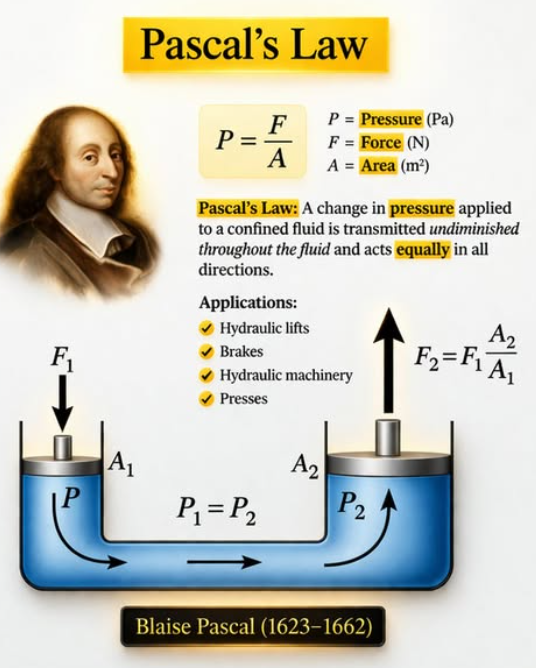 I have such respect for Pascal that I considered naming our son after him. (My wife wasn’t having it. Maybe if we lived in France?)
Pascal made important contributions to both math and physics but he’s perhaps best known for his philosophic “wager,” that it makes sense to believe in God, since if He exists, you’ll be very glad you did, and if He doesn’t, you haven’t lost anything. I counter that this is not how we accept or reject religious tenets.
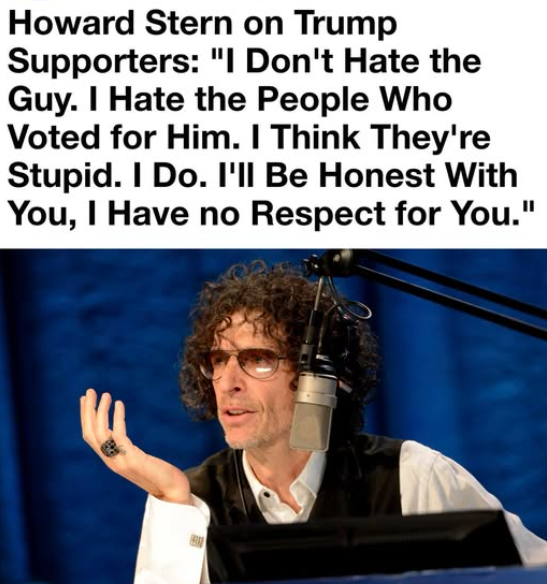 “Republican Patriots” writes: Howard Stern once again reveals the contempt so many in the entertainment elite hold for everyday Americans. He claims not to hate President Trump himself, but openly declares his hatred for those who support him, calling them stupid and saying he has no respect for them. This kind of arrogant dismissal shows how out of touch these Hollywood types have become with the hardworking people who built this country.
I’ve got news: contempt for Trump supporters is hardly limited to “these Hollywood types.” The vast majority of Americans–especially at this point–are neither greedy pigs nor hateful morons. We respect human rights and rule of law.



-
Greenhouse Gases8 months ago
Guest post: Why China is still building new coal – and when it might stop
-
Climate Change8 months ago
Guest post: Why China is still building new coal – and when it might stop
-

 Greenhouse Gases2 years ago
嘉宾来稿:满足中国增长的用电需求 光伏加储能“比新建煤电更实惠”
-
Climate Change2 years ago
Bill Discounting Climate Change in Florida’s Energy Policy Awaits DeSantis’ Approval
-

 Climate Change2 years ago
嘉宾来稿:满足中国增长的用电需求 光伏加储能“比新建煤电更实惠”
-
Climate Change Videos2 years ago
The toxic gas flares fuelling Nigeria’s climate change – BBC News
-

 Carbon Footprint2 years ago
US SEC’s Climate Disclosure Rules Spur Renewed Interest in Carbon Credits
-

 Renewable Energy5 months ago
Sending Progressive Philanthropist George Soros to Prison?