

Paris, France, 22 May 2025 – Greenpeace International is alarmed by the state of the UN Ocean Conference draft declaration which falls far short of expectations, with less than three weeks to the start in Nice, France. Rather than establishing the ambition shown by states to protect the oceans,the current text – set to be published as the final text of the upcoming conference – lacks the necessary ambition to address the crisis facing the oceans.
The third, and supposedly final, draft declaration fails to include the key measures needed to ensure the ocean recovers from decades of abuse and can withstand the impacts of global climate change.
Megan Randles, UNOC Head of Delegation for Greenpeace International, said: “We’re shocked after all the fine words from the organisers of this conference to find a declaration text that lacks the ambition needed to protect the oceans. The UN Ocean Conference was supposed to be the moment when governments turned the tide and showcased genuine progress. Instead, we are handed a weak political declaration with glaring omissions and weak language.
“The current text makes clear governments once again aren’t serious about protecting the oceans, and are satisfied to say fine words but not deliver real change at sea. It also fails to recognise the rights and leadership of coastal communities and Indigenous Peoples, who are on the frontlines of ocean stewardship. Unless this Declaration is drastically improved, the UN Ocean Conference will become a meaningless talking shop.”
The glaring omissions or regressions from earlier draft texts are:
- Pitifully weak language on deep sea mining, with no reference to a moratorium on this dangerous industry, and the removal of any reference to applying the precautionary principle, which appeared in early drafts. [1]
- The lack of any urgency on the Global Ocean Treaty ratification, or reflection that the governmental self-set deadline to reach 60 ratifications by this Conference is set to be missed. [2]
- Failure to recognise that the Global Ocean Treaty is fundamental to deliver on the 30 by 30 target agreed under the Convention on Biological Diversity, as the Global Ocean Treaty is the only legal tool that can deliver this universally agreed and binding UN target on the high seas, which make ⅔ of the world’s ocean. [3]
- The absence of a clear reference to the need to reduce plastic production. While there is a brief mention in the text on the development of an internationally binding instrument on plastic, it makes no mention of the need to reduce production.[4]
- No mention of key issues such as addressing labour and human rights abuses in distant water fishing fleets or ensuring the protection of vulnerable marine ecosystems from the impact of destructive fishing practices – crucial issues that are fundamental to global marine conservation.
- The removal of a “human rights-based” approach to protecting the oceans which undermines accountability in ocean governance. Otherwise, there is no guarantee that policies will protect the rights of those most dependent on — and essential to — ocean stewardship. This weakens the foundation for just, inclusive, and effective marine protection, and must be urgently addressed.[5]
- No concrete commitments to additional financial resources.
From aboard the Rainbow Warrior in the Tasman Sea, Georgia Whitaker, Senior Oceans Campaigner at Greenpeace Australia Pacific, said: “The Australian government has the opportunity to step up and showcase true global leadership on ocean protection at the UN Oceans Conference. The eyes of the world are now on the re-elected Albanese government that signed the Global Ocean Treaty in 2023, but has been dragging its feet, yet to bring its promise into law. We are calling on the Australian government to ratify the Global Ocean Treaty in the first 100 days of government, and propose ocean sanctuaries in the Lord Howe Rise and South Tasman Sea between Australia and Aotearoa-New Zealand, to help protect precious marine life being decimated by brutal industrial fishing.”
A new analysis released this week by Greenpeace Australia Pacific has revealed the shocking extent of ocean destruction and shark bycatch in the Pacific Ocean in lieu of protection possible under the treaty.
“Australia’s approach to deep sea mining will be watched closely by the rest of the world. The Albanese government must join the 33 other countries, including some of our Pacific neighbours, and back a moratorium on deep sea mining to protect our precious blue backyard,” Whitaker added.
The UN Ocean Conference follows the world’s first deep sea mining application for the international seabed, recently submitted by The Metals Company to the US government, as opposed to the UN regulator, amid high political controversy. This unilateral action undermines the UN, potentially is in violation of international law, and should be condemned by all States at the UN Ocean Conference.
As of today, 21 countries have ratified the Global Ocean Treaty, and 33 countries support a moratorium on deep sea mining.
The United Nations Oceans Conference will be held in Nice, France from 9 – 13 June.
— ENDS —
Media contact:
Magali Rubino, Greenpeace France: +33 7 78 41 78 78 / magali.rubino@greenpeace.org (CET)
Kimberley Bernard, Greenpeace Australia Pacific: +61 407 581 404 / kbernard@greenpeace.org (AEST) (WhatsApp best)
Notes for editors:
The draft political declaration is available upon request.
Greenpeace Australia Pacific spokespeople will be available from Nice, Australia and from the Rainbow Warrior in the Tasman Sea.
[1] The Zero Draft of the Political Declaration “emphasized the importance of a precautionary approach” in relation to seabed mining. The reference has been deleted from the final draft.
[2] The Treaty will only enter into force 120 days after 60 countries have ratified. The UN Secretary-General is required to convene the first meeting of the COP to the Agreement no later than one year after its entry into force. France had targeted for the Global Ocean Treaty to enter into force by the conference.
[3] Paragraph 21 of the Zero Draft of the Political Declaration stated “We recognise the important role the Agreement will play in achieving 30×30.” That reference has been removed from the final draft.
[4] The final version of the Political Declaration deletes critical mentions to the urgency of addressing plastics pollution or its human health impacts, which were present in earlier drafts. Astrid Puentes Riaño, Special Rapporteur on the human right to a clean, healthy and sustainable environment, stated on May 20th that “Human rights must be the core of ocean governance and of every ocean pledge”
[5] Paragraph 2 of the second version of the Draft Political Declaration stated that “We must act with urgency to face this challenge with bold, ambitious, human rights-based, just and transformative action.” The reference to human-right based actions has been removed.
UN Ocean Conference draft declaration fails to address the ocean crisis

Climate Change
World Bank and IMF should lead the financial system in responding to the climate crisis
Sandra Guzmán is director at the Climate Finance Group for Latin America and the Caribbean (GFLAC), and Raju Pandit Chhetri is lead climate finance negotiator for the least-developed countries at the UNFCCC.
Recent catastrophic floods in Nepal starkly remind us that the climate crisis demands urgent action. The initial estimate that the country will need to spend $5 billion on recovery will likely remain a major concern. However, that is only one part of the story. No financial metric can capture the value of lives lost in crises like this.
And this is not a standalone event; from the mountains of Nepal to the coastlines of Latin America and the Caribbean, developing countries are increasingly facing severe climate impacts. The average annual loss from climate disasters in the Latin American and Caribbean region is estimated at $58 billion. Human suffering remains immeasurable in all these instances.
Climate finance has been a key demand from our regions and from all developing countries to meet the needs of their citizens. At the recently concluded pre-COP31 in the Pacific, several developing-country governments strongly warned leaders about the dangers of failing to act on both climate and climate finance.
Pacific leaders rail at climate finance failures after pre-COP trip to Tuvalu
Yet, two years after the Baku climate summit, where all governments agreed on the New Collective Quantified Goal (NCQG) on climate finance – with multilateral development banks (MDBs) playing a key role in delivery – that discussion risks being sidelined at this week’s annual meetings of the World Bank and International Monetary Fund in Bangkok, Thailand.
World Bank drops climate finance target
The MDBs have a critical role in mobilising a share of the $300-billion-per-year goal for public climate finance adopted at COP29 and are key to scaling broader financing to $1.3 trillion per year by 2035. They entered the NCQG dialogues promising capacity to mobilise these resources and agreeing to be part of the solution.
This June, even as the World Bank announced the renewal of its Climate Change Action Plan, it dropped its 45% climate finance target under pressure from the US administration. That commitment was key to ensuring the bank continues to deliver on its promise to mobilise enough climate finance to meet the NCQG target.
This announcement was a setback at a moment when developing countries are looking to MDBs to step up and fill gaps left by cuts in official development assistance (ODA) by donor governments.
World Bank’s climate work can endure without finance target, experts say
MDBs have long said they can convert $1 provided by donors into $2-$4 for client countries and have promised to deliver impact. Official data does paint an encouraging picture overall. The MDBs have delivered an increase in climate finance almost every year so far.
While financing needs far exceed what has been provided, MDBs mobilised an average of around $75bn per year in climate finance for low- and middle-income countries over the last five years, showing they are still on track to deliver the $120 billion per year they committed to.
Adding to the debt burden
However, climate finance cannot be measured by quantity alone. As MDBs increase their focus on private-sector mobilisation to diversify their funding, tracking the quality of the financing they mobilise becomes even more critical. Beyond scale, this is where the system currently lags most.
Between 70-90% of the financing provided by MDBs is in the form of loans, exacerbating the debt burdens that the World Bank and IMF have long warned about. This strains countries’ economies at a time when developing countries face severe climate impacts, inflationary pressures, and global economic uncertainty. Adding further debt that climate-vulnerable countries must repay with interest does not necessarily translate into effective climate finance flows.
It is also essential to address barriers to accessing finance in low- and middle-income countries, particularly by prioritising transparency around how much climate finance goes to the most climate-vulnerable countries and communities.
Additionally, there needs to be clarity on how much climate finance is being mobilised to build resilience and address increasingly frequent climate disasters, as well as for renewable energy projects that would help developing countries achieve a just transition.

Climate stresses undermine development
As climate-induced disasters become more frequent, countries are compelled to shift resources away from vital sectors such as health, education, food security and infrastructure that underpins development. For nations already grappling with limited fiscal budgets and mounting debt, climate change is becoming an even heavier burden, pushing them to borrow more.
These are also development issues at their very core – countering debt challenges, investing in resilient infrastructure, protecting schools and hospitals from climate disasters, and increasing crop yields to reduce the cost of food. So, when the World Bank talks about a smart development framework, it warrants a check on how much climate finance is provided and its quality.
Editor’s Desk: Nepal’s disaster has laid bare the world’s adaptation accountability gap
MDBs must now lead the charge by publishing a clear plan to deliver on the scaled-up climate finance goal as a first step, and make financing accessible and affordable, including grant-based instruments. The plan must also define clear accountability metrics to track delivery, access, affordability and reach and commit to at least triple adaptation finance.
MDB shareholder countries also have a role in backing the institutions to deliver on these promises. When World Bank and IMF management meets with finance ministers this week in a region battered by the worst climate impacts, they must not leave climate finance off the agenda.
They must give the World Bank and IMF the mandate, the capital and the political backing to make real scale-up possible. The true test of this financial system will not be found in conference rooms in Bangkok, but in the lives saved in Nepal.
The post World Bank and IMF should lead the financial system in responding to the climate crisis appeared first on Climate Home News.
World Bank and IMF should lead the financial system in responding to the climate crisis
When oil and gas shipments stopped flowing through the Strait of Hormuz at the start of the Iran war, Southeast Asian nations were left reeling as the supply crunch laid bare their acute reliance on fossil fuel imports.
As prices soared, governments in the region scrambled to introduce emergency energy-saving measures – from a four-day working week to curbs on air conditioning. Thailand revived decommissioned coal plants while the Philippines, which imports nearly all of its oil, declared a “national energy emergency”.
But the crisis has also prompted renewed resolve to find a long-term solution to their vulnerability at a time when electricity demand is booming to power the region’s growing industry, cooling needs and the mushrooming of energy-hungry data centres.
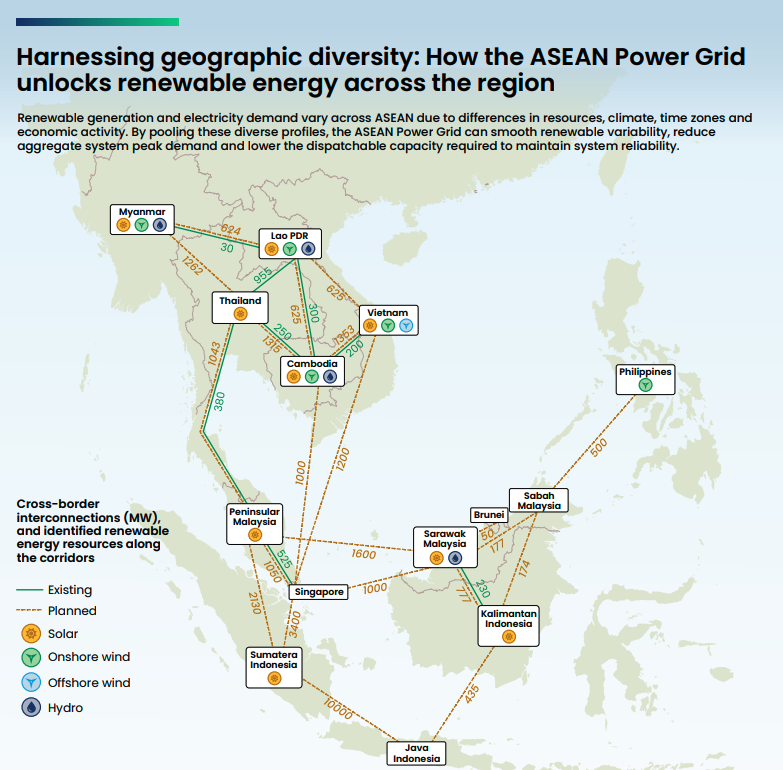
At the heart of Southeast Asian nations’ response is a longstanding infrastructure project to connect the region’s power grids by 2045 and enable cross-border trading of clean electricity through a network of underground and subsea interconnectors.
-
Southeast Asia’s fragile grids threaten billions in clean energy investment
Renewables developers need reliable electricity infrastructure and stable policies to help the region meet climate goals and surging demand for power -
UN backs push to upgrade grids slowing clean power uptake in Africa and SE Asia
The Global Grids Accelerator will help turn national and regional plans to expand electricity infrastructure into viable projects on the ground -
China keeps Indonesia’s battery dream afloat but future less certain
Chinese capital and technology turned Indonesia into the world’s top nickel supplier, but its dependence on China and the rise of nickel-free batteries could upset its battery ecosystem plans
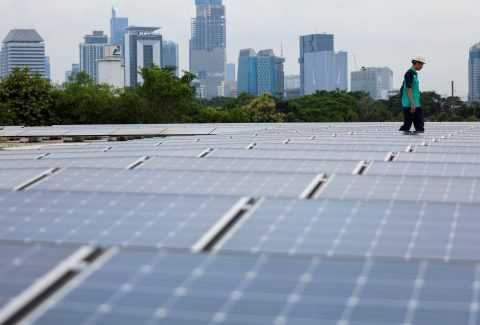
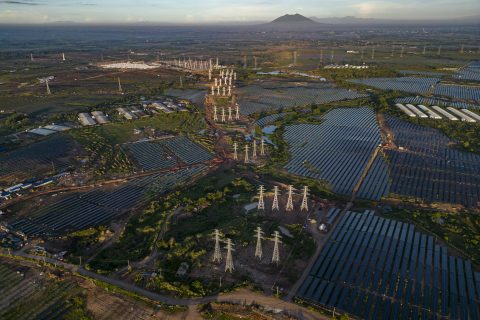
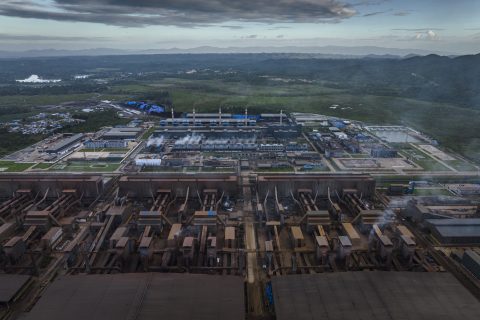
The plans will allow nations with high renewable energy generation potential to trade surplus power to their neighbours and major demand centres like Singapore, helping to integrate more renewables into the power mix and reduce reliance on fossil fuel imports.
“[It] will give us more energy security,” the Philippines’ energy secretary, Sharon Garin, told a press conference after a meeting of the Association of Southeast Asian Nations’ (ASEAN) energy ministers last week, when they discussed accelerating the delivery of the regional grid as part of measures to respond to the energy crisis.
“The Philippines is rich in solar power, Malaysia is rich in hydropower and Indonesia has geothermal: different countries have different resources. [The ASEAN Power Grid] will optimise the utilisation of renewables to the benefits of each member state,” said Garin.
But turning this decade-old political vision into a reality has been slow, held up by painstaking work to harmonise a patchwork of regulatory and legal frameworks and mobilise the private capital needed to build cross-border infrastructure.
More than $300 billion is needed to expand and modernise the region’s fragile grids to support the projected energy demand increase by 2050. This includes $27 billion required to deliver the cross-border interconnections by 2040, according to the International Energy Agency (IEA).
Every year of delay could cost the region billions of dollars in additional fuel costs and lock in new gas infrastructure for decades to come, according to analysis by global energy think-tank Ember.
The building block for energy security
With electrification high on the agenda of the COP31 climate talks in Türkiye next month, there is growing attention on the need to modernise and expand grid infrastructure to cope with growing electricity use and more renewables in the power mix.
Clean electrification and energy efficiency could deliver about a third of cumulative carbon emission reductions between 2026 and 2050, according to the International Renewable Energy Agency’s World Energy Outlook. But delivering that would require doubling annual global grid investment to $1 trillion between now and 2035.
Last month, the UN launched an initiative to accelerate investment into expanding and modernising grids in Southeast Asia and Africa.
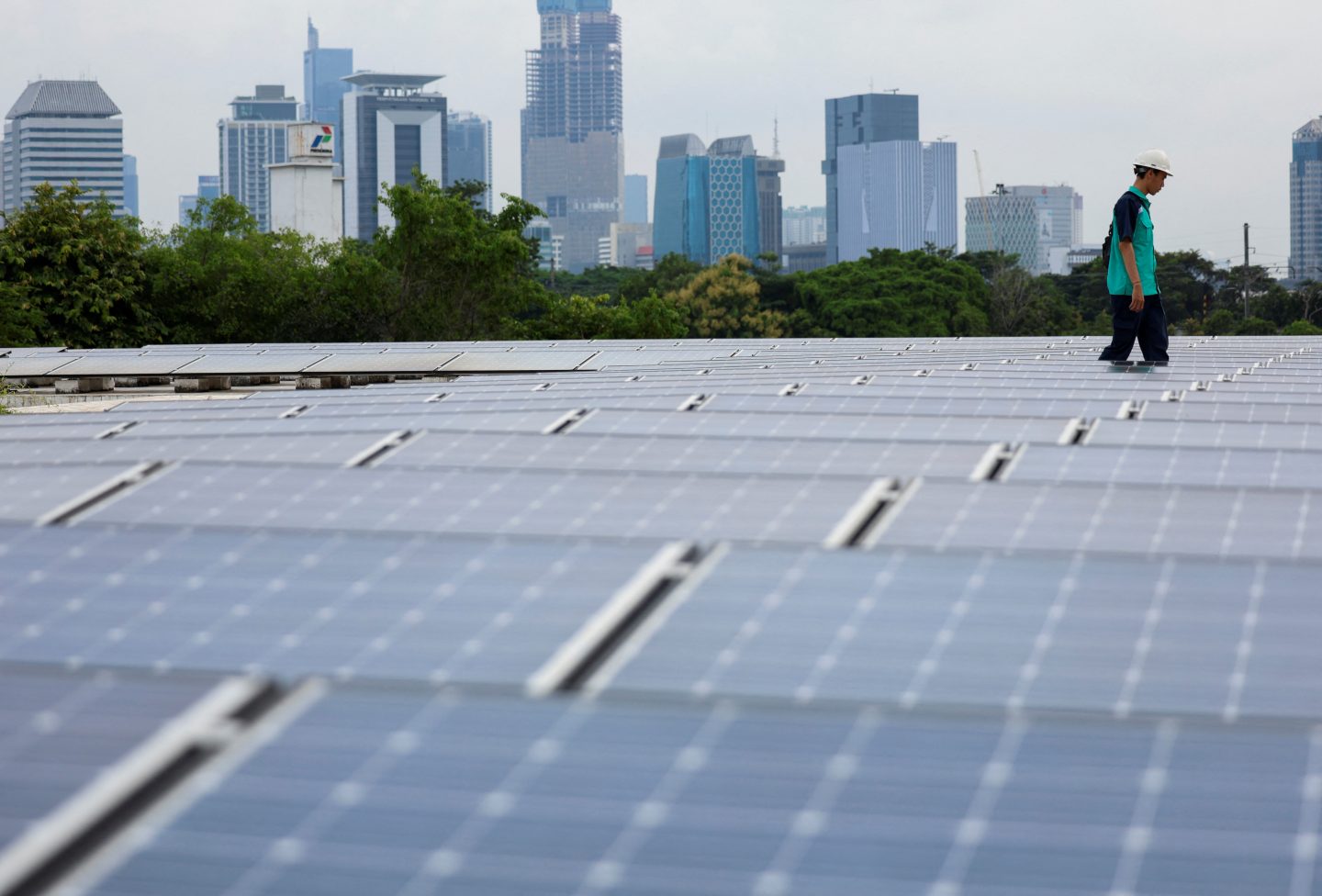
First conceptualised in 1997, the ASEAN Power Grid has gained fresh impetus in recent years as countries turn to renewables to cut their emissions and move away from volatile fossil fuel markets.
Energy supply disruption caused by wars in Ukraine and the Middle East has strengthened the case for regional grid connections. Before this year’s conflict began, the Middle East accounted for 60% of Southeast Asia’s crude oil imports. Competition for fewer, more expensive oil and gas shipments has left Southeast Asia facing a $160 billion energy import bill this year. Based on current policies, this could rise to $400 billion by mid-century.
In the Philippines last week, energy ministers agreed on an enhanced planning framework to deliver the ASEAN Power Grid and made progress on regulatory guidelines.
Garin said ministers were considering accelerating the project’s delivery. “The first study was to connect [by] 2045 – that’s too far,” she said.
A strong business case
The economic benefits of the plan have “captured the political imagination” of leaders in the region, Robert Cooke, grids advocacy lead at the Global Renewables Alliance, told Climate Home News. “The business case is stronger than ever,” he said.
“If countries were to go about building their own separate grids, of course that would be an expensive endeavour. But the discussion around the ASEAN Power Grid includes what costs could we share in building out this grid,” added Tiza Mafira, director of the Indonesia office for the Climate Policy Initiative.
Stronger grids would help the region meet collective targets to increase the share of renewable energy in total primary energy supply from 14% to 30% and in installed power capacity from 34% to 45% by 2030.
Connecting and pooling dispersed renewable resources would also help smooth local power shortages caused by daily and seasonal variations, reducing the need for backup gas plants and battery storage.
The IEA found the ASEAN Power Grid could help unlock some of the 20 terawatts of untapped solar and wind potential across Southeast Asia – an amount around 55 times the region’s current total power capacity.
From lines on a map to shovels in the ground
Rather than building a single unified network, the ASEAN Power Grid is developing cross-border links between neighbouring countries and smaller groups of nations.
As of 2025, nine of 18 priority interconnection projects are operational – accounting for around 10 GW of capacity with an additional 13.7 GW planned by 2040.
Source: Ember
A power line channelling up to 200 MW of clean electricity generated from hydropower in Laos to Singapore via Thailand and Malaysia has emerged as a key building block for grid-to-grid trading.
Progress on technical discussions will also help provide the clarity the private sector needs to invest in bankable projects, said Cooke.
In 2025, the Asian Development Bank and the World Bank announced a dedicated funding initiative to support the project.
“The enabling pieces are emerging,” said Monalisa Dimalanta, former chair of the Philippine Energy Regulatory Commission and the National Renewable Energy Board. “But the timelines remain unclear and a 2045 vision cannot answer today’s emergency,” she said.
“A power grid… that exists only on paper will not keep the lights on.”
Singapore: the delivery test
The implications of failing to deliver the ASEAN Power Grid are most acute in Singapore.
Constrained by space, with few renewable energy resources and dependent on gas for more than 90% of its electricity mix, Singapore has emerged as a leading proponent of a regional power grid as it seeks to achieve net-zero emissions by 2050.
To meet its power needs, the city-state aims to import 6 GW of low-carbon electricity by 2035, around one-third of its energy demand – a target which it is set to miss, however.
The plans heavily rely on building interconnectors to import solar power from Indonesia across the South China Sea. Around 40% of the ASEAN Power Grid’s planned interconnections are directed towards Singapore.
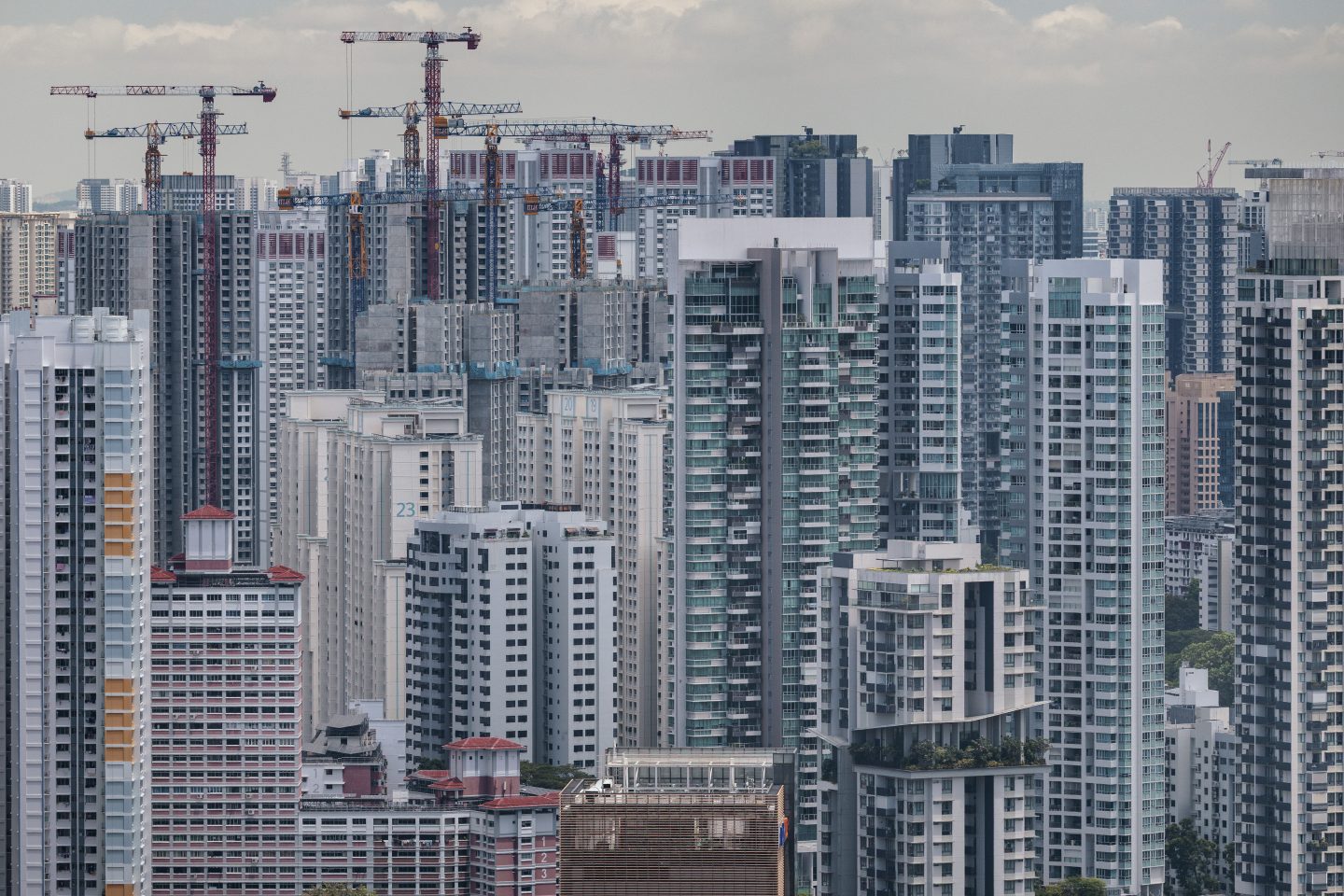
Ember’s analysis found that delivering the planned interconnectors by 2035 could enable renewables to meet nearly half of Singapore’s electricity demand. Delays could drop this to only a fraction of the country’s needs, and risk locking in new gas capacity until the 2050s. Without the ASEAN Power Grid, Singapore would need to install an additional 300 MW of gas-fired power capacity to bridge the gap by 2035.
Already home to the largest data centre capacity in Southeast Asia, Singapore’s electricity demand keeps rising, driven by the boom in AI infrastructure. “At one point, [it] either has to build a new gas plant, or it has to get the interconnection to supply that demand,” Lam Pham, an Ember energy analyst and the report’s author, told Climate Home News.
A region at a crossroads
With capital increasingly available, political will is now the biggest risk standing in the way of timely execution, said Pham.
But there are other challenges too, including the lack of frameworks on transmission tariffs and how to share the benefits of clean power trading. “It’s really hard to justify projects without that,” he said.
In addition, climate-fuelled weather events, including extreme heat and tropical storms, pose major threats to the region’s grid infrastructure. Experts say stronger grid interconnection can isolate damage and build the system’s resilience.
Efforts to deliver on the ASEAN Power Grid also come as ministers stressed the “continued importance of oil and gas” for economic development and seek to secure fossil fuel supplies and stockpile oil to prepare for the next crisis.
Despite an acceleration of renewable deployment, particularly solar, coal still generates nearly half the electricity supply in ASEAN member states and dominates the power mix in Indonesia, the Philippines and Vietnam, while Singapore and Thailand rely on gas.
While these measures might help the region with the immediate crisis, “the long-term answer is more domestic renewable energy, electrification, storage, efficiency and regional power trade”, Dimalanta said.
Main image: An aerial view of the MTerra solar project in the Philippines, set to become one of the world’s largest solar-and-battery developments (Photo by Ezra Acayan/Getty Images)
The post