

The head of the United Nations has called on all countries to deliver plans for phasing out their production and consumption of fossil fuels, as rising oil prices and climate shocks threaten energy and human security.
In his farewell speech to the UN General Assembly (UNGA) in New York on Tuesday, outgoing UN Secretary-General António Guterres for the first time urged “every government to adopt a national plan to transition away from fossil fuels” aligned with limiting warming to 1.5C. The plans, he said, should include “clear timelines and protection for affected workers and communities”.
“We know fossil fuel interests won’t step aside on their own. For decades, Big Oil has treated the atmosphere as an open sewer – and cashed in on the consequences,” Guterres told diplomats in his speech opening the leaders’ segment of the assembly, also calling out the industry’s windfall profits after Russia’s invasion of Ukraine.
-
COP31 electrification pledge leaves out clean power commitment
Campaigners and experts say the goal’s effectiveness in reducing emissions may be limited unless countries agree to meet it using only clean energy -
Climate change and energy transition rise up national security agenda
Leaders highlighted the national security risks posed by global warming and fossil fuel dependency at New York Climate Week
At last year’s COP30 climate summit in Belém, a group of about 80 governments led a failed push to develop a global roadmap to transition away from fossil fuels. Brazil instead proposed to draft a voluntary report that will be presented this year ahead of COP31 after countries and organisations submitted their views to the process.
Governments first agreed to transition away from fossil fuels in energy systems at COP28 in Dubai in 2023, but have since failed to agree at UN climate talks on how to move forward with that commitment, as efforts to do so have been effectively blocked by large fossil fuel-producing countries.
France, Netherlands issue plans
A few countries have moved forward with their own transition plans. France launched the first one at an international conference on the issue in April and the Netherlands followed suit this month. Not being major fossil fuel producers, both European nations aim to end their coal, oil and gas consumption by 2050, although the Dutch plan was criticised for not setting specific phase-out dates for the dirty fuels.
Adão Soares Barbosa, climate ambassador from Timor-Leste and chair of the Least Developed Countries (LDC) group in the UN climate negotiations, told a press briefing on Tuesday that last year’s discussions on shifting away from fossil fuels need to continue at COP31, adding that developed countries should lead the way with transition plans and curb their use of fossil fuels.
“We are expecting that we can make a request to major-emitting countries to limit emissions from this sector,” he said. “For LDCs, we’ll also try to reduce fossil fuel use, but it will depend on national circumstances.”
Samoa’s lead negotiator Anna Rasmussen said small island states have outlined their energy transition plans in their nationally determined contributions (NDCs) – countries’ plans for meeting the Paris Agreement goals – but added “we’re still waiting” for climate finance to help implement those plans.
Despite the global push to clean up the energy mix, countries leading climate talks are themselves also expanding fossil fuel production. COP31 co-presidents Australia and Türkiye have both recently given the green light to mine and drill more coal, oil and gas, and still depend on fossil fuels for 60% and 56% of their electricity production respectively.
Fossil fuel expansion threatens COP31 hosts’ credibility, experts warn
COP30 host nation Brazil has also persisted with its plans to explore potential new oil reserves near the mouth of the Amazon River – a region known as the Equatorial Margin.
These are moving ahead despite President Luiz Inácio Lula da Silva announcing last year at the Belém climate summit that the country would develop its own fossil fuel phase-out plan. This is still under development with little information about its progress and may be hampered by elections next month.
“We have achieved our self sufficiency in oil and will continue to explore the potential of new reserves, such as those in the Equatorial Margin,” Lula said in his speech to the UNGA on Tuesday. “But we will not abandon the environmental agenda,” he insisted. “We will move forward with the roadmap for the decarbonisation of the Brazilian economy.”
Transition far cheaper than status quo
Speaking at the main Climate Week NYC venue, Mads Christensen, executive director of Greenpeace International, said given the fast-shifting cost dynamics for both fossil fuels and renewables, countries should revise their existing energy plans because they are now out of date.
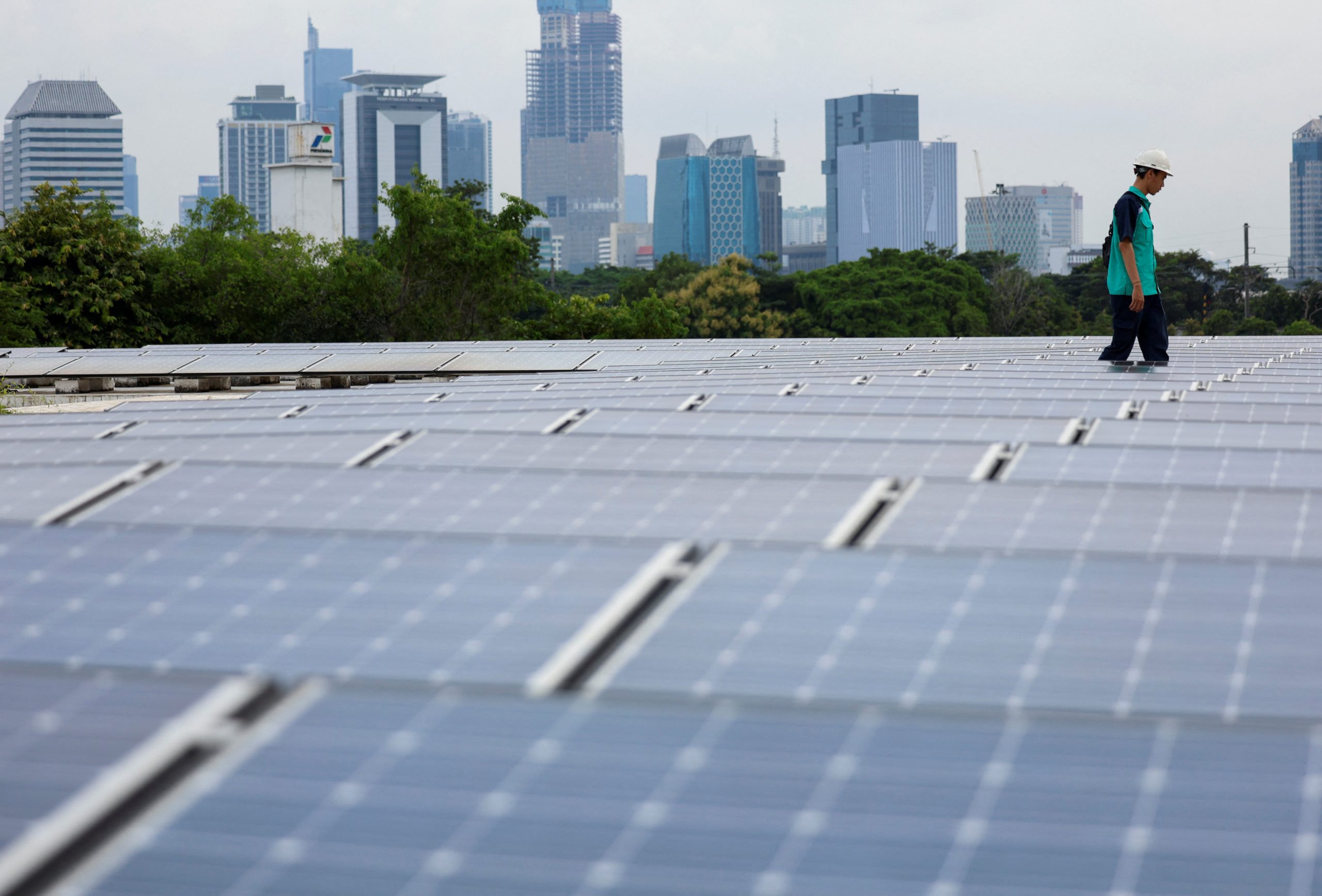
Gas power generation now costs around 150 euros per megawatt compared with around 50 euros for solar with battery storage – making the latter two-thirds cheaper.
“If these plans were updated, I think we would have a much faster transition because it simply makes good financial sense,” he said.
Tzeporah Berman, founder and chair of the Fossil Fuel Treaty Initiative, told Climate Home News that the Santa Marta process for transitioning away from fossil fuels (TAFF), launched at April’s conference, could help countries discuss, design and develop their national roadmaps, as well as mobilise the international cooperation required to actually deliver them.
“Many countries want not only national roadmaps but a global roadmap off the highway to hell,” she added. “A global plan is necessary to ensure the rules aren’t rigged against those who want to do the right thing and so all countries can make credible commitments.”
The second TAFF conference will be held in the Pacific island nation of Tuvalu next spring, co-chaired by Ireland. In New York, Tuvalu’s climate minister Maina Vakafua Talia called for stepped-up efforts to tackle the fossil fuel use that is threatening his country’s “demise” by driving global warming.
“The world is running out of time, and so I ask every government to come to… Tuvalu with solutions – real solutions, not false solutions – for us to ensure that we have a pathway and a way forward,” he urged.
The post UN chief urges countries to adopt fossil fuel transition plans with timelines appeared first on Climate Home News.
UN chief urges countries to adopt fossil fuel transition plans with timelines

More than a dozen countries, including Germany, South Korea, Pakistan and several small island states, have publicly backed the Turkish COP31 presidency’s flagship electrification pledge.
The voluntary pledge aims to raise electricity’s share of global final energy consumption to 35% by 2035, from 23% currently, but does not specify how that electricity should be generated.
The COP31 presidency is not expected to publish a full list of backers until next week, as it continues to rally support. But at least 14 countries have publicly endorsed the pledge, according to a Climate Home News analysis of speeches and official statements.
Alongside COP31 co-host Australia and COP32 host Ethiopia, they include Germany, Norway, Finland, South Korea, Pakistan, Zimbabwe, Eswatini, Togo and Liechtenstein, as well as the small island states of Palau, Seychelles and the Solomon Islands.
The European Union is widely expected to join the pledge this week, although member states still need to formally approve the decision, Politico reported. On Wednesday, President Ursula von der Leyen supported the pledge in her personal capacity and encouraged others to do the same.
Major economies still on the fence
Other major economies have welcomed COP31’s focus on electrification while stopping short of endorsing the pledge.
British Prime Minister Andy Burham said on Thursday that he was proud to support the summit’s focus on electrification. He said it matters for energy security, for creating good jobs in clean energy and manufacturing, and for lowering people’s bills.
-
Big fossil-fuel countries back Brazil-led transition roadmap
Some countries including Germany and the Netherlands call for the roadmaps to inform a key global review of climate progress in 2028 -
COP31 outcome needs to prioritise transition away from fossil fuels
Many countries are already working on parts of their transition, such as phasing out coal or ending fossil fuel subsidies, with more expected to follow soon
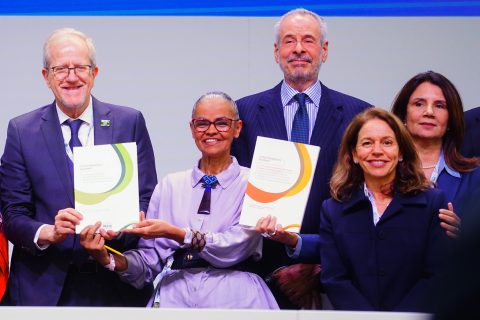

Brazil’s environment minister João Paulo Capobianco ssaid on Thursday that electrification was “an important front” in climate action, but warned it should not be pursued “for the sake of it”. It should instead serve as a means of improving efficiency and cutting emissions. He said Brazil would work with the Turkish proposal and suggest adjustments to allow “specific solutions” that reduce emissions, without giving details.
Saudi Arabia was more openly sceptical. Energy minister Prince Abdulaziz bin Salman told the leaders’ summit that emissions reduction is “what unites us”, “not necessarily the track to achieving it”. “The expansion of electrification does not necessarily mean cutting emissions, so long as we do not consider the sources of its production,” he said, adding that countries’ choices must be respected.
Clean power strings attached
Many of the nations formally backing the initiative have attached some strings to their support. At a high-level roundtable on Wednesday, the low-lying Pacific island nation of Palau said it would sign on to the pledge. But it added that electrification “must not become a substitute or a distraction” from the chief goal of transitioning away from fossil fuels.
Seychelles also endorsed the pledge but added that it must be connected with cleaner electricity. “Electrifying more activities while continuing to burn fossil fuels will not deliver the full economic or climate benefits,” the country’s representative told the roundtable.
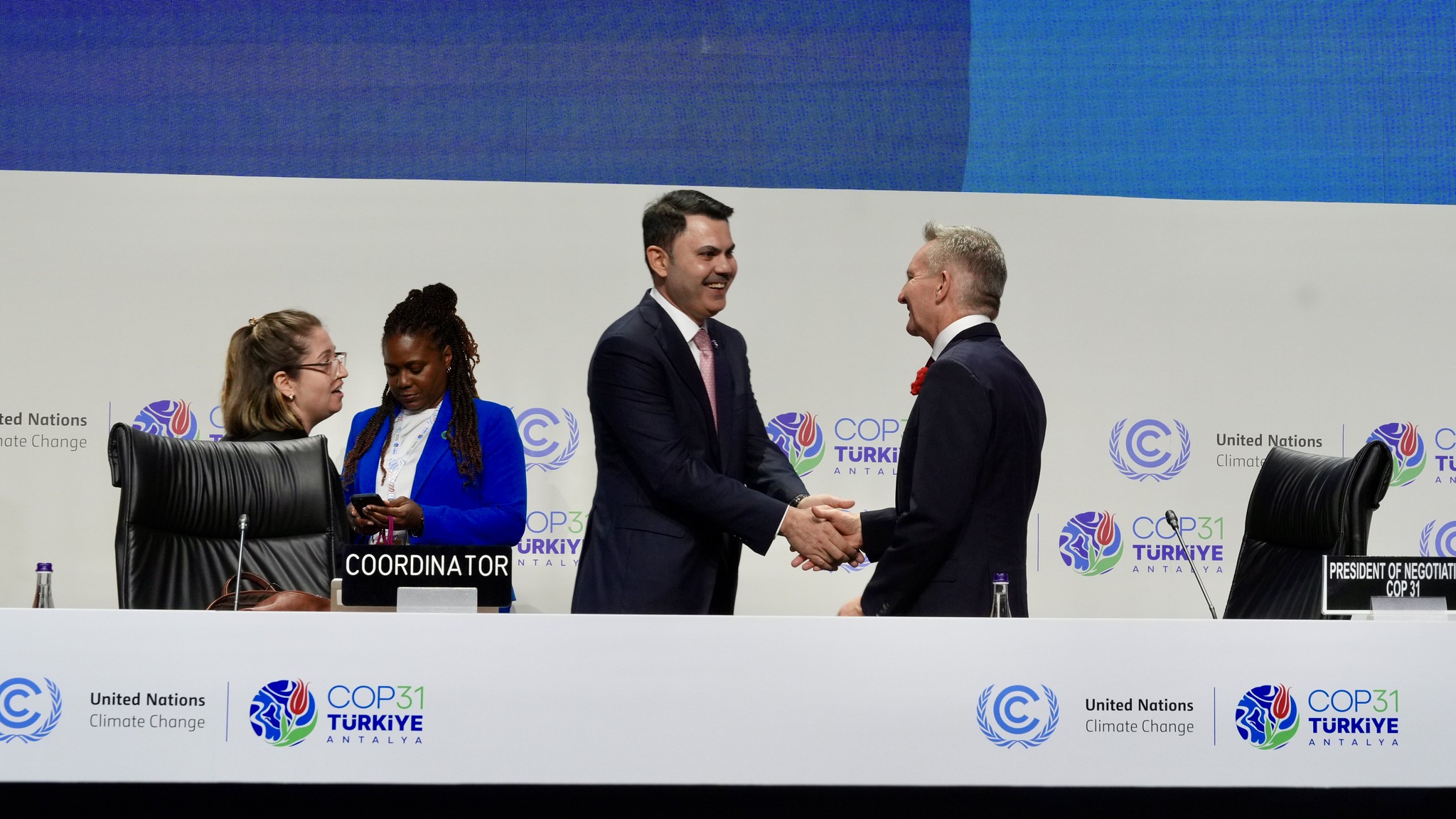
Australia’s climate and energy minister Chris Bowen, whose country is co-leading the pledge with Türkiye, has defended its design. “Electrification is almost always a good thing,” he told the Outrage and Optimism podcast recently. He argued that switching to an electric car cuts emissions by 60% even on a coal-fired grid, and by 90% when powered by solar.
Doug Arent, senior fellow at the WRI Polsky Center for the Global Energy Transition, said the most important thing “is that there is significant support for the concept of electrification”. He expects more countries to “recognise their pathway to be behind the 35 by 35” in the coming years.
Calls for finance
Other developing countries backing the pledge have underlined the critical importance of access to finance. Pakistan’s Prime Minister Shehbaz Sharif showed off his country’s people-led boom in rooftop solar and growing rollout of electric vehicles. But he added that “momentum without finance cannot be sustained,” and said the burden of new technologies cannot fall on countries already in debt.
Zimbabwe backed the pledge but warned of the high capital costs and financial bottlenecks facing developing countries. Its representative proposed a global electrification investment facility that would provide first-loss guarantees for projects under Mission 300, an initiative to connect 300 million people in Sub-Saharan Africa to electricity by 2030.
The Solomon Islands, another supporter of the pledge, asked for a dedicated finance access window for small island nations and least developed countries (LDCs).
Tuesday saw the launch of a global finance coalition backed by COP31 host Türkiye and COP32 host Ethiopia aimed at supporting clean electrification in developing countries.
Closing the roundtable, Türkiye’s energy minister Alparslan Bayraktar, who chaired the session, claimed the 35×35 pledge had found broad support worldwide. He called for a “smart” energy transition that draws on all available technologies, including carbon capture, use and storage.
The post COP31’s electrification pledge wins support, with caveats on clean power and finance appeared first on Climate Home News.
COP31’s electrification pledge wins support, with caveats on clean power and finance
Climate Change
Albanese must deliver credible action to end fossil fuel chokehold, not just rhetoric
ANTALYA,Türkiye, Thursday 12 November 2026 — In response to Prime Minister Albanese’s COP31 Leaders’ Summit address, Shiva Gounden, Head of Pacific at Greenpeace Australia Pacific, speaking from Antalya said:
“Prime Minister Albanese’s COP31 address was full of nice rhetoric, but once again failed to confront or even mention the root cause of the climate crisis — fossil fuels.
“In Antalya, UN climate chief Guterres told leaders to “tell the truth”. The truth is Australia can not credibly talk about its clean energy transition while continuing to expand the industry it needs to leave behind. Australia must reckon with reality; its damning track record of 38 coal and gas approvals since it took office in 2022.
“We meet in Antalya amidst a global energy shock and dire projections of 1.5°C overshoot. Overshoot means something in the Pacific — it means irreversible harm, lives and cultures lost forever, entire nations at stake. We must face the fierce urgency of now.
“Never before has the need to end the fossil fuel chokehold been so abundantly clear, as our Pacific communities again suffer the consequences of a global economy hooked on coal, oil and gas. The Pacific needs credible roadmaps and clear timelines to unhook from fossil fuels — Australia can’t keep saying implementation and not reflect it with credible action.”
ENDS
COP31 images and video available here in Greenpeace Media Library
Media contact: Kate O’Callaghan in Antalya (GMT+3) on +61 406 231 892 (Whatsapp/Signal)
Albanese must deliver credible action to end fossil fuel chokehold, not just rhetoric
A second set of world leaders give their speeches on Thursday before heading out of town and leaving their negotiators to it. After around 40 leaders spoke on Wednesday, today there will be just 25 or so including the UK’s Andy Burnham, Venezuela’s Delcy Rodriguez and Bangladesh’s Tarique Rahman.
But Brazil’s President Lula is still there and is expected to keep grabbing headlines, along with California’s Governor – and maybe next US president – Gavin Newsom – and Swedish climate activist Greta Thunberg who has lost none of her star power, if the crowd around her in the press centre was anything to go by.
We’ll bring you highlights through the day on issues ranging from finance to methane, and update you on a pledging event for the Pacific Resilience Facility, which the climate-vulnerable region is relying on to keep small island nations as safe as possible in the face of intensifying storms, drought and sea level rise.
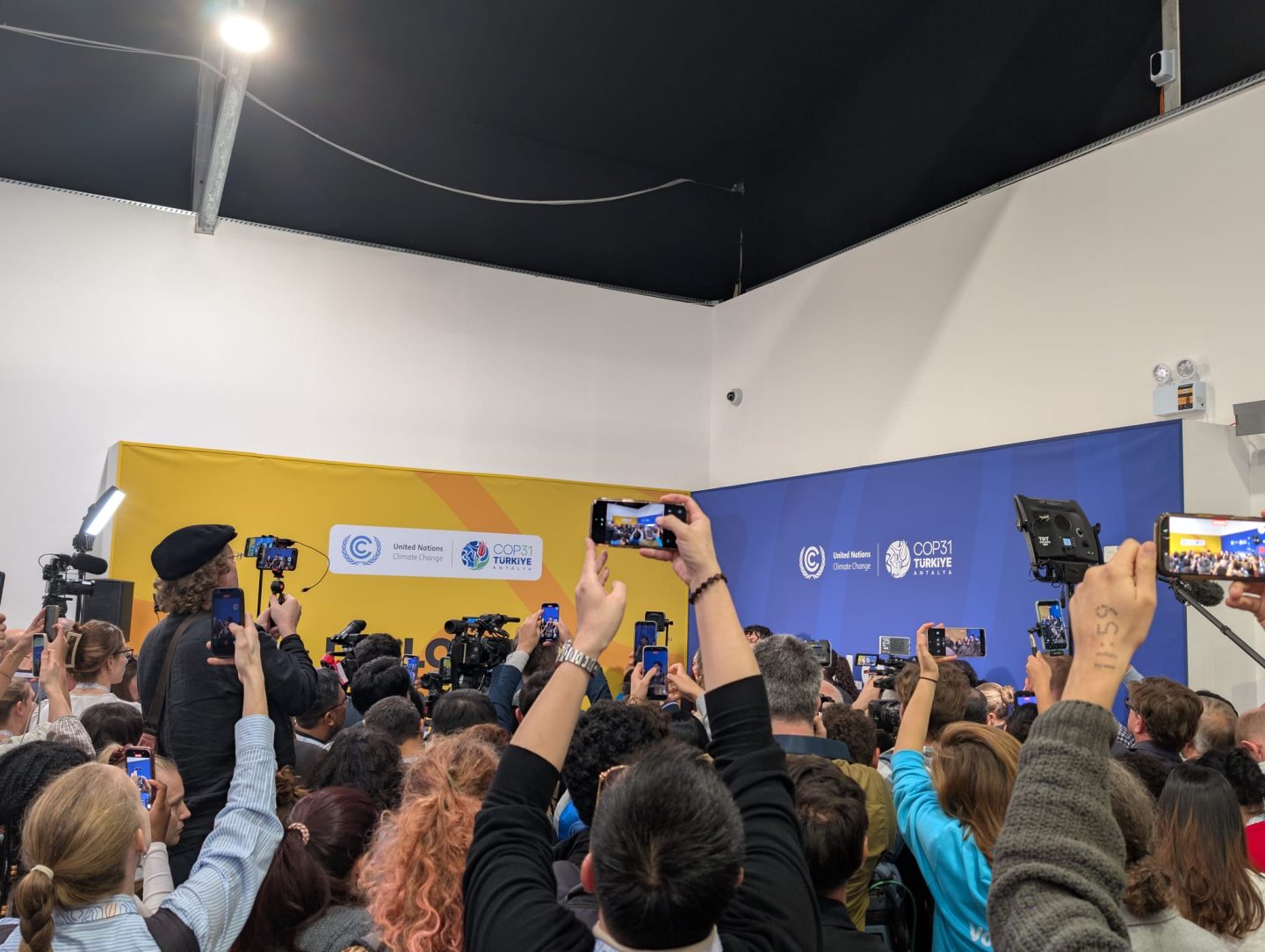
The post COP31 Bulletin Day 4: Burnham speaks with UK climate policy under fire appeared first on Climate Home News.
COP31 Bulletin Day 4: Burnham speaks with UK climate policy under fire


COP31’s electrification pledge wins support, with caveats on clean power and finance
Albanese must deliver credible action to end fossil fuel chokehold, not just rhetoric

