

On quiet streets across the Californian city of Monterey Park, green-and-white “YES on Measure NDC” signs stood on front-yard lawns as volunteers walked door-to-door, drumming up support among residents to vote in favor of a ban on new data centers in their area.
They clarified the ballot wording in English, Spanish and Chinese, while distributing multilingual flyers warning about the rise in electricity demand, industrial infrastructure and environmental impacts associated with AI-related data center development.
Less than a month later, on June 2, Monterey Park voters overwhelmingly approved the ban in the San Gabriel Valley east of Los Angeles, with 86.4% voting in favor and 13.6% opposed, according to county election results.
Social opposition to data centers is on the rise, especially in the US, as artificial intelligence (AI) and the technology hubs needed to support it stoke competition for electricity, water and land in communities where they are based. Industry advocates say data centers bring economic benefits and do not always result in higher power prices for households.

The result in Monterey Park made it the first city in the United States to enact a citywide prohibition on data centers through a voter-approved ballot measure.
“This week our city has been celebrating the landslide results from Measure NDC,” Monterey Park Mayor Elizabeth Yang said in a phone interview.
On social media, Yang described the city’s response as the result of sustained resident organizing and civic engagement. “We want to fulfill our duty of listening to residents,” Yang told Climate Home News.
A community campaign takes shape
The vote came after months of public testimony, neighborhood outreach and organizing surrounding a proposed data center project on Saturn Street in Monterey Park. Here, developers planned to replace an existing commercial office building with a nearly 50-megawatt data center intended to serve growing demand for AI computing.
Supporters of Measure NDC (Measure No Data Centers) argued that keeping this, and other such centers, out of their community would help protect air quality, drinking water resources, public health and local infrastructure.
According to CoStar News, a real estate information platform, the backers of the Saturn Street project – Digico Infrastructure REIT and HMC Capital’s StratCap – had already withdrawn their planning application on April 3 amid growing local opposition and regulatory uncertainty, including the city’s decision to place a data center ban before voters.
Subsequently, on April 20, the Monterey Park City Council adopted an ordinance prohibiting all data centers within the city limits.
Explainer: Will AI data centres make or break the energy transition?
Company representatives later said they would explore future “productive land uses … supported by the broader community”. Potential alternatives discussed publicly have included housing, although no formal proposal has been submitted.
Reuters reported in May that DigiCo Infrastructure, an Australian company, was exploring “monetisation options” for its two Los Angeles sites after rowing back on the Monterey Park proposal. DigiCo is also selling its Chicago data center for $750 million to pay down debt and fund the development of another site in Sydney.
DigiCo and HMC Capital did not respond to requests for comment for this article.
Potential local benefits of data centers
Industry lobby groups argue that data centers can provide economic benefits to host communities. According to the US-based Data Center Coalition, which represents major operators and developers, data centers generate tax revenue, support construction and technical jobs, and provide infrastructure needed for cloud computing, scientific research and AI development.
The industry has also challenged claims that data centers necessarily raise electricity costs for households. A recent report by energy consulting firm Energy + Environmental Economics (E3), commissioned by the coalition, found no historical evidence that data centers had driven up residential electricity rates under existing utility pricing structures. It argued that factors including inflation, grid modernization costs, natural gas price volatility and investments in wildfire resilience have played a bigger role in rising electricity bills.
According to E3, large users can, under certain regulatory frameworks, reduce prices for other customers by contributing more revenue to utilities than they cost to serve. In a previous analysis of Amazon data centers, the consultancy found that payments from the facilities exceeded the incremental costs incurred by utilities. The report also noted that regulators across the US have increasingly adopted specialized pricing structures as data center demand has expanded.

Hefty carbon, water and land footprints
The concerns raised in Monterey Park mirror debates over the environmental and infrastructure demands of AI being heard in many countries around the world, from Europe to North America and Asia.
This month, a UN report estimated that the data centers required for AI globally could consume 945 terawatt-hours of electricity annually by 2030 – roughly twice France’s 2025 power consumption.
This, it calculated, would have a carbon footprint needing some 6.7 billion trees grown over 10 years to offset, a water footprint equal to the annual domestic needs of 1.3 billion people in Sub-Saharan Africa, and a land footprint of more than 14,500 square kilometers, roughly twice the Jakarta metropolitan area.
In a 2026 report, Key Questions on Energy and AI, the International Energy Agency (IEA) found that electricity consumption from AI-focused data centers grew by approximately 50% in 2025 alone.
It warned that “social acceptability is also a growing issue, as communities push back against data center projects”, citing concerns about environmental sustainability, electricity affordability, infrastructure strain and democratic participation in land-use decisions.
Global data center electricity consumption by sensitivity case, 2020-2035

AI-focused facilities consume substantially more electricity than traditional data centers and often require extensive supporting infrastructure, including cooling systems, industrial electrical equipment, backup generators running on diesel and large-scale energy storage systems.
The IEA also noted that operators are increasingly exploring onsite natural gas generation and battery infrastructure to maintain electrical reliability as AI workloads intensify.
Local concern over industrial infrastructure
Samuel Brown Vazquez, an East San Gabriel Valley community organizer, said doubts about the proposed data center in Monterey Park were informed by broader debates over industrial development in the area.
Brown cited community opposition to proposals that could bring battery energy storage facilities – and potentially data centers – to the former Puente Hills Mall site in the City of Industry, where residents have raised concerns about pollution, fire risks, and the impacts of new industrial infrastructure on nearby residential neighborhoods and schools.
Many viewed the campaign as part of a larger conversation about how communities should respond to the rapid expansion of AI-related infrastructure across Southern California.
Power-hungry AI data centres seen driving demand for fossil fuels
According to nonprofit Data Center Watch, around $64 billion-worth of data center projects nationwide were delayed or blocked between May 2024 and March 2025 amid increasing local opposition.
Mayor Yang wants Monterey Park’s experience to encourage other communities to take a more active role in decisions about AI-related infrastructure. “We’re hoping other cities can follow similarly in banning data centers with proposed ballot measures,” she said, adding that whether such efforts succeed elsewhere will depend in part on how local officials respond to residents’ concerns.


The new UN report this month called on governments and companies to address AI’s environmental impacts proactively to ensure that the technology develops sustainably and its benefits are shared fairly.
Kaveh Madani, director of the United Nations University Institute for Water, Environment and Health, who led the investigation team for the report, said AI “is a technological transformation that is improving the lives of billions of people around the world”. But, he added, it must be used “responsibly”.
“We have a narrow window to ensure that the backbone of the technological revolution of our era develops within planetary limits, and that the communities who provide the critical minerals for advancing AI and the ones that host its infrastructure and e-waste are also among those who benefit from it,” he said.
This story was developed, reported and produced under the Covering Climate Now (CCNow) Climate Journalism Student Mentorship, which connects USC student journalists with professional newsrooms in CCNow’s global network. Participants receive training, editorial mentorship, and the opportunity to report and publish original climate stories with partner outlets while being paid professional freelance rates.
The post The vote that stopped a data center: US communities query resource-hungry AI appeared first on Climate Home News.
The vote that stopped a data center: US communities query resource-hungry AI

Climate Change
After a week of plenty of activity and drama for Greenpeace at sea, I felt like writing to you on a much quieter theme…
Do you have a favourite book, poem or story about the ocean?
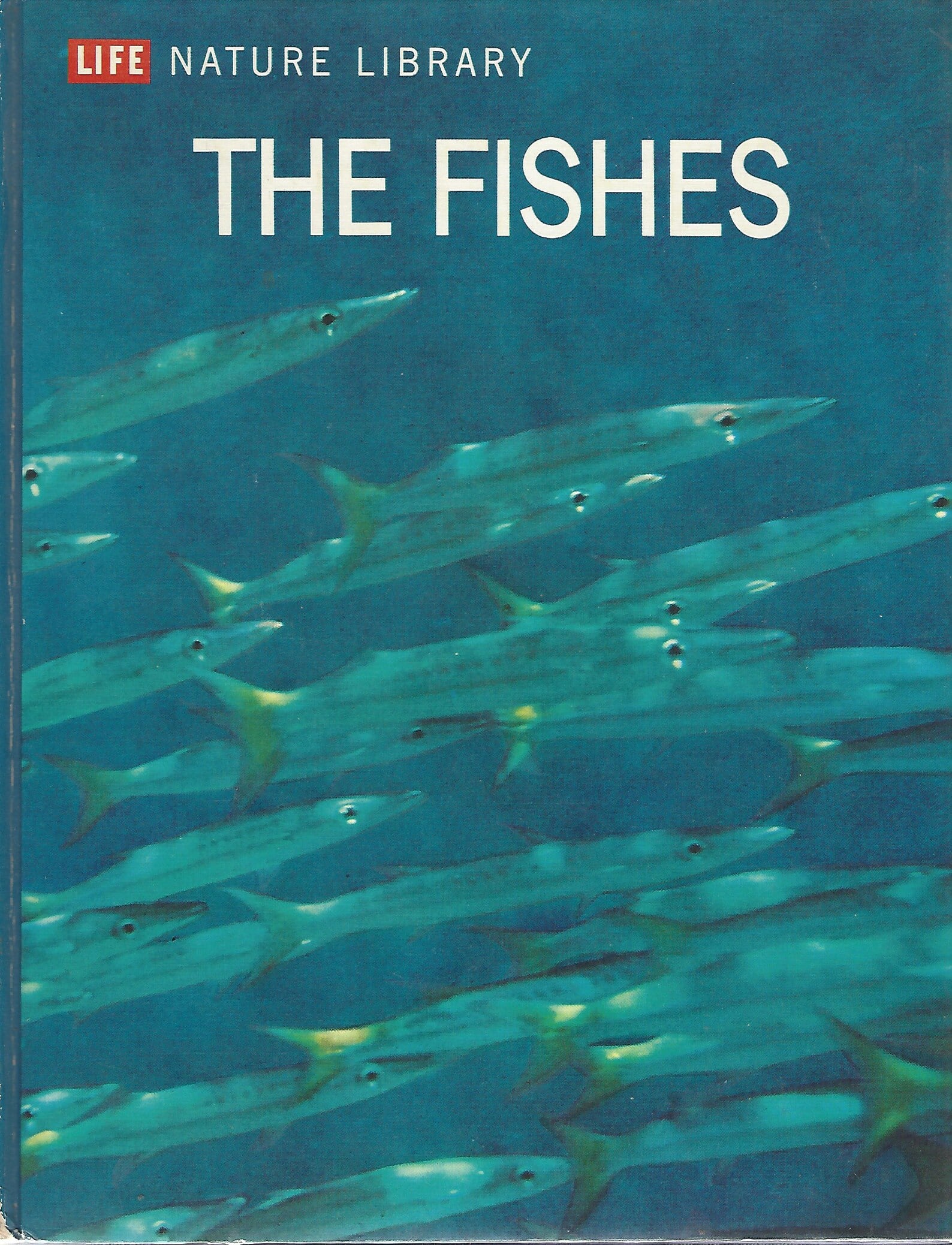
When I was very small, it was the TimeLife book of The Fishes, by F. D. Ommanney, which I remember endlessly poring over, my child’s mind gripped, in total fascination. The cover illustration showed a shoal of barracuda, mid-water and heading upwards, lit up as an iridescent blue by a column of sunlight. Oddly, it is only the cover and the illustrations of the deep sea creatures which I now remember—but I loved that book, as the weakened spine, blunted pages and dog-eared corners attested.
The Fishes has been on my mind recently, because I’ve been working with some dear friends on our own illustrated oceans book, to be published by Upswell Publishing. The book is called Scott Reef: Like Nowhere Else on Earth, and I want to share with you a bit of the story behind its creation.
Scott Reef is absolutely magnificent: Australia’s largest freestanding oceanic reef, brimming with life, including rare and threatened species such as a genetically distinct population of green sea turtles, pygmy blue whales and the wonderfully elegant dusky sea snake. But Scott Reef isn’t near our capital cities; it is way off the north-west coast of WA. And it is threatened with devastation by Woodside, which wants to drill up to 57 toxic wells at the Reef for its vast, dirty Browse gas project.
One of the main challenges in the fight to save Scott Reef from being turned into an industrialised gas zone by Woodside is bringing this incredible location to life for people who haven’t actually experienced it first hand. Because despite its ecological significance and dazzling beauty, ‘Scott Reef’ is also—at least not yet—exactly a household name.
To help get over this barrier, Greenpeace has enabled a number of photographers to travel to Scott Reef by boat (including the Rainbow Warrior) to document its astonishing diversity of colour and life. We then brought these images together in a remarkable photobook, produced by our talented in-house team, which we’ve been putting into the hands of as many leaders as possible—including the MPs whose decisions can determine the Reef’s future.
Back in June this year, I was sharing a copy of our in-house book at a business gathering in Perth when someone pulled me aside. Had we thought about publishing the book commercially? Apart from anything else, he wanted to buy a copy himself! He had a point. We were proud of what we’d created, but a commercially published version could reach a much wider audience and have even greater campaign impact. I immediately turned to my dear friend, Terri-ann White, who runs Upswell Publishing in WA, for advice.
Terri-ann has a huge heart and terrific vision. So many wonderful things in WA owe their existence to her doings, and, true to form, she was immediately encouraging and enthusiastic. “But,” she said, “it would add a whole new dimension if we had some words to accompany the incredible pictures.”
Fair enough, I thought. I could ask a few authors.
“And when would you like it published?” she asked.
“Ideally November,” I answered sheepishly.
Now, in publishing terms, nobody goes from idea to finished work, beautifully produced by a commercial publisher, in just four months. It. Just. Doesn’t. Happen. A book of this scale would ordinarily take nine months, I was told. But Terri-ann was undeterred. “If you can get a rapid turnaround on the writing, I will give it a shot.”
Over the following few days, I sent out 24 emails to prospective writers. To my joy and surprise 23 of them responded almost immediately with an enthusiastic yes!
Terri-ann was somewhat alarmed and perplexed when I told her the good news… we’d discussed a few authors, not more than twenty! “Impossible,” she texted. “Editing is important and you are talking about thousands of words!” But I also know Terri-ann. She does the impossible. And so, here we are… Terri-ann is going to hit that improbable deadline. Scott Reef: Like Nowhere Else on Earth will be on shelves in November.
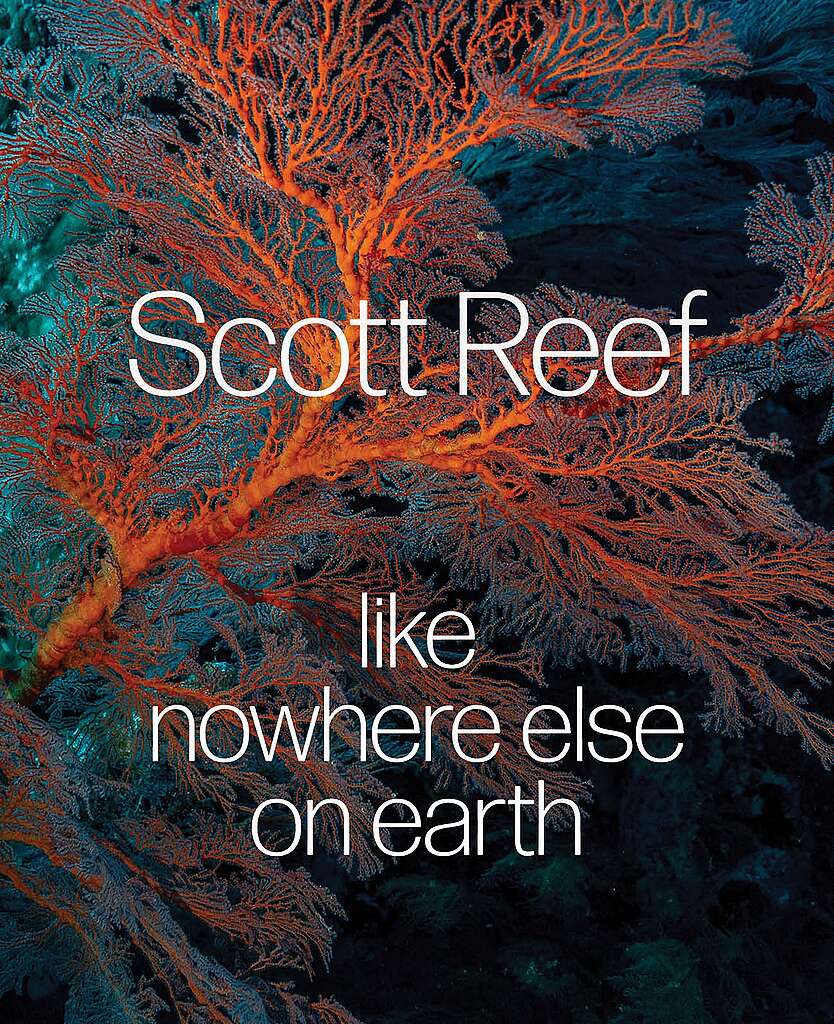
The contributors are a wonderfully diverse bunch, united by their enthusiasm for Scott Reef — and their extraordinary speed!
It’s a brilliant mix. The book brings together national icons like Peter Garrett, Tim Winton, Mick Dodson, Janet Holmes à Court and Fiona Stanley; the intellectual heft of professors Frank Bongiorno, Jessica Meeuwig, Rick Steiner and Samantha Hepburn; the poetic vision of Prema Arasu, Berndt Sellheim and Saadiah Freeman; the field expertise and passionate first hand witnessing of Imogen Zethoven, Tooni Mahto, Ben Fitzpatrick, Geoff Bice, Olaf Meynecke, Paul Gamblin, Sarah Gittoes and Hayley Baillie; and the determination of emerging activist voices Jackson Reid and Emma Sangalli.
Their elegant words wrap themselves around the sheer wonder of the underwater world, brought to life by the work of the photographers — of whom one, Wendy Mitchell, has also contributed a wonderful essay.
Terri-ann showed me the full physical proofs this week and they are breathtaking. This book contains some of my absolute favourite images of wildlife beneath the waves -– and believe me, after almost 20 years at Greenpeace, I’ve been privileged enough to see some remarkable shots! The essays bring a whole new depth and richness to the story of Scott Reef.
If I am being honest, and maybe a bit sentimental, I hope that a four or five-year-old child somewhere in Australia will spend part of their summer holidays turning the pages of this book, wide-eyed with curiosity and awe at the beauty and strangeness of the creatures that call our oceans home.
Our shared commitment is to make sure that, as those children grow up, the wonders of Scott Reef will exist not just in the pages of the book, but out there in the wild waters off north-western Australia—alive, thriving, and every bit as extraordinary as they are today; a living wonder beneath the waves.
Pre-orders of Scott Reef: Like Nowhere Else on Earth are available here.


Q & A
Sometimes you get asked a question so often that you decide to produce a report to answer it!
We know there is strong public opposition to voter opposition to gas drilling at Scott Reef and fracking in the Kimberley in Western Australia. But I am frequently asked whether, even if people don’t want it, more gas drilling is a necessary evil to sustain WA’s prosperity?
The short answer is an unequivocal ‘No’. The longer answer is our new report, From Gas to Green: Building Western Australia’s Future State, which makes the comprehensive case that Asia’s gas market is declining — while WA has an enormous untapped opportunity to become a global leader in green industries and exports, helping drive the region’s shift away from fossil fuels. The faster that WA embarks on a decisive shift away from gas—and that includes no fracking in the Kimberley, or drilling at Scott Reef — so much the better for the state’s people, ecology and economy.