

Monica Feria-Tinta is a barrister at the Bar of England & Wales, and a leading advocate in environmental and climate change litigation both in English and international courts.
What do melting glaciers in the Cordillera Blanca, a mountain range in Peru, have to do with RWE, a fossil fuel giant based in Germany? The answer could have profound consequences for the role of climate litigation in tackling the climate crisis.
Saul Luciano Lliuya is a farmer from Huaraz, a city in the foothills of the Peruvian Andes. He and 120,000 other local residents live in constant danger. The melting of glaciers caused by climate change is causing the water levels in Lake Palcacocha above their home, to rise.
In 1941, a huge chunk of glacier fell into the lake. The resulting avalanche claimed between 1,800 and 7,000 lives. Peru’s disaster management agency warns that a flood could occur at any moment.
A trailblazing lawsuit, which a German court is due to rule on this week, has already set a global precedent for corporate climate liability by seeking to hold RWE accountable for its role in the accelerating glacial melt that threatens Lliuya’s hometown of Huaraz.
Global forest loss hits “frightening” record high with climate-fuelled fires
Liability of fossil fuel companies
Scientific studies link RWE’s emissions to glacier melt, increasing the risk of catastrophic flooding posed by a rapidly expanding glacial lake above the city.
After filing a case against RWE in 2015 for a portion of the costs required to prevent a future flood, an appeals court in Hamm ruled in 2017 that the case was admissible. This was hugely significant – a landmark decision.
In principle, it means that RWE could be held liable for a share of climate change damages, thereby establishing an historic precedent that fossil fuel companies can be held liable in court for such damages.
RWE is now phasing out its coal-fired power plants as part of efforts to reach net zero emissions by 2040 and argues that a single emitter of carbon dioxide cannot be held responsible for global warming. “If such a claim were to exist under German law, it would also be possible to hold every motorist liable,” it said in a recent statement on the case – an assertion the judge went out of his way to dismiss in March during his opening remarks.
Protection from flood risk
Given how significant this case is to climate litigation, I have been following it closely from the beginning. The 2017 ruling already shifted the dial in terms of holding major emitters accountable for the harms they cause.
The last round of hearings in March this year, focused on the scientific evidence of the risk of flooding for the plaintiff’s property. A key question before the court was the extent to which Lliuya’s home and family are at risk. His lawsuit argues that RWE should contribute its fair share to protective measures, given its role in driving the climate impacts endangering his community.
During the hearings, scientists representing the plaintiff challenged key findings of a court-appointed expert report, highlighting critical “blind spots.” They argued the report severely underestimated the risk of rockfalls triggered by thawing permafrost and failed to fully account for climate change’s accelerating impacts. The plaintiff’s legal team warned that the flood risk to Huaraz is much higher than acknowledged and urged the court to act accordingly.
Now a final decision in this landmark case, which could cement its significance for future climate damages litigation, is awaited.
Transboundary harm
While climate litigation is a relatively new area of the law, the basis of Lliuya’s case is nearly 90 years old. “Transboundary harm”, or harm that is not contained by geographic borders, is the notion that links pollution originating from one state to the impact it has on property in another.
The concept was introduced in the 1938 Trail Smelter case where, for the first time ever, a party was held liable for damages caused by fumes carried over to another country by the winds from a privately owned factory. It established the principles of transboundary harm and polluter pays.
Lliuya’s case is the first case to apply this principle in the climate change context, making it a definitive moment in the history of climate litigation.
RWE has stated in its defence that it could not be held accountable for providing electricity to the German people, a lawful act. But the courts in Germany held that you can be held accountable if you knew of the deleterious effect, and that since 1958 it has been foreseeable to an optimal observer that increasing C02 emissions would lead to global warming.
‘David versus Goliath’
Speaking to Lliuya’s lawyer, Roda Verheyen, brought into sharp focus the ‘David vs Goliath’ nature of the case. With RWE possessing vast amounts of resources to litigate, the company has embarked on a strategy of deconstructing the case to a painfully granular level. “Death by detail” is how Verheyen put it to me.
This asymmetrical dynamic is typical of climate litigation cases. Yet despite the disadvantages faced by Lliuya and those supporting him, the precedent already set in 2017 has changed the legal landscape forever.
Greenpeace’s $660m damages ruling a ‘wake-up call’ to climate movement
To date there have been 68 lawsuits filed seeking financial redress for the impacts of climate change. The fossil fuel industry, including oil and gas majors ExxonMobil, Shell, Chevron, ConocoPhillips and BP, has been the target of 54% of them.
Whatever the outcome of Lliuya’s case, we have entered a new age of corporate accountability, one in which major polluters that cause serious harm to the environment can no longer escape the legal consequences.
The post The Peruvian farmer who has changed the climate litigation landscape forever appeared first on Climate Home News.
The Peruvian farmer who has changed the climate litigation landscape forever

As an extreme El Niño breaks marine temperature records, COP31 is set to boost the profile of the ocean’s role in solving climate change, but finance and clear conservation measures will be needed for it to move the needle, experts said.
The Turkish presidency has announced plans for an Antalya Ocean Declaration that recognises the centrality of the global ocean – the world’s largest carbon sink – in regulating the climate and minimising the now unavoidable overshoot of global temperatures above 1.5C over pre-industrial levels.
Meanwhile, as part of the formal UN negotiations, Australia has announced plans to land a cover decision in Antalya, which, according to veteran former US negotiator Sue Biniaz, would be the only section of the formal negotiations where the role of oceans could be included.
She added that an outcome at COP31 seems likely, given the initiative from both presidencies and a push from over 100 countries – including Brazil, the EU and the African Group of countries – calling for the UN negotiations to deliver a plan for implementing ocean measures.
Governments will arrive in Antalya with a “super El Niño” adding stress to marine ecosystems and expected to continue to intensify until December 2026, with parts of the Pacific averaging almost 30C (86F) – over 3C more than normal – in October, according to monthly EU sea temperature data.
-
COP31 Briefing: What to expect from the Antalya climate summit?
Electrification, the fossil fuel transition, adaptation to rising impacts, climate science and trade are key themes as governments gather for COP31 in Türkiye -
European nations signal support for fossil fuel roadmap, says COP30 president
André Corrêa do Lago told Climate Home News that it’s up to other nations to decide how the fossil fuel and deforestation roadmaps are used -
Nepal seeks stronger recognition of mountain issues in UN climate process
Flood-hit Nepal wants COP31 to adopt a new agenda item formalising work on mountains and climate change and boosting the response to rising risks


Needs for ocean conservation and funding
While elevating the ocean agenda is “critical”, it must lead to funding for ocean conservation and a clear plan for reaching the global target – set at UN biodiversity talks in 2022 – of protecting 30% of the global ocean by 2030, said Pradeep Singh, senior ocean governance expert at Oceano Azul Foundation.
The ocean is precisely where governments are farthest off track from meeting this target – informally known as the 30×30 goal. Even if countries meet all their nature conservation plans, only about 12% of the global ocean would be protected, the UN says.
“Acknowledgment of marine protected areas and the 30×30 target as climate infrastructures will certainly boost efforts and funding for science and management,” Singh told Climate Home News.
Shamini Selvaratnam, director of international climate and clean energy at Ocean Conservancy, said an ocean commitment that makes a difference in coastal communities “takes funding, local capacity and support that countries can actually access”.
An analysis by climate think tank Zero Carbon Analytics shows that investment in the blue economy – through activities like sustainable fisheries or cleaner shipping – is only at about 2% of the needs, which are estimated at $550 billion per year.

Following-through on commitments
Selvaratnam added that countries must also establish mechanisms to follow through on these measures, which currently only exists in the form of a non-binding dialogue that is not expected to produce any negotiated agreements.
She said that countries at COP31 must find ways for their ocean commitments to inform the next global stocktake, the UN’s five-yearly review of progress on climate action. Some countries – including African countries, Latin American nations, small island states and the European Union – have backed a process that culminates in the next global stocktake.
At climate negotiations, countries are not mandated to include ocean conservation measures in their climate plans. But a group of countries led by France and Brazil is pushing them to do so voluntarily through an initiative called Blue NDC Challenge. Seventeen countries have joined the initiative so far.
In its list of COP31 priorities, the EU has called for the “critical role” of oceans to be recognised, but falls short of calling for any specific actions to feature marine action more prominently in climate plans.
As part of their demands, ocean campaign groups have called for the establishment of an “Antalya Ocean Compact”, a platform where countries can coordinate efforts across different environmental treaties, including the UN climate, biodiversity and high seas negotiations.
Ultimately, Selvaratnam said a strong deal “must accelerate emissions cuts, clean energy, and a transition away from fossil fuels, including offshore oil and gas”.
Ilana Seid, chair of the AOSIS group of small island states and permanent representative of Palau to the UN, said during a press briefing last week that “meaningful progress” on emissions reduction is “the best way” to alleviate stress on the ocean.
The post ‘Blue COP31’ set to spotlight need for ocean protections amid record heat appeared first on Climate Home News.
‘Blue COP31’ set to spotlight need for ocean protections amid record heat
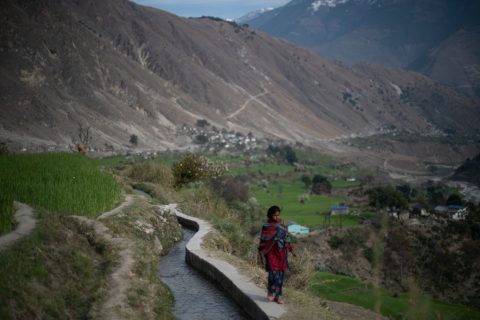
In the wake of its recent glacial flooding disaster, Nepal and the kingdom of Bhutan have proposed a new agenda item on mountains and climate change for the COP31 summit which opens on Monday in the Turkish city of Antalya.
In a submission addressed to the COP31 presidency and the head of the UN climate secretariat (UNFCCC), Nepal said the agenda item, entitled “1.5°C Warming in Mountains”, is an effort to strengthen the response of the international community to the climate risks facing the world’s mountain regions.
The item proposes that mountain issues should become a regular part of the formal UN climate change process, with a focus on scientific assessment of the risks associated with warming overshooting 1.5C, an annual high-level dialogue, a dedicated work programme and improved access to climate finance.
Maheshwar Dhakal, chief of the climate change management division of Nepal’s Ministry of Agriculture, Forests and Environment, told Climate Home News that Himalayan countries face similar problems such as collapsing glaciers and flooding from glacial lakes.
“We are trying to bring all Himalayan countries together under this agenda item,” he said.
COP31 Briefing: What to expect from the Antalya climate summit?
At this year’s UN General Assembly, Nepal’s Prime Minister Balendra Shah called for strong global action to ensure climate justice and proposed creating a Himalayan Climate Resilience Mechanism led by India, China and Nepal. It would share satellite data, monitor glacial slopes and lakes, strengthen early warning systems and coordinate cross-border disaster response.
Nepal has experienced significant infrastructure losses and human casualties from flooding every year since 2020. In late August, the collapse of a glacial slope on the border with Tibet caused a torrent of water and debris to course down the Bhote Koshi River, leaving more than 6,000 people dead or missing.
According to a government needs assessment, the disaster caused an estimated $2.7 billion in physical damage and economic losses, while around $4.8 billion will be required for recovery and reconstruction.
More research needed on threats
Although high mountain regions are known to be fragile ecosystems, especially as global warming accelerates glacier melt, the extent of their vulnerability is still not fully understood. When the devastating Bhote Koshi floods hit, it opened the eyes of the world to the risks.
Dhakal said the Bhote Koshi floods “have proved the impacts of climate change in the Himalayan region”, which were linked to rising temperatures by scientists with the World Weather Attribution group. “Therefore, Nepal wants scientific studies, research and political discussions on mountain climate risks to receive greater attention at international climate conferences,” he added.
Nepal has been making efforts on this front since 2009, when it held a cabinet meeting at Kalapatthar near Mount Everest. Since COP28 in Dubai, Nepal has organised high-level events and dialogues on mountain issues at COPs and is co-hosting one at COP31 with Bhutan, Pakistan, Kyrgyzstan and Tajikistan.
Editor’s Desk: Nepal’s disaster has laid bare the world’s adaptation accountability gap
Dhakal said the dialogues held so far have raised awareness, but mountain concerns must become part of the formal UN climate process to unlock climate finance and technical support that can bolster countries’ capacity to tackle climate threats.
If specific indicators and priorities are developed for mountain regions, vulnerable developing countries like Nepal would have better access to finance to help them adapt to the climate warming they have done very little to cause, he added.
More detailed data would enable them to prepare stronger project proposals for international climate funds, including the Green Climate Fund (GCF). In 2025, the GCF backed a project to protect livelihoods from climate-induced flooding in Nepal but it took seven years to get approval.
Sindhu Dhungana, an alternate board member at the GCF, said the problem is becoming more widespread and urgent for the Hindu Kush Himalaya region.
“The economies, cultures and almost everything in Himalayan countries depend on mountains,” he explained. “For us, climate change is mountain change… [it has] affected everything, including the economy and biodiversity.”
Destroyed development projects
Nepal wants the UN climate process to address mountain risks both before and after disasters. Countries need better research, technology, early warning systems and other adaptation measures to protect people and infrastructure. But even when countries take precautions, loss and damage is likely to occur and will require international support to address it.
Nepal has been provisionally allocated $21.6 million from the United Nations’ new Fund for Responding to Loss and Damage (FRLD) to help with the aftermath of the Bhote Koshi disaster, but this is just a fraction of needs and the money will come only months after it made an initial request.
Dhakal pointed to the damage caused by floods to infrastructure built with loans, such as the Melamchi Drinking Water Project, which received $312 million from the Asian Development Bank but was destroyed by a major flood in 2021, shortly after it began operating. The recent Bhote Koshi disaster wiped out a dozen hydropower facilities, as well as solar energy systems.
Nepal flood destruction shows “limits to adaptation”, scientists say
Nepal wants international discussions on what should happen when climate-related disasters destroy development projects built using credit, and how the loans should be treated afterwards.
“Climatic disasters wash out… projects, but the burden of loan is still paid by Nepal,” Dhakal said.
For now, it remains unclear whether the opening session of COP31 will consider or adopt the proposed agenda item on mountains and climate change, with consultations on how to respond still underway among governments and the COP31 co-presidencies.
“If countries agree to discuss the proposal and include it in the agenda, that would be another step forward,” Dhakal said. “Further discussions in the coming years could gradually give the mountain agenda a stronger shape.”
The post Nepal seeks stronger recognition of mountain issues in UN climate process appeared first on Climate Home News.
Nepal seeks stronger recognition of mountain issues in UN climate process
Some governments have backed using Brazil’s voluntary roadmaps on fossil fuels and deforestation to inform the next UN assessment of global climate action, a key process that concludes in 2028, the COP30 presidency told Climate Home News.
Brazil published the roadmaps on transitioning away from fossil fuels and on halting deforestation by 2030 this week, after failing to secure an agreement in Belém to make them part of formal negotiations. The documents set out a menu of policies countries could use to start acting on both issues straight away.
At their launch, Brazilian top climate officials argued the roadmaps could feed into the second stocktake negotiations. Through that process, due to start at this year’s COP, countries are meant to take stock of collective progress on climate action and decide on a plan to ramp up ambition in future policies.
In an interview with Climate Home News in London, COP30 president André Corrêa do Lago said that “some European governments” had signalled their support for the Brazil-led roadmaps to inform the global stocktake negotiations.
“I hope that there will be many other countries that may support this,” he said. “It’s not that you have to take the entire package, because who are we to come up with the solution? But some elements of the roadmaps may be useful.”
-
Brazil’s fossil fuel roadmap sketches out first global timetable
The COP30 presidency’s voluntary timetable asks countries to plan first, then build up clean energy – only turning to oil and gas supplies from 2031 -
COP30 roadmap says faster use of existing tools can halt forest loss by 2030
The plan launched by Brazil to help the world end deforestation charts a path to meeting the global goal, but requires national efforts and finance to be stepped up, experts say -
COP31 Briefing: What to expect from the Antalya climate summit?
Electrification, the fossil fuel transition, adaptation to rising impacts, climate science and trade are key themes as governments gather for COP31 in Türkiye



Corrêa do Lago cautioned that countries might not publicly come forward to champion the lengthy documents at COP31, because “governments have to read [the roadmaps] and they have to be very careful”.
The fossil fuel roadmap invites countries to draw up their own domestic plans to cut fossil fuel use and production and build clean energy systems by 2028, while putting the main push on cutting coal, oil and gas supply after 2031. The deforestation roadmap urges countries to use existing tools to ramp up finance and forest monitoring, and to tackle harmful trade incentives, among other measures.
Santa Marta coalition could put roadmap to use
As his presidency draws to a close, Corrêa do Lago said Brazil would keep championing the roadmaps but that “others will decide” whether they are taken up in the formal UN negotiations. Those talks, where decisions require consensus among nearly 200 countries, might not be the best venue, he added.
He suggested a potential home for the fossil fuel roadmap, outside of the UN negotiations, could be the Santa Marta process. A group of nearly 60 governments met for the first time in April in Colombia to discuss how to wean their economies off fossil fuels.
Countries in Santa Marta signalled their interest in developing national roadmaps away from fossil fuels, as well as building trade systems that favour renewable energy and reforming global finance to remove barriers to the energy transition.
Corrêa do Lago said the coalition “can have a very important role” in putting the fossil fuel roadmap to use, because its members are already focused on implementation and could use the roadmap and “even perfect it”.