



- What timeline options were delegates debating?
- How did the timeline discussions unfold?
- What were the main points of disagreement?
- Why is the IPCC in a ‘serious funding crisis’?
- How have scientists reacted?
- What other issues remain unresolved?
- How are the IPCC AR7 reports progressing?
- How might the IPCC use AI and enhance gender inclusivity?

When we lay our feet upon the ground whether walking through forests, fields, or city streets we often walk unaware of the stories held beneath us. The soil is not lifeless dirt but a vibrant archive, holding millennia of memory. Within its dark layers lie the echoes of fire, flood, frost, and footsteps, stories imprinted by plants that once flourished, medicines that healed, and foods that sustained entire communities. This earth remembers, and if we pause to listen, it will teach us how to heal and regenerate what has been lost.
The Responsibility of Humanity: Healing Takes Time
Healing the earth is no simple task. The scars of human impact from industrial extraction to sprawling urban growth are deep and lasting. These wounds are not mended within a single lifetime but unfold across generations, measured in ecological cycles far older than our own. The process of bio-regeneration, the natural ability of ecosystems to renew, repair, and restore themselves, depends on intricate relationships between soil nutrients, native plants, and healthy water systems. It is a slow, fragile, and profoundly relational dance, reminding us that human urgency must make room for earth’s rhythms.
The Knowledge Beneath Our Feet: Roots, Networks, Life
Indigenous Peoples have long understood that beneath the surface lies a hidden world of interconnected roots, intertwined fungi networks, and microorganisms working unseen yet essential to the health of all life. These subterranean relationships weave resilience and communication, binding ecosystems together. When native plants vanish or are displaced, these lifelines weaken, unravelling the fabric that sustains water retention, nutrient cycling, and soil fertility.
Restoration is not merely about planting seeds above ground; it is about rekindling these ancient, living connections below the surface. This is where true regeneration begins, life branching out in all its richness, supporting the ecosystem in ways both visible and hidden.
Plant Foods and the Sacred Return to Place
The resurgence of Indigenous plant foods, including ancestral varieties of corn, beans, squash, wild rice, and berries, as well as traditional medicines, embodies a sacred act of returning. It is not just about food security; it is about restoring memory, balance, and a sense of belonging. These plants are not strangers but kin, evolved alongside the waters, soils, pollinators, and seasons of their birthplaces. Their reintroduction reignites that timeless conversation between earth below and sky above, between roots and leaves, a reciprocal renewal of biodiversity and cultural survival.
This symbiotic dance reconnects us to place and each other, reminding us that healing the land means healing the relationships we hold with all living beings around us.
Plant Memory and Indigenous Worldview: Teachers and Relatives
In Indigenous worldviews, plants are not mere objects; they are teachers, relatives, and keepers of knowledge. Their memory is holistic, carried in seeds, genetic code, and the stories they bear. These plants remember the pollinators that visit them, the soils that nourish them, and the people who have harvested and cared for them through generations.
When invasive species erase native plants from a landscape, entire ecosystems lose their stories and identities. Returning to Indigenous plants means reclaiming cultural memory and restoring the deep reciprocity between people, plants, insects, animals, and the earth, a tapestry vital to resilience.
The Challenge of Invasive Species: Disrupting Balance, Disrupting Culture
Across regions like the Great Lakes, invasive species garlic mustard, phragmites, and buckthorn disrupt soil chemistry, shade out seedlings, and monopolize resources crucial to native biodiversity. Aquatic invaders, such as zebra mussels, choke lakes and rivers, threatening native plants and fish that are central to Indigenous lifeways.
These invasives are not just ecological invaders; they fracture cultural relationships cherished for generations. Healing the land thus calls for revitalizing native populations, respecting cultural ties, and reclaiming places from disruption.
The Science of Soil in a Changing Climate: Living Systems Under Siege
Beneath what many call “dirt” lies a living, breathing community of minerals, fungi, and microbes, all orchestrating fertility and resilience. Climate change, however, exerts a significant impact on soil systems. More frequent droughts, harsh floods, and unchecked erosion strip away nutrients and vitality.
Without healthy soil, plants falter, medicines become scarce, and entire livelihoods falter. The foundation of plant-based economies, from Indigenous harvests to broader food systems, wavers as soil health declines.
Indigenous Stewardship: Seeds, Sanctuaries, and Sovereignty
Across Turtle Island, Indigenous communities answer this call with fierce care. Community seed banks protect ancestral varieties, not merely genetic stock, but living relatives that hold stories, teachings, and ecological memory. Each seed is sovereignty in waiting.
Restoration efforts abound: the Haudenosaunee nurture seed libraries that preserve heirloom plants, while the Anishinaabe work tirelessly to heal wild rice beds ravaged by industry. These projects are ecological and profoundly cultural, reinforcing responsibilities that begin beneath our feet.
Returning the Mind to the Earth: Reciprocal Healing
The soil is a patient teacher, reminding us that life thrives on reciprocity and balance. When humans take without giving back, the earth remembers. To restore ecosystems, revive plant medicines and foods, and safeguard biodiversity, we must ground our minds and spirits in the wisdom of the earth itself.
Healing is a long journey, a patient’s work of bio-regeneration and restoration. Returning Indigenous plants to their homes and honouring their relationships is a practice of humility. It calls us to be kin, caretakers, and students of the land’s memory.
Only then can we fully step into our role as stewards of the soil, the plants, and the possibilities for generations yet to come.
Blog by Rye Karonhiowanen Barberstock
(Image Credit: Erone Stuff, Unsplash)
The post The Earth Remembers: Soil, Seeds, and the Future of Indigenous Plant Life appeared first on Indigenous Climate Hub.
The Earth Remembers: Soil, Seeds, and the Future of Indigenous Plant Life
Continue Reading
Three countries have been named by the Paris Agreement’s compliance committee for failing to submit a nationally determined contribution (NDC) and repeatedly snubbing offers of help with their climate plans.
After months of internal debate over whether to identify serial non-responders, the Paris Agreement’s Implementation and Compliance Committee (PAICC) named the three countries which have failed to engage with it over their NDCs on Friday.
It named Democratic Republic of Congo, Senegal and North Korea in a footnote of its annual report, adding that it decided to name them “with a view to facilitating engagement”, adding that representatives of the three nations had been invited to its meeting in early 2027 “with the purpose of identifying any challenges and constraints”.
“The Committee noted the importance of Parties engaging with the Committee in a timely manner, while noting that some delays may be due to the national capabilities and circumstances of the Parties”, the report said.
-
Under US pressure, World Bank says it will back gas “where appropriate”
The US wants the World Bank to expand its gas support while climate campaigners are pushing for it to end – its head spoke this week of limited backing for the fossil fuel -
IPCC scientists vow to press on with climate reports despite political deadlock
After governments again failed to agree a timeline, nearly 120 IPCC authors pledged to complete their assessment on time and with full scientific rigour -
Paris Agreement committee snubbed over missing NDC climate plans
Many governments have still not submitted a nationally determined contribution to the UN, breaching a key requirement of the Paris Agreement
In July, PAICC said 12 countries had ignored its repeated attempts to discuss why they had not published an NDC as required every five years under the 2015 Paris accord.
Members of the committee had been divided over whether to name them, but at a September meeting decided to do so in their annual report to the annual climate COP summit.
By the time the report was published on Friday, only Congo, Senegal and North Korea “had not communicated an NDC or submitted a [Biennial Transparency Report] and had not yet responded to any of the Committee’s notifications, despite several reminders issued by the Committee in this regard”.
Rainforest and renewable energy ambitions
The silence from Congo and Senegal is notable because the former is home to much of the Congo Basin rainforest while the latter has sought billions of dollars in climate finance to support its renewable energy ambitions.
After Brazil, Congo has more rainforest than any country in the world. This forest, and the country’s peatlands, absorb huge amounts of greenhouse gas but are fast being lost to expanding farmland, charcoal production, logging and mining.
Senegal signed a Just Energy Transition Partnership with Canada and wealthy European nations in 2023, to help it meet its renewable energy targets under the-then government of Macky Sall. It was chair of the Least Developed Countries group between January 2022 and December 2023.

Tejas Rao, who is researching the PAICC as part of a doctoral thesis at Cambridge University, said the governments of the three countries should engage with the committee.
“Engagement costs these governments very little and the committee has shown it will listen,” he said.
“Silence leaves the committee with no basis to help, and it leaves the [governments] exposed to the narrative that they are simply disengaged,” he told Climate Home News.
Paris Agreement requirement
The 2015 Paris Agreement requires all parties to publish an NDC every five years outlining their emissions reduction targets, with each plan meant to be more ambitious than the country’s last NDC.
The latest set – the third round of plans, with new targets for 2035 – was due in February 2025. While most countries missed this deadline, all but around 30 – mostly small emitters but including Egypt, Vietnam and Argentina – have now submitted them.
Over the year, the PAICC – which is made up of government climate officials from developed and developing countries – has been communicating with governments that have not submitted NDCs and trying to overcome barriers to them doing so.
Some nations have cited exceptional circumstances as the reason for not submitting an NDC, a process that requires a significant amount of work in tracking emissions and consulting on how to curb them across the economy. For example, a letter from a Sudanese official to the PAICC, seen by Climate Home News, said that the country’s civil war had led to the suspension of its NDC preparation.
-
IPCC scientists vow to press on with climate reports despite political deadlock
After governments again failed to agree a timeline, nearly 120 IPCC authors pledged to complete their assessment on time and with full scientific rigour -
Under US pressure, World Bank says it will back gas “where appropriate”
The US wants the World Bank to expand its gas support while climate campaigners are pushing for it to end – its head spoke this week of limited backing for the fossil fuel -
Who shapes climate science? The equity question facing the IPCC
Early completion of the next global climate science assessment reports risks excluding research from the Global South, which is key to ensuring the findings are fair
The US and Iran are not signed up to the Paris Agreement and so do not have active NDCs, nor does Taiwan, which is not a UN member state.
Rao said that because the PAICC is “facilitative and non-punitive”, naming the countries “is meant to open a door, not close one – the invited consultation is the point”.
“In recent months, governments that explained their constraints, whether capacity, finance or domestic process, have been met with follow-up and support rather than sanction, and the number of silent governments has fallen sharply,” Rao said.
The post Paris Agreement committee names three countries snubbing it over NDCs appeared first on Climate Home News.
Paris Agreement committee names three countries snubbing it over NDCs
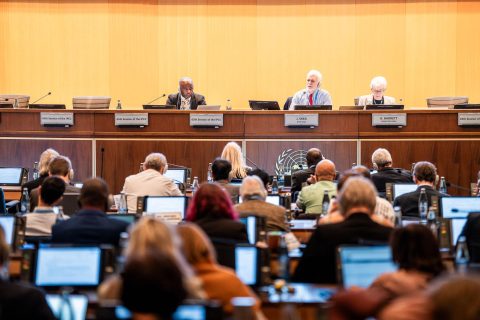
Countries have failed – for the sixth time running – to agree on the timeline for publishing the Intergovernmental Panel on Climate Change’s (IPCC) next set of influential reports.
The IPCC’s 65th session (IPCC-65) was seen by many to be the final opportunity for countries to agree on a schedule where its seventh assessment report (AR7) would be published in time for the UN’s second “global stocktake” of climate action.
Before last week’s meeting in Addis Ababa, Ethiopia, IPCC chair Prof Sir Jim Skea had warned that releasing the reports in time for the stocktake in 2028 would depend on a timelines being agreed by the end of 2026.
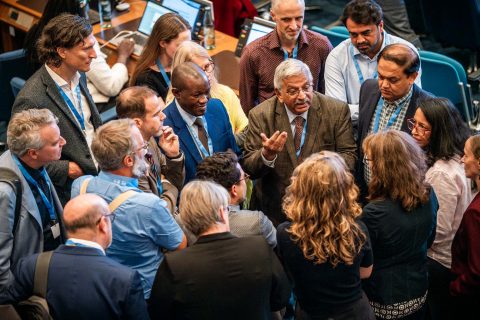
But the week-long meeting descended into fraught disagreements between governments, resulting in Skea “suspending” the talks on Friday evening with no decision made.
Countries were also unable to agree on the IPCC’s budget for the rest of the AR7 cycle, leaving the body with a “serious funding crisis”.
The IPCC has pledged to reconvene the meeting at the “earliest opportunity”; however, it has not yet given an indication of when this will be.
In his concluding remarks, Skea described the Addis Ababa summit as a “profound disappointment” and “among the most difficult IPCC meetings”, according to reporting from the Earth Negotiations Bulletin (ENB).
Some countries have reacted with dismay to the breakdown of negotiations, warning that a failure to have the IPCC’s latest assessments on climate adaptation and mitigation ready for the UN stocktaking exercise would undermine global climate action.
A climate envoy from a Pacific island state said it was a “travesty that a handful of countries continue to delay the IPCC’s reports – the science we need back home to help us save lives and livelihoods”.
Below, Carbon Brief explores the key developments, debates and disagreements at the IPCC meeting.