

Weather Guard Lightning Tech

Tesla Megapacks Energize Australia, Vattenfall Bird Detection Radar, Norway and Denmark’s Ambitious Offshore Goals
Vattenfall is researching more bird detection methods, Norway and Denmark are setting ambitious offshore wind targets, Australia’s first offshore wind projects are progressing nicely, Western Australia is using Tesla Megapacks for battery installations, and U.S. wind generation declines in 2023.
Sign up now for Uptime Tech News, our weekly email update on all things wind technology. This episode is sponsored by Weather Guard Lightning Tech. Learn more about Weather Guard’s StrikeTape Wind Turbine LPS retrofit. Follow the show on Facebook, YouTube, Twitter, Linkedin and visit Weather Guard on the web. And subscribe to Rosemary Barnes’ YouTube channel here. Have a question we can answer on the show? Email us!
Pardalote Consulting – https://www.pardaloteconsulting.com
Weather Guard Lightning Tech – www.weatherguardwind.com
Intelstor – https://www.intelstor.com
Allen Hall: Our friend from the UK, Derek Rutherford, ran a poll, and he sent this to me not long ago, and I just have forgotten to put it up here, but he ran a poll about what are the biscuits that are most likely to be consumed when out on a UK wind farm. And a biscuit in the United States doesn’t mean anything, and a biscuit in the UK means a cookie, it’s a cracker cookie, it’s a common, it is a cookie, like an oatmeal cookie, that’s the way I, Taste it, that’s what it tastes like.
There’s really no equivalent in the United States. So they ran a poll, it was very interesting because there, it was a definite choice here. So there was four, rich tea, bourbon, hobnob, and fig roll. And I think I have tried fig roll it’s not my thing.
Philip Totaro: Chocolate digestive isn’t even one of the how do, this is not a legitimate poll.
I’m sorry this, if chocolate digestive is not on the list, then we have a problem.
Joel Saxum: That’s what we, that we eat, there’s a box of them in the, in our living room right here, so again, my better half from Newfoundland they were the last British colony in Canada. So we drink tea and have digestives.
Allen Hall: When you have tea, you can’t have chocolate and tea. Those two just do not go together. It’s so uncouth. The Queen would never do that. It’s almost like gingerbread. So the survey results are really fascinating. 61 percent of your wind turbine technicians in the UK prefer hobnobs.
Philip Totaro: Alright, that I believe.
But again, they weren’t given the option of chocolate digestives, so I still think this is not a legitimate poll.
Joel Saxum: He did throw some chocolate in there because the bourbon is chocolate. It has a chocolate cream filling. , right? It’s not bourbon flavored. It doesn’t have bourbon in it.
Philip Totaro: Although if it did, that might be number one, Joel.
Joel Saxum: And when farm sites, I think that the bourbon cookie is, it’s named after some like French Aristo aristocracy.
Allen Hall: But I, if we’re gonna ask the same question in the United States, I’m not even sure what the list would consist of. And I think that was what my, piqued my curiosity is if we’re talking about cookies, we get rid of all the illicit things, right?
Now we’re down to Oreos, some sort of chocolate chip cookie. What else? Twinkies? Ho Hos?
Joel Saxum: You got to say, you got to say what’s for, what’s the most popular lunch thing, right? It’s going to change. Oh yeah. Yeah. Like the most popular lunch I would say probably in Texas is. Burritos or tacos?
Because there’s literally taco trucks that pull up to O& M buildings and sell tacos at lunchtime.
Allen Hall: That’s just true. See, but there’s a difference in the UK because they have a break, right? There’s a there’s a morning tea break that happens. Yeah, like America we have to work through till dinnertime, but if you were to have a break in America Say at 10 a. m. right? You say, okay, I’ve been working since six. It’s 10 a. m. It’s black coffee. It’s just black coffee. Oh, that it may be just black coffee. That may be the answer, Joel. So that’s where our money should be invested into is black coffee because all the wind farms are going to be built. Is that where we’re going to invest it?
Joel Saxum: Hey, who’s investing in it early is our friend Armando from Arthwind. He’s got the Arthwind coffee company.
Allen Hall: That. Coffee is brilliant, by the way, just, it smells so good. Armando is going to make a killing in the United States. We got to get a kid in and we have to get in on that business.
Vattenfall is conducting bird detection research at the Holland Sea, Koest, Zuid wind farm. In the Netherlands, in that area, there’s millions of birds that are crossing across the North Sea there in the spring and the fall, migrating, and what they’re doing is they’re installing infrared cameras to work 24 7 and using AI to detect falling objects.
The falling objects are birds. Evidently birds that are impacted by the wind turbines but the infrared allows them to see this in bad weather. I guess the birds maybe have the birds have a hard time seeing in the bad weather. So they run into the wind turbines. Maybe that’s what they’re checking for.
Evidently the sensitivity of this system is pretty good. They can see a small bird 120 meters away and large birds about 300 meters away. This seems to be a continuing effort across the world. Now, are we going to settle on a solution to detect birds and determine when to slow down wind turbines or maybe shut them off and during migration patterns?
Rosemary Barnes: Yeah, I think that we’ve settled on two different types, depending on the conditions. There’s Ones that are using computer vision, just taking images, videos of the area and AI is analyzing it to see when they can literally see a bird and and then they can say how fast it’s going and when you would need to slow down or stop your wind turbine to stop a collision.
And that works really well. But only in daylight, so it doesn’t work overnight and perhaps it doesn’t work when it’s really foggy or cloudy or something like that. So when you can’t use the vision based systems, then you’ve got to go to infrared. Bit sad that they’re tracking birds that are falling through the sky, it would seem like they’ve set their ambitious low in this case.
The other systems I’ve seen, they’re tracking a bird and saying, okay, it’s coming, slow the turbine, we don’t want it to die. And this one, they’re just like, okay, a bird died, note that for next time. I’m not sure. Maybe this is, the first phase of the study.
Joel Saxum: I think this one’s odd though, because there’s these studies have been going on for a long time and there’s all kinds of technologies like Rosemary, you’re saying there’s commercialized versions of different products out there that can do this, and I, I know of one that uses radar that can, same thing that can see at night or through the, through clouds or bad weather, So why they’re like, Oh, we’re going to take this study on and we’re actually going to put a press conference, a press release out about it. It’s you guys are like five years behind the game and I know that there’s a, there’s site specific challenges, right?
Because when you say we can, we’re going to do. One solution to monitor for birds or bats or for raptors or whatever. That doesn’t really work because you may be monitoring in Australia. You might be monitoring offshore North sea. You may be monitoring onshore in Germany, right? There’s different kinds of birds.
There’s different kinds of bats. There’s. different environmental conditions, so you have to adjust for those, but the solutions are there this is, this shouldn’t be a study to see how many die that we’re past that as an industry.
Allen Hall: I will say, on the aerospace side, we’ve been putting infrared cameras in the noses of airplanes so the pilots can see through horrible weather, and it is remarkably good.
In the last even in the last three or four years, the next generation’s coming out, and it is impressive, so I, it makes sense. Thank you. That they’re going to try to use this technology and win, because it has advanced so far, that, and the costs have come down to more reasonable levels, that infrared may be the way to go.
Union Pacific has shipped the longest wind turbine blade in the company history. So Union Pacific is the big company. train operator, railroad operator in the United States. They shipped an 80 meter long blade for Vestas, which is part of their Vestas V163 4. 5 machine. Which they’ve been talking about that turbine for a couple years at this point, but they moved that We want to move a whole series of blades from Colorado down to Brownsville, Texas, and then shipped out to Texas to somewhere else in the world.
So the trick here, Rosemary, is that UniPacific has figured out a way to move 80 meter long blades across a significant portion of the United States. And when you were working with LM, One of the issues was above, when you get to these longer blades that you, GE decided to make a two piece blade so they could move it in and out of different ports and across the country.
Now that Vestas is moving 80 meter blades via train. Is a two piece blade even needed or will it be needed at some point anyway?
Rosemary Barnes: I don’t know. It’s all very fuzzy limits, when you say you can’t transport a blade over a road that’s above a certain distance, it’s, it’s challenging too, but you’ve, we’ve all seen probably on social media, see videos of blades going through mountainous regions and there are trucks that can actually tilt the blade up close to vertical when it goes around a bend so that it can get around tighter corners.
That’s an alternative solution. I don’t know the specific train route. I would expect that, it worked for this particular route that it had to do. But when they’re when they’re doing, when they’re doing the logistics of blade transport, they’re checking a specific route, they’re like, okay, what’s the actual.
Corners on the road or the train, what bridges do we have to get under, what roundabouts do we have to go around, what road closures are we going to need, are there any tunnels that we have to go through, will it feed, will we need road closure, it’s a really specific route by route question, so I wouldn’t say they’ve put 80 meter blades on 80 meter blades on a train, that means that now any 80 meter blade can be transported anywhere that there’s a railroad, I think that’s definitely not true.
But that said, yeah, there was a two piece blade for a, a little over 70 meter long blade. They also make it in a one piece for places that don’t need the two piece for logistical reasons. And I suspect that there aren’t too many, possibly there have been zero sales that actually hinged on the capability of this yeah, two piece blade.
Like I, I am not sure that there is a single project where they’re like, we can’t have any other turbine this size unless the blades are in two pieces. Because people invented all these other kinds of solutions other than two piece blades to get long blades out to site. So there’s that, but, you can imagine that at some point, anything’s going to max out.
Can you put a hundred meter long blade on a truck and tilt it up to vertical to get around a corner? I don’t know. Do we actually need a hundred meter blades in offshore wind farms? I suspect not. It’s pretty hard to speak in absolutes and say, beyond this length of blade, this solution is going to be needed.
Yeah, it’s one, one, Tool in the toolbox is two piece blades and then there’s a few other tools and new ones being developed all the time but also, overlay that on top of the environment that wind turbine sizes onshore at least are not increasing as rapidly as they were a couple of decades ago.
So I think the issue is less pressing now. Yeah, I don’t know. I’d be interesting, interested to hear what Bill thinks about those kind of issues because you’re tracking all the data for all those sorts of things. I’m just talking about the vibes.
Philip Totaro: So let’s start at the beginning as well. The bend radius in the train route is going to determine, ultimately, the length of blade that you can transport.
So the fact that they did this, again, it is route specific, as Rosemary said, but it is still, an impressive thing because you have to be able to get the fixtures and all that stuff developed to be able to do this. So now that they’ve established that this is a route that they can use, if they are using this route down to Brownsville for, some type of export, which I actually doubt because most of the V 163 4.
5s are actually going to be used in the U. S. At least at this point. They are trying to offer for sale in other markets, but so again, it’s good that they have this route. As per the two blade discussion, it’s just one of those things where if you don’t have to do a two piece blade, then nobody really wants it.
The whole reason why a lot of effort went into developing something that was a two piece is because of all these transportation constraints where everybody wanted to put a turbine that was probably abnormally large in a place where, like Germany, for example, where you’re probably going to have to go under, overpasses that are You know, only 4.
3 meters or whatever, tall let’s say. And having that as a design constraint for a blade means that you’re gonna have to do things like segmenting it or what have you to be able to fit it. Now, this is where we get into the conversation of, do we need bigger turbines or higher quality, better performing turbines?
And at the end of the day, yeah, a bigger turbine, there are some economies of scale you get out of. A larger turbine size especially offshore, but even onshore, there’s fewer, foundation pads. And, for a fixed amount of megawatts you want to produce, there’s fewer, foundation pads and towers and cables that you got to run and everything else.
So there’s that aspect, but it really boils down to, are you really, space constrained in a way that a two piece blade is actually the right technological solution. To be blunt, even in a place like Australia, they aren’t necessarily space constrained, but there are people that want to, build like 10 megawatt, 12 megawatt onshore wind turbines for some of their project sites, these mega project sites that they have.
And, at the end of the day, there’s no way they’re going to logistically be able to transport blades on the roads to get them there. What do you do? Are you going to build a batch factory? Yeah. It’s, you either build a local factory or they’ve talked about airships bringing in blades, and now we’ve got this other airplane guy that wants to fly blades in, or whatever, yeah, radia.
Rosemary Barnes: Yeah, don’t criticize that’s Allen’s favorite project.
Philip Totaro: It could be gainful employment for me, guys, hang on. Yeah if they ever bother to build the thing, we’ll see. But, at the end of the day, this is what it boils down to, is there’s, The bigger turbine size you go, the you necessarily see like a reduction in the amount of the addressable market that you can fulfill with.
Like again, if you’re gonna make like 10 or 12 megawatt onshore wind turbines, that might be great for the Chinese who have a factory out in the middle of the desert. They’ve got no bridges or overpasses or tunnels or underpasses or whatever to have to deal with. And they can just take a 12 megawatt wind turbine and stick it in the middle of the Gobi desert and, grid connected back to wherever they want to.
HVDC that, that line to it’s not this sort of thing that, you’re not going to see like tons of five to 10 megawatt wind turbines, they already have some, but you’re not going to be able to put like a 10 megawatt wind turbine everywhere in like Germany that you currently have a one and a half or a two megawatt.
It’s a finite market, is the point. Again, the fact that, so going back to the original premise here, the fact that Union Pacific is able to do this with Vestas, it’s good, it’s enabling, potentially a business case for Vestas to be able to transport blades from, a Colorado factory to Texas, presumably also New Mexico.
Where they’re going to go to Sunzea and, we’ll see what comes of, additional innovation in this area. But again, we’re already bumping up against some of the limits of what we can do technologically. And unless we can develop new, this is where the innovation is really happening in the industry is unlocking other business models that wouldn’t otherwise be be possible.
Lightning is an act of God, but lightning damage is not. Actually, it’s very predictable and very preventable. StrikeTape is a lightning protection system upgrade for wind turbines made by WeatherGuard. It dramatically improves the effectiveness of the factory LPS, so you can stop worrying about lightning damage.
Visit weatherguardwind. com to learn more, read a case study, and schedule a call today.
Allen Hall: In Norway they are pushing ahead with offshore wind and pretty heavily actually. Norway just signed a contract for its first commercial offshore wind farm with Venter Energy and Venter Energy will develop a 1. 5 gigawatt site at the Southern North Sea 2.
Norway’s energy minister emphasized the project’s importance in Norway’s commitment to renewable energy and five groups qualified to participate in this auction and the companies are impressive. BP, Stackraft, Equinor, RWE, Shell. And so there’s some big players here. Now, this is part of Norway’s goal to get to 30 gigawatts by 2040, right?
So remember, America was trying to get to 30 gigawatts by 2030. Norway’s trying to get to 30 gigawatts by 2040, right? There’ll be a quiz after this. Denmark has planned to tender an offer for 6 gigawatts across 6 wind farms. And they can actually reach, if they want to, 10 gigawatts per year. Production from those sites.
And there’s a couple of variations between the sites. But essentially, Denmark is going to use it for its internal consumption and then export it to neighboring countries and are also talking about rosemary, green hydrogen of all things. And This is a huge push by Denmark to become a major player in offshore wind.
The Denmark is going to own about a 20 percent minority stake in each of the wind farms, which I think has historically been the case in Denmark, at least what I remember. So with the six gigawatts, they’re going to roughly double the amount of gigawatts in the water they have right now, or if they get to 10, they’re going to triple it.
So this is a huge move by Denmark, a relatively small Country, Joel, Denmark’s about the size of what?
Joel Saxum: Wisconsin? Oh, it’s tiny. You could drive across the country in three and a half hours.
Allen Hall: Oh, there you go.
Rosemary Barnes: Yeah, but it’ll cost you like 300 bucks. The tiles on the bridges that connect the main islands in Denmark and also across to Sweden something else.
Joel Saxum: I did that one to, to Malmo for a day, just to say I was in Sweden the first time I was in Denmark and it was like, whoa, wait a second. I just wanted to go and say hi.
Allen Hall: So Rosemary, there were six projects that were named as to start a feasibility study for Australia’s first offshore wind farms. So those six have to go through this little process.
There are six additional projects that are, that need to go through a engagement with traditional owners and traditional owners is a term for what?
Rosemary Barnes: For Indigenous Australians, but I’m not sure that is, everybody will have to obviously work with yeah, indigenous people amongst, everybody else that lives in the community.
So I’m not sure that’s what the difference is. I thought that the six additional projects were because they said just, open, we’ve got, all of this area of water, who wants to build wind turbines here? And people put in projects and they, rank them and they pick their top six and then their next six.
And then the other six had some overlaps with ones that were in the first six and so they’re like, okay you can’t obviously both make wind farms in the same space, so can you relocate your borders a little bit and resubmit with the yeah with a plan that will fit with what we’ve already approved and that said, approval is a wrong word for me to have used just then, they’re not approved, it’s just that they’re like, yes, okay, now move on to the next part of your planning yeah, There’s still a long way to go.
It’s a lengthy process, which is good. You can’t just go sticking wind turbines in the water willy nilly and not worrying about the, environmental or social consequences. But I think it’s good to see things moving along. And once the first projects get done, it’ll be a lot easier to, then increase because there’ll be a framework in place.
People will know what issues were encountered, what problems were addressed. Communities had, if any, it’s really hard to tell at the moment for me personally, I’m struggling to find what the average person on the street thinks about wind turbines because the the opposition has made it their thing to, say that everybody is anti offshore wind and it’s hard to tell if that’s what people are saying or what the government, the opposition wishes people were saying.
Yeah, I think all that will play out over the next, One or two years. And I’m really looking forward to getting started. I’m happy to see this progress.
Allen Hall: They’re looking for 25 gigawatts out of these 12 sites, right? 25 gigawatts is basically what they’re going to try to accomplish off the coast of the United States, east coast of the United States, at 30, right?
And Norway, it’s going for 30. Now, it looks like in Victoria alone, it’s at 2 gigawatts by 2032, 4 by 2035, and 9 by 2040. That’s a pretty aggressive schedule. Having more recently seen some of the news from Vestas and Vestas is saying, Hey, America, you got to get some of these projects moving and you just can’t keep talking about them.
You have to put them in an action. Is there more of a chance that Australia gets turbines in the water, but just because you’re so used to heavy industrial projects that this is relatively simple for the Australian economy to absorb?
Rosemary Barnes: I do think that there’s some uniquely. Weird aspects about the U. S. that are causing roadblocks that I wouldn’t expect to see most other places. Some of them, yeah, like actually specific to the US, but also some of them Australia might have done if we hadn’t have seen what had happened in the US. I think there’s been a few cases where it’s like, Oh, it turns out that our port doesn’t really suit this kind of development and kind of, like developed one part of the project too soon, given that we need to do these big port upgrades.
And. So I think that’s been front of mind for people in Australia to identify those kinds of issues. So in one sense, I think we’re learning from those mistakes but yeah, I don’t know. It’s hard to say. I admit this is, again, I’m just going back to the vibes of it, really, because, I’ve lived in the U. S. for a brief amount of time, and obviously in Australia, I lived in, I do feel like in Australia where our government is more able to just do stuff. Whereas in the U. S. it feels like you need permission from individual land holders a lot and that it’s more yeah, it’s more likely that someone, an individual or an individual company will really hold things up in the U. S. than in Australia. I feel like once the government has decided that something should happen, If there isn’t general discontent amongst the people then it’s likely it’ll go ahead. If voters don’t like it, then let, and make that known, then of course that’s gonna stop things but overall you see much less often that, yeah, like a single company or landholder would be able to say, no, you can’t do this.
But yeah, again, like I don’t really know the law in the U. S. That’s just the vibe I get from watching what happens over there.
Joel Saxum: It’s a pain in the ass,
Vestas notice for sure. And I’m really interested because the developers on some of these projects are brilliant. big names, right? Ocean Winds CIP obviously is involved.
Allen Hall: Orsted’s involved, right? So they’ve got a huge the place, Orsted comes to mind because, they pulled out of some projects in the United States and where do they go? They’re going to Australia. And that, says a lot about the infrastructure of Australia, that they feel like they can get projects done there easier, more likely.
And that’s I wouldn’t have assumed that from the go.
Rosemary Barnes: A lot of the problems that you have in the U S I, we don’t, I don’t know of a solution to them in Australia yet either. The availability of ships to install these turbines. They’re, I haven’t even chosen specific turbines yet.
As far as I’m aware, I’m sure they haven’t identified specific ships that are going to install. I assume they’re thinking about it and, that people are watching how much of a problem this has been in Australia. We don’t have the Jones Act or an equivalent in Australia, so we won’t run into those specific specific problems.
But, It’s easy at this point to feel nice and smug yeah, Australia’s moving fast and scooping up all of the the supply that you should have had in the U. S. However, I, yeah, I don’t know, anytime you’re feeling smug, that’s probably an opportunity to reflect and say you’re probably setting yourself up for a disappointment in a couple of years.
We’ll see.
Allen Hall: I don’t know Australians to be bashful or like that. Of course you’re going to win. Australia always wins. Isn’t that how it goes?
Rosemary Barnes: Yeah, I think an average Australian is a pessimist or a cynic like me and it’s not in the cultural. It’s not, yeah, it’s not in our culture to talk ourselves up too much not that we never do it, but.
Allen Hall: In this case, you may need to.
Rosemary Barnes: I am actually optimistic. You can hear it coming through that I’m optimistic about Australian offshore. I know I sound the exact opposite, but yeah, I am. I think we are in an exciting point where we’re about to see yeah, a lot happening and. Watching it with great interest and yeah, looking forward to it.
Allen Hall: Let me ask you about another Austra, another Australian effort, which is Elon Musk and the Tesla Megapacks. Now while Australia wants to jail Elon for Posting videos on X, on the other hand, they’re buying a lot of product from Elon on these Tesla MegaPaks. So there’s going to be a new record breaking pack of 1.
3 gigawatt hour of a battery system. My gosh, that is huge. And it the second stage of Neon’s Kali battery. Project in Western Australia will have 348 of the Tesla Megapack 2XL units. And with that alone, the capacity is 341 megawatts or 1600 megawatt hours. So that’s 1. 3 gigawatt hours.
Yikes. And it will be the largest battery system in Australia and one of the biggest in the world. I don’t know whether is one that is larger. That’s a massive battery. Now, when you have that kind of battery capability online they’re talking about it being able to charge and discharge about 20 percent of their network’s average demand in Western Australia.
That’s a huge amount.
Rosemary Barnes: This is in Western Australia, right? It’s a small grid. It’s not connected to the rest of Australia. They’re, thousands of kilometers away. So yeah they’ve got good reason for not connecting just the distance, but their average demand, I looked it up.
The average demand last week was two gigawatts. You’ve got 560 megawatts. Battery that’s about to that’s what this announced project was, and it’s just a few kilometers down the road from an existing one, which is existing project, which is 500 megawatts. 2000 megawatt hours. So yeah, 560 plus 500.
So obviously, excuse me, that’s over one gigawatt. So that between them is like half of average demand. So Aside from the batteries just being big, the batteries I don’t know of anywhere in the world that is installing all at once such a big chunk of of, proportional chunk of battery capacity compared to their normal grid.
Yeah, so it will be incredibly interesting to see how this affects their market. Yeah, I was looking at a few charts. I shared them in our podcast co host chat the other day, but if you have a look at when yeah, like their profile. Generate their generation profiles over the day, then obviously you’ve got a big lump during the middle of the day from solar and especially from rooftop solar.
And when you separate out the utility scale solar, you’ll see that is not a nice, upside down U curve. It’s more like a M shape because the middle of the day, electricity prices are negative and they’re curtailing utility scale solar at the moment. You can’t curtail rooftop solar. So that’s why it gets its nice, classic curve.
Obviously it’s going to be, the bulk of it is going to be that electricity from solar that’s going to be charging but what we see negative prices in the middle of the day when you’ve got these huge batteries there to soak it all up, hard to say. And then in the evening at the moment it’s yeah, they’ve got a mix of, yeah, wind and a lot of gas in Western Australia.
Yeah. And if you look at the amount of battery capacity, it’s, more, way more than enough to get rid of all of the gas in the evening peak when prices are high. So it’s just going to be really interesting to see what happens to prices when, I feel like we’re fast forwarding a decade into the future with these two, two batteries we’ll see what happens.
Joel Saxum: I think that Elon’s doing it on purpose here as a use case, right? If there was a place that you could say. If battery can take over for renewables and you can have a mixed hybrid battery renewables grid, this is the place you could do it right now. There’s not very many places in the world.
Although, if you try to do this in Texas, you’d have to put 40 gigawatts of batteries in because of peak demands, like 85 gigawatts. So that’s not gonna happen here, but this is a case study where realistically, Hey, we can do this. We can supplant basically 50 percent of the production with batteries.
So it’s a it’s a proof of concept.
Rosemary Barnes: It’s really interesting because it’s really, it’s a gas killer, right? It’s the gas that’s making all its profits, especially the gas peak is making all their profits in that usually two hour period in the evening. And then you put in more battery capacity than what gas is providing at that time.
I feel like the immediate loser is going to be gas and to a certain extent coal. So that’s strange to do in Western Australia where they’re really gas based economy. They have a lot of gas exports and they have a a reservation of the locally produced gas. They yeah, they keep a certain amount for domestic consumption.
So their gas is really cheap. Yeah, so It’s going to be interesting. Very interesting.
Allen Hall: So Elon fired all the staff at the supercharger group. Did you see that today? And so all the Tesla car supercharger efforts are stalled until they, I think he let off 500 people, basically everybody at the top of that organization.
And my first thought was maybe they’re directing a lot of energy into these super batteries. For Australia and other places that they’re just going to, instead of charging cars, you’re going to be charging whole civilizations. Does that make sense?
Joel Saxum: I don’t know how much these big batteries cost that you’re doing a utility scale, but I know the Tesla power walls, when you put in your house, if you put one or two of those, it’s 10, 000 bucks.
Allen Hall: Oh yeah. Or more. Yeah it’s really expensive.
Rosemary Barnes: I think they get a better deal on the grid scale ones. They just put in a kilometer of power walls.
Allen Hall: Hey, Uptime listeners. We know how difficult it is to keep track of the wind industry. That’s why we read PES Wind Magazine. PES Wind doesn’t summarize the news.
It digs into the tough issues. And PES Wind is written by the experts. So you can get the in depth info. Check out the wind industry’s leading trade publication, PES wind at PESwind. com.
An interesting report out of the U S D O E on wind generation in 2023, because it fell for the first time since 19, sometime in the 1990s. So that’s. 20 plus years ago, 30 years ago, the average capacity factor of the U. S. wind turbine fleet fell to an 8 year low of 33. 5 percent in 2023. And that decline was attributed to slower wind speeds, especially in the 1st, half of the year and the maturing wind.
Sources like the wind turbines are getting up in age and those parts when generation decreased most in the upper Midwest and the with the east and west north central states seeing declines of about six and eight percent respectively. So this can’t go on for much longer, Phil, right? This is attributed to Arc, Arcvera has seen some decrease in wins.
And if you’ll go to Arcvera’s website, you’ll see these monthly reports are what the wins are. We saw some that last year clearly, but the fleet maturing, how much impact does that have on these reduced average capacity factors? Yeah.
Philip Totaro: This is a good question. I get the sense that this has more to do with wind variance than it necessarily has to do with asset age, to be honest.
And the reason I’m also saying that is that we’re now at a point where we’ve got 52. 8 gigawatts in the U. S. Well, there’s 148 installed, but there’s 52. 8 gigawatts of wind in the U. S. that is at least 10 years old or older. And that does have an impact when you see, the time or age related degradation and mechanical wear of components, et cetera, et cetera, you do see a reduction in the capacity factor.
What’s happened though here is that because this is so widespread, Screams to me, it’s not a, it’s not a power generation issue, per se, it’s a wind resource and availability kind of issue. Keep that in mind. And, these things fluctuate year on year. Now, the other aspect of this to keep in mind is because there’s so much capacity, that is, ripe for a repower.
This is probably going to be an anomaly of just a one year thing. Even with the capacity, the new capacity we’re going to add in the United States this year, it’s probably going to be somewhere around, I want to say, eight gigawatts or so based on what currently tracking again, this fluctuates quite a bit, unfortunately, because even though there are a number of projects and consenting queues that have been approved or what have you, there’s not You know, there are any number of reasons why they may not get built in a timely fashion, so we’ll keep abreast of that.
However fact that the, there was a drop again, I’m it’s not necessarily something everyone needs to freak out about. It is, noteworthy but again if you’re having, a huge drop in performance across seven or eight states that’s not a, that’s not a a mechanical degradation or asset wear out, component wear out type of thing.
That’s a a wind resource issue.
Joel Saxum: Phil, could any of this be tied to repowering projects? Because my thought, my mind goes to this. I know there was some really big ones last year. I know there was a couple that were, a couple hundred megawatts. So that all of a sudden you lose a couple hundred megawatts for, Six, eight, nine months on the grid.
It could any of that be a part of this?
Philip Totaro: Yes, although I, until we get to see and unfortunately the EIA hasn’t officially published this data publicly yet. So we haven’t seen it. Once we start digging into it, I’ll be able to, give you more of a debrief about, what happened where, and which projects might’ve been most materially impacted.
But keep in mind, too, that we obviously do a lot of repowers in the summer when the wind isn’t as high anyway, and so it’s, you shouldn’t have seen that much of, again, they’re talking about some some averages are, they’re, it’s down by 8%. You if you see that much of a fluctuation from a historical average, it’s annual energy output that’s due mostly to either wind variance or this could also be curtailment because there were, there’s increasing chatter in the industry about curtailments and the impact that’s had.
So just keep that in mind. The problem is we don’t. They don’t publicly report, all the curtailment data that they could, FERC doesn’t put that out I guess because of commercial sensitivities or, other reasons, but that’s something that could also be, impacting this.
Joel Saxum: I know that I read something the other day about wind and not necessarily in West Texas, like the Abilene Sweetwater area, but up towards Lubbock and Amarillo up further north there, they have to curtail quite a few wind farms regularly, just simply because the transmission capabilities are not there to get the power out.
It’s not necessarily classical curtailment issues. It’s just if we, hey, if we built some lines to Dallas, we’d be able to keep these things running.
Philip Totaro: Yeah. And and with this recently announced plan by the government to upgrade, what was it? 100, 000 miles of transmission lines? Hopefully that helps.
That also alleviates some of this capacity backlog that we’ve got in the interconnection queue. But the, again, the reality is, okay, so yeah, we, wind performance dropped versus 2022. But I’m not, I’m not worried. Like we’re all still going to be building and maintaining wind farms for a long time.
Allen Hall: Can we talk about the upgraded transmission line cable that everybody’s has been bouncing around? You’ve seen it just little snippets here and there because it does seem like it’s a interesting technology that is not. being widely discussed quite yet, where the existing transmission lines that we have, you see everywhere in the United States are essentially aluminum wire over a steel core.
And that’s a really old design because it works. But the advanced design is to take the steel out because it’s heavy and replace it with carbon fiber. So you have a carbon fiber, lighter weight, stronger core, which means you can add more aluminum conductor on the outside of it, thereby pushing up to three times the amount of.
power through the lines. What that seems like a relatively easy solution to upgrade the grid. Why is that not happening faster than putting more transmission line in?
Philip Totaro: I would think cost. Because, inevitably, carbon’s more expensive than steel. What about damage?
Joel Saxum: Can it withstand lightning damages and stuff?
Allen Hall: Existing cables don’t withstand lightning damage. That’s why they have a shield wire over top of a lot of them. Yeah, so there’s a sacrificial piece there from lightning strike. But it just seems the obvious solution is you have the infrastructure for transmission lines. If that’s the holdup for putting more power onto the grid, put a bigger wire there.
And let’s move on if we can.
Joel Saxum: Yeah you want to get your, you want to get your race car down the track quicker, you Add a little bit to the motor, right?
Philip Totaro: But, look, cause there’s also, this is actually goes back to a thing we did with our technology tracker, like in 2017 or something, which was there were a number of companies looking at high temperature superconducting cables.
Which actually would, in addition, be more efficient. The problem with that is you gotta cryogenically cool everything and, that it just adds a layer of complexity and expense to a pre existing system that, again, this is the big thing the government’s talking about, spending, I think it’s, I’m just looking at the data here, 3.
46 billion. in the first round of this grid resilience and innovation partnership program where, they’re planning on upgrading. I don’t know again that they’re going to upgrade it with this, carbon fiber wrapped cable, but they should at least be upgrading transmission lines throughout the U.
S. And the reality of it is that We were in desperate need of it. And, the fact that the government’s stepping up, the problem is that I think if you took the cost per, foot or mile or however we measure, our unit of length here for the, basically, the cost per, unit distance of all the cable that we have to replace in the country to be able to actually accommodate, not only kind of demand growth, but also, provide us with a bit of margin safety factor and all that sort of thing.
You’re talking about, I remember somebody did a study and it was like 14 trillion or something like that to upgrade all the the utility lines in the United States. So we’re, a few billion from the government is good and it’s a place to start, but it’s like a fantastic number to be able to actually upgrade the entire infrastructure the way it probably needs to be.
Joel Saxum: There’s good news Phil, because I just saw a startup that is going to send energy through the ground. Solved. The world’s cheapest transmission line. You just, now you just take your iPhone charger and you stick it in the dirt and you’re good to go.
Allen Hall: That’s going to do it for this week’s Uptime Wind Energy podcast.
Thanks for listening. Please give us a five star rating on your podcast platform and subscribe in the show notes below to Uptime Tech News, our weekly newsletter. And check out Rosemary’s YouTube channel, Engineering with Rosie. And we’ll see you here next week on the Uptime Wind Energy Podcast.
https://weatherguardwind.com/tesla-megapacks-australia-vattenfall-bird/

 When I first saw this, I thought it was a joke, but then I realized that means this sincerely.
The president’s approval rating is in the low 30s, as most Americans are disenchanted, to put it kindly, with his corruption, dishonesty, and incompetence.
If I were a Republican running for election, the very last thing I would be promoting to voters is any association whatsoever with Trump.
Congressional Republicans: Does This Sound Like Good Advice?
Weather Guard Lightning Tech
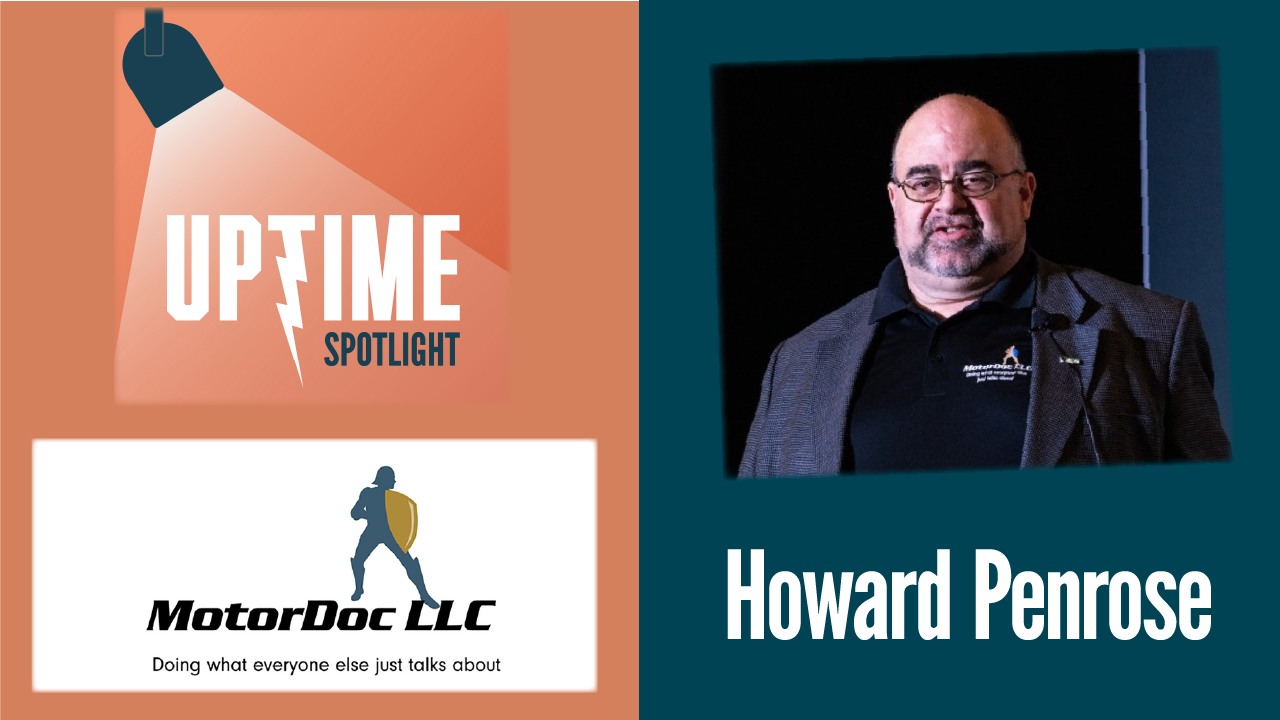
Motordoc Diagnoses Drivetrains From the Ground
Howard Penrose of MotorDoc joins to discuss the circulating currents killing main bearings and drivetrain checks without a climb. Reach out at info@motordoc.com or on LinkedIn.
The Uptime Wind Energy Podcast is brought to you by Weather Guard Lightning Tech, creators of the StrikeTape Ultra LPS retrofit. Subscribe to Uptime’s Substack newsletter. And check out Rosemary’s “Engineering with Rosie” Youtube channel. Have a question we can answer on the show? Email us!
Welcome to Uptime Spotlight, shining light on wind energy’s brightest innovators. This is the progress powering tomorrow.
Allen Hall: Howard, welcome back to the program.
Howard Penrose: Hey, thanks for having me.
Allen Hall: It’s about time everybody realizes what motorDoc can do. There’s so much technology, and I’ve been watching- Yeah … your Chaos and Caffeine podcast on Saturday morning, which are full of really, really good information about the motorDoc as a company, all the things you’re doing out in the field, and how you’re solving real-world problems, not imaginary ones- Yeah
real-world problems. Oh, yeah. Yeah, and
Howard Penrose: whatever annoys me that week. Exactly. And, and whatever great coffee I’m trying out. Yes. Except for a few. We’ve had the ReliaSquatch down our- Yes … um, a couple of times. Uh, yeah, no, I, I enjoy it, and we gotta get you on there sometime. I don’t do- I, it- … a lot of interviews other than an AI character we put in.
Allen Hall: It’s a very interesting show because you’re [00:01:00] getting a little bit of comedy and humor and s- Yeah … and a, and a coffee review, which is very helpful because I’ve tried some of the coffees that you have reviewed, that you’ve given the thumbs up to. But if you’re operating wind turbines and you’re trying to understand what’s happening on the drivetrain side, on the generator, everything out to the blades even, main bearings, gearboxes- Yeah
all those rotating heavy, expensive parts, there’s a lot of ways to diagnose them-
Howard Penrose: Yes …
Allen Hall: that are sort of like we can look at a gear, we can look at a joint, we can look at roller bearings, whatever, but motorDoc has a way to quickly diagnose all of that chain in about- Yeah … 15 seconds.
Howard Penrose: Well, a little longer than 15 sec- more like a minute.
A minute, okay. It feels like paint drying. But- Uh, in any case, yeah. Uh, uh, and, and what’s kind of funny is, um, back in the ’90s, uh, EPRI actually accidentally steered the technology away from its [00:02:00] core purpose, which was in 1985, um, NAVSEA, the US Navy, had done research on using current signature analysis for looking at pumps, fans, and compressors, the bearings, the belts, the components, all the rotating components using the motor as the sensor.
Not too much different than we are now. I mean, mind you, we got better resolution now, we’ve got, uh, more powerful– I mean, I look at my data from the ’90s, and now it’s completely different. Um, and then Oak Ridge National Lab, same thing, bearings and gears in motor-operated valves. So in 2003, we were the first ones to apply electrical and current signature analysis to some wind turbines in the Mojave Desert.
Wow. Yeah. So, um, nobody had tried it before. Everybody said it couldn’t be done. And, uh, that was a bad thing to say to me because- … it meant I was gonna get it [00:03:00] done. Right. At that time, um, we were looking at bearing issues and some blatant conditions with the, um, with the, uh, generator using a technology called Altest, ’cause I was with Altest at the time.
And, uh, I had taken an EMPath software and blended it with a, a power analyzer, and they still have that tool to this day. I was using that technology all the way through 2015. 2016, I should say. And then- And then switched over to the pure EMPath, which was more of an engineering tool. And then more recently, in 2022, uh, made the decision to ha- to take all the work we’d done on over 6,000 turbines, uh, looking at how we were looking at the data and what we were doing on the industrial side, and took a, uh, created a current signature analyzer that would do one phase of current to analyze the entire powertrain.
Allen Hall: So when you tell [00:04:00] operators you can do this magic, I think a lotta times they gotta go, “
Howard Penrose: What?” Oh, yeah, yeah. They don’t understand it because they’re used to vibration- Right … which is a point analysis system. Right.
Allen Hall: Vibration at this- Yeah … particular location. Yeah. One spot- Even if it’s- … or a couple
Howard Penrose: spots
triax, they’re reading through material, up through a transducer. Hopefully, they put it above the bearing and not in the middle of the machine like everybody is now, because everybody’s trying to sell a sensor. Right. True. They’re not selling a- they’re not selling accuracy. They’re just selling sensors.
Right. So, um- Yeah … you know, uh, I, I’ll, I’ll even talk about one of the companies here. We’ve got Onyx here, and they do it right. I mean, they’ve been doing it right pretty well because we’ve been doing some of the same towers they’re on, and we can match the data they’re getting. Oh, good. Right? Yeah. Uh, so but they get it in multiple spots, and there’s areas they can’t quite reach, so we’ll detect those areas as well.
So it’s a good melding of two technologies.
Allen Hall: Oh, sure. Sure,
Howard Penrose: sure. You know what I mean? Yeah, yeah, yeah. So when you have electrical signature and you have vibration, but in [00:05:00] cases if you don’t have vibration, we’re a direct replacement.
Allen Hall: Because the generator- I
Howard Penrose: dare say that.
Allen Hall: Yeah. Whichever–
Howard Penrose: I dare say that, um, with- Well, the
Allen Hall: generator is acting as the sensor.
Howard Penrose: The air gap. The air gap in the generator s- specifically, yes. Yeah. Generator, motor, transformer. Right.
Allen Hall: Yeah. So any of those- Mm-hmm … you can clamp onto, look at the current that’s on there. Everything that’s happening on the drivetrain, in the gearbox, out on the rotor- Yep … main bearings, all of that creates vibration.
Creates a torque. T- a, a torque. Yeah. Yes, more exactly a torque. Yeah. And that’s seen in the generator, in the current coming out of the generator. Yes. So those signals, although minute, are still there. Yes. So if you clamp onto that current coming out of the generator, you’ll see the typical AC sine wave sitting there.
But on top of that- Is all the information about how that drivetrain is doing
Howard Penrose: Absolutely, and everything else. Anything electrical comes through [00:06:00] that. So what you do is just like vibration, you do a spectral analysis. So every component has a frequency associated with it, just like vibration. It’s, as a matter of fact, I, I keep having to try to explain to people electrical and current signature analysis is no different than vibration analysis.
It’s the same concept. We use the same tools. The signature looks just a little different. It’s a little noisier, um, but you need that noise in order to see everything. But we have a time waveform, and instead of, um, inches per second or millimeters per second, whatever, you know, uh, velocity, acceleration, and displacement, uh, what we end up with is decibels is the optimal method.
You can look at straight voltage signatures at those points or, or current signatures, but the values are so small that you have to look at it from a logarithmic standpoint. Right. There are some benefits to it versus vibration, and there’s some things that aren’t as good as vibration. [00:07:00] So, you know, we, we do…
You have to… Any technology is gonna have their strengths and weaknesses. Sure. So we will see everything all at once. Load doesn’t matter. Right. Speed doesn’t matter. It’s… Only reason speed matters is the location of the frequencies. Uh, so the higher the resolution, meaning the longer you take data, the less chance you have on a lightly lo- loaded machine of blending the peaks together.
Right. Um, on the flip side, if I have two bearings turning at the exact same speed, I couldn’t tell you which one it is. Because they’re the same. Right.
Allen Hall: And the mechanical features of that bearing is w- what creates the signal that you’re measuring. Exactly. So if a bearing has five rollers versus 10, just imaginary thing.
Yeah, yeah. Five rollers versus 10 has a different electrical signature, so you can determine, like, that bearing, that 10 roller bearing- Yes … has the problem, the five is fine. Yes. Yeah. That’s the magic, and I think people don’t translate the mechanical world into the electrical world. That that’s what’s [00:08:00]happening.
They,
Howard Penrose: they don’t because, because what’s happening is they named it wrong.
Allen Hall: Yes.
Howard Penrose: A majority of our users are mechanical folks. Sure. Our vibration analysts and stuff like, ’cause they know how to look at the signatures. Right. Everybody tries to force it on their electrical people, and electrical people go, “We don’t know what this is.”
Yeah. And it’s, it’s, it’s a matter of that training and, and, you know, in the electrical world, you’re not taught to look at that. Right. Yeah. It doesn’t matter. Mechanical world, you’re taught to look at that. So our intern, we were trying to bring in electrical engineering interns and found out that just wasn’t working.
So last year, I brought in my first, uh, intern that’s, you know, he’s been with us now since I brought him in. Okay. Uh, and, uh, Amar, and, uh, you know, he’s helped us develop our vi- uh, vibration software to go along with it. Guess what? It’s the same thing. It’s the exact same sy- system Um, but we just take in a vibration signal instead.
But he picked up on it immediately as a [00:09:00] third-year college student. I can take somebody with a decade as an electrical engineer with a PhD and they can’t figure it out.
Allen Hall: Well, because you’re, you’re taking real- Because it’s different. Yeah. It’s r- well, it’s real-world components-
Howard Penrose: Yeah …
Allen Hall: creating electrical signals.
That’s hard- Well, you have- … to process for a lot of people. Yeah,
Howard Penrose: yeah. It’s
Allen Hall: just not
Howard Penrose: something that we do every day. But that’s… If they, i- if we sa- i- i- if you’re looking at vibration and you start looking at the sensor, it gets complicated too, ’cause guess what? It’s an electrical signal. Right. It’s, it is technically electrical signature now.
It’s converting a
Allen Hall: mechanical signal- Right … into an electrical signal, which is what’s happening in the generator anyway. Yeah.
Howard Penrose: Whether it’s a piezoelectric cell that’s generating a small signal- Yeah … on top of a small waveform that you then take out, you demodulate, uh, or it’s, uh… So you take that carrier frequency out, or it’s a MEMS sensor, which is the same thing.
You know, the, it just sees some slower s- It, it does more of a digital output. So you, you, you know, you have those, or you [00:10:00] have this, which just basically uses a component of the machine to, to, as its own sensor. There is one other difference between them, too, and, uh, I find this very useful when I’m going out troubleshooting something that other people can’t figure out, uh, ’cause we use all the technologies.
So in this case, it would be, uh, the structural movement. Okay? So, so say I have a generator and there’s something wrong with the structure, and the whole machine is vibrating. So y- well, if I put a transducer on it, they might think that’s vibration or something else. We don’t see it. Right. We only see directly exactly what’s happening with the machine.
Sure. So a lot of times when we go in to troubleshoot something that people have done vibration on and everything else, it’s been pro- a, a problem for them for years. We walk in, and all of a sudden we’re identifying whether it’s the machine or it’s something else right off the bat. Then we can take a look at the vibration data and [00:11:00] say, “Okay, it wasn’t the bearing or the bearing, um, structure.
It was, you know, the mounting.” Right. It wasn’t
Allen Hall: fastened
Howard Penrose: down properly. Yeah,
Allen Hall: yeah. Right.
Howard Penrose: Go tighten that bolt. Right, exactly.
Allen Hall: Well, I mean, that’s the cheap answer. Yeah. I’d rather tighten a bolt than rip apart a motor or a generator- And, and- … every day …
Howard Penrose: and that’s the whole point. Now, there are other strengths that go with it.
So for instance, on the powertrain of a wind turbine, I can tell you if you’ve lubricated the bearings correctly. Wow. Because part of what we do is we do take those electrical signatures, and we convert those over to watts. Watts is an energy conversion. Sure. So you see that as heat or some type of loss.
So whatever, whatever’s being lost there is not being sent to the customer. To the outside. Right. Making money. So, um, if I’m taking a look at, say, a main bearing, I might see watts or kilowatts of losses. So you’re gonna have some ’cause you have friction, right? But when we see it increase on, say, a roller, [00:12:00] or the rollers, or, or the cage, that’s usually an indicator that I have a lubrication issue.
Or if we only see it on the outer race, that means that they didn’t clear out all the old grease when they were lubricating it, ’cause the rollers then have to ride across it- Right … ’cause it dries up.
Allen Hall: Sure.
Howard Penrose: Uh, and will carry contaminants. So if you see that, you go up, clean it up, you’ll extend the life of the bearing.
Absolutely you will. Without having to do a lot of work. So, uh, we, we look at our technology as more so early in the, in the stage of a condition. I don’t wanna call it failure, ’cause it’s not a failure. It’s something that’s mitigable. And I made that word up. You can mitigate it. Meaning you can go up and correct it and extend the life of that component.
Sure. Uh, in gearboxes we’ll see problems with, um… Well, the, the one we’re talking about here a fair amount is all the circulating currents going on uptower. We did that research. The current signature analyzer we have is a direct result of doing wind turbine [00:13:00] research just on circulating currents uptower, ’cause we conferred everything over to, to sound at 48 kilohertz.
And so that gives me a 24-kilohertz signal. That high-frequency stuff, which we’re researching in CGRE, and IEEE, and IEC, is called supra harmonics, which I– we talked about that before. Yes, we have. Yeah. And, uh, so when you start seeing that in the, in, in the current that’s circulating uptower because the ground that goes from the top of the tower down is for- DC
lightning protection. And lightning protection, yeah. It’s not meant for, um- Not for
Allen Hall: high frequency- Yeah …
Howard Penrose: currents. Yeah. Uh, we, when we measured it, when we mapped out dozens of towers of all different manufacturers, we found that the impedance about halfway down the tower is where it ends. Sure. The, the resistance.
And then the increased, uh, the high-frequency noise turns any of your shaft brushes into resistors. And at about 15 kilohertz, no current is [00:14:00]passing through them. It’s all passing the bearing, which becomes more conductive the higher the frequency. So with 60% of main bearings failing due to electrical currents, it’s actually currents that are circulating uptower.
It’s not static. There is some static up there, but it’s not static. It’s coming from the controls, the, the generator, and everything else. Inverters,
Allen Hall: converters.
Howard Penrose: And we’ve seen up to 150 amps passing through a, through a bearing.
Allen Hall: So I– We run across a lot of operators who have been replacing main bearings, and they don’t know the reason why.
Yeah. And I always say, “Well, call Howard at MotorDoc because I would almost bet you you have the f- high frequency running around uptower in the nacelle- And the next main bearing you put in there is gonna go the same way as the- Yeah … first one you put in there. Until you cut off that circulating current and then the cell, you’re just gonna continue with the problem.
Then you haven’t eliminated the problem, you’re just fixing the result of that problem. Yes. But it takes- Yeah, you’re, you’re- How, [00:15:00] how, well, how long- You’re replacing
Howard Penrose: a fuse.
Allen Hall: Right, you’re replacing a fuse. Yeah. How long does it take you to s- to determine- An expensive fuse. Yeah. Yeah. Oh, yeah, ’cause you’re taking the rotor down.
Yeah. Well, how, how fast can you determine if you have harmonics uptower that are gonna be causing you problems? 120 seconds.
Howard Penrose: Okay.
Allen Hall: So that’s the thing. I think a lot of- I mean,
Howard Penrose: that’s of the actual data collection time. So you clamp on uptower, uh, and then you can… Well, the way we have it set up now, you just tell it you wanna collect data every five s- uh, five minutes, and then you go downtower, let it collect its data, go back up, grab it.
Um, it’s like…
It’s huge. It’s this size. So, um, and then you connect- It plugs into a laptop. Yeah. Plug it into a laptop or any type of tablet. Um, it, it’s Windows now. I’m trying to get away from Windows. We’re gonna have Linux systems, uh, as well. Uh, and then you use that to, um, just collect that data, and then you press another button.
Now it pops up, and it tells you if you’re in danger or not, [00:16:00] the amount of current passing through the bearing, and the frequencies all the way out.
Allen Hall: So the ideal is you’re gonna have this kit with you in the truck. Yeah. And as you see these problems pop up, you’re gonna clamp on uptower. Yep. You’re gonna measure these circulating currents, and you’re gonna know immediately if you have another mechanical issue, a, a lubrication issue- Oh, yeah.
It’ll look at- … some kind of alignment issue, or- You’ll get all
Howard Penrose: of this information at once. So you- Right … if you go on the power side. So certain turbines, like anything that has the transformer downtower, you don’t have to climb. Right. GE. I mean, I don’t climb. So, uh, uh, you know, th- and that was part of the, the concept behind when we started down this path because I’ve been in the wind industry since 1997.
So one of the things I always saw was, and, and we talked about even, you know, here when it was called AWEA, and we were talking always on the health and safety side about wearing out the technicians. Um, so we discovered that, you know, what was it? Almost 60% of the [00:17:00] turbines you didn’t have to climb. Right.
Oh, yeah. And even the ones you do, you go up, you set it up, and it’ll tell you where you need to focus. The other thing in the powertrain, let alone the generator, when we do a sweep of a site– Now, if we do a straight electrical signature analysis, I’d term that one as a technician’s tool. Sure. That’s more of an engineer’s tool.
Uh, a lot more data, a lot harder to set up. But even though I’m saying harder to set up, it’s still pretty easy. It’s still minutes. Right. Yeah. Most technicians will collect data with, like, a couple hours worth of training. Yeah. You g- You basically gather that data, and if you’re getting a site, so we’ll go out– I love going out in the field.
So we’ll go out in the field, especially if it’s a tower we don’t have to climb I’ll knock out, uh, well, let’s just say I’ll, I’ll, I’ll name one. Say a GE 1.6. I’ll knock out one of those every eight to 11 minutes, depending on how you get to the tower.
Allen Hall: So that’s a full diagnosis of drivetrain- Yeah … plus anything odd happening- Yep
with circulating currents and all that [00:18:00] can- Oh, no, no. Circulating- Or just- … current, that’s a- That’s a separate thing at tower … separate study that- Okay … you have to do that uptower. But anything, anything drivetrain-wise, you can be in and out- Yeah … in a couple of minutes. Yep. Okay. So there’s a lot of operators that have end-of-warranties coming up, right?
Yes. There’s been a lot of developments, so they’re kind of running into the end-of-warranty, and they don’t know the health status of their drivetrain. Same thing for a lot of operators that are in- Yep … full service agreements, and they’re questioning whether they’re getting their money’s worth or not.
Yes. I always say, “Call Howard at Motordoc. You guys can have a whole site survey done maybe in a couple of days, and you will know all the problems that are on site for the lowest price ever”. Yeah. It’s crazy how fast you can do it and how accurate it is. I talk to operators that use your system, so I hear you.
Yeah. Your podcast, listen to your podcast, I’m calling your customers to find out what they say, and they love it. Oh, yeah. They can’t believe how accurate it is. Yeah. Well, the thing about that is we as an industry need to make sure that our turbines are operating at [00:19:00] maximum efficiency. Yep. And if a simple tool like the Motordoc EMPath system exists, we need to get customers, operators in line to start doing it worldwide.
Australia- Oh … Europe-
Howard Penrose: Yeah. We- … Canada. Australia, we’re trying to get into, but right now we even have OEMs using it through North- That’s good … and South America, Asia. Good. Uh, Middle East, um, and, uh, and some of Europe. Good. So it’s, it’s, it’s really taking off. Uh, I’d say probably our biggest market right now is Brazil.
Sure. They’re going crazy. Well, the, the turbines are- They’re having a lot of problems. Yeah.
Allen Hall: Right. And the, well, those turbines have a h- high usage, right? So because- Oh, yeah … the winds are so good, they’re operating at, like, capacity factor is above 50%. Yes. It’s insane. Yeah. So there’s a lot of wear and tear.
There’s no downtime for those turbines.
Howard Penrose: Yeah. Well, and, and people think it’s all the starting and stopping. It’s not. No. It’s a grid-related issue. So we have- Sure … we have a low frequency. And you know some of the stuff I volun- I, I’m, I’ve been volunteered for- [00:20:00] Yeah … uh, including the CIGRE thing. Um, so I get to sit in the grid code committees for IEEE and put my, and our input into that, uh, and kind of watch the back of the IBR industry, right?
Mm-hmm. ‘Cause there’s a definitely bias against our industry. Um, and I also, uh, get to hear what’s going on in the grid side of things from CIGRE worldwide, and it’s all very similar, and it has to do with low-frequency oscillating currents- Yes … called subsynchronous currents- Yes … which are low enough not to damage large synchronous machines.
And they thought, and there’s books written on this, by the way, multiple books written on wind turbine impact- Uh, and they’re seeing now, um… Well, we detected it first, along with Timken. Hank, uh, and, and I went out to a site, and we detected for the first time, because of how they wanna do the testing and where the site was located, we saw the oscillating torque [00:21:00] in the air gap, ’cause that’s one of the things the technology does.
It actually measures the torque, air gap torque. Sure. So we were watching the oscillating torque as a tower started up. And so we did, we went through the rest of that site looking at the same stuff in the same way. It increased our time and data collection, and time on site. But then we started looking for it at other sites, and going to pass data because I don’t have to go back and retake data.
Right. And we’re like, “Oh my God. It’s everywhere.” 16 hertz, 21 hertz, and 50 hertz. And we found a paper that specifically identified that as the sub synchronous frequencies for 60 hertz. So we know what they are also for 50 hertz. Once we identified that and we saw how much the torsi- torque was oscillating, we worked with Shermco, who got us some information on Y-rings that were failing.
Yeah. And they were all failing… When the metallurgy was done, they were all failing from fatigue. And you’re like, fatigue how? What’s fatiguing these connections? [00:22:00] Well, the fatigue is that air gap torque- Exactly … because you’re basically causing the, the, everything to oscillate a little bit, and that causes the windings to move slightly.
It’s a living,
Allen Hall: breathing machine-
Howard Penrose: Exactly … this generator
Allen Hall: is.
Howard Penrose: Yeah.
Allen Hall: It’s not
Howard Penrose: static. It’s definitely not sta- no electric machine is static. No. Even a transformer’s not static. Right.
Allen Hall: So- There’s a little
Howard Penrose: bit of wiggle going on there all the time All the time. And it’s minute, so it takes a long time. Right. And what, uh, uh, everybody…
Well, first people thought it was a particular manufacturer, which it wasn’t. Turned out every defig’s failing the same way. Sure. You’re fatiguing it. Yeah. Every bearing is failing the same way, even in the gearbox, main bearings, and everything else. Right. All of these conditions are happening across all the OEMs, but they’re not allowed to talk.
Well, this is, this is the thing that
Allen Hall: I like watching your podcast.
Howard Penrose: Yeah.
Allen Hall: The Chaos and Caffeine. It comes out Saturday mornings. It’s on YouTube. If you haven’t- Yeah … clicked into it, you should click into it
Howard Penrose: because a lot of these issues are discussed there. It’s definitely, um… [00:23:00] Let’s just say I’ll speak Navy quite a bit.
Allen Hall: It’s a great podcast, and I think what you’re doing with the EMPath system- Yes … at motor dock is really a game changer. Yeah. I’m talking to everybody, all the operators I know. I keep telling them to call you and to try the system out because it’s so inexpensive and it does the work quickly and efficiently, and it’s been proven.
There’s no messing- Oh, yeah … around when you’re talking to MotorDoc. I…
Howard Penrose: Somebody dared tell me that there’s no standard for it. There’s ISO standards for it. Yes. There’s IEEE 1415- Yes … which I chair. Uh, and there’s other standards coming out- This is- … associated with it. And there’s a document that I also chair for Sea Gray- Called A178, which is the practical application of the technology.
So it’s well-documented. There are traceable standards for it. I need more
Allen Hall: operators to call you- Yeah … and to talk to you and get systems in the back of the trucks that they can use to check out the health of their gear boxes and their drive trains and their generators. How [00:24:00] do they do that? Where do they go?
Where, where’s, what’s- Well- … the first place they should look for?
Howard Penrose: Uh, info@motordoc.com. Okay. I get all, I get all of those as well, so do my people. Um, or, uh, LinkedIn. LinkedIn’s really good.
Allen Hall: Look up anything. Yeah.
Howard Penrose: Yeah, yeah. So, so either the company at Motordoc, or, uh, I’m, I sh- I’ll show up either searching for my name or, uh, linkedin.com/in/motordoc.
Come straight to me ’cause I’ve been in, on LinkedIn forever, so- Right, just- … I got to do that … look up
Allen Hall: Howard Penrose, P-E-N-R-O-S-E. Yep. Or go to motordoc.com is- Yep, motordoc.com … the website address.
Howard Penrose: Yep. There’s a lot of great information there. And we have partners, and we have people. We’re growing the company.
You know, talk to me. I, I’ll- Yes … I like answering the phone and talking. It’s, it’s a thing. My people go, “Can we answer the phone one?” No. Um, but, but yeah, we, we, y- when you call us, you’re not just dealing with a single person. Right. The Motordoc is far more expansive. Right now, we [00:25:00] just got our partnership with, uh, Hitachi and, and Juliet- Yeah, that’s great
and stuff like that. Uh, we’re helping them with certain things. Uh, we’re partnered with some of the big OEMs, almost all of them, um, you know, helping identify the issues, you know. And, and when users contact us, often they’ll tell us what’s going on, and we’ll, we can, uh, sometimes say, “Yeah, it’s this, and here’s how we prove it.”
Allen Hall: Yeah. That’s the, that’s the beauty- Yeah … of calling Motordoc. So I need my operators that, that watch the show- Yeah … worldwide, go online, go on LinkedIn, get ahold of Howard, get ahold of Motordoc, and get started. Yep. Howard, thank you- And- … so much for being on the podcast. Yeah. This is fantastic. I love talking to you because-
it’s, it’s like talking to, you know… Uh, no, really, it’s talking like someone who’s a real good industry expert, who’s been there a long time, and understands- Yeah … how this
[00:26:00] works.
 Sad that it came to this, but not nearly as sad as I would if he gets away with all this criminality, and the rest of the world writes us of as avid supporters of crime and apathetic to rule of law.


-
Climate Change1 year ago
Guest post: Why China is still building new coal – and when it might stop
-

 Greenhouse Gases2 years ago
嘉宾来稿:满足中国增长的用电需求 光伏加储能“比新建煤电更实惠”
-
Greenhouse Gases1 year ago
Guest post: Why China is still building new coal – and when it might stop
-

 Climate Change2 years ago
嘉宾来稿:满足中国增长的用电需求 光伏加储能“比新建煤电更实惠”
-
Climate Change2 years ago
Bill Discounting Climate Change in Florida’s Energy Policy Awaits DeSantis’ Approval
-

 Renewable Energy10 months ago
Sending Progressive Philanthropist George Soros to Prison?
-
Greenhouse Gases1 year ago
嘉宾来稿:探究火山喷发如何影响气候预测
-

 Carbon Footprint2 years ago
US SEC’s Climate Disclosure Rules Spur Renewed Interest in Carbon Credits