

President Lula opened COP30 with his boldest call yet for climate action and a clean-energy future. In his address, the Brazilian President declared that the world must “accelerate the energy transition” and “get rid of fossil fuels.” What drew the loudest applause from climate and energy experts in Belém, however, were his calls for COP30 to deliver tangible roadmaps to “overcome dependence on fossil fuels,” “reverse deforestation,” and secure equitable climate finance in a “fair and planned manner.”
Yet the day after, Lula’s promotion of so-called “sustainable fuels” cast a shadow of concern. A Roadmap away from oil, gas and coal will only succeed if negotiators and the Brazilian presidency resist the dangerous distractions of biofuels and other false solutions and stay focused on the transition from fossil fuels to renewable energy.
The rationale for a roadmap
The case for a global roadmap could not be clearer. The latest round of national climate targets falls dramatically short of the Paris Agreement’s ambition. If the race to decarbonisation at the pace required to limit warming to 1.5°C were a 42-kilometre marathon, by 2035 we should have already covered half the distance. Instead, current pledges take us barely two kilometres forward.
As Nationally Determined Contributions (NDCs) miss the mark, they must become the floor, not the ceiling, of global ambition. A roadmap – if not hijacked as a Trojan horse for false solutions like “sustainable fuels” – could help accelerate the phase out of fossil fuels, the source of nearly three quarters of global emissions. Clearly, a roadmap on its own will not solve these challenges, but it can be a critical step further.
What a roadmap could entail and what’s the process for it?
A full roadmap may not be finalized at COP30, but the mandate to begin accelerating the transition away from fossil fuels could well emerge in Belém – whether through a declaration, the UAE Dialogue, a new agenda item, or an omnibus decision.
To give such an outcome real weight, it should be formally anchored under the CMA and Paris Agreement, not left as an optional declaration. This would transform it into a stronger, coordinated Mutirão, a collective effort embedded within a broader ministerial dialogue on the transition away from fossil fuels.
Such a process should explore transition scenarios and produce global pathways aligned with International Energy Agency (IEA) and Intergovernmental Panel on Climate Change (IPCC) benchmarks, providing structured guidance ahead of the next Global Stocktake, with milestones for 2035 and 2040 and links to long term strategies.
It could also involve developing country-tailored roadmaps that identify enabling conditions, barriers, cooperation mechanisms, and international support needs, consistent with national capacities and equity. Such a process should include a political segment, bringing together ministers and high-level representatives to assess progress and report to COP31 with concrete recommendations for adoption.
-
Climate-hit nations hail loss and damage fund’s debut call for proposals
Developing countries say the launch of the fund’s operations at COP30 is a long-awaited step towards justice, but activists warn it lacks the resources to meet colossal needs -
Carbon market supporters risk cheating the nature they wish to protect
Efforts to dilute Article 6 rules risk turning the new UN carbon market mechanism into a false climate solution that harms both nature and global climate action


Lula’s ‘Sustainable Fuels’ Mirage
On the second day of the Leaders Summit, President Lula, leader of the world’s second-largest biofuels producer, after the United States again spoke of a roadmap to ‘end dependency on fossil fuels’. But this time, he tried to slip in a twist: positioning “sustainable fuels” as a third pillar of the energy transition, alongside renewables and efficiency, and even launching a pledge to quadruple their production. It’s hard not to suspect that Brazil envisions the roadmap as a vehicle to advance its biofuels agenda.
That would be a serious mistake. Ironically, this proposal came alongside Lula’s call for a roadmap to halt deforestation. Yet, biofuels remain a leading driver of forest loss. If both roadmaps emerge from COP30, they must be interlinked to ensure one doesn’t undermine the other. Emission savings from biofuels are wildly overstated; some studies even find they emit more than the fossil fuels they replace. And let’s be honest: it’s impossible to imagine a world that quadruples “sustainable fuels” without devastating consequences for food security.
The pledge to quadruple so-called “sustainable fuels” rests on more shaky ground than one might realize: It conveniently draws from a recent IEA study “prepared in support of Brazil’s COP30 Presidency”. But this study refers to the IEA scenario of an “accelerated case”, which assumes existing policies are implemented, not that these policies align with net-zero pathways or the goals of the Paris Agreement. In fact, this pledge risks slowing down electrification across multiple sectors, contradicting what the IEA itself identifies as essential for a credible net-zero pathway.
Not another COP-out: We must rewrite the rules of the UN climate talks
If COP30 succeeds in establishing a roadmap – and it should – as part of the broader response to the global climate ambition gap, it must not be hijacked by Brazil’s biofuels agenda. Other countries should push back – or at the very least, insist on strong safeguards.
The lack of support speaks for itself: beyond Brazil, only 18 others have backed the pledge, hardly a groundswell compared to the 133 nations that endorsed the tripling renewables target at COP28. What’s more, countries such as Japan and Italy appear to be backing this pledge not to advance decarbonization, but to justify extending the life of combustion-engine vehicles and even coal plants through co-firing under the guise of biofuels.
Brazil’s biofuels push is not a breakthrough. It’s a dangerous distraction. A roadmap for a fast, fair and funded energy transition is urgently needed but it must be science-aligned, electrification-focused, and firmly aimed at phasing out fossil fuels, not replacing one problem with another.
The post “Sustainable fuels” pose high risks to Lula’s promised roadmap away from fossil fuels appeared first on Climate Home News.
“Sustainable fuels” pose high risks to Lula’s promised roadmap away from fossil fuels

A report from Greenpeace Australia Pacific and Springmount Advisory reveals the untapped green economic opportunity for Western Australia in a declining Asian gas market, which also offers a genuine solution for decarbonisation in Asia.
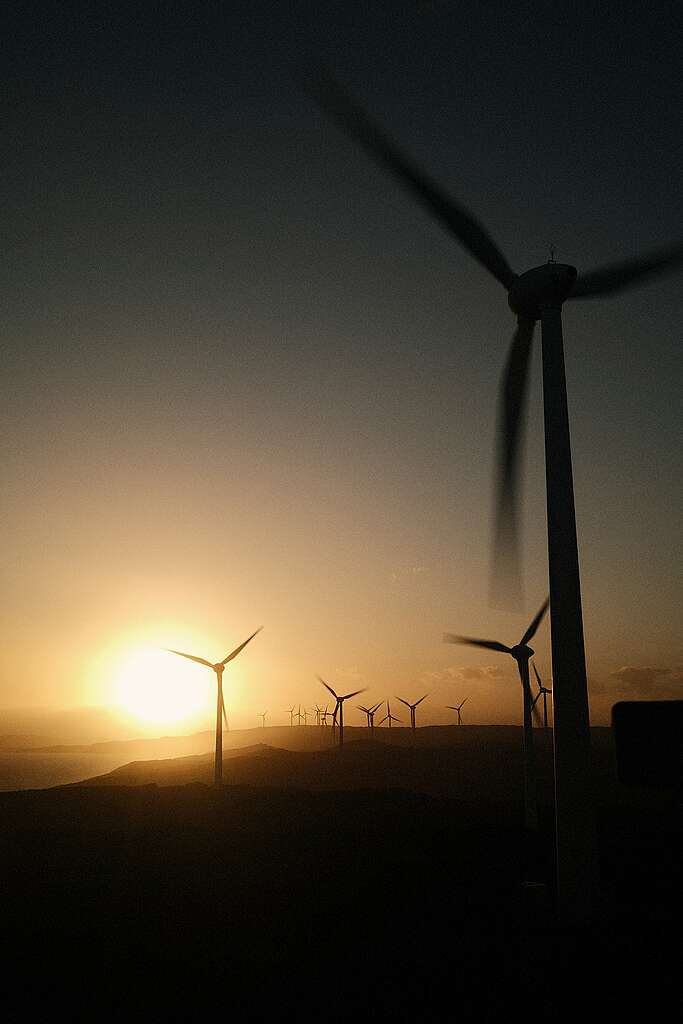
Is Western Australia clinging to a fading gas industry while a thriving green future passes it by? As major Asian trading partners rapidly pivot away from volatile gas imports toward cheap solar and battery storage, this report exposes a high-stakes choice: risk becoming stranded in an oversupplied fossil fuel market, or harness WA’s unmatched sun and wind to lead the global clean energy transition.

Summary
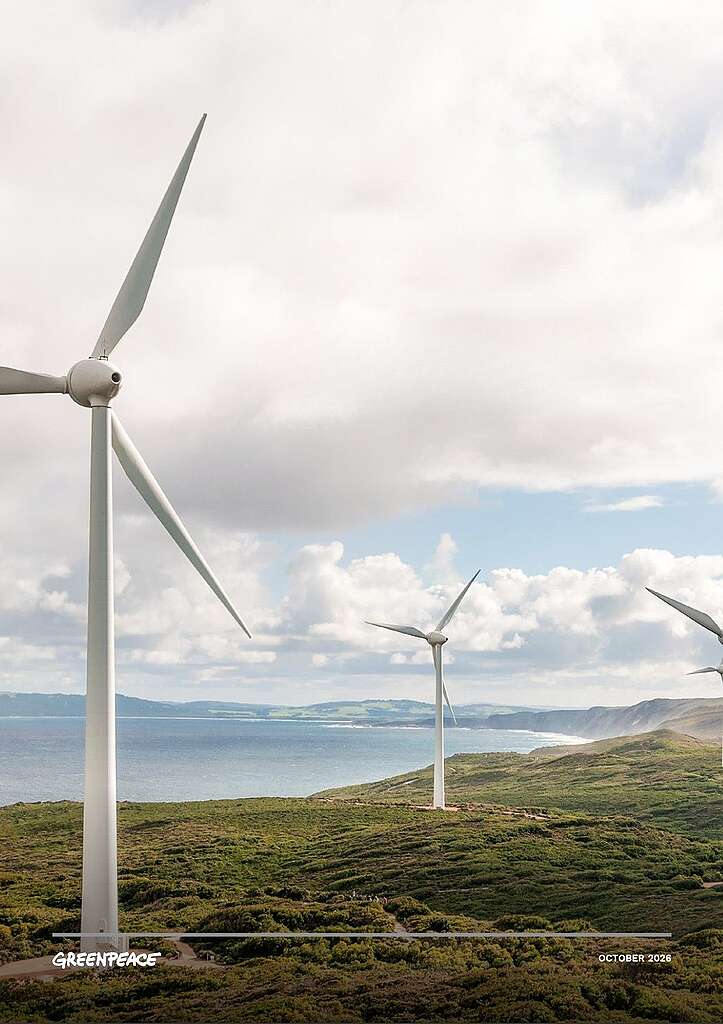
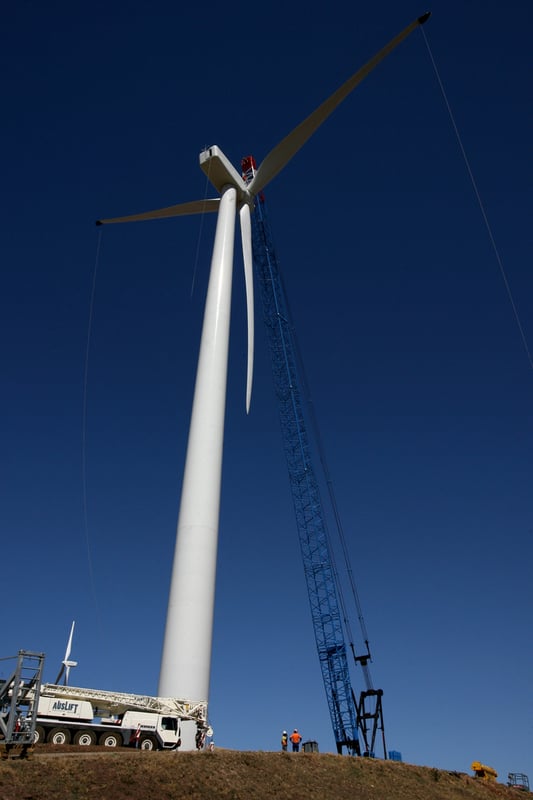
From Gas to Green: Building Western Australia’s Future State reveals that Western Australia (WA) faces a critical juncture as falling Asian gas demand, geopolitical gas supply volatility and accelerating renewable energy deployment undermine the long-term economic viability of gas exports. By harnessing its world-class wind and solar resources, the report demonstrates that WA can execute an orderly phase-out of gas and pioneer a green commodity export economy that could generate $987 billion in economic value by 2060, create 24,000 ongoing jobs, and drive a 9.6% reduction in global greenhouse gas emissions.
Key Findings
- Gas demand is falling in Asia – WA can no longer rely on gas exports: Gas demand in core Asian markets fell in 2025 and is projected to continue to decline in 2026. Legislated energy plans in Japan, South Korea, and China now prioritise renewables and nuclear over gas.
- Asia is increasing renewables, importing gas just gets in the way: Evidence from markets like Thailand suggests that gas imports are increasingly crowding out cheaper renewable energy investments and battery storage rather than displacing coal, locking in more emissions over time.
- Green commodities offer a real solution to decarbonise Asia – this is a major win for WA: With world-class renewables, WA can lead Australia’s green commodity exports, which by 2060 could be worth almost a trillion dollars ($987 billion) and support a genuine 9.6% reduction in global emissions.
Recommendations to WA government
Recommendation 1: Plan an orderly gas phase-out aligned with a trading partner pivot plan
Implement a managed, orderly phase-out of gas exports aligned with trading partners’ decarbonisation pathways, rather than waiting for demand to collapse, by:
- Developing and implementing a staged phase-out of gas facilities aligned with feedstock supply expiry or typical end of facility lifespans.
- Committing to no new gas development for gas expansion, including Browse and Kimberley fields.
- Developing new, reciprocal trade relationships with existing gas trade partners, structured to progressively replace gas exports with green commodities – integrated with recommendation 2.
Recommendation 2: Develop an integrated green commodity export strategy, positioning WA as a global green iron manufacturing hub
Establish an integrated green commodity export strategy that immediately prioritises green iron development, positioning WA as a global green iron manufacturing hub, by:
- Committing to green commodity export targets to give industry and investors a clear demand signal.
- Prioritising green iron as the lead sector within the broader green commodity strategy, given WA’s iron ore endowment and first-mover potential.
Recommendation 3: Reject false solutions such as carbon dumping (CCS) and blue hydrogen
Reject carbon dumping (also described as carbon capture and storage, or CCS) and blue hydrogen as viable decarbonisation technologies, and prioritise green hydrogen and proven renewables for clean energy and fuel production by:
- Excluding blue hydrogen projects (and CCS-dependent projects) from all government support programs.
- Requiring existing hydrogen-based production (including ammonia, methanol, synthetic fuels) to have clear, near-term transition timelines to switch to green hydrogen production.

What you can do
Together, we can push for a prosperous green future.
You can help by:
- Sending an email to Environment Minister Murray Watt and Prime Minister Anthony Albanese, calling on them to reject Browse.
- Sharing this story to help more Australians understand what’s at stake.
- Encouraging your friends and family to take action.
REPORT: “From Gas to Green” Building Western Australia’s Future State
Cleaner cooking projects in the UN carbon market will have to set aside a share of their credits to insure against the risk that the trees they save are lost to fire, drought or logging, after the market’s regulator rejected calls to exempt the sector.
The requirement is part of a new rulebook that the Paris Agreement carbon market regulator – the Article 6.4 Supervisory Body – approved last Friday for programmes that aim to cut emissions by distributing new and cleaner cookstoves in regions that still burn wood or charcoal for cooking.
These are the UN mechanism’s first rulebooks for cookstoves, one of the carbon market’s most popular credit types and also one of its most criticised for overstating climate benefits.
They consist of two methodologies: one for programmes that aim to cut greenhouse gas emissions by distributing more efficient cookstoves that burn less wood or charcoal, and a separate methodology for projects shifting households to lower-emissions cookers running on electricity or liquid petroleum gas (LPG).
Mkhuthazi Steleki, the South African chair of the Supervisory Body, said “this decision gives cleaner cooking projects a new pathway under the UN carbon market, with clear rules to ensure that each credit represents a real and credible emission reduction”.
Industry and NGOs lobby to weaken UN carbon credit rules in “coordinated” push
In copycat submissions and a private briefing to government officials, the groups have opposed a proposal to tighten safeguards for emissions offsetsLaunch of Africa Energy Bank delayed again in blow to oil and gas hopes
Repeated delays are raising questions about the bank’s momentum and whether it can mobilise investment to finance Africa’s oil and gas ambitions in an era of energy transition

Exemption push rejected
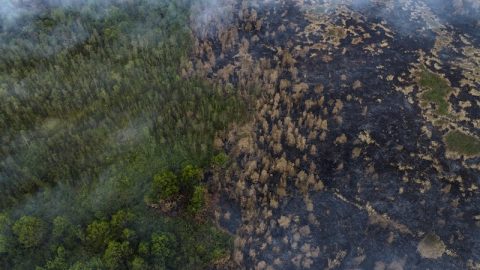
More efficient cookstove projects earn credits based on the amount of carbon they save by preserving trees that would have otherwise been cut down and burned for fuel. But if those trees later burn in a wildfire or are logged, the carbon stored would be released anyway, erasing the climate benefits of the credits.
Several carbon credit developers, conservation NGOs and the UN Environment Programme (UNEP) disputed that cookstove projects face this risk, in what critics described as a “coordinated lobbying campaign”.
They argued that, unlike forest protection schemes, this type of credit represents a “flow” of avoided emissions rather than a “stock” of stored carbon that can be released. They also warned that requiring a buffer would impose disproportionate costs and undermine the financial viability of these activities.
But the UN carbon market regulator was not persuaded by the argument. It decided that projects would have to protect against this reversal risk by handing over a percentage of credits to a so-called “buffer pool” instead of selling them.
‘New paradigm’
The amount of credits to be given up is calculated by applying different methods for natural risks, like wildfires, droughts or hurricanes, and human-caused ones, such as logging or land clearing.
For natural risks, project developers will need to apply local risk values derived from new modelling published by a group of independent scientists.
Campaigners have broadly welcomed the decision. Federica Dossi, an expert at Brussels-based advocacy group Carbon Market Watch, said it sets a new paradigm for calculating reversal risk based on empirical data. “This approach is grounded in science and we hope to see this now being adopted by other carbon crediting mechanisms in the voluntary market,” she added.
Backers claim this method is more rigorous than current practice in the voluntary carbon market, which largely relies on expert guesswork.
Pre-COP draws attention to Pacific’s climate plight and 1.5C goal
Pushback over science
As Climate Home News previously revealed, the same industry and NGO groups that sought an exemption from the “buffer pool”, along with some corporate buyers, criticised the use of a study backed by the UN carbon market’s experts that recommended the new risk assessment approach.
The groups pushed for more flexible rules that would have allowed natural risk values drawn from other sources, including national databases, or from the project developers themselves.
While the Supervisory Body rejected this approach, it gave project developers and countries the option to propose alternative values that would first need to be vetted by the mechanism’s expert panel and then approved by the regulator.
A carbon market expert told Climate Home News that, while it is too early to say how this provision will be used, they expect requests will have to be backed up with solid scientific evidence, lowering the risk of unfounded claims.

Policy discounts questioned
To guard against human-caused risks, projects will need to apply a flat 20% value set by the Supervisory Body, at the bottom of the 20-45% range recommended by its technical experts ahead of last week’s meeting.
That value can be further reduced by up to two-thirds if the host country has an emission-reduction plan covering forests, a long-term climate strategy and a framework for the UN’s REDD+ forest protection scheme.
Injy Johnstone, senior research fellow at the Munich-based Max Planck Institute, said that, while these are important governance measures, their existence does not necessarily demonstrate that the underlying risk of forest carbon loss has been reduced.
“It is important to distinguish between evidence of actual risk reduction and assumptions about the effectiveness of policy commitments,” she added.
Moving target
A UN source told Climate Home News that, under the approved formula, improved cookstove projects must set aside at least 9% of credits linked to saved wood if they operate in the lowest-risk areas and the host country can claim all available discounts. The share of credits rises significantly in regions with high natural risk values, such as Guyana, Sri Lanka and Timor Leste, or that do not have REDD+ programmes.
These factors could change in the future as the Supervisory Body asked its technical experts to recommend revisiting the risk values “should credible new evidence arise”.
Climate change is likely to make forest destruction events, such as wildfires or hurricanes, more freque