Connect with us

Published

on

Weather Guard Lightning Tech
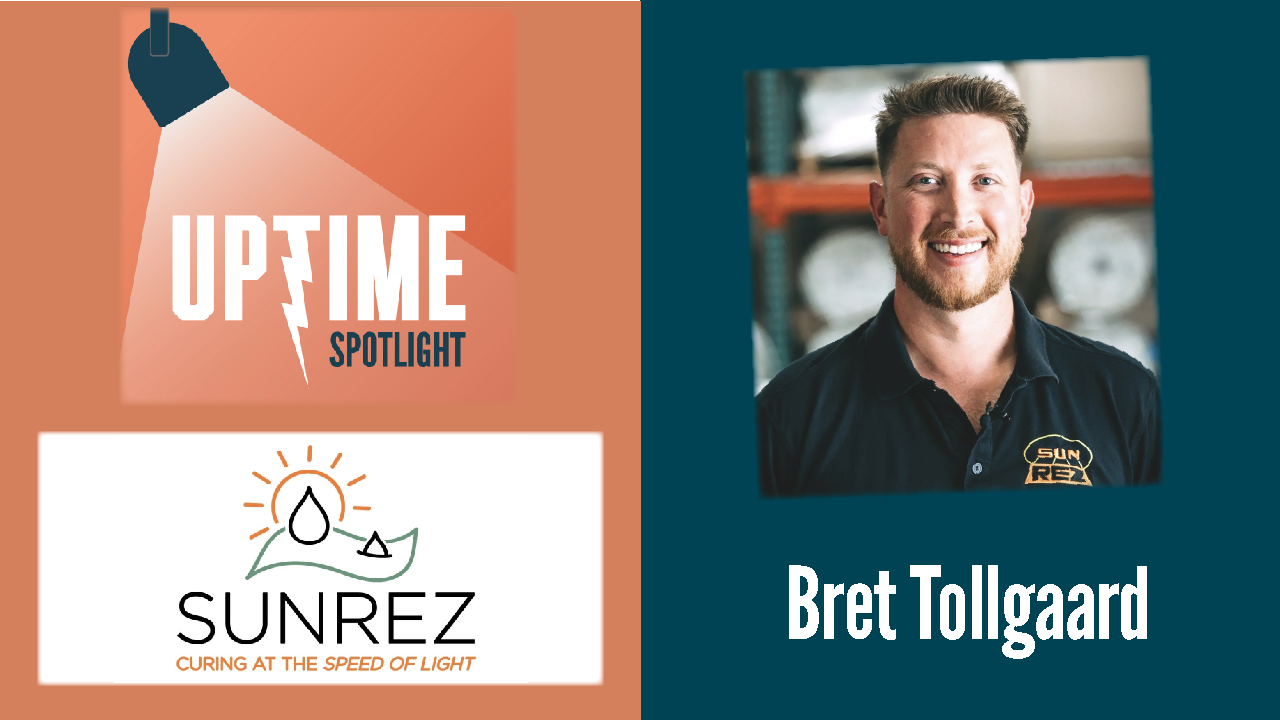
Sunrez Prepreg Cuts Blade Repairs to Minutes

Bret Tollgaard from Sunrez joins to discuss UV-curing prepreg that cuts blade repair time by up to 90% and has recently recieved OEM approval.

Sign up now for Uptime Tech News, our weekly newsletter on all things wind technology. This episode is sponsored by Weather Guard Lightning Tech. Learn more about Weather Guard’s StrikeTape Wind Turbine LPS retrofit. Follow the show on YouTubeLinkedin and visit Weather Guard on the web. And subscribe to Rosemary’s “Engineering with Rosie” YouTube channel here. Have a question we can answer on the show? Email us!

Allen Hall: Brett, welcome back to the program. 

Bret Tollgaard: Thanks for having me again.

Allen Hall: So a lot’s happening at sunrise at the moment. Uh, there’s, uh, activity with sunrise materials on a lot of blades this year.

Over the last couple of years actually, ISPs, operators, OEMs, are realizing that UV curing is a huge advantage.

Bret Tollgaard: Turns out there’s a lot of value added, uh, to the entire process when utilizing UV cure, uh, pre-req.

Allen Hall: So the, the pre pres are, have been available for a couple of years. The qualification though was always the concern.

Has the OEM qualified this material? Are they gonna give you the blessing? Does this show up in the manual? If I call the OEM, are they gonna say they have talked to you guys? A lot of those hurdles have been cleared at this point.

Bret Tollgaard: Yeah, great question. And we are happy to announce that we have finally been approved by a large OEM for use on the epoxy blade for now all general kind of repairs.

We have several more OEMs that have already passed their phase one mechanical testing, and we’re iterating through now [00:01:00] their, uh, secondary and tertiary kind of tests. And so we do expect to be fully qualified by several OEMs before the end of the year, which should make the ISPs integration and utilization of our materials much, much easier.

Allen Hall: So the, the, the problem you’re solving is repairs in the field for the most part, or sometimes in the factory. Mm-hmm. But a lot of times in the field that those repairs. It happened quite a bit. They’re the same repair, the same area, the same kind of thing over and over and over again. And wetting out fabric on site takes time.

Particularly if you’re using standard materials, you have to bag it. You have to apply heat in some cases to get it to kick, and then you have to wait several hours for it to cure. So in the repair cycle time, most of your time is waiting.

Bret Tollgaard: It sure is. Uh, and on top of all that, we all know that there aren’t enough technicians in this industry to even do all the repairs, uh, that would like to be done.

Yeah. And so to really kind of streamline all of that, [00:02:00] uh, we’ve rolled out a couple of new things and we’ve had a lot more interest in some pre consolidated preki patches for customers. Uh, if a particular blade model has an issue that is a standardized kind of repair. We’re actually now building custom prepregs, or we will build the appropriate width length, stack it, consolidate it, uh, wrap it between our films.

So then all the customer has to do when they get on site is, uh, you know, do do the appropriate surface prep. Scarfing, apply a little bit of our UV surface primer to the backside of that patch. But now they can go up tower, single peel, stick, roll out, and then they’re cured.

Allen Hall: And that’s a. How many hours of saving is that?

It’s gotta be like six, 12 hours of saving, of, of

Bret Tollgaard: labor. It’s upwards of 80 to 90% of the labor that’s gonna actually need to be done to apply that. Otherwise, and then same thing too. We’ve had a couple instances where we took a several day repair down to one, to two to three hours. And these are multi-meter long repairs that were fast tracked because we pre consolidated preki [00:03:00] everything.

Some were in flat sheet forms, some were much longer on rolls, where you’re actually then rolling out with a team. Um, and so we’ve been able to demonstrate several times, uh, over the last 12 months, uh, the, the value that a UV cure preprint.

Allen Hall: Well, sure, because that, that would make sense. The issue about wetting out fabric in the field you just done in the back of a trailer or something, somewhere like that.

Usually it is, it’s that you’re never really sure that you got the fabric wetted out. The experienced technicians always feel like, have done it enough that they get very consistent results. But as you mentioned, getting technicians is hard and, and there’s so many repairs to do. So you’re doing those wetting out composite things takes practice and skill.

Just buying it, preki it, where you have control over it. And you guys sell to the military all the time. So that, and you’re, are you ass 91 qualified yet? You’re in the midst of that?

Bret Tollgaard: So we, I mean, a, we just got ISO certified, uh, at the end of last year in December. So our [00:04:00] QMS system and everything like that’s up to date, that’s huge.

Another big qualification for the OEMs that want to see, you know, true quality and output.

Allen Hall: That’s it. I, if I’m gonna buy a preki patch, so, uh, uh, that would make sense to me, knowing that. There’s a lot of rigor as a quality system. So when I get out the the site and I open that package, I know what’s inside of it every single time.

Bret Tollgaard: Well, and that’s just it. And like we got qualified based on the materials that we can provide and the testing that’s being done in real world situations when you’re wetting out by hand and you’re vacuum backing and you’re trying to cure. It is a little bit of an art form when you’re doing that. It is, and you might think you have a great laminate, you got void content, or you haven’t properly went out that glass ’cause humidity or the way the glass was stored or it was exposed.

The sizing and the resin don’t really bite. Well. You might think you have a great repair, but you might be prematurely failing as well after X cycles and fatigue. Uh, simply because it’s not as easy to, to truly do. Right? And so having the [00:05:00] pre-wet, uh, pre impregnated glass really goes a long way for the quality, uh, and the consistency from repair to repair.

Allen Hall: Well, even just the length of the season to do repairs is a huge issue. I, I know I’ve had some discussions this week about opening the season up a little bit, and some of the ISPs have said, Hey, we we’re pretty much working year round at this point. We’re, we’ll go to California. We’ll go to Southern Texas.

We’ll work those situations. ’cause the weather’s decent, but with the sunrise material, the temperature doesn’t matter.

Bret Tollgaard: Correct. And I was actually just speaking to someone maybe half hour ago who came by and was talking about repairs that they had to do in Vermont, uh, in December. They could only do two layers of an epoxy repair at a time because of the amount of the temperature.

Allen Hall: Yeah.

Bret Tollgaard: Whereas you could go through, apply a six or an eight layer pre-reg cure it in 20 minutes. Uh, you know, throughout that entire length that he had and you would’ve been done. That’s, and so it took several days to do a single repair that could have been done in sub one hour with our material.

Allen Hall: I know where those wind turbines are.

[00:06:00] They weren’t very far from, we used to live, so I understand that temperature, once you hit about November up in Vermont, it’s over for a lot of, uh, standard epoxy materials and cures, it is just not warm enough.

Bret Tollgaard: Yeah, we, we’ve literally had repairs done with our materials at negative 20 Fahrenheit. That were supposed to be temporary repairs.

They were installed four or five years ago. Uh, and they’re still active, perfectly done patches that haven’t needed to be replaced yet. So,

Allen Hall: so, because the magic ingredient is you’re adding UV to a, a chemistry where the UV kicks it off. Correct. Basically, so you’re, it’s not activated until it’s hit with uv.

You hit it with uv that starts a chemical process, but it doesn’t rely on external heat. To cure

Bret Tollgaard: exactly. It, it is a true single component system, whether it’s in the liquid pre preg, the thickened, uh, the thickened putties that we sell, or even the hand lamination and effusion resin. It’s doped with a, a variety of different food initiators and packages based on the type of light that’s [00:07:00] being, uh, used to, to cure it.

But it will truly stay dormant until it’s exposed to UV light. And so we’ve been able to formulate systems over the last 40 years of our company’s history that provide an incredibly long shelf life. Don’t prematurely gel, don’t prematurely, uh, you know, erode in the packaging, all those

Allen Hall: things.

Bret Tollgaard: Exactly.

Like we’ve been at this for a really long time. We’ve been able to do literally decades of r and d to develop out systems. Uh, and that’s why we’ve been able to come to this market with some materials that truly just haven’t been able to be seen, uh, delivered and installed and cured the way that we can do it.

Allen Hall: Well, I think that’s a huge thing, the, the shelf life.

Bret Tollgaard: Mm-hmm.

Allen Hall: You talk to a lot of. Operators, ISPs that buy materials that do have an expiration date or they gotta keep in a freezer and all those little handling things.

Bret Tollgaard: Yep.

Allen Hall: Sunrise gets rid of all of that. And because how many times have you heard of an is SP saying, oh, we had a throwaway material at the end of the season because it expired.

Bret Tollgaard: Oh, tremendously

Allen Hall: amount of, hundred of thousands of dollars of material, [00:08:00]

Bret Tollgaard: and I would probably even argue, say, millions of dollars over the course of the year gets, gets thrown out simply because of the expiration date. Um, we are so confident in our materials. Uh, and the distributors and stuff that we use, we can also recertify material now, most of the time it’s gonna get consumed within 12 months Sure.

Going into this kind of industry.

Allen Hall: Yeah.

Bret Tollgaard: Um, but there have been several times where we’ve actually had some of that material sent back to us. We’ll test and analyze it, make sure it’s curing the way it is, give it another six months shelf, uh, service life.

Allen Hall: Sure.

Bret Tollgaard: Um, and so you’re good to go on that front

Allen Hall: too.

Yeah. So if you make the spend to, to move to sun, you have time to use it.

Bret Tollgaard: Yes.

Allen Hall: So if it snows early or whatever’s going on at that site where you can’t get access anymore, you just wait till the spring comes and you’re still good with the same material. You don’t have to re-buy it.

Bret Tollgaard: Exactly. And with no special storage requirements, like you mentioned, no frozen oven or frozen freezer, excuse me, uh, or certain temperature windows that has to be stored in, uh, it allows the operators and the technicians, you know, a lot more latitude of how things actually get

Allen Hall: done.

And, and so if. When we [00:09:00] think about UV materials, the, the questions always pop up, like, how thick of a laminate can you do and still illuminate with the UV light? And make sure you curate I I, because you’re showing some samples here. These are,

Bret Tollgaard: yeah.

Allen Hall: Quarter inch or more,

Bret Tollgaard: correct. So

Allen Hall: thick samples. How did you cure these?

Bret Tollgaard: So that was cured with the lamp that we’ve got right here, which are standard issued light, sold a couple hundred into this space already. Um, that’s 10 layers of a thousand GSM unidirectional fiber. Whoa. This other one is, uh, 10 layers of, of a biox. 800 fiber.

Allen Hall: Okay.

Bret Tollgaard: Uh, those were cured in six minutes. So you can Six

Allen Hall: minutes.

Bret Tollgaard: Six minutes.

Allen Hall: What would it take to do this in a standard epoxy form?

Bret Tollgaard: Oh, hours,

Allen Hall: eight hours maybe?

Bret Tollgaard: Yeah. About for, for the, for the post cure required to get the TGS that they need in the wind space, right? Absolutely. And so yeah, we can do that in true minutes. And it’s pre impregnated. You simply cut it to shape and you’re ready to rock.

Allen Hall: And it looks great when you’re done, mean the, the surface finish is really good. I know sometimes with the epoxies, particularly if they get ’em wetted out, it doesn’t. It [00:10:00] doesn’t have that kind of like finished look to it.

Bret Tollgaard: Exactly. And the way that we provide, uh, for our standard, uh, you know, pre pprs are in between films and so if you cure with that film, you get a nice, clean, glossy surface tack free.

But as more and more people go to the pre consolidation method down tower, so even if they buy our standard prereg sheets or rolls, they’re preki down tower, you can also then just apply a pre, uh, a peel ply to that top film. Oh, sure. So if you wet out a peel ply and then you build your laminate over the top.

Put the primer and the black film over when they actually get that up on tower, they can then just remove that fuel ply and go straight to Sandy or uh, uh, painting and they’re ready to rock.

Allen Hall: Wow. Okay. That’s, that’s impressive. If you think about the thousands and thousands of hours you’ll save in a season.

Where you could be fixing another blade, but you’re just waiting for the res, the cure,

Bret Tollgaard: and that’s just it. When you’re saving the amount of labor and the amount of time, and it’s not just one technician, it’s their entire team that is saving that time. Sure. And can move on to the next [00:11:00] repair and the next process.

Allen Hall: So one of the questions I get asked all the time, like, okay, great, this UV material sounds like space, age stuff. It must cost a fortune. And the answer is no. It doesn’t cost a fortune. It’s very price competitive.

Bret Tollgaard: It, it really is. And it might be slightly more expensive cost per square foot versus you doing it with glass and resin, but you’re paying for that labor to wait for that thing to cure.

And so you’re still saving 20, 30, 40 plus percent per repair. When you can do it as quickly as we can do it.

Allen Hall: So for ISPs that are out doing blade repairs, you’re actually making more money.

Bret Tollgaard: You are making more money, you are saving more money. That same group and band of technicians you have are doing more repairs in a faster amount of time.

So as you are charging per repair, per blade, per turbine, whatever that might be, uh, you’re walking away with more money and you can still pass that on to the owner operators, uh, by getting their turbines up and spinning and making them more money.

Allen Hall: Right. And that’s what happens now. You see in today’s world, companies ISPs that are proposing [00:12:00] using UV materials versus standard resin systems, the standard residence systems are losing because how much extra time they’re, they’re paying for the technicians to be on site.

Bret Tollgaard: Correct.

Allen Hall: So the, the industry has to move if you wanna be. Competitive at all. As an ISP, you’re gonna have to move to UV materials. You better be calling suns

Bret Tollgaard: very quickly. Well, especially as this last winter has come through, the windows that you have before, bad weather comes in on any given day, ebbs and flows and changes.

But when you can get up, finish a repair, get it spinning, you might finish that work 2, 3, 4 later, uh, days later. But that turbine’s now been spinning for several days, generating money. Uh, and then you can come back up and paint and do whatever kind of cosmetic work over the top of that patch is required.

Allen Hall: So what are the extra tools I need to use Sunz in the kits. Do I need a light?

Bret Tollgaard: Not a whole lot. You’re gonna need yourself a light. Okay. You’re gonna need yourself a standard three to six inch, uh, bubble buster roller to actually compact and consolidate. Sure. Uh, that’s really all you need. There’s no vacuum lights.

And you sell the lights. We do, we, [00:13:00] we sell the lights. Um, our distributors also sell the lights, fiberglass and comp one. Uh, so they’re sourced and available, uh, okay. Domestically, but we sell worldwide too. And so, uh, we can handle you wherever you are in the world that you wanna start using uv, uh, materials.

And yeah, we have some standardized, uh, glass, but at the same time, we can pre-reg up to a 50 inch wide roll. Okay, so then it really becomes the limiting factor of how wide, how heavy, uh, of a lamette does a, a technician in the field want to handle?

Allen Hall: Yeah, sure. Okay. In terms of safety, with UV light, you’re gonna be wearing UV glasses,

Bret Tollgaard: some standard safety glasses that are tinted for UV protection.

So they’ll

Allen Hall: look yellow,

Bret Tollgaard: they’ll look a little yellow. They’ve got the shaded gray ones. Sunglasses, honestly do the same.

Allen Hall: Yeah.

Bret Tollgaard: But with a traditional PPE, the technicians would be wearing a tower anyways. Safety glasses, a pair of gloves. You’re good to go. If you’re doing confined space, work on the inside of a, a, a blade, uh, the biggest value now to this generation of material that are getting qualified.

No VOC non [00:14:00] flammable, uh, no haps. And so it’s a much safer material to actually use in those confined spaces as well as

Allen Hall: well ship

Bret Tollgaard: as well as ship it ships unregulated and so you can ship it. Next day air, which a lot of these customers always end. They do. I know that.

Allen Hall: Yeah.

Bret Tollgaard: Um, so next day air, uh, you know, there’s no extra hazmat or dangerous goods shipping for there.

Uh, and same thing with storage conditions. You don’t need a, a flammable cabinet to actually store the material in.

Allen Hall: Yeah.

Bret Tollgaard: Um, so it really opens you up for a lot more opportunities.

Allen Hall: I just solves all kinds of problems.

Bret Tollgaard: It, it really does. And that’s the big value that, you know, the UV materials can provide.

Allen Hall: So. I see the putty material and it comes in these little tubes, squeeze tubes. What are these putties used for?

Bret Tollgaard: So right now, the, the existing putty is really just the same exact thickened, uh, resin that’s in the pre-print.

Allen Hall: Okay.

Bret Tollgaard: And it’s worked well. It’s, it’s nice we’re kind of filling some cracks and some faring, some edges and stuff if things need to be feathered in.

But we’ve [00:15:00] been working on this year that we’ll be rolling out very, very soon is a new structural putty. Okay. So we’ll actually have milled fibers in there and components that will make it a much more robust system. And so we’ve been getting more inquiries of, particularly for leading edge rehabilitation.

Where Cat three, cat four, even cat five kind of damage, you need to start filling and profiling before any kind of over laminates can really be done properly. And so we’re working on, uh, rolling that out here very, very soon. Um, and so that will, I think, solve a couple of needs, um, for the wind market. Uh, and then in addition to some new products that we’re rolling out, uh, is gonna be the LEP system that we’re been working on.

Uh, the rain erosion testing showed some pretty good results. But we’re buying some new equipment to make a truly void free, air free system that we’re gonna it, uh, probably submit end of April, beginning of May for the next round, that we expect to have some very, very good, uh, duration and weather ability with,

Allen Hall: because it’s all about speed,

Bret Tollgaard: it’s durability.

Allen Hall: All about e

Bret Tollgaard: Exactly. And ease of use by someone in the [00:16:00] field. Yeah. Or OEMs on, you know, in the manufacturing plant. Um, there has yet, in my opinion, to be a true winner in the LEP space. That is just the right answer. And so by applying our materials with the really high abrasion resistance that we expect this to have and be as simple to do as it really appeal, stick and cure, um, we think it’s gonna be a bit of a game changer in this industry.

Allen Hall: Well, all the sunrise materials, once they’re cured, are sandal

Bret Tollgaard: correct.

Allen Hall: And I think that’s one of the things about some of the other systems, I always worry about them like, alright, they can do the work today, but tomorrow I have to come back and touch it again. Do I have a problem? Well, and the sun rests stuff is at least my playing around with it has been really easy to use.

It’s, it’s. Uh, things that I had seen maybe 20 years ago in the aerospace market that have they thought about using the material not only [00:17:00] in the factory, but outside the factory. How easy is it to adapt to, how easy to, to paint, to all those little nuances that come up? When you’re out working in the field and trying to do some very difficult work, uh, the sunroom material is ready to go, easy to use and checks all the boxes, all those little nuances, like it’s cold outside, it’s wet outside.

Uh, it’s, it’s hot outside, right? It’s all those things that, that stop ISPs or OEMs from being super efficient. All those parameters start to get washed away. That’s the game changer and the price point is right. How do. People get a hold of you and learn about the sun rose material. Maybe they, you can buy through fiberglass or through composite one.

Mm-hmm. That’s an easy way to do, just get to play with some samples. But when they want to get into some quantity work, they got a lot of blade repair. They know what they’re doing this summer or out in the fall or this winter come wintertime. How do they get [00:18:00] started? What do they do?

Bret Tollgaard: Well, one of the first things to do is they can reach us through our website.

Um, we’re developing a larger and larger library now for how to videos and install procedures, um, generating SOPs that are, you know, semi, uh, industry specific. But at the same time too, it’s a relatively blanket peel and stick patch, whether it’s a wind turbine blade, a corroded tank, or a pressure pipe. Um, and so yeah, www.suns.com Okay, is gonna be a great way to do it.

Uh, we’re actively building more videos to put on, uh, our YouTube channel as well. Um, and so that’s kind of gonna be the best way to reach out, uh, for us. One of the big things that we’re also pushing for, for 26 is to truly get people, uh, in this, in industry, specifically trained and comfortable using the products.

At the end of the day, it’s a composite, it’s a pre impregnated sheet. It’s not difficult, but there are some tips and tricks that really make the, the use case. Uh, the install process a lot easier.

Allen Hall: Sure.

Bret Tollgaard: Uh, and so just making sure that people are, are caught up on the latest and greatest on the training techniques will [00:19:00] go a long way too.

Allen Hall: Yeah. It’s only as good as the technician that applies it

Bret Tollgaard: e Exactly.

Allen Hall: Yeah. That’s great. Uh, it’s great all the things you guys are doing, you’re really changing the industry. In a positive way, making repairs faster, uh, more efficient, getting those turbines running. It’s always sad when you see turbines down with something that I know you guys could fix with sun.

Uh, but it does happen, so I, I need the ISPs to reach out and start calling Sun and getting in place because the OEMs are blessing your material. ISPs that are using it are winning contracts. It’s time to make the phone call to Sun Rez. Go to the website, check out all the details there. If you wanna play with your material, get ahold of fiberglass or composite one just.

Order it overnight. It’ll come overnight and you can play with it. And, and once you, once you realize what that material is, you’ll want to call Brett and get started.

Bret Tollgaard: A hundred percent appreciate the time.

Allen Hall: Yeah. Thanks Brett, for being on the podcast. I, I love talking to you guys because you have such cool material.

Bret Tollgaard: Yeah, no, we’re looking, uh, forward to continuing to innovate, uh, really make this, uh, material [00:20:00] splash in this industry.


Sunrez Prepreg Cuts Blade Repairs to Minutes

Continue Reading

Renewable Energy

Numbers Associated with Trump’s Incompetence Are Kept Secret

Published

on

We won’t know how much damage Trump has done to our county, its people, the world in general, until Trump leaves office.

That’s just one more good reason to make this happen soon.

https://www.2greenenergy.com/2026/07/21/numbers-associated-with-trumps-incompetence-are-kept-secret/

Continue Reading

Renewable Energy

You’re Being Asked to Believe the Unbelievable

Published

on

American voters are being told that progressives hate America.

This type of crap may have some level of acceptance among our least intelligent voters, but fortunately, they’re nowhere near the majority.

You’re Being Asked to Believe the Unbelievable

Continue Reading

Renewable Energy

Omterra Rebrand, Goldwind Warns on Turbine Size

Published

on

Weather Guard Lightning Tech

Omterra Rebrand, Goldwind Warns on Turbine Size

Siemens Gamesa rebrands as Omterra, Goldwind questions ever-bigger turbines, and MIT revisits the century-old Betz limit.

Sign up now for Uptime Tech News, our weekly newsletter on all things wind technology. This episode is sponsored by Weather Guard Lightning Tech. Learn more about Weather Guard’s StrikeTape Wind Turbine LPS retrofit. Follow the show on YouTubeLinkedin and visit Weather Guard on the web. And subscribe to Rosemary’s “Engineering with Rosie” YouTube channel here. Have a question we can answer on the show? Email us!

The Uptime Wind Energy podcast, brought to you by StrikeTape. Protecting thousands of wind turbines from lightning damage worldwide. Visit striketape.com. And now your hosts

Allen Hall: Welcome to the Uptime Wind Energy Podcast. I’m your host, Allen Hall, and I’m here with Rosemary Barnes, who is recovering from a very serious illness, Matthew Stead, who has been healthy pretty much all the Australian winter, and Yolanda Padron in sunny, hot Austin, Texas. Welcome, Rosemary

Rosemary Barnes: Thank you. I am recovering from man flu, and I say man flu because it’s just a cold, but I’m complaining a lot about it.

Allen Hall: there’s gonna be a new name for Siemens Gamesa. So it was Siemens and then Gamesa’s a separate company. They merged. Siemens Energy, uh, broke off from Siemens AG. So [00:01:00] that’s a very well-known name, Siemens. It’s– Everybody knows Siemens at this point around the world.

And the, the one family had, as a company, had s- label on everything, right? So it’s, uh, Werner von Siemens started it 150 years ago. It’s been a long time since Siemens was started, but it’s everywhere. It’s on turbines, transformers, and power plants around the world, and now they’re changing their name, right?

So when Siemens Energy broke off from Siemens AG, they, they had a limited time they could use that name, so they have rebranding themselves or are about to rebrand themselves, and I wanna pronounce this right, Omterra. O-M-T-E-R-R-A. Now, we did a little research on this, and I think it’s Latin for all of the world.

It’s kind of a conjoined, uh, set of words, Latin words, kind of a, a schmear in a sense. So, uh, so the company that, you [00:02:00] know, that spun off in w- roughly 2020, if I remember this right, Matthew, does that sound right? It was roughly 2020 when Siemens Energy was established on its own. Uh, they’re gonna be changing their name to Omterra.

So instead of seeing, seeing Siemens Gamesa publications or Siemens Gamesa wind turbines, I guess they’re gonna have this new name, Omterra. What do we all think?

Matthew Stead: I think it’s great. I think, and if you go back to, you know, GE Vernova, um, I, I thought Vernova was a bit weird for a while, but now it just rolls off the tongue and easy. It just makes so much sense. Um, so I’m, I’m, I’m for it. I, I like it. I’ve already… You know, can already say it. It took a lot longer to say Vernova than it’s taking to say

Terra.

Rosemary Barnes: I think that it– But it’s not Vernova, it’s GE Vernova, right? So everyone knows what it is. Whereas my understanding is it’s not Siemens Omtera, it’s just Omtera, which makes it sound like a new budget kind of [00:03:00] brandless, history-less, uh, company. So that’s… Yeah, I’m no

branding expert, but I think that, uh, like they, they must have not been able to use the word Siemens at all, um, because otherwise you surely would, because it has a very…

Outside of, you know, their blade issues and bearing issues of a couple of years ago, they do have a, like a solid engineering reputation across many fields, so you wouldn’t probably intentionally divorce yourself entirely from that. So, um, yeah, I, I think it will take some getting used to for me

Matthew Stead: but everyone remembers. I mean, it’s not like– The people in the wind industry know their heritage, they know their history, so I don’t think it matters. I mean, you know, you know, they, they purchase the Senvion, you know, technologies or, you know, licenses in Europe. You know, y- y- you don’t forget these things, so I don’t think it matters.

I think it’s just a, it’s a color, it’s a, it’s a label

Yolanda Padron: I think it’ll be fine. I just think that there will be a little [00:04:00] bit of confusion down the line as with everything, right? Like I’ve, I’ve been on the side of conversations where I have to explain like Siemens versus like SGRE on paper and it’s like, oh, it’s– this is why th- there was that paper trail, uh, because people would think it was an absolutely different thing.

Um, so I, I can totally see those conversations coming, coming to play in the future where someone thinks that Ontier is a completely different entity that maybe they changed OEMs or something, um, for a site. But nothing a little history lesson won’t fix, I guess.

Matthew Stead: You just want people talking about you

Rosemary Barnes: Name change every year

Allen Hall: Change your name every year. Well, that’s, that’s one way to approach it. I w- always wonder what the boardroom looks like and sounds like when this discussion is going on, because Siemens, Siemens Energy is a big company, and there had to be outsourcing of this to probably several marketing firms, mostly [00:05:00] in Germany, I’m guessing.

And they came back with a bunch of pitches, and eventually they picked one. But boardrooms are probably not the place to pick a name. And I always think like, “Oh, you just had such a opportunity to do something really cool or really impressive.”

Allen Hall: Well, we’ll see how it goes with Omterra. The, it’s gonna be, I’m sure, a huge marketing effort, and you’ll probably see commercials for it during the Super Bowl.

Developers are [00:06:00] eyeing Britain’s next big renewables auction and have been waiting to learn the rules and most importantly, the price. Well, this week the UK government delivered both. It confirmed a package of changes to the CFD scheme ahead of allocation round eight, aimed at simplifying the process and keeping good projects from being tripped up by some paperwork.

So AR7 was super successful, and they’re hopefully gonna have a, a great allocation round eight. Uh, unchanged from last round, here are some pieces to it. AR7 brought in 15 gigawatts of, of new capacity, uh, well below the ceilings, and the government is betting that that’s stability from AR7’s gonna exist for AR8, so they’re keeping the pricing limits the same.

And let me give you some of the numbers here. So everything’s in 2024 prices, just so we have a baseline here. It, 113 pounds per megawatt hour [00:07:00] for fixed bottom offshore wind, 271 pounds for floating offshore wind. That’s, uh, pounds per megawatt. And then 92 pounds per megawatt for onshore wind, and s- 75 pounds per megawatt for solar. So 271 pounds per megawatt hour in 2044 dollars is, you know, you’re probably talking, what, 290 pounds per megawatt hour. That’s a really good strike price or ceiling to allow, uh, some more floating wind into the UK waters

Rosemary Barnes: Yeah. Well, the UK have this newly signed agreement with Japan, right, to, to progress development of that technology. I feel like I, I haven’t looked up any numbers to back this up, but I feel like the gap between fixed bottom and floating is narrowing. It’s barely more than double now, which, um, yeah, I think is not that bad considering how little development there has been for floating offshore wind compared to fixed bottom.

So [00:08:00] yeah, I think that it is an interesting technology to develop. I, I know with the, um, auction rounds and ’cause it’s a government thing, it’s easy to think, “Oh, why are you spending any money on anything other than the cheapest one?” Because y- you know, like, it, it feels weird that the government would play, you know, when they’re purchasing power for their grid, that they would do any more than trying to just get, you know, bulk power at the cheapest price possible whilst ensuring, you know, reliability.

Um, but in the previous or the previous, the one– last one or the one before that, they had quite a few tidal projects announced that certainly, you know, an expensive and not mature technology. But I think that you can’t say the same thing about floating offshore wind. I think that it is on a, like a good, a good development trajectory, and there are certainly places on Earth where floating offshore is one of the most appealing technologies.

You know, if you think of through to 2030s, 2040s, there’s plenty of places where, um, you know, slightly higher [00:09:00] price paid for floating offshore wind will still be worth it because they have so few other options available. So it makes sense as an industry to in- invest in capabilities there.

Matthew Stead: think it’s a really interesting method. It seems to be really successful, the contract for di-difference approach. So, um, I’m, I’m surprised that it’s not adopted more widely, um, in other locations,

Rosemary Barnes: it is around a bit.

I would like to see it, like, in, in Australia, we are, we are developing some new wind projects, but not as fast as we need to, to, you know, hit our upcoming targets. And I think, like, while the government is doing some things to help move or help incentivize developers, it’s not working that well, and maybe CFD would be a, you know, a bit of a better way to, like, just actually guarantee that these projects are gonna go ahead.

Allen Hall: Australia has a shipping problem. there’s been a concern at state-owned transport hubs are becoming less supportive of [00:10:00] wind energy projects with ACEN Renewables saying that they will now have to truck a large transformer from a wind project or for a wind project in northern New South Wales from the Port of Adelaide.

That’s not necessarily close. And h- they also said that the Port of Brisbane has refused to accept passage of some big transformers for a solar farm. also there’s some, uh, something about blades not being able to be accepted in certain ports. Like some of the, uh, Australian state-managed or state-owned ports are not accepting renewables.

Rosemary Barnes: I think

also that blades in Queensland can only be transported to site like one per day with a full police escort or something. It’s wild to

me ’cause, you know, like I lived in, in Denmark for so long and there were blades going up and down just the normal highway every single day, multiple like, uh, and three– they would go in sets of threes for obvious reasons.

Um, yeah, but the, the, the [00:11:00] Queensland government changed like a, a year ago or, or so, and it changed to a very anti-renewables government and they just threw all of the state’s renewable plans in the bin,

Allen Hall: such a recent change that when they, at least the news articles I’ve seen about it, I’ve only seen a handful, that they have, um, like last year some big transformers, like really difficult to move items have come through those ports and they’re just not letting them through now. How does that work?

If you have a, a, a legal right to build a wind farm or a solar farm or, or substation or whatever’s going on there, how do they reconcile not allowing those components to come through a port? In what world does that make sense?

Matthew Stead: I mean, most of the ports are– yeah, most of the ports are privatized, so it’s up to the individual commercial entity that’s running the port, I would, I would imagine. So it’s beyond the control of the government, would be my first guess.

Yolanda Padron: it seems like it’s an, a federal sort of thing that would give permits.

Matthew Stead: No, I mean, I’ve done a bit of work in the Port of Melbourne and, [00:12:00] um, it’s facilitated by the government, uh, state government, not federal, and but the ports are largely privatized.

Rosemary Barnes: I just pulled up an article and it says that it’s state-owned transport hubs are becoming

less supportive of wind energy projects. Um, yeah, and that’s the reason for why they’ll have to get that transformer in northern New South Wales, so very close to Queensland. They have to go from Adelaide, where you live, Matt, all the way through South Australia, maybe Victoria, New South Wales, and then, yeah, up to nearly the border.

Allen Hall: Is that just a temporary blip that the next election cycle it’ll revert back or is this something that’s more long term?

Rosemary Barnes: uh, it’s not obvious that it’s gonna flip straight back, that’s for sure

Allen Hall: [00:13:00] for years, the race in wind has run mostly in one direction: bigger and bigger blades, bigger towers, bigger machines.

And now a chief engineer f- at one of China’s largest turbine makers says it’s time to pump the brakes. Bo Juul Petersen, uh, Goldwind’s chief engineer in Denmark, argues that scaling turbines up no longer makes economic sense. So it’s not an engineering question, it’s an economic question. His reasoning rests on a simple rule of geometry, the square cube r- law, which says that as a turbine grows, its materials and costs climb faster than the rotor area that earns the revenue.

Past a certain point, he says, bigger simply costs more than it makes. Have we crossed that threshold yet? Is 20 megawatts that, [00:14:00] uh, pivot point where it doesn’t make any more sense to make a larger turbine?

Matthew Stead: didn’t we have problems when we went from three to six?

Allen Hall: One to two.

Matthew Stead: I, I, I think, uh, I think it’s good that someone’s actually coming out and saying this

Yolanda Padron: Whoa, whoa, whoa. Rosie’s on the podcast.

Rosemary Barnes: yeah, ex-excuse me, this is one of my topics of obsession that I constantly carry on about. I made a whole, a whole video about it with, um, equations to back up my opinions about scaling, um, and a very nifty tug of war metaphor between economic factors that favor big wind turbines and economic fav- factors that favor small ones.

And I think that we’re always a little bit ahead of, of what the right, the right balance is between those. So, you know, the benefits from having bigger turbines are that, um, you have fewer electrical connections, for offshore especially, that means less subsea cables and, um, yeah, just like much faster Faster construction of all that, you [00:15:00] know, less, uh, substructures and less, less of everything to install, less of everything to maintain as well.

You know, it doesn’t take so much longer to get up and do your annual maintenance checks of a big turbine compared to a small one. Like, it takes longer, but not, not that much longer. Um, but then all of the structural factors favor smaller turbines over bigger ones. blades especially, as they get longer, you get so many more problems in O&M, but they don’t show up on the developer’s spreadsheet, you know. The spreadsheet that you’re using to decide, um, your f- your final investment decision, it, it doesn’t, it doesn’t know that you’re gonna have a whole bunch of blade issues.

It doesn’t wanna know and so I think that that’s one factor that has pushed us past the economic point of where wind turbine size should be. And I think the other thing is prestige. I know that when I worked at LM, you know, we had the longest blade in the world.

It was 88 meters, was our first, um, world record that we set while I was working there. They’d had many before that. We had– They [00:16:00] had a, like, one-to-one scale printout of it that they took to WindEurope or WindHamburg, um, that everyone stood in front of, and then they lost it to somebody, and then they got it back again with the blade for the Halieade-X.

And we all know how well that went to, you know, have the world’s longest blade. Y- you know, it wasn’t so easy to make it, turned out. It’s very easy to announce and not so easy to make, um, with reliable quality. And now we’ve got all these Chinese companies, especially MingYang, is constantly announcing the world’s biggest something.

Um, don’t sell so many of them, but it’s not the point, isn’t to sell them, it’s to have the prestige of making the world’s biggest something.

Allen Hall: Yeah, what would be the technology breakthrough that would allow it to be more stable at a 20 or 25 megawatt? Because right now I’m, I’m seeing 1% improvement here and there, not 5%, 10%.

Rosemary Barnes: Yeah, I mean, 1% improvement will eventually add up to what, what you need. Maybe it’s in

20 years’ time, not 10 years’ time. But y- you know, like you can imagine anything. maybe [00:17:00] they start somehow, like aero and automotive manufacturing technologies get cheap enough that we can start making wind turbine blades with all prepregs instead of y- you know, um, you know, dry fabric and infusion.

For example, maybe 3D printing gets cheap enough that you can make your whole, whole blade from an additive process. Like a- anything like that. But it can also be other things like maybe the cost of subsea cables in- increases like a whole lot, and then if, you know, like things on one side getting more expensive can make it more worthwhile to save hard problems somewhere else. So that’s why I say it’s like a, it’s a, a ve- it’s a multivariable optimization problem that changes every time you have a…

Like for every project to project from year to year, it’s always gonna be slightly different. So I don’t think it’s wise to definitively say 20 megawatts is the threshold that we should never cross. Like I, I don’t agree with that.

Allen Hall: It’s one of those arguments, I think, about [00:18:00] any sort of technology about where the endpoint is. There’s too many variables to predict it. I always point to aviation in which older airplanes will hang around and hang around and hang around until the fuel price goes up enough where it doesn’t make sense to operate them.

So they will fly an airplane un-until they can no longer structurally do it. But if the price of oil shoots up and the price of aviation fuel bumps up, those airplanes get parked, and then they’re buying the new airplane with a more efficient engine. It’s a similar thing, I think. There’s just– You can’t tell where the technology’s gonna go or what the economic impacts of any part of that business will force you to do something different.

So it’s gonna be higher than 20 megawatts, guarantee you that.

Yolanda Padron: Well, it’s one of those things too, right? Where if we’re repeating the, the same blade type and we’re getting smarter about operating that same blade type, then the economic cost goes down, [00:19:00] right? Like, eventually. ‘Cause then you’re not just experimenting on every new thing or having to take all of the, the funding into tr- specializing techs or getting very specialized techs onto your site and finding a new– kind of the wheel every so often. [00:20:00] So speaking of larger wind turbines, evidently we’ve been doing this all wrong, that we’ve had the calculations for the, uh, Betz limit has been off, and, uh, a group of MIT engineers, I guess, uh, have, have made a breakthrough.

Allen Hall: So basically every wind turbine that is spinning today is based on some fundamentals, uh, math, empirical data in, in some level, but on formulas that have led us to design the wind turbines and that core formula called the momentum theory. And if you hear blade designers who hang around blade designers, which I don’t necessarily recommend, but if you do hang around blade designers, they, they’ll say the momentum theory, momentum theory, like, “Yeah, yeah, yeah, yeah, I got it.”

It, it, the– MIT is saying it breaks down exactly at the operating point where modern turbines try to live. Um, so for a century the fix [00:21:00] was a patchwork of corrections and useful, but with no real theory behind them. Now, a team at MIT said it has rebuilt the math from first principles, creating what they call a unified momentum model. It even nudges at the famous Betz limit, the century-old ceiling on how much energy a rotor can capture, and it bumps it up by a few percentage points, and that would be the first uptick to the Betz limit in over 100 years. All right, Rosemary, as our official Betz limit expert, does this make any sense?

Have the MIT folk something new?

Rosemary Barnes: a wind turbine blade, its aerodynamics are just the same aerodynamics as what keeps an airplane in the sky, right? It’s, it’s all the… It’s just an airfoil. It’s just facing a wind speed, um, you know, a local wind speed. It’s complicated by the fact that [00:22:00] a wind turbine blade is also rotating, so the wind speed is different along the whole span, and that’s, uh– and so is the flow angle, and that’s why blades are twisted and tapered.

Um, but you know, essentially when you wanna figure out how much energy, uh, a wind turbine is gonna generate or you wanna design the blade so that it optimizes that amount, you’re just slicing it up into a whole bunch of little bits of 2D flow, exactly the same as an, an airplane. So if it doesn’t work for wind turbines, then it shouldn’t work for airplanes either.

So that’s one fundamental thing. And also at Betz limit, it’s not like it’s not driving design. It’s more like if you, if your design exceeds the Betz limit for a, um, a horizontal axis wind turbine, then you– it’s like a sanity check that you’ve done something wrong. Uh, that’s, that’s what I would say you would mostly use it for.

Um, but what I don’t understand, and maybe Alan, presumably you did read the, read the research or at least the press [00:23:00] release. Are they arguing that y- um, like the tips of a wind turbine blade are rotating, are moving fast enough that it’s approaching transonic flow? ‘

Allen Hall: Yeah, it’s a rental number thing.

Rosemary Barnes: there’s different types of aerodynamic equations depending on how fast the, airfoil’s moving.

And my understanding is transonic is like 0.8 Mach, um, 0.8, which is 274 meters a second, which is more than double what, um, the fastest tip speeds are currently. So I would think that you’re not quite approaching that yet. They’re– It’s not like a cutoff that, you know, all of a sudden at that exact, exact speed the air behaves totally differently.

But, um, y- yeah, like it seems far enough away that it’s not that relevant. But is that what they’re getting

at or, or is it something different?

Allen Hall: I like doing sanity checks when I read things from MIT. So what blade [00:24:00] manufacturers and/or wind turbine OEM has designed a set of blades and go, “Oh my gosh, we’re getting more energy than what we calculated,” and not thought to themselves, “Huh, maybe we should look into that”? It’s, it’s, it’s hilarious almost that all the engineers working in wind for 100 years wouldn’t have stumbled across this, where the turbine produces more power than the Betz limit would say it would.

Y-

Rosemary Barnes: yeah, as many people have commented on, you know, any one of my YouTube videos about wind turbine aerodynamics, if they would just put more blades in there, then, you know, less wind would just fly through without ever being, um, y- without ever hitting a blade.

So, you know, like obviously wind turbine, uh, blade aerodynamics people are stupid because if they weren’t, then they would see that you just put more blades in and you get more, twice as many blades, twice as much energy and w- What about three times as many blades? Three times as much energy.

And I [00:25:00] didn’t even go to MIT and that’s just, you know, like just

brilliant

Allen Hall: Obvious

Rosemary Barnes: off the top of my head here.

Allen Hall: it’s sort of ludicrous, honestly, and I see these things in wind occasionally. I see it more often in other areas, particularly aerospace, where, where you just have to go, “What are we spending time on?

Really? We’re working on this? On a fraction of a percentage point that we may have a slight error in?” Like, it does not matter. What are you gonna do with that?

Rosemary Barnes: there’s two issues. One is that the person writing up the press release is not the person that did the research, and they will always blow it up to be much more groundbreaking than the engineers who actually worked on it probably think it is.

So, the, like, I think you have to, like, reserve your criticism of the work and try and criticize the press release. And then the second error that I commonly see is that people don’t have an un- good understanding of a status quo. So they think that they have smashed the status quo, but really it’s more to do with them not understanding the status quo than it is through [00:26:00] some legitimate, like, massive im- improvement.

So it could well be that this is all very good and correct work, just with limited practical implication. That would be my most expected, um, from this.

Allen Hall: Rosemary, how many times a month do you get queries about wind turbine improvements that are just physically impossible?

Rosemary Barnes: Oh, I mean, if I read all of the comments on my YouTube channel, then probably quite, quite frequently. But, um, yeah, the most common one is just people thinking you can just add more blades and get a proportional increase in, um, in energy, you won’t get more power from adding more blades if that’s the only thing that you do, because in a well-designed wind turbine, which modern ones are, every, e- every air molecule that goes through the rotor disc is gonna interact with the, um, with, with a blade.

That’s how it’s, it’s designed. The blades are moving really fast, and so every molecule doesn’t get hit, but, you know, every, every molecule is affected and has some energy extracted from it. Um, then the other thing is people [00:27:00]who think if you reduce drag, like if you can come up with a lower drag airfoil or a higher lift airfoil, then you think, they think that that relates to more energy proportionally.

So they’re like, “Oh, this airfoil has twice as much lift, so it’s gonna be twice as much power.” It’s like, actually, you know, wind turbine designers are aware of the full range of, you know, airfoils that are available, including high lift ones, and they’re not using it because, you know, the same reason the airplane wings aren’t just, you know, like the highest, highest lift airfoil.

Y- you know, it’s more of a lift to drag ratio type thing, and that’s true for wind turbine blades as well, but also there’s structural considerations probably more so in a wind turbine blade than there are in, um, in airplane wings. So, you know, there’s some sacrifices made for that. Um, yeah, but those are the two, two main families of, of mistakes that I’d say people make.

Allen Hall: So

Rosemary Barnes: Matt

Allen Hall: up to his hand up for

to MIT media representatives

Matthew Stead: uh,

I had a couple of sort of quick and simple points. The first of all, uh, I’m actually a graduate of [00:28:00] MIT. I’ve graduated from, uh, from a course at MIT. Um, so that’s the first thing. Um, not in engineering. Um, the next one is like, so what? I mean, we can’t even reliably measure, um, you know, AEP the other one is all models are wrong.

Yolanda Padron: But not just wind

Matthew Stead: the world is not perfect. All models are wrong, so trying to improve something that’s wrong, you know, might help a little bit, but does it really matter?

Rosemary Barnes: But it is also the job of academics to improve these models. So there’s nothing wrong with MIT spending a lot of energy to, um, you know, improve on an incorrect model with another incorrect model. Uh, if it’s more useful, that’s great, and even if it’s not, like isn’t that the job of

Matthew Stead: yeah.

Matthew Stead: you should add to where it has the most impact on humanity. You should actually put the effort into areas that have a greater impact on pushing the boundary. You know, pushing small boundaries does not help the world

Allen Hall: Matthew is an MIT graduate, [00:29:00] the one thing that Matthew brings to the table is real-world experience. And that if you shelter yourself inside a laboratory at MIT, and I understand why you would do that, because I’m sure it’s a very pleasant place to work, and there’s a lot of benefits to that.

However, the way that MIT used to work back in the day, and not everything was roses then, but oh, okay, y- that people had industry experience. They had a knowledge of what was going on on the ground, and they were engineers, and they realized that formulas and reality don’t always align. And maybe we lost that somewhere in the ’80s and, or ’90s, but it does continue to be a problem, where back to Matthew’s point, if you’re going to use that amount of brain energy, put it to something that can help the world.

This isn’t necessarily helping the world That wraps up another episode of the Uptime: Wind Energy podcast. If today’s discussion sparked any questions or ideas, and I’m sure that it will, we’d love to hear from [00:30:00] you. Reach out to us on LinkedIn, and don’t forget to subscribe so you never miss an episode.

So for Yolonda, Rosemary, and Matthew, I’m Allen Hall, and we’ll see you here next week on the Uptime: Wind Energy podcast.

Omterra Rebrand, Goldwind Warns on Turbine Size

Continue Reading

Trending

Copyright © 2022 BreakingClimateChange.com