

-
Grid Infrastructure -
Transmission & Power Markets -
Press Releases
Solutions for the Surge: New Report on Reducing Energy Costs with Grid-Enhancing Technologies and High-Performance Conductors
Technologies Offer Options for Meeting Growing Electricity Demand, Keeping Costs Down
WASHINGTON, D.C. – A new report released today highlights the important role Grid-Enhancing Technologies (GETs) and High-Performance Conductors (HPCs) can play in ensuring the U.S. transmission grid can meet the surging near-term power demand from growing economic sectors while keeping costs down for consumers. The Federal Energy Regulatory Commission’s (FERC’s) recent transmission planning and cost allocation rule, Order 1920, mandates transmission providers develop scenario-based, long-term transmission planning that includes the consideration of GETs and HPCs.
Prepared by The Brattle Group on behalf of the American Council on Renewable Energy (ACORE), the report, titled “Incorporating GETs and HPCs into Transmission Planning Under FERC Order 1920,” highlights the many benefits of these technologies. The report also addresses how: (1) current planning processes may be inadequate for their consideration; (2) Order 1920 can remedy these deficiencies; and (3) relevant state entities can encourage transmission providers to fully integrate these technologies into transmission planning and selection processes.
“GETs and HPCs are proven tools that can add critical grid capacity in less than a year in some instances,” said Elise Caplan, ACORE’s Vice President of Regulatory Affairs. “FERC’s directive in Order 1920 sets the stage for transmission providers to cost-effectively address rapid load growth and other challenges to the grid through careful consideration of these technologies.”
As demonstrated through on-the-ground deployment and various studies, these technologies are well-established, cost-effective technologies that can be quickly deployed in the near term on the existing system and complement the longer-term buildout of transmission. The report finds that cost savings associated with the seven benefits FERC laid out in Order 1920 can range from tens to hundreds of millions of dollars annually per region – totaling several billions of dollars per year for all U.S. consumers if they become widely adopted.
“GETs and HPCs are mature, proven technologies, and our analysis found that these tools can provide all seven benefits outlined in FERC Order 1920,” said Bruce Tsuchida, Principal at The Brattle Group and lead report author. “Transmission providers can use a holistic evaluation method when assessing various benefits and comparing potential transmission solutions. These technologies will likely shine through as a lower-cost option to ensuring reliable, affordable power for ratepayers.”
In addition to planning for future needs, transmission providers account for various uncertainties — including investment costs and the trajectory of future changes to load. Improved long-term transmission planning processes can better evaluate all available solutions within multiple scenarios. FERC’s directive also presents significant opportunities for states to work with transmission providers to enhance the technologies’ consideration and promote broader adoption.
“In finalizing Order 1920, FERC directed transmission providers to revamp their planning processes to better plan and prepare the system for future challenges. But it will take some time before Order 1920 is fully effective,” said Rich Glick, Principal at GQS New Energy Strategies and former FERC Chair. “In the meantime, action is needed to address more immediate threats to reliability and affordability. This report shows that GETs and HPCs offer a near-term capacity solution while grid operators continue to plan the regional transmission lines needed to meet future challenges.”
To download a copy of the report, click here.
###
About ACORE:
For over 20 years, the American Council on Renewable Energy (ACORE) has been the nation’s leading voice on the issues most essential to clean energy expansion. ACORE unites finance, policy, and technology to accelerate the transition to a clean energy economy. For more information, please visit https://acore.org/.
Media Contacts:
Dylan Helms
Manager, Communications
American Council on Renewable Energy
communications@acore.org
202-935-6491
Ellie Potter
Senior Public Affairs Manager, Macro Grid Initiative
American Council on Renewable Energy
potter@acore.org
202-505-5589
The post Solutions for the Surge: New Report on Reducing Energy Costs with Grid-Enhancing Technologies and High-Performance Conductors appeared first on ACORE.
https://acore.org/news/solutions-for-the-surge-new-report-on-reducing-energy-costs-with-grid-enhancing-technologies-and-high-performance-conductors/

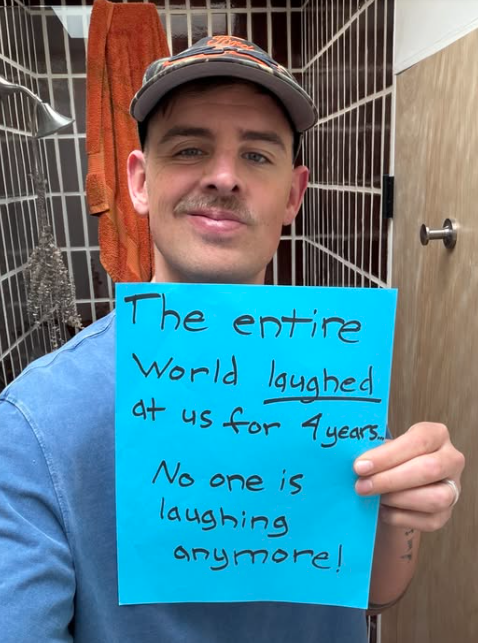 This guy is correct that no one outside the United States is laughing at us now, in the spring of 2026.
The most common response to the Trump administration is a blend of horror and sorrow. The world never thought for a moment that the corrupt fascism and criminal insanity that dominates the planet’s banana republics could have possibly come to America.
 JFK was assassinated 63 years ago, and the general public still doesn’t know who did it.
If the U.S. federal government is good at anything, it’s keeping secrets that would cause itself embarrassment.
In the case of Pam Bondi, it seems most likely that she didn’t prosecute Trump’s enemies with enough alacrity. Yet there are countless other possibilities.
I’m prepared to leave this Earth not knowing why she got whacked, and you should be too.
Renewable Energy
President Donald Trump Reportedly Looking to Replace Press Sec. Karoline Leavitt: ‘He’s Not Happy’
Is it possible that’s the report here is true?
Her job is to stand in front of the American people and lie through her teeth.
How could Trump not be happy with her? It’s hard to imagine that Trump could find a more competent liar.
President Donald Trump Reportedly Looking to Replace Press Sec. Karoline Leavitt: ‘He’s Not Happy’


-
Climate Change8 months ago
Guest post: Why China is still building new coal – and when it might stop
-
Greenhouse Gases8 months ago
Guest post: Why China is still building new coal – and when it might stop
-

 Greenhouse Gases2 years ago
嘉宾来稿:满足中国增长的用电需求 光伏加储能“比新建煤电更实惠”
-
Climate Change2 years ago
Bill Discounting Climate Change in Florida’s Energy Policy Awaits DeSantis’ Approval
-

 Climate Change2 years ago
嘉宾来稿:满足中国增长的用电需求 光伏加储能“比新建煤电更实惠”
-
Climate Change Videos2 years ago
The toxic gas flares fuelling Nigeria’s climate change – BBC News
-

 Renewable Energy5 months ago
Sending Progressive Philanthropist George Soros to Prison?
-

 Carbon Footprint2 years ago
US SEC’s Climate Disclosure Rules Spur Renewed Interest in Carbon Credits