

Weather Guard Lightning Tech

PowerCurve’s Data-Driven Approach to Blade Analysis
Nicholas Gaudern, CTO at PowerCurve, discusses the growing focus on data-driven insights in wind turbine operations, emphasizing the importance of laser scans, digital twins, and aerodynamic add-ons for enhancing efficiency and performance.
Sign up now for Uptime Tech News, our weekly email update on all things wind technology. This episode is sponsored by Weather Guard Lightning Tech. Learn more about Weather Guard’s StrikeTape Wind Turbine LPS retrofit. Follow the show on Facebook, YouTube, Twitter, Linkedin and visit Weather Guard on the web. And subscribe to Rosemary Barnes’ YouTube channel here. Have a question we can answer on the show? Email us!
Allen Hall: Nicholas, welcome back to the podcast. Hi. Thanks Allen. Good to see you again. There’s a lot going on in wind right now. Obviously the elections that happy the United States are changing the way that a lot of US based operators are thinking about their turbines and, and particularly their blades.
I’ve noticed over the last, even just couple of weeks that. Operators and the engineers are paying more attention to what they’re actually getting on site.
Nicholas Gaudern: Yes.
Allen Hall: Instead of, uh, the sort of the full service agreement where, hey, they’re under warranty for two years, I don’t really need to do anything for a little while approach.
That’s changing into, I want to know what arrives on site, what am I getting and what problems are there with these particular blades that I may not know about because they’re new to me. Even though these blades, there may be thousands of these blades out in service. Mm-hmm. Me, my company doesn’t know.
Yep. How they operate. How they perform, particularly at this, this new site, I’m Repowering or, [00:01:00] or building new. That is a complete shift. From where it was a year ago, two years ago, five years ago. Yeah. And I think the biggest performance piece that people are looking at is aerodynamics, and I’m trying to understand how these blades perform, how they move.
Yes. What kind of loads there are, what kind I expect over the next year or two. And I think they’re just becoming now aware of maybe I need to have a game plan.
Nicholas Gaudern: Mm-hmm.
Allen Hall: And I, and that’s where power curve comes in, is like in the sense of have a king plan. Understand what these plates are all about. Yeah, yeah.
And try to characterize ’em early rather than later.
Nicholas Gaudern: Yeah, exactly. I think there’s been an increased focus on, on data and for operators, as you say, to understand more what they’re getting and not necessarily relying on just what they’re told. So, uh, I think a nice case study of that is last year we were helping a customer to build a, a digital twin.
Uh, of one of their turbine models that they, that they purchased. So what that involved [00:02:00] is, uh, going to site, doing a laser scan of a blade, understanding geometry, helping them to build up some aerodynamic and structural models of that blade. So then that customer was going to build an AEL model themselves of that turbine so that they could run load calculations.
They could look at, uh, site specific, uh, changes that could be relevant to that turbine’s configuration or how they operated it. And this isn’t really something that you saw a lot of, uh, a few years ago, but I think it’s great that operators, particularly when they have a larger engineering capacity, are starting to get into that game.
Uh, and it’s tough because it’s a lot of what the OEMs do, it’s their kind of specialist knowledge, but there’s a lot of smart people out there. Uh, there’s a lot of companies you can work with to help gather that data and build these products up.
Allen Hall: The OEMs right now are. Lowering the number of engineers.
Nicholas Gaudern: Mm-hmm.
Allen Hall: Staff reductions. Yeah. Uh, so getting a hold of somebody on the engineering staff, particularly with aerodynamics, can be quite hard. Yes. And in fact, I’ve talked to [00:03:00] some smaller operators that can’t get access to those people at all.
Nicholas Gaudern: No, no. We, we get told that a lot that, um, there’s, there’s customers calling OEMs and they, yeah.
They can’t, they can’t speak to anyone who really understands that the issues that they’re facing. But free now we, we have contact with a lot of OEMs. I would say that we have more aerodynamicists and power curve than some OEMs have now. Oh, that’s true. And that’s quite, that’s true. Surprising. You know.
Um, so it does mean that I think from a customer support perspective, it is harder for the OEMs to take on some of those really detailed or nuanced questions that an operator may have.
Allen Hall: Right. Operators are getting smarter.
Nicholas Gaudern: Yep.
Allen Hall: And asking more pointed questions, not generic questions anymore. Uh, we’ve had, uh, junker on the podcast and I, when I ran into her last summer, she was basically saying that like you, you’re talking to operators now that are getting smarter about what they’re doing.
Yes. They’re asking more pointed questions. The OEMs can’t respond. So now what do you do? Yeah, that’s, that’s the Global Blade Group.
Nicholas Gaudern: Yeah, exactly.
Allen Hall: [00:04:00] Perspective, right? Where everybody’s starting to pool the resources together. I think that’s an
Nicholas Gaudern: absolutely great initiative. I mean, it’s something that’s been going along in various forms for a few years now, but um, now big it has joined Stack rt.
It’s kind of been relaunched in, in this new form that you were discussing with us. So, um, we are really excited to be part of that, I think kind of the way, uh. Our role sits within the group. We’re still working on, on the details, but we’re definitely gonna be part of that group in helping to, to share knowledge.
So the aim is that we will help, uh, educate basically to, to raise discussion points, to, to lead forums with operators about how they can understand their aerodynamics better, how they can ask more relevant questions of the OEM. So I think that’s what a lot this is about, just asking the right questions.
I think sometimes operators can feel a little bit, uh, blind. Uh, as to the best way to navigate a problem, but by knowledge sharing within the Blades group with other forums, um, I think that’s gonna make that a lot easier for everyone.
Allen Hall: And you’ve been tapped as [00:05:00] the lead of the aerodynamics group within the Global Blade
Nicholas Gaudern: Group?
Yes. Yep, yep, that’s, that’s correct. Um, we haven’t had a, a kickoff yet as such, but that will hopefully happen in the next couple of months. But yeah, the idea is that power curve will kind of. Lead that knowledge sharing around the aerodynamic subject.
Allen Hall: Yes. So if you haven’t joined the Global Blade Group, it’s free.
Yep. If you work for an operator, you can just join it and you should. So get somebody on your staff to sign up to get ahold of Burger and get going with that, because then you can tap into all the resources that they have. Them being, uh, the most recent one is the leading edge protection campaign that was just summarized, uh, a couple of weeks ago.
So that data set is out there and you want to have access to that. Mm-hmm. But I think more importantly, as the group goes forward now and has been emboldened again, the aerodynamic piece is the missing link for most operators. Yeah, it is.
Nicholas Gaudern: And it’s, it’s often an area that is, um, hasn’t had as much attention historically.
Uh, there’s just not so many engineers out there with that background. You know, it’s, um, [00:06:00] I wouldn’t say it’s any more or less hard than lots of other of the complex subjects within a wind turbine. There’s just, there’s fewer people, uh, who, who know the same, uh, level of, um, stuff.
Allen Hall: Yeah. And there’re being, those resources are being, uh, taxed quite heavily at the minute, uh, with all the activity it happen in the OEMs.
Now, as operators, uh, start to receive newer blades and you see. OEMs obviously moving to bigger turbines and to specific models, so there’s actually fewer varieties of blades than there were a couple years ago, but there’s still quite a number of blades out there. Mm-hmm, mm-hmm. So you, you’re going to get generally a more generic blade type at your specific wind site?
Nicholas Gaudern: Yeah, quite possibly.
Allen Hall: Yeah. I, I think especially ge renova is, is gonna be driving down to a, a limited set of blades and a limited set of turbines. So they’re gonna be trying to apply that turbine. More globally than they have in the past, instead of tailoring a specific set of blades vest is, it’s gonna do something very similar, I think.
Mm-hmm. Uh, and in that mode, [00:07:00] if you’re an operator and you’re receiving these blades, you don’t really understand what’s about to happen unless you do your homework ahead of time. And I think that’s where the opportunity lies today to do something really inexpensive and smart up front. To understand what’s likely to happen.
Yeah.
Nicholas Gaudern: Yeah, exactly. And I think that all starts with, um, as we talked about, gathering good data, whether that be a laser scan or detailed photographs or measurements or NDT, uh, putting some sensors in the blade, some CMS equipment. I think all of that stuff to help really build up that knowledge base early.
To help start planning for future o and m, uh, operations? Yeah,
Allen Hall: so the simple one as blades come on site is to do a laser scan.
Nicholas Gaudern: Mm. Yep. And that takes how long? A few hours. And, and it’s much easier on the ground than it is a tower as well. And then you can use that full kinds of things. Yes. It’s very useful to do aerodynamic studies on.
But then, uh, other stuff that might not seem so [00:08:00] exciting, but is super important. How do you move blades around a, uh, handling yard if you have a CAD model that’s much easier to plan? How do you, uh, look at a new stacking frame or a, a lifting device that you might need to purchase? Well, it all comes back to having that initial data.
And I think what we see, uh, at Power Curve is there’s a huge variety of aerodynamic upgrades that are shipped with blades. And even though, um. Two customers might buy the same blade. They might not necessarily have the same upgrade pack on from the, uh, from the OEM. So really understanding what’s in your fleet from the start.
Where are those VGs? Where are the serrations, where are the spoilers? That’s critical going forward to understand how to manage those blades. And we talk to a lot of operators, uh, about VGs and other upgrades. It’s, uh, surprising to us how few know what is on their blades. They just don’t know. They don’t have that information.
They just arrive. Yeah. So, so what happens if some of those add-ons need replacing? What happens if you are missing [00:09:00] potential? Well, you don’t have a good data set to go back to, to really understand the problem. So yeah, we’d really encourage that from the get go to, to document that.
Allen Hall: The, the discussion I’ve seen at operators about trying to get a blade model out of the OEM goes like this, Hey, OEM, uh.
I would like to have the blade model so I can do some analysis and we can operate this thing once it comes off warranty, obviously. And the OM says no.
Nicholas Gaudern: Hmm.
Allen Hall: All right. Well, can I scan it? Yeah, yeah, yeah. Okay. Well, you own the blade at the end of the day. I own the blade so I I can scan it all day. Yeah. But they will not give you the model, but you can scan it.
And scanning’s not expensive. I get it. If they sent you the model, it’d be less expensive. Yeah. But that’s not going to happen. And you can’t even contractually get it because it’s ip. Yeah. Even though you can go scan the same blade.
Nicholas Gaudern: Yeah.
Allen Hall: It doesn’t make any sense why you’re not scanning the blade at this point.
It’s so easy. Five years ago. Yes. Difficult
Nicholas Gaudern: today. Simple. Yeah. The scanning process [00:10:00] itself, I think where the real, uh, complexity comes in is then how do you convert that scan? Into a usable CAD model. I think that’s where the, the experience and um, and the skill of a, a good CAD engineer is really important.
So within, uh, power curve, we’ve been drawing blades for years and years and years now. So 30, 40 different blades we’ve scan, we’ve drawn, we’ve analyzed, and um, even the best laser scan may still have a few question marks around how you should interpret the data. So I’d encourage you that if you are going to go down that path.
Then, then call someone who’s done it a few times before and, and understand what’s going on.
Allen Hall: And then getting the details about the aerodynamic upgrades. I’ll call them quote unquote upgrades because sometimes I wonder if there are upgrades or not. Yeah. Uh, especially VGs getting those identified. It’s exactly where they are on the blade matters.
Trailing ulcerations, the kind of trailing ulceration you have, the sizes of them because they all vary in size [00:11:00] as you go up and down the blade, knowing where those are exactly out on the blade. And to me, when I see a variety of blade, a variety of blades made the same blade model, same blade revision.
Yep. But you start looking at ’em and you see those manufacturing tolerances move around quite a bit. It makes sense not to scan just one blade, but I’m probably gonna scan a variety of blades once they come outside. Yeah. Maybe they,
Nicholas Gaudern: maybe the OEM changes the philosophy about what they wanna do and I think with add-ons, um, there is a lot of, um, design philosophy involved.
With aerodynamics, as with lots of other disciplines, there’s a few ways you can skin the cat, right? There’s different ways that you can have a very similar effect with different products or different configurations, and I think you see that with aerodynamic upgrades quite clearly. So from some manufacturers we see, they’ll ship blades with bgs almost from root to tip.
From from the get go. You’ll see some OEMs that just have them in the route. You’ll have some that have none at all, and that that is still quite surprising, I think, because. Vortex [00:12:00] generators, particularly down in the root region of a blade to me, are, are kind of obvious now they’re proven. Uh, there’s a big stall zone in the root of the blade.
A VG array will help reduce that level of stall. Now you still have to engineer that solution. So perhaps one of the reason we don’t see all blades with them is the OEM didn’t have the capacity to engineer that solution because they didn’t have enough aerodynamics. Or they were too busy working on the next blade or whatever.
But that doesn’t mean that you can’t benefit from those products being there. So this is why it’s important to, to understand what you’re getting and to ask the questions, well, why, why doesn’t the root of my blade have VGs on? Have you done a calculation that shows that they didn’t work? Uh, and if you didn’t, well maybe, maybe you could, or maybe you could talk to someone else.
Um,
Allen Hall: yeah, because you do see the offerings today. And the two obvious ones we see mostly in the states, particularly with VGs and add-ons, is Siemens VGs and trailing inspirations are everywhere. Yeah, all [00:13:00] over those blades.
Nicholas Gaudern: I think Siemens have been for a long time now, uh, very keen on add-ons. And I like that philosophy personally.
I, I think there’s, there’s a school of thought that says if you put an add-on on a blade, you’ve kind of, you’ve kind of failed. You know, you should have addressed in the design that problem, and therefore you don’t need to put an add-on on, but I would make an argument that there are so many things that an add-on product can do that are incredibly hard to achieve in a molded, uh, product.
So even if you think you could include everything in the mold, maybe the cost or the complexity of doing that. Is much harder than just sticking something on afterwards. So I, I don’t think there should be any discussion around it being like a bandaid or a cheat or a fix, or there should be an integrated part of a design process.
A VG will give you more stall margin. So if you design with VGs, maybe you can design your blade, uh, twist distribution a little bit differently. Uh, if you integrate serrations into your design [00:14:00] process, maybe you can change the type of error fo you use or the tip speed ratio that you run at, because the serrations can help reduce the noise.
So if you’re considering all of that from the get go, there’s a lot of power in these devices that are, as I say, are very difficult to achieve in just, uh, out of the mold product. Um, I, I think a lot of operators
Allen Hall: don’t realize how much impact those little plastic devices. Yeah. Can have on, on power production and which is revenue.
Yes. Straight revenue. That’s all that it is. Exactly. And they sort of discount them on some level because they made out of plastic. I don’t know why that is. It’s the, all the engineering and the literally thousands of hours of engineering and being in the wind tunnel, which is super expensive. Yes. To go figure these things out because you can’t calculate them with excel.
No, it’s, it’s way more complicated of a problem than that. You need,
Nicholas Gaudern: you need some higher fidelity tools. And again, I think that’s why there’s been, uh, differing levels of uptake among the OEMs, among different operators because it does require some, [00:15:00] some hard calculations to be done. Maybe some full rotor CFD calculations, but that is all within the grass.
Of what you can do quite economically today. You know, huge increases in computing, power cloud computing services. You can do this stuff
Allen Hall: Well. That’s the thing that I bring up to the operators quite often is I said, you use Chap GPT, right? Yeah. Yeah. And they go, well, yeah, yeah. Well, you realize the amount of compute power that exists behind those, that amount of compute that’s being built today is also gonna do CFD.
Yes. Is also gonna do all those complicated aerodynamic problems and solution sets. That we weren’t really able to do 10 years ago will be instantaneous to us in a couple of months. Yeah,
Nicholas Gaudern: I mean, we work with a, a cloud computing, uh, service, uh, at North. So they’re, they’ve been our cloud computing provider for, for a number of years now to run CFD on.
They’re just building some new data centers now in Denmark, and I believe they said one of them had a rate of power of 250 megawatts.
Allen Hall: Right. [00:16:00] Yeah. They’re having
Nicholas Gaudern: to build, imagine the, imagine the computing power behind 250 megawatts. Right?
Allen Hall: Because as GE Renova has mentioned in a couple of their more recent public, uh, notices, is that gas turbines are a big business for GE Renova for data centers.
Nicholas Gaudern: Yeah.
Allen Hall: And how much data center can you build in a year? Well, evidently about 20 gigawatts worth. Yeah. Quite a lot. Yeah. That’s a lot of compute power. Way more than the planet has ever had before. Yeah.
Nicholas Gaudern: So I think there’s, there’s some, I mean. The work we do, we think we’re quite innovative. We think we’re kind of, uh, leading the way in, in some fields, but we have to be very careful to, to stay on the train because very soon, uh, the computing power that’s gonna be available.
Might blow some of the stuff we are doing now out of the water. Sure will. So we, you know, we need to keep our eye on this fidelity. Yeah. The Fidelity’s gonna go
Allen Hall: way up, but the engineering that goes behind it still has to be there because garbage N equals garbage out. Exactly. You, you have to have people with
Nicholas Gaudern: the experience and the knowledge and the fundamentals because [00:17:00] even with things like vortex generators, there’s so many different ways you can use them.
And I think the two, the two biggest ways, uh, you know, going back to that comment about Blaze being shipped with VGs from root to tip. If you have VGs in the root, they’re fundamentally addressing stall from thick aerofoils. If they’re towards the tip, it’s more about robustness of the power curve, so helping the turbine deal with sub, uh, standard surface conditions, whether that be dirt, bugs, ice, fungus, erosion, whatever.
So even though you may be able to compute all this stuff, some of these fundamental nuggets of knowledge about how these add-ons should work or could work. It’s critical to help set up the problem. And, um, that’s, that’s where we come in hopefully.
Allen Hall: Well, let’s talk leading edge for a minute, just because there’s been a lot of data.
The Global Blade Group has published some five year study from a variety of operators that are trying different kinds of coatings and solutions. One of the things that I get asked weirdly enough is how much can I [00:18:00] possibly lose in a EP due to leading edge? And the numbers that are thrown at me are crazy.
Yes, people will tell me they’re losing 10%. There is no way you’re losing 10%. And
Nicholas Gaudern: that’s, that’s because they’re not using an engineering driven approach. Right. So we’ve, we’ve talked about data capture and, and sensible engineering. It applies to everything. And I think leading edge erosion is an example of something that just has too many reckons involved.
Well, you can actually work it out. Um, you can go to a wind tunnel, you can do CFD simulation, you can do our elastic simulations, and you can come up with a much more, uh, engineering driven and consistent, uh, loss number. So something that we’ve been working on for a long time now in power covers. How do you understand those losses?
And, uh, a year or two ago, we launched our ERA Vista tool, and that is. Uh, designed to take data from the field that real data we’ve been talking about, and combine it with the best engineering knowledge we can [00:19:00] to come up with that loss number. So, uh, a real blade model taken from a real laser scan, CFD simulation, scarda data, coupled into a, uh, a model of a turbine in, uh, in a blade element momentum form.
That is how the turbine would’ve been designed in the first place. So kinda this consistent tool chain. And what we find with leading a ros after analyzing a couple of thousand turbines now with a vista is losses one and a half, 2%. Something in that that’s, that’s a bit more realistic as a loss number.
Those are still significant numbers, but that’s, you should be worried about that number should. You don’t need to have it at 10% to be worried. No 1% on a big turbine is plenty enough to worry about. Right. Especially when you have a hundred of them. Yeah. So, so we don’t need the scaremongering, you just need that consistency and that, um, and that focus on what, what is actually happening and, and can I justify it?
So
Allen Hall: this goes back to a discussion you and I had a, a couple of months ago [00:20:00] about the spreadsheet that’s being shared around that was created at a university that supposedly. Tells us what the, the a EP loss is in an Excel like form. Yeah. That is being used so incorrectly right now.
Nicholas Gaudern: Uh, and it is like any tool, if you, if you use it in a smart way, then maybe you can get a sense of answer.
But trying to do something consistently and to see any kind of real difference between turbine models will be. Very challenging. Yes. Um, so what I like about some of these simple tools is it can help put you in a ballpark, right? That stops us having these silly conversations about 10% losses or 0% losses.
You know, it helps to kind of narrow the band, but if you then want to really understand, uh, what the answer is, much, much closer to reality. Then you have to have the blade data. Yes. Because every blade is different. Every turbine model is different. [00:21:00] You can’t have that generic setup if you want to have that, that subtlety so you can actually spend your money wisely.
Allen Hall: That’s the problem is that that tool’s being used sort of globally across a farm and everybody that’s involved on the engineering side and particularly on the finance side of the operators realizes I’m probably not gonna fix all of these. Yeah. Turbines. A hundred turbine farm, very common in the United States.
200, 300 plus. Now I need to know what turbines I need to go after based on real data. If I have a hundred turbine farm, I really want to pick out the 20 turbines that I’m gonna go put. Leaning as protection on. Yeah. I need to know that, but only when I really know it is to run it through Arab Vista.
And then it does give me the Yeah. The top 20
Nicholas Gaudern: EE Exactly. And that, and that’s exactly what it’s designed to do, to take, to give confident analysis that you can then base business decisions on. Yeah. Um, because there’s a lot of operators out there who would love to optimize how [00:22:00] they’re spending their, their own m budget.
And this tool will allow them to do that. Right. And I,
Allen Hall: I just, I’m starting to see more adoptions at Vista because that accounting
Nicholas Gaudern: Yep. Is starting to take place and then you can start planning for the future as well. Right. So, so let’s say you have five years worth of inspection data that you can run through the system.
You can then see how the AP loss has progressed over five years. Yes. Where’s it going in the future? Uh, maybe I’m finding that my turbines from one OEM are performing way worse than turbines from another OEM. Sure, and that’s just useful information.
Allen Hall: Well, even on the a EP loss from existing leading edge protection systems, some of the more draggy lossy, uh, leading edge protection systems.
Are still being applied today. So as those systems fail, the amount of drag, a lawsuit that is created when the system eventually wear out is way more than just leaving the, the turbine alone, honestly. Yeah. So it’s not, you [00:23:00] need to think of it as a, a, a larger problem. You
Nicholas Gaudern: have, you have to take that system level approach for sure.
Right? You need to think
Allen Hall: about, yes. Okay. Then my blade has say it’s 1% right now I’m gonna put this coating on, but the coating’s gonna last three years roughly generally. What happens at year three? Well, I’m gonna have a 3% loss break.
Nicholas Gaudern: Yeah. May maybe the l break in some, in some cases might make the situation worse.
Right. So, you know, it’s about just choosing the right, the right tool for the problem, isn’t it? It is. When should I put, uh, protection on? When should I not, when should I clean a blade? When should I not? When should I apply VGs? When should I not? But unless you have the data coming in and you have that, uh, setup that we’ve been talking about earlier in the, in the discussion here, that’s really hard to do.
It is. So it’s,
Allen Hall: it’s really hard to do. And even the discussion about leading edge protection, the, the, the issue I have with a lot of them is that they do leave a significant lip Yeah. Right. In a croker area.
Nicholas Gaudern: Yeah.
Allen Hall: Some of [00:24:00] the providers of those systems are, are like, well, it doesn’t really make that much difference.
And they don’t have any aerodynamic data. And I’ve talked to a person that doesn’t know that much about aerodynamics obviously. ’cause there’s only a few handful of people mm-hmm In wind that know that much, but. I think, okay, yes, you’re gonna recover the 1% a EP loss that the blade roughness did have, but you’re not really recovering all that.
No, not necessarily necessarily what a vista will help also tell you, it helps, it
Nicholas Gaudern: helps make a good decision around that,
Allen Hall: right? So you may have a, a preferred LEP solution, but if it really doesn’t change your a EP, then what are we doing?
Nicholas Gaudern: Yeah, exactly. And perhaps the structural implications weren’t that big on that turbine.
Right. So, so yeah, again, having that balance of the structural risk, the aerodynamic risk, I think, um, as you start gathering more and more inspection data as operators are having now that kind of risk, a score based approach where you’re bringing together structural risk, aerodynamic risk, financial risk, um, [00:25:00] and bringing all those things together, that’s, that’s where the money lies.
Allen Hall: The industry is getting smarter. About the way they spend money, which once interest rates went up and they know filter tower on the program. Every episode talks about interest rates and what effect it as. Yes, it does have an effect, but on an engineering group it has a really significant effect because you need to have a better model.
You need to have a better approach. You just don’t throw money at these problems anymore. You need to have an ROI based solution. That’s where Aero Vista comes in. That’s a real solution that’s been validated and has proven itself, and it’s gonna get you to the proper solution, the most cost efficient solution, the fastest way.
I haven’t seen a product out there, and I’ve been around quite a bit. I haven’t seen another product that even approaches that. No, no,
Nicholas Gaudern: I’m, I’m,
Allen Hall: I’m glad to
Nicholas Gaudern: hear
Allen Hall: that one. And it’s not gonna be on the spreadsheet, so if you’re working on a spreadsheet today, stop, pick up the phone, get on the internet. [00:26:00] Look up power curve.
They’re based in Denmark, but they’re worldwide. You guys are everywhere right now and start talking about cost effective solutions. Yes. Start looking at how to spend your money more wisely.
Nicholas Gaudern: Exactly. Exactly.
Allen Hall: Now’s the time to do that. How do people get ahold of you, Nicholas? How do I get people get ahold of power crew.
Nicholas Gaudern: So they can check at our website. That’s, that’s power curve. Uh, dk, we have all our contact details on there. You can look up myself, uh, on LinkedIn. Also our CEO, Neil’s Business Development. Emil, we’re all on LinkedIn. You can reach out there through the website. Yeah, we’d love to talk to you.
Allen Hall: Absolutely. So this year is the year to get your a EP figured out and to get all your add-ons figured out and to get your LEP approach, uh, aligned with the cost.
And I, I think this is the time that Power Curve will be in the lead of this. And hopefully your phone starts ringing a little bit more because we, we’d love to help them do [00:27:00] that. Absolutely. Because I do, I think there’s so much opportunity for operators to save money Yes. And, and to have more production.
Yep. Which is what we need. We need the industry, particularly the United States, need to be able to prove itself more than ever.
Nicholas Gaudern: Yeah. Just use, use the data, use the expertise that’s out there and Uh, absolutely. And uh, yeah, give us a call. Nicholas, thanks for being back on the podcast. It’s been great.
Thanks, Allen.
https://weatherguardwind.com/powercurve-data-driven/

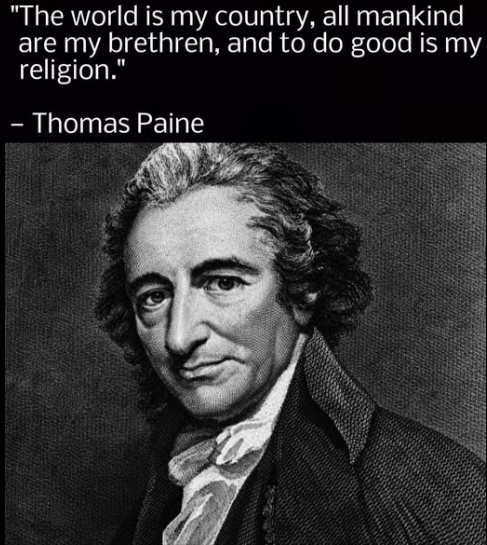 Sure, there have been many other people who have lived according to the beliefs expressed here by philosopher and American revolutionary Thomas Paine, but their numbers don’t begin to compare with those who think of themselves as patriots of the country of their birth and adherents to the religion they were assigned by their parents.
What a terrible shame. It’s easy to imagine a world of peace and harmony, but it sure seems an incredible challenge to get there. This is especially true today, on a planet that is increasingly led by fascist dictators, and a population where ignorance, nationalism, and hate is heating up by the day.
Weather Guard Lightning Tech
China Barred Vestas Software, Ørsted Buys Chinese Monopiles
Vestas CEO Henrik Andersen says China barred Vestas from monitoring its own turbines. Plus Ørsted takes heat for Chinese monopiles, India’s blade design gap, and tents that beat weather delays.
The Uptime Wind Energy Podcast is brought to you by Weather Guard Lightning Tech, creators of the StrikeTape Ultra LPS retrofit. Subscribe to Uptime’s Substack newsletter. And check out Rosemary’s “Engineering with Rosie” Youtube channel. Have a question we can answer on the show? Email us!
 Virtually all top-ranking retired military brass view Trump as shown at left. On top of that, Hegseth has publicly fired all current generals and admirals who are not loyal to Trump, as the entire world watched the purge.
Doesn’t this affect the way the psychopath’s command of our nation is ultimately determined?



