

Humanity is consuming natural resources faster than the planet can replenish them, and the gap is growing. The result is environmental degradation, economic risk, and a shrinking inheritance for future generations. With the global population still rising and consumption habits in wealthy nations showing little sign of slowing, addressing overconsumption has never been more urgent.
This guide explains what overconsumption of natural resources means, which resources are most at risk, how it harms the environment, and what individuals and industries can do about it.
Key Takeaways
- Earth Overshoot Day 2026 falls on July 30, the point at which humanity exhausts the planet’s entire annual ecological budget with five months still remaining in the year.
- Humanity is currently using nature 73% faster than Earth’s ecosystems can regenerate, the equivalent of consuming 1.73 planets simultaneously. This is the highest level of ecological overshoot ever recorded.
- The two most consumed natural resources on Earth are water and sand.
- North Americans consume an average of 90 kilograms of natural resources per person per day, nine times more than the average African.
- Transitioning to renewable energy, sustainable agriculture, and circular economy practices are the most effective paths forward.
What Is Overconsumption of Natural Resources?
Overconsumption occurs when humans extract or use natural resources faster than the planet can replenish them. When this happens, ecosystems cannot recover from excessive resource extraction, leading to biodiversity loss and long-term deterioration of the natural world. Once a resource is fully depleted from a region, it is often gone permanently.
The logging industry is a clear example. Timber is used for construction, paper manufacturing, and fuel. Billions of people depend on it for shelter, heat, and cooking. But overconsumption of timber leads to deforestation. Since 1990, the world has lost 420 million hectares of forest land, and between 2001 and 2025, total global tree cover loss reached 540 million hectares driven primarily by agricultural expansion, logging, and infrastructure development.
The stakes are not abstract. When essential resources like clean water, fertile land, and building materials disappear, the consequences fall hardest on the most vulnerable communities around the world.
How Does Overconsumption Affect Natural Resources?
Natural resources need time to replenish. Forests must regrow after logging. Fish populations must recover after commercial fishing. Aquifers refill slowly after extraction. When human demand exceeds these regeneration rates, the consequences compound over time.
A useful benchmark is Earth Overshoot Day, the calendar date each year when humanity’s demand for ecological resources exceeds what Earth can regenerate in that same year. In 1972, overshoot day fell on December 31, meaning humanity was living within the planet’s means. By 2026, it falls on July 30, the highest level of ecological overshoot in human history. From that point on, we operate on ecological credit for the rest of the year, drawing down natural capital in forests, fisheries, freshwater systems, and the atmosphere’s capacity to absorb CO₂.
Understanding this dynamic is central to understanding how climate change and resource depletion are connected and why action on both fronts is urgent.
What is an ecological footprint?
An ecological footprint measures the land and water area a human population requires to produce the resources it consumes and absorb the waste it generates. When a nation’s footprint exceeds its biocapacity, it runs an ecological deficit. More than 80% of the global population lives in countries currently running such a deficit.
What Natural Resources Are We Consuming?
Natural resources fall into two broad categories: non-renewable and renewable. Both are under pressure from overconsumption, though for different reasons.
Non-Renewable Resources
Non-renewable resources form over millions of years and cannot be meaningfully replenished on human timescales. They include fossil fuels like oil, coal, and natural gas, as well as mined materials such as metals, ores, diamonds, sand, and other raw materials.
Relying heavily on non-renewables carries serious economic risk. More than 80% of the world’s energy still comes from oil, coal, and natural gas. The consequences of burning fossil fuels extend well beyond supply risk. They include greenhouse gas emissions, air pollution, and accelerating climate change. If fossil fuels became too scarce or expensive to extract, the disruption to the global economy would be severe, with no ready substitute available at the same scale.
Demand for critical minerals like lithium, cobalt, and copper is also expected to surge dramatically in coming decades, driven by the transition to electric vehicles and renewable energy infrastructure. Even the green energy transition has its own resource demands to manage carefully.
Renewable Resources
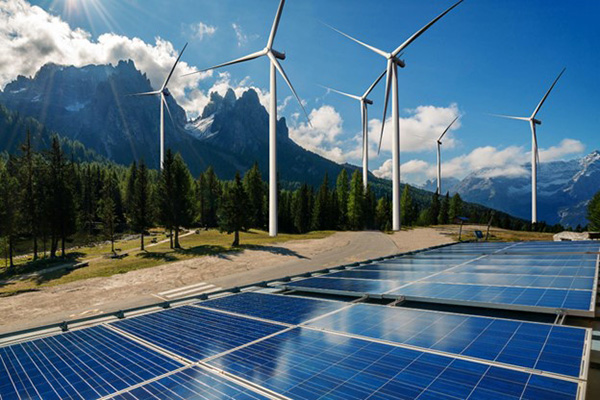
Renewable resources replenish naturally in a much shorter timeframe. They include solar and wind energy, food crops, fish, animals, and lumber.
Wind and sunlight are effectively limitless as energy sources. We can use them without depleting them, which is why transitioning to sustainable energy sources is such a critical lever for reducing overall resource pressure. Biological renewables like fish populations and forests, however, must be carefully managed to avoid overexploitation.
Fish stocks are a pressing concern. The FAO reported that 35.5% of global fish stocks were overfished in 2025, continuing an upward trend from previous years. Overfishing doesn’t just reduce the catch available today. It disrupts marine food webs, causes biodiversity loss, and threatens the livelihoods of coastal communities worldwide.
Overconsumption also degrades fertile agricultural land. As soil quality deteriorates and water becomes scarcer, the capacity to feed a growing global population comes under increasing strain.
How Does Consumption of Natural Resources Vary by Country?
Resource consumption is closely correlated with national wealth. Wealthier nations consume 10 times more natural resources than developing countries.
North America leads global per-capita consumption. The average North American uses 90 kilograms of resources per day, compared to 45 kilograms for the average European and just 10 kilograms for the average African resident. According to Scientific American, over a single lifetime, one American will consume 53 times as many goods and services as a person from China and as many natural resources as 35 residents of India.
This disparity matters because it shapes where solutions need to be concentrated. High-consumption nations bear disproportionate responsibility for driving global resource depletion and have the greatest capacity to change. Understanding your own carbon footprint is a meaningful first step toward making that change personal.
How Does Overconsumption of Natural Resources Affect the Environment?
The environmental impacts of resource-intensive industries are wide-ranging and interconnected. Some are direct. Deforestation removes habitat and releases stored carbon. Others work through a longer chain, as industries that harvest natural resources generate greenhouse gas emissions that accelerate climate change, which in turn threatens the very resource systems we depend on.
Consider the construction industry. It requires metals mined from the Earth, sand and lumber as building materials, and fossil fuels to power its machinery. Each of these inputs carries its own environmental cost including habitat disruption, water use, and carbon emissions, and they compound across the full supply chain.
Atmospheric greenhouse gas concentrations have risen from 367 parts per million CO₂ equivalent in 1972 to an estimated 547 parts per million in 2026, according to NOAA estimates. The accumulated ecological debt from overshoot since the early 1970s now equals approximately 20.6 years of the planet’s full biological productivity.
Protecting land and ocean ecosystems and transitioning to sustainable energy sources represents humanity’s best opportunity to reverse this trend. For businesses already thinking about their role in this, carbon offsets can support reforestation and emissions reduction projects that directly address the damage overconsumption has caused.
What Are the Most Consumed Natural Resources?
The two natural resources consumed in the greatest quantities globally are water and sand.
Sand
Sand is the world’s second most consumed natural resource, used primarily in concrete for construction. Global urbanization drives an enormous appetite for it, and humanity extracts approximately 50 billion tons of sand each year. The consequences include the deterioration of river systems and ocean habitats as sand is removed in vast quantities.
Water
Water is the most consumed natural resource on Earth. It is essential for drinking, agriculture, cooking, industrial processes, and electricity generation. Despite water covering 70% of the planet’s surface, 97.5% of that water is ocean water. Accessible freshwater is a genuinely finite resource.
The numbers reveal the scale of the problem. About 4 billion people, nearly two-thirds of the global population, experience severe water scarcity for at least one month each year. Agriculture accounts for roughly 70% of all global freshwater withdrawals. According to the BBC, 21 of Earth’s 35 major aquifers are already receding. Climate change is deepening the crisis by intensifying droughts and altering rainfall patterns precisely where demand is growing fastest.
The global carbon cycle is tightly linked to freshwater availability. Warming temperatures and disrupted precipitation patterns are a direct consequence of the same fossil fuel overconsumption that drives resource depletion more broadly.
How Can We Slow the Overconsumption of Natural Resources?
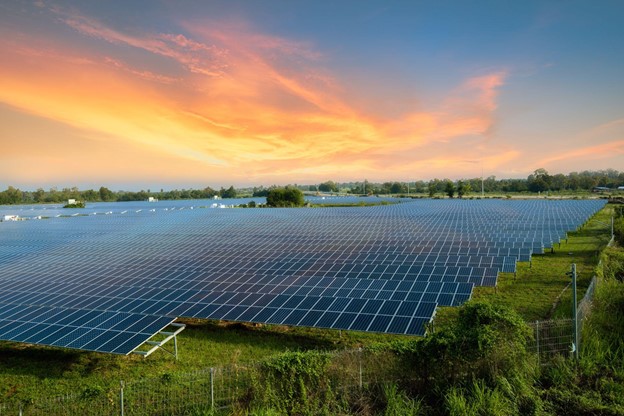
Slowing overconsumption requires action at multiple levels: policy, industry, and individual behavior. The most impactful changes involve moving away from non-renewable resources, improving efficiency across industries, and embracing the principles of a circular economy, in which materials are reused and regenerated rather than consumed and discarded.
Transition to renewable energy. New technologies continue to lower the cost and improve the efficiency of renewable energy sources like wind and solar. Accelerating this transition reduces fossil fuel burning and the extraction pressures that come with it. Renewable Energy Credits (RECs) are one accessible way for households and businesses to support clean power today.
Sustainable agriculture and fisheries management. More efficient food production, better fisheries regulation, and reduced food waste can protect natural lands and fish populations while feeding a growing global population. Reducing meat consumption is one of the highest-impact dietary changes an individual can make.
Water desalination and conservation. Desalination technology can convert ocean water into freshwater suitable for drinking and agriculture, reducing pressure on strained freshwater systems. Conservation measures in agriculture, which is by far the dominant user of freshwater, can make an outsized difference.
Circular economy practices. Designing products for longevity, repairability, and recyclability reduces the total volume of resources extracted and the waste generated. This model is gaining traction across manufacturing, construction, and packaging industries and is increasingly recognized as one of the most commercially viable paths to sustainability.
Carbon offsetting. For emissions and resource use that cannot yet be eliminated, verified carbon offsets fund projects that reduce deforestation, capture methane, and support renewable energy development. Terrapass carbon offset projects include reforestation, REDD+, landfill gas capture, and residential solar installation.
Individual action. Each person can meaningfully reduce their ecological footprint by being conscious of consumption habits. Buying less, choosing durable goods, reducing food waste, and reusing materials wherever possible all add up. Use the Terrapass carbon calculator to understand exactly where your personal footprint comes from and take targeted action.
Frequently Asked Questions
What are the main natural resources being overconsumed?
The most overconsumed resources include freshwater, sand, fossil fuels (oil, coal, and natural gas), timber from forests, and fish stocks. Fertile agricultural land and minerals like lithium and cobalt are also under increasing pressure.
Which country consumes the most natural resources per person?
North Americans, and Americans in particular, consume the most natural resources per capita. The average North American uses 90 kilograms of resources per day, compared to 45 kilograms in Europe and 10 kilograms in Africa.
What is Earth Overshoot Day and why does it matter?
Earth Overshoot Day marks the point in the calendar year when humanity has used up all the ecological resources the planet can regenerate that year. In 2026, it falls on July 30, the highest level of ecological overshoot ever recorded. Everything consumed after that date draws down ecological reserves, accelerating long-term depletion.
How does overconsumption drive climate change?
Overconsumption drives climate change primarily through the extraction and burning of fossil fuels, deforestation (which releases stored carbon), and industrial processes that generate greenhouse gas emissions. Understanding how the carbon cycle works helps explain why reducing consumption and offsetting emissions are two sides of the same solution.
How can individuals reduce their impact?
The most effective individual actions include reducing home energy use, minimizing food waste, consuming less meat, and buying durable goods over disposable ones. Calculating your carbon footprint is a good starting point, and offsetting unavoidable emissions through Terrapass helps fund real-world emissions reductions.
What is a circular economy?
A circular economy is an economic model designed to eliminate waste by keeping materials in use for as long as possible through reuse, repair, remanufacturing, and recycling. It contrasts with the dominant take-make-dispose model that drives overconsumption and is increasingly seen as one of the most practical large-scale responses to ecological overshoot.
Taking Action to Protect Natural Resources
Overconsumption is depleting the natural systems that all human life depends on. The data is stark. In 2026, humanity hit the highest level of ecological overshoot ever recorded, and the real human footprint is still growing.
The solutions exist. Renewable energy, sustainable resource management, and a shift toward circular economic models can collectively move us back toward a world that operates within planetary limits. Technology continues to improve our capacity to do more with less, from precision agriculture to advanced water treatment to verified carbon markets.
Systemic change is essential, but individual choices also matter. A world of responsibly consumed resources is a world of greater health, stability, and opportunity for everyone including future generations.
Learn how Terrapass can help you reduce your carbon footprint and offset your consumption.
Brought to you by terrapass.com
The post Overconsumption of Natural Resources: Causes, Effects & Solutions (2026) appeared first on Terrapass.

Carbon Footprint
Democrats who call climate change an emergency should not defend a permitting system too slow to build the clean energy that would address it.”
Democrats, Take The Deal. New York Times editorial, Nov. 12.
Insetting program design starts with your supplier map. The carbon claim comes much later.
Consider a coffee procurement team that funds a farm intervention before checking its sourcing data. The supplier aggregates coffee lots from several regions. The buyer lacks farm-level traceability. Another purchaser expects to report the same outcome. A more attractive project brochure solves none of these problems.
If the distinction between a value-chain intervention and a purchased credit is still open, read CCC’s Insetting vs Offsetting guide before you set the brief.
Insetting program design begins with the purchasing relationship and works outward. You need to decide 1) where an intervention belongs, 2) what business problem it addresses, 3) who pays for it, 4) how results will be measured, and 5) what the evidence will let you say about them. This five-step playbook turns that sequence into a procurement plan.
Step 1: Insetting program design starts with supplier mapping
Start with the commodities that matter most to your Scope 3 inventory and sourcing continuity. Ask finance for spend by supplier, sustainability for the emissions baseline, and category managers for origin and volume records. Then identify which suppliers can trace material to a jurisdiction, sourcing region, producer group, or individual land-management unit.
The level of traceability affects what you can account for. Under the GHG Protocol Land Sector and Removals Standard, the spatial boundary for purchased land-based products depends on the traceability associated with each volume. Farm-specific factors or removals require physical traceability through an acceptable chain-of-custody model. A contract with a tier-one trader, by itself, does not establish a link to the farms behind its deliveries.[1]
Build a first-pass table with five columns: commodity and annual volume; supplier and origin; current traceability level; land-use and production risks; and the business owner who can change the purchasing terms. Mark missing data plainly. A blank cell is cheaper to fix before a program starts than after a claim is drafted.
If your company sets an SBTi Forest, Land and Agriculture target (FLAG), keep its land-related target boundary separate from energy and industry emissions. The current FLAG guidance also requires relevant companies to assess primary deforestation-linked commodities in their value chains.[2]
Step 2: Choose a commodity and jurisdiction for a pilot
Select one supply corridor where the sourcing connection can be established and procurement has a reason to stay. A useful pilot has repeat purchases, suppliers willing to share records, an intervention matched to a diagnosed problem, and a defined plan to measure the result. Carbon potential alone is a poor selection rule if the supplier cannot deliver the crop your business needs.
Compare candidate regions on land-use risk, supplier concentration, local rights and tenure, the availability of baseline data, and exposure to drought, erosion, or forest conversion. Check the relevant legal requirements separately. A nature project does not satisfy a due-diligence obligation merely because it has a carbon method attached.
Consider a coffee buyer sourcing from two districts. In the first, producer-group records identify the farms, while recent dry seasons have increased rejected green coffee lots. In the second, deliveries pass through several intermediaries and farm origins are unknown. Pilot shade management in the first district, with local agronomic advice and quality checks built into the plan. The buyer can trace purchases there and test the intervention against a defined sourcing problem.
Use a short decision memo to record why the selected corridor beats the alternatives, what remains uncertain, and what would stop the pilot. That memo is the first control against a project drifting toward whatever happens to photograph well.
Step 3: Design the supplier engagement and commercial model
The intervention needs an owner on each side of the contract. Decide who supplies planting material or training, who maintains the practice, who bears the cost if a harvest disappoints, and how long the buyer expects to purchase from participating suppliers. Where smallholders participate, budget cash flow and technical support for practices that offer a later return.
Put these terms in a supplier agreement or pilot addendum. It should cover eligible farms and volumes, consent to data collection, access for monitoring, any land or carbon rights that matter, benefit sharing, and what happens if the purchasing relationship ends. Ask local counsel and producer representatives to review the arrangement. The Accountability Framework is a useful reference for supply-chain work involving forests, ecosystems, and human rights.[3]
Avoid assigning an automatic carbon benefit to the buyer. The contract should say which party has the right to report each outcome, how overlapping claims will be checked, and how any issued credits will be handled. A reduction reported in a buyer’s inventory cannot simply be sold for someone else’s offset claim without an accounting review. SBTi FLAG guidance excludes purchased credits used as offsets from near-term FLAG target achievement.[2]
Set commercial measures beside environmental ones: delivered volume, rejection rate, supplier retention, and procurement cost. They tell you whether the program works as a supply-chain investment, even if carbon accounting takes longer to resolve.
Step 4: Build monitoring, reporting, and verification before rollout
Agree on the baseline and data flow before paying for a full rollout. Identify the land units or sourcing regions in scope, the practices that change, the records suppliers already keep, and the additional measurements the program requires. Decide which data can come from field visits, transaction records, or remote sensing, and who checks each source.
For carbon, separate three questions. Did the practice happen? Did emissions or removals change under an applicable method? Can the buyer attribute a defensible share to its purchased goods without double counting? The GHG Protocol’s 2026 guidance includes dedicated chapters on spatial boundaries, data and methods, evaluating actions, credited outcomes, and assurance.[1] These are distinct jobs. A photograph of a planted tree answers only part of the first.
CCC’s MRV and Additionality article explains the separate evidence questions a project reviewer will ask.
Create an evidence file for every reporting period: dated supplier and farm records, purchase volumes, methods and emission factors, uncertainty, quality checks, and changes from the baseline. Specify who can challenge the data and how corrections are recorded. If a project also seeks credit certification, keep project accounting and corporate inventory accounting separate. The GHG Protocol says its land standard focuses on entity-level inventories and does not set the rules for credit certification.[4]
Start with the minimum viable measurement design that can survive review. Add complexity when the pilot tells you which data actually changes a decision.
Step 5: Decide what can be reported and claimed
Insetting program design needs reporting rules before the marketing copy. Procurement, sustainability, finance, and legal should agree on four distinct outputs: operational performance; observed land or nature outcomes; inventory effects, if the accounting criteria are met; and any separately issued credits. One dashboard can display them, but they should not share a single unqualified headline.
SBTi FLAG guidance allows certain land-based removals within a company’s operations or supply chain to contribute to FLAG pathways, subject to criteria including permanence, traceability, data quality, and allocation. It does not allow purchased offsets to meet near-term FLAG targets.[2] Eligibility therefore depends on evidence and the applicable target rules, not on calling an activity “insetting.”
Draft a claims register. For each proposed sentence, record the period, boundary, data owner, calculation method, reviewer, and whether the result is measured, estimated, or still a goal. If the evidence supports only “we funded a pilot with 200 farms,” say that. Do not turn a funding fact into a verified emissions reduction.
What good looks like by year three
Treat year three as a review point, not a promised payback date. A mature pilot should have mapped participating supply volumes, a stable supplier agreement, a repeatable data collection process, and a comparison of commercial and environmental results against the baseline. It should also have a documented answer for outcomes that cannot be included in the buyer’s inventory.
Scale only where the pilot improves a sourcing decision and the evidence can follow the product. If neither condition holds, redesign the intervention or change the corridor. A disciplined program can conclude that a site is unsuitable. That is useful procurement intelligence.
Discuss your insetting program with CCC
Carbon Credit Capital designs nature-based supply chain investments around sourcing needs and measurable sustainability outcomes. Schedule a consultation with our carbon and sustainability experts to map your tier-one supplier network, FLAG exposure, and first pilot decision.
Sources
[1] GHG Protocol, Land Sector and Removals Standard, version 1.1, and companion Guidance, June 2026: https://ghgprotocol.org/land-sector-and-removals-standard ; https://ghgprotocol.org/land-sector-and-removals-guidance
[2] Science Based Targets initiative, Forest, Land and Agriculture Science-Based Target-Setting Guidance, version 1.2, March 2026, especially pp. 16–17, 37, and 41: https://sciencebasedtargets.org/resources/files/SBTiFLAGGuidance.pdf
[3] Accountability Framework initiative, Accountability Framework and guidance for companies: https://accountability-framework.org/
[4] GHG Protocol, Frequently Asked Questions: Land Sector and Removals Standard, questions 10 and 18: https://ghgprotocol.org/blog/frequently-asked-questions-land-sector-and-removals-lsr-standard
Nature-based carbon investments deserve consideration when they address a specific business dependency and produce outcomes you can measure. Imagine Moonbucks, a global coffee roaster planning next season’s espresso blend. It is considering natural Grade 4 coffee from Jimma, in southwestern Oromia, Ethiopia. Its sourcing decisions affect the roasting schedule and the cash tied up in coffee purchases. Moonbucks needs to understand which measures could protect that supply, what they would cost and how it would judge the results.
1. Define the sourcing problem before choosing a project
Moonbucks needs a dependable component for its espresso blend. Its procurement team wants continuity of volume and an agreed cup profile. Replacing a shipment at short notice could require new sample approval and changes to the blend, and given the schedules for cultivation, processing, and freight delivery, is practically impossible. Moonbucks needs to get this right, and its initial concern is inconsistent deliveries. It commissions an assessment of the supplying farms and post-harvest chain. The questions cover land condition, harvest availability and whether drying or storage problems are affecting saleable lots.
This distinction changes the investment brief. A tree-planting proposal cannot be assumed to fix drying problems. Better storage cannot restore eroded land. The team must establish which problem exists before selecting the response.
CCC’s guide to finding nature-based solutions in your supply chain explains where to look. Here, the next task is to turn a broad concern into a testable proposal.
2. Develop nature-based carbon investments around the actual supply chain
The assessment would trace Moonbucks’ purchases back through the exporter and supplying producer groups. Which farms supply the contracted lots? Who controls land-management decisions? How long does the buyer expect to maintain the purchasing relationship?
Furthermore, Jimma natural Grade 4 cannot be treated as interchangeable with every Ethiopian coffee. Moonbucks would need to test any substitute against its own blend and quality requirements.
Suppose Moonbucks’ assessment identifies an opportunity to maintain shade trees and restore vegetation along exposed streambanks. The IPCC describes agroforestry as a way to store carbon in vegetation and soil, with potential benefits for erosion control and water quality.1 Moonbucks would need local advice on species, growing conditions and maintenance before deciding how these measures fit its sourcing plan.
The proposal now has a defined sourcing connection and a candidate intervention. The next steps are to test its effect on production, assess carbon eligibility and build the financial case.
3. Compare the proposal with other ways to protect supply
WBCSD’s Nature-based Solutions Blueprint recommends comparing nature-based options with other responses across their benefits and costs.2 For Moonbucks, that means evaluating the landscape proposal alongside drying improvements, storage controls and alternative sourcing arrangements.
The product’s natural-process designation matters. Moonbucks should examine the drying and dry-milling chain alongside land conditions. Its team would check storage practices, contamination risks and incoming-lot quality to see whether problems arise before or after the coffee leaves the farms.
The revised proposal might combine land stewardship with separate post-harvest controls. Each component needs its own purpose and budget. A sustainability label should not obscure which activity is expected to solve which problem.
The project develops as the evidence improves. Its scope should follow the diagnosis rather than preserve the first idea unchanged.
4. Establish what the carbon outcome could count toward
Moonbucks’ sustainability team now tests the proposed carbon case separately from the sourcing case. Is the objective a measurable change in Moonbucks’ value-chain emissions, verified credits for separate voluntary use, or distinct outcomes under carefully defined arrangements?
Scope 3 covers value-chain emissions. A purchasing relationship alone does not prove that a farm intervention can be included in Moonbucks’ inventory. The team needs an applicable accounting method, defensible boundaries and evidence supporting attribution.
SBTi’s FLAG Guidance (forest, land and agriculture), version 1.2, says purchased credits used as offsets cannot meet near-term FLAG or energy and industry targets. Eligible land-based removals are subject to accounting requirements.3 Moonbucks needs to test its proposal against those rules before including an outcome in its targets.
For Moonbucks’ Jimma proposal, maintaining existing trees and establishing new vegetation could involve different carbon questions. Specialists must examine the baseline and additionality, meaning what changes because the project proceeds. They must also assess measurement and the risk that stored carbon is lost. CCC’s MRV and additionality article introduces those tests.
Until that work is complete, Moonbucks should not budget an assumed Scope 3 reduction or credit-sale receipt. Direct emissions reductions remain the priority.
5. Build a financial case that survives weaker assumptions
Moonbucks’ finance team would now build a multi-year budget. UNEP’s State of Finance for Nature 2023 compares current finance with the investment needed to meet climate, biodiversity and land-restoration goals.4 The company would cost its proposed activities, farmer participation and ongoing monitoring. Verification, where required, is a separate expense. Maintenance and responsibility for replacing failed plantings must remain visible after the initial establishment budget ends.
Operational benefits need equally careful treatment. If fewer rejected lots reduce emergency purchasing, count that saving once. Do not add “supply resilience” as another financial benefit when it represents the same avoided cost.
Moonbucks should compare a base case with slower benefits, higher implementation costs and no carbon revenue. It should also distinguish production outcomes from quality and shipment outcomes. A single good harvest would not prove that the landscape intervention caused better delivery performance.
A project can remain worth funding even when its carbon case needs more work. That decision must rest on the operational evidence and the company’s objectives, without unsupported environmental claims.
6. Fund a pilot with a clear expansion decision
Moonbucks’ first approval would fund a bounded pilot, rather than commit the entire sourcing program. Before spending, Moonbucks would agree on participating farms, responsibilities and the evidence needed at review.
Its scorecard could track farmer participation, implementation costs and plant survival, alongside accepted coffee volumes and lot-quality results. Carbon measurements would follow the selected method. Farm-level traceability must connect the intervention to the actual sourcing relationship.
Suppose Moonbucks’ review later finds that storage changes explain most quality improvements, while the land measures need longer observation. Those findings would shape the next decision: expand the proven component, adjust the landscape work or pause further spending. They would not justify crediting all improvements to tree planting.
This gives nature-based carbon investments a practical place in a multi-year strategy. Funding increases as the evidence supports it, and the project can change direction before a larger commitment.
Discuss a sourcing opportunity with CCC
Carbon Credit Capital’s nature-based supply-chain investment service uses its Dual-Value Model to examine supply-chain economics alongside potential sustainability outcomes.
Schedule a consultation to discuss your sourcing exposure and the questions to resolve before allocating capital.
Sources
- Intergovernmental Panel on Climate Change (IPCC), Climate Change 2022: Mitigation of Climate Change, Chapter 7, Agriculture, Forestry and Other Land Uses, section 7.4.3.3 (Agroforestry).
- World Business Council for Sustainable Development (WBCSD), Nature-based Solutions Blueprint, 5 June 2024.
- Science Based Targets initiative (SBTi), Forest, Land and Agriculture Science-Based Target-Setting Guidance, version 1.2, March 2026, section 3.1.4, pp. 37–38.
- United Nations Environment Programme (UNEP), State of Finance for Nature 2023, 2023.
