Anything worth achieving is hard. It requires dedication, focus, and perseverance. And sometimes a little luck. Osprey Wilds’ clean energy focus began 20 years ago. Yet, it wasn’t until this fall with the addition of a 716 kilowatt (kW) solar photovoltaic system that we finally reached our goal of producing 100% of our electricity on-site through renewable sources. As a 501 (c) (3) nonprofit environmental learning center, Osprey Wilds reaches over 15,000 people annually through our wide-ranging accredited environmental education programs. Located on Grindstone Lake, near Sandstone, MN, our campus resides on 783 acres of beautiful forests, prairies and wetlands. This ideal setting, accompanied by our overnight lodging and dining facilities, allows us to connect K-12 students, youth, family and adults to nature for multiple days at a time, providing truly immersive, meaningful connections to the environment. At our core, we believe it is our responsibility to model sustainable environmental practices for others to learn from. This includes how we steward the land, how we use energy, how we grow, raise and purchase food, and the products we use. Our goal is always trying to reduce our impact on the planet, lessen our carbon footprint, and teach our audience what they can do in turn with their lives. We strive to create environmental ripple marks and we achieve that through our mission of instilling a connection and commitment to the environment in people of all communities through experiential learning.
The path down our clean energy focus began in 2004, when we secured a federal Housing & Urban Development (HUD) grant to install a 65-ton geothermal ground-source heat pump system to cool and heat our two main buildings. This eliminated our usage of propane to heat the two buildings, and shifted our energy needs to run the heat pumps on electricity. With the realization that our overall energy usage was lower, but our electricity needs were now higher, we sought out adding renewable energy sources to produce the electricity we used. From 2005 to 2015, we were successful in obtaining grants to add over 39 kilowatts of solar photovoltaic arrays to supply about 20% of our total campus electricity needs. During that time, we also added 29 solar hot water panels for domestic use in heating the water used for our dormitory showers and sinks, and our commercial kitchen, made a campus-wide LED lighting upgrade, added blown cellulose insulation to improve the R-value of our buildings, and upgraded our HVAC control systems. But to cover the remaining 300,000 kilowatt hours of electricity we were still using annually, we knew we needed to do something big to achieve our goals of becoming carbon neutral.

In 2019, we reached out to a solar company to help us achieve that goal. Over the next several months, I worked with them on a plan of adding 248 kW of solar photovoltaic arrays, distributed across multiple solar-compatible locations on our property that would produce the kilowatts needed to cover our annual energy usage. We worked with our local bank to secure terms for a loan that would finance the cost of the system, and met with our local electric cooperative East Central Energy about how this could work. This proposed system would put us well over 40 kW on our account, the kW threshold in Minnesota for net-metering. Coming to the realization that this proposal wouldn’t allow for net metering with our system meant ultimately it wouldn’t work economically for Osprey Wilds, as we would have been reliant on the net-metered income for the months we overproduced to cover the loan expenses we were looking to take on to finance the project. If we could have purchased the system outright and not had to worry about cash flowing the loan, net metering wouldn’t have made a big difference. It was a learning process, and whetted my appetite to see if there was some other way we could collaborate with East Central Energy to achieve our energy goals and theirs.
We all know what happened in March 2020. The world came to a halt with the impact of COVID-19, and in many ways is forever changed from that pandemic. Our focus at Osprey Wilds shifted to institutional survival and how we could sustain as an organization that is designed around immersive, shared experiences with people. For a solid year, we had no program revenue from in-person K-12 schools, a devastating loss for us, only enhanced by the sadness in knowing that thousands of children looking forward to that multi-day nature experience at Osprey Wilds were missing out. We were fortunate to secure federal grants from the rescue packages passed, and stayed afloat. As things slowly began coming back and operations returned closer to normal, the time was right to re-engage with East Central Energy and their CEO Justin Jahnz to see what might be possible. Those talks in 2022 led to an idea – a three party power purchase agreement among Osprey Wilds, East Central Energy and a solar provider, with the solar provider owning and operating the system on Osprey Wilds property and selling the electricity to East Central Energy, who then would sell it to Osprey Wilds. For it to work, we needed a solar provider interested, selling the solar electricity generated at rates that would be make financial sense for East Central Energy to purchase, while still being high enough that it was profitable for the solar provider, yet also low enough that Osprey Wilds could afford to purchase the electricity from East Central Energy. It was a proposal that would require threading a needle to find financial terms that could work for all parties, but it was also exciting and definitely worth the effort to see if we could make it happen.
During this time period, Osprey Wilds also completed a conservation easement with the Minnesota Land Trust on over 460 acres of our campus. Permanently protecting over 85% of our campus was something our organization was proud to have accomplished, and aligned very strongly with our environmental values of treading lightly on the planet, and protecting natural resources in perpetuity. During this conservation easement process, I knew I wanted to leave open the ability to add a large solar photovoltaic system on our campus for the eventual goal of producing 100% of our electricity onsite. For an optimal solar capacity location, as well as a visually strong first impression, we landed on a 3-acre exclusion in our 20-acre tallgrass prairie, noticeable on your left hand side as soon as you pull into Osprey Wilds’ driveway. The 3-acre exclusion was large enough for a 250 kW system, capable of supplying all of our electricity needs.
But as we began working with East Central Energy on the RFP (request for proposal) for the solar project at Osprey Wilds, I learned that this was a relatively small space to work with, as providers would be interested in putting up a larger system to reach the economies of scale necessary to lower the cost of the project and make it financially attractive. Examining the size of the exclusion, it was determined that the largest a system could be was approximately 700 kW. While this seemed very large to me, many commercial solar installers are looking at systems with production levels two to ten times that size to make projects financially viable.
With that knowledge, I was worried if we would get any proposals that would fit within the financial parameters needed for it to work for East Central Energy and Osprey Wilds. In the spring of 2023, we received proposals back from multiple solar companies. But unfortunately and somewhat predictably, all the numbers were far higher than what East Central Energy could afford to purchase, and in turn, what Osprey Wilds could as well. With that deflating realization, we talked openly with the company that had been the closest in their proposal, Soltek, Inc., about our desire to find a way with this project. We shared the benefits we saw for their company to be able to partner with East Central Energy and an environmental learning center that hosts and educates thousands of participants each year, and the impact they could have on those individuals with this inspiring project. Shawn Markham, Soltek’s CEO, took that passion of ours to heart, and over the ensuing months kept diligently trying to find ways to reduce the cost of the project to make it viable.


In March of 2024, I got a message from Shawn that we should talk. Conditions had shifted dramatically within the solar industry in the past 12 months. Changes made by the California Public Utilities Commission (CPUC) in the fall of 2023 were taking effect April 15th that were reducing the daytime compensation for rooftop solar for homeowners by about 75%, making it much less affordable for individuals to add solar. As a result, the solar industry was struggling. Shawn now had access to materials and equipment that he could get for half the price he could a year ago, dramatically lowering the cost of the proposed Osprey Wilds system and thus lowering the rate at which he could sell electricity to East Central Energy. Concurrently, he had also applied for a Renewable Energy in America Program (REAP) grant through the USDA and was awaiting word on its status. By the end of June, Shawn got word that he’d received the REAP grant, and with the savings he was realizing with the lower priced materials for the project, he could offer a rate that fit for East Central Energy and their cooperative members, and for Osprey Wilds. The solar dream was going to happen!
Soon materials and panels were being delivered to Osprey Wilds, and all three parties worked on crafting power purchase and land lease agreements for project terms to become official. The end result would be a win-win-win. Soltek would own and operate the system, selling affordable electricity to East Central Energy, while creating a 30-year source of guaranteed income. East Central Energy would expand their ability to purchase affordable, clean, and locally sourced electricity for their members. Lastly, Osprey Wilds would achieve its carbon goals, and save money with favorable electricity rates secured for the next 30 years.
Installation of the eventual 716 kW prairie solar garden began late July and was completed in just three weeks. East Central Energy is currently in the final stages of installing their transfer station next to the system, which will feed into their phase three line only a few hundred feet away. The system will go live in October, and produce 1,000,000 kWh (1,000 megawatt hours) annually, more than three times Osprey Wilds’ current electricity demands. The large production level of the system will set us up for future campus expansions that can remain carbon neutral. In the meantime, the majority of the electricity generated will actually go to our neighbors, providing them with clean, locally produced electricity at no increased expense to them.
The prairie solar garden is nestled within prairie grasses and wildflowers, allowing native ecosystems to coincide with energy production. In addition, the solar garden is bordered by a woven wire fence perimeter, which will allow us to partner with local sheep producers to add pastured livestock and agriculture into the mix, creating three sustainable land uses simultaneously.

With this project’s completion, we will now boast the largest solar photovoltaic system of any nature center or environmental learning center in Minnesota and the Midwest. It is a tangible example of what can happen when you work with others – you are able to achieve something greater than you could on your own. A rising tide lifts all boats, and it is our hope that this project demonstrates to our guests our commitment to the planet, and that it inspires them to pursue ways they can reduce their carbon footprint and climate change impact. We share a beautiful planet, one of unimaginable beauty, that is worth fighting for. When you love something, you take care of it, and at Osprey Wilds, this prairie solar garden is our latest pledge to the Earth that we are doing what we can to take care of it. We encourage you to do what you can for the planet as well.
Osprey Wilds is open to the public with over 10 miles of hiking and cross country ski trails at no charge. Visit us to see our prairie solar garden, check out our live animal ambassadors, shop our gift shop, learn about upcoming programs, or simply enjoy a nature respite along the lake, in the woods, or on the prairie.

Bryan Wood strives to provide people with rewarding and meaningful environmental experiences. He has followed his passion for the outdoors through various positions over the years. Throughout all of them is rooted a deep desire to connect people to nature and inspire them to make a positive impact with their lives for the planet and its inhabitants.
The post Osprey Wilds Achieves 100% Solar Clean Energy Goal appeared first on Climate Generation.

Governments at the COP17 nature summit in Armenia agreed on Saturday to scale up their policies to protect the planet’s shrinking biodiversity, and for the first time invited large emerging economies like China and Gulf states to take on donor responsibilities to help fund those efforts.
For the past two weeks, countries held talks in Yerevan under the UN Convention on Biological Diversity to outline a plan to ramp up currently “insufficient” policies to conserve land and marine ecosystems. A recent UN progress report found the world is off track to meet 22 out of 23 global targets aimed at reversing species loss and protecting 30% of land and seas by 2030.
While a response plan, called the “Global Review of Collective Progress”, was expected to be the main outcome of COP17, negotiations struggled to advance amid a deadlock over the controversial subject of how to finance the boost in conservation measures needed.
After an all-night session on Friday, delegates agreed to invite developing countries to voluntarily signal their interest in assuming donor funding obligations alongside developed nations. Negotiators repeatedly warned that any stronger provisions on expanding the donor base would collapse the deal.
COP president: Results beat expectations
An exhausted COP17 president Hambardzum Matevosyan, Armenia’s environment minister, told journalists in the early hours of Saturday that “we’ve achieved more than we could’ve expected” given the “importance” of the decisions being taken.
“It was 100% possible that those items did not made it through. 100% possible,” he said, adding that the conference had made progress on “all the most important items”.
Speaking at the closing plenary, the group of Pacific Islands said that, while the summit had achieved “great outcomes”, delegates are also departing Yerevan “with realities not reflected in the official text”, such as the low replenishment of the Global Environment Facility (GEF), a key funder of nature projects.
-
Lula’s election win in Brazil raises hopes for zero deforestation drive
Lula’s re-election makes it more likely Brazil can meet a key goal to end forest loss in the Amazon and builds confidence in a new fund to protect the world’s rainforests, experts say
Some observers also said the deal did not go far enough. Steven Guilbeault, a former Canadian environment minister who helped broker the Global Biodiversity Framework (GBF), said the Yerevan package of action is “an important step forward”, but still “falls short of what is needed to meet our 2030 commitments”.
An Lambrechts, biodiversity politics expert at Greenpeace International, said COP17 had kept things moving forward and set well-intentioned promises, but added that these “won’t remove major roadblocks to implementation” such as insufficient finance and debt constraints in developing countries.
WWF chief conservation officer Daudi Sumba noted that financial issues were not fully resolved. Despite the deal in Yerevan, “I fear finance will remain the key issue that continues to haunt the UN biodiversity summits,” he said in a statement.
‘Yerevan Pathway’ tackles nature plans and subsidies
In the lead-up to the summit, the UN assessment report showed countries are falling short on virtually all targets in the GBF, the 2022 global deal often referred to as the ‘Paris Agreement for nature’.
They include a landmark target to protect at least 30% of the planet’s land and sea by 2030. If countries all stick to their current national goals, about 26% of land would be protected and only about 12% of marine ecosystems would be under conservation measures.
The main COP17 decision – named the Yerevan Pathway by the presidency – calls for countries to revise their biodiversity plans, subject to available funding, with a particular focus on addressing the gap in coverage of “marine, coastal and inland water ecosystems”.
It also urges the over 60 countries who have not submitted a biodiversity plan yet to finalise them “as soon as possible” and taking into account the gaps identified by the UN progress report.
Countries also agreed to tackle the drivers of biodiversity loss by “accelerating” the reduction of subsidies for activities that damage nature. Subsidy reform, covered by Target 18 of the GBF, is where countries have made the least progress so far, according to the assessment report.
Jill Hepp, director of nature and marine policy and incentives at green group Conservation International, said singling out subsidies in the Yerevan Pathway “gives a strong signal” that closing the gap for biodiversity action requires “more urgent efforts to reform harmful incentives and scale up positive incentives”.
“Timid” steps to expand base of donors
Having failed to meet a target to channel $20 billion for biodiversity conservation by 2025 and faced with shrinking aid budgets, the EU pushed a proposal to expand the list of which countries count as donors, so that wealthy emerging economies like China and Saudi Arabia could also voluntarily contribute. The group of Arab nations strongly opposed this.
During the talks, Irish minister of state for nature, Christopher O’Sullivan, whose country holds the EU presidency, said the bloc wanted the world’s “new realities” to be reflected in the donor list.
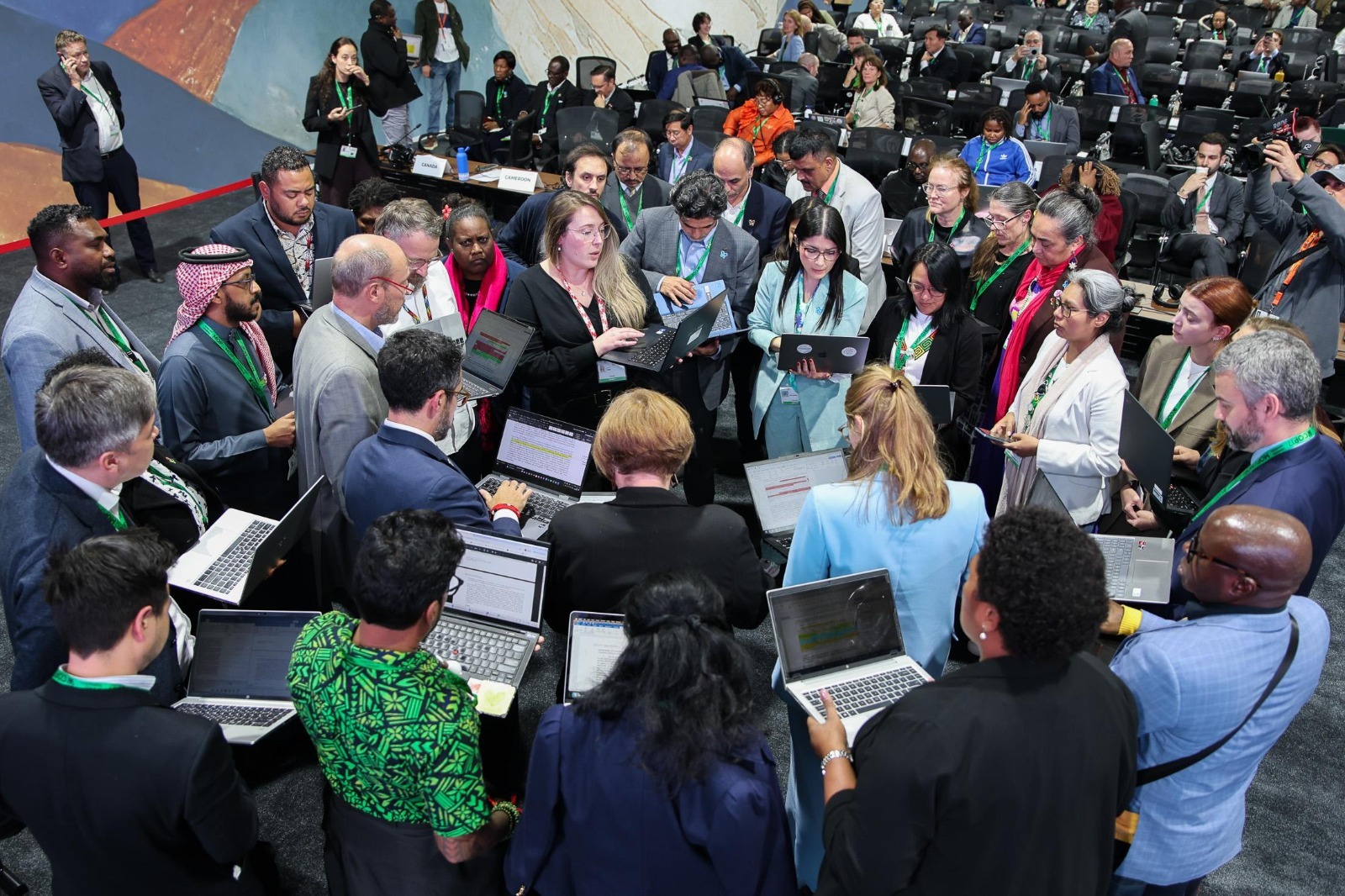
Negotiations remained gridlocked for most of the two-week talks, until a last-day compromise was struck to invite developing countries that may want donor status “to indicate to the [Convention on Biological Diversity] secretariat their interest in being included in the corresponding list”.
Countries also asked the secretariat to send an invitation to emerging economies wanting donor status at each subsequent COP, and requested a technical report on “the implications of inclusion in the list” for emerging economies.
Swiss lead negotiator Gabriela Blatter said during one of the sessions that her country had expected greater steps towards expanding the base of contributing countries, but added that “if we’re mutually unhappy, it’s probably the closest we can get on these very delicate political compromises”. Saudi Arabia, on the other hand, also noted their dissatisfaction but said it had expected “a lot less”.
The fragile deal was approved in a package of decisions together with the Global Review, after some delegations including Brazil and China appealed to the plenary not to make further changes to the text at the risk of collapsing the whole agreement.
In a statement delivered to the closing plenary, the EU said the finance outcome had delivered “timid” progress towards fully broadening the base of donors.
Cali Fund still not operational
Adopted two years ago at COP16, the Cali Fund was seen by some observers as a way to channel private-sector finance into biodiversity conservation, as governments struggle to find public funds. But it is still struggling to get up on its feet.
The fund allows big corporations to access certificates for the use of genetic material found in biodiversity in return for a financial contribution, which experts estimate has the potential to raise up to $6.9bn for biodiversity. While voluntary, companies are encouraged to pay 1% of their profits or 0.1% of revenue into the fund.
But since its creation, the fund has received little more than $10,000, which Guilbeault argued is because the rules for disbursements to local communities and the operation of the fund had yet to be fleshed out. This was due to happen at COP17.
Yet, while the final decision on the fund laid out some of the rules – including how companies can earn “Cali Fund certificates” – some key technical details were left to the next COP in 2028 in Ecuador. This includes the issue of whether companies can pay a lower rate if they use genetic data for only a small portion of their products.
“By punting essential decisions to two years from now, parties have all but ensured the fund remains empty until then,” said Pakhi Das, a public policy advisor at NGO Plant-for-the-Planet.
The post COP17 delivers fragile deal to boost conservation and funding for nature appeared first on Climate Home News.
COP17 delivers fragile deal to boost conservation and funding for nature
SYDNEY, Thursday 30 October 2026 — In response to reports that the Albanese government is set to introduce draft legislation this year that would seek to ban data centres in Australia’s suburbs, Joe Rafalowicz, Head of Climate and Energy at Greenpeace Australia Pacific, said:
“These reports are a testament to the growing community opposition to these completely inappropriate AI factories that have sprung up across our suburbs, and Big Tech corporations should take heed — the data centre build-out must not happen without the endorsement of the Australian people.
“But the government can’t simply ship this problem out to regional Australia without addressing the fundamental issues with this extractive new industry.
“We’re already seeing a trend of AI data centre proposals moving to the regions, in areas that are more water-scarce, more environmentally sensitive, and next to sources of fracked and coal seam gas to support their massive BYO gas-fired power plans — a pattern we’ve seen play out in the United States.
“From the Beetaloo Basin in the NT to the Western Downs in Qld, we’re seeing a wave of AI data centre proposals that would see new gas fast-tracked to support their massive energy demand, and threaten to completely derail Australia’s energy transition.
“Just as suburban Australians are asking, “what for?”, regional communities like Berry Springs and Dalby do not want dirty data centres setting up shop with absolutely no benefit to their communities. Greenpeace is calling for a moratorium on AI data centre developments until strict and enforceable safeguards are in place to protect our climate and our communities.”
-ENDS-
Media contact
Kate O’Callaghan on +61 406 231 892 or kate.ocallaghan@greenpeace.org
AI data centre ban in suburbs would not address fundamental issues: Greenpeace
In the thick of the COP29 climate summit in Azerbaijan in 2024, the UN climate talks were rattled by what can only be described as a major PR disaster. The BBC, Reuters and The Guardian all carried headlines, attributed to leading climate policy experts, that the COPs were “no longer fit for purpose”.
The articles outlined a series of reforms called for in an open letter signed by 22 eminent scientists and politicians, including a former UN secretary-general and previous UN climate chief, with a further 150 lending their support. The headlines shook confidence in the COP process, just as governments were wrestling over a new climate finance goal.
The Club of Rome – which handled the media relations for the letter – hurried to say that its “constructive, supportive ideas” had been “misinterpreted”. Negotiators kept calm(ish) and carried on, in the end landing the finance goal after some high-stakes drama on the final day.
-
Early speakers’ list suggests few powerful leaders will attend COP31
Just 77 heads of state or government are scheduled to address the COP31 climate summit in Antalya, a third less than the COP28 peak -
Africa wants adaptation finance on COP31 agenda, raising risk of a fight
The African Group want