

New Zealand’s parliament has adopted a controversial new law blocking a whole avenue of climate litigation and shutting down its most advanced corporate lawsuit, which has been blamed by the government for shaking business confidence and investment.
The Climate Change Response (Tort Liability) Amendment Bill, expected to take effect in the coming days after it is formally signed by the Governor-General, prevents all current and future civil claims for climate loss or harm under tort law.
Justice minister Paul Goldsmith said last week that the aim was to give businesses “certainty around their climate change obligations”, noting it would not alter the government’s responsibilities under the Climate Change Response Act 2002 nor business obligations under the Emissions Trading Scheme.
“Our response to climate change is best managed by the Government at a national level and not through piece-meal litigation in the courts,” he added in a statement.
Such litigation, he said, “risks developing a new regime that contradicts the framework Parliament has already enacted” to tackle climate change.
South Africa’s top court blocks Shell’s offshore oil exploration right
Constitutional Court rules that Shell and its partners failed to consult affected communities and did not properly consider environmental risksPeruvian farmer loses climate case against RWE – but paves way for future action
Experts say that despite dismissing the lawsuit, the ruling sets a precedent by confirming that climate science can establish legal liability for the damage caused by emissions

Goldsmith singled out a key domestic climate lawsuit brought by Northland iwi leader and activist Mike Smith against six big companies: dairy firms Fonterra and Dairy Holdings, energy firms Genesis Energy and Z Energy, New Zealand Steel and coal mining firm BT Mining. A seventh original defendant, Channel Infrastructure, was dropped after it permanently decommissioned its Marsden Point oil refinery.
Smith argued that these companies had caused him harm under public nuisance and negligence law, as well as a third breach of a duty to cease contributing to climate change that has yet to be tested domestically. He did not seek financial compensation, instead asking for the companies to immediately stop emitting or contributing to net greenhouse gas emissions.
In one of the most advanced corporate climate accountability lawsuits in the world, a trial had been scheduled for April 2027 after the Supreme Court unanimously allowed the case to continue.
Corporate lobbying in the shadows
Smith described the passing of the bill as “deeply concerning”, particularly as it coincided with the Supreme Court hearing another of his climate lawsuits. In that case, Smith v Attorney-General, he argues that the government’s response to climate change and its impacts on Māori communities in particular breaches rights to life and culture.
“That timing raises profound questions about the separation of powers and the rule of law,” said Smith. “Whatever one’s view of the merits of these cases, it is deeply troubling when parliament intervenes to remove a legal pathway while the courts are actively considering fundamental questions about climate responsibility, rights and the crown’s obligations.”
The bill – which says that no person (including the government) can be found liable in tort for emissions-related climate change effects – followed major lobbying efforts by the companies defending themselves in Smith’s lawsuit. They outlined a proposed legal amendment in a briefing note to the government in 2024.
The centre-right government has been fiercely criticised over its lack of transparency in relation to this lobbying activity. The national ombudsman recently found that the Prime Minister’s Office effectively withheld information requested by the Environmental Law Initiative about meetings, discussions and conversations regarding Smith’s case.
Green groups fail to stop bill
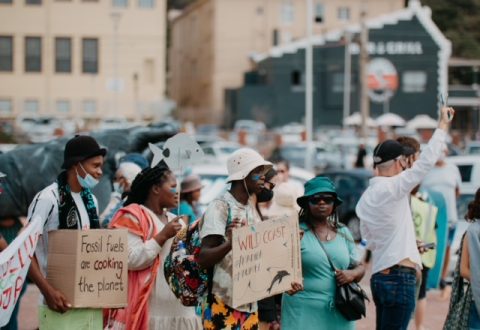
The bill sparked huge concern among environmental campaigners in New Zealand and elsewhere. Greenpeace Aotearoa called it a “shocking abuse of executive power” and the vast majority of submissions to a parliamentary inquiry said it should be rejected.
But in the end, it was adopted with little resistance, moving relatively smoothly through parliament, passing its third reading by 67 votes to 53. Sam Bookman, climate law lecturer at Melbourne Law School, told Climate Home News he was not surprised by this, given that the coalition government has a secure majority.
A complaint has been made to the UN special rapporteur on climate change and human rights by Smith, the National Iwi Chairs Forum Pou Tikanga and youth coalition Climate Clinic Aotearoa over what they see as the government’s heavy-handed approach. Smith is also challenging the new law in yet another lawsuit.
“Pathetic”: New Zealand plans to barely cut emissions between 2030 and 2035
Bookman thinks it “very unlikely” that such a challenge will succeed, noting that New Zealand’s constitution is firmly anchored in parliamentary sovereignty.
But the expert in climate law does not see the bill as the end of legal action in the country, noting that New Zealand has a “sophisticated climate litigation landscape with a growing number of specialist and experienced lawyers and NGOs”.
The country is also approaching its next general election in November, and some opposition parties have pledged to restore access to the courts if elected.
Amanda Larsson, global project lead on agriculture for Greenpeace International, said: “This law deserves to be tested, and I strongly encourage the international climate litigation community to unite and help defend New Zealanders’ fundamental right to hold polluters accountable before this becomes a global blueprint.”
Copycat legislation on the rise
New Zealand’s move is part of a small but growing legislative effort to shut down climate litigation around the world.
In the US, Republican politicians introduced legislation in the House and Senate in April that would shield fossil fuel firms from climate liability lawsuits. Similar laws have already been passed at state level in Tennessee, Utah, Iowa and Louisiana.
The German state of Bavaria has put forward a similar proposal to the Federal Council, aiming to block private climate claims as well as the recognition and enforcement of foreign judgments imposing such liability. There are also proposals to limit available remedies and actions in the Netherlands and Belgium.
UN General Assembly backs “climate obligations” set by world’s top court
Bookman said he expects more efforts to counter climate damages litigation and advised plaintiffs to think about how to respond, including drawing on broader support in opposing them.
“Even though it’s very hard for plaintiffs to win these types of cases, companies are very eager to avoid the expense, embarrassment and political accountability that come even with unsuccessful lawsuits,” he said.
The post New Zealand moves to protect business with law curtailing climate litigation appeared first on Climate Home News.
New Zealand moves to protect business with law curtailing climate litigation

Next week, diplomats from around the world will descend on Yerevan, Armenia, to negotiate a series of decisions under the UN Convention on Biological Diversity (CBD).
Between 19 and 30 October, 196 parties will gather to hammer out the precise wording of the dozens of legal texts that make up the decisions under the Conference of the Parties (COP) to the CBD.
This year’s summit is particularly significant, as it marks the halfway point between the agreement of the Kunming-Montreal Global Biodiversity Framework and the deadline for achieving its targets.
The CBD has found that countries are currently not on track to meet 22 out of the framework’s 23 targets.
During the fortnight, delegates will also be negotiating decisions relating to the two supplemental protocols to the CBD: the Cartagena Protocol, which covers biosafety; and the Nagoya Protocol, which covers access and benefit-sharing for the use of genetic resources.
(The Cartagena and Nagoya Protocols, which are each governed by a “meeting of the parties”, or “MOP”, have fewer parties than the CBD as a whole, with 173 and 141, respectively.)
Carbon Brief is tracking the progress of countries towards consensus on dozens of negotiating texts using the interactive table below.
The tracker includes texts from the COP, as well as the MOPs for the Cartagena and Nagoya protocols. It also includes draft decisions from the most recent subsidiary body meetings, as these form the starting point for the negotiations in Yerevan.
The CBD has three subsidiary bodies: the subsidiary body on scientific, technical and technological advice (SBSTTA), the subsidiary body on implementation (SBI) and the subsidiary body on article 8(j) and other provisions (SB8J).
SB8J focuses on issues related to the Indigenous peoples and local communities. It was established at COP16 in Cali, Colombia, in 2024.
The first two columns of the interactive tracker list the topic of each agenda item and the relevant body, with subsequent columns including dates, page counts and links to the original documents.
The table is searchable and can be sorted using the arrows in the header.
Areas of disagreement in UN draft texts are denoted by square brackets. Counting the brackets in a particular iteration of a text therefore gives a sense of how far parties are from reaching consensus.
The bracket column is colour-coded, with dark green indicating a low number of brackets and red indicating a high number of brackets remaining.
Texts can also present parties with choices using “options” or alternatives (“alt”), which are counted together in the sixth column of the table.
The key discussions in Yerevan will centre around two agenda items in particular. The first is the global review, which will assess progress towards the GBF and make recommendations for accelerating action.
The second is finance, which can be separated into two parts: resource mobilisation and the financial mechanism. On resource mobilisation, biodiverse global south countries are likely to push for an increased amount of international finance for conservation.
Disagreement over the creation of the financial mechanism led to the suspension of COP16 in Cali in October 2024, as parties failed to find agreement on the mobilisation of finance before the end of the summit.
Global south countries want the establishment of a separate financial mechanism under the control of the CBD; global north countries largely prefer to maintain the existing mechanism, which sits under the Global Environment Facility.
At the resumed session of COP16 in Rome in early 2025, countries agreed on a roadmap that would lead to the establishment of a permanent mechanism.
related

Analysis: Lula presidency saved at least 20,000km2 of Brazilian Amazon since 2022

Why land-use emissions have fallen by a third this century – in six charts

Analysis: 84% of nations miss deadline to identify ‘nature-harming’ subsidies by 2025

UK withdraws millions in funding from world’s second-largest rainforest in Congo
The post Interactive: Tracking negotiating texts at the COP17 biodiversity summit appeared first on Carbon Brief.
Interactive: Tracking negotiating texts at the COP17 biodiversity summit
A beacon of love
On an outer island of Fiji, two thousand nautical miles from Sydney, is a shining light of hope and resilience for our troubled world.
The island of Kioa is home to a Tuvaluan community who migrated from their atoll of Vaitupu in the late 1940s. It is a land of warm hearts, big smiles, and deep cultural roots; a place where the sound of a conch still summons the island together, where islanders paddle out to fish in carved outrigger canoes, and healthy happy children walk barefoot to school.
Here, culture is life. Kioans live sustainably through their traditional knowledge and practices. The island is alive with song, dance and the rhythms of a life tied to the tides, the winds, and the seasons.

Facing the future
Greenpeace has been lucky to have a relationship with Kioa for a number of years now, and we are continually learning from this remarkable community.
Last week, as part of our Voyaging Oceania project, we returned to the island. Our purpose was twofold —- to carry messages from the island to leaders gathering in Nadi this week for the Pacific Pre-COP, and to support the Kioa community in their efforts to improve water security for the island.
Unlike Tuvalu itself, with its eight atolls, Kioa is a mountainous, forested and richly fertile island. It will remain habitable far into the future. Kioans did not initially migrate from Vaitupu due to climate change, but the move was prophetic. They now have a lifeboat.
However, even Kioa faces challenges on our rapidly warming planet, in particular when it comes to water. Climate change is shifting once reliable rainfall patterns. On top of this, the island is already feeling the effect of this year’s intensifying El Niño event, which for Fiji means reduced rainfall and prolonged dry spells.
Right now, fresh water has to be carefully rationed, and is only available for a few hours a day. During last week’s visit aboard our campaigning ship Oceania, Greenpeace was privileged to work with the Kioa community on a new solar-powered water distribution project for the island.
Designed and led by the island, the project involves using a solar pump to move water from a reliable source to a storage tank and then using gravity to distribute the water around the village.
It was a lesson in how local knowledge and ingenuity can be the backbone of today’s climate solutions. To build a dam around the source, the local community knew the exact spot where they could gather gravel at low tide to mix with the cement. They took only what was needed, knowing that all resources must be carefully conserved. Kioa has no roads and no machinery, and it was an all-of-island effort to carry the materials up to the project site, including many heavy bags of sand and rock.
Such projects truly bring to life the vision of a resilient, locally-led, fossil fuel free Pacific.