

von Lena Westphal (Nachhaltigkeitsmanagement)
Immer häufiger stellt sich heraus, dass in vielen Bereichen im Leben keine Gleichberechtigung zwischen Frau und Mann besteht. Dies hat oft auch den Grund, dass die Forschung zu bestimmten Themen, die für Frauen relevant sind, rückschrittig ist bzw. sich gerade erst aufbaut. So ist bekannt, dass die Klimakrise mehr negative Auswirkungen auf Frauen als auf Männer hat. Der vierte Gleichstellungsbericht des Bundes greift dieses Thema als Fokusthema mit der Bezeichnung „Gleichstellung in der sozial-ökologischen Transformation“ auf.
Disclaimer: In diesem Blogartikel wird von dem Familienmodell Frau, Mann, evtl. Kind(er) gesprochen und sich auf ein binäres Geschlecht bezogen. Ich bin mir bewusst, dass es natürlich und zum Glück (!) viele verschiedene Familienmodelle und Geschlechter gibt und möchte darauf hinweisen, dass beispielsweise alleinstehende, alleinerziehende, Frauen mit einer Behinderung, Trans*frauen oder Frauen in einer gleichgeschlechtlichen Beziehung noch härter von den Auswirkungen der Klimakrise betroffen sind als heterosexuelle Cis-Frauen.
So nimmt die Marginalisierung von LGBTIQ+Personen beispielsweise im Katastrophenfall zu. Sie erfahren beim Zugang zu Wasser, Lebensmitteln, Gesundheitsversorgung und Notunterkünften häufig Diskriminierung.
*** English version below ***
Frauen sind gesundheitlich stärker von den Auswirkungen des Klimawandels betroffen als Männer, da sie häufiger mit Hitzesymptomen wie Kopfschmerzen, Leistungsabfall und Schlafstörungen zu kämpfen haben. Auch in der Schwangerschaft kann es durch Hitzewellen, die von der Erderwärmung ausgelöst werden, zu Komplikationen und sogar Frühgeburten kommen. Auch die Ressourcenverknappung, etwa bei Lebensmitteln, hat mehr Auswirkungen auf die Frau, da ihre Überlebenswahrscheinlichkeit geringer ist als bei Männern. So waren 2023 im Hitzesommer 75 Prozent aller Verstorbenen weiblich.
Es gibt auch gesellschaftliche und politische Gründe, warum Frauen stärker von der Erderwärmung betroffen sind. Das klassische Rollenbild einer Frau, das immer noch Teil unserer Gesellschaft ist, sieht vor, dass sich Frauen zunächst erstmal um andere kümmern und erst zum Schluss um sich selbst. Frauen leisten weltweit mehr Care-Arbeit (= Sorgearbeit oder Pflegearbeit) als Männer.
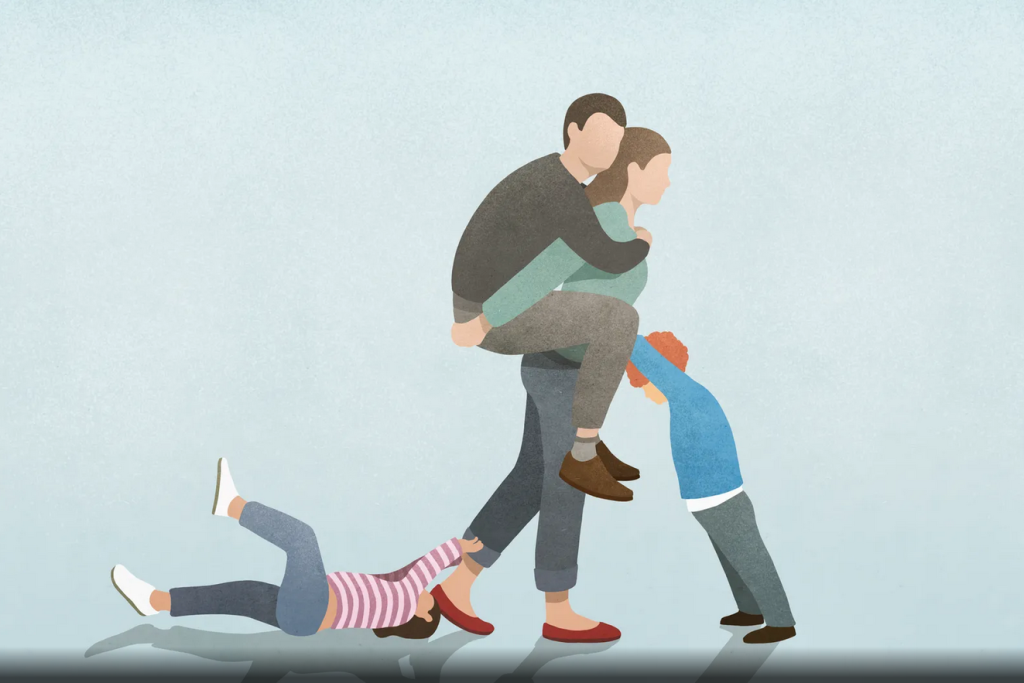
Die Ungleichverteilung von Sorge- und Haushaltsaufgaben erschwert es Frauen, sich an die Auswirkungen des Klimawandels anzupassen. So haben sie meistens einen schlecht bezahlten Job in der Familie und sind somit abhängig von ihrem Partner. Ihnen bleibt insgesamt auch weniger Zeit, sich ausreichend über den Klimawandel und dessen Folgen zu informieren.
Insgesamt sei betont, dass es sich hierbei nicht nur um Probleme der Frauen im globalen Süden handelt, sondern es ein weltweites Problem ist. Nach dem Wirbelsturm Katrina in den USA 2005 haben beispielsweise mehr Frauen als Männer aufgrund von Care-Arbeit ihren Job aufgegeben, damit sie sich besser um ihre Familien kümmern konnten.
Frauen arbeiten auch häufiger in Pflegeberufen und sind hier einem direkten Infektionsrisiko ausgesetzt, was die Corona-Pandemie bereits bestens gezeigt hat. Die Klimakrise wird langfristig für weitere und häufiger auftretende Pandemien sorgen und hier werden dann auch wieder Frauen einem erhöhten Infektionsrisiko ausgesetzt sein, da sie vermehrt an vorderster Front in systemrelevanten Berufen arbeiten. Pandemien sorgen zusätzlich dafür, dass die Gleichstellung von Frau und Mann wieder gefährdet wird, da sich Frauen auch eher um das Homeschooling der Kinder kümmern als Männer.
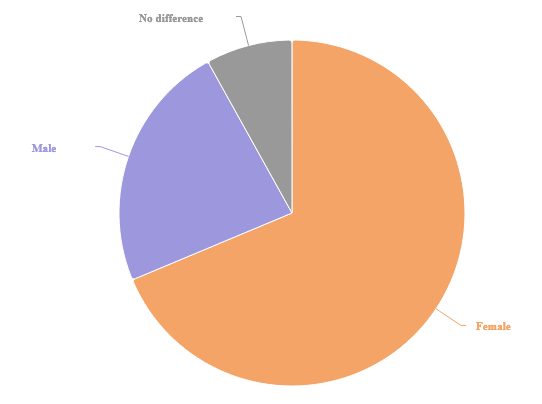
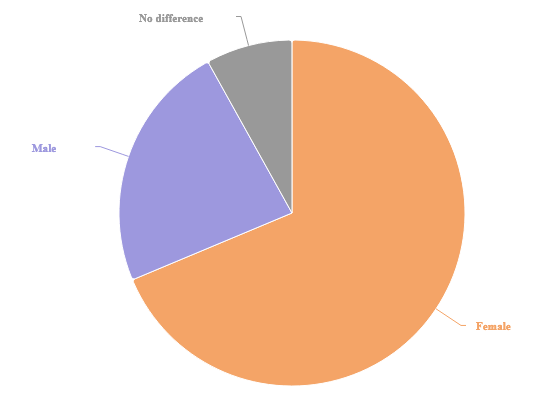
Mehr als zwei Drittel der Studien (68 Prozent) zeigen, dass Frauen durch den Klimawandel größeren Gesundheitsrisiken ausgesetzt sind. Das Kreisdiagramm zeigt die Ergebnisse von 130 Studien über Klimawandel und Gesundheit: 89 Studien kamen zu dem Ergebnis, dass Frauen stärker betroffen sind als Männer, 30 Studien kamen zu dem Ergebnis, dass Männer stärker betroffen sind als Frauen, und 11 Studien kamen zu dem Ergebnis, dass es keinen Unterschied in der Betroffenheit von Männern und Frauen gibt. Weltweit sind Frauen häufiger als Männer von klimabedingter Ernährungsunsicherheit betroffen und leiden nach extremen Wetterereignissen auch häufiger unter psychischen Erkrankungen oder Gewalt in der Partnerschaft.
Weltweit sind Frauen insgesamt stärker von Armut betroffen und verfügen über weniger Geld oder Besitz als Männer. Im globalen Süden haben Frauen tendenziell weniger Landbesitz, weniger Zugang zu landwirtschaftlichen Produktionsmitteln wie Geräten, Saatgut oder Dünger, aber auch weniger Kapital.
Aufgrund der zunehmenden Trockenheit verlängert sich die Strecke bis zu den Wasserquellen. Die Wasserversorgung ist in vielen Kulturen Frauensache und meistens essen und trinken Männer zuerst, sodass am Ende kaum noch etwas für die Frauen übrigbleibt, obwohl diese das Wasser, aufgrund ihrer Menstruation, dringend benötigen. Durch die weiteren Wege, machen sich die Frauen häufig schon im Dunkeln auf den Weg oder kehren erst nachts zurück, wodurch sie einem erhöhten Risiko von sexualisierter Gewalt ausgesetzt sind.
Frauen werden früher zu Hausarbeit, wozu auch das Heranschaffen von Wasser gehört, herangezogen. Sie haben dadurch weniger Zeit und Gelegenheit, Bildung zu erlangen, wenn die Wege zu den Wasserstellen immer weiter werden.
Die Lebensmittel werden aufgrund klimatischer Veränderungen insgesamt knapper. Frauen in ärmeren Ländern sind eher dem Risiko zu hungern ausgesetzt als Männer, da die knappe Nahrung eher an sie verteilt wird.
Auch politisch gesehen haben Frauen einen Nachteil. In selbstversorgenden Familien führt die Politik dazu, dass sich diese Familien auf immer schlechteren Böden durchschlagen müssen. Sobald Männer die Familien als “Klimaflüchtlinge” verlassen, müssen die hinterbliebenen Frauen ihre Familien alleine versorgen, was sie noch angreifbarer macht.
Kommt es zu Extremwetterereignissen verletzen sich oder sterben Frauen sogar häufiger als Männer. Vor allem in Ländern, in denen Frauen einen niedrigeren sozioökonomischen Status haben, gehen diese selten ohne männliche Begleitung aus dem Haus, tragen Kleidung, die die Bewegungsfreiheit bei möglichen Überflutungen sehr einschränkt und werden später vor Klimakatastrophen gewarnt. Während die Männer bei der Arbeit sind, kümmern sich Frauen zu Hause um die Familie und den Haushalt. Oft können Frauen auch nicht schwimmen, was die Flucht bei Überschwemmungen nahezu unmöglich macht. So waren 2004 bei dem Tsunami in Südostasien 70 Prozent der Todesopfer Frauen.
Als 1991 der Zyklon “Gorki” an der Küste von Bangladesch wütete, kamen neunmal mehr Frauen ums Leben als Männer. Bei den verheerenden Buschbränden 2009 in Australien wollten sich doppelt so viele Frauen als Männer in Sicherheit bringen. Und als 2016 in Kenia wegen einer schweren Dürre zwei Millionen Menschen hungern mussten, waren es jeweils die Frauen, die als letzte Lebensmittel erhielten.
Hinzu kommt, dass klimawandelbedingte Katastrophen häufig die Versorgung mit Mitteln der Familienplanung und den Zugang zu gynäkologischen Untersuchungen oder Geburtshilfe einschränken.
Als wäre das nicht alles schon genug, steigt auch die sexualisierte Gewalt gegenüber Frauen. Zwangsheiraten könnten im globalen Süden wieder zunehmen, weil die Klimakrise den Zugang zu Bildung und Hilfsangeboten stark negativ beeinflusst. Es kommt zu Ernteausfällen, junge Frauen werden vermehrt zu Hause gebraucht, um die Familien zu unterstützen und werden häufiger jung verheiratet oder gegen Vieh verkauft. Es kommt auch dazu, dass (junge) Frauen zu Prostitution gezwungen werden. Dies hat dazu geführt, dass im südlichen Afrika, aufgrund von Dürreperioden, die HIV-Infektionen gestiegen sind. All diese “Maßnahmen” werden von den Familien durchgeführt, um das fehlende Einkommen zu kompensieren und die restliche Familie vor Hunger zu schützen.
Selbst wenn Frauen in Notunterkünften unterkommen, sind sie dort vermehrt Gewaltdelikten ausgesetzt und haben nahezu keine Privatsphäre.
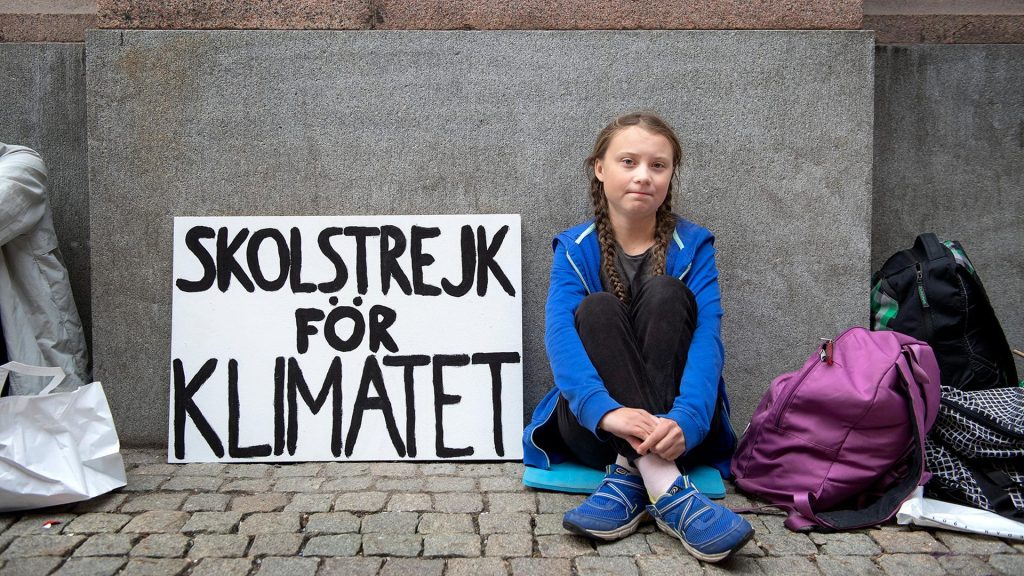
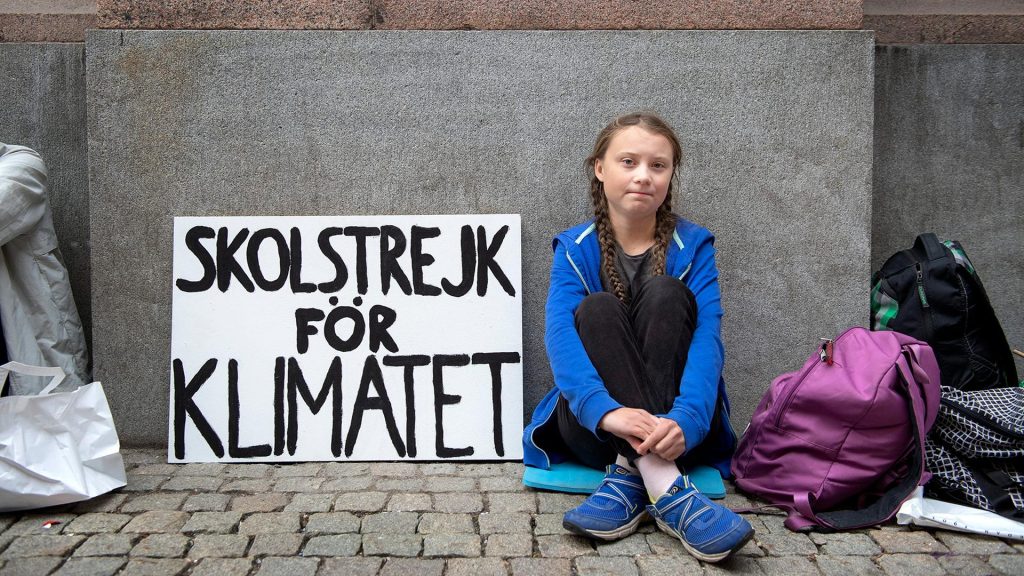
Gerade weil Frauen stärker vom Klimawandel betroffen sind, nehmen sie den Klimawandel stärker als Bedrohung wahr als Männer. Sie setzen sich mehr für den Klimaschutz ein und fordern auch mehr politische Maßnahmen und sind auch bereit, mehr Geld dafür auszugeben. So war es ab dem 20. August 2018 Greta Thunberg, die in Schweden die „Schulstreiks für’s Klima“ startete und damit weltweit die “Fridays For Future”-Bewegung loslöste.
In Deutschland ist vor allem Luisa Neubauer für ihren Aktivismus bekannt und setzt sich auf Demos oder in Talkrunden vor allem mit männlichen Politikern auseinander. Generell sind überproportional viele Frauen an der Protestbewegung beteiligt.
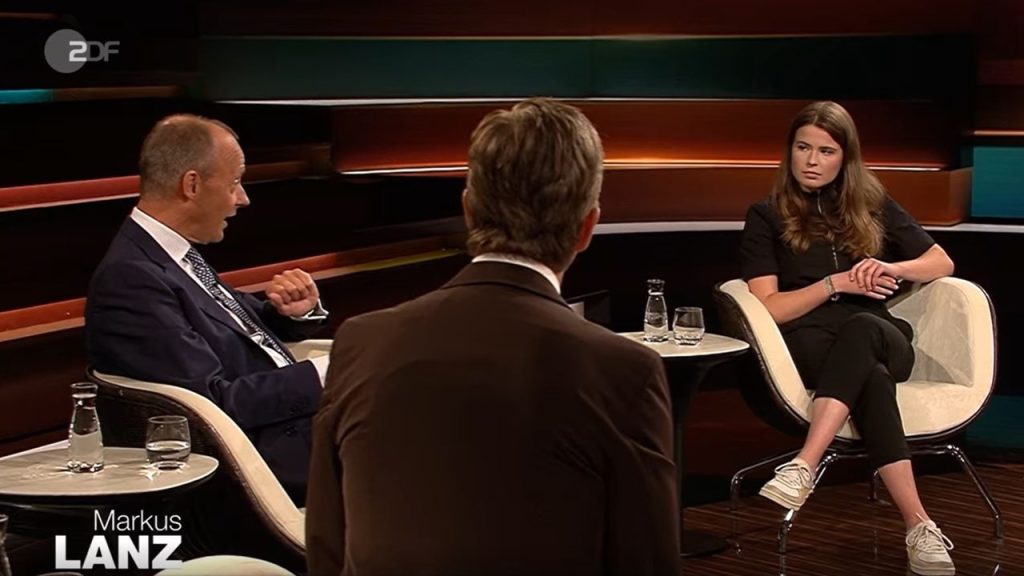
(Quelle: Utopia.de)
Frauen haben insgesamt einen klimafreundlicheren Lebensstil. Sie essen weniger Fleisch und fahren weniger Auto. Oft ist das aber keine bewusste Entscheidung, da sie weniger befugt sind, einen umweltbelastenden Lebensstil zu führen. Eine französische Studie fand vor kurzem heraus, dass Männer 26 Prozent mehr CO₂-Emissionen verursachen als Frauen. Während auf Männer jährlich 5,3 Tonnen CO₂ zurückgehen, sind es bei Frauen 3,9 Tonnen. Die Bereiche Verkehr und Ernährung machen zusammen rund die Hälfte eines durchschnittlichen CO₂-Fußabdruckes aus.
Viele argumentieren, dass Männer mehr Kalorien oder Fleisch benötigen oder allein durch ihren Job mehr CO₂ verbrauchen als Frauen. Dies konnte die Studie allerdings widerlegen. Rechnet man alle sozioökonomischen, biologischen und gesellschaftlichen Unterschiede heraus, bleibt immer noch ein Geschlechterunterschied von 18 Prozent. Für diese restlichen 18 Prozent konnten die Forscher:innen keine Erklärung bieten.
In Ländern, in denen Frauen politisch mehr Mitspracherecht haben, ist jedoch auch die CO₂-Belastung geringer und das Interesse an strukturellen Veränderungen größer. Außerdem zeigen Frauen in ihrem Alltag mehr Engagement, etwa beim Einkauf, bei der Arbeit, bei politischen Wahlen oder beim Engagement in ihren privaten Bereichen.
Leider ist es bisher weltweit so, dass kaum Frauen an den politischen Entscheidungen mitwirken können, da sie bei beispielsweise Klimakonferenzen immer noch unterrepräsentiert sind. Ihre Bedürfnisse werden von den männlichen Entscheidungsträgern stets vernachlässigt. Dementsprechend hätte es einen großen Einfluss, wenn Frauen mehr zu sagen hätten und häufiger bei Entscheidungen beteiligt werden.
Seit Jahrzehnten warnen Expert:innen, dass klassische Geschlechterrollen die Menschen anfälliger für extreme Wetterereignisse machen. Politische Entscheidungsträger haben diese Warnungen lange ignoriert. Heute sind sie gezwungen umzudenken und sich zu fragen, wie sich Ungleichheiten abbauen lassen, die sich anderenfalls immer weiter zu verstärken drohen.
Die Klimakrise bedroht vor allem arme Bevölkerungsschichten, die keinen politischen Einfluss haben. Die meisten Frauen haben kein Mitspracherecht, wenn es um die Diskussion um die Verwendung und Nutzung von Ressourcen oder um grundlegende Entscheidungen geht.
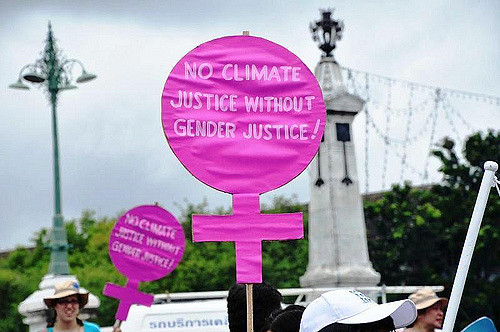
Im Pariser Klimaabkommen von 2015 haben sich die Staatsoberhaupte darauf geeinigt, die globale Erderwärmung auf durchschnittlich 1,5 Grad Celsius über dem vorindustriellen Niveau zu begrenzen. Die Unterzeichner:innen einigten sich zudem auch auf einen “geschlechtergerechten” Ansatz bei der Anpassung an den Klimawandel. Dieser sollte sich an den besten verfügbaren wissenschaftlichen Erkenntnissen orientieren.
Um dieses Ziel zu erreichen, müssten die Systeme verändert werden, die noch immer an alten Ungleichheiten festhalten. Machtverhältnisse müssen neu gedacht werden. Dies würde bedeuten, dass Reichtum und Ressourcen weltweit gleichmäßiger verteilt werden müssen und es eine gerechtere Mitbestimmung und Beteiligung bei umweltpolitischen Themen gibt.
Bisher gibt es allerdings wenig Belege für diesen Wandel, weshalb die Ungleichheit immer noch Tagesordnung ist. Die Beteiligung von Frauen an Anpassungsprojekten ist sehr selten und auch in der nationalen Klimapolitik werden die Bedürfnisse von Frauen nicht genug beachtet.
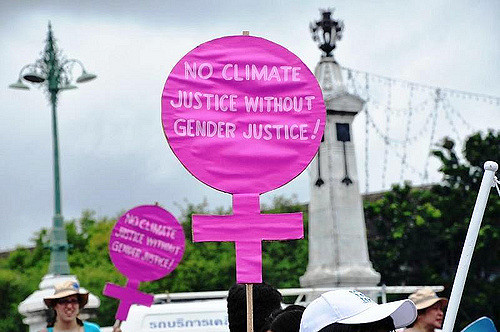
Die Geschlechtergleichheit wird aber immerhin in vielerlei Hinsicht angestrebt. So ist es beispielsweise eines der 17 Ziele der Sustainable Development Goals (kurz: SDG’s). Durch die UN-Klimakonferenzen gründeten sich auch zwei transnationale Netzwerke: das zivilgesellschaftliche GenderCC – Women for Climate Justice und die Global Gender and Climate Alliance (GGCA).
Abschließend muss jedoch betont werden, dass das persönliche Konsumverhalten von Frauen und Männern einen nicht so großen Einfluss auf das Klima hat wie Unternehmen. Rund 100 Unternehmen machen weltweit bereits 70 Prozent der Treibhausemissionen aus. Somit haben Politik und Wirtschaft den größeren Einfluss.
Außerdem gibt es auch Momente, in denen Männer stärker vom Klimawandel bedroht sind, als Frauen. Dies ist allerdings die Seltenheit. Ein Beispiel ist aber, dass Männer, aufgrund ihres klassischen Rollenbildes, bei Waldbränden länger in ihrem Haus bleiben, um es zu “beschützen”, während sich die Frauen mit dem restlichen Teil der Familie in Sicherheit bringen. Dies ist u. a. auf die toxische Männlichkeit zurückzuführen, aufgrund derer dieses Verhalten von Männern erwartet wird. Dieser Faktor ist natürlich auch nicht gesund. Allerdings ist bewiesen, dass der Klimawandel zu einseitig naturwissenschaftlich und damit stark stereotyp männlich diskutiert wird. Frauen leiden somit insgesamt mehr unter den Folgen der Klimakrise und viele dieser Folgen wurden durch patriarchle Strukturen verursacht.
*** English version ***
Climate crisis: women more affected than men
by Lena Westphal (Sustainability Management)
It is becoming increasingly apparent that in many areas of life there is no equality between women and men. This is often due to the fact that research on certain topics that are relevant to women is lagging behind or is only just beginning to develop. For example, it is known that the climate crisis has more negative effects on women than on men. The federal government’s fourth Gender Equality Report takes up this topic as a focus theme with the title “Equality in the socio-ecological transformation”.
Disclaimer: This blog article refers to the family model of woman, man, possibly child(ren) and refers to a binary gender. I am aware that there are of course and fortunately (!) many different family models and genders and would like to point out that, for example, single women, single parents, women with a disability, trans* women or women in a same-sex relationship are even harder hit by the effects of the climate crisis than heterosexual cis women.
For example, the marginalization of LGBTIQ+ people increases in the event of a disaster. They often experience discrimination when it comes to access to water, food, healthcare and emergency shelters.
Women’s health is more affected by the effects of climate change than men, as they are more likely to suffer from heat-related symptoms such as headaches, reduced performance and sleep disorders. Heatwaves caused by global warming can also lead to complications and even premature births during pregnancy. The scarcity of resources, such as food, also has a greater impact on women, as they are less likely to survive than men. In 2023, for example, 75 percent of all deaths in the heatwave summer were female.
There are also social and political reasons why women are more affected by global warming. The classic role model of a woman, which is still part of our society, is that women first take care of others and only then take care of themselves. Worldwide, women perform more care work than men.
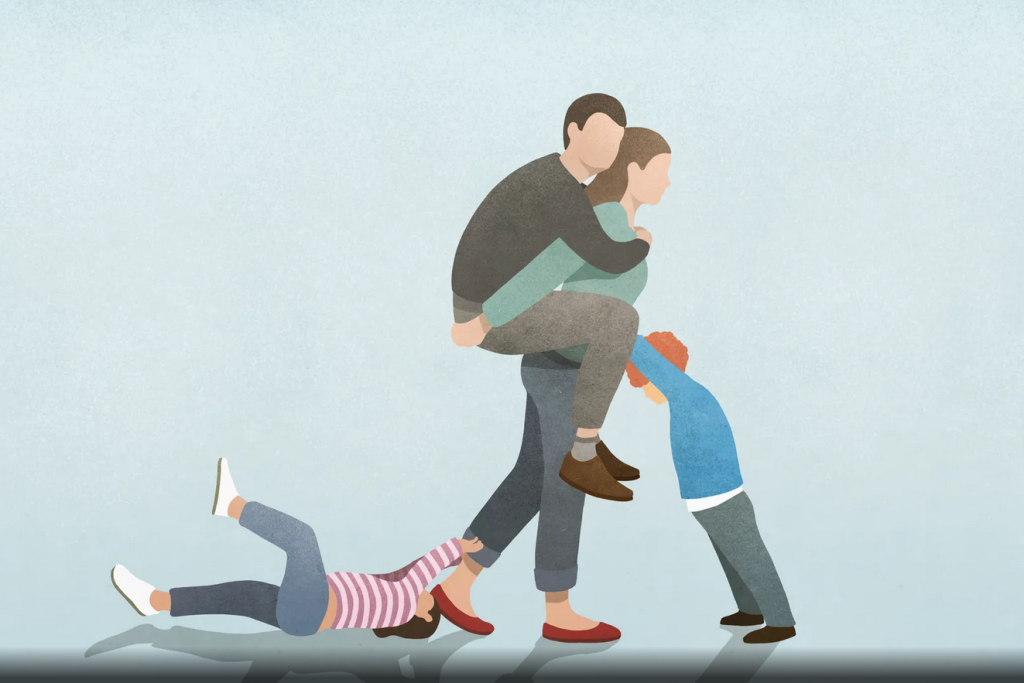
The unequal distribution of care and household tasks makes it difficult for women to adapt to the effects of climate change. They usually have a low-paid job in the family and are therefore dependent on their partner. Overall, they also have less time to inform themselves sufficiently about climate change and its consequences.
Overall, it should be emphasized that this is not just a problem for women in the Global South, but a worldwide problem. After Hurricane Katrina in the USA in 2005, for example, more women than men gave up their jobs due to care work so that they could take better care of their families.
Women also work more frequently in care professions and are directly exposed to the risk of infection, as the coronavirus pandemic has already shown. The climate crisis will lead to further and more frequent pandemics in the long term, and women will again be exposed to an increased risk of infection, as they are increasingly working at the front line in systemically relevant professions. Pandemics also ensure that gender equality is once again at risk, as women are also more likely to homeschool their children than men.
More than two thirds of the studies (68 percent) show that women are exposed to greater health risks as a result of climate change. The pie chart shows the results of 130 studies on climate change and health: 89 studies came to the conclusion that women are more affected than men, 30 studies came to the conclusion that men are more affected than women, and 11 studies came to the conclusion that there is no difference in the extent to which men and women are affected. Globally, women are more likely than men to be affected by climate-related food insecurity and are also more likely to suffer from mental illness or intimate partner violence following extreme weather events.
Worldwide, women are generally more affected by poverty and have less money or property than men. In the global South, women tend to own less land, have less access to agricultural production resources such as equipment, seeds or fertilizer, but also less capital.
Due to the increasing drought, the distance to water sources is increasing. In many cultures, water supply is a matter for women and men usually eat and drink first, so that in the end there is hardly anything left for the women, even though they urgently need the water due to their menstruation. Due to the longer distances, women often set off in the dark or only return at night, which exposes them to an increased risk of sexualized violence.
Women are called upon to do housework earlier, including fetching water. As a result, they have less time and opportunity to gain an education as the distances to water points become ever longer.
Food is becoming scarcer overall due to climatic changes. Women in poorer countries are more at risk of starvation than men, as the scarce food is more likely to be distributed to them.
Women are also at a political disadvantage. In self-sufficient families, the policy means that these families have to eke out a living on increasingly poor soil. As soon as men leave their families as “climate refugees”, the women left behind have to support their families alone, which makes them even more vulnerable.
When extreme weather events occur, women are injured or even die more often than men. Particularly in countries where women have a lower socio-economic status, they rarely leave the house without a male companion, wear clothing that severely restricts their freedom of movement in the event of flooding and are later warned of climate disasters. While men are at work, women are at home taking care of the family and the household. Women often cannot swim either, which makes it almost impossible for them to escape in the event of flooding. In the 2004 tsunami in South East Asia, for example, 70 percent of the fatalities were women.
When Cyclone “Gorki” hit the coast of Bangladesh in 1991, nine times more women lost their lives than men. During the devastating bushfires in Australia in 2009, twice as many women tried to flee to safety as men. And when two million people went hungry due to a severe drought in Kenya in 2016, it was women who were the last to receive food.
In addition, climate change-related disasters often limit the supply of family planning resources and access to gynecological examinations or obstetric care.
As if that wasn’t enough, sexualized violence against women is also on the rise. Forced marriages could increase again in the Global South because the climate crisis is having a major negative impact on access to education and aid. There are crop failures, young women are increasingly needed at home to support their families and are more often married off young or sold for livestock. (Young) women are also forced into prostitution. This has led to an increase in HIV infections in southern Africa due to periods of drought. All these “measures” are carried out by families to compensate for the lack of income and to protect the rest of the family from hunger. Even if women are accommodated in emergency shelters, they are increasingly exposed to violence and have almost no privacy.
Precisely because women are more affected by climate change, they perceive climate change as more of a threat than men. They are more committed to climate protection and also demand more political measures and are prepared to spend more money on them. It was Greta Thunberg, for example, who launched the “School Strikes for the Climate” in Sweden on August 20, 2018, thereby triggering the “Fridays For Future” movement worldwide.
In Germany, Luisa Neubauer in particular is known for her activism and mainly confronts male politicians at demonstrations or in talks. In general, a disproportionately high number of women are involved in the protest movement.
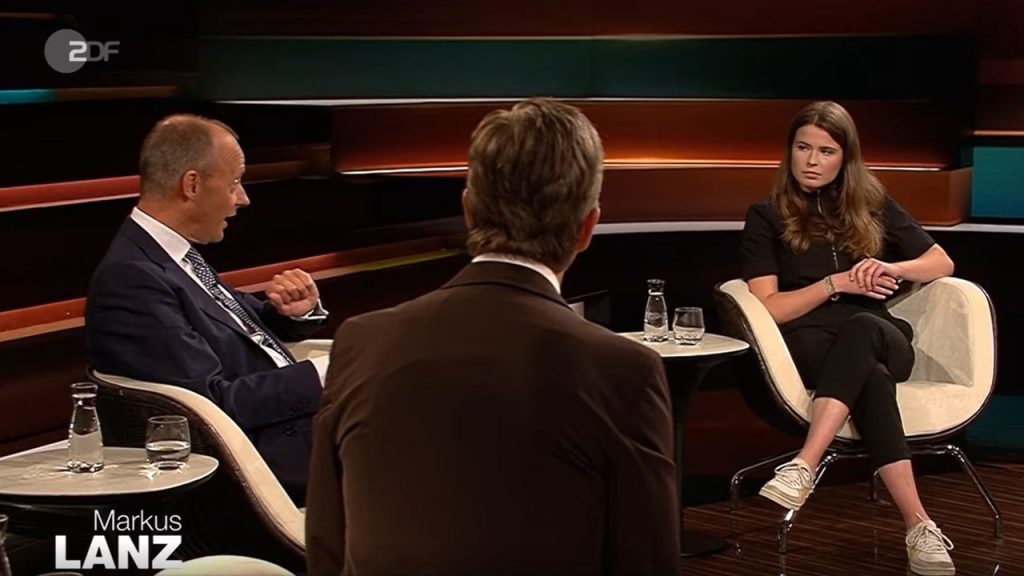
(source: Utopia.de)
Overall, women have a more climate-friendly lifestyle. They eat less meat and drive less. However, this is often not a conscious decision, as they are less empowered to lead an environmentally harmful lifestyle. A French study recently found that men cause 26 percent more CO₂ emissions than women. While men are responsible for 5.3 tons of CO₂ per year, the figure for women is 3.9 tons. The transport and food sectors together account for around half of an average CO₂ footprint.
Many argue that men need more calories or meat or consume more CO₂ than women simply because of their job. However, the study was able to disprove this. If all socio-economic, biological and social differences are factored out, there is still a gender difference of 18 percent. The researchers were unable to provide an explanation for this remaining 18%.
However, in countries where women have a greater political say, carbon pollution is also lower and interest in structural change is greater. Women also show more commitment in their everyday lives, for example when shopping, at work, in political elections or in their private lives.
Unfortunately, women have hardly been able to participate in political decisions worldwide to date, as they are still underrepresented at climate conferences, for example. Their needs are always neglected by male decision-makers. Accordingly, it would have a major impact if women had more say and were more frequently involved in decision-making.
For decades, experts have warned that traditional gender roles make people more vulnerable to extreme weather events. Political decision-makers have long ignored these warnings. Today, they are forced to rethink and ask themselves how inequalities can be reduced, which otherwise threaten to become ever more pronounced.
The climate crisis primarily threatens poor sections of the population who have no political influence. Most women have no say when it comes to discussions about the use and utilization of resources or fundamental decisions.
In the Paris Climate Agreement of 2015, the heads of state agreed to limit global warming to an average of 1.5 degrees Celsius above pre-industrial levels. The signatories also agreed on a “gender-responsive” approach to adapting to climate change. This should be based on the best available scientific knowledge.
In order to achieve this goal, the systems that still hold on to old inequalities must be changed. Power relations need to be rethought. This would mean that wealth and resources must be distributed more evenly worldwide and that there must be fairer co-determination and participation in environmental policy issues.
So far, however, there is little evidence of this change, which is why inequality is still the order of the day. The participation of women in adaptation projects is very rare and women’s needs are not sufficiently considered in national climate policy.
However, gender equality is still being pursued in many respects. For example, it is one of the 17 goals of the Sustainable Development Goals (SDGs for short). The UN climate conferences also led to the establishment of two transnational networks: the civil society GenderCC – Women for Climate Justice and the Global Gender and Climate Alliance (GGCA).
Finally, however, it must be emphasized that the personal consumer behavior of women and men does not have as great an impact on the climate as companies. Around 100 companies already account for 70 percent of greenhouse gas emissions worldwide. Politics and business therefore have the greater influence.
There are also times when men are more threatened by climate change than women. However, this is a rarity. One example, however, is that men, due to their traditional role model, stay longer in their house during forest fires to “protect” it, while women take the rest of the family to safety. This is partly due to toxic masculinity, because of which this behavior is expected of men. This factor is of course not healthy either. However, it has been proven that climate change is discussed too one-sidedly in scientific terms and thus in a strongly stereotypically male way. Women are therefore suffering more overall from the consequences of the climate crisis and many of these consequences were caused by patriarchal structures.
Inhaltliche Quellen:
- https://www.bmfsfj.de/bmfsfj/ministerium/berichte-der-bundesregierung/vierter-gleichstellungsbericht-257274
- https://www.aerztinnenbund.de/Frauen_gesundheitlich_vom_Klimawandel.3715.0.2.html
- https://www.dw.com/de/frauen-klimakrise-stärker-betroffen-maenner-geschlechergerechtigkeit-klimagerechtigkeit-klimawandel/a-62092939
- https://dgvn.de/meldung/klimagerechtigkeit-und-geschlecht-warum-frauen-besonders-anfaellig-fuer-klimawandel-naturkatastroph
- https://unwomen.de/klima-und-gender/
- https://www.welthungerhilfe.de/welternaehrung/rubriken/klima-ressourcen/rolle-von-frauen-im-klimaschutz-aufwerten
- https://www.bmz.de/de/themen/frauenrechte-und-gender/gender-und-klima
- https://www.rnd.de/wissen/klimawandel-und-das-maennliche-geschlecht-gibt-es-den-eco-gender-gap-wirklich-Y7LWRBWX7BAAJF3XKFFA2FZ6GA.html
- https://www.genanet.de/themen/klima
- https://www.spiegel.de/wissenschaft/mensch/studie-maenner-verbrauchen-26-mehr-emissionen-als-frauen-fleisch-und-autos-a-a7358f7c-5470-42af-b5ea-8ba8337b5460
- https://www.lse.ac.uk/granthaminstitute/publication/the-gender-gap-in-carbon-footprints-determinants-and-implications/
- https://sites.manchester.ac.uk/global-social-challenges/2022/07/07/corporations-vs-consumers-who-is-really-to-blame-for-climate-change/
Quellen Abbildungen:
- Abbildung 1: https://www.spiegel.de/karriere/care-arbeit-und-die-haeusliche-gehaltsluecke-warum-das-gleiche-nicht-gerecht-ist-a-a64b128d-d206-4360-8246-5b4bdbb11d16
- Abbildung 2: https://www.carbonbrief.org/mapped-how-climate-change-disproportionately-affects-womens-health/
- Abbildung 3: https://www.tagesschau.de/ausland/europa/greta-thunberg-fridays-for-future-100.html
- Abbildung 4: https://utopia.de/markus-lanz-luisa-neubauer-friedrich-merz-klimapolitik_192757/
- Abbildung 5: https://dgvn.de/meldung/klimagerechtigkeit-und-geschlecht-warum-frauen-besonders-anfaellig-fuer-klimawandel-naturkatastroph

Intro
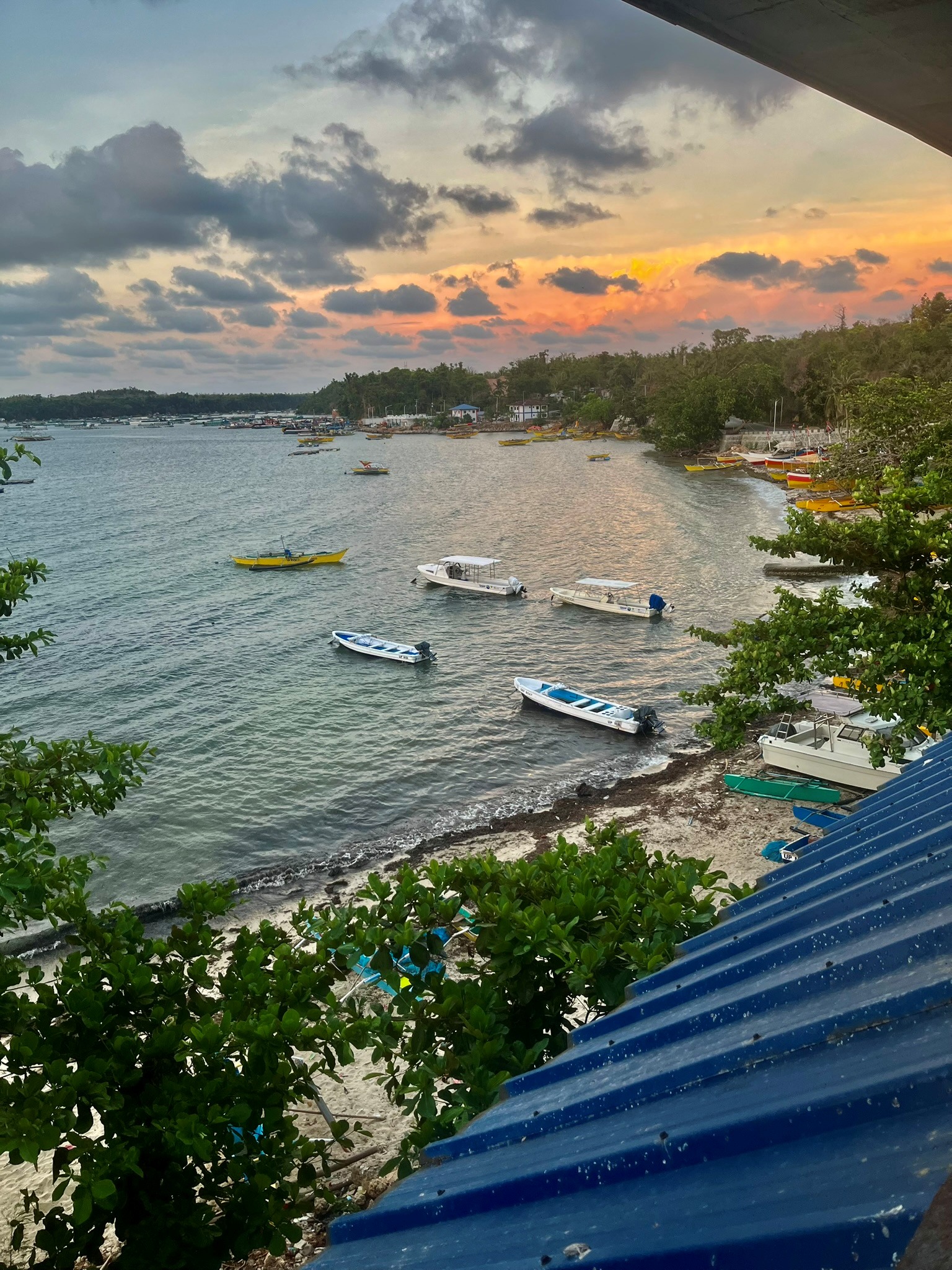
At the western tip of Luzon, which is the biggest island of the Philippines, lies the small coastal town of Bolinao. Tourists seldom find their way here as it takes around seven hours to get here by bus from Manila. Still, you can spot foreigners walking around every now and then, but they really stand out among the Filipinos. A reason for their presence is often that they study or work at the Bolinao Marine Laboratory (BML), which belongs to the University of the Philippines (UP). It is one of the seven research institutions participating in the GAME project 2026. Every year, GAME brings together Master’s students from all over the world to experience different cultures and conduct globally replicated experiments in marine ecology.
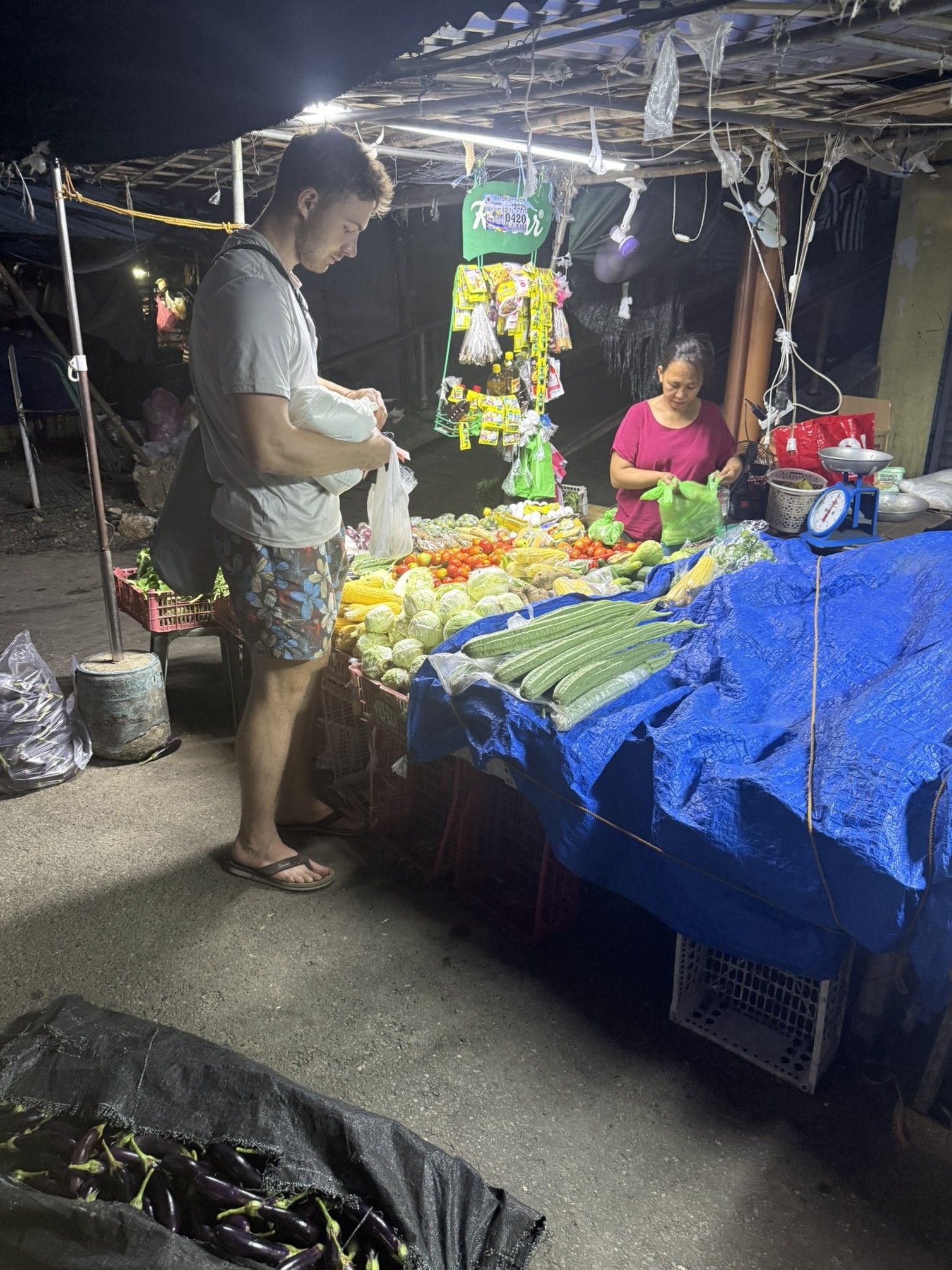
This year’s Team Philippines consists of Jona, a Filipino master student of Marine Biology at the University of the Philippines, and Konstantin, a German student who is enrolled in the Master programme „Ecology and Evolution“ at Freiburg University. As part of GAME 2026, we are currently staying at BML for 6 months to run experiments about the influence of underwater soundscapes on the colonization of marine hardbottoms.
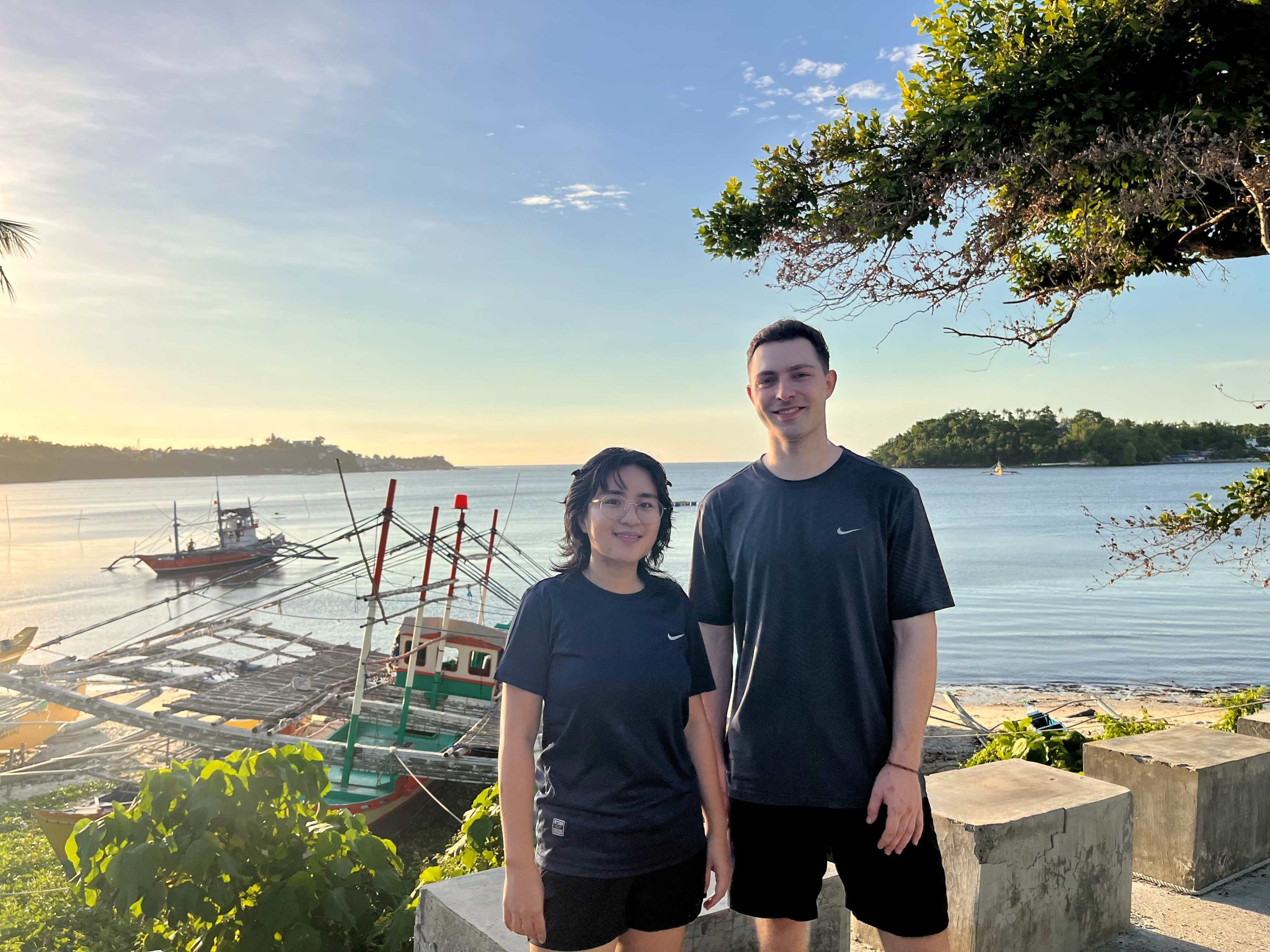
Where are we?
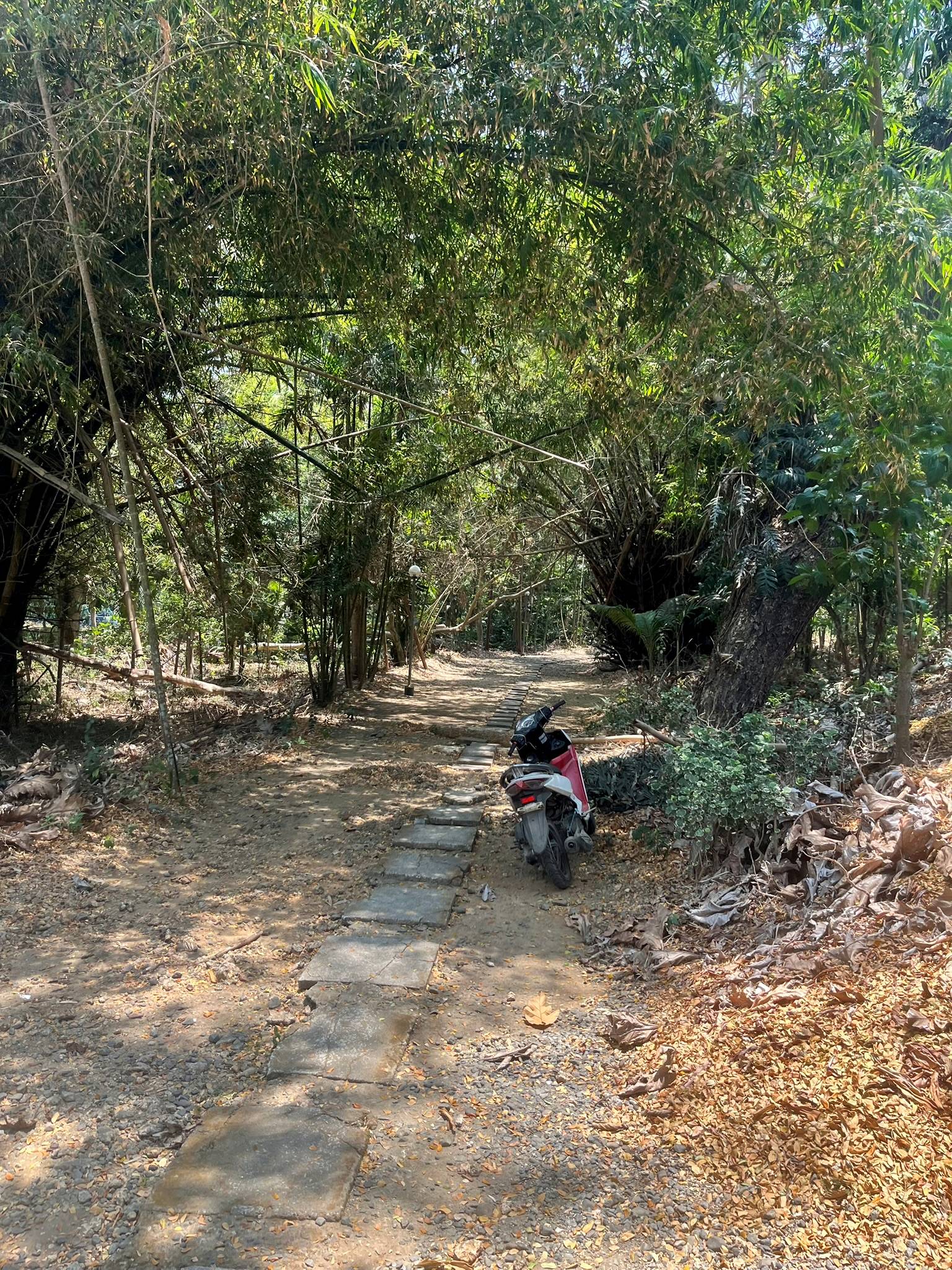
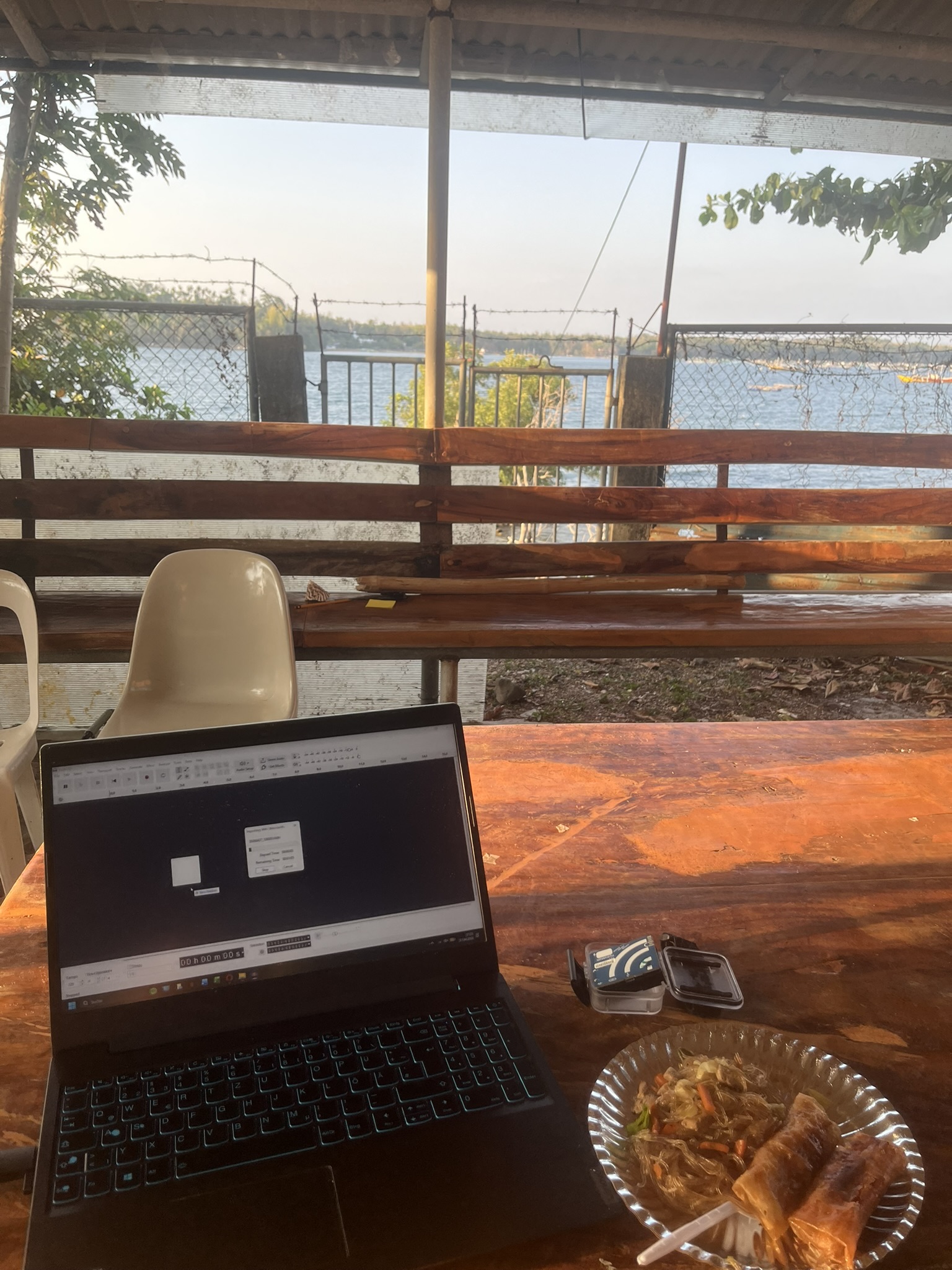
At the BML, we live in a dormitory together with many other students and scientists mostly from the Philippines and a few international interns. At almost any time of the day there is someone in the kitchen to hang out with, eat together, or simply have a chat. It is easy to make friends in this little community. The way to work is just a short walk along a forest path, where we can pick mangos for a snack and spot butterflies, birds, or even wild macaques climbing through the trees. After crossing a street, we reach the institute. But instead of enjoying the cool temperatures of the laboratories, we spend most of our working days outside, doing fieldwork in or near the water.
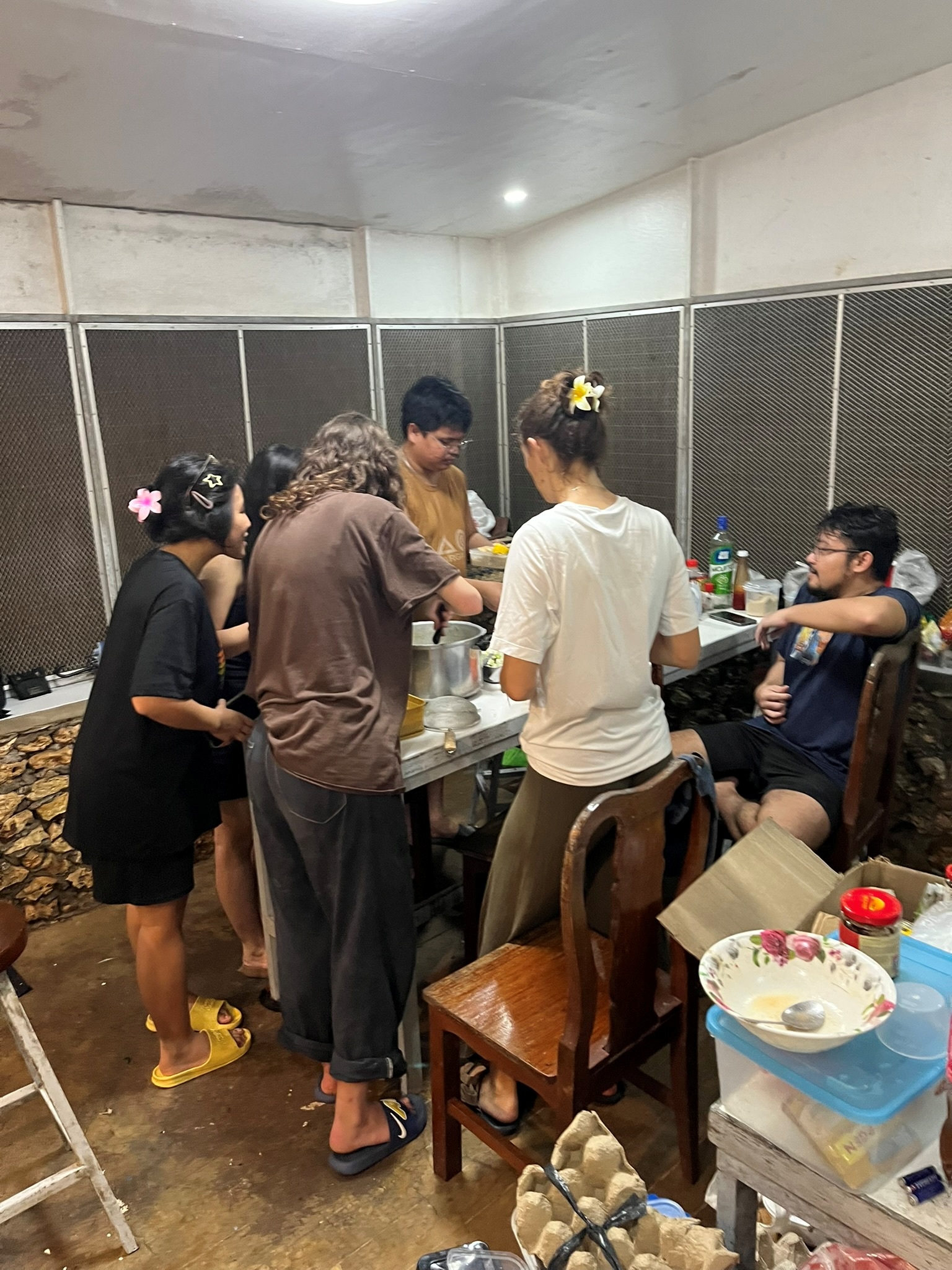
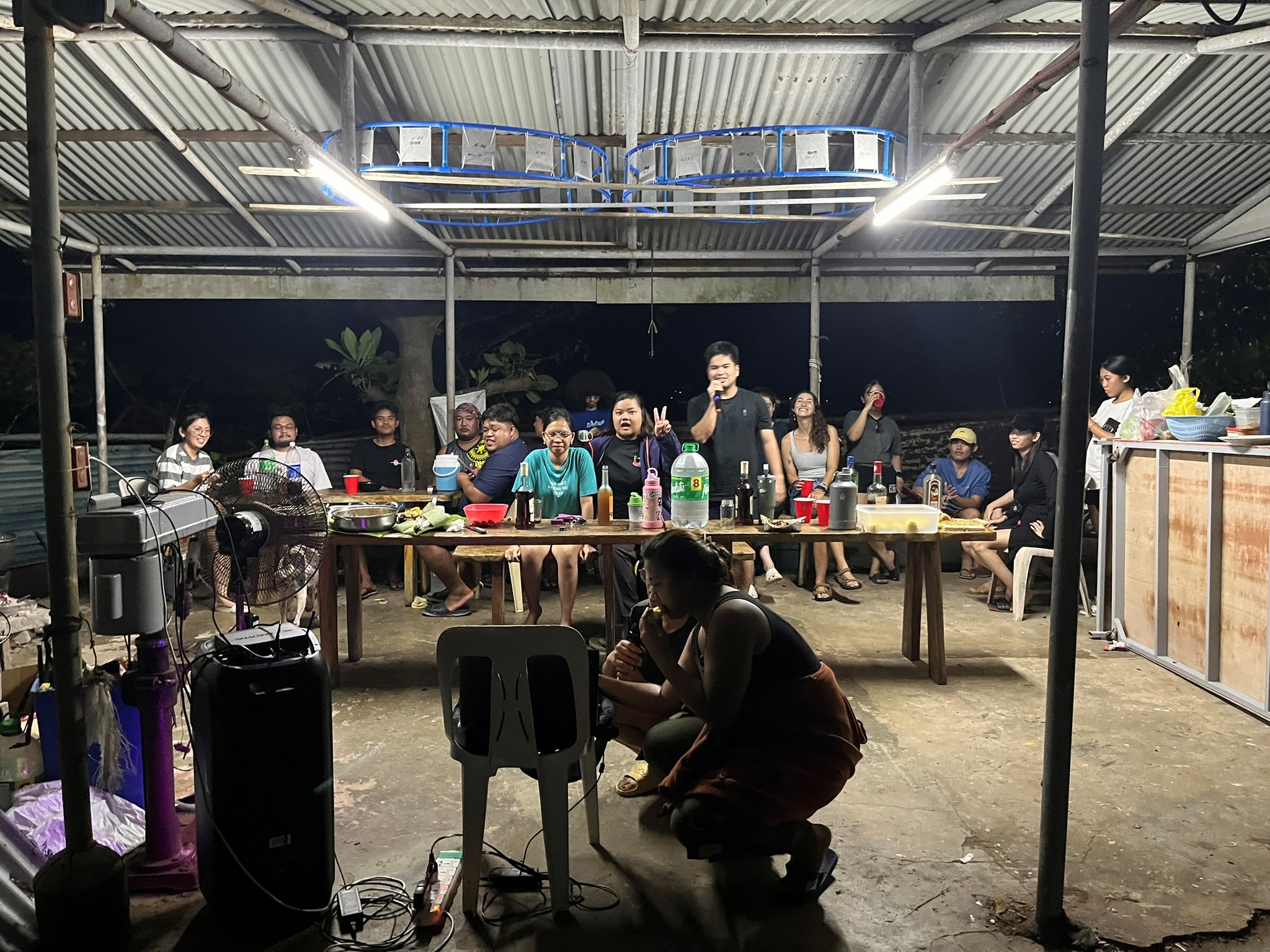
On Fridays, Konstantin experiences real Filipino culture during an almost weekly party at the institute with karaoke and lots of food and drinks. And Jona even brought some German culture to the Philippines by baking German bread for everyone.
What do we do?
Even though Bolinao is a remote place, it can get quite loud. Tricycles and jeepneys pass by, children play basketball in the streets, and karaoke can be heard almost everywhere and at any time. But just a few meters offshore, the soundscape changes. Beneath the surface of the ocean, you enter a world filled with sounds that are not so familiar to humans. When you dive down, alongside the rhythm of your own breathing, you might hear the crackling snaps of shrimp, the grunts of fish, or the rumble of waves rolling overhead. Together, these sounds form a natural underwater symphony which, however, can easily be interrupted by the noise of passing boats.
Marine organisms use sounds to communicate and to gather information about their environment, and there is growing evidence that this also applies to the larvae of sessile invertebrates such as mussels, barnacles and tunicates. During their pelagic life they are presumably able to use sounds for finding their way to suitable habitats, in which the sessile adult life stage can survive and reproduce. But what happens when these natural soundscapes are disturbed by anthropogenic noise? And what is the effect when the soundscape in a degraded reef gets enriched with sounds of a healthy coral reef?
In our experiments, which we just finished a few days ago, we investigated how different underwater soundscapes influence the colonization of hard substrata by the larvae of marine invertebrates. For this, we placed PVC settlement panels in the water and exposed them to playbacks of either boat noise, or amplified recordings from healthy coral reefs. A further group of panels was not exposed to any playbacks. By comparing the communities that establish under these different acoustic conditions, we can determine whether soundscapes affect the settlement of larvae.
Challenges
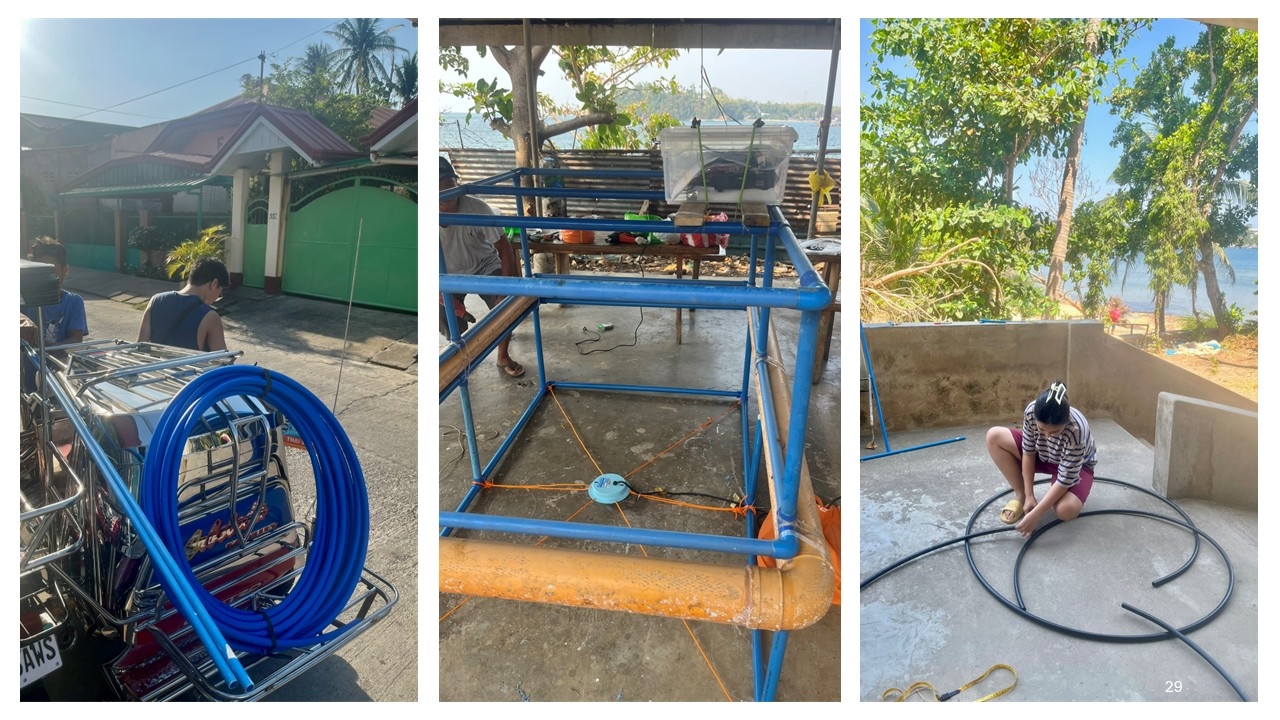
In contrast to the other GAME teams of this year’s project, we don’t have a jetty at BML. So, our first challenge was to build a setup that could carry an MP3 player for the soundscape playbacks, an amplifier, and an underwater speaker, which all need electricity supply, and position it about 30 to 50 meters away from the beach.
We ended up building a floating frame that carries the settlement panels as well as the underwater speaker, and combined it with a waterproof box, which was above the waterline and contained all the sensitive technical equipment. The box was firmly sealed so that it withstood waves and heavy monsoon rains, while its interior remained dry. At the same time, it was protected with a reflective car cover to prevent the technical equipment from overheating, as the box was constantly exposed to the burning tropical sun. To supply the set up with electricity, we – with the help of technicians and divers – rammed long bamboo poles into the seafloor and attached a cable to them that was connected to an electrical outlet on land.
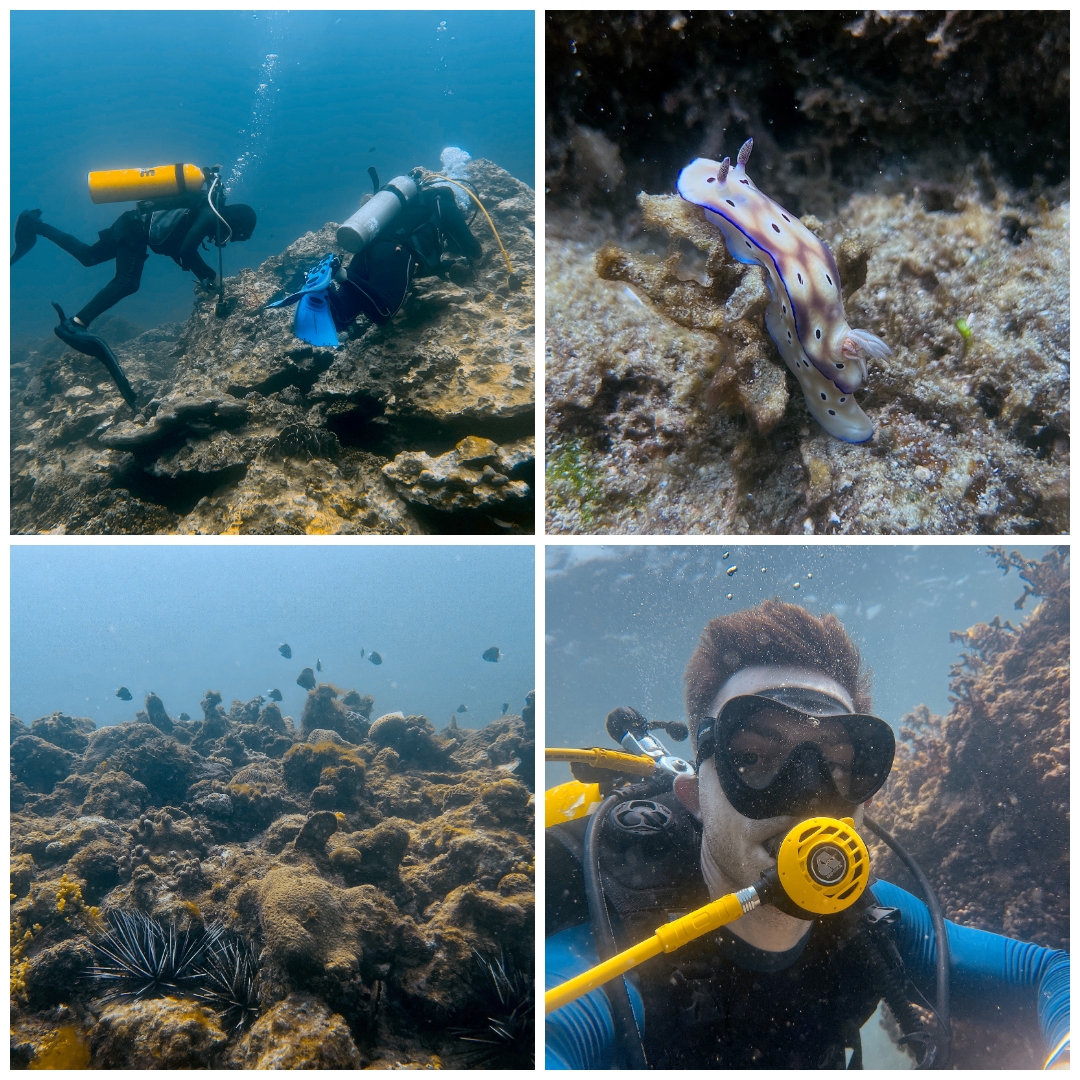
As a consequence of this particular set up, every time we want accessed it, we either went snorkeling or took a boat. Hence, we had to plan our work according to the tides. We also needed to avoid the hottest hours of the day, and sometimes we needed to hurry because a storm was approaching. In the end, you could say that we learned to live in the rhythm of Mother Nature.
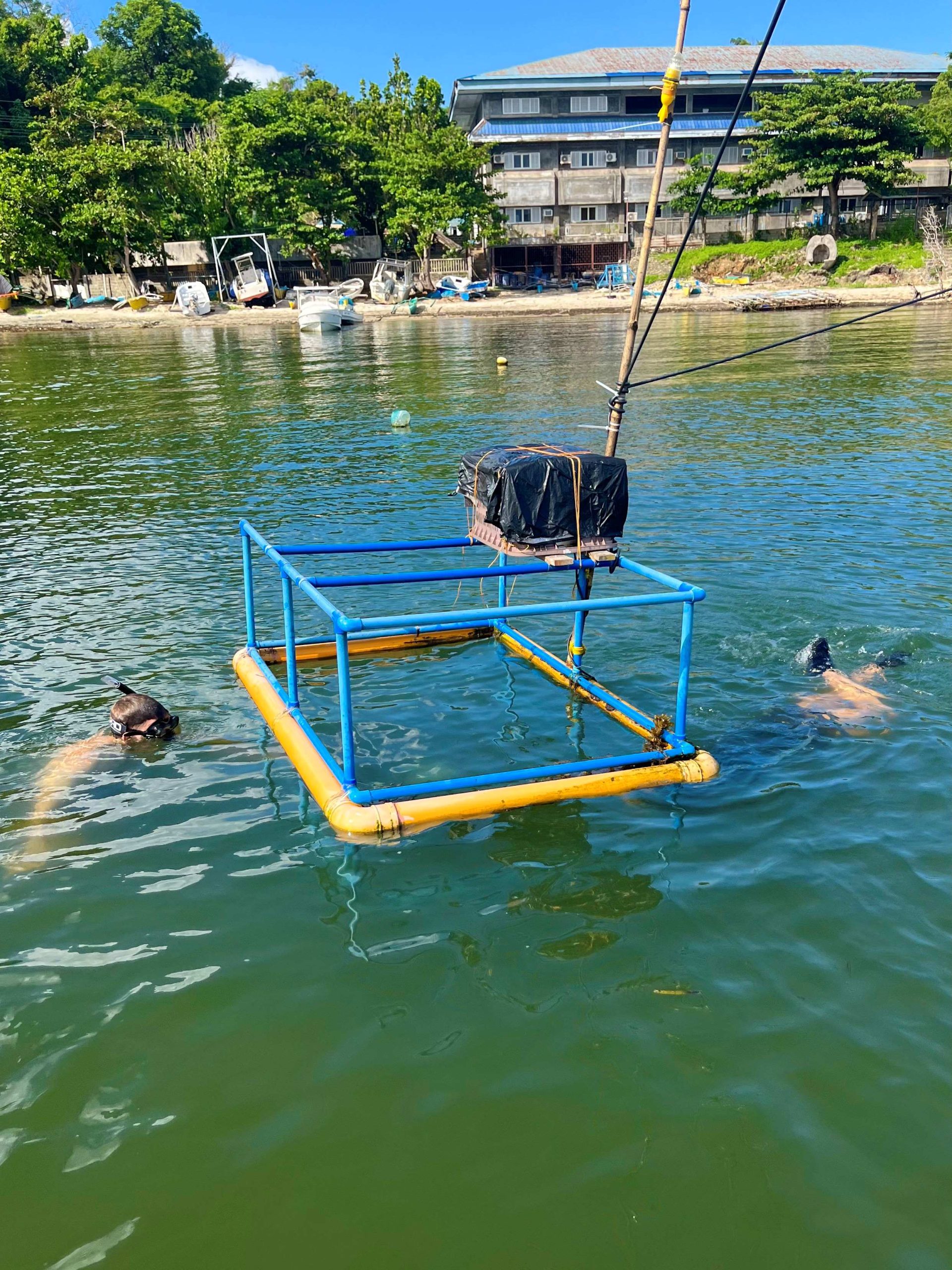
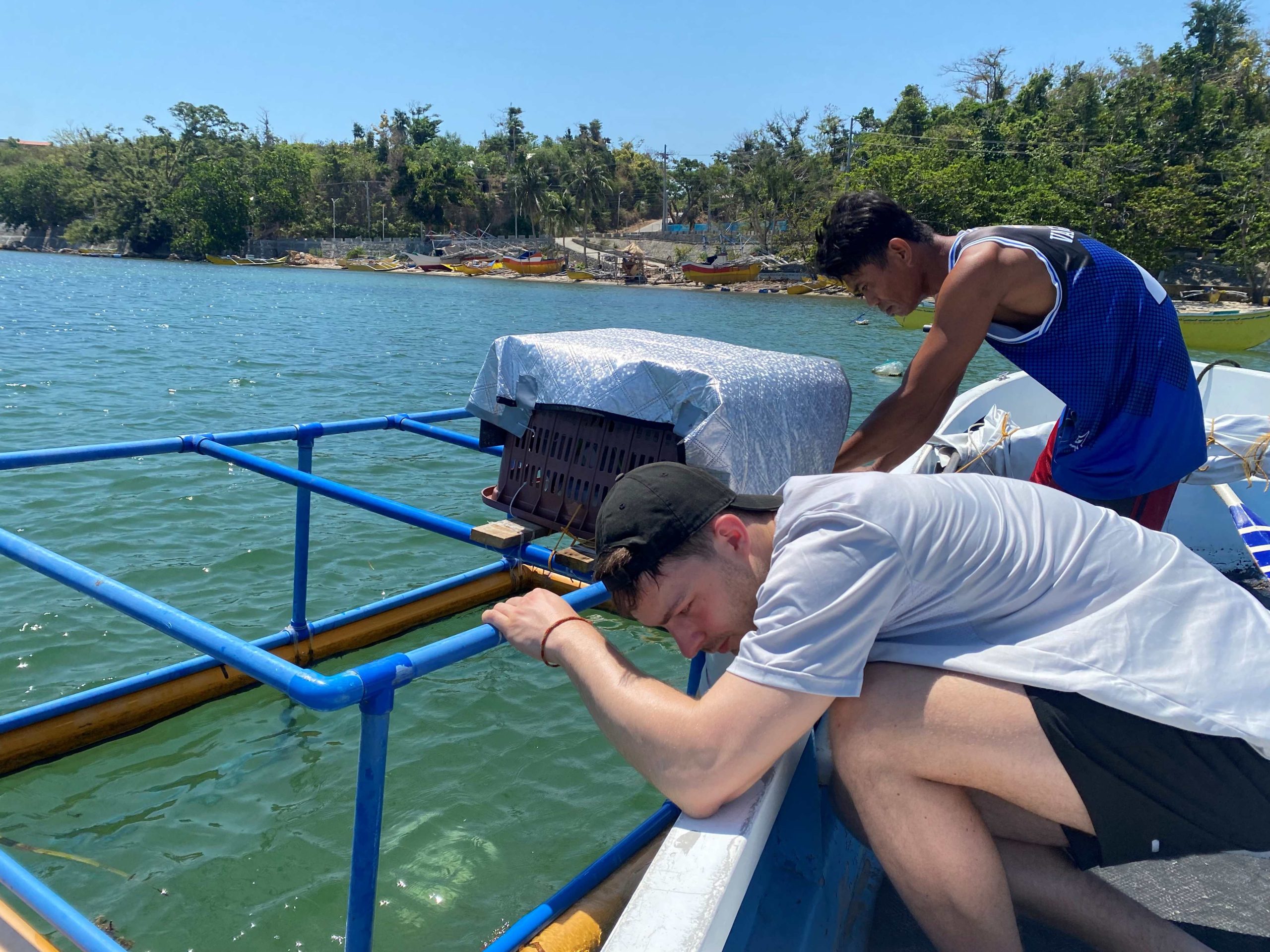
After some test runs, everything was ready and we could finally start the experiments. From that moment on, we regularly inspected the frames to check whether everything was still in place and whether there were any damages or malfunctions. So, we still had to go into the water almost every day. It was beautiful to make a small detour while working to see some nudibranchs, octopus or pufferfish and get to know the local underwater environment better every day. Once a month we took all the settlement panels out of the water to collect data about the abundance of single species and to document the community composition. Already after a few weeks in the water, many barnacles had settled on the panels. At a later stage, they dominated the artificial substrates together with macroalgae and black mussels. Furthermore, we could detect different species of ascidians, polychaetas, and hydrozoans, which, however, only occurred in very low abundances.
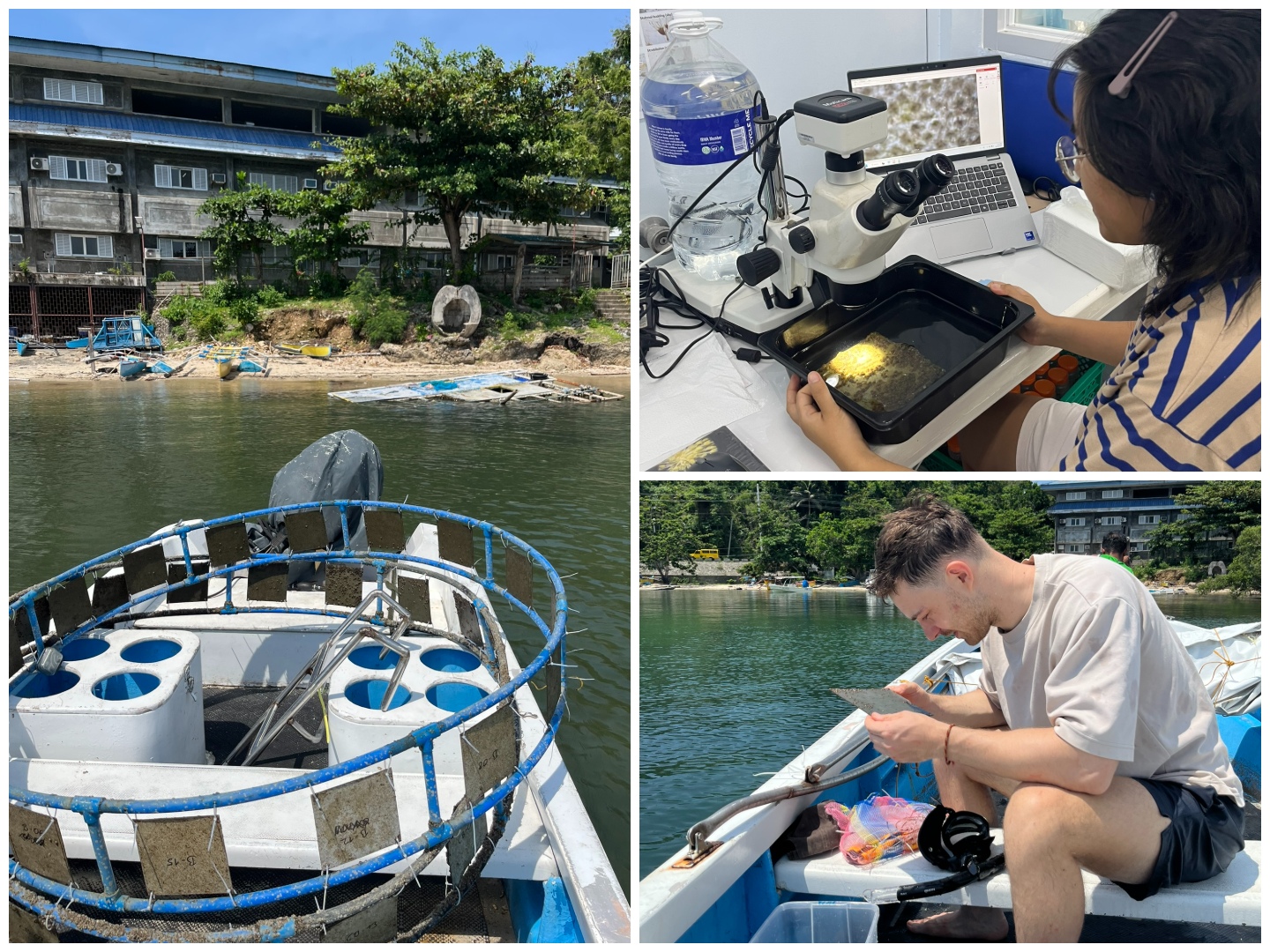
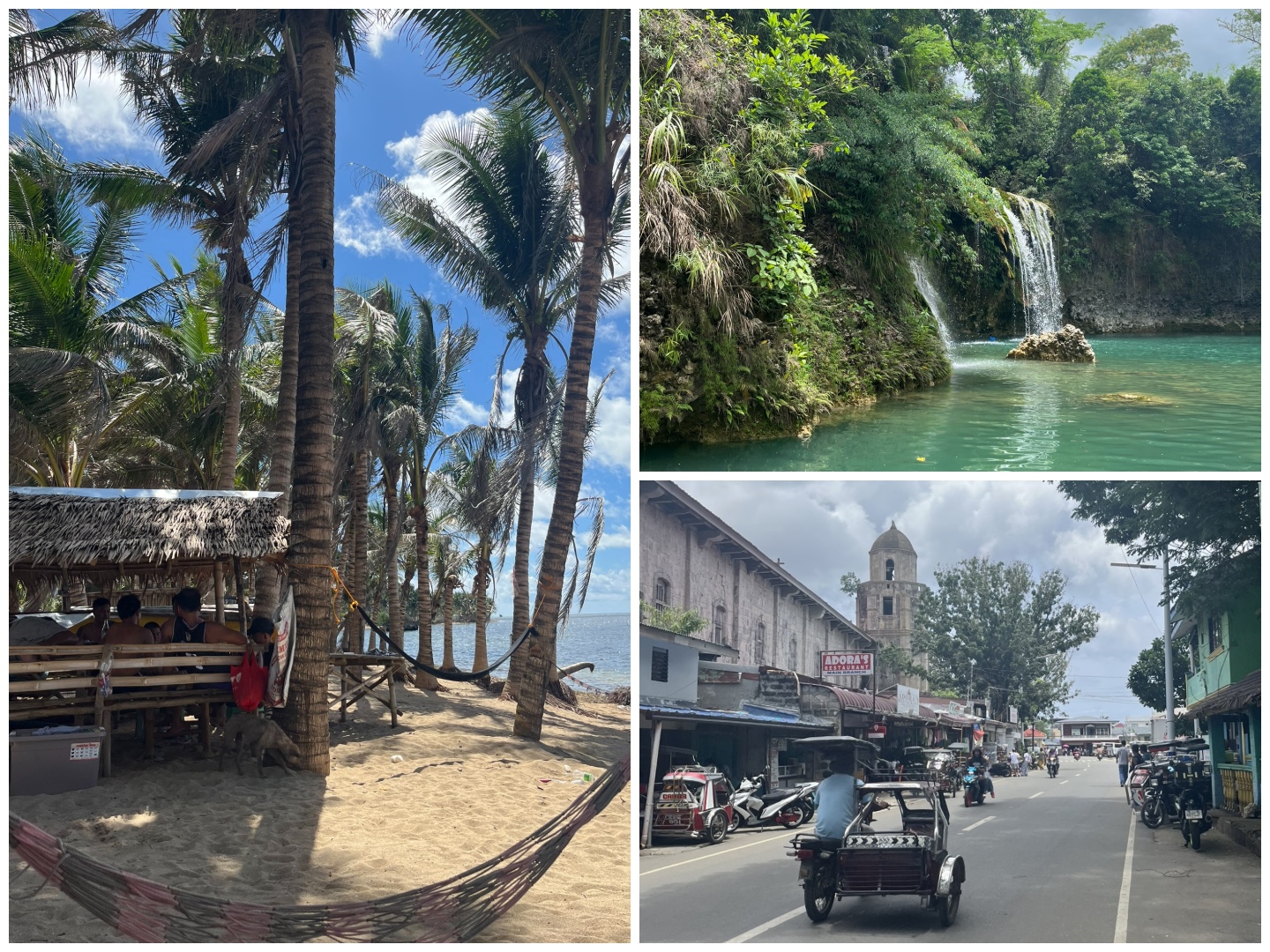
Alongside with the preparations of the experimental set up, every few weeks, Konstantin was able to join the coral research group during their fieldwork and went diving with them. This how we got our recordings of sounds from nearby healthy coral reefs. He deployed underwater microphones (hydrophones) while diving and since this task took only some minutes of the dive, he often still had enough air and time to enjoy the underwater world of the Philippines more closely.
Life in Bolinao
To put it in a nutshell, life here is a mix of relaxing beach vibes, lively markets in the city center and a wonderful community in and around the institute. A foundational value embedded in Filipino communities is Bayanihan, which embodies unity, cooperation, and collective volunteerism, where individuals work together toward a common goal without expecting personal gain or reward. This is something we feel and experience at the institute, as any individual is willing to provide help without asking for anything in return.
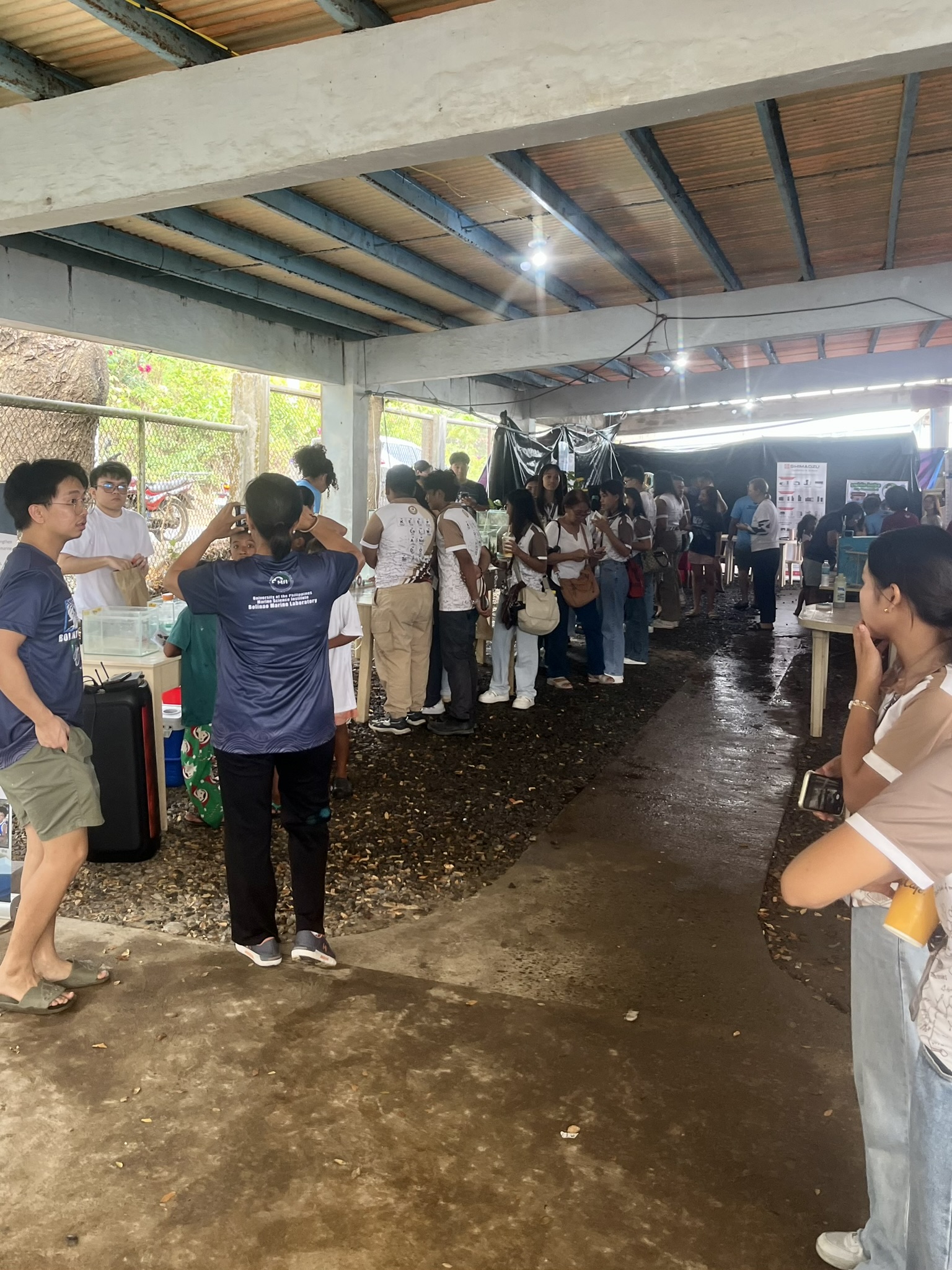
Science has a very strong application-oriented status here. Within the working groups at the institute, people often discuss the benefit of their research to the community. We also talked to local fishermen. They were very curious about our work and told us how they could already make use of previous research by the institute and increase their income at mussel farms.
Our experiment also could help these fishermen in the future. If we gain a better understanding of how soundscapes affect marine life, we could use that knowledge to prevent the decline of biodiversity in these waters. This would enable the community to secure stable access to the natural marine resources that serve as an important source of food and income here.
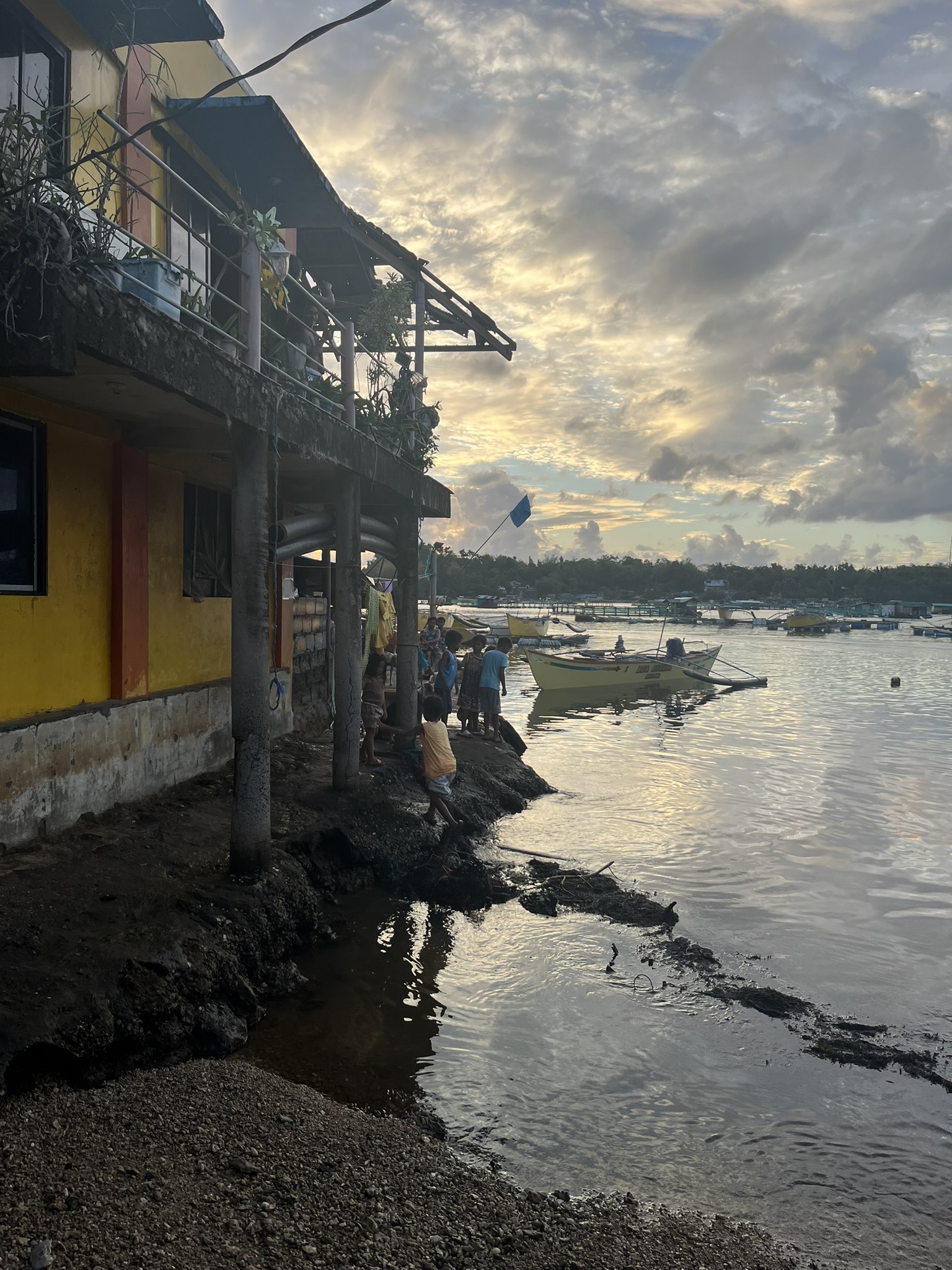
The end of our experiments
The Philippines experience 20 typhoons in a year on average and most of them hit the country during the northwest monsoon between July through October, which is overlapping with the last phase of our experiments. The frames we deployed were built to go along with the waves, but strong waves with heavy rains inflicted some damage on them. Because of that and since further storms were about to come, we decided to terminate the experiments some weeks earlier than planned.
We didn’t do much analysis of the data that we collected yet, but the first results are already fascinating. When comparing the communities that established under the influence of boat noise with those that developed in the absence of playbacks, it seems that the noise decreased the communities‘ biomass and biodiversity while it also altered their composition.
For assessing the dry weight of the organisms that colonized the panels, we scraped off everything that grew on their surfaces and dried this material in an electric dryer. After this work, the whole laboratory building smelled like a fish market. On the next day, we could already see that people took notice as many fans appeared on the hallway to blow away that smell. Luckily, everyone has been very kind and patient, helping us with ventilation and cleaning and simply putting up with the smell. Soon, our time here will come to an end, and we will head back to Kiel, Germany, to work on our data. We will be sad to say goodbye to all our colleagues and friends here, and we hope that the smell of fish will not be the only impression we leave behind!
Soundscapes in the pearl of the orient seas: The Philippines!
It all started with a bang – several million years ago. Beneath the Atlantic, successive eruptions raised an enormous volcanic mountain from the ocean floor, and its very tip now forms rugged cliffsides, deep red canyons and fertile ground for hotel chains. How land was formed here, in the middle of the ocean, is still plainly evident in the red and black banded mountainsides of Madeira, in pools of volcanic rock frozen mid-flow and in cliffs sculpted by magma, wind and water. Life clings to this volcanic ground with stubbornness: Cacti climb sheer ridges, while sage-green, brown and vibrant yellow shrubs crouch against the rugged terrain.
Today, Madeira is known as the Island of Flowers, an image that echoes across postcards, signs and souvenirs. Indeed, many of the winding mountain roads are lined by eucalyptus trees from Australia, tall white and lilac lilies from South Africa, and hydrangeas from Asia. Fitting for an island that lives from tourism, while also beginning to buckle under its strain.
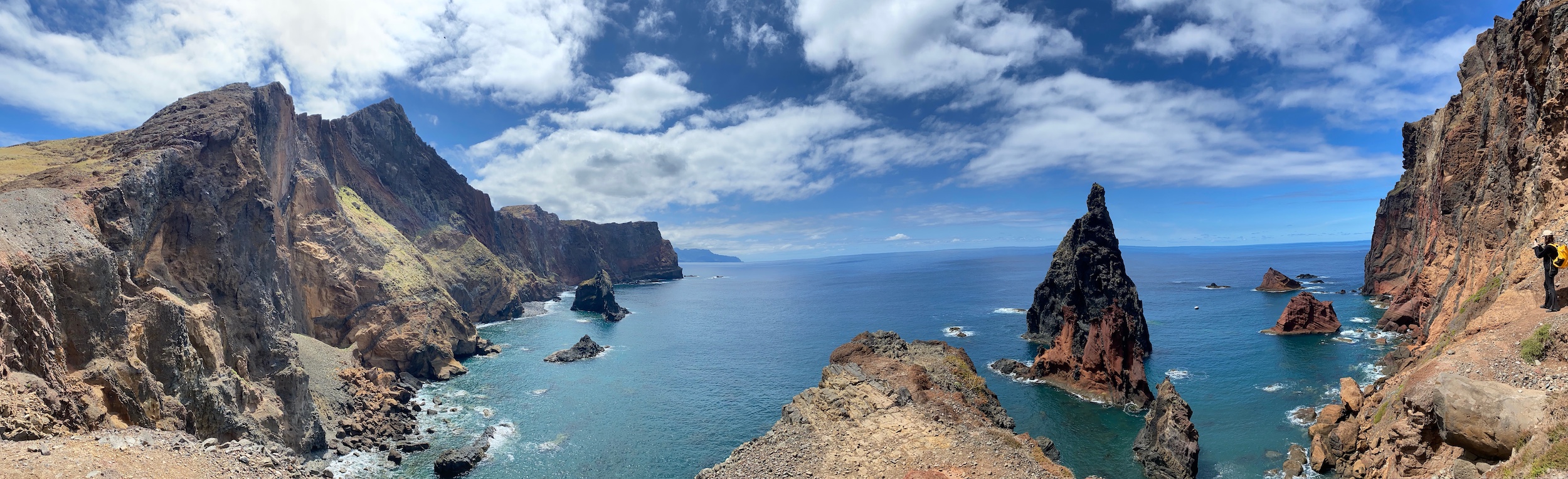
Our own project looks, at least partly, at another, less visible invader: human-made sound. Beneath the ocean’s surface, boat engines add to the island’s natural underwater soundscape, and during the six months we spend here we want to find out whether sound changes where the larvae of marine sessile animals, such as bryozoans, tunicates or polychaetes, choose to settle. Those animals are sessile in their adult life, but as larvae they are free floating. In this stadium, they are influenced by a wide variety of environmental factors—including noise—while they seek out a suitable habitat in which they could settle and survive.
And with that “Óla” from Team Madeira. We are Elin and Jana, two German students who have come to Madeira for half a year to take part in this year’s GAME (Global Approach in Marine Ecology) project.
Jana studies biology at the Ruhr-University in Bochum. “I was always interested in marine biology and had already worked in this field for my bachelor’s thesis. When I decided that I didn’t want to move away from Bochum for my Masters, I was a little bit sad, deep down, thinking that I couldn’t continue to pursue marine biology. So, I was thrilled to return to the ocean and to fieldwork when I got accepted for GAME”.
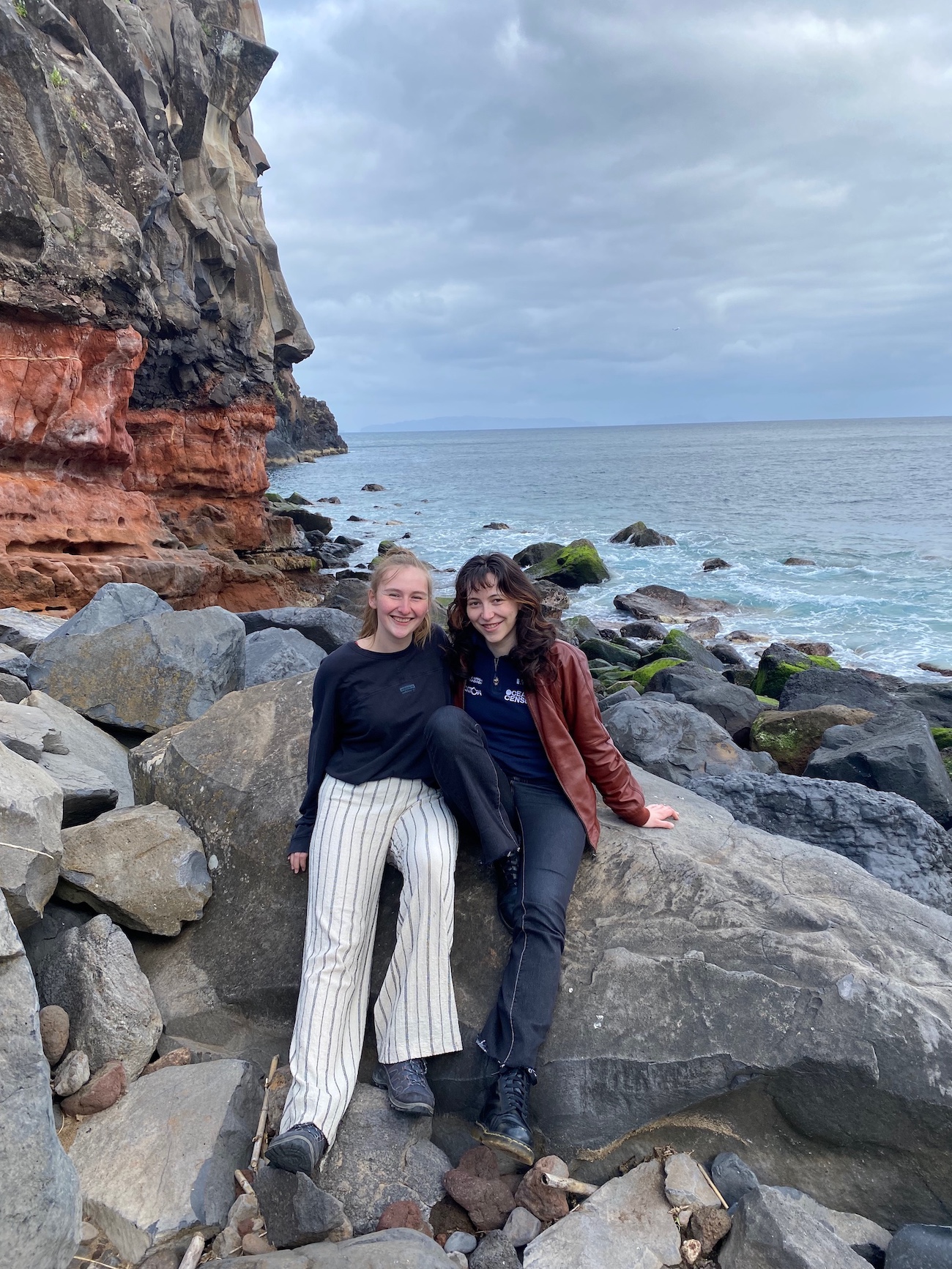
Elin studies biological oceanography in Kiel “This year’s GAME topic of The influence of soundscapes on hard bottom community colonization seemed made for me, since I had already written my bachelors thesis about the colonization of hard substrates and if I could’ve picked any field, sound would have been it.”
This year is the first time that GAMIEs are working with sound, which made the planning phase in Kiel in March extra exciting for us. We tested underwater microphones, so called hydrophones, tried out speakers and had many, many, many discussions about scientific literature and the experimental setup. In the end all teams agreed on one basic concept: One student in each country would analyze the effects of boat noise and the other the influence of natural soundscapes on the formation of invertebrate communities. Natural soundscapes will be captured by deploying thydrophones in underwater habitats that are typical for the marine region a team is working in. In Madeira, the underwater world is strongly shaped by the past volcanic activity, and features steeply sloping rock faces and rocky areas that are overgrown with algae and sessile animals. These form the most typical habitat of the region. Furthermore, here and there they give way to sandy bottoms at greater depths.
We are investigating the settlement under the influence of natural sounds, because more and more marine habitats have been destroyed by human activity. In the past, several studies have been conducted on marine mammals, fish, shellfish and coral species, which found that when sound was used to simulate healthy habitats in otherwise disturbed environments, it led to the successful re-establishment of populations. A concept that is known as acoustic restoration.
In our experiments, both, the natural sounds and the boat noise, will be played back from speakers and will be directed onto plastic plates hanging in the water, to which the larvae of sessile animals can attach.
So much for the theory.
After arriving on Madeira in early April, we got to work and realized quickly that reality is lots of planning, glue, trips to the hardware store and starting over. Luckily, we have kind and helpful supervisors at MARE, the research institute here in Madeira, many of which are former GAMIEs. They contributed their experience, advice and occasional emotional first aid. But most of the time we’re trying to do as much as we can on our own – with special support from Jana’s electronics-technician-husband, Niklas, who also came along to Madeira and is of great help with all the equipment. Even though we had many long and a few frustrating days, it was nice to plan and build everything on our own. Actually, it’s incredibly rewarding to see the finished results of our work running smoothly while the experiments are going on.
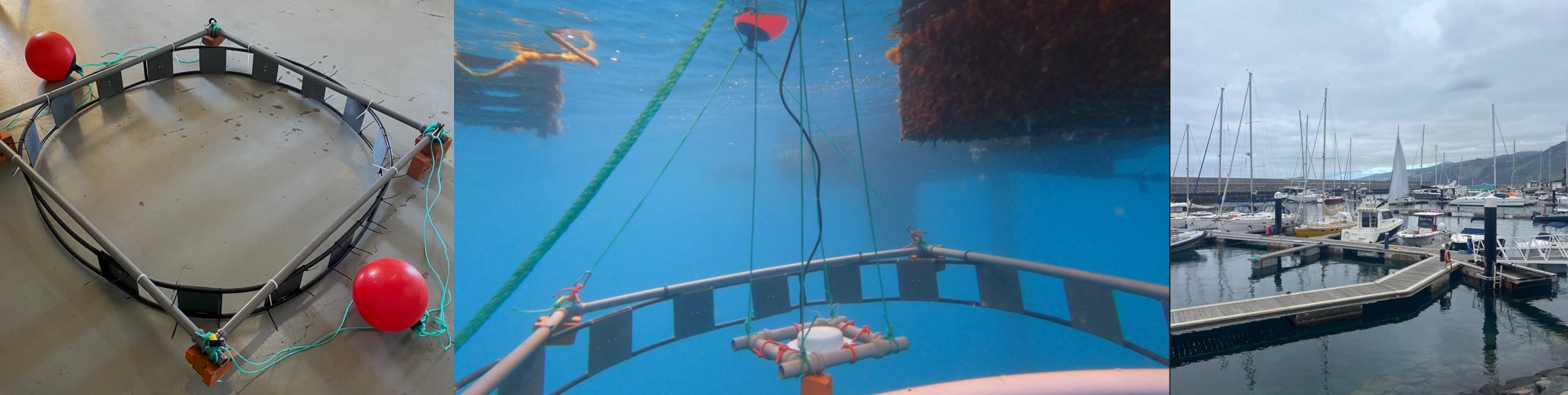
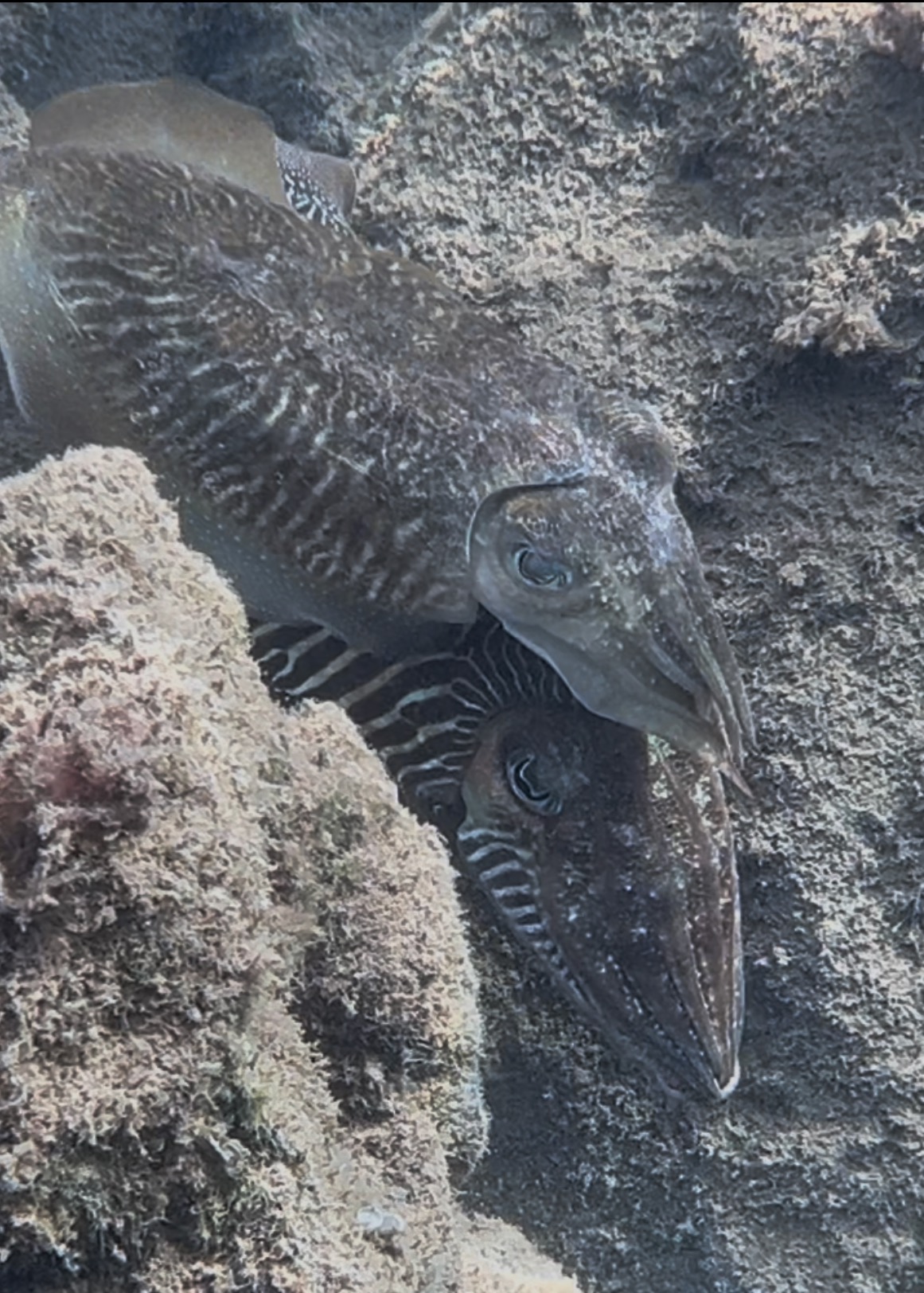
Our workplace here in Madeira is the marina in Quinta do Lorde, which is almost on the eastern tip of the island. It’s a beautiful workplace, because most days the water is calm and clear and we get to see sepias, triggerfishes and a school of barracudas swimming in the shallow waters. This makes it all the more frustrating that it is forbidden to go in, due to the ship traffic – you can imagine how hard it is for two marine scientists to follow this rule, and how often we stare into the water longingly.
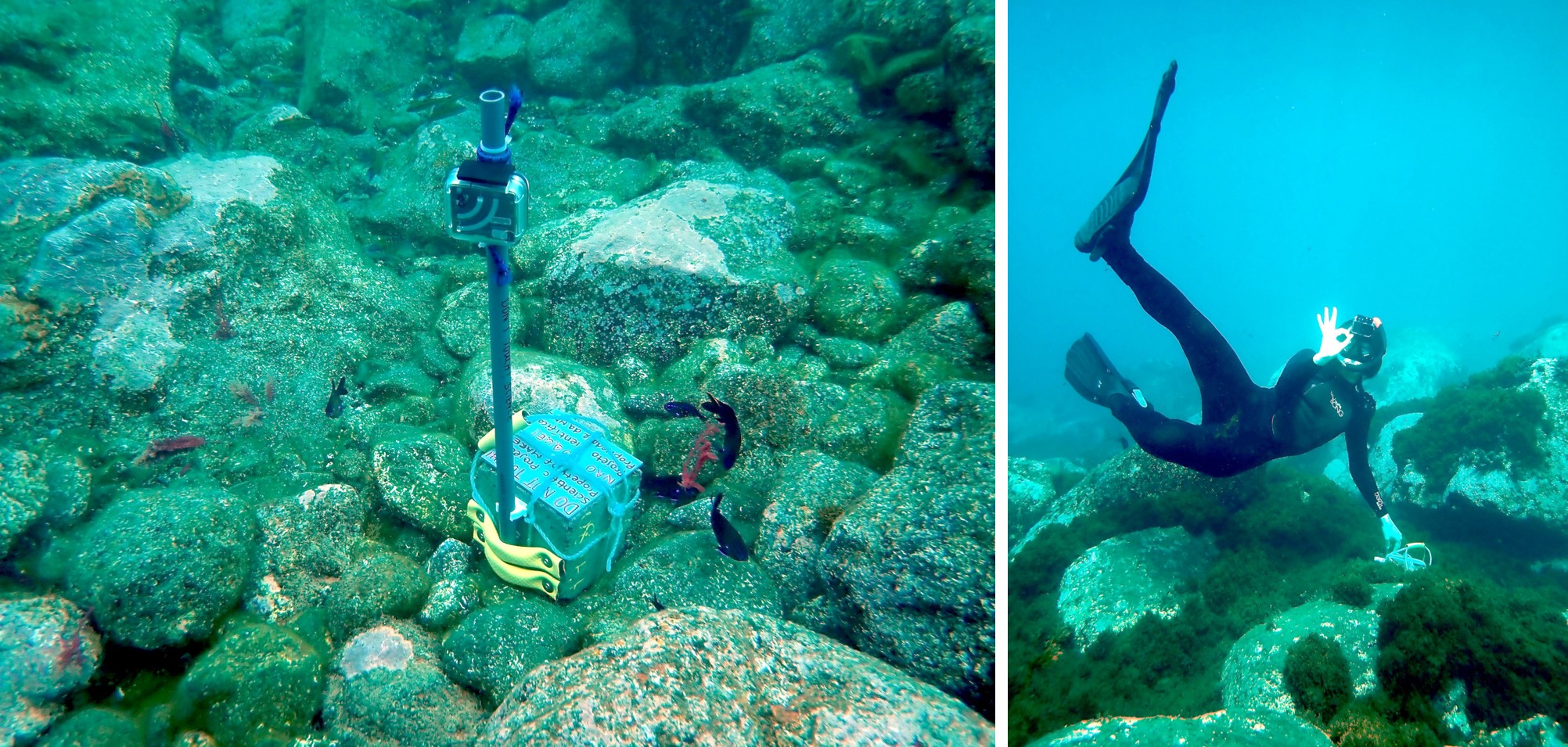
The ideal way for us to run the two experiments was conducting them both at the same time. But of course, the playbacks of the natural soundscape and the boat noise shouldn’t mask or overlay each other. And they should not reach those panels that we have to study invertebrate settlement in the absence of any playbacks. This prerequisite is called acoustic isolation: whatever happens near one speaker shouldn’t affect the other settlement plates. Since sound can travel far under water, we choose the two opposite ends of the marina and two jetties in between for the deployment of the settlement panels.
Unfortunately, our workplace is in a busy marina and to check if the play-backed boat noise doesn’t affect the other locations where we placed settlement plates, we need silence throughout the entire area. So, we had to stop and redo the measurements many, many times, because of incoming and departing boats, loud wind, cracking noise from the jetties or technical difficulties with our hydrophones.
We had one truly frustrating Friday afternoon when we wanted to test acoustic isolation but couldn’t get even five minutes of silence without a boat engine in the background for hours! And then, shortly before we had to catch the last bus home, we finally managed to do the test- and it was perfect. We had recordings without any disturbances and we had acoustic isolation- which meant we could run both experiments in parallel.
Then the wind blew the hydrophone from the jetty into the water, while we were packing up. Jana was over it and ready to give up, but Elin declared it the best thing that had happened that day. She had in the morning naively predicted a short workday with plenty of time to go snorkeling. Instead, she got special permission to go into the marina just this once – and gleefully fished out the hydrophone. Everything was done just in time before the last bus came and we decided never to test acoustic isolation on a Friday afternoon again.

Since Jana studies the effects of natural soundscapes on larvae settlement, she needs to record the marine ecosystems of Madeira. The team at MARE helped her to choose a few promising locations, which best reflect Madeira’s rocky underwater landscape. They are in protected areas and have little boat traffic.We built six hydrophone stands, of which one was placed at each location with the help of a technical diver. The stands were constructed in a way that the hydrophone could be attached and detached by freediving from the surface, and this allows us to work independently of the diver. And, of course, to have the opportunity to go snorkeling for work :). For the first month it was just Elin who could hold her breath long enough to reach the hydrophone stand, which was in 5 to 8 meters water depth, because she had years of experience. But after training freediving while snorkeling in beautiful locations all over the island, first Niklas and then Jana figured it out and now we can divide this very popular task among the three of us.
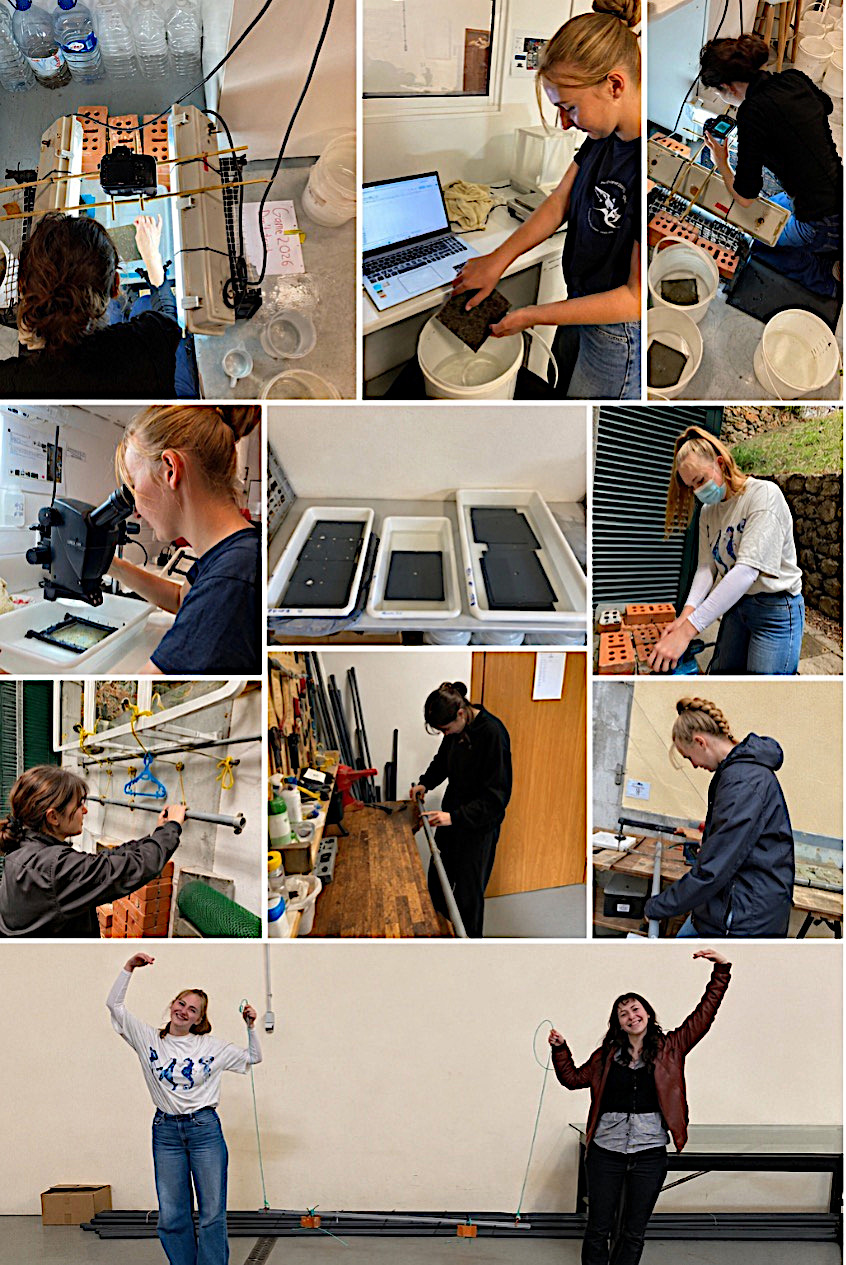
Even when the project is running smoothly, there are always a million little things to think of, to plan and to organize. Our motto became ‘at least one of us is thinking’ – because of how often one of us forgot something or didn’t think ahead and the other one caught it just in time. And there is something to it. Even though we will write separate Master theses, we share the work and the responsibility, and it is amazing to work in a team in which you can truly rely on the fact that the other person cares just as much and is right there with you.
When we’re not in the workshop building our frames or glued to the binocular during long sampling days, we love to be in the water for snorkeling trips or go hiking in the beautiful mountains. The island’s nature is fascinatingly versatile, and after almost 5 months have passed now, we’re sure that we’ll never grow tired of the amazing views. There are so many Levada trails with waterfalls, hidden paths through the mountains and small towns to visit. Levadas are man-made irrigation channels on Madeira. They carry the water from the mountains from the north to the south. The network, which spans a total of 2,000 to 3,000 kilometers, is used today not only for agriculture but primarily as a world-famous hiking trail. We make a point to go exploring new places, but the joy of staying for half a year is that you get to find your favorites and come back to them.

We are really happy to have worked and lived here on Madeira, and we can’t believe that half a year has almost come to an end; we’d do it all over again in a heartbeat.
Did you know some female sea turtles can travel hundreds—or even thousands—of miles through open ocean before returning to nest on or near the very beaches where they hatched? In fact, Leatherback sea turtles take this long-distance travel to an extraordinary level. Pacific leatherbacks nesting in Indonesia have been documented migrating more than 10,000 kilometers to the West Coast of the United States. That’s the longest migration of any air-breathing marine vertebrate. So how do they accomplish this without Google Maps?
Scientists have found that sea turtles can sense magnetic information and use it as a navigational cue. Because the strength and angle of Earth’s magnetic field vary across the planet, these subtle differences can provide turtles with information about where they are and help guide their movements across the ocean. For turtles that return to their birthplace to nest (a behavior known as natal homing), these magnetic cues may be especially important. It’s an extraordinary system, but even the best navigation can take a turtle only so far.
Despite their great sense of direction, sea turtles don’t always make it where they’re going.
A sea turtle may be capable of navigating thousands of miles, but reaching the right destination is that much more of a challenge when human-caused obstacles lie in the way.
Artificial light is one example. Artificial lighting not only discourages nesting females from coming ashore but also has a harmful impact on hatchlings, which historically emerge from their nests at night and orient toward the brightest horizon. On a natural, undeveloped beach, that is generally the open ocean. But artificial light from coastal development can overwhelm the natural cue, drawing hatchlings inland away from the water and causing them to get lost on day one.
Coastal development not only brings more artificial light and human activity to the shoreline, but it also changes turtle habitats themselves. Buildings, roads and other development can alter or reduce areas sea turtles need for nesting. Shoreline armoring, such as seawalls, can eliminate the dry sand turtles need to successfully nest, while beach driving and other activities can further disrupt nesting habitats. And these challenges extend beyond the beach.
The ocean is getting noisier, too. Sea turtles have internal ears and can hear underwater sounds. Vessel traffic, oil and gas surveys, underwater construction and sonar all add noise to the marine environment. Human-generated sound can cause stress, disrupt normal behaviors or even force marine animals to move from preferred habitats or divert from migratory paths.
Get Ocean Updates in Your Inbox
Sign up with your email and never miss an update.
Evolution never saw the plastic grocery bag coming.
Then there’s a threat sea turtles encounter almost everywhere they travel: plastic pollution. Sea turtles evolved over millions of years to spot drifting prey, like jellyfish. But plastic rapidly started to be used only around 60+ years ago.
Our plastic trash entered the ocean so quickly that animals haven’t had time to adapt. To a hungry sea turtle, a floating plastic bag still looks enough like dinner to trick even an experienced turtle. Plastic bags, balloons, soft plastic packaging and other plastics, once swallowed, can block a turtle’s digestive tract or puncture internal organs. And it doesn’t necessarily take much.
A recent Ocean Conservancy study of more than 10,000 marine animal autopsies found that nearly half of the sea turtles studied had ingested plastic. Even more alarming, researchers found that for adult loggerhead turtles, swallowing just one and a half times the plastic in a golf ball was enough to kill 50% of these creatures.
It’s a heartbreaking reminder that something we use for minutes can threaten an animal that’s been roaming Earth’s ocean for more than 100 million years.
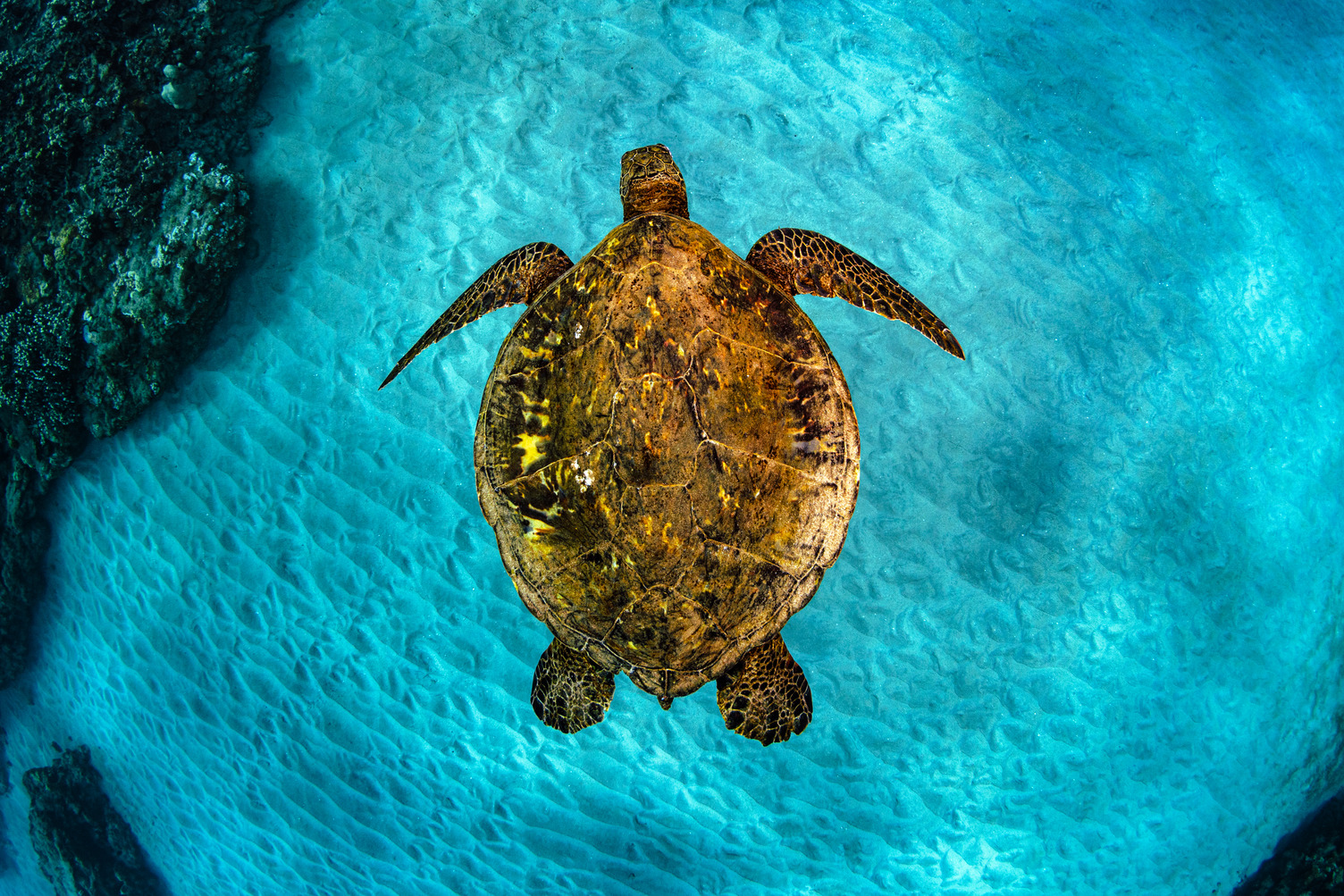
Ancient animals still face very modern threats.
Sea turtles survived the extinction event that wiped out dinosaurs. They’ve outlasted shifting continents and dramatic changes to our planet. But surviving millions of years doesn’t make them invincible. Today, they’re facing threats that appeared in the blink of an evolutionary eye: plastic pollution, habitat loss, vessel strikes, fishing gear entanglement and climate change. The remarkable thing is that many of these challenges aren’t inevitable. They’re problems we can all help solve.
Together, we can reduce the amount of plastic that reaches the ocean. We can protect and restore nesting beaches. And we can support policies that protect healthy ocean ecosystems. Every action helps make our waters a safer place for animals that depend on it.
So, do sea turtles get lost? When left to their own devices, not often. Sea turtles have an extraordinary ability to navigate across vast stretches of open oceans. But there’s a bigger question worth asking: Can we help make the ocean a safe place while they make these incredible journeys? Navigation is only part of the challenge for sea turtles trying to find their way home. Sea turtles may know where they’re going, but it’s our job to ensure the ocean and coastlines they depend on are safe when they get there. That’s why Ocean Conservancy is committed to protecting our entire ocean—and all the creatures that dwell there.
We’re fortunate to share the planet with these amazing creatures. Their journeys are a remarkable feat of science and survival. To all the turtles out there: Here’s to finding your way—wherever you’re going!
Visit Our Action Center
The post Do Sea Turtles Get Lost? appeared first on Ocean Conservancy.
https://oceanconservancy.org/blog/2026/08/27/do-sea-turtles-get-lost/



-

 Greenhouse Gases2 years ago
嘉宾来稿:满足中国增长的用电需求 光伏加储能“比新建煤电更实惠”
-
Climate Change1 year ago
Guest post: Why China is still building new coal – and when it might stop
-
Greenhouse Gases1 year ago
Guest post: Why China is still building new coal – and when it might stop
-

 Climate Change2 years ago
嘉宾来稿:满足中国增长的用电需求 光伏加储能“比新建煤电更实惠”
-

 Renewable Energy11 months ago
Sending Progressive Philanthropist George Soros to Prison?
-
Climate Change2 years ago
Bill Discounting Climate Change in Florida’s Energy Policy Awaits DeSantis’ Approval
-
Greenhouse Gases1 year ago
嘉宾来稿:探究火山喷发如何影响气候预测
-

 Carbon Footprint2 years ago
US SEC’s Climate Disclosure Rules Spur Renewed Interest in Carbon Credits