

Global oil demand is expected to be almost one million barrels per day less than was forecast before the Iran war, as shortages and soaring costs prompt drastic cutbacks by consumers and businesses, a report by the International Energy Agency (IEA) said on Wednesday.
With the closure of the Strait of Hormuz choking off supplies and keeping prices high, less oil is being used to make products such as jet fuel, LPG cooking gas and petrochemicals, the Paris-based IEA said in its monthly oil report, forecasting the biggest quarterly demand drop since the COVID pandemic.
The Iran war “upends our global outlook”, the government-backed agency said, adding that it now expects oil demand to shrink by 80,000 barrels per day in 2026 from last year.
Before the conflict began, the IEA said in February it expected oil demand to rise by 850,000 barrels per day this year, meaning the difference between the pre-war and current estimates is 930,000 barrels a day, or 340 million barrels a year.
That could have a significant impact on the outlook for planet-heating carbon emissions this year.
At an intensity of 434 kg of carbon dioxide per barrel of oil – the estimate used by the US Environmental Protection Agency – the annual reduction in carbon dioxide emissions from oil for 2026, compared with the pre-war forecast, is similar to the amount emitted by the Philippines each year.
Harry Benham, senior advisor at Carbon Tracker, told Climate Home News that he expects at least half of the reduction in oil demand to be permanent because of efficiency gains, behavioural change and faster electrification.
The oil shock is leading to oil being replaced, especially in transport, with electricity and other fuels, just as past oil shocks drove lasting reductions in consumption, he said. “The shock doesn’t delay the transition – it reinforces it,” he added.
Demand takes a hit
While demand for oil has fallen significantly, supplies have fallen even further. Supply in March was 10 million barrels a day less than February, the IEA said, calling it the “largest disruption in history”.
This forecast relies on the assumption that regular deliveries of oil and gas from the Middle East will resume by the middle of the year, the IEA said, although the prospects for this “remain unclear at this stage”.
-
Italy pushes coal exit back after gas prices rise
Analysts say the move sends a negative signal, but its impact will be limited given coal’s marginal role in Italy’s energy mix -
Charging worries, high prices put brakes on EV growth in Bangladesh
Sales of e-bikes and rickshaws are up amid queues at fuel stations, but a lack of charging infrastructure and high prices still deter many Bangladeshis from going electric -
Fossil Free Zones can be on-ramps to the clean energy transition
Oil and gas blocks overlap with a fifth of forests in the Amazon, Congo Basin and SE Asia – policies are needed to transition away from fossil fuels and halt deforestation together


Last month, US Energy Secretary Chris Wright told the CERAWeek oil industry conference that prices were not high enough to lead to permanent reductions in demand for oil, known as demand destruction.
But the IEA said on Wednesday that “demand destruction will spread as scarcity and higher prices persist”.
Industries contributing to weaker demand for oil include Asian petrochemical producers, who are cutting production as oil supplies dry up, the report said, while consumers are cutting back on liquefied petroleum gas (LPG), which is mainly used as a cooking gas in developing countries, the IEA said.
Flight cancellations caused by the war have dampened demand for oil-based jet fuel, the IEA said. As well as cancellations caused by risk from the conflict itself, airports have warned that fuel shortages could lead to disruption.
Across the world, governments, businesses and consumers have sought to reduce their oil use after the war. The government of Pakistan has cut the speed limit on its roads, so that people drive at a more fuel-efficient speed, and Laos has encouraged people to work from home to preserve scarce petrol and diesel.
Nepal’s EV revolution pays off as oil crisis causes pain at the pumps
Consumers in Bangladesh are seeking electric vehicles (EVs) to avoid fuel queues and, in Nigeria, more people are seeking to replace petrol and diesel generators with solar panels, Climate Home News has reported.
In the longer term, the European Union is considering cutting taxes on electricity to help it replace fossil fuels and France is promoting EVs and heat pumps.
IEA urged to help “future-proof” economies
Meanwhile, the IEA came under fire last week from energy security experts, including former military chiefs, who signed an open letter in which they accused the agency of offering “only a temporary response to turbulent markets”, calling for stronger structural action “to future-proof our economies”.
They said that besides releasing emergency oil stocks and offering advice on how to reduce oil demand in the short term, the IEA should show countries how to reduce their exposure to volatile oil and gas markets.
The IEA has also been under pressure from the Trump administration to talk less about the transition away from fossil fuels.
This article was amended on 15 April 2026 to correct the drop in 2026 forecast oil demand from “nearly a billion” to “nearly a million”
The post IEA slashes pre-war oil demand forecast by nearly a million barrels per day appeared first on Climate Home News.
IEA slashes pre-war oil demand forecast by nearly a million barrels per day

Climate Change
GREENPEACE GAS PROTEST DAY TWO: Activists spend first night on Woodside’s Scarborough gas platform, “in this for the long haul”
- NEW footage and photos available here and on Instagram – more being uploaded today.
- Interviews available with campaigners on board the Rainbow Warrior on request.
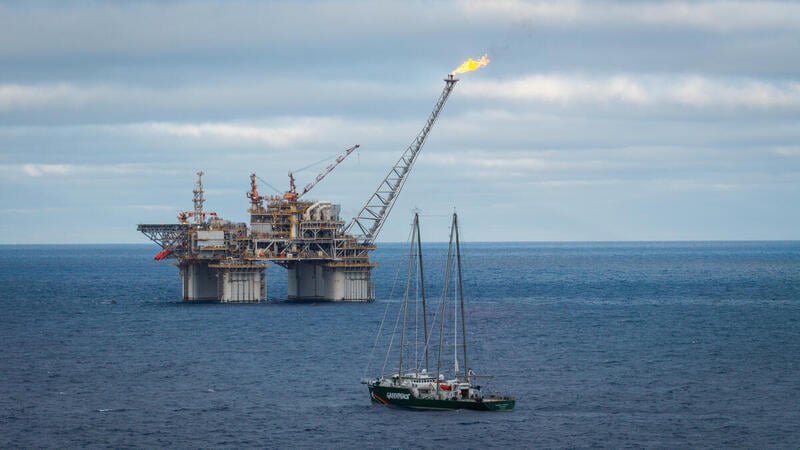
Greenpeace Australia Pacific activists have slept overnight on Woodside’s Floating Production Unit and dropped a massive 12×14-metre banner reading “Stop Woodside’s Dirty Gas. Save Scott Reef”.
Two activists have set up temporary hanging tents on the South East pillar, while the other two returned to the Rainbow Warrior late yesterday afternoon, after fulfilling their initial role. The activists will occupy the platform for as long as possible.
The environmental advocacy group is peacefully protesting Woodside’s plans to drill for oil and gas at Scott Reef as part of its Browse proposal.
Sakyo Noda, one of the Greenpeace Australia Pacific activists, said: “As a Japanese person living in Australia, I feel incredibly passionate about stopping Australia’s gas exports to Asia.
“Despite what the gas industry tells us, Australia’s gas is not helping to decarbonise Asia. It is simply not true. We shouldn’t be allowing fossil fuel companies like Woodside to extract new fossil fuels, let alone at extraordinary places like Scott Reef”.
Aboard the Rainbow Warrior, Geoff Bice, WA Campaign Lead at Greenpeace Australia Pacific, added, “Everyone is in good spirits. We’re in it for the long haul.”
Links:
Photos and video of Scott Reef here
Audio and footage of yesterday’s press conference here
Content and live updates will be uploaded to a live blog and Instagram
In-person interviews in Perth with David Ritter, CEO of Greenpeace Australia Pacific, can be organised. Dial-in, SimSat and Zoom interviews with Geoff Bice, WA Campaign Lead at Greenpeace Australia Pacific, currently aboard the Rainbow Warrior, can be organised.
Saturday, 17 October 2026
7.18 AM AWST
Hi folks! We’re joining you live from the Rainbow Warrior where we will be providing you with updates as our four activists continue scaling and occupying Woodside’s gas platform. The activists are peacefully protesting against Woodside’s latest gas expansion plans, the Browse project, which would see up to 57 toxic wells drilled at Scott Reef.
“Right now our activists are scaling Woodside’s massive Floating Production Unit. They are scaling the South-East pillar and the underside of the Helideck. They’ll be setting up camp soon and have plenty of provisions with them – so stick around!”
5:45 AM AWST
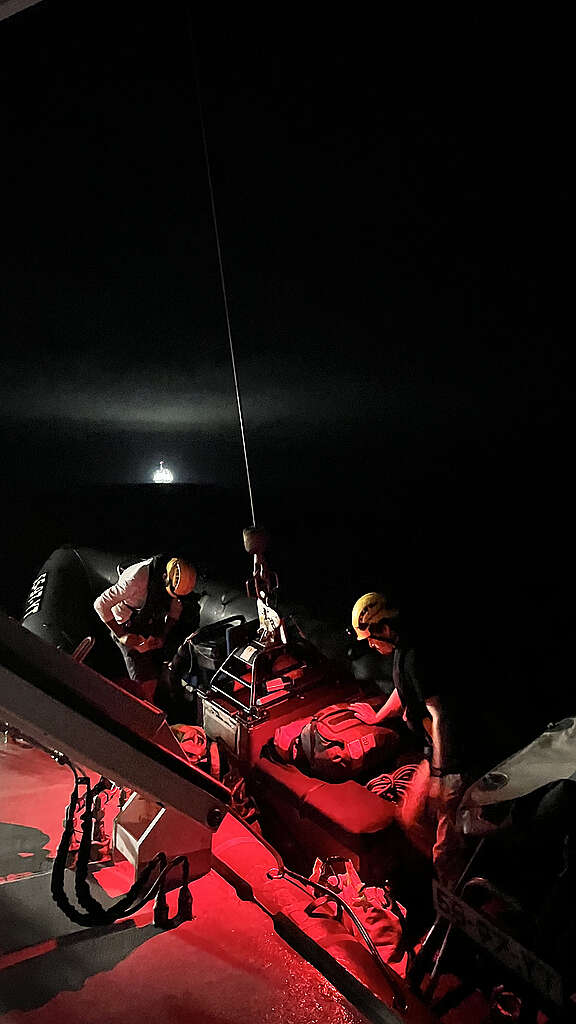
Our RHIBS are in the water! We’ve deployed our four activists and our ship crew on our small fast boats, headed to the gas platform. We’re carrying crew and equipment, plenty of food, all of our safety climbing gear, some big banners, cameras and a whole lot of heart… someone even has something to read after they get settled in.
5:26 AM AWST
Before sunrise activists prepared to launch RHIBS from the Rainbow Warrior.
Looking for a front seat view?
You can follow along with the Live Rainbow Warrior bow cam here!
Looking for more?
Follow us on Instagram for a peek behind the scenes and hear from our Rainbow Warrior crew.
Live blog: Greenpeace activists occupy Woodside gas project to save Scott Reef
Climate Change
Greenpeace activists climb and occupy Woodside’s Scarborough gas project calling on the Australian government to “Stop Woodside’s Dirty Gas” and “Save Scott Reef”
PERTH, Saturday 17 October 2026 — Four Greenpeace Australia Pacific activists are scaling and occupying a Floating Production Unit at Woodside’s Scarborough gas project off the coast of Western Australia, displaying banners reading: “Stop Woodside’s Dirty Gas. Save Scott Reef.”
- Photos and video available here and here. More will be uploaded throughout the day.
- Content and live updates will be uploaded to a live blog and to Instagram
Early this morning at 05:45 AWST, Greenpeace Australia Pacific activists launched from the Rainbow Warrior, Greenpeace’s flagship vessel, scaling and attaching themselves to a Floating Production Unit (FPU), a key piece of gas processing infrastructure at the Scarborough gas field over 200km off the coast of Exmouth.
Woodside has since confirmed it has initiated a temporary shut down of the FPU.
Greenpeace Australia Pacific is occupying the gas platform in peaceful protest of Woodside’s plans to drill for oil and gas at Scott Reef as part of its Browse proposal.
David Ritter, CEO at Greenpeace Australia Pacific, said: “Greenpeace Australia Pacific is taking action today to expose the unacceptable risk to Scott Reef posed by Woodside’s plans.
“Australians love our oceans. Woodside’s reckless Browse gas proposal would turn the magnificent Scott Reef into an industrial gas zone. Woodside wants to drill up to 57 toxic wells around Scott Reef, Australia’s largest oceanic reef, home to nesting green sea turtles, and endangered species like pygmy blue whales and the dusky sea snake; it is a place like nowhere else on Earth.
“Woodside has an alarming track record of oil spills, incidents and environmental neglect, and can’t be trusted with our oceans. From whaling in Albany in the seventies, to Woodside’s threat to Scott Reef today, there’s more than fifty years of history, of Greenpeace taking action off WA’s coasts to protect our oceans.
“There’s no future in new gas projects. Our future is in secure homegrown renewable energy, green industry and exports, where communities and places like Scott Reef are protected — there’s no future in dirty gas shipped offshore.
“The prospect of drilling for oil or gas on the Great Barrier Reef would be considered absolute madness today, but that is exactly the decision before the government: save Scott Reef or risk its destruction at the hands of a gas corporation.”
From aboard the Floating Production Unit, Dr Chris Holden, Greenpeace Australia Pacific activist said: “As a doctor, when I see new fossil fuel projects like Woodside’s Browse project being put forward, I can’t help but think about the impact this is going to have on the health of our communities and planet, and feel a sense of duty to act.
“Not only will this project do irrevocable harm to nature at Scott Reef, it will have a terrible impact on our climate, putting all of our lives at risk.
“On the Rainbow Warrior I’m carrying a copy of the 2025 Lancet countdown report, which warns that health impacts of climate change are worsening, with millions dying needlessly each year due to fossil fuel dependence, growing emissions, and failure to adequately adapt.
“With warnings like this from the leading global health professionals, our government simply can’t allow fossil fuel projects like Woodside’s Browse project to go ahead. It is their duty to do what is in the best interest of our communities.”
Almost half a million people have signed a petition calling on the government to Save Scott Reef and Woodside’s Browse gas project.
-ENDS-
Notes:
- Dial-in, SimSat and Zoom interviews with Geoff Bice, WA Campaign Lead at Greenpeace Australia Pacific, currently aboard the Rainbow Warrior, can be organised separately
Media contact:
Greenpeace Australia Pacific media team on +61 406 231 892 or +61 407 581 404

GREENPEACE GAS PROTEST DAY TWO: Activists spend first night on Woodside’s Scarborough gas platform, “in this for the long haul”

Making Billions by Harming Others


