Connect with us

Published

on

Solar energy is transforming Australia’s approach to sustainable living, and rebates are making it more accessible.  

Whether you’re a homeowner, a business owner, or part of a community group, understanding these rebates can help you make informed decisions to help reduce your reliance on non-renewable energy sources.  

So, how do you Maximise Solar Rebates in Victoria for 2025? This guide breaks down the available programs by state, their benefits, and how to maximise your savings. Now, let’s dive in and start saving.

What is a Solar Rebate?

Financial incentives are designed to reduce the upfront costs of installing photovoltaic systems, enabling more people to purchase them.  

Different federal and state incentives, including rebates, interest-free loans, and tax breaks, are available for homeowners and businesses, and they could save them thousands of dollars on their systems.  

It makes investing in renewable energy more effortless, and an increasing number of people are switching and reducing their reliance on the electrical grid and non-renewable energy sources.  

How Do Solar Rebates Work in Australia?

Australia offers federal and state rebates, so you may be eligible to use both systems to save even more.   

We have the Small-Scale Renewable Energy Scheme (SRES) at the federal level. Technically speaking, this is an incentive since the federal government doesn’t provide direct cash rebates.  

Instead, photovoltaic installations generate Small-scale Technology Certificates (STCs). The number of STCs you get depends on the size of your system when you install it and your location.  

Those STCs can be sold to offset installation costs, and their value depends on their current market value.  

To simplify this process for homeowners, photovoltaic installers usually offer to buy their STCs directly upon installation and credit the money to their bills.  

That way, it works like an instant rebate, helping lower those initial up-front costs so that more people can purchase photovoltaics.  

You can also save your STCs and shop around for a better price, but you must first pay your full up-front cost for your system. The best part is that the federal Australian solar rebate is available to anyone in Australia who installs a photovoltaic system.  

Different states also have their own rebates and incentive programs. The rebates by state section below provides more information on what is available in your state.  

When deciding on your system, consider your unique situation and the different types of panels available. Contact Cyanergy to get the best commercial solar panels for your business. 

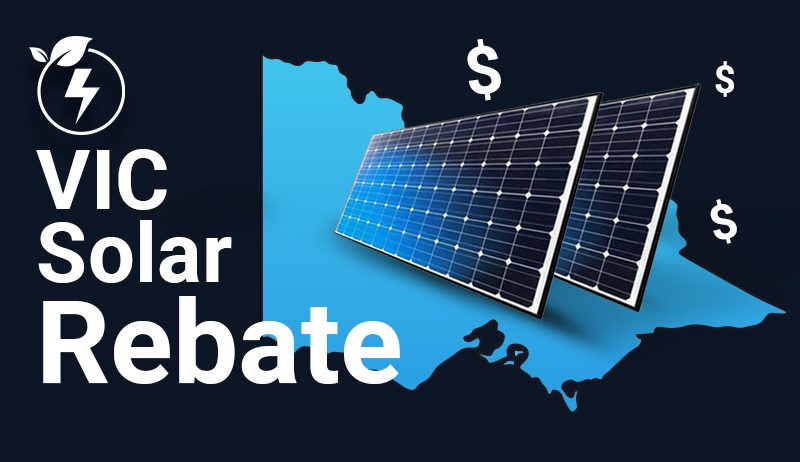
How to Maximise Solar Rebates in Victoria for 2025?

Solar Victoria Rebate

If you live in Victoria and want to save the most money when installing solar panels or batteries in 2025, there are several things you can do.  

The Victorian government offers rebates, interest-free loans, and feed-in tariffs to make solar energy more affordable.  

Following the proper steps can reduce your upfront costs and lower your electricity bills for years.   

1. Understand the Available Rebates and Incentives 

The Victorian Solar Homes Program is a federal government initiative that helps homeowners and landlords install solar panels and batteries.  

Here’s what it offers:   

Solar Panel Rebate: Get up to $1,400 off the solar panel cost.   

Battery Rebate: Get a discount on battery storage, but eligibility changes yearly, so check updates.   

Interest-Free Loan: Borrow the same amount as your rebate (up to $1,400) and repay it over four years.   

Feed-in Tariffs (FiT)   

Victoria’s feed-in tariff allows you to earn money by selling extra electricity from your solar panels back to the grid.  

The rate varies, but in 2025, the minimum FiT is expected to be around 4.9 cents per kWh, with higher rates for power exported during peak times.   

For example, if your solar panel system costs $5,000, you could receive a $1,400 rebate and borrow another $1,400 as an interest-free loan. Thus, you only need to pay $2,200 upfront, making solar more affordable.  

2. Check If You’re Eligible for Rebates

To qualify for the Solar Homes Program, you must:   

  • Be the owner of the property.   
  • Have a household income below $210,000 per year.   
  • Live in a property valued at under $3 million.   
  • Install a system from a government-approved supplier.   

The Battery Rebate may have additional conditions, such as requiring a minimum battery size and specific energy storage capacity.   

Tip: Check the Solar Victoria website before applying to see if the rules have changed in 2025.   

3. Choose the Right Solar System for Maximum Savings

Pick the Right Size System   

A more extensive solar panel system produces more electricity, reducing your power bills and increasing your feed-in tariff earnings. However, more significant systems cost more, so ensure they fit your budget.   

  • If you use a lot of electricity daily, a system around 6.6kW is an excellent choice.   
  • If you plan to add a battery, consider a 10kW system to store more energy.   

Consider Battery Storage   

Batteries allow you to store solar energy and use it at night, reducing your need for electricity from the grid. A battery storage can save you even more on power bills, especially if feed-in tariff rates are low.   

If your solar panels generate extra power during the day, you can store it in a battery and use it at night instead of buying electricity. This helps you avoid high evening electricity rates.   

government incentives

4. Find a Reliable Solar Installer

Only government-approved installers can offer rebates, so check the Solar Victoria list of accredited providers. Choosing a high-quality installer ensures your system is installed safely and efficiently.   

  • Compare quotes from different installers to find the best deal.   
  • Check reviews to make sure the company is trustworthy.   
  • Ask about warranties. Good solar panels should last at least 25 years, and batteries should last 10 years or more.   

5. Apply for Rebates and Loans Properly  

Once you have chosen your solar system and installer, apply for the rebate before installation. Here’s how:   

  • Get a quote from an accredited solar installer.   
  • Apply online through the Solar Victoria portal.   
  • Provide necessary documents, like proof of homeownership and income details.   
  • Wait for approval before installation begins.   
  • Install your system and pay the remaining balance after your rebate is applied.   

6. Maximise Your Savings with Smart Energy Use

To get the most benefits from your solar system:   

  • Use more electricity during the day when the sun is shining (e.g., run your washing machine dishwasher, or charge your EV).   
  • Switch to a time-of-use electricity plan if it helps lower your costs.   
  • Regularly clean your solar panels so they work efficiently.   

Extra Tips to Save the Most with Smart Choices 

By understanding your rebate options, choosing the right system, and applying correctly, you can save thousands on solar in Victoria for 2025.  

The key steps are:   

  • Apply for the Solar Homes Program early.   
  • Consider getting a battery for extra savings.   
  • Choose a reliable solar installer.   
  • Use more energy during the day to reduce power bills.   

With the right approach, you can reduce your electricity costs, increase the value of your home, and help the environment—all while receiving the best financial support available!  

Solar Rebates and Incentives All Around Australia

Australia offers different solar rebate programs to help reduce the cost of installing solar panels and batteries.  

These programs are available at both the national and state levels. Below is a summary of the available rebates, who can apply, and how much you can save.   

Federal Solar Incentives

Small-scale Renewable Energy Scheme (SRES) 

This national program provides Small-scale Technology Certificates (STCs), which can lower the cost of a solar system by around $400 to $600 per kW. The STCs apply to systems under 100kW installed by approved professionals.   

Large-scale Renewable Energy Target (LRET)  

For businesses with systems over 100kW, this program issues Large-scale Generation Certificates (LGCs) for every megawatt-hour of clean energy produced. LGCs are worth about $46.25 each and are issued monthly.   

Solar Rebates by State

solar rebates

New South Wales (NSW)   

Solar Battery Rebate: Get $1,600 to $2,400 for a battery and $250 to $400 for connecting to a Virtual Power Plant (VPP). Available for homes with existing solar systems.   

Grants and subsidies for Apartment Solar Projects cover up to 50% of installation costs, saving apartment residents up to $600 annually.   

Empowering Homes Program: Interest-free loans up to $14,000 for homeowners earning less than $180,000 annually to buy solar batteries.   

Victoria (VIC)   

Solar Homes Program: Up to $1,400 off solar panels and interest-free loans for battery purchases are available to homeowners and rental properties that meet income and property value limits.   

Queensland (QLD)   

Feed-in Tariff System: Queensland does not offer direct rebates but allows households to earn money by selling extra solar energy back to the grid. The amount paid depends on the electricity provider, so compare rates to get the best deal.   

Australian Capital Territory (ACT)   

Sustainable Household Scheme (SHS): This scheme offers rebates and no-interest loans for solar panels, batteries, and electric vehicle chargers. It is open to households and community groups that meet eligibility rules.   

Western Australia (WA)   

Distributed Energy Buyback Scheme (DEBS): A feed-in tariff program paying up to 10 cents/kWh for energy exported to the grid during peak hours.   

Switch Your Thinking Program: Offers discounts on sustainable products for residents in specific WA council areas.   

Northern Territory (NT)   

Home and Business Battery Scheme: Provides up to $5,000 for battery installations for homes, businesses, and non-profits.   

Apartment Solar Rebate: This rebate covers up to 50% of solar installation costs, with a cap of $7,500 per dwelling for apartments and shared buildings.   

Feed-in Tariff Program: Pays households and businesses for excess energy sent back to the grid. Payment rates depend on the energy provider.   

South Australia (SA)   

Incentives for Sustainability: A City of Adelaide program offering cash-back incentives for solar installations and sustainable homes. Available to residents, businesses, and community groups in Adelaide.   

Using these rebates and incentives, Australians can reduce the cost of their solar systems, save money, and switch to cleaner energy. 

Talk to an expert and enjoy all the rebates on your solar project! Contact Cyanergy Today! 

Your Solution Is Just a Click Away

The post How to Maximise Solar Rebates in Victoria for 2025? appeared first on Cyanergy.

https://cyanergy.com.au/blog/how-to-maximise-solar-rebates-in-victoria-for-2025/

Continue Reading

Renewable Energy

Explore Commercial Heat Pump Warranties: What Cyanergy Offers? 

Published

on

Heat pumps are an excellent investment for any Australian Business, whether you run restaurants, hotels, nursing homes, laundries, or manufacturing facilities.

They save money, reduce emissions, and, most importantly, modernise operations by prioritising energy efficiency and environmental sustainability.

But when you’re spending your hard-earned dollars on a commercial heat pump, you are not only purchasing a product, you’re also investing in long-term performance. And one factor that separates smart purchases from regrets is warranty protection.

Besides satisfactory performance, a solid warranty on your heat pump can offer you peace of mind and protect you from unexpected repair costs.

Still, with so many options in the market, how can you understand which companies actually back up their promises with real protection?

Let’s put your concerns to rest! In this blog, we’ll unveil what commercial heat pump warranties usually cover, what to watch out for, and exactly how Cyanergy’s warranty stacks up, doing things differently.

Understanding Warranties for Heat Pumps: Why It Matters?

So, what is a hot water heat pump system warranty?

A commercial hot water heat pump warranty is a
manufacturer’s or supplier’s promise that the product will perform as expected for a specified period.
Warranties typically cover repairs or replacements if something goes wrong due to faulty materials.

Types of Heat Pump Warranties: What’s Typically Covered?

When purchasing a heat pump, understanding the different types of warranties is crucial to protecting your investment
and minimising repair costs. In Australia, warranties may include manufacturer coverage, labour warranties, and
even full system replacement.

So, here’s a breakdown of the most common types of heat pump warranties available throughout
Australia:

1. Manufacturer’s Warranty

This is the most common type of warranty included with most of the new heat pumps installed in Australian commercial
properties.

Warranty Coverage:

  • Major components are covered under this warranty, including the compressor, condenser, air handler, fan,
    heat exchanger, electronic controls, and, sometimes, refrigerant components such as the evaporator.
  • Some units also include a separate warranty for the refrigeration system.

Warranty Duration:

The manufacturer’s warranty is typically 5 to 10 years, but can be extended to 12 years for premium models.

However, remember that to qualify for warranty, installation must be performed by a certified professional, such as
Cyanergy. Also, some manufacturers offer extended parts warranties
if the unit is registered shortly after installation.

2. Labour Warranty

This covers the labour costs for diagnosing, repairing, or replacing defective parts. In most cases, manufacturer
warranties cover parts, but not always labour.

Since labour can be costly, especially for complex systems, it’s worth checking for better financial protection.

Covers:

  • This provides the technician’s labour and service fees.

Duration:

The warranty lasts from 1 to 3 years from the installation date. This entirely depends on your service provider and
the size of the installations.

3. Installation Warranty

An installation warranty is usually offered by the HVAC company that installs
your heat pump system
with professional help.

Covers:

  • Any issues caused by improper installation.
  • Workmanship defects.

Duration:

This is applicable for typically 1 to 2 years, depending on the contractor. Also, always try to get this warranty in
writing, as some contractors may only offer a verbal assurance, which may not hold up if issues arise.

4. Extended Warranty

Some manufacturers offer extended coverage for their models at an additional cost. These provide more extended
coverage periods and broader protection for parts and repairs beyond the standard warranty limits, giving you
added peace of mind.

Covers:

  • It can include both parts and labour.
  • Some manufacturers even offer full system coverage for a long time.

Duration:

Ensure that this extended warranty coverage lasts 10 to 12 years. However, regular servicing may be required to keep
it valid.

Also, check for exclusions, maintenance requirements, and whether the manufacturer or a third party backs it.

5. Unit Replacement Warranty

Offered by some manufacturers as part of their premium product warranties.

Covers:

  • It provides a complete system replacement if a major failure occurs within the warranty period.

Duration:

Replacement warranty lasts for 1 to 5 years, depending on your chosen heat pump brand and model number.

6. Tank Warranty

In Australia, if your heat pump includes a hot water storage tank, this may have a separate warranty.

Covers:

  • This warranty covers any leaks, corrosion, or manufacturing defects in the tank.

Duration:

Even though the warranty claims often last 5 to 10 years, it’s better to check that specifically with the tank
manufacturer.

Why Warranties Matter for Businesses in Australia?

Warranties on heat pumps can be beneficial for businesses. Thinking why?

With warranty coverage, minimum risk of expensive equipment breakdowns, and protection against unexpected repair costs, businesses can operate with greater confidence.

They minimise downtime and maintenance disruptions for your system, keeping your system running for a long time.

Additionally, having a valid warranty may be a requirement for participation in certain government energy programs, such as the Victorian Energy Efficiency Certificates (VEECs) scheme.

Cyanergy’s Warranty Offer: What You Get, What Sets Us Apart!

Hot water heat pumps, like the popular Smart Lifestyle
Australia (SLA) model
, offer significant advantages for your business. For example:

  • They use up to 75% less energy than traditional electric systems.
  • Offer cost savings that are 3.5 times cheaper to run and ideal for high-usage commercial settings like
    office buildings and hospitals.
  • Traditional heating systems use burning fossil fuels, whereas installing heat pumps can reduce your
    dependency on fossil fuels.
  • Heat pumps reduce gas emissions, lowering your carbon
    footprint
    .
  • Perform longer with less regular maintenance over time.

Also, SLA units are available in 200 L and 300 L capacities, making them a versatile choice across
industries. Moreover, our heat pump is 4X more energy efficient than electric systems.

Now, let’s see what Cyanergy’s warranty offers.

Here’s how Cyanergy Australia stacks up. When you buy a commercial hot water heat pump through Cyanergy

Warranty Component Cyanergy Offers
Compressor 5-year warranty support
Cylinder or Tank  7-year warranty support
Whole Unit 5-year warranty support for the whole system

Some Scenarios That Prove Warranties Pay Off

Here we’ve added a few example scenarios so you can see how warranties play out in “real life” with Cyanergy.

Case 1: Compressor failure in year 3

Imagine enjoying years of energy savings, then suddenly, your compressor fails in year three. In such cases with many companies, you’d be stuck paying for costly parts.

But with Cyanergy, your compressor is covered for up to 5 years, offering peace of mind at the same time, ensuring savings. Isn’t it a win-win?

Case 2: Tank develops a leak in year 6

Most standard warranties on hot water system tanks expire around the 5-year mark, leaving you unprotected just when things start to wear down.

However, Cyanergy’s 7-year cylinder warranty, a leaking tank in year six, isn’t a problem. This saves thousands of dollars, and customers do not need to struggle for emergency replacements.

Case 3: Control board fails in year 2

Electronics are unpredictable, and control boards are no exception. They’re essential for system operation, so if one fails, your system could shut down completely.

Many manufacturers offer limited warranties on these parts, often just 1 year. But Cyanergy’s 5-year whole-unit warranty means you’re covered for unexpected component failures like this for a long time.

Case 4: Environmental or any external damage

These are often excluded from many warranties everywhere. You’ll need to check if the damage falls under “defective component” or external factors.

Make sure your C&I properties have ground fault protection, surge protection, and water drainage that are up to spec.

Make the Most of Your Heat Pump Warranty: 5 Expert Tips!

If you’re living in Australia, then getting a heat pump installed is undoubtedly a smart move, but if you’re not careful, you could miss out on the full benefits of your warranty.

Don’t let simple oversights cost you down the track! 

So, here are the five expert tips that help you make the most of your system:

  1. Keep all paperwork, including receipts, installation date, installer name & certificates.
  2. Register the product if required.
  3. Follow installation specs to know about the provided services like correct plumbing, proper electrical setup, clearance & environmental standard compliance.
  4. Maintain regularly clean filters, flush the tank if needed, check valves and sensors, and follow manual guidelines.
  5. Document everything if something seems wrong, as proper documentation helps in claiming a warranty.

Cyanergy’s Service Response and Installer Quality

At Cyanergy, we offer exceptional customer service. For any warranty-related concerns, our team responds within 24 hours to ensure quick and efficient resolution.

As a CEC-approved installer in Australia, we have successfully completed hundreds of commercial solar projects across Victoria (VIC) and New South Wales (NSW). You can count on our expertise and commitment to quality from installation through to after-sales support.

Takeaway Thoughts

In the end, you deserve more than just a shiny product in a box. You deserve lasting value and genuine support with a commitment to reliable hardware, strong service, and support designed for commercial users.

So, if you’re considering a heat pump upgrade or part of a business that depends on reliable hot water, let us walk you through exactly what coverage you’ll get and ensure you get the best match for your needs.

For more information, call us today and talk with our experts without any further delay!

Your Solution Is Just a Click Away

The post Explore Commercial Heat Pump Warranties: What Cyanergy Offers?  appeared first on Cyanergy.

Explore Commercial Heat Pump Warranties: What Cyanergy Offers? 

Continue Reading

Renewable Energy

Handing the Keys to the Kingdom over to the Chinese

Published

on

When I argue for environmental responsibility and the decarbonization of the grid, I often say:

I know there are people who believe, perhaps because this is what they’re told by Donald Trump, that climate change is a hoax. But are there people who don’t believe in cancer? In the importance of our country’s investing in the industry that is destined the dominate the 21st Century?

Trump will be gone soon.  Maybe you and I will be gone (in a different sense) before the effects of this administration’s folly in the EV and cleantech industry are fully felt.

But it’s inevitable, unless we turn this around, and soon.

Handing the Keys to the Kingdom over to the Chinese

Continue Reading

Renewable Energy

Small, Vertical-Axis Wind Turbines (VAWTs)

Published

on

In preparation for my first book, “Renewable Energy – Facts and Fantasies,” I interviewed Ray Lane, then managing partner of Kleiner Perkins, one of the world’s great venture capital firms, who told me about his stance with his prospects, “You build the first one. I’ll invest in the next 20. Then we’ll take the thing public and use that cash to build the next 5000.”

I’m 99+% sure that the “first one” of these will never be built, i,e., installing these VAWTs at the base of functioning wind farms. The concept is asinine, as it defies the laws of fluid dynamics.

.

Small, Vertical-Axis Wind Turbines (VAWTs)

Continue Reading

Trending

Copyright © 2022 BreakingClimateChange.com