

The health and happiness of everyone onboard sits firmly in the hands of the kitchen staff. This is a responsibility that is taken seriously, and holidays offer a chance to extend that responsibility further and show off with some flare of culinary skill. This holiday was no different; only it also stood as the halfway point of the expedition so far. Fourth of July in the Arctic and cheeseburgers and apple pie were on the menu. The buns were baked fresh, and the patties were a mix of prime cut and spices, better than any barbecue I’ve attended back on land.
It may have been the surrounding Arctic Ocean, the thousands of miles between home and here, or Americans holding the minority on board, but the celebrations of fireworks and barbecues felt like an odd and distant idea. Even the thought of this being a halfway marker seemed at odds with experience. Warned before boarding, but still not fully believing it, time has a different form out here. You can never really get a grasp on it, and right when you do it has a habit of changing shape at the last moment. We remained at our first drilling site (VRE-03A) for eight days; in those days, it felt like a month had gone by. Somehow, despite being only a day longer than transit, it felt like twice the amount of time. From there, however, things sped up, two weeks zipped into one. This, of course, is aided by the eternal daylight that graces all of the shifts with its presence, add then the “Good mornings” said at the end of the day and the “Good nights” said at the start. I could have been born on this ship, and life back home only a distant dream, or I could have arrived yesterday, all of the experiences unfolding in a 24-hour period; both seem equally possible.
Being “lost in time” is exactly the problem the coordinated effort of all the working groups onboard is aimed at, so feeling lost in time is oddly appropriate while being onboard. Unfortunately for me, however, there is no Paleomagnetic team to identify reversals in my magnetic field that could tell me what week I am in or an army of micropaleontologists that can identify small microfossils that fall off me and identify what time of day it is by how hot or cold my body temperature is. No, sadly, these talented teams have their focus on the core samples as they come up, and my best time-keeping tool has been the arrival of Lava Cakes every Saturday (It has been four lava cakes upon writing this blog post).
In spite of the feeling of being lost in the present, the picture of the past is coming further into focus everyday. With nearly 3,000 meters of core recovered (2858.38m to be exact), and teams working around the clock, the personality of the Fram Strait becomes a little clearer with each core arriving in the lab. Unfortunately working in the region still comes with challenges. The possibility of gas hydrates has slowed down drilling operations at times, as an expected measure of precaution. As well as the presence of greigite, which has proven to be a challenge for the magnetostratigraphy of the expedition. The rare forming mineral has a magnetic field that dilutes the signal of the data from the past. Both of these problems can be overcome with interdisciplinary team work and time. Sea ice on the other hand can’t be overcome with this strategy, and after six successful days of drilling along the western slope of the Vestnesa Ridge the threat of large floating ice chunks moving in from the north would push us off site. As for now we head southward to keep clear of sea ice to start drilling at BED-01A.
Working in the conference room I notice people making their way downstairs. The night shift is playing a round of ping pong on makeshift tables in the center of the room, and a “cookie break” brings some members of the opposite shift to join in for a moment before returning to work. A giant “round-the-world” game is starting up. Rather than compete, the emerging rule seems to be to prioritize the rally or just keep the game going. As more and more people gather, Co-Chiefs Kristen St. John and Renata Guilla Luchi join in. The scene is awesome, and just as it gets going faster the familiar “Core on deck” is heard over the comms. A faint reminder of the work sitting on the other side of the break brings the ping-pong rally to an end. Still not sure when I am, but not sure if I mind. Maybe that is what halfway feels like for everyone: good food, good people, and the slight hope that time doesn’t show up anytime soon.







Ocean Acidification
Dr Heidarzadeh’s TV interview with SkyNews on the massive M7.7 Panama earthquake on 9 October 2026
Dr Heidarzadeh’s TV interview with SkyNews on the massive M7.7 Panama earthquake on 9 October 2026. Click here for the full story.
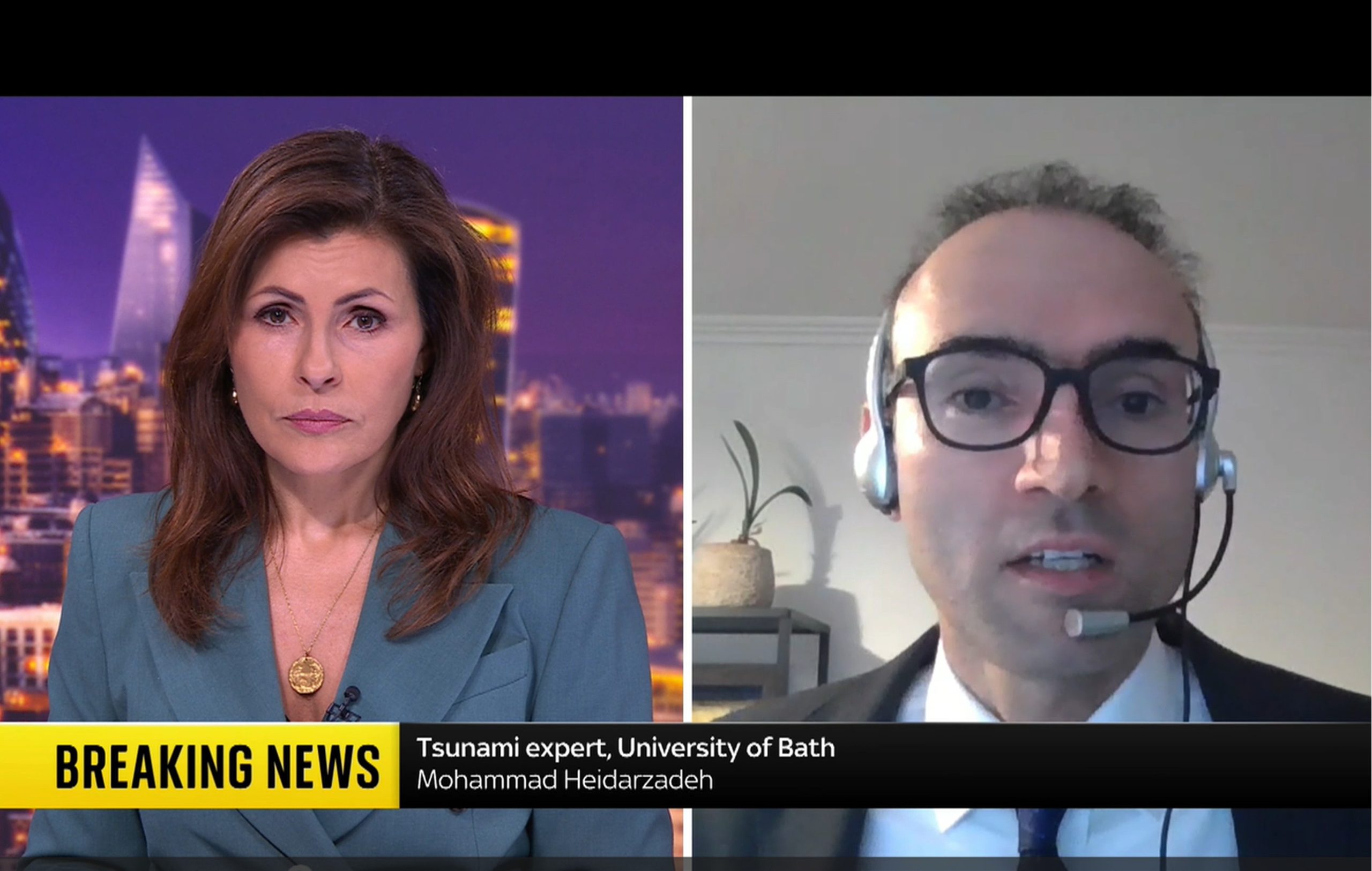
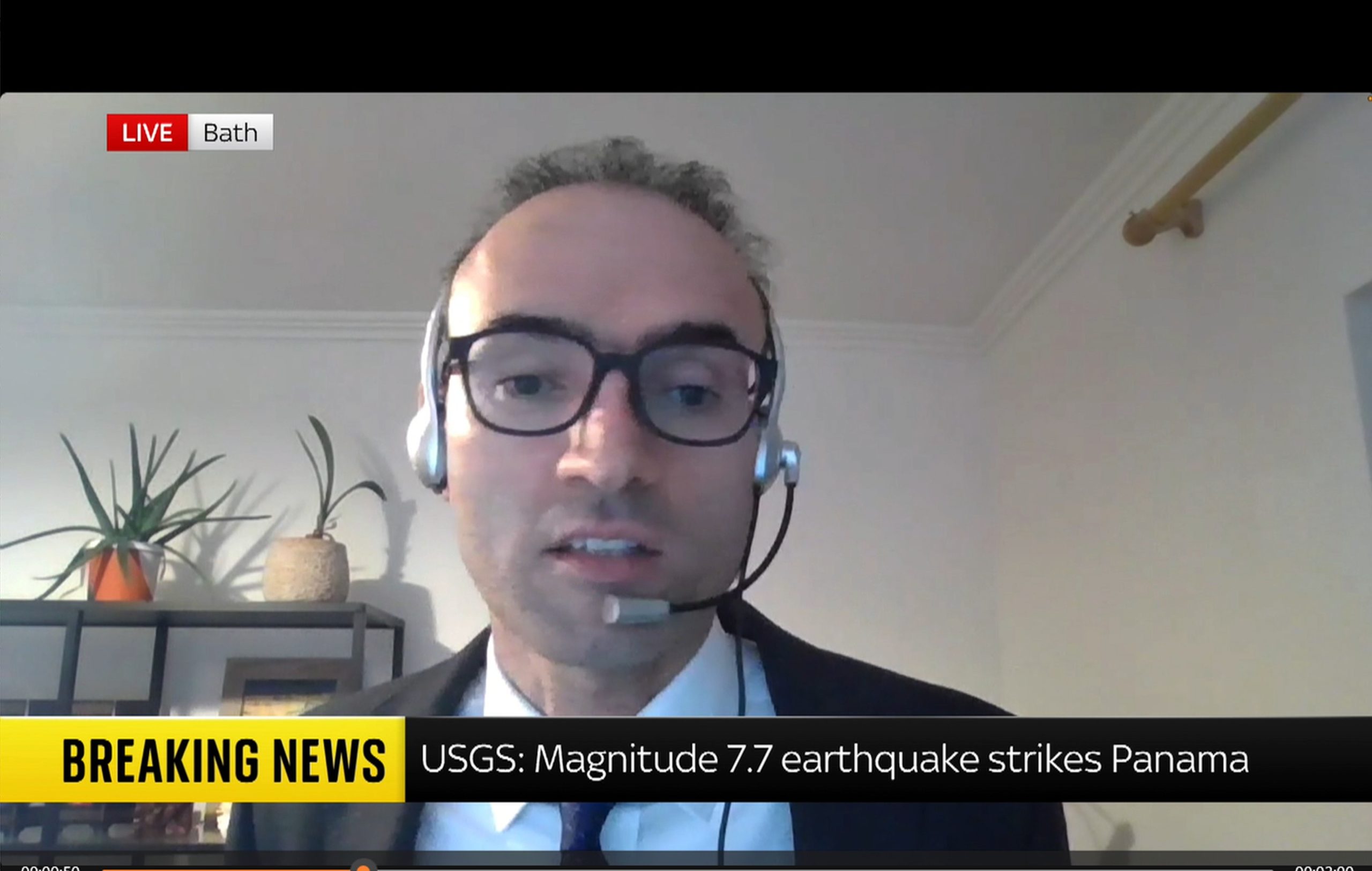
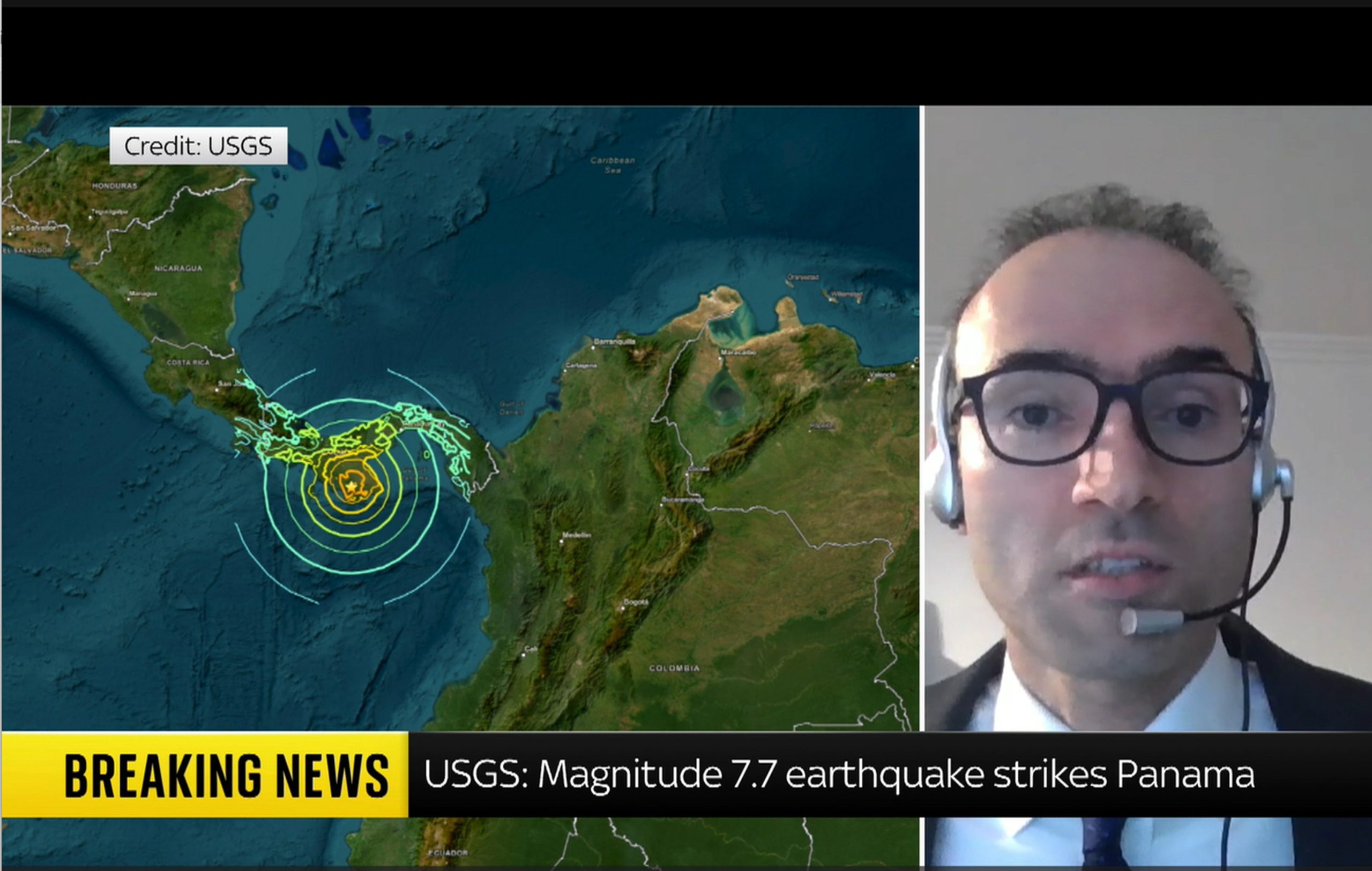
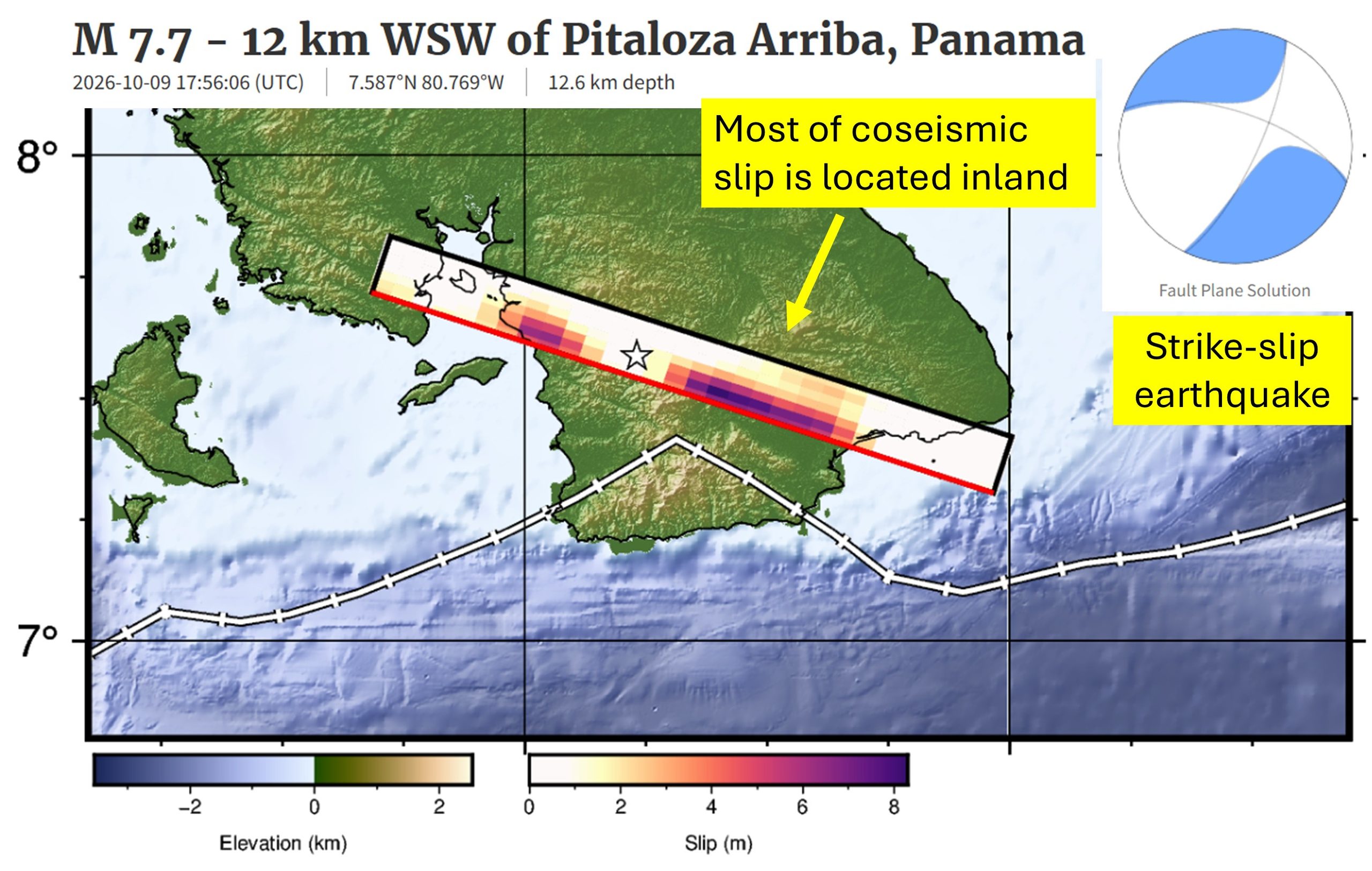
Dr Heidarzadeh’s TV interview with SkyNews on the massive M7.7 Panama earthquake on 9 October 2026
Our ocean is an incredibly vast and mysterious place. And there is no place where that is more evident than the deepest ocean area in the world: the legendary Mariana Trench. Located east of the Philippines, the Mariana Trench lies in the Mariana Archipelago in the western portion of the North Pacific. The greater area of the Mariana Trench Marine National Monument is made up of more than 95,000 square miles of ocean. Beneath these waters lie incredibly complex aggregations of submerged islands and volcanoes … and of course, an astoundingly massive trench.
Dive in with us to have your biggest questions answered about the famed Mariana Trench.
How deep is the Mariana Trench?
The deepest part of the Mariana Trench, known as Challenger Deep, is almost 36,000 feet below the ocean’s surface. For context, Mount Everest is about 29,000 feet above sea level, so the Mariana Trench is about 7,000 feet deeper than Mount Everest is tall. For one more comparison, the RMS Titanic lies at a depth of about 12,500 feet below sea level. The Challenger Deep is in waters nearly three times deeper than this ship’s final resting place.
Due to its enormous size, the Mariana Trench has at times been affectionately nicknamed the Grand Canyon of the ocean. This is certainly a picturesque image, but don’t let the mammoth size of this U.S. national terrestrial park fool you into thinking the Mariana Trench matches its size. The trench’s footprint is estimated to be 120 times larger than the Grand Canyon’s, and to reach the bottom of Challenger Deep, you’d need to descend through almost six Grand Canyons stacked on top of each other before you’d reach the seafloor.
Oh … and did we mention it’s five times wider than it is deep? It’s about 43 miles wide!
What is Challenger Deep, and how long would it take to reach it?
Challenger Deep is the deepest point of the Mariana Trench. Fewer than 30 people have ever journeyed to this area. The trek below the surface is long, dark and time-consuming, and it’s not an expedition considered lightly by scientists and explorers.
The first people to descend into the depths of this area in 1960 were oceanographers Jacques Piccard and Don Walsh, and it took them close to five hours to reach Challenger Deep. Since then, more advanced submersibles have been created, but it still takes two to four hours for modern vessels to reach such depths. For example, explorer and filmmaker James Cameron reached the seafloor in a little more than 2.5 hours in the first documented solo submarine dive to the area, and it took oceanographer Dr. Dawn Wright about four hours in 2022. It is crucial that these submersibles descend slowly and steadily beneath the surface, as the immense water pressure compounds with every mile a submersible descends. Speaking of pressure …
Get Ocean Updates in Your Inbox
Sign up with your email and never miss an update.
What is the water pressure at the bottom of the Mariana Trench?
If you thought the depth of the Mariana Trench was its only jaw-dropping feature, think again. Water pressure is one of the most important factors affecting deep-sea life. In the ocean, pressure increases by one atmosphere for every 33 feet (10 meters) of depth. One atmosphere (a unit of measurement for pressure equivalent to average air pressure at sea level) is equal to about 14.7 pounds per square inch (PSI), which is the approximate standard atmospheric pressure at sea level. If you were to convert atmospheric pressure into weight, one atmosphere is about the weight of a bowling ball. Stay with me, friends.
If a vessel were to dive 2,000 feet below the surface, the pressure would equal that of 60 bowling balls stacked atop every square inch of that submersible. But 60 bowling balls is simply nothing compared to the pressure in the Mariana Trench. The atmospheric pressure at the depths of Challenger Deep is equal to about 16,000 PSI. That pressure is about the same as the weight of an entire full-grown elephant on every square inch of a submersible!
Need a more extreme comparison? If a human were to be placed at the bottom of the Mariana Trench, the pressure would be equal to that of 50 jumbo jets piled on top of a person!
Do any animals live in the Mariana Trench?
The depths of the Mariana Trench come with immense pressure and extreme darkness, but somehow, life finds a way to survive. Organisms that live at an extreme depth, like that of Challenger Deep, have to be highly adapted to low temperatures (typically just above freezing), high pressure and virtually no light at all.
Species found in the depths of the Mariana Trench might look vastly different from animals from other ocean depths because their anatomy has been refined to thrive in harsh conditions. At such great depths, these animals typically depend on chemosynthesis (using nutrient-rich waters being pumped out of hydrothermal vents) or descending detritus (dead matter that has fallen from higher parts of the ocean) for food, such as whale falls. Just a handful of these animals include species of octopuses and squids, sea cucumbers, amphipods, sea jellies, shrimp, sea worms and some wild-looking fish!
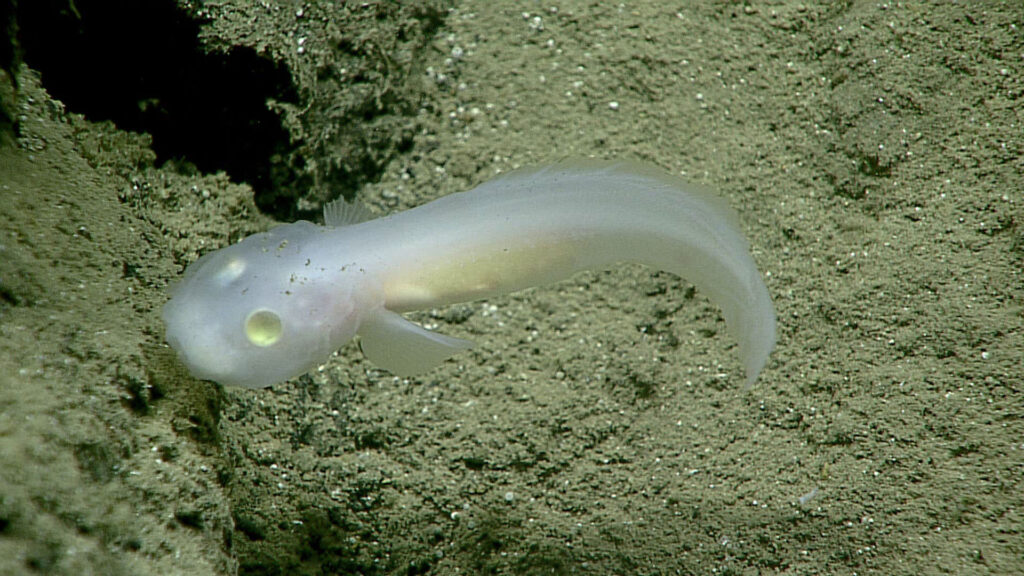
In 2025, more than 7,000 new species were discovered in the Mariana Trench, including the hadal snailfish (Pseudoliparis swirei). This is the deepest-dwelling fish currently known to science. Now, the fish has been dubbed “the Mariana snailfish.”
How was the Mariana Trench formed?
The process by which the Mariana Trench was created is a geologically fascinating one known as subduction. On the Earth’s surface, there are thin plates that cover the planet’s mantle, which is made of molten rock. If two of these plates collide, one pushes down into the Earth’s mantle while the other is pushed over the bottom plate. When this happens, a trench is formed from the drag of the bottom plate. This process can sometimes create incredibly strong earthquakes. The plates that forged the Mariana Trench’s creation are estimated to be up to approximately 180 million years old.
This trench was unknown to scientists until 1875. It was then that a team of explorers on the HMS Challenger measured the depth of the sea by simply lowering a weighted rope into the water. They were baffled when they measured that first portion of the seafloor to be five miles below the surface. And so was born the origin of some of the most daring deep-sea explorations known to mankind to date.
Is the Mariana Trench protected?
The Mariana Trench is in waters off Guam and the Mariana Islands. The region is protected from some human activities under its status as a marine monument. The creation of the Mariana Trench Marine National Monument signified that international, national and local leaders all recognize the importance of protecting this area.
However, just because the region is protected does not mean it’s not vulnerable to modern threats to ocean health. Plastic bags have been spotted in the Mariana Trench during several expeditions, highlighting the far-reach