

More than one-quarter of United States Forest Service (USFS) firefighting positions are vacant, creating shortages as extreme conditions lead to wildfires across the country, internal data reviewed by The Guardian has revealed.
USFS Chief Tom Schultz has repeatedly reassured the public and lawmakers that the agency is prepared for the high amount of wildfire activity predicted this year.
“The agency saying it is ‘fully staffed’ is dangerous,” a squad leader who is familiar with the data said. “Maxing out 19-year-olds with no qualifications isn’t the best strategy.”
With more than 41,000 wildfires already this year, the 5,100 unfilled positions — 26 percent of the USFS firefighting force — are especially concerning for regions like the Pacific Northwest that are facing extremely high wildfire risk in 2025.
Today a bunch of articles have been being published about fire and our staffing numbers. Members like you have…
Posted by NFFE Forest Service Council – IAMAW on Tuesday, July 22, 2025
USFS staffing reports from July 17 show a USFS vacancy rate of 39 percent during a year that has been almost 31 percent busier than average in terms of wildfire activity.
In the Intermountain region — the nation’s largest with nearly 34 million forested acres across parts of Nevada, Wyoming, Utah, California and Idaho — staff shortages are at almost 37 percent.
In Oregon and New Mexico, firefighters have described being pulled away from fire lines to do administrative tasks due to insufficient support staff, reported Reuters.
“There is definitely a lot of tension in the system this season,” said one fire captain, as The Guardian reported. “It’s sort of like that medieval torture device that stretched people – just one more crank.”
There have been reports of forest service crews having less than half the staff needed to be considered fully operational.
Six U.S. firefighters who asked to remain anonymous due to being barred from speaking publicly said staffing shortages had made it harder for firefighters to suppress large wildfires and have contributed to more risks and injuries for those working on the ground.
Many of the vacant positions are in leadership and middle management, which leaves crucial gaps in tactical planning and experience.
“We can’t send [a crew] without supervision because it is unsafe – if they don’t have a qualified supervisor that engine is parked,” said retired firefighter Bobbie Scopa, who was with the USFS for 45 years.
Less staff also leads to fatigue for firefighters who spend weeks on fire lines in extreme weather with little chance for rest and recovery.
“Folks are having to fill in and fill holes,” Scopa explained, “and they are going out without all the positions they need for a team.”
To be fair, the map looks like that pretty much every year.
But to the point, now is not the time to mess w/ our ability to do our jobs.
Purchasing (basic supplies) was never easy in the government; it’s worse now.
Of course we dutifully jump thru hoops as elections have consequences, but damn.
— Alt US Forest Service (@altusfs.altgov.info) July 17, 2025 at 9:38 PM
In recent years, the USFS has had a hard time recruiting and retaining qualified firefighters due to low pay and increasing job hazards. The agency lost almost half its permanent employees from 2021 to 2024.
The issue has been exacerbated by the Trump administration, which has slashed budgets and reduced support staff.
The U.S. Department of Agriculture, which oversees the USFS, has tried calling on employees with fire qualifications who took early retirement or resignation offers to return voluntarily for the season until their contracts end. However, when Schultz was questioned by senators about the issue, he said the numbers of employees who had decided to return were not yet available.
“We depend on those people to help run the large fires,” Scopa said, as reported by The Guardian. “Teams are not fully functional right now because we have lost so many people.”

Scopa said there had even been food shortages for firefighters in the field.
“I am hearing from firefighters who aren’t getting meals because they are having problems with the contracts for the caterers because we laid off people who worked in contracting,” Scopa said. “There was no efficiency in this – they just slashed it with an ax.”
And the staff reductions could get worse.
The Trump administration is proposing the consolidation of firefighters into a new Department of the Interior agency. Many firefighters support the concept, but there have been worries that emergency response management is taking a back seat while the process is being pushed through quickly.
“You all have trotted out another new reorganization in the middle of a very dangerous fire season,” said Democratic Senator from Oregon Ron Wyden to Schultz during a committee meeting, as The Guardian reported. “These infernos are not your grandfather’s fires – they are bigger and they are hotter. We need to address this critical preparedness gap.”
A state of emergency was declared in Oregon last week due to wildfire activity. The state has already been affected by several fires this year, including the 95,000-acre Cram fire, the largest in the country.
As of July 21, 83 large wildfires were being fought by firefighters across the country.
Approximately two weeks ago, the country’s fire managers moved its response to “Preparation Level 4,” the second-highest designation, which shows that firefighting resources are heavily committed.
Even though Schultz has assured Congress of the USFS’ preparedness for the intense wildfire activity, his tone shifted in an internal memo last week to agency leadership, as shared with The Guardian.
“As expected, the 2025 fire year is proving to be extremely challenging,” Schultz wrote. “We have reached a critical point in our national response efforts and we must make every resource available. At times like this we know the demand for resources outpaces their availability.”
The post Firefighter Shortage Across U.S. Poses ‘Dangerous’ Risks as Peak Wildfire Season Ramps Up appeared first on EcoWatch.
https://www.ecowatch.com/firefighter-shortage-usfs-wildfire-season.html

There’s something undeniably special about wearing uniquely handcrafted, fair trade jewelry that you can know was made slowly and thoughtfully with care. Equally special is wearing an elevated set of jewelry crafted with recycled materials and sustainable processes.
Whether you’re looking for an investment piece or more affordable pieces, there are options for any budget on this list. The aesthetics of these fair trade and sustainable jewelry brands also vary, so you’ll also be able to discover an ethical brand that matches your unique style.
What is Fair Trade Jewelry?
Fair trade can both be a general term used to describe a brand’s sourcing practices — like direct relationships with artisan cooperatives, wages above local standard rates, and safe working conditions — or a third-party “Fair Trade” verification through an organization like Fair Trade Federation, Fair Trade USA, or World Fair Trade Organization. When a brand doesn’t have a certification, we verify a brand’s practices by their own published information.
In the cases where brands do go the extra mile and get a third-party verification for their fair trade practices, we’ve noted it directly in their entries.
Note that this guide includes affiliate links and partners. As always, we only feature brands that meet high standards for responsibility we love, and that we think you’ll love too!
2. Ana Luisa
Best for: affordable everyday jewelry
Conscious Qualities: Recycled Gold, Lab-Grown Diamonds, Small-Batch Production, Direct-to-Consumer
Ana Luisa creates stunning, elegant jewelry from responsibly-sourced materials including 100% recycled gold and lab-grown diamonds. The sustainable jewelry brand also produces in small batches to minimize waste.
By using a direct-to-consumer model, Ana Luisa is able to provide luxury, high-quality jewelry at accessible prices.

3. Monica Vinader
Best for: recycled demi-fine jewelry
Conscious Qualities: Woman-Founded, Recycled Silver & Gold Vermeil, Traceable Gemstones, Lab-Grown & Conflict-Free Diamonds, Supply Chain Transparency
Price Range: $85 (studs) – $2,495 (diamond ring)
British jewelry brand Monica Vinader was one of the first brands to meet the gap between fashion jewelry and fine jewelry with their “demi fine” jewelry. The women-founded brand has necklaces, earrings, bracelets, and rings crafted from 100% recycled sterling silver and gold vermeil, fully traceable gemstones, and lab-grown or conflict-free diamonds. Monica Vinader also launched Product Passports, taking an active effort towards full supply chain transparency.

4. WorldFinds
Best for: unique statement jewelry with a story
Conscious Qualities: Fair Trade Verified, Upcycled Materials, Artisan-Made
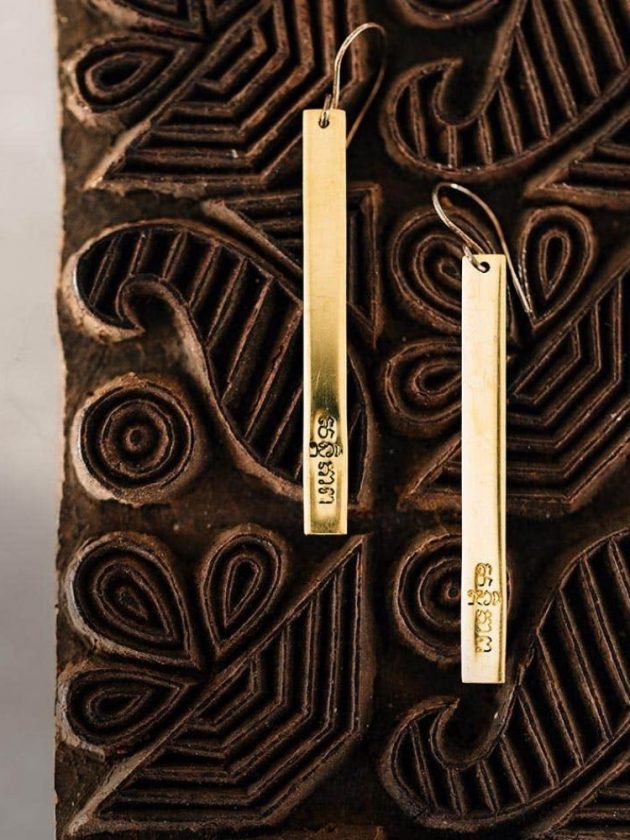
WorldFinds provides sustainable employment and just wages for hundreds of women artisans in India and Bali. These artisans handcraft both sleek metal fair trade jewelry and unique recycled Kantha pieces. WorldFinds is Verified by the Fair Trade Federation, which assesses members against fair trade principles including fair wages, safe conditions, and transparent supply chains.
Plus WorldFinds’ signature Kantha jewelry is made from upcycling materials: wood scraps from a furniture factory and locally sourced Kantha fabric remnants.

5. Astor + Orion
Best for: drop earrings and charm necklaces with symbolism
Conscious Qualities: Certified Ethical Factory, Recycled Materials, Designed for Recyclability, Repair Program
Ethical jewelry brand Astor + Orion sources their jewelry from a factory with multiple certifications ensuring worker safety, fair production practices, and responsible environmental management. Astor + Orion’s stunning jewelry is made from recycled materials and designed in a way to make it easily recyclable! Their pieces also come with a quality assurance — the brand will repair any piece within 6 months of purchase.

6. Laura Elizabeth
Best for: non-toxic jewelry in organic shapes
Conscious Qualities: Locally Sourced Recycled Metals, Woman-Owned, Fair Wages, Safe Working Conditions
Price Range: $45 – $330
Crafted from recycled metals sourced locally in LA, Laura Elizabeth creates stand-out sustainable jewelry. All of the brand’s jewelry is sourced ethically from a small, woman-owned studio in Los Angeles that ensures reasonable working hours (35 hr/week), fair wages, and safe working conditions (such as proper ventilation). Check out more on Laura Elizabeth in this post!
The jewelry is also non-toxic, free of cadmium or lead.

7. Ten Thousand Villages
Best for: giftable fair trade jewelry
Conscious Qualities: Fair Trade Production, Artisan-Made
Price Range: $6 – $175
Founded in 1946, Ten Thousand Villages is one of the fair trade pioneers and a founding member of the World Fair Trade Organization (WFTO), the global network that verifies fair trade practices across its member organizations.
They’ve developed relationships with artisans around the world, providing valuable economic opportunities for thousands of makers in 30 countries around the world. Their marketplace has handmade necklaces, earrings, bracelets, and rings, along with a variety of other fair trade goods.
8. Edge of Ember
Best for: gemstone jewelry
Conscious Qualities: Recycled Gold & Silver, Artisan-Made, Ethical Production
Price Range: $49 (ear cuff) – $2,730 (diamond tennis bracelet)
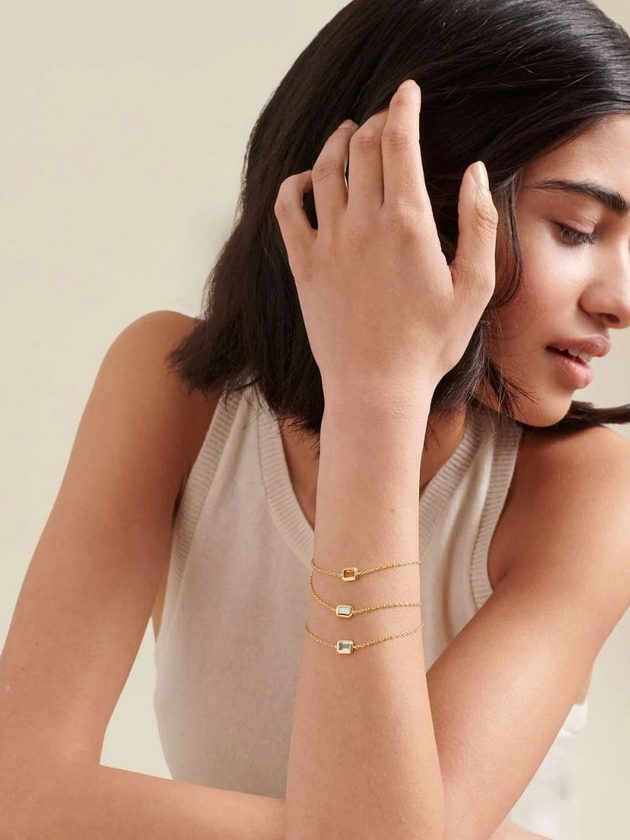
Edge of Ember’s timeless jewelry is responsibly crafted by makers working in artisan groups and small-scale factories. Their delicate necklaces, bracelets, rings, and other pieces are crafted by skilled artisans in India, Hong Kong, Germany, and Thailand. The brand carries out independent social audits to ensure ethical working conditions and environmental responsibility.
Edge of Ember has a wide selection of recycled gold and silver rings, bracelets, and necklaces adorned with stunning gemstones, including many birthstone jewelry options perfect for gifting.
9. Aurate
Best for: ethical diamond fine jewelry
Conscious Qualities: 100% Recycled Gold, Lab-Grown & Conflict-Free Diamonds, Vintage Collection
Price Range: $18 (stainless steel chain) – $19,000 (diamond tennis necklace)
Responsibly-sourced quality jewelry — that’s Aurate’s promise. The jewelry brand’s sleek, timeless pieces are thoughtfully made by seventh-generation craftspeople using 100% recycled gold and lab-grown or conflict-free diamonds.
Aurate also has a curated collection of vintage fine jewelry from cocktail watches to signet rings up to 50% off.
10. SOKO
Best for: modern, minimalist artisan-made jewelry
Conscious Qualities: Above-Market Artisan Wages, Black-Owned
Price Range: $78 – $298
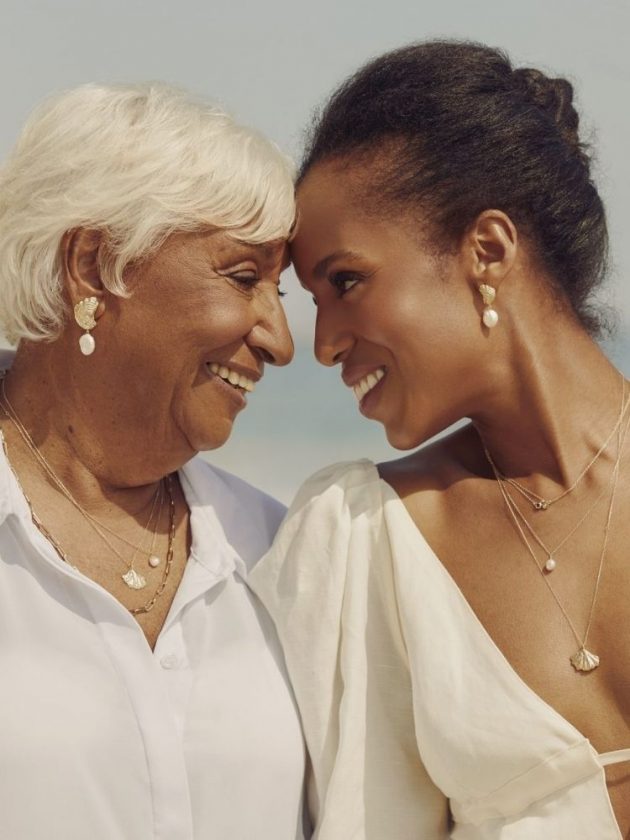
SOKO is an innovative Black-owned ethical jewelry brand using mobile tools to bridge the barriers for artisan entrepreneurs in Kenya. In partnership with SOKO, independent artisans can operate a “virtual factory”, earning 5x more than an average artisan workshop in their local areas.
The jewelry is made with 24K gold or silver-plated brass — an affordable metal that also happens to consist of 90% recycled content on average. Other materials include reclaimed horn and bone, locally-sourced teak wood offcuts, and ceramic beads made by a fair trade women’s collective in Kenya.

10. Raven + Lily
Best for: affordable artisan jewelry
Conscious Qualities: Fair Trade Verified, Artisan-Made, Women-Led
Price Range: $40 – $240
Raven + Lily is an ethical fashion and jewelry brand verified Fair Trade by the Fair Trade Federation. The women-led brand partners with artisan women around the world who use natural materials to craft both classic, elegant pieces and statement jewelry.

11. NAKIIT
Best for: one-of-a-kind, solo-handcrafted pieces
Conscious Qualities: Made-to-Order, Recycled Silver & Gold, Zero-Waste Scrap Recycling
Price Range: $21 – $485
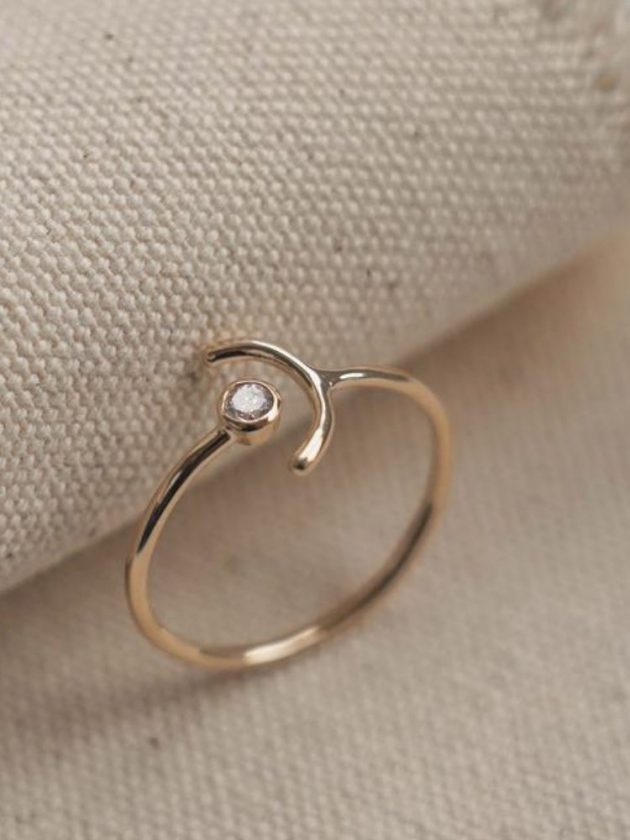
As a small, slow-minded jewelry brand, NAKIIT’s founder + owner handcrafts each piece with intention. In fact, every piece of jewelry the brand sells is made by the founder herself!
Nearly all of NAKIIT’s ethically-made jewelry is either made-to-order or one-of-a-kind, ensuring a minimal ecological impact and the highest attention to quality.
As if we could love this brand even more, NAKIIT also sources recycled sterling silver and gold, plus recycles any remaining metal scraps or dust after production.
You May Also Want to Check Out:
Best Fair Trade Fashion Brands With Style and Heart
Affordable Ethical Fashion Brands
Consciously Curated Marketplaces for One-Stop Ethical Shopping
The post 11 Best Fair Trade and Sustainable Jewelry Brands That Shine appeared first on Conscious Life & Style.
11 Best Fair Trade and Sustainable Jewelry Brands That Shine
It’s time to leave fast fashion in the dust — with one-of-a-kind designs, quality fabrics, and the assurance your dollars are supporting a more responsible fashion industry, these slow fashion brands are sure to win you over.
Before we go any further, though, I think we need to clarify what exactly slow fashion is…
What Do I Mean By “Slow Fashion?”
Slow fashion is about being more mindful and thoughtful about how clothing (and other fashion items) are being produced, how they’re being purchased, and how they’re being used/worn.
Instead of mass-producing trend-driven garments cheaply and quickly, slow fashion production is about creating a piece to last by using high-quality materials, transitional designs (i.e. they migth be contemporary but they’re not super “trendy”), and durable construction.
For individuals, slow fashion purchasing habits means buying less, but better. A slow fashion mindset is all about choosing well — it’s about picking well-made items that are built to last and also selecting pieces that fit your lifestyle and body well, to ensure they’ll not only be durable but will actually be useful for years to come.
Adopting slow fashion in your life, though, doesn’t necessarily have to mean spending money — this concept is also about slowing down to appreciate your clothes and closet. Slow fashion can mean wearing what you have as much as possible, mending and repairing worn clothing, or upcycling an even sewing your own clothes.
For more, read “What is Slow Fashion, Really?”
While slow fashion is a term that’s often used quite generally, it’s important to note that there are fast fashion brands that might have some organic or recycled clothing. Those did not make the list!
Slow fashion companies to me — and the criteria used to select brands for this guide — are brands that produce in smaller batches, make most of their pieces by hand, craft each piece with attention to detail and quality, and ideally, partner with skilled artisans, sewers, and craftspeople (who are of course fairly paid).
Now without further ado, here are our picks for…
My Top Picks for Slow Fashion Brands
To be clear: you do not need to purchase from slow fashion brands to participate in slow fashion. However, when the time comes that you want to add a new piece to your wardrobe, you probably want your dollars to go towards supporting responsible brands that are doing things better; that are producing with quality and intention.
You want to invest in pieces for the long-haul — and pieces that have a positive impact. And these slow fashion brands