Connect with us

Published

on

Currently, if you’re exploring solar energy for your business, you’re likely drowning in questions about solar panel installation costs, potential savings, government rebates, installation requirements, long-term value, and more.

At Cyanergy, we work with thousands of Australian businesses, ranging from small, family-run citrus farms to large industrial manufacturing facilities, that want cleaner, cheaper, and more reliable energy but aren’t sure where to begin.

Don’t worry!

To help you out, we’ve created the ultimate Commercial Solar FAQ guide, featuring straightforward answers drawn from Cyanergy’s extensive experience and expertise.

We’ve also added helpful sections that explain what commercial solar installation actually is, why it matters, its key benefits, and a complete walkthrough of the installation process so you understand the entire journey from start to finish.

So, let’s see how this Cyanergy guide answers the most common commercial solar FAQs, explaining them in simple, practical terms!

What Is Commercial Solar Installation?

Commercial solar installation refers to the design, engineering, and installation of solar power systems specifically tailored for businesses or commercial properties.

In Australia, large offices, manufacturing facilities, or retail buildings are equipped with photovoltaic (PV) systems to generate clean, renewable electricity.

By adopting solar energy, businesses can reduce their utility costs, lower their carbon footprint, and enhance long-term energy reliability. However, the process is complicated and requires professional installation to ensure efficiency and obtain necessary regulatory approvals.

The commercial solar PV systems are best as they:

  • Have higher power demands.
  • Use more advanced engineering.
  • Can range from 10 kW to multi-megawatt systems.
  • Often involves roof, ground, or carport mounting.
  • Require strategic planning around operating hours and energy patterns.

Cyanergy’s Commercial Solar Power Solutions

Switching to solar isn’t just an upgrade for Australians, it’s a strategic investment that transforms how your business powers its future.

At Cyanergy, our commercial solar installations go far beyond placing panels on a roof. We deliver a complete, long-term energy solution designed to slash your operating costs and maximise energy efficiency for decades.

Our comprehensive service includes:

  1. Full energy analysis
  2. Tailored system design
  3. Engineering approvals
  4. High-efficiency Tier-1 solar panels
  5. Premium, reliable inverters
  6. Installation by certified electricians
  7. Ongoing monitoring & maintenance for peak performance

Key Components of Commercial Solar Panel System

  • Solar panels (solar PV modules)
  • Inverters
  • Roof or ground-mounted racking systems
  • Electrical wiring and monitoring equipment
  • Additional Backups (Battery storage, Generators)

Your Answers to the Most Common Commercial Solar Questions| Get the Facts!

Before you go solar, it’s wise to know all the truth without any guesswork.

Why? This clear understanding of the most asked commercial solar FAQs can be the game-changer for your business that
needs to operate sustainably while reducing annual energy costs.

So, here are the 15 key answers every homeowner needs to know before investing in solar panel
technology:

1. Is commercial solar really worth it for my business?

Short answer: Absolutely yes, if you consume power.

Long answer: Undoubtedly, Commercial solar energy has become one of the smartest financial decisions
an Australian business owner can make.

At Cyanergy, we consistently see commercial clients slash their electricity bills by 40-80%, depending on system
size, energy usage patterns, and solar exposure. With power prices rising year after year, solar acts as a financial
shield.

Let’s see why it’s worth it:

  • Lower operational expenses, so the power bills drop dramatically
  • Offering fast ROI (many Cyanergy clients see payback in 2 to 4 years)
  • Government
    rebates
    reduce the upfront cost.

  • Protection against energy price volatility
  • Increased property value and aesthetics
  • Boosted sustainability credentials, grabbing the attention of eco-conscious buyers.

Remember! Solar isn’t just a cost; it’s an investment that pays you back in the long run.

2. How much does a commercial solar system cost?

The cost depends on the system, design, and equipment quality. At Cyanergy, systems are tailored based on estimates
from the site audit and other criteria. It’s not “one-size-fits-all”.

Typical price ranges in general we see are:

  • 30 kW commercial system: $25,000 – $40,000
  • 50 kW sized system: $45,000 – $70,000
  • 100 kW system: $90,000 – $150,000
  • 200–500 kW systems: highly customised, vary depending on installation complexity and many other
    factors.

Cyanergy installs Tier-1 solar panels and
uses premium inverters or high-efficiency
alternatives. However, you can always customise them to suit your preferences and goals.

Cyanergy’s every solar quote includes:

✔ Full energy assessment

✔ Custom ROI modelling

✔ Design, engineering & installation

✔ Government rebate calculation

✔ Monitoring setup

✔ Industry-leading warranties

3. What rebates or incentives are available for commercial solar?

Businesses and any C&I
properties in Australia
can take advantage of generous solar financial incentives that began on October 1,
2025.

Besides that, at Cyanergy, we assist our customers with all major schemes, including:

STCs (Small-scale Technology Certificates)

This rebate applies to systems up to 100 kW. The discount often saves commercial clients $10,000 to $40,000 off the
solar installation price.

LGCs (Large-scale Generation Certificates)

LGCs apply only to systems above 100 kW. These provide ongoing financial returns for the clean electricity you
generate.

State Grants & Industry Programs

Depending on your industry and location, extra funding and
other incentives
may be available. Cyanergy’s team stays updated to ensure you never miss a rebate you’re
eligible for.

We handle all the paperwork, from start to finish, so you get the maximum savings with zero hassle.

4. How long is the payback period?

The typical payback period for Cyanergy commercial clients is 2–5 years. However, it depends on:

  • Energy consumption pattern
  • Electricity rates
  • System size
  • Solar design & orientation
  • Your operating hours
  • Shading & roof structure

Businesses with high daytime usage, for example, manufacturing
facilities
, warehouses, retail, aged care, schools, etc, often recover their investment even faster.

And the best part? After payback, your system produces free power for 20+ years, which is a substantial competitive
advantage.
5. Can my roof support commercial solar panels?

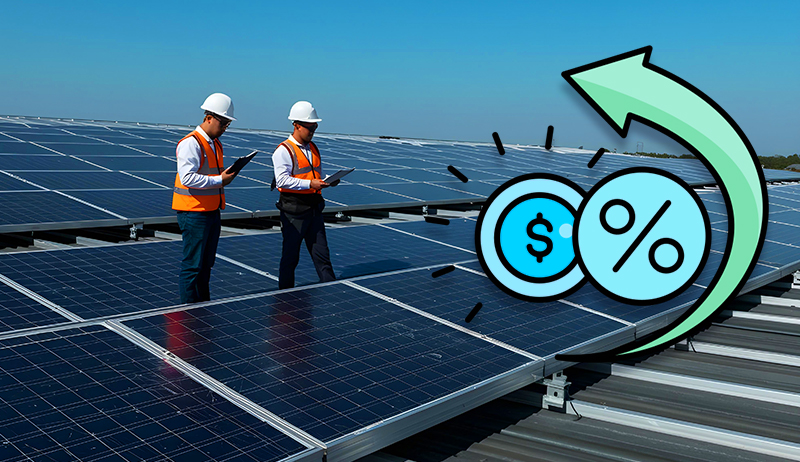
In Australia, rooftop solar is a very common sight. Most commercial and residential buildings already have solar systems installed, and the number continues to grow rapidly each year.

In many cases, roofs can support solar panels, but an assessment is always essential for commercial setups.

What to look for? Here’s your checklist:

  • Roof age and condition
  • Structural integrity
  • Roofing material type
  • Weight load capability
  • Angle, orientation, and shading
  • Complexity for installation and maintenance

However, if your roof isn’t suitable for mounting solar panels, there are alternatives, such as ground-mounted solar, solar carports, and tilt-frame designs for flat roofs.

You can also use solar paints or window facades to generate solar power.

6. What’s the lifespan of a commercial solar system?

A high-quality commercial solar panel system installed by accredited professionals can last for 25 to 30 years or more.

Cyanergy uses equipment from reputable manufacturers with bankable warranties. We design systems to last well beyond the payback period, ensuring strong long-term ROI

7. Do commercial solar panels require regular maintenance?

Even though solar is low-maintenance, it is not maintenance-free. To make your system function efficiently, you might need to

  • Perform an Annual inspection.
  • Cleaning every 6–12 months, depending on dust and debris.
  • Monitoring system performance through the provided platform.

Remember, this routine maintenance helps prevent downtime, keeps panels efficient, protects your warranty, and lets you catch issues earlier.

8. Will solar affect my business operations during installation?

Based on our previous installation experience, disruptions are minimal or nonexistent in most cases. The reason is that Cyanergy schedules installations:

  • Outside peak business hours whenever possible.
  • For larger systems, we install the panels in stages.
  • With safety barriers that allow your operations to continue safely and smoothly.

Most commercial clients continue business as usual. We always keep communication clear so you know what’s happening.

9. What brands does Cyanergy use? Are they reliable?

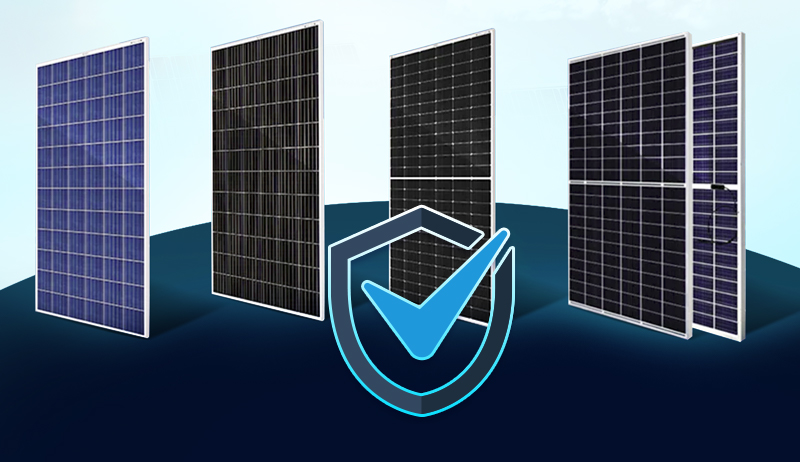
Cyanergy only works with Tier-1 solar panel manufacturers and top-performing inverter brands that are trusted globally.

We choose equipment based on performance, warranty, availability, and your budget. Reliability and lifespan are our top priorities.

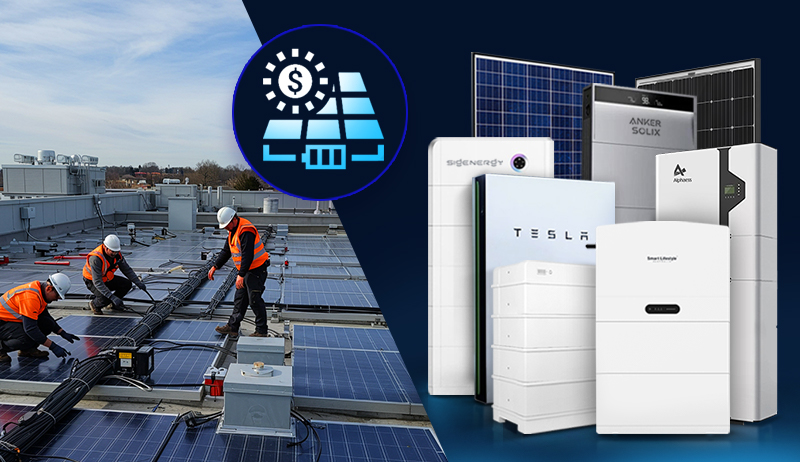
Our most used solar panels and inverters are:

Solar Panels

Inverters

  • Fronius
  • SMA
  • Sungrow
  • Huawei

10. How much energy will my business actually save?

After installing a solar panel, actual savings can range from 40 to 80% on electricity bills. However, the exact amount depends on:

  • When your business consumes power
  • Solar system size
  • Local weather conditions
  • Electricity tariffs
  • Whether battery storage is added for nighttime use

11. What if my energy usage increases in the future?

Expanding a system is not a problem for Cyanergy. The reason is that we always design systems with scalability in mind. We believe that as your businesses grow, your solar system should grow with you!

However, for the expansion, the options include extra roof space for the future, inverter oversizing, Upgradable circuit capacity, and an integrated battery-ready design.

12. Can I add batteries to a commercial solar system?

Yes, and it’s becoming increasingly popular not only in Australia but also worldwide.

Commercial batteries help to reduce peak demand charges, store excess solar for nighttime usage, improve power quality and provide backup protection during grid outages.

Cyanergy supplies commercial-grade battery solutions for business sizes ranging from small offices to large industrial facilities.

13. What if my business moves? Can I take the solar system with me?

Even though the answer is technically yes, practically, it depends!

Removing and reinstalling a large commercial solar system can be costly in most cases. Therefore, many businesses choose to leave the system and increase the property’s value or install a new, tailored system at the new site.

If you are still perplexed about what to do, Cyanergy helps you evaluate the ROI of both options before making a decision.

14. What warranties does Cyanergy offer?

At Cyanergy, we provide comprehensive warranty coverage on our solar panel system:

  • 25–30 year panel performance warranty
  • 10–25 year inverter warranty
  • 10–15 year product warranty on panels
  • 10+ year workmanship warranty
  • Full after-sales support

However, we also offer attractive warranties on heat pumps, air conditioners and other energy-efficiency upgrades throughout Victoria, New South Wales and Queensland.

So you can contact us for reliable products and outstanding services!

15. Why choose Cyanergy for commercial solar?

Because we don’t just “install” solar, we build long-term renewable energy solutions.

What sets us apart? Let’s see:

✔ Proven commercial expertise

Cyanergy has completed thousands of installations across small businesses, schools, warehouses, factories, councils, and national chains.

✔ End-to-end service

We handle everything:

  • Energy assessment
  • System design
  • Approvals and paperwork
  • Engineering
  • Installation
  • Monitoring setup
  • Maintenance

✔ Premium equipment only

At Cyanergy, there is no cutting corners, no cheap or unreliable products.

✔ Transparent ROI modelling

Our previous reports show actual savings, not inflated marketing numbers.

✔ Exceptional after-sales support

From the first consultation to post-installation monitoring, we stay with you every step of the way.

Have A Project In Mind? Let’s Talk Solar!

Contact us for a solar quote today!
Closing Remarks: Ready to Switch with Cyanergy’s Commercial Solar Solutions?

Well, if you’re running a business in
Australia
, chances are the answer is yes.

Whether you’re considering a 30 kW rooftop system or a multi-megawatt commercial solar farm, Cyanergy provides the
expertise, high-quality products, and customer support that you need to transition to clean, cost-effective energy
with confidence.

Also, if you have any questions that you’d like to add to the list, contact us today and talk with our solar expert team. We’re here to help you
make the switch!

Your Solution Is Just a Click Away

The post FAQs: Your Most Common Commercial Solar Questions Answered  appeared first on Cyanergy.

https://cyanergy.com.au/blog/faqs-your-most-common-commercial-solar-questions-answered/

Continue Reading

Renewable Energy

You’re Being Asked to Believe the Unbelievable

Published

on

American voters are being told that progressives hate America.

This type of crap may have some level of acceptance among our least intelligent voters, but fortunately, they’re nowhere near the majority.

You’re Being Asked to Believe the Unbelievable

Continue Reading

Renewable Energy

Omterra Rebrand, Goldwind Warns on Turbine Size

Published

on

Weather Guard Lightning Tech

Omterra Rebrand, Goldwind Warns on Turbine Size

Siemens Gamesa rebrands as Omterra, Goldwind questions ever-bigger turbines, and MIT revisits the century-old Betz limit.

Sign up now for Uptime Tech News, our weekly newsletter on all things wind technology. This episode is sponsored by Weather Guard Lightning Tech. Learn more about Weather Guard’s StrikeTape Wind Turbine LPS retrofit. Follow the show on YouTubeLinkedin and visit Weather Guard on the web. And subscribe to Rosemary’s “Engineering with Rosie” YouTube channel here. Have a question we can answer on the show? Email us!

The Uptime Wind Energy podcast, brought to you by StrikeTape. Protecting thousands of wind turbines from lightning damage worldwide. Visit striketape.com. And now your hosts

Allen Hall: Welcome to the Uptime Wind Energy Podcast. I’m your host, Allen Hall, and I’m here with Rosemary Barnes, who is recovering from a very serious illness, Matthew Stead, who has been healthy pretty much all the Australian winter, and Yolanda Padron in sunny, hot Austin, Texas. Welcome, Rosemary

Rosemary Barnes: Thank you. I am recovering from man flu, and I say man flu because it’s just a cold, but I’m complaining a lot about it.

Allen Hall: there’s gonna be a new name for Siemens Gamesa. So it was Siemens and then Gamesa’s a separate company. They merged. Siemens Energy, uh, broke off from Siemens AG. So [00:01:00] that’s a very well-known name, Siemens. It’s– Everybody knows Siemens at this point around the world.

And the, the one family had, as a company, had s- label on everything, right? So it’s, uh, Werner von Siemens started it 150 years ago. It’s been a long time since Siemens was started, but it’s everywhere. It’s on turbines, transformers, and power plants around the world, and now they’re changing their name, right?

So when Siemens Energy broke off from Siemens AG, they, they had a limited time they could use that name, so they have rebranding themselves or are about to rebrand themselves, and I wanna pronounce this right, Omterra. O-M-T-E-R-R-A. Now, we did a little research on this, and I think it’s Latin for all of the world.

It’s kind of a conjoined, uh, set of words, Latin words, kind of a, a schmear in a sense. So, uh, so the company that, you [00:02:00] know, that spun off in w- roughly 2020, if I remember this right, Matthew, does that sound right? It was roughly 2020 when Siemens Energy was established on its own. Uh, they’re gonna be changing their name to Omterra.

So instead of seeing, seeing Siemens Gamesa publications or Siemens Gamesa wind turbines, I guess they’re gonna have this new name, Omterra. What do we all think?

Matthew Stead: I think it’s great. I think, and if you go back to, you know, GE Vernova, um, I, I thought Vernova was a bit weird for a while, but now it just rolls off the tongue and easy. It just makes so much sense. Um, so I’m, I’m, I’m for it. I, I like it. I’ve already… You know, can already say it. It took a lot longer to say Vernova than it’s taking to say

Terra.

Rosemary Barnes: I think that it– But it’s not Vernova, it’s GE Vernova, right? So everyone knows what it is. Whereas my understanding is it’s not Siemens Omtera, it’s just Omtera, which makes it sound like a new budget kind of [00:03:00] brandless, history-less, uh, company. So that’s… Yeah, I’m no

branding expert, but I think that, uh, like they, they must have not been able to use the word Siemens at all, um, because otherwise you surely would, because it has a very…

Outside of, you know, their blade issues and bearing issues of a couple of years ago, they do have a, like a solid engineering reputation across many fields, so you wouldn’t probably intentionally divorce yourself entirely from that. So, um, yeah, I, I think it will take some getting used to for me

Matthew Stead: but everyone remembers. I mean, it’s not like– The people in the wind industry know their heritage, they know their history, so I don’t think it matters. I mean, you know, you know, they, they purchase the Senvion, you know, technologies or, you know, licenses in Europe. You know, y- y- you don’t forget these things, so I don’t think it matters.

I think it’s just a, it’s a color, it’s a, it’s a label

Yolanda Padron: I think it’ll be fine. I just think that there will be a little [00:04:00] bit of confusion down the line as with everything, right? Like I’ve, I’ve been on the side of conversations where I have to explain like Siemens versus like SGRE on paper and it’s like, oh, it’s– this is why th- there was that paper trail, uh, because people would think it was an absolutely different thing.

Um, so I, I can totally see those conversations coming, coming to play in the future where someone thinks that Ontier is a completely different entity that maybe they changed OEMs or something, um, for a site. But nothing a little history lesson won’t fix, I guess.

Matthew Stead: You just want people talking about you

Rosemary Barnes: Name change every year

Allen Hall: Change your name every year. Well, that’s, that’s one way to approach it. I w- always wonder what the boardroom looks like and sounds like when this discussion is going on, because Siemens, Siemens Energy is a big company, and there had to be outsourcing of this to probably several marketing firms, mostly [00:05:00] in Germany, I’m guessing.

And they came back with a bunch of pitches, and eventually they picked one. But boardrooms are probably not the place to pick a name. And I always think like, “Oh, you just had such a opportunity to do something really cool or really impressive.”

Allen Hall: Well, we’ll see how it goes with Omterra. The, it’s gonna be, I’m sure, a huge marketing effort, and you’ll probably see commercials for it during the Super Bowl.

Developers are [00:06:00] eyeing Britain’s next big renewables auction and have been waiting to learn the rules and most importantly, the price. Well, this week the UK government delivered both. It confirmed a package of changes to the CFD scheme ahead of allocation round eight, aimed at simplifying the process and keeping good projects from being tripped up by some paperwork.

So AR7 was super successful, and they’re hopefully gonna have a, a great allocation round eight. Uh, unchanged from last round, here are some pieces to it. AR7 brought in 15 gigawatts of, of new capacity, uh, well below the ceilings, and the government is betting that that’s stability from AR7’s gonna exist for AR8, so they’re keeping the pricing limits the same.

And let me give you some of the numbers here. So everything’s in 2024 prices, just so we have a baseline here. It, 113 pounds per megawatt hour [00:07:00] for fixed bottom offshore wind, 271 pounds for floating offshore wind. That’s, uh, pounds per megawatt. And then 92 pounds per megawatt for onshore wind, and s- 75 pounds per megawatt for solar. So 271 pounds per megawatt hour in 2044 dollars is, you know, you’re probably talking, what, 290 pounds per megawatt hour. That’s a really good strike price or ceiling to allow, uh, some more floating wind into the UK waters

Rosemary Barnes: Yeah. Well, the UK have this newly signed agreement with Japan, right, to, to progress development of that technology. I feel like I, I haven’t looked up any numbers to back this up, but I feel like the gap between fixed bottom and floating is narrowing. It’s barely more than double now, which, um, yeah, I think is not that bad considering how little development there has been for floating offshore wind compared to fixed bottom.

So [00:08:00] yeah, I think that it is an interesting technology to develop. I, I know with the, um, auction rounds and ’cause it’s a government thing, it’s easy to think, “Oh, why are you spending any money on anything other than the cheapest one?” Because y- you know, like, it, it feels weird that the government would play, you know, when they’re purchasing power for their grid, that they would do any more than trying to just get, you know, bulk power at the cheapest price possible whilst ensuring, you know, reliability.

Um, but in the previous or the previous, the one– last one or the one before that, they had quite a few tidal projects announced that certainly, you know, an expensive and not mature technology. But I think that you can’t say the same thing about floating offshore wind. I think that it is on a, like a good, a good development trajectory, and there are certainly places on Earth where floating offshore is one of the most appealing technologies.

You know, if you think of through to 2030s, 2040s, there’s plenty of places where, um, you know, slightly higher [00:09:00] price paid for floating offshore wind will still be worth it because they have so few other options available. So it makes sense as an industry to in- invest in capabilities there.

Matthew Stead: think it’s a really interesting method. It seems to be really successful, the contract for di-difference approach. So, um, I’m, I’m surprised that it’s not adopted more widely, um, in other locations,

Rosemary Barnes: it is around a bit.

I would like to see it, like, in, in Australia, we are, we are developing some new wind projects, but not as fast as we need to, to, you know, hit our upcoming targets. And I think, like, while the government is doing some things to help move or help incentivize developers, it’s not working that well, and maybe CFD would be a, you know, a bit of a better way to, like, just actually guarantee that these projects are gonna go ahead.

Allen Hall: Australia has a shipping problem. there’s been a concern at state-owned transport hubs are becoming less supportive of [00:10:00] wind energy projects with ACEN Renewables saying that they will now have to truck a large transformer from a wind project or for a wind project in northern New South Wales from the Port of Adelaide.

That’s not necessarily close. And h- they also said that the Port of Brisbane has refused to accept passage of some big transformers for a solar farm. also there’s some, uh, something about blades not being able to be accepted in certain ports. Like some of the, uh, Australian state-managed or state-owned ports are not accepting renewables.

Rosemary Barnes: I think

also that blades in Queensland can only be transported to site like one per day with a full police escort or something. It’s wild to

me ’cause, you know, like I lived in, in Denmark for so long and there were blades going up and down just the normal highway every single day, multiple like, uh, and three– they would go in sets of threes for obvious reasons.

Um, yeah, but the, the, the [00:11:00] Queensland government changed like a, a year ago or, or so, and it changed to a very anti-renewables government and they just threw all of the state’s renewable plans in the bin,

Allen Hall: such a recent change that when they, at least the news articles I’ve seen about it, I’ve only seen a handful, that they have, um, like last year some big transformers, like really difficult to move items have come through those ports and they’re just not letting them through now. How does that work?

If you have a, a, a legal right to build a wind farm or a solar farm or, or substation or whatever’s going on there, how do they reconcile not allowing those components to come through a port? In what world does that make sense?

Matthew Stead: I mean, most of the ports are– yeah, most of the ports are privatized, so it’s up to the individual commercial entity that’s running the port, I would, I would imagine. So it’s beyond the control of the government, would be my first guess.

Yolanda Padron: it seems like it’s an, a federal sort of thing that would give permits.

Matthew Stead: No, I mean, I’ve done a bit of work in the Port of Melbourne and, [00:12:00] um, it’s facilitated by the government, uh, state government, not federal, and but the ports are largely privatized.

Rosemary Barnes: I just pulled up an article and it says that it’s state-owned transport hubs are becoming

less supportive of wind energy projects. Um, yeah, and that’s the reason for why they’ll have to get that transformer in northern New South Wales, so very close to Queensland. They have to go from Adelaide, where you live, Matt, all the way through South Australia, maybe Victoria, New South Wales, and then, yeah, up to nearly the border.

Allen Hall: Is that just a temporary blip that the next election cycle it’ll revert back or is this something that’s more long term?

Rosemary Barnes: uh, it’s not obvious that it’s gonna flip straight back, that’s for sure

Allen Hall: [00:13:00] for years, the race in wind has run mostly in one direction: bigger and bigger blades, bigger towers, bigger machines.

And now a chief engineer f- at one of China’s largest turbine makers says it’s time to pump the brakes. Bo Juul Petersen, uh, Goldwind’s chief engineer in Denmark, argues that scaling turbines up no longer makes economic sense. So it’s not an engineering question, it’s an economic question. His reasoning rests on a simple rule of geometry, the square cube r- law, which says that as a turbine grows, its materials and costs climb faster than the rotor area that earns the revenue.

Past a certain point, he says, bigger simply costs more than it makes. Have we crossed that threshold yet? Is 20 megawatts that, [00:14:00] uh, pivot point where it doesn’t make any more sense to make a larger turbine?

Matthew Stead: didn’t we have problems when we went from three to six?

Allen Hall: One to two.

Matthew Stead: I, I, I think, uh, I think it’s good that someone’s actually coming out and saying this

Yolanda Padron: Whoa, whoa, whoa. Rosie’s on the podcast.

Rosemary Barnes: yeah, ex-excuse me, this is one of my topics of obsession that I constantly carry on about. I made a whole, a whole video about it with, um, equations to back up my opinions about scaling, um, and a very nifty tug of war metaphor between economic factors that favor big wind turbines and economic fav- factors that favor small ones.

And I think that we’re always a little bit ahead of, of what the right, the right balance is between those. So, you know, the benefits from having bigger turbines are that, um, you have fewer electrical connections, for offshore especially, that means less subsea cables and, um, yeah, just like much faster Faster construction of all that, you [00:15:00] know, less, uh, substructures and less, less of everything to install, less of everything to maintain as well.

You know, it doesn’t take so much longer to get up and do your annual maintenance checks of a big turbine compared to a small one. Like, it takes longer, but not, not that much longer. Um, but then all of the structural factors favor smaller turbines over bigger ones. blades especially, as they get longer, you get so many more problems in O&M, but they don’t show up on the developer’s spreadsheet, you know. The spreadsheet that you’re using to decide, um, your f- your final investment decision, it, it doesn’t, it doesn’t know that you’re gonna have a whole bunch of blade issues.

It doesn’t wanna know and so I think that that’s one factor that has pushed us past the economic point of where wind turbine size should be. And I think the other thing is prestige. I know that when I worked at LM, you know, we had the longest blade in the world.

It was 88 meters, was our first, um, world record that we set while I was working there. They’d had many before that. We had– They [00:16:00] had a, like, one-to-one scale printout of it that they took to WindEurope or WindHamburg, um, that everyone stood in front of, and then they lost it to somebody, and then they got it back again with the blade for the Halieade-X.

And we all know how well that went to, you know, have the world’s longest blade. Y- you know, it wasn’t so easy to make it, turned out. It’s very easy to announce and not so easy to make, um, with reliable quality. And now we’ve got all these Chinese companies, especially MingYang, is constantly announcing the world’s biggest something.

Um, don’t sell so many of them, but it’s not the point, isn’t to sell them, it’s to have the prestige of making the world’s biggest something.

Allen Hall: Yeah, what would be the technology breakthrough that would allow it to be more stable at a 20 or 25 megawatt? Because right now I’m, I’m seeing 1% improvement here and there, not 5%, 10%.

Rosemary Barnes: Yeah, I mean, 1% improvement will eventually add up to what, what you need. Maybe it’s in

20 years’ time, not 10 years’ time. But y- you know, like you can imagine anything. maybe [00:17:00] they start somehow, like aero and automotive manufacturing technologies get cheap enough that we can start making wind turbine blades with all prepregs instead of y- you know, um, you know, dry fabric and infusion.

For example, maybe 3D printing gets cheap enough that you can make your whole, whole blade from an additive process. Like a- anything like that. But it can also be other things like maybe the cost of subsea cables in- increases like a whole lot, and then if, you know, like things on one side getting more expensive can make it more worthwhile to save hard problems somewhere else. So that’s why I say it’s like a, it’s a, a ve- it’s a multivariable optimization problem that changes every time you have a…

Like for every project to project from year to year, it’s always gonna be slightly different. So I don’t think it’s wise to definitively say 20 megawatts is the threshold that we should never cross. Like I, I don’t agree with that.

Allen Hall: It’s one of those arguments, I think, about [00:18:00] any sort of technology about where the endpoint is. There’s too many variables to predict it. I always point to aviation in which older airplanes will hang around and hang around and hang around until the fuel price goes up enough where it doesn’t make sense to operate them.

So they will fly an airplane un-until they can no longer structurally do it. But if the price of oil shoots up and the price of aviation fuel bumps up, those airplanes get parked, and then they’re buying the new airplane with a more efficient engine. It’s a similar thing, I think. There’s just– You can’t tell where the technology’s gonna go or what the economic impacts of any part of that business will force you to do something different.

So it’s gonna be higher than 20 megawatts, guarantee you that.

Yolanda Padron: Well, it’s one of those things too, right? Where if we’re repeating the, the same blade type and we’re getting smarter about operating that same blade type, then the economic cost goes down, [00:19:00] right? Like, eventually. ‘Cause then you’re not just experimenting on every new thing or having to take all of the, the funding into tr- specializing techs or getting very specialized techs onto your site and finding a new– kind of the wheel every so often. [00:20:00] So speaking of larger wind turbines, evidently we’ve been doing this all wrong, that we’ve had the calculations for the, uh, Betz limit has been off, and, uh, a group of MIT engineers, I guess, uh, have, have made a breakthrough.

Allen Hall: So basically every wind turbine that is spinning today is based on some fundamentals, uh, math, empirical data in, in some level, but on formulas that have led us to design the wind turbines and that core formula called the momentum theory. And if you hear blade designers who hang around blade designers, which I don’t necessarily recommend, but if you do hang around blade designers, they, they’ll say the momentum theory, momentum theory, like, “Yeah, yeah, yeah, yeah, I got it.”

It, it, the– MIT is saying it breaks down exactly at the operating point where modern turbines try to live. Um, so for a century the fix [00:21:00] was a patchwork of corrections and useful, but with no real theory behind them. Now, a team at MIT said it has rebuilt the math from first principles, creating what they call a unified momentum model. It even nudges at the famous Betz limit, the century-old ceiling on how much energy a rotor can capture, and it bumps it up by a few percentage points, and that would be the first uptick to the Betz limit in over 100 years. All right, Rosemary, as our official Betz limit expert, does this make any sense?

Have the MIT folk something new?

Rosemary Barnes: a wind turbine blade, its aerodynamics are just the same aerodynamics as what keeps an airplane in the sky, right? It’s, it’s all the… It’s just an airfoil. It’s just facing a wind speed, um, you know, a local wind speed. It’s complicated by the fact that [00:22:00] a wind turbine blade is also rotating, so the wind speed is different along the whole span, and that’s, uh– and so is the flow angle, and that’s why blades are twisted and tapered.

Um, but you know, essentially when you wanna figure out how much energy, uh, a wind turbine is gonna generate or you wanna design the blade so that it optimizes that amount, you’re just slicing it up into a whole bunch of little bits of 2D flow, exactly the same as an, an airplane. So if it doesn’t work for wind turbines, then it shouldn’t work for airplanes either.

So that’s one fundamental thing. And also at Betz limit, it’s not like it’s not driving design. It’s more like if you, if your design exceeds the Betz limit for a, um, a horizontal axis wind turbine, then you– it’s like a sanity check that you’ve done something wrong. Uh, that’s, that’s what I would say you would mostly use it for.

Um, but what I don’t understand, and maybe Alan, presumably you did read the, read the research or at least the press [00:23:00] release. Are they arguing that y- um, like the tips of a wind turbine blade are rotating, are moving fast enough that it’s approaching transonic flow? ‘

Allen Hall: Yeah, it’s a rental number thing.

Rosemary Barnes: there’s different types of aerodynamic equations depending on how fast the, airfoil’s moving.

And my understanding is transonic is like 0.8 Mach, um, 0.8, which is 274 meters a second, which is more than double what, um, the fastest tip speeds are currently. So I would think that you’re not quite approaching that yet. They’re– It’s not like a cutoff that, you know, all of a sudden at that exact, exact speed the air behaves totally differently.

But, um, y- yeah, like it seems far enough away that it’s not that relevant. But is that what they’re getting

at or, or is it something different?

Allen Hall: I like doing sanity checks when I read things from MIT. So what blade [00:24:00] manufacturers and/or wind turbine OEM has designed a set of blades and go, “Oh my gosh, we’re getting more energy than what we calculated,” and not thought to themselves, “Huh, maybe we should look into that”? It’s, it’s, it’s hilarious almost that all the engineers working in wind for 100 years wouldn’t have stumbled across this, where the turbine produces more power than the Betz limit would say it would.

Y-

Rosemary Barnes: yeah, as many people have commented on, you know, any one of my YouTube videos about wind turbine aerodynamics, if they would just put more blades in there, then, you know, less wind would just fly through without ever being, um, y- without ever hitting a blade.

So, you know, like obviously wind turbine, uh, blade aerodynamics people are stupid because if they weren’t, then they would see that you just put more blades in and you get more, twice as many blades, twice as much energy and w- What about three times as many blades? Three times as much energy.

And I [00:25:00] didn’t even go to MIT and that’s just, you know, like just

brilliant

Allen Hall: Obvious

Rosemary Barnes: off the top of my head here.

Allen Hall: it’s sort of ludicrous, honestly, and I see these things in wind occasionally. I see it more often in other areas, particularly aerospace, where, where you just have to go, “What are we spending time on?

Really? We’re working on this? On a fraction of a percentage point that we may have a slight error in?” Like, it does not matter. What are you gonna do with that?

Rosemary Barnes: there’s two issues. One is that the person writing up the press release is not the person that did the research, and they will always blow it up to be much more groundbreaking than the engineers who actually worked on it probably think it is.

So, the, like, I think you have to, like, reserve your criticism of the work and try and criticize the press release. And then the second error that I commonly see is that people don’t have an un- good understanding of a status quo. So they think that they have smashed the status quo, but really it’s more to do with them not understanding the status quo than it is through [00:26:00] some legitimate, like, massive im- improvement.

So it could well be that this is all very good and correct work, just with limited practical implication. That would be my most expected, um, from this.

Allen Hall: Rosemary, how many times a month do you get queries about wind turbine improvements that are just physically impossible?

Rosemary Barnes: Oh, I mean, if I read all of the comments on my YouTube channel, then probably quite, quite frequently. But, um, yeah, the most common one is just people thinking you can just add more blades and get a proportional increase in, um, in energy, you won’t get more power from adding more blades if that’s the only thing that you do, because in a well-designed wind turbine, which modern ones are, every, e- every air molecule that goes through the rotor disc is gonna interact with the, um, with, with a blade.

That’s how it’s, it’s designed. The blades are moving really fast, and so every molecule doesn’t get hit, but, you know, every, every molecule is affected and has some energy extracted from it. Um, then the other thing is people [00:27:00]who think if you reduce drag, like if you can come up with a lower drag airfoil or a higher lift airfoil, then you think, they think that that relates to more energy proportionally.

So they’re like, “Oh, this airfoil has twice as much lift, so it’s gonna be twice as much power.” It’s like, actually, you know, wind turbine designers are aware of the full range of, you know, airfoils that are available, including high lift ones, and they’re not using it because, you know, the same reason the airplane wings aren’t just, you know, like the highest, highest lift airfoil.

Y- you know, it’s more of a lift to drag ratio type thing, and that’s true for wind turbine blades as well, but also there’s structural considerations probably more so in a wind turbine blade than there are in, um, in airplane wings. So, you know, there’s some sacrifices made for that. Um, yeah, but those are the two, two main families of, of mistakes that I’d say people make.

Allen Hall: So

Rosemary Barnes: Matt

Allen Hall: up to his hand up for

to MIT media representatives

Matthew Stead: uh,

I had a couple of sort of quick and simple points. The first of all, uh, I’m actually a graduate of [00:28:00] MIT. I’ve graduated from, uh, from a course at MIT. Um, so that’s the first thing. Um, not in engineering. Um, the next one is like, so what? I mean, we can’t even reliably measure, um, you know, AEP the other one is all models are wrong.

Yolanda Padron: But not just wind

Matthew Stead: the world is not perfect. All models are wrong, so trying to improve something that’s wrong, you know, might help a little bit, but does it really matter?

Rosemary Barnes: But it is also the job of academics to improve these models. So there’s nothing wrong with MIT spending a lot of energy to, um, you know, improve on an incorrect model with another incorrect model. Uh, if it’s more useful, that’s great, and even if it’s not, like isn’t that the job of

Matthew Stead: yeah.

Matthew Stead: you should add to where it has the most impact on humanity. You should actually put the effort into areas that have a greater impact on pushing the boundary. You know, pushing small boundaries does not help the world

Allen Hall: Matthew is an MIT graduate, [00:29:00] the one thing that Matthew brings to the table is real-world experience. And that if you shelter yourself inside a laboratory at MIT, and I understand why you would do that, because I’m sure it’s a very pleasant place to work, and there’s a lot of benefits to that.

However, the way that MIT used to work back in the day, and not everything was roses then, but oh, okay, y- that people had industry experience. They had a knowledge of what was going on on the ground, and they were engineers, and they realized that formulas and reality don’t always align. And maybe we lost that somewhere in the ’80s and, or ’90s, but it does continue to be a problem, where back to Matthew’s point, if you’re going to use that amount of brain energy, put it to something that can help the world.

This isn’t necessarily helping the world That wraps up another episode of the Uptime: Wind Energy podcast. If today’s discussion sparked any questions or ideas, and I’m sure that it will, we’d love to hear from [00:30:00] you. Reach out to us on LinkedIn, and don’t forget to subscribe so you never miss an episode.

So for Yolonda, Rosemary, and Matthew, I’m Allen Hall, and we’ll see you here next week on the Uptime: Wind Energy podcast.

Omterra Rebrand, Goldwind Warns on Turbine Size

Continue Reading

Renewable Energy

Trump Headed for Prison?

Published

on

If any of us had been asked before Trump’s arrival on the political scene how we would feel if the United States government descended into abject corruption, became the disgrace of the civilized world, and wanted our opinion on the incarceration of an American president, we would have dismissed it with a laugh.

Now that it has actually happened, we say that removing Trump from office and sending him to prison is the very best outcome possible.

That’s why 70% of Americans and close to 100% of others in the developed world will rejoice the moment that Trump is no longer a figure in world events.

Trump Headed for Prison?

Continue Reading

Trending

Copyright © 2022 BreakingClimateChange.com