

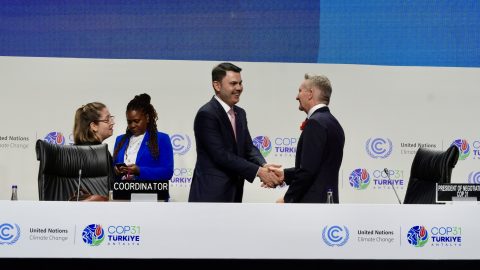
Ministers are now in the building and embarking on the tricky task of refining the mammoth 18-page draft cover text down to something that can be agreed upon by the end of the week.
If Monday’s heads of delegation meeting is anything to go by, this will be a big challenge. According to reporting from the Earth Negotiations Bulletin, which is allowed into the room unlike media, Like-Minded Developing Countries (LMDC) – a group that includes China, India and Saudi Arabia – said the draft crosses their red lines.
Particularly, they object to the inclusion of the 35×35 electrification target, the roadmap on transitioning away from fossil fuels and calls to rapidly reduce methane. The Arab Group and Russia went further, rejecting the draft text entirely over similar concerns.
Even Türkiye’s ally Azerbaijan criticised the draft, ENB reports, while developed countries look to have stayed relatively quiet. The text currently contains most of their key asks, including on responding to an overshoot of 1.5C and acknowledging the latest science, but also calls on them to reach net zero emissions by 2030, which is very unlikely to fly.
COP31 Bulletin Day 7: Incoming ministers set to battle over cover text
Negotiations on the cover decision will resume late this afternoon. Other developments of note include concerns about the fate of the Climate Finance Work Programme (CFWP), with the poorest countries wanting it to continue for two more years and to include a goal to triple adaptation finance. The EU and Switzerland have called for no text on this item, not wanting to take on new financial commitments.
NGOs under Climate Action Network International issued a letter calling on ministers and the COP31 presidency to ensure the CFWP addresses developing countries’ needs for grant-based, highly concessional public finance for adaptation, loss and damage, emissions reductions and just transition. ”A weak or procedural result only, or worse, no text at all, would represent a failure and undermine the Paris Agreement’s finance architecture,” it said.
-
Push for ocean roadmap that informs next global stocktake grows at COP31
A group of countries including African nations, European Union, and small island states wants COP31 to deliver an ocean roadmap towards 2028 -
Scientists defend UN overshoot report after Saudi-led push to sideline it at COP31
In response to critics who have questioned the report’s scientific legitimacy, its authors say the review matches IPCC standards
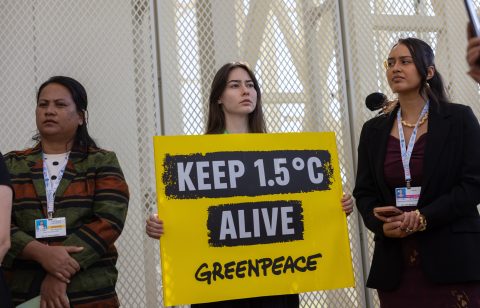
Elsewhere, the EU is set to announce it is backing the voluntary pledge to boost electrification to 35% of final energy use by 2035.
Tuesday is Oceans Day at COP31, with discussions and events due to focus on increasing cooperation between countries to protect oceans and including measures in national climate plans. There’s also likely to be a fresh push by some countries on the importance of climate science feeding into international policy and on driving forward the shift away from fossil fuels.
COP31 set to boost ocean protection – marine geoengineering too?
One aspect of the cover decision which is likely to prove relatively uncontroversial are its references to the importance of the ocean, which are pleasing campaigners.
Asked how such words will actually protect marine ecosystems, David Ryfisch, senior manager at the Climate Policy Initiative, said the words will send a signal to politicians as well as to the private sector.
“We will need the insurers, the institutional investors, banks, etc, to provide the financing, because a lot of funding will be necessary,” he told journalists on Oceans Day at COP31.
Areas which need funding, he said, include sustainable fisheries, coastal protections and cleaning up the shipping industry. Standing alongside him, young Samoan activist Brianna Fruean spoke of a project she saw at the pre-COP in Fiji where the villagers of Naidiri have stopped fishing in an area of their waters and are re-planting coral that has been bleached.
All the planters are volunteers though, she told Climate Home News, squeezing it in around their day jobs. With funding, they could be paid for their work and restore the reef much faster. The project began in 2009.
At a separate event on Indian cooperation with small island developing states on ocean conservation, India’s environment minister Bhupender Yadav talked up his country’s mangrove restoration efforts.

A more controversial climate solution involving the seas is marine geoengineering, which means fiddling with the oceans so they store even more carbon dioxide than they already do.
Some ocean advocates support this – or at least research into it. Kilaparti Ramakrishna, oceans and climate advisor at the Woods Hole Oceanographic Institution, told Climate Home News in September that research should be conducted into ocean alkalinity enhancement and ocean iron fertilisation, where iron is put in the ocean so that algae grows on it and sucks up carbon.
“Those are the kinds of things that make the ocean a hero in terms of solving the climate problem, but we should always be mindful that in solving one problem, we don’t create other problems,” he said.
On Tuesday, however, Marine Lecerf, head of international policy at Ocean and Climate Platform, was wary about marine carbon removal techniques. “There are many uncertainties surrounding their effectiveness, their scalability, their durability – but even more importantly, their potential adverse impact on nature,” she said.
There is wording in the cover text on carbon dioxide removal in general, which Lecerf opposes, saying the link between this and oceans has not and should not be made.
Former Canadian environment minister Steven Guilbeault said the focus should instead be on ocean solutions that have already been proven to work. “We can perhaps another day talk about those technologies if we’re going to need them,” he said.

The post COP31 Bulletin Day 8: Arab Group, Russia reject cover text over fossil fuels and electrification goal appeared first on Climate Home News.

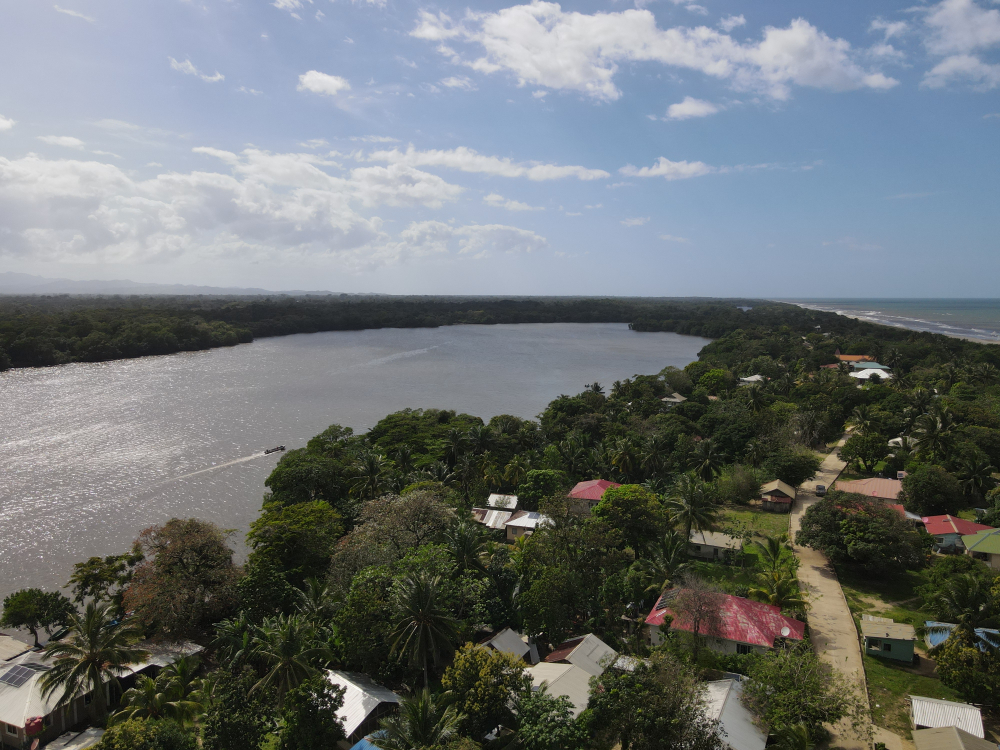
There is a remote corner of Honduras where tropical rainforests and vast lagoons are commonplace.
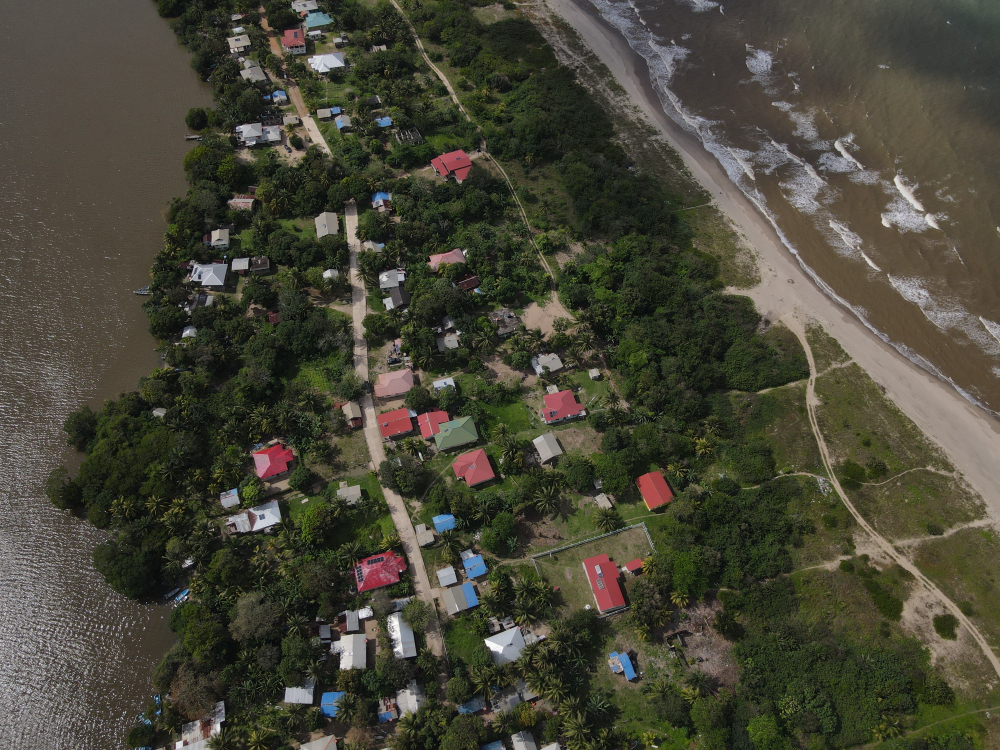
In the Gracias a Dios department, stretching across the country’s southeast coastline, the weather is hot and humid all year round. The region forms part of the Mosquito Coast and is known for its natural beauty, significant biodiversity and intricate waterways that almost touch the Atlantic Ocean.
The people who live here are few and far between, numbering around 100,000 across a huge landscape of almost 7,000 square miles. The Indigenous population has long built its life and culture from within this remote landscape, working with nature to serve their essential needs.
But it is this inaccessibility and close reliance on the natural environment which is now posing a serious challenge to the health and wellbeing of local people. As the climate crisis intensifies, people are being forced to find innovative solutions to maintain their way of life.
“The Indigenous and Afro-descendant communities…live in a territory highly exposed to the effects of climate change,” said Kevin Santos, a project manager at the Comisión Acción Social Menonita (CASM), a non-profit Honduran organisation with offices across the country.
“Their location combined with limited connectivity, the fragility of the infrastructure, and a strong dependence on natural resources means that climate events have direct impacts on daily life and livelihoods,” he commented.
Giving people direct control
The threats these communities now face include flooding, hurricanes, coastal erosion, drought and rising sea levels.
“When an emergency occurs, difficulties with transport, communication and access to services can delay the response and increase the impacts. For communities, adaptation therefore means not only preparing for a climate event, but also strengthening their ability to anticipate, respond and recover,” said Santos.
To tackle this crisis, local people have developed a series of interventions to build resilience and protect their families.
Push for ocean roadmap that informs next global stocktake grows at COP31
The project is being implemented by CASM and developed under the Adaptation Fund’s locally led adaptation programme. The initiative gives local institutions the ability to implement climate solutions with direct control over their financing needs.
The project is now approaching the midpoint of its four-year, US$4-million grant programme to support the Indigenous people in the Juan Francisco Bulnes and Brus Laguna municipalities adapt to these ever-present climate risks. A large proportion of the financing is being directed towards building adaptation across four areas: disaster preparedness, resilient infrastructure, ecosystem restoration and sustainable agriculture.
One tailored solution includes restoring mangroves and forests to act as natural barriers and reduce the impact of flooding and erosion. In addition, communities saw the need to combine both water and renewable electricity, with a plan to invest in solar systems to keep essential water systems running during extreme weather events.
Locally led priorities
Overall, the evolving plan has a target to reach 18,000 people, roughly the combined populations of both districts, with 60% of beneficiaries being women.
According to CASM, one of the main priorities identified by local people was to strengthen community-based early warning systems. The ability to have timely information when exposed to hurricanes and flooding makes all the difference in allowing people to prepare and evacuate. New emergency shelters are being created and personnel trained on how to run them.
The intervention calls for women to be directly involved in these contingency and risk management plans, alongside ensuring these plans are responsive to the different challenges men and women face in an emergency.
“Women often take on a significant share of responsibilities related to water, food, family care and household recovery. For this reason, a gender approach is a cross-cutting component of the programme,” added Santos. This forms part of a wider priority to strengthen community organisation and create spaces for people to effectively participate in managing their own adaptation actions.
To date, one of the learnings from the project has been the need to combine climate solutions. “Resilience requires an integrated approach rather than an isolated intervention,” said Santos.
“A community may need a water system, but also energy to keep it operating; it may need an early warning system, but also communication and transport to respond to the warning. It may need protection from flooding, but also healthy ecosystems that reduce exposure,” he added.
Different continent, same challenges
Similar interventions are being pursued across the Atlantic Ocean in Côte d’Ivoire and Ghana. A regional programme implemented by UN-Habitat has successfully restored 248 hectares of mangrove ecosystems across both countries in a bid to reduce coastal vulnerability and improve shoreline stability.
A total of 21 communities dotted along the coast are involved in the project with 126,000 potential beneficiaries. Early warning systems have also been identified by communities as essential to reducing the impact of the rising sea levels and frequent storms.
Furthermore, the project is preparing to build solar-powered irrigation systems to train farmers on climate-resilient agricultural techniques.
Mouhamadou Diene, regional project coordinator at UN-Habitat, commented: “Some significant project solutions have been identified to improve the resilience of coastal communities in Ghana and Côte d’Ivoire…both countries share the Gulf of Guinea coastline and face interconnected coastal climate risks”.
In Guatemala, Indigenous women build climate resilience with old and new farming methods
Both the Latin American and African projects dovetail with the focus on ocean and coastal management at the UN climate conference underway in Antalya, Türkiye. Alongside coastal resilience, they support climate-proofed infrastructure, disaster risk reduction, nature-based solutions, water and food security – key themes also being negotiated at the conference.
“Country and locally led adaptation solutions such as those in Honduras and the regional approach in Ghana and Cote d’Ivoire are having significant impacts in empowering vulnerable communities to build resilience to sea level rise and related climate risks,” said Mikko Ollikainen, head of the Adaptation Fund. “Scaling up successful adaptation projects is increasingly important as we see climate impacts becoming more intense and erratic,” he added.
Lessons on coastal resilience
People living in coastal regions are experiencing a barrage of climate pressures, and these aren’t restricted to isolated communities. An estimated 900 million people worldwide live in low-lying coastal zones and are threatened by extreme weather events, according to the UN.
As national governments seek to develop new policy interventions to tackle these risks, the experiences of people in places such as Gracias a Dios are illuminating.
“Adaptation works better when solutions are based on local knowledge and priorities,” argued Santos. “Rather than centrally defining what each community needs, work with community organisations to identify risks, discuss alternatives, and develop proposals grounded in the local context,” he urged.
By doing so, researchers believe climate adaptation can be made more sustainable, combining local know-how with the technical information and resources to ensure solutions reach the people who need them the most.
Adam Wentworth is a freelance journalist based in Brighton, UK.
The post Building coastal resilience for local communities in Honduras appeared first on Climate Home News.
Building coastal resilience for local communities in Honduras
Russia, Saudi Arabia and COP31 co-president Australia are the largest exporters of carbon dioxide (CO2) emissions in history, reveals Carbon Brief analysis.
Since 1850, the three nations – and other major fossil-fuel exporters – have exported hundreds of billions of tonnes of CO2 in the form of gas, oil and coal that has been burned in other countries.
Carbon Brief’s analysis of extraction-based CO2 emissions is based on figures compiled by Robbie Andrew, a senior researcher at Norwegian climate institute CICERO.
It shows that Australia is responsible for more than twice as much global warming when including emissions from its fossil-fuel exports, while Saudi Arabia has caused more than four times as much.
Australia has been under pressure for continuing to expand its fossil-fuel production ahead of the UN climate summit in Antalya, where it is co-president with host nation Turkey.

In contrast, nations that are heavily reliant on energy imports – such as Japan or Germany – have are responsible for far lower shares of planet-warming emissions, if responsibility passes to fossil-fuel producers.
There are many different ways to assign historical responsibility for current global warming.
Carbon Brief has previously published analysis based on territorial emissions, the consumption of imported goods, according to colonial rule or based on historical emissions per capita.
Historical responsibility
This year is expected to be around 1.5C hotter than pre-industrial temperatures. Next year is forecast to be the hottest on record, at around 1.7C of warming.
This year-to-year variation is due to natural variability, such as El Niño. However, approximately 100% of global warming to date is the result of human-caused greenhouse gas emissions.
The burning of fossil fuels since the industrial revolution is the largest contributor to this.
Since there is a direct link between each tonne of CO2 and each fraction of a degree of warming, historical fossil-fuel emissions can be tied to responsibility for current climate change.
This is typically calculated on the basis of historical territorial CO2 emissions, according to where in the world the fossil fuels are burned. It is also possible to assign historical responsibility on a “consumption” basis, according to where goods are used.
Historical emissions are often counted by country, but this puts the focus on populous nations. Alternatively, responsibility can be assigned per capita, based on today’s populations.
A less-familiar way to look at the question of historical responsibility is to consider where fossil fuels are extracted. This puts the spotlight on major fossil-fuel exporters.
The figure below shows that Russia, Saudi Arabia and Australia are the largest CO2 exporters of all time, based on emissions from exported fossil fuels since 1850.
(The allocation is based on extraction taking place within current national borders. Emissions under the former USSR, Czechoslovakia and Yugoslavia are allocated among constituent countries, based on their share of emissions at the time of separation.)
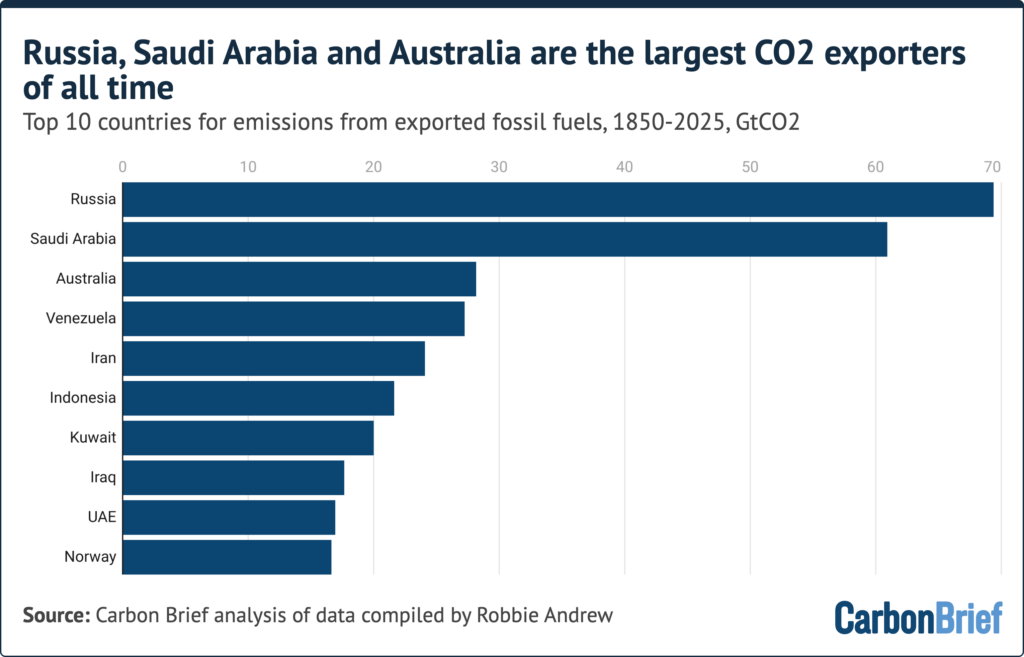
Other major CO2 exporters, based on their overseas sales of fossil fuels since 1850, include Venezuela, Iran, Norway, the United Arab Emirates and Canada.
Between them, these major coal, oil and gas producers have exported hundreds of billions of tonnes of CO2 over the past 175 years, according to Carbon Brief’s analysis.
Extraction-based accounting
The analysis shows that overall, the US and China retain the largest responsibility for historical warming under extraction-based accounting, despite having been net CO2 importers since 1850.
The US has large resources of coal, oil and gas, but was nevertheless a major oil importer until after the shale revolution in the early 2000s.
China remains a major oil and gas importer, describing itself as “rich in coal, lacking oil and gas”.
Russia remains in third place, as shown in the figure below, despite gaining responsibility for an extra 69bn tonnes of CO2 from exported fossil fuels.
The UK becomes the fourth-largest historical emitter, climbing above Germany due to the latter’s reliance on fossil-fuel imports.
Saudi Arabia becomes responsible for the world’s fifth-largest share of historical warming when including its fossil-fuel exports, which increase its cumulative emissions more than fourfold.
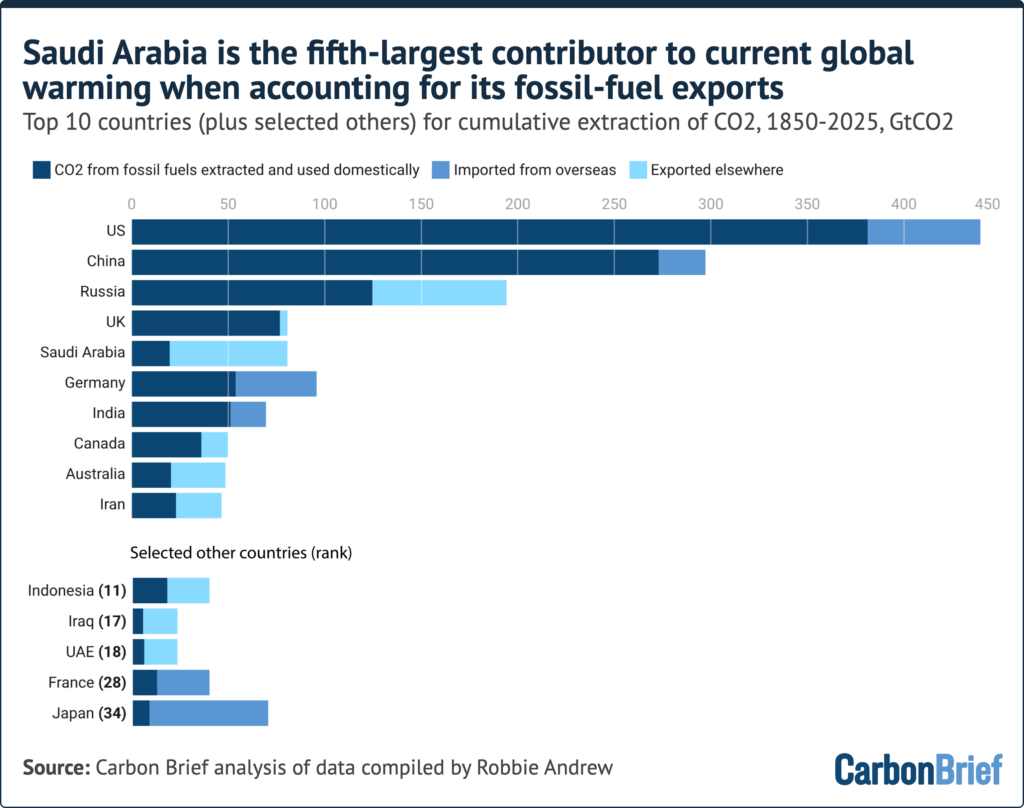
Australia also climbs up the rankings, becoming one of the top-ten largest emitters when including its fossil-fuel exports. This more than doubles its share of historical emissions.
Nations that drop down th