

After a marathon last night of negotiations in Cali, Colombia, COP16 closed abruptly on Saturday morning – when countries realised that with the final session of the biodiversity summit stretching to 11 hours, smaller country delegations had left and there were no longer enough governments in the room to formally approve further decisions.
Some progress had been made, however, as the talks established a new “Cali Fund” to channel voluntary contributions from the private sector to compensate countries for the commercial use of genetic material from plants and animals. They also created a new permanent body for Indigenous people, granting them formal power to influence decisions made under the UN biodiversity convention.
But no common ground was found on the most pressing issue facing governments: how to close the gap in biodiversity finance. As time ran out, countries also failed to approve a technical set of indicators – known as the “monitoring framework” – to assess progress on national targets and plans to protect nature.
The meeting was suspended, and the UN biodiversity secretariat said governments would need to reconvene before the next COP in two years, due to be held in Armenia, to resolve pending issues.
Bittersweet reactions
Observers of the talks said the lack of agreement on future funding for nature conservation around the world could hold back government efforts to present updated national biodiversity plans – which are a critical tool for meeting a global goal to protect at least 30% of the world’s land and water ecosystems by 2030 and a cornerstone of an international nature pact agreed two years ago in Montreal.
“Governments in Cali put forward plans to protect nature but were unable to mobilise the money to actually do it,” said An Lambrechts, head of delegation for Greenpeace at COP16. “Biodiversity finance remains stalled.”
Kirsten Schuijt, director general of WWF International, said the outcome “jeopardises” the implementation of the Montreal conservation goals, warning “we’re now veering dangerously off track”.
Colombia’s environment minister and COP16 president, Susana Muhamad, pointed to the positive aspects of the summit her country hosted – for which more than 23,000 delegates registered – saying it had managed to “raise the political profile of biodiversity”.
The lack of agreement on finance and a monitoring framework, “leaves some challenges for the [biodiversity] convention that will have to be resolved”, she added. “Discussions there were always very polarised and remained that way.”
La #COP16Colombia será recordada por ser una COP histórica, por ser la #COPdeLaGente.
Todas las decisiones tomadas benefician la protección de la biodiversidad y reconocen la labor de los pueblos indígenas, comunidades afro, campesinos y comunidades locales como guardianas y… pic.twitter.com/J3vFF5LRj7
— Susana Muhamad (@susanamuhamad) November 3, 2024
Finance gap
Unlocking more and better finance was a key challenge for the two-week COP16 talks – but very little fresh cash was forthcoming and the closing plenary failed to reach agreement on whether to set up a new fund to channel the money before losing quorum, leaving discussions up in the air.
As part of the Kunming-Montreal pact, adopted in 2022, developed countries agreed to provide $20 billion a year by 2025 for nature conservation and $30 billion per year by 2030.
Up to now, funding for biodiversity has been insufficient, with the total amount from all sources standing at about $15.4 billion in 2022, according to a report by the Organisation for Economic Co-operation and Development (OECD).
Within that, a fund for rich-government contributions has secured only around $400 million, including $163 million in new pledges from eight countries at COP16 – which observers called “a drop in the ocean”.
At COP16, countries clash over future of global fund for nature protection
In addition, governments at COP16 clashed over what to do with this biodiversity fund, which was created at COP15 in Montreal. Some countries pushed for a new fund to replace the current one that sits with the Global Environment Facility (GEF), arguing that the GEF is not efficient at channelling funds to biodiversity hotspots nor at giving access to Indigenous people and local communities who safeguard nature on the ground. Developed countries countered that doing this would waste time and divide efforts.
The GEF’s CEO, Carlos Manuel Rodriguez, told Climate Home News during COP16 that creating a new fund could lead to a “fragmentation” of biodiversity funding. “Our main limitation is financial. If we had more resources we would do more,” Rodriguez said. In the end, no decision was made and talks will be taken up again at negotiations between COPs.
To that end, Colombia proposed a text that would start “an inter-sessional process” to come up with a “comprehensive financial solution” by COP17 in 2026. Moments ahead of the final vote on this, a new proposal was released to set up another global fund by 2030.
But governments remained fixed in their opposing views: the African group of countries, Bolivia and Brazil demanded a new fund, while Canada, Switzerland, Japan, New Zealand and the EU opposed it, instead offering an assessment of the current set-up by COP18.
“A new fund does not mean new funding. It’s very difficult to explain to our citizens the multitude of funds and administrative burden associated with it. Our citizens are the taxpayers – the source for us to finance official development aid,” said the European Union’s negotiator.
Brazil’s lead negotiator pushed back, saying it seemed that developed countries did not want to help and her delegation was not prepared to discuss anything else until a solution was found.
In the end, time ran out and the meeting was closed before an agreement was reached, raising concern among observers.
National biodiversity plans
In the lead-up to the Cali summit, only a handful of countries had met a deadline to submit up-to-date biodiversity plans, although more had set national targets for nature protection without showing how they would meet them.
At COP16, Colombia opened the count by announcing its new National Biodiversity Strategy and Action Plan (NBSAP) on the first day – which was then followed by other mega-diverse countries including India, Peru and Thailand.
By the end of the conference, 119 countries had announced national targets, while 44 had published NBSAPs – comprehensive plans that require broad consultation – leaving around 150 to come.
Colombia adds nature to the mix with its $40-billion energy transition plan
Bernadette Fischler Hooper, head of international advocacy at WWF UK, told journalists on the summit’s last day that the new plans and targets were a positive sign, but she stressed the need for funding to implement them.
Very few African countries have so far put together their NBSAPs, she said, adding “we’ve heard (at COP16) time and time again that the reason for that is lack of resources”.
The COP16 text “urges” countries to submit new NBSAPs “as soon as possible”, but stopped short of setting a deadline as some had wanted.
Two major biodiverse countries have yet to submit either NBSAPs or national targets: Brazil and the Democratic Republic of Congo, which are home to massive carbon sinks in the Amazon and Congo Basin. Brazil promised at COP16 to submit its biodiversity plan this year.
Indigenous victory
Among the decisions governments adopted, COP16 created a permanent body for Indigenous people, which will grant them unprecedented participation in decision-making and greater prominence within the UN biodiversity convention.
After strong opposition from Russia and Indonesia, countries approved the new body tasked with addressing challenges for Indigenous people, including barriers to accessing funding and threats to environmental defenders.
“This is a watershed moment in the history of multilateral environmental agreements,” Jennifer Corpuz, a lead negotiator for the International Indigenous Forum on Biodiversity, said in a statement.
The decision also recognises the contributions of Afro-descendent communities to biodiversity protection, which was a priority for COP host Colombia, alongside Brazil.
Historic moment at #COP16Colombia #IndigenousPeoples and #localcommunities now have their traditional knowledge recognised through a permanent body in the @UNBiodiversity ! @IIFB_indigenous celebrates their victory after two weeks of negotiations pic.twitter.com/A3u9dkV05N
— Forest Peoples Programme (@ForestPeoplesP) November 2, 2024
Hindou Oumarou Ibrahim, a Chadian indigenous activist and chair of the UN Permanent Forum on Indigenous Issues, told Climate Home during COP16 that access to nature funding is still a major hurdle for Indigenous communities, which also struggle to secure land tenure.
In another victory for Indigenous people, countries also agreed to establish the “Cali Fund” which will be filled by voluntary contributions from companies that use genetic material derived from living organisms in their products. A key aspect of that decision was that “at least half” of the funding will go directly to Indigenous people.
The text says companies in the cosmetics, pharmaceutical, food supplements and other sectors should contribute 1% of their profits to the fund.
Fossil fuels left out
Also among the more than 30 decisions discussed at COP16, negotiators adopted a key text on the linkages between climate change and biodiversity – but after some back and forth, it omitted all mention of the fossil fuels that are heating the planet and damaging its ecosystems.
Colombia initially proposed including reference to the global commitment to “transition away” from fossil fuels in energy systems that was agreed at last year’s COP28 climate summit in Dubai. However, this was removed in closed-door negotiations by the talks’ co-chairs Sweden and China, observers told Climate Home.
On Thursday, Fiji made a new attempt to put the fossil fuel language back in the text but this failed, partly due to time constraints.
Fossil fuel transition pledge left out of COP16 draft agreement
Andrés Gómez, coordinator for Latin America at the Fossil Fuel Non-Proliferation Treaty initiative, said the omission was a “missed opportunity” to get the issue on the table at the UN biodiversity talks. He said attention should turn now to the COP29 climate summit in Baku this month, which offers another chance to rally support for a phase-out of fossil fuels.
Commentators urged political leaders to build on the momentum from COP16 to raise nature to the top of their priority list and align their work on biodiversity and climate change.
“All countries should start mainstreaming their biodiversity and climate goals into sectoral policies, including for agriculture, land use, infrastructure and energy,” said Crystal Davis, global director for food, land and water at the World Resources Institute, a US-based think-tank.
“We urge countries to deliver strong finance outcomes at the upcoming G20 and COP29 meetings, where they should continue bridging nature and climate action for people and planet alike,” she added in a statement.
(Reporting by Sebastian Rodriguez and Mariel Lozada; editing by Megan Rowling)
The post COP16 hands power to Indigenous people but fails to bridge nature finance gap appeared first on Climate Home News.
https://www.climatechangenews.com/2024/11/03/cop16-hands-power-to-indigenous-people-but-fails-to-bridge-nature-finance-gap/

Climate Change
“Sink or swim”: WA Gov hugely underestimating decline in regional gas demand while sleeping on green exports, new report finds
PERTH, Tuesday 13 October 2026 — A new report from Greenpeace Australia Pacific and Springmount Advisory reveals green commodity exports are an untapped economic opportunity for Western Australia in a declining Asian gas market, while offering a genuine solution for decarbonising Asia.
From Gas to Green: Building Western Australia’s Future State is a comprehensive analysis of the declining gas market in Asia, and the untapped economic opportunity for WA to become a global leader in green commodity exports while driving the regional shift away from fossil fuels.
The report offers key recommendations for the WA Government to support regional decarbonisation through an orderly phase out of gas exports in favour of green iron and other green exports. It comes as global climate leaders from across business, politics and advocacy prepare to meet for the Global Citizen Now: Perth event focused on decarbonising WA.
Key findings:
- Gas demand is falling across WA’s core markets in Asia: Gas demand fell in 2025 and is projected to continue to decline, driven by a combination of global geopolitical factors and domestic concerns.
- Policy shifts in key markets since the war on Iran now prioritise renewables and nuclear over gas: Japan, South Korea and China have legislated energy plans that prioritise renewables and nuclear over gas.
- New WA gas would arrive in a saturated, uncertain Asian market filled with cheaper gas: The US is now the world’s largest liquefied gas producer and plans to double its capacity as it also targets Asian markets.
- Green commodities offer a real solution to sustain WA’s economy: WA can lead Australia’s green commodity exports, which by 2060 could be worth almost a trillion dollars.
- Exporting more WA gas is likely to delay or impede Asia decarbonisation: Despite claims by the gas industry, there is no evidence that WA gas is displacing coal in Asia, and in fact diverts resources from genuine decarbonisation options.
Geoff Bice, WA Campaign Lead at Greenpeace Australia Pacific said: “As our export partners in Asia shift away from expensive and polluting gas, the WA Government has a golden opportunity to pivot our economy to green exports, like green iron, which is the most effective way to help our region to decarbonise.
“The writing is on the wall: gas is in decline, renewables are our future. In this context, it makes zero sense for the government to encourage high risk projects like Woodside’s reckless Browse gas proposal at Scott Reef.
“This report clearly shows that the WA Government faces a choice: sink or swim. They can either allow the gas industry to keep ripping off West Australians and continue propping up its decline, or choose the path that will deliver enormous benefits to the state and the world by becoming a leader in the rapidly expanding green economy.”
Tom Quinn, Managing Director of Springmount Advisory: “Western Australia prospers when it looks to the future and builds for future demand. Twenty years from now, what the world needs is green commodities made using WAs abundant renewable resources. Just like it did with iron ore in the 1950s and gas in the 1970s, WA should look to the future and build what the world will need, not sunsetting industries like gas that are already past their peak.”
-ENDS-
Media contact
Kate O’Callaghan on 0406 231 892 or kate.ocallaghan@greenpeace.org
Lucy Keller on 0491 135 308 or lucy.keller@greenpeace.org
A report from Greenpeace Australia Pacific and Springmount Advisory reveals the untapped green economic opportunity for Western Australia in a declining Asian gas market, which also offers a genuine solution for decarbonisation in Asia.
Is Western Australia clinging to a fading gas industry while a thriving green future passes it by? As major Asian trading partners rapidly pivot away from volatile gas imports toward cheap solar and battery storage, this report exposes a high-stakes choice: risk becoming stranded in an oversupplied fossil fuel market, or harness WA’s unmatched sun and wind to lead the global clean energy transition.
Summary
From Gas to Green: Building Western Australia’s Future State reveals that Western Australia (WA) faces a critical juncture as falling Asian gas demand, geopolitical gas supply volatility and accelerating renewable energy deployment undermine the long-term economic viability of gas exports. By harnessing its world-class wind and solar resources, the report demonstrates that WA can execute an orderly phase-out of gas and pioneer a green commodity export economy that could generate $987 billion in economic value by 2060, create 24,000 ongoing jobs, and drive a 9.6% reduction in global greenhouse gas emissions.
Key Findings
- Gas demand is falling in Asia – WA can no longer rely on gas exports: Gas demand in core Asian markets fell in 2025 and is projected to continue to decline in 2026. Legislated energy plans in Japan, South Korea, and China now prioritise renewables and nuclear over gas.
- Asia is increasing renewables, importing gas just gets in the way: Evidence from markets like Thailand suggests that gas imports are increasingly crowding out cheaper renewable energy investments and battery storage rather than displacing coal, locking in more emissions over time.
- Green commodities offer a real solution to decarbonise Asia – this is a major win for WA: With world-class renewables, WA can lead Australia’s green commodity exports, which by 2060 could be worth almost a trillion dollars ($987 billion) and support a genuine 9.6% reduction in global emissions.
Recommendations to WA government
Recommendation 1: Plan an orderly gas phase-out aligned with a trading partner pivot plan
Implement a managed, orderly phase-out of gas exports aligned with trading partners’ decarbonisation pathways, rather than waiting for demand to collapse, by:
- Developing and implementing a staged phase-out of gas facilities aligned with feedstock supply expiry or typical end of facility lifespans.
- Committing to no new gas development for gas expansion, including Browse and Kimberley fields.
- Developing new, reciprocal trade relationships with existing gas trade partners, structured to progressively replace gas exports with green commodities – integrated with recommendation 2.
Recommendation 2: Develop an integrated green commodity export strategy, positioning WA as a global green iron manufacturing hub
Establish an integrated green commodity export strategy that immediately prioritises green iron development, positioning WA as a global green iron manufacturing hub, by:
- Committing to green commodity export targets to give industry and investors a clear demand signal.
- Prioritising green iron as the lead sector within the broader green commodity strategy, given WA’s iron ore endowment and first-mover potential.
Recommendation 3: Reject false solutions such as carbon dumping (CCS) and blue hydrogen
Reject carbon dumping (also described as carbon capture and storage, or CCS) and blue hydrogen as viable decarbonisation technologies, and prioritise green hydrogen and proven renewables for clean energy and fuel production by:
- Excluding blue hydrogen projects (and CCS-dependent projects) from all government support programs.
- Requiring existing hydrogen-based production (including ammonia, methanol, synthetic fuels) to have clear, near-term transition timelines to switch to green hydrogen production.

What you can do
Together, we can push for a prosperous green future.
You can help by:
- Sending an email to Environment Minister Murray Watt and Prime Minister Anthony Albanese, calling on them to reject Browse.
- Sharing this story to help more Australians understand what’s at stake.
- Encouraging your friends and family to take action.
REPORT: “From Gas to Green” Building Western Australia’s Future State
Cleaner cooking projects in the UN carbon market will have to set aside a share of their credits to insure against the risk that the trees they save are lost to fire, drought or logging, after the market’s regulator rejected calls to exempt the sector.
The requirement is part of a new rulebook that the Paris Agreement carbon market regulator – the Article 6.4 Supervisory Body – approved last Friday for programmes that aim to cut emissions by distributing new and cleaner cookstoves in regions that still burn wood or charcoal for cooking.
These are the UN mechanism’s first rulebooks for cookstoves, one of the carbon market’s most popular credit types and also one of its most criticised for overstating climate benefits.
They consist of two methodologies: one for programmes that aim to cut greenhouse gas emissions by distributing more efficient cookstoves that burn less wood or charcoal, and a separate methodology for projects shifting households to lower-emissions cookers running on electricity or liquid petroleum gas (LPG).
Mkhuthazi Steleki, the South African chair of the Supervisory Body, said “this decision gives cleaner cooking projects a new pathway under the UN carbon market, with clear rules to ensure that each credit represents a real and credible emission reduction”.
Industry and NGOs lobby to weaken UN carbon credit rules in “coordinated” push
In copycat submissions and a private briefing to government officials, the groups have opposed a proposal to tighten safeguards for emissions offsetsLaunch of Africa Energy Bank delayed again in blow to oil and gas hopes
Repeated delays are raising questions about the bank’s momentum and whether it can mobilise investment to finance Africa’s oil and gas ambitions in an era of energy transition

Exemption push rejected
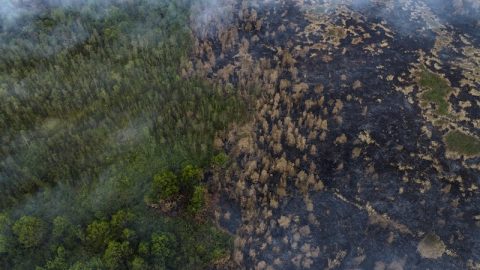
More efficient cookstove projects earn credits based on the amount of carbon they save by preserving trees that would have otherwise been cut down and burned for fuel. But if those trees later burn in a wildfire or are logged, the carbon stored would be released anyway, erasing the climate benefits of the credits.
Several carbon credit developers, conservation NGOs and the UN Environment Programme (UNEP) disputed that cookstove projects face this risk, in what critics described as a “coordinated lobbying campaign”.
They argued that, unlike forest protection schemes, this type of credit represents a “flow” of avoided emissions rather than a “stock” of stored carbon that can be released. They als