

The “dangerous humid heat” that engulfed western Africa in mid-February was made 10 times more likely by human-caused climate change, a new rapid attribution study finds.
Throughout February, western Africa was hit by unusually intense heat. Temperatures exceeded 40C in some regions, prompting the Ghanaian and Nigerian meteorological services to issue heat warnings.
The World Weather Attribution (WWA) service have analysed the region’s “heat index” – a measure that incorporates both temperature and humidity, to reflect the physiological impacts of the extreme conditions.
While the average air temperatures in west Africa reached 36C over 11-15 February, the heat index for the same period was about 50C, according to the study.
The study authors find that climate change made the heatwave 10 times more likely and 4C hotter. They warn that if global warming reaches 2C above pre-industrial temperatures, “similar events will occur about once every two years and will become a further 1.2-3.4C hotter”.
There was “very limited” data available on the impacts of this heatwave across west Africa, the study notes. However, the authors told a press briefing that heat is a “silent killer” and that lack of reported impacts does not mean the heatwave was not dangerous.
The report says that “to reduce heat-related morbidity and mortality in southern west Africa, there is an urgent need for improved monitoring and research on the impacts and risks associated with heat waves”.
Early heatwave
Countries across west Africa have been sweltering under unseasonably hot temperatures for weeks.
Wasiu Adeniyi Ibrahim is a meteorologist from the Nigerian Meteorological Agency and a co-author on the study. He told a press briefing that in west Africa, the most severe hot and humid weather of the year is usually recorded during March and April.
However, by February this year, the region was already reporting record-breaking temperatures. This intense heat was driven by an “anomalous high-pressure system over the Sahara region” which “carried hot air towards the coast”, Ibrahim explained.
On 7 February, the Ghanaian capital city of Accra recorded its hottest day in history when temperatures reached 38C.
The finals of the Africa Cup of Nations football tournament were played in Ivory Coast on 11 February. This year, for the first time, the Confederation of African Football included two-minute cooling breaks at the 30th and 75th minutes, with provisions for additional breaks under extreme heat.

The Nigerian Meteorological Agency issued a warning on 13 February after air temperatures hit 41C in the north of the country, stating that the heat could cause conditions including fainting, heat rash, “weakness of the body” and respiratory issues. The agency advised people to stay hydrated, seek shade and stay indoors as much as possible between midday and 4pm.
“Experts warn that the extreme temperatures, amid the epileptic power supply, could trigger diseases, threaten livestock, and lead to death,” the Nigerian newspaper Punch said, reporting on the heat warning.
The WWA adds that, across Nigeria, “doctors reported an increase in patients presenting for heat-related illness” and “people complained of poor sleep due to hot nights”.
The Ghanaian Meteorological Agency released an “urgent public service announcement” on 20 February, advising precautionary measures such as staying hydrated and avoiding direct sun exposure.
As the month progressed, hundreds of regional and national temperature records across the region were broken, including hottest February nights in Ghana, Benin and Togo.
‘Dangerous humid heat’
Extreme heat is particularly dangerous when combined with high humidity. When it is hot, the human body produces sweat to cool itself down. However, as humidity increases, sweating becomes less effective.
To assess the severity of the hot and humid conditions, the study authors analysed the “heat index”. This measure “combines temperature and humidity to reflect how it feels to the human body”, Dr Izidine Pinto – a researcher at the Royal Netherlands Meteorological Institute and co-author on the study – explained to a press briefing.
The study says:
“While the average air temperature in west Africa was above 36C, the heat index for the same period was about 50C, reflecting how a combination of humidity and high temperatures caused dangerous conditions.”
The authors focus on a region of southern west Africa where the heat was the most extreme, including Nigeria, Benin, Togo, Ghana, Ivory Coast, Liberia, Sierra Leone, and small parts of Guinea and Cameroon.
The maps below show the five-day heat index over this region averaged over 11-15 February (left), where purple indicates hotter temperatures, and the difference compared to the 1991-2020 average (right), where red indicates hotter temperatures. The blue boxes in both maps indicate the study region.

Pinto told the press briefing that as there was no meteorological station data available for many of the countries in the study region, the researchers had to “wait for the gridded datasets to be updated and validated for the region” before conducting their analysis. This delayed the release of the study findings, he said.
To put the heatwave into its historical context and determine how unlikely it was, the authors analyse a timeseries of annual maximum five-day heat index over the study region, shown below. Higher bars with darker colours indicate a higher heat index.

The authors find that in today’s climate, this heatwave was a one-in-10 year event.
Attribution
Attribution is a fast-growing field of climate science that aims to identify the “fingerprint” of climate change on extreme-weather events, such as heatwaves and droughts. To conduct attribution studies, scientists use models to compare the world as it is today to a “counterfactual” world without human-caused climate change.
They can also use these models to assess how much more intense or frequent the event would be in an even warmer world.
In this study, the authors investigate the impact of climate change on the maximum five-day heat index in southern west Africa.
They find that global warming made the west African heatwave 4C hotter. They add that if global warming reaches 2C above pre-industrial temperatures, similar events could become a further 1.3-3.4C hotter.
The authors also calculate that climate change made the heatwave 10 times more likely to occur, adding that similar events could occur every other year in a 2C world.
The graphic below illustrates these results. a pink dot indicates the number of years in every 100 that an event like the February heatwave over southern West Africa would be seen at different warming levels.
The square on the left shows a world without climate change, in which such a heatwave would happen less than once every 100 years. The middle square shows that in today’s climate, the heatwave is a one-in-10 year event. And the square on the right shows that in a 2C world, a heatwave of this severity could be expected every other year.

(These findings are yet to be published in a peer-reviewed journal. However, the methods used in the analysis have been published in previous attribution studies.)
Under-reported
West Africa was not the only region to experience record-breaking heat in February 2024.
February 2024 was the world’s hottest February on record, and countries across southern Africa – including Botswana, Namibia, Mozambique, South Africa, Zambia and Zimbabwe – saw temperatures of 4-5C above the February average.
Africa’s record-breaking heat continued into March.

In Johannesburg, South Africa’s largest city, many residents faced several weeks without water. “Authorities in Johannesburg, South Africa’s commercial hub, have blamed the ongoing heatwave for the lack of water in some parts of the city for several weeks,” Daily News reported on 13 March.
On 18 March, the health and education ministries of South Sudan closed its schools, after weather services projected an extreme two-week heatwave with temperatures of up to 45C. Parents were advised to keep all children indoors, and ministries warned that any school found open during the warning period would have its registration withdrawn.
BBC News added:
“Muslims, who make up around 6.2% of the country’s population, have been hit especially hard as many are observing Ramadan – a month of fasting. They are therefore not permitted to drink water or any other liquids to stay hydrated during the day.”
Between March 18-19, at least five countries in Africa, including South Africa and South Sudan, reported record-breaking temperatures.
However, the WWA study says that while the heatwave “potentially affected millions”, there is “very limited” data available about its impacts. As such, it says that very few heat-related impacts were reported by the media and government organisations.
“This, of course, does not mean there are no impacts”, said Maja Vahlberg from the Red Cross Red Crescent Climate Centre, who is a co-author on the study.
In fact, Vahlberg told a press briefing that early-season heatwaves are generally “more impactful than heat waves in the hot season” because “the human body has to very rapidly adjust to extreme temperatures”.
Heatwaves are a “silent killer”, Pinto told the press briefing, warning that “you only see the impacts later”.
The lack of reporting on the impacts of the heatwave “reflects the need to improve awareness of dangerous heat and detection of heat impacts”, the study says.


The post Climate change made west Africa’s ‘dangerous humid heatwave’ 10 times more likely appeared first on Carbon Brief.
Climate change made west Africa’s ‘dangerous humid heatwave’ 10 times more likely

The ongoing “super El Niño” is likely to peak at the end of 2026 and push average global temperatures to record levels next year.
That is according to Carbon Brief’s latest “state of the climate” update, which analyses El Niño forecasts from more than a dozen climate models, as well as six global temperature datasets.
Dr Zeke Hausfather, Carbon Brief’s climate science contributor, described this year’s El Niño as “simply staggering” when answering questions from CB+ members during a CB Connect “ask me anything” session.
El Niño is a naturally occurring climate pattern in the tropical Pacific that releases heat from the ocean into the atmosphere and temporarily boosts global temperatures.
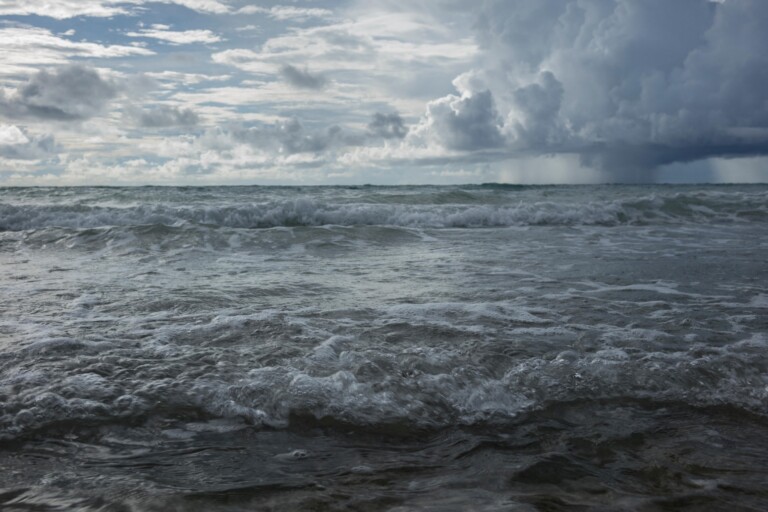
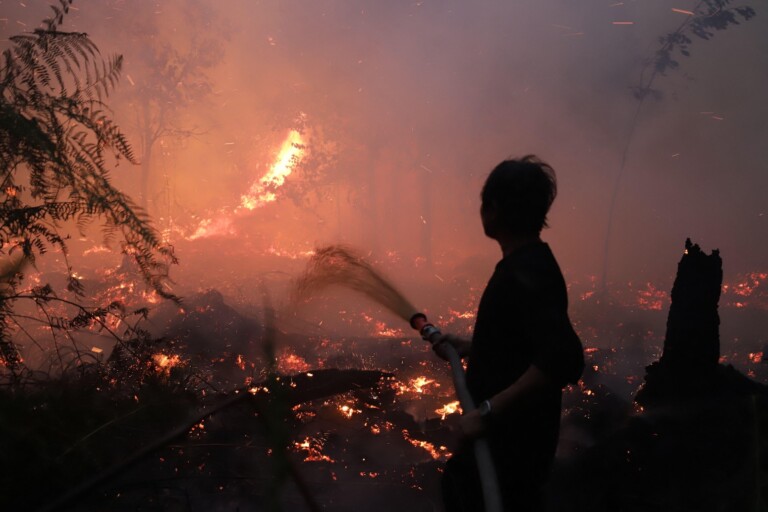
This year’s El Niño event – which has been underway since June – has already broken a number of records and reshaped the world’s weather, fuelling fires in Indonesia and “super typhoons” in the west Pacific.
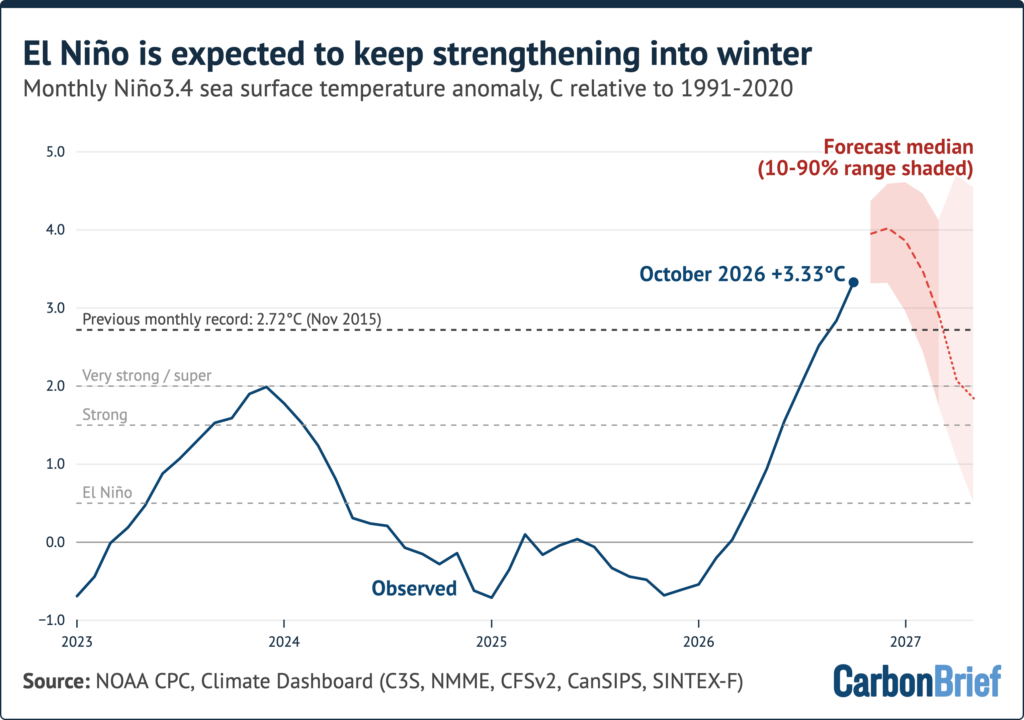
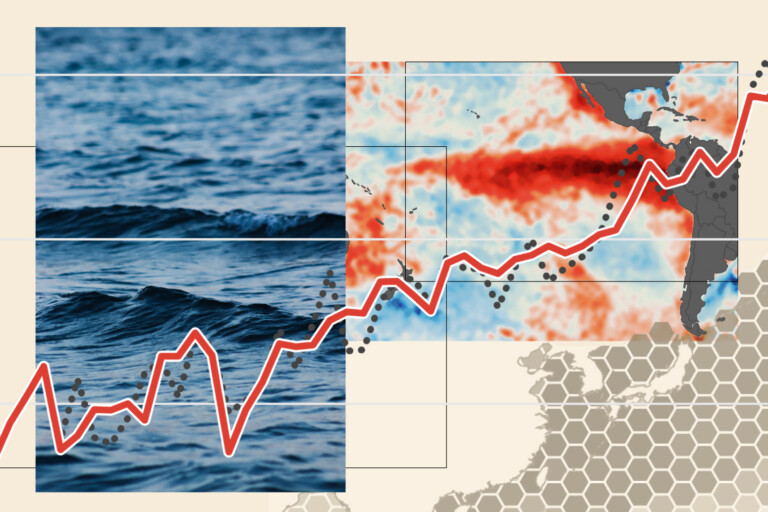
The strength of an El Niño is tracked using the “Niño3.4 anomaly”, which is a measure of how much warmer sea surface temperatures are than average in a section of the central Pacific.
Analysis of more than 600 forecasts from 14 different climate models by Hausfather for Carbon Brief’s “state of the climate” update shows how models project this year’s El Niño will peak with an anomaly of around 4C. This would be more than a degree above the previous record in 2015-16.
Writing on CB Connect on 5 November, Hausfather wrote:
“This El Niño event is developing so quickly and is reaching sea surface temperatures so warm that it’s simply staggering. We haven’t seen anything like this in the historical record and it may end up being the strongest El Niño event in the past millennium.”
This year’s El Niño has already chalked up a number of milestones.
On 18 September, the daily anomaly in the Niño3.4 region broke the satellite-era record set in 2015 when it reached 3.11C.
Meanwhile, September as a whole recorded the highest monthly Niño3.4 region temperature anomaly – 2.84C – since sea surface temperature records began in the mid-1800s.

Membership
Support award-winning climate journalism
Hausfather wrote on CB Connect that this year’s El Niño had been “running well above any prior El Niño event since June, at times by a full degree [Celsius]”.
Carbon Brief’s “state of the climate” analysis indicates that El Niño is set to continue to intensify into December, with 10 out of 14 models expecting temperatures in the Niño3.4 region to peak in the final month of this year. The remainder anticipate a November peak.
While human emissions of greenhouse gases are responsible for almost all of long-term global warming, temperatures in specific years are strongly influenced by El Niño events.
The “state of the climate” analysis explains that this year’s El Niño event will have its largest effect on global temperatures in 2027. This is because global temperatures typically lag warming in the tropical Pacific by around three months.
Carbon Brief projects that the 2027 average global temperature will reach around 1.74C above pre-industrial levels. It calculates a 96% chance that next year will be the warmest on record.
This projection is based on the historical relationship between year-on-year temperature changes and El Niño conditions the preceding autumn. It also factors in uncertainty around how global temperatures will develop across the remainder of 2026.

The post ‘Simply staggering’: Rapidly developing ‘super El Niño’ on track to peak in December appeared first on Carbon Brief.
‘Simply staggering’: Rapidly developing ‘super El Niño’ on track to peak in December
Some things are too precious to risk. And Scott Reef is one of them.
Today, we’re launching a bold new campaign starring iconic Australian actor Michael Caton and a green sea turtle named Sandy to rally Australians behind one simple message: Flip off Woodside to save Scott Reef.
Off the coast of Western Australia, Scott Reef is one of Australia’s most extraordinary marine environments. It is home to vulnerable green sea turtles, endangered pygmy blue whales and thousands of other marine species.
Each year, one thousand endangered green sea turtles return to Scott Reef to nest. It’s where they lay their eggs. It’s where baby turtles hatch. It’s where they make their first brave dash from the sand to the ocean. It’s their home.
But this remarkable ecosystem is under threat from Woodside’s plans to drill for gas, with up to 57 toxic wells proposed around the reef.
Turtles can’t speak up for their home, so we’re asking Australians to make their voices heard instead.

From one Aussie icon to another
At the heart of our new campaign is an iconic Australian voice, Michael Caton. Caton is using his voice to speak out for, what will soon be, another Australian icon – Scott Reef.
In a cinematic courtroom showdown, Caton lends his unmistakable voice to one of Scott Reef’s most vulnerable inhabitants: a green sea turtle fighting to protect her home from corporate destruction.
As Sandy the turtle defiantly flips her flippers at Woodside, Caton delivers a message that every Australian can get behind.
“Some things are too precious to risk.”
Because when it comes to protecting our natural environment, sometimes being polite just isn’t enough.