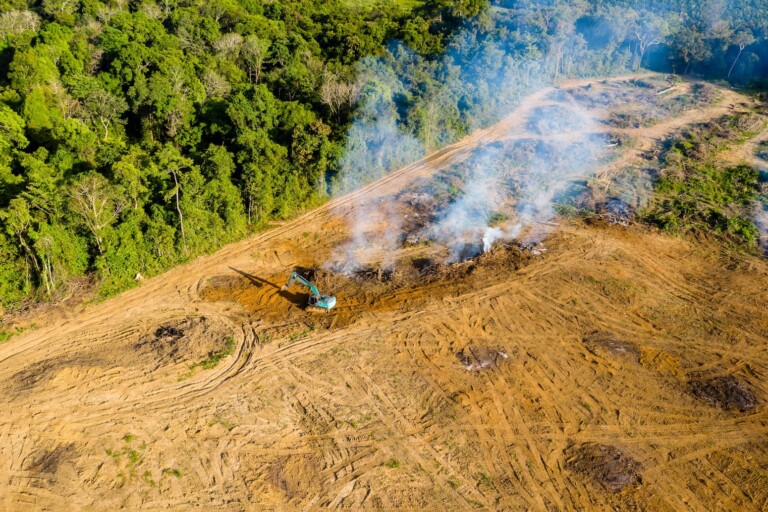
When a South Korean firm pulled the plug on a multibillion-dollar investment last year, it was a major blow to Indonesia’s plans to build an integrated battery-manufacturing ecosystem – until a group of Chinese companies stepped into the breach.
Project Titan aims to tap Indonesia’s vast nickel reserves in East Halmahera – the epicentre for mining the sought-after metal – before shipping refined and processed material to make batteries for electric vehicles (EVs) more than 2,000 kilometres away in a factory in West Java.
Even before South Korean battery firm LG Energy Solution scrapped its planned $8.45 billion investment in Project Titan, citing “various factors” including market conditions, years of stalled feasibility studies had cast doubt on the initiative – a pillar of Indonesia’s goal to use its nickel riches to become a global battery manufacturing hub and a base for EV production in the region.
The $6-billion investment and cooperation framework struck earlier this year between state companies and a Chinese consortium keeps Project Titan alive, but it also highlights Indonesia’s heavy dependence on China for capital, technology and materials in battery manufacturing.
“We get cash but there is no tech transfer or skilled labour jobs,” Zulfikar Rakhmat, director of the China-Indonesia Desk at the Jakarta-based Center of Economic and Law Studies, told Climate Home News. Indonesia’s dependence on China for funding, nickel smelting and processing capacity is “almost total”, he added.
And at a time when cheaper nickel-free battery alternatives are winning over the EV market, China’s outsized role could bring additional commercial risks for Indonesia’s emerging battery industry.
“If Indonesia’s battery chain is seen as entirely Chinese-owned and coal-powered, its product will struggle to enter the Western markets,” Rakhmat added, referring to efforts by countries, including the European Union, to break their dependence on Chinese cleantech and reduce imports of carbon-intensive goods.
A Chinese tale of two halves: steel and batteries
Chinese investment in industrial projects to develop Indonesia’s nickel reserves – the world’s largest – is not new.
China was “the main engine” behind the country’s successful push to refine its nickel domestically after the government banned the export of raw ore in 2020, said Berlin Syahputra Situmorang, a researcher at the Indonesian Initiative for Sustainable Mining.
China, which imported most of Indonesia’s raw nickel ore prior to the ban, invested billions of dollars in building the country’s refining capacity.
Large, mostly coal-powered industrial parks sprang up near mines to refine nickel, some of which have been associated with extensive environmental and human rights abuses.

By 2025, Indonesia produced two-thirds of the world’s raw nickel supply and boasted 43% of nickel refining capacity. Yet three-quarters of the country’s refining capacity is controlled by Chinese firms, according to research by the Washington-based research organisation C4ADS.
And while the Indonesian government talked about developing its mineral wealth to power the batteries needed for the energy transition, Indonesia’s real success was to develop a stainless steel industry, the biggest consumer of nickel globally.
More than 80% of Indonesia’s nickel supplied the stainless steel sector in 2025, with only 17% going into the EV battery supply chain, according to analysis by the Centre for Research on Energy and Clean Air (CREA).
“It’s a tale of two different parts,” said Lloyd Hain, managing director of Xenith Market Services, an Australian mining and supply chain consultancy. “Indonesian stainless steel goes all over the world. The battery side, however, has been a completely different story.”
An emerging battery ecosystem
Developing a battery industry has proved a lot more difficult. Several plants to process nickel into battery-grade materials are planned or under construction across the country, but many remain at early stages of development.
Still, Indonesia’s battery exports exceeded $1 billion in 2025, according to data from the UN Comtrade Database. By 2028, CREA estimates that 30% of Indonesia’s nickel production will go towards making battery materials.
The nation’s first battery cell plant in Karawang, West Java, began operating in 2024. It was developed by South Korean car maker Hyundai and LG Energy Solution, which continues to operate the facility despite withdrawing from Project Titan.
Project Titan, the flagship integrated battery project, aims to develop 20 gigawatt hours (GWh) of capacity to produce nickel-based EV batteries as well as energy storage batteries to support the country’s goal of rolling out 100 GW of solar capacity in the next four years.
Under the deal agreed this year, it will be operated by Indonesian state companies and a consortium including China’s Zhejiang Huayou Cobalt and battery manufacturer EVE Energy.
Another $5.9-billion joint venture between state firms and a consortium led by Chinese battery giant CATL will develop nickel mining, processing and a battery-recycling factory in East Halmahera as well as a 6.9 GWh battery facility in Karawang, with plans to scale.

Collaboration with Chinese firms “is expected to encourage technology transfer so that national companies can become leaders in their own country”, Minister of Energy and Mineral Resources Bahlil Lahadalia said in a statement about Project Titan.
Foreign companies investing in Indonesia are required to partner with the Indonesia Battery Corporation (IBC), a state-owned enterprise made up of state mining and energy firms, tasked with establishing the capabilities for developing a battery and EV ecosystem.
It is the complexity of making batteries that underlies Indonesia’s dependence on Chinese know-how, said Situmorang of the Indonesian Initiative for Sustainable Mining.
Without a transfer of technology, Indonesia “risks remaining dependent on external players for the most advanced parts of the value chain”, Situmorang told Climate Home News.
Forging a path of its own
Indonesia’s reliance on China does not stop at money and technical knowledge. It also relies on Chinese imports of key battery materials, such as lithium and graphite.
That means Indonesia should aim to diversify its investment partners by working more closely with South Korean companies and seek long-term lithium and graphite supply deals with major producers such as Australia, said Rakhmat of the Center of Economic and Law Studies.
It must also invest in domestic research and development as well as nurturing its own engineering talent, he added.
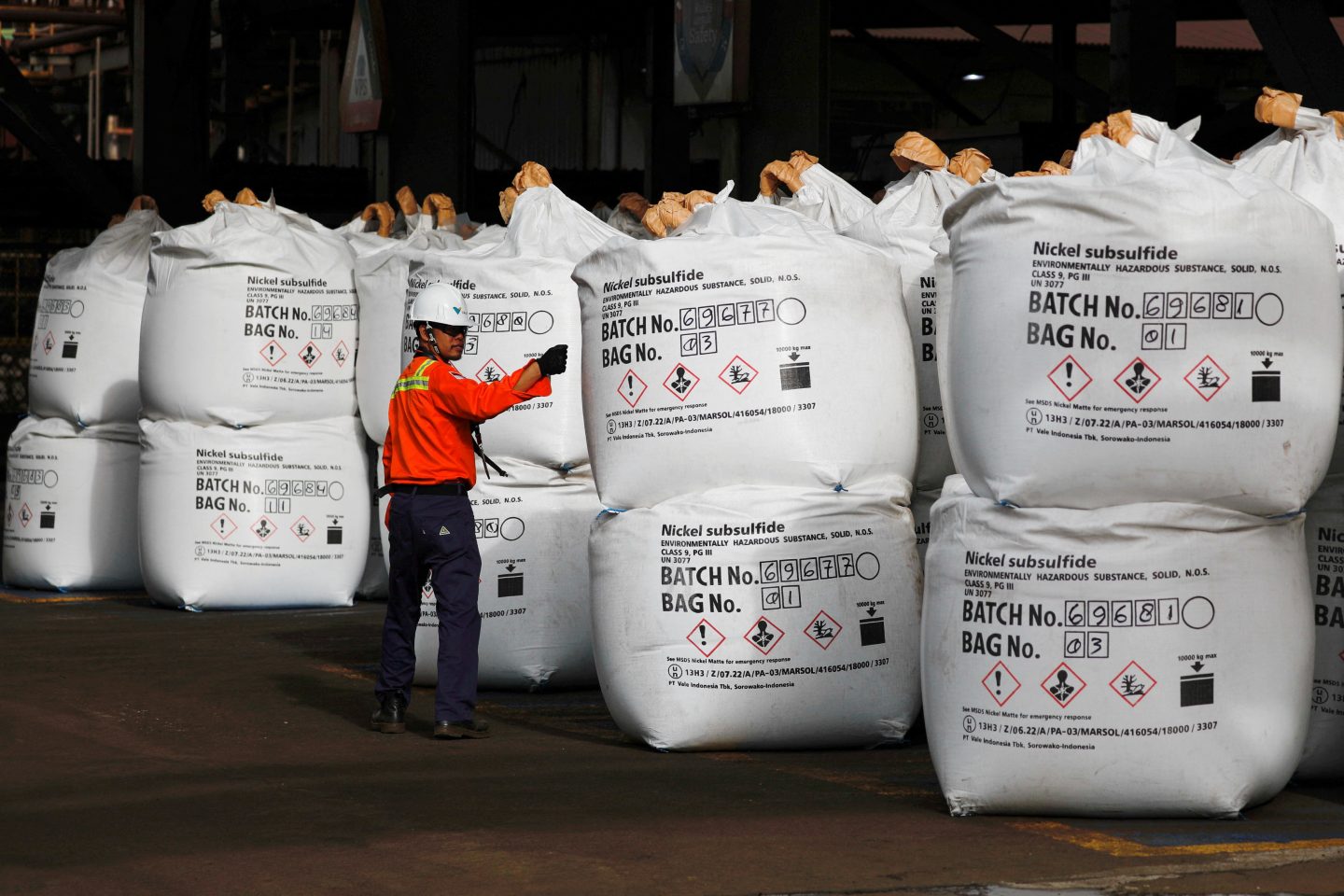
Eventually, however, the Indonesian government will need to decide whether it wants to integrate its battery ecosystem “completely and unconditionally” into China’s EV supply chain “or go its own way”, said Shen Wei, a research fellow at the UK-based Institute of Development Studies.
He warned that it would be “inherently difficult” for Indonesia to continue to learn from China while simultaneously trying to compete with it.
In a sign of tension between Indonesia’s efforts to capture more value from its resources and the Chinese firms that have bankrolled the industry’s expansion, the Chinese Chamber of Commerce wrote to President Prabowo Subianto in May warning that recent policies, including a sharp reduction in nickel ore production quotas to push up prices, could undermine existing projects and future investment.
The Chinese Chamber of Commerce in Indonesia did not respond to a request for comment, nor did Indonesia’s Ministry of Energy and Mineral Resources or the Ministry of Investment and Downstream Industry.
A damaging myth: “Nickel is everything, forever”
The rapid shift towards nickel-free EV batteries poses another threat to Indonesia’s plans.
China is driving global adoption of lithium iron phosphate (LFP) batteries, a battery chemistry which relies on more common materials, is cheaper to produce and is better suited for frequent charge and discharge, making it an attractive alternative to power electric two- and three-wheelers, urban EVs and stationary power storage.
LFP batteries accounted for more than 55% of EV batteries deployed globally last year, driven by China and imports of Chinese-made vehicles by emerging market countries, according to the International Energy Agency. They also accounted for about 90% of battery storage deployment.
“If Indonesia stays too fixed on a ‘nickel equals EV future’ mindset, there’s a risk of missing where the bulk of the market is actually going,” Situmorang said, noting that in Indonesia, most of the EVs sold in 2025 used LFP batteries.
Nickel-based batteries, which can pack more energy in each battery, are still in demand for long-range and premium EVs popular in the US, Europe and upper-end Asian markets. Outside China, almost 80% of EV batteries used nickel-containing types in 2025.
Rakhmat said Indonesia is adapting its manufacturing strategy, targeting its nickel-based batteries for the export market and boosting production of LFP batteries to meet domestic demand.
Several Chinese firms are already investing to manufacture LFP batteries in Indonesia.
But Rakhmat said the realisation of changes in the market “came very late” and that many local officials still incorrectly believe that “nickel is everything and forever”.
Without a robust industrial policy and a strategy to create sustained domestic demand for “Made in Indonesia” batteries, “there is a possibility that we will be left behind,” he warned.
Main image: A view over the PT Virtue Dragon nickel industrial complex in Konawe, Southeast Sulawesi, Indonesia (Photo: Ulet Ifansasti/Getty Images)
The post China keeps Indonesia’s battery dream afloat but future less certain appeared first on Climate Home News.
China keeps Indonesia’s battery dream afloat but future less certain
Climate Change
Collective global roadmap can boost Cambodia’s energy transition goals
Phalkun Out is manager of energy policy and government relations at EnergyLab Asia.
Cambodia has made impressive strides in transitioning from dirty coal and imported electricity to homegrown renewable energy that now accounts for nearly half of the electricity mix. The kingdom has a target to source 70% of its total power capacity from renewables by 2030. This is achievable but requires global support and cooperation.
The recent momentum on developing a formal process to assist countries in transitioning away from fossil fuels (TAFF) is very encouraging. The roadmap process championed by the COP30 Brazil presidency and at the Santa Marta conference in Colombia shows a clear appetite among countries to invest in a just and orderly transition.
The current energy crisis provides a stark reminder of how relying on imported fossil fuels, like oil and gas, puts at risk our economic competitiveness and energy security. The impact on families, particularly poorer households, has been devastating as they struggle to pay for transport, food and electricity.
Even as Cambodia has been able to shield itself from the worst impacts, thanks to its renewable investments, this moment is still a wake-up call for all of Southeast Asia, which has experienced a devastating oil shock twice in a decade.
Given the turbulent times ahead, the region cannot afford a return to the status quo of high dependence on foreign fuel supplies. As a clean energy leader, Cambodia can play a critical role in elevating the importance of clean energy transition at the regional level.
Cambodia cannot go it alone
A new international governance framework and coordinated transition plans are essential for Cambodia and the rest of Southeast Asia to achieve a just and orderly transition. There are structural barriers that need to be overcome swiftly.
However, to reach Cambodia’s 70% renewables target, the government plans to overcome structural hurdles – upgrading grid infrastructure, managing limited fiscal space, and addressing the high upfront capital costs of renewable energy – that require more than local effort.
Concessional loans and grants similar to the $110-million World Bank credit to Cambodia for the Sustainable Energy Transition Project, approved in June 2026, are crucial to help build smart grids, high-voltage transmission lines and large-scale battery energy storage systems, needed to make the most of the new renewables coming online.
Global initiatives like the COP31 Türkiye presidency’s plans to champion electrification and a global target for electricity to provide 35% of final energy consumption by 2035 are commendable. But they still need to be understood in terms of what opportunities and support this could offer for countries like Cambodia.

(Photo: EnergyLab Asia)

(Photo: EnergyLab Asia)
Cambodia has seen progress on electrification, recording a 127% increase in year-on-year electric vehicle registrations in 2025. And, to sustain the renewable energy momentum, the government eliminated import taxes and duties on solar and energy storage technologies in April, which analysts predict will slash total renewable project costs by an estimated 7% to 30%.
Energy think-tank Ember has also noted a trend across Asia in which countries that built the skills to make electronics then moved into electric technologies, manufacturing solar panels, heat pumps and electric vehicles. This suggests Cambodia could follow with the right government financial and policy support.
However, for these trends to continue and even accelerate, continued international financial and technical support for countries like Cambodia is also essential.
COP31 can enhance cooperation and support
At COP30 last November, Brazil agreed to develop a global roadmap on transitioning away from fossil fuels, and several countries made it clear this was a priority for them.
The Brazil COP30 presidency previewed its roadmap at the Bonn climate talks in June, championing the roadmap as a flexible implementation tool adaptable to national circumstances. This guide can be used by countries like Cambodia to structure its transition and tackle technical barriers.
Southeast Asia’s fragile grids threaten billions in clean energy investment
The Turkish and Australian COP31 presidencies this year have the opportunity to transform the roadmap and prevent the issue from being sidelined at the summit in Antalya. The world needs a coordinated process that can sustain deliberate planning, technology transfer and adequate public investment.
For regions like Southeast Asia and Africa, the transition is not just a climate obligation; it is an economic necessity that requires the world to stop talking and start building.
The post Collective global roadmap can boost Cambodia’s energy transition goals appeared first on Climate Home News.
Collective global roadmap can boost Cambodia’s energy transition goals
Climate Change
Q&A: What is ‘long-duration energy storage’ – and why does the UK need it?
The UK is pioneering the use of “super batteries” that can store energy for long periods, smoothing the output from wind and solar power as the country moves towards net-zero.
It is aiming to build “long-duration energy storage” (LDES) that fills up when supplies are plentiful, to help cover the gaps when the wind does not blow and the sun does not shine.
These periods can last for days or even weeks – sometimes referred to as “dunkelflaute”, a German word meaning “dark doldrums” – whereas the current batteries on the electricity system only last a matter of hours.
The nation’s energy regulator Ofgem has now identified 16 LDES projects that it is “minded to” support under a new “cap-and-floor scheme”.
The technologies selected can be used to store energy for long periods in the form of gravity, chemical processes or electrical charge.
These include pumped hydro, which has dominated long-term storage in the past, through to large lithium-ion batteries, “flow batteries” with novel chemistry and compressed-air storage.
The use of these technologies is expected to cut energy system costs in the UK by more than £24bn between 2030 and 2050.
This Q&A looks at what LDES means and where it can come from, why it is needed and what the UK and others are doing to support its use.
What is LDES?
LDES is a broad category of technologies, with some variation in definition.
The UK government defines it as technologies that can store energy for anywhere from four hours up to years. Ofgem uses a slightly different threshold of eight hours and upwards.
Sir Chris Llewellyn Smith, emeritus professor of physics at the University of Oxford and lead author of a Royal Society report on large-scale electricity storage, tells Carbon Brief:
“[The Department of Energy Storage and Net-Zero] (DESNZ) seems to describe it as including things which we would regard as some short duration or medium duration [storage]. It’s a big confusion…For us, long duration is stuff that can last not just into seasons, but into years and into decades.”
LDES can be used to support several different aspects of the electricity system, including the integration of variable renewable energy.
Currently in the UK, there is 2.8 gigawatts (GW) of LDES, made up of four pumped-hydro energy storage assets in Scotland and Wales.
(This article refers to the UK throughout, but strictly relates to the island of Great Britain made up of England, Scotland and Wales. Northern Ireland is part of the separate all-Ireland electricity system.)
The largest of these existing sites is the Dinorwig power station in North Wales, sometimes referred to as the “electric mountain”. This is a 1,728 megawatt (MW) station opened in the 1980s, which is used to manage short-term surges in electricity demand.

For example, during England’s football World Cup match against the Democratic Republic of Congo on 1 July 2026, electricity demand rose by around 1.2GW at half-time and 1.7GW at full-time. This is equivalent to the total electricity demand for the cities of Glasgow and Leeds, combined.
Pumped storage, alongside batteries, has been used to keep the electricity system balanced during such moments by providing enough electricity to keep the system secure very quickly.
As the UK’s electricity system becomes increasingly dominated by variable renewables, however, the need for LDES to manage peaks and troughs of generation is growing.
George Martin, principal for power system modelling at analytics company LCP Delta, tells Carbon Brief that wind power creates a particular need for LDES. He says:
“[LDES is] really important for the system, particularly in a wind-driven system. You get more peaks and troughs in your renewable output and, [while] short duration [storage] can obviously help with that, with things like ‘dunkelflaute’, long-duration storage is what is needed.”
As such, the UK is working to expand the capacity and duration of storage available through LDES, as well as the range of technologies this system is based on.
For example, in May 2026 the UK’s largest vanadium “flow battery” site opened, co-located with a 3MW solar farm in Uckfield, East Sussex. (A flow battery stores energy in liquid chemical mixtures that are pumped between tanks, via an electrochemical cell.)
The Uckfield site consists of 90 vanadium flow batteries, which can be used to store 21 megawatt-hours (MWh) of electricity. This is equivalent to seven hours of peak output from the attached solar farm and is roughly enough electricity to power 3,000 homes for a day.
The batteries can be used to store surplus daytime solar generation, which can then be used in the evening and overnight.
Other LDES technologies with a longer storage capacity could be used to similarly help manage power supply and demand, but over weeks, months or seasons. This could include compressed-air energy storage, hydrogen storage and others.
The diversity of LDES technologies reflects the range of roles it is expected to play in the electricity system in the UK. This could be meeting short-term surges, helping to utilise surplus renewable energy generation or providing longer-term flexibility.
What types of LDES are available?
There are numerous types of energy storage technology, although most fall into four main categories: mechanical; thermal; chemical; and electrochemical.
For example, a pumped-hydro project uses surplus energy to pump water uphill to a reservoir. The mechanical energy is released when the water flows down through a turbine.
Thermal storage could be a tank of gravel that is heated up, then later used to warm up water. Electrochemical storage is familiar in the form of batteries.
Finally, chemical storage relates to energy stored in molecular bonds, for example, making hydrogen from water. (Similarly, the energy in fossil fuels, which is ultimately derived from the sun, is a form of chemical storage.)
A key consideration for each LDES technology is the amount of energy it can store, measured in watt-hours (Wh). For example, a 1MW battery with four hours of storage contains 4MWh of electricity. It can therefore be used to deliver 1MW continuously for up to four hours.
Another consideration is whether the energy can be stored for long periods before use – and whether it is economic to do so.
In recent years in the UK, battery energy storage – predominantly lithium-ion batteries with a duration of one to four hours – has dominated the storage sector. The lithium battery sector in the UK has grown from almost nothing in 2015 to more than 6GW today.
However, as lithium-ion batteries have only tended to hold a few hours of storage, they cannot help support the grid during longer periods of low renewable energy generation.
Technologies such as vanadium-redox flow batteries, compressed-air energy storage or hydrogen salt-cavern storage could potentially help manage supply and demand over days, weeks or even years.
A range of LDES technology options are shown in the table below.
| Technology | Type | Duration | How does it work? |
| Gravity storage | Mechanical | Hours | A heavy object is lifted, storing kinetic energy that can be turned back into electrical energy by a generator. |
| Lithium-ion batteries | Electrochemical | Hours | Lithium ions move between a negative anode and a positive cathode through an electrolyte within the battery. |
| Liquid air | Mechanical | Hours to days | Air is compressed and cooled until it becomes a liquid. When the air becomes a gas again, it drives a turbine. |
| Vanadium flow | Electrochemical | Hours to days | Liquid chemical mixtures are pumped between tanks, via an electrochemical cell. |
| Compressed air | Mechanical | Hours to days | Air is compressed to a high pressure and stored in underground geological formations, such as salt caverns or disused oil and gas wells. |
| Pumped hydro | Mechanical | Hours to days | Water is pumped up a hill to a reservoir and then released to drive a turbine. |
| Hydrogen salt cavern storage | Chemical | Seasons | Surplus energy is used to make hydrogen from water. The hydrogen is then stored in underground salt caverns, before being burned as fuel. |
| Thermal energy storage | Thermal | Seasons | A material such as gravel is heated with surplus energy and kept in an insulated store, before being used to warm water. |
Each option has specific advantages and disadvantages; for example, while pumped hydro storage has a high upfront cost, it has a long lifespan of over 50 years. As such, its capital cost per kilowatt hour (kWh) is lower than many other storage options over time.
(Pumped hydro is the most established LDES technology in the world, but no new projects have been built in the UK since the 1980s.)
While it has historically been a short-duration form of storage, some lithium-ion batteries can now store power for much longer chunks of time.
Lithium-based grid batteries now often offer 8-12 hours of storage and – as shown in the table above – even longer durations are possible
As Ed Porter, director for Europe at data company Modo Energy, quipped on LinkedIn following the cap-and-floor scheme results:
“Lithium [is] going far beyond 8 hours; that debate must surely be dead now.”
While even 12 hours is of limited use for gaps in generation of days, weeks or seasons, there are numerous benefits to lithium-ion batteries in comparison to other LDES technologies. For example, the cost of these batteries has fallen by an average of 20% per year over the last decade.
Given the variation in technologies – including scale, lifespan, commercial readiness and aspects such as necessary geography – comparing the costs of each technology is challenging.
However, utilising a diverse set of storage technologies is expected to be particularly beneficial for electricity systems, according to experts.
Julia Souder, CEO of industry group the LDES Council, tells Carbon Brief:
“The UK is leading the charge on technology diversity. We’re witnessing matching different LDES solutions to the real differences in market structure and country needs.
“But make no mistake: a handful of LDES technologies will do the heavy lifting over the next decade. We’re seeing that play out in which technologies are winning through the UK government’s new cap-and-floor mechanism for long duration storage.”
How much LDES will the UK need?
LDES is expected to be a key component of the UK’s electricity system in the future, particularly as it moves away from easily stored and dispatched fossil fuels such as gas.
The government has set a target of “clean power by 2030”, in the lead-up to the wider net-zero by 2050 goal.
In 2024, the Labour administration set out an “action plan” for reaching the 2030 target, which included substantial increases to electricity generation technologies.
This included setting widely discussed targets to double offshore wind, triple onshore wind and quadruple solar capacity by 2030, alongside rebuilding the UK’s nuclear fleet.
But the action plan also set a less well-known target for 4-6GW of LDES, to help balance this renewables-dominated electricity mix. This is in addition to 23-27GW of short-duration battery energy storage, new interconnectors and a big push to develop consumer-led flexibility.
There is also a major expansion of LDES to 3.8-5.3GW by 2030 in the most recent “future energy scenarios” report from the National Electricity System Operator (Neso), as shown in the chart below.
Neso’s pathways show LDES rising to between 16.6GW and 13.2GW by 2050, mainly dependent on how hydrogen is used in the electricity system.

The Neso report notes that few LDES schemes are likely to come online before 2030, due to the long project development and planning times, as well as high capital expenditures.
Which types of LDES is the UK planning to use?
While the UK is pursuing a diverse range of LDES, certain technologies are likely to make up the bulk of LDES in the next decade or so.
This is evident in the technologies that have bid successfully into the UK government’s new “cap-and-floor” mechanism for LDES.
The scheme was first announced in 2024 and is designed to guarantee a minimum level of revenue for energy storage operators – the “floor” – as well as to put a limit on profits via the “cap”.
(The mechanism will be funded through electricity bills. However, Ofgem expects it to be broadly cost-neutral over time.)
Similar mechanisms have been used to support the development of other technologies in the UK, in particular those with high upfront costs, such as interconnectors. Ultimately, it minimises the risk for developers by guaranteeing a certain level of future revenue.
In 2025, 171 LDES projects with a total capacity of 52.6GW applied to enter the cap and floor scheme, which is administered by Ofgem. Of these, 77 projects (28.7GW) were deemed eligible to enter a second “assessment” phase.
These were made up of nine different technologies, as shown in the figure below. However, lithium-ion batteries dominated the process, making up more than 20GW of the 29GW total.

No pure vanadium-flow batteries, liquid-air energy storage, iron-air batteries, sodium-sulphur batteries or hydrogen batteries were deemed eligible for the second phase.
(Conventional hydrogen storage was not eligible to bid into the process either, but could be supported through other means. The government is expected to release an updated hydrogen strategy later in 2026.)
Ultimately, Ofgem announced in June 2026 that it was “minded to” support 7.6GW of LDES capacity, spread across 16 projects. Of this total, 4GW is expected to be online by the end of the decade, at the bottom end of the range said to be required for the clean power 2030 target.
The 16 projects are listed in the table below. They comprise four technologies: pumped storage hydro (3.9GW); lithium batteries (3.6GW); one vanadium-zinc flow battery (65MW); and one compressed- air energy storage site (50MW).
| Name | Technology | Region | Capacity (MW) | Duration (hours) | Storage capacity (MWh) |
| Earba PSH | Pumped storage hydro | North Scotland | 1,800 | 15 | 27,000 |
| Coire Glas | Pumped storage hydro | North Scotland | 1,440 | 32 | 46,100 |
| Loch Kemp Storage | Pumped storage hydro | North Scotland | 660 | 22 | 14,500 |
| East Claydon Storage | Lithium battery | East England | 500 | 12 | 6,000 |
| Sundon Storage | Lithium battery | East England | 500 | 8 | 4,000 |
| Field Netherton | Lithium battery | North Scotland | 400 | 16 | 6,400 |
| Field New Deer | Lithium battery | North Scotland | 400 | 18 | 7,200 |
| Field Lond Stratton | Lithium battery | East England | 400 | 16 | 6,400 |
| Springwell | Lithium battery | East Midlands | 400 | 11 | 4,400 |
| Drakelow (Innova) | Lithium battery | West Midlands | 385 | 9 | 3,500 |
| Field Rigifa | Lithium battery | North Scotland | 200 | 18 | 3,600 |
| Field Fyrish | Lithium battery | North Scotland | 200 | 17 | 3,400 |
| Ocker Hill BESS | Lithium battery | West Midlands | 145 | 8 | 1,200 |
| Thornton BESS 2 | Lithium battery | East Midlands | 100 | 11 | 1,100 |
| Frontier Legacy | Vanadium-zinc flow battery | North Wales | 65 | 8 | 500 |
| TeesCAES | Compressed air | North-east England | 50 | 30 | 1,500 |
Welcoming Ofgem’s initial decision on the cap-and-floor mechanism, energy minister Michael Shanks said in a statement:
“Forty years after the country’s last pumped storage facility, this government is getting Britain building again…
“We are [going] further and faster in delivering the clean-power mission by rolling out a new generation of pumped-hydro storage and state-of-the-art batteries – making more of the clean, homegrown power we already produce, cutting waste, lowering bills and strengthening our energy security.”
Collectively, the provisionally successful projects can provide between eight and 32 hours’ worth of electricity storage. The top ten projects in terms of duration that applied for the mechanism – those with at least 12 hours’ worth of storage – all moved forward.
Following Ofgem’s “minded-to” decision, the regulator launched a consultation that ended on 7 August 2026. It will now make a final decision on the projects that will be supported through the “cap and floor” mechanism.
Martin tells Carbon Brief that “it’s not over” yet, with Ofgem likely to face scrutiny over the methodology it used to determine these final results. He adds:
“There’s going to be a lot of activity and a lot of responses to that consultation. I don’t expect the overall amount of capacity that’s been awarded to change, although they could increase it – it could only go up, probably.
“But there might be some change in what projects end up getting approved as a result, or maybe they end up making some changes for the next window [of applications for LDES support].”
Alongside the cap-and-floor process being run by Ofgem, the government introduced legislation via the Planning and Infrastructure Act to support the introduction of the scheme.
Additionally, in August 2026, Innovate UK – the UK’s national innovation agency – announced new funding for “ultra-long” duration battery energy storage.
Up to £3m will be invested in demonstration projects as part of the first phase of the funding, with £10m available in the sector to support the development of technologies capable of storing and discharging at least 100 continuous hours of electricity.
In a statement responding to the new funding, Dr Jamie Speirs of the University of Strathclyde and co-director of the UK Energy Research Centre, said achieving the UK’s low-carbon ambitions will rely on “unlocking” LDES to support a highly renewable system. He added:
“By providing flexibility across hours, days and even seasons, LDES could enable a resilient, low-carbon electricity system – reducing curtailment, strengthening security of supply and ensuring that intermittent renewables can maximise their contribution to the grid in all conditions.
“Investing in innovation opportunities such as this call to support market deployment of LDES technologies is a key way to support these technologies to market, giving us the best chance to meet our net zero targets.”
Phase one of the funding is open for applications until 30 September, with grants of between £350,000 and £700,000 available for the successful projects.
Seamus Garvey, professor of dynamics at the University of Nottingham, welcomes the new funding. However, he cautions that more needs to be done to ensure the future markets for medium- and long- duration storage are not compromised by early commitments to storage at shorter timescales. He tells Carbon Brief:
“Energy storage will be required over many timescales and as we decarbonise further and further, the requirements for longer durations grow and grow.
“One key problem in my opinion is that because we are tending to buy into lots of short-duration stores now, we are actually removing pieces of market that could be accessible by longer duration stores and that is making the (already-difficult) problem of financing these stores ever more difficult.”
How could LDES impact energy bills?
The rollout of LDES technologies is widely expected to help reduce energy bills as the UK transitions to a clean-energy system.
There is still a significant amount of uncertainty over the development of LDES, due to the wide range of options, nascent stages of development and lack of market maturity. Nevertheless, most research agrees that it will cut electricity system costs by the middle of the century, relative to a world where LDES is not used.
For example, adding 20GW of LDES could reduce electricity system costs by £16-51bn between 2030 and 2050, compared with a scenario that has limited flexible capacity, according to analysis for the Department for Energy Security and Net Zero (DESNZ), by thinktank Regen and LCP Delta. The analysis, published in 2023, found that 20GW of LDES could reduce costs by around £26bn.
Analysis by LCP Delta in 2025 found that building 20GW of established medium-sized LDES technologies – pumped hydro with a capacity of 8-12 hours – by 2050 would have a system benefit of more than £10bn.
LDES could reduce total UK electricity system costs by £7-13bn annually by 2040-2050, according to a report from the Transition Finance Council – a public-private body launched by the City of London Corporation and the UK government – citing a range of other studies.

The council says this would predominantly be by avoiding “curtailment”, where some generators are paid to switch off because the electricity grid cannot accommodate their output. It says that LDES would defer the need for additional grid investment and would reduce balancing costs, including curtailment.
(In the financial year 2024-25, balancing costs reached £2.7bn, adding around £40 to the average household electricity bill. Some £1.9bn of this – £28 per household – related to constraints, where wind is “curtailed” and gas plants are switched on elsewhere.)
Curtailment is a particular issue in Scotland, where much of the UK’s wind capacity sits behind congested sections of the national electricity network. Porter notes on LinkedIn that this helps explain why 79% of the LDES projects by storage capacity are located in northern Scotland.
Martin says LDES will allow the UK to “use our renewable fleet more efficiently”. He adds:
“[LDES] is able to increase renewable energy and then decrease gas generation during high-demand periods, and that brings all sorts of benefits to the system.
“It reduces emissions, it reduces the overall cost of the system, it can help reduce bills for consumers. So those are the types of benefits that we’ll see as a result of [more] LDES being [on the system].”
The Transition Finance Council report adds that despite the upfront cost, LDES quickly pays for itself. It estimates that each gigawatt of long-duration flexibility on the system requires around £2-2.5bn in investment, but yields annual system savings of £0.5-1bn once operational.
As such, even accounting for the upfront cost of developing LDES, the technologies would provide £30-60bn of electricity system savings over 25 years, the council says. It adds that this means LDES “will repay itself several times over”.
related
CCC: Faster electrification of UK will ‘put money back into people’s pockets’
Analysis: UK’s EV drivers are now saving £1,100 each a year – and £3bn in total
Q&A: Can China turn hydrogen into its next clean-energy industry?
Q&A: How the UK government aims to ‘break link between gas and electricity prices’
The post Q&A: What is ‘long-duration energy storage’ – and why does the UK need it? appeared first on Carbon Brief.
Q&A: What is ‘long-duration energy storage’ – and why does the UK need it?
Climate Change
Every country needs a model to help optimise its energy transition
Claver Gatete is Executive Secretary of the UN Economic Commission for Africa. Jason Veysey is Energy Modeling Program Director and Senior Scientist at the Stockholm Environment Institute. Lisa Sachs is Director of the Columbia Center on Sustainable Investment at Columbia University.
The case for global energy transition has rarely been clearer. The closure of the Strait of Hormuz earlier this year exposed the cost of unplanned, fossil-dependent systems, while the falling cost of renewables, the rising penetration of electric vehicles, and the growing value of demand flexibility have made the direction of travel obvious. The benefits of a clean, secure, integrated system are no longer in dispute. What remains unclear is how to build it.
Countries around the world have called for faster renewable energy deployment and alternative energy arrangements. A secure, affordable, resilient, decarbonised system requires specific investments in specific places in a specific sequence, optimised across sectors and borders. But very few governments have the analytical foundation to translate those imperatives into investment.
The two instruments that are supposed to determine investment priorities for decarbonisation – Nationally Determined Contributions (NDCs) and country platforms – cannot answer the most basic question facing any country undertaking an energy transition: what should the energy system look like?
To close this gap, every country needs a bankable, economy-wide optimisation model for its energy system. A model is not a plan, but it can help answer the critical question of what the future energy system should look like. It shows how optimal scenarios vary as assumptions and policies are adjusted, calculates investment requirements and sequencing, and quantifies how system costs are affected by assumptions, policies, and exogenous variables like trade policy and financing terms.
Tool for efficient investment
Optimisation is a simplified way of simulating an energy system, but it can be an extremely powerful tool for moving energy planning from reactive (how do we manage the disparate actions in the energy system?) to intentional (what energy system underpins our national objectives?). A model can show how optimal scenarios vary as assumptions and policies are adjusted, and how investment requirements are quantified and sequenced.
Optimisation models can treat the energy system and the sectors it serves as an integrated whole, optimising across sectors and projects in ways that can be mutually reinforcing. If considered independently, growth in industrial demand, transport electrification, and digital infrastructure can add stress to the energy system. But an optimised plan can arrange these and other changes in an efficient, synergistic way.
Two to tango: How governments can unlock private investment for national climate goals
New load can be added where low-cost power is available; industrial customers can ensure the viability of investments in energy supply; electric vehicle charging policy can smooth load curves and reduce costs for all consumers.
Additionally, optimisation modeling can also change the financeability of investments. Taken alone, each project faces uncertainty about the rest of the system, which raises the cost of capital and causes projects to stall or unwind after contracts are signed. A coherent, optimised plan makes visible the coordination that private capital would otherwise have to bet on: identified offtake, sequenced and committed transmission, contracted power supply, and so on.
What COP31 and COP32 should do
The upcoming COPs in Turkey and Ethiopia can shift the center of gravity of international climate cooperation from fragmented commitments to planning. Three moves are urgently needed.
First, optimised, economy-wide, long-term energy system planning must be the foundation on which any meaningful NDC, country platform, or finance commitment rests. NDCs are typically drafted by environment or single-line ministries, with limited cross-sectoral input from ministries of energy, finance, and planning. They contain targets, derived from sectoral strategies or national commitments, not from an analytically grounded picture of what the energy system should look like and what investments would make it work. Country platforms are generally a portfolio of investments assembled from existing project pipelines, rather than derived from a system-level analysis of what an optimised, decarbonised energy system would require.
Second, recognise regions as a key planning unit. Modern integrated energy systems are inherently regional. Renewable endowments are unevenly distributed; balancing variable supply across borders lowers aggregate cost, reduces redundant backup capacity, and unlocks economies of scale no individual nation can achieve. Many energy investments in Southeast Asia, East Africa, Southern Africa and Central Asia may only be financeable in a regional context. Assessing domestic infrastructure without regional optimisation perpetuates the perception that decarbonisation is more expensive than it is.
COP31 leaders unveil global targets, with spotlight on electrification
Third, finance the planning capacity. A coordinated commitment by multilateral development banks, bilateral donors, and philanthropic partners to help every region and its constituent countries develop and maintain their own modelling capability, with open-source tools and regional analytical hubs, would close the most consequential gap in the current architecture. The cost is small relative to current spending on country platforms, failed project preparation, and misallocated infrastructure investment.
This includes supporting regional institutions such as the ASEAN Centre for Energy, the African Energy Commission, regional power pools, and the Latin American and Caribbean Energy Organization to determine what optimised regional systems require. Country-by-country pledging, repeated at every COP, will not deliver what meaningfully integrated systems can.
The 2026 energy crisis made the cost of unplanned, fossil-dependent systems newly visible. That window of clarity will close. The international community should seize the moment to build the planning foundation that has been missing for thirty years, rather than commissioning another round of NDCs or pledges, striving for outcomes neither was designed to deliver.
The post Every country needs a model to help optimise its energy transition appeared first on Climate Home News.
Every country needs a model to help optimise its energy transition
-
Climate Change1 year ago
Guest post: Why China is still building new coal – and when it might stop
-
Greenhouse Gases1 year ago
Guest post: Why China is still building new coal – and when it might stop
-
Greenhouse Gases2 years ago嘉宾来稿:满足中国增长的用电需求 光伏加储能“比新建煤电更实惠”
-
Climate Change2 years ago嘉宾来稿:满足中国增长的用电需求 光伏加储能“比新建煤电更实惠”
-
Climate Change2 years ago
Bill Discounting Climate Change in Florida’s Energy Policy Awaits DeSantis’ Approval
-
Renewable Energy10 months agoSending Progressive Philanthropist George Soros to Prison?
-
Greenhouse Gases1 year ago
嘉宾来稿:探究火山喷发如何影响气候预测
-
Carbon Footprint2 years agoUS SEC’s Climate Disclosure Rules Spur Renewed Interest in Carbon Credits